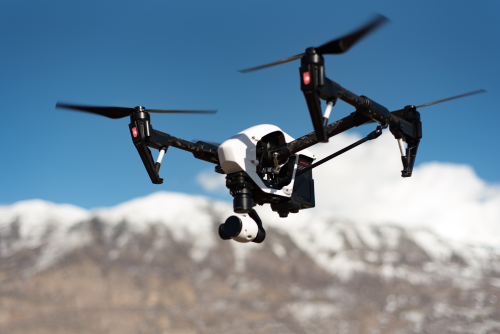
Learning how to choose portable power stations for your drone without wasting money starts with ignoring the biggest-box marketing. The right unit depends less on brand hype and more on how your batteries charge, how many packs you use in a day, and whether you travel by car, van, or plane. For many drone pilots, the smartest buy is a smaller station, a better charger, or no power station at all.
Quick Take
If you want the short version, use this:
- Buy for your real charging workflow, not the biggest watt-hour number you can afford.
- Start with your drone charger: AC wall brick, USB-C, or DC smart charger. The wrong outputs cause most buyer regret.
- Calculate your daily energy need in watt-hours, then add charging losses and a safety buffer.
- Expect usable power to be lower than the number on the box, especially when charging through AC outlets.
- Frequent field crews usually get better long-term value from LiFePO4 battery chemistry. Occasional users may prefer lighter units.
- If you mostly fly local missions and recharge at home or from your vehicle, you may not need a power station at all.
- Most portable power stations are not practical for airline carry-on. Always verify airline and airport battery rules before travel.
- Skip gimmicks. Prioritize output options, weight, recharge speed, durability, warranty, and workflow fit.
Why portable power stations get overbought
A lot of drone users buy a power station the same way they buy a first drone: bigger must be better.
That logic usually fails.
A huge unit may give you more capacity, but it also adds weight, takes longer to recharge, becomes annoying to carry, and often costs money that would have been better spent on extra batteries, a faster charger, a hard case, or a second charging hub.
On the other side, buying too small creates a different problem: the station can technically power your charger, but not long enough to matter, or it can only recharge a fraction of your packs before dying.
The goal is not “maximum power.” The goal is enough power, in the right form, with the least friction.
Step 1: Decide whether you actually need a portable power station
Before comparing battery chemistry, outputs, and capacity classes, ask a harder question: do you need one?
You probably do not need one if:
- You usually fly close to home.
- You only use two to four batteries per outing.
- You can recharge between sessions at home, in a hotel, office, or vehicle.
- Your drone supports USB-C charging and a compact high-output power bank would cover you.
- Your work sessions are short, predictable, and near mains power.
You probably do need one if:
- You spend full days in the field.
- You run several batteries through multiple recharge cycles in one day.
- You power more than the drone, such as a laptop, tablet, controller, monitor, phone, RTK base, or data gear.
- You work from a car, van, or boat where stable charging matters.
- You fly professionally and downtime costs money.
- You operate in remote areas with no reliable wall power.
Better alternatives for some pilots
A portable power station is not the only answer.
For some buyers, these options are smarter:
- A high-output USB-C power bank for small drones and controllers
- An additional OEM battery hub
- More flight batteries instead of field charging
- A vehicle inverter or 12V charging setup for road-based work
- A dedicated FPV field battery and charger
If your drone workflow is light, portable power stations can be a nice-to-have accessory, not a must-have tool.
Step 2: Calculate your real daily energy budget
This is the single best way to avoid wasting money.
Portable power stations are usually sold by capacity, often measured in watt-hours, or Wh. That tells you how much stored energy the unit holds in ideal conditions.
But your drone does not use ideal conditions.
You lose some energy during charging, voltage conversion, heat, and inverter use. So the number on the box is not the exact number you will get in real life.
A practical sizing method
Use this sequence:
- Add up the watt-hours of all drone batteries you expect to recharge in a day.
- Add the energy needs of your controller, tablet, phone, laptop, monitor, or any other gear.
- Add 15% to 25% for charging and conversion losses.
- Add another 20% buffer so you are not running the station to zero every time.
Example 1: Travel creator
Imagine you use:
- 3 drone batteries at 60Wh each
- You expect to recharge all 3 once during the day
- A phone and controller add roughly another modest amount
- A small laptop edit session also needs power
Your drone battery energy alone is 180Wh.
Add charging losses and your other devices, and you may easily land in the 300Wh to 500Wh real-world need range.
That does not automatically mean you need a 500Wh station, but it tells you a tiny backup unit probably will not be enough.
Example 2: Small commercial crew
If you run:
- 6 batteries at 80Wh each
- One full recharge cycle in the field
- A laptop, tablet, and phones
- Maybe a second charger or data station
Now you are well into the range where a mid-size or larger station starts making sense.
Remember: advertised capacity is not usable capacity
If you charge your drone batteries through a standard AC outlet on the power station, the station converts battery power to AC, then your charger converts it back again. That convenience costs efficiency.
As a rule of thumb:
- Direct USB-C or DC charging is usually more efficient
- AC charging is more universal, but less efficient
- Real usable output is usually lower than the headline capacity
This is why a “small but good” unit with the right outputs can outperform a bigger unit used the wrong way.
Step 3: Match the power station to your charging method
This matters more than many buyers realize.
A power station is only useful if it can feed your actual charging gear properly.
If you use your manufacturer’s AC charging brick or hub
This is the simplest setup.
You plug your regular wall charger into the AC outlet on the power station and charge as usual. It is convenient and widely compatible.
What to check:
- Continuous AC output, not just surge output
- Pure sine wave AC if specified
- Enough headroom for your charger and any other gear running at the same time
- Fan noise and heat during charging
This is the easiest route for beginners, but it is not always the most efficient.
If your drone or hub supports USB-C charging
This is often the most underrated option.
If your batteries, charging hub, or controller accept USB-C Power Delivery, often called USB-C PD, you may get a cleaner and more efficient setup than using AC.
What to check:
- Does the station’s USB-C port provide enough wattage?
- Does it support the voltage and charging profile your gear needs?
- Can it run more than one high-output USB-C port at once?
For many creators, strong USB-C support is more useful than extra AC outlets.
If you fly FPV or use a smart charger
FPV pilots often use chargers that prefer DC input or draw meaningful AC power.
In that case, check:
- Whether your charger works better from AC or direct DC
- The station’s continuous output rating
- Stable output under load
- Port compatibility for your charger cables and connectors
If you already use a compact, dedicated field charging setup, a power station should improve it, not complicate it.
Continuous watts matter more than marketing surge numbers
Portable power stations often advertise a big surge number. That is not the number most drone pilots should care about.
You want to know:
- How many watts the unit can deliver continuously
- How much each individual port can provide
- Whether AC and USB-C performance drops when multiple devices are connected
Many drone chargers are not huge loads, but once you add a laptop, display, or second charger, output limitations appear quickly.
Step 4: Choose the right size class
Here is a practical way to think about size.
| Buyer profile | Typical use | Power station class | What to prioritize | What often becomes overkill |
|---|---|---|---|---|
| Casual hobbyist | Local flights, home recharge, occasional day trips | None to under 300Wh | Small size, simple AC or USB-C, low weight | Large 700Wh+ units |
| Travel creator by car | Drone, phone, controller, maybe laptop | 300Wh to 700Wh | USB-C power, modest AC, easy carry, fast recharge | Expandable systems and large solar bundles |
| FPV pilot | Multiple packs, smart charger, mixed gear | 300Wh to 700Wh | Charger compatibility, output stability, portability | Fancy app features, huge household backup capacity |
| Real estate, inspection, photo/video pro | Half-day to full-day field work | 500Wh to 1000Wh | Reliability, cycle life, AC headroom, vehicle recharge | Ultra-light units with limited cycle life |
| Enterprise or survey team | Long days, multiple batteries, laptops, data gear | 1000Wh+ | Durable chemistry, recharge speed, service support, workflow integration | Consumer-focused extras that add cost but not uptime |
This table is a starting point, not a rule.
Two pilots in the same category can need very different systems depending on drone size, number of packs, and whether they recharge in a vehicle between locations.
Step 5: Pick the right battery chemistry
Battery chemistry affects weight, life span, and long-term value.
LiFePO4: better for frequent use
LiFePO4 stands for lithium iron phosphate.
Why many drone professionals prefer it:
- Longer cycle life
- Better thermal stability
- Usually better value over years of regular use
- Good choice for crews that charge and discharge often
Tradeoff:
- Heavier and bulkier for the same capacity
If you fly every week, run commercial jobs, or treat your power station like a tool rather than an occasional accessory, LiFePO4 is often the safer bet.
NMC or lighter lithium-ion: better for weight-sensitive users
Some smaller or older-style power stations use lighter lithium-ion chemistry, often NMC-based.
Why some people still choose it:
- Lower weight
- More compact size
- Easier to carry for casual use
Tradeoff:
- Usually fewer total cycles than LiFePO4
- May be less attractive for heavy weekly use
If you only need a station for occasional road trips or weekend flying, lower weight may matter more than maximum cycle life.
Step 6: Buy for portability and recharge speed, not just capacity
A power station that stays in the closet is wasted money.
Weight and carry style
Ask yourself:
- Will you carry it from a parking area to a launch point?
- Will it live in a backpack, trunk, van, or case?
- Do you need a single-hand carry?
- Can you safely move it with your other gear?
On paper, extra capacity sounds great. In practice, a unit that is annoying to carry often gets left behind.
How fast the station itself recharges
A lot of buyers focus only on how fast the station charges their drone batteries. But the station itself also needs to recharge between trips.
Useful recharge options include:
- Wall charging at home or hotel
- Vehicle charging between sites
- Fast AC recharge for quick turnaround
- Solar input if you truly work off-grid
Solar is not a default upgrade
Solar sounds perfect for drones. In reality, it is often oversold.
For most pilots, solar is:
- Slower than expected
- Weather dependent
- Inconvenient to set up on short stops
- Poor value if you mostly work from roads, towns, or client sites
Solar can make sense for remote base camps, expedition travel, van life, or long outdoor deployments. Otherwise, it is usually not the first place to spend extra money.
Noise and heat matter more than spec sheets suggest
Some power stations are loud under charge or discharge because the cooling fan ramps up.
That may not matter at a survey site. It may matter a lot if you are:
- Recording ambient sound
- Working around clients during interviews
- Charging inside a vehicle
- Using the station in a quiet indoor location
Also remember that heat is the enemy of battery longevity. A unit that runs cooler and vents properly usually ages better.
Safety, travel, and operational limits to know
Portable power stations touch both battery safety and travel compliance, so this is not a section to skip.
Charging safety
Use disciplined habits:
- Charge on a stable, non-flammable surface
- Keep the station out of direct sun when possible
- Do not charge swollen, damaged, wet, or overheated drone batteries
- Use manufacturer-approved chargers and battery hubs where required
- Do not leave lithium battery charging completely unattended for long periods
- Keep vents clear and avoid stuffing the station into soft bags while operating
Vehicle use
Charging in or from a vehicle can be useful, but be careful:
- Avoid leaving the station in a very hot car for long periods
- Make sure it cannot slide, tip, or become a projectile in transit
- Protect it from dust, water, and vibration
- Do not block airflow while charging inside a vehicle
Air travel and border movement
This is one of the biggest buyer traps.
Many portable power stations contain lithium batteries large enough to trigger airline restrictions. Rules vary by airline, country, airport screening practice, and battery size. In many cases, a typical drone power station is not realistic for passenger air travel.
Before flying with one, verify:
- Airline rules for lithium battery capacity
- Carry-on versus checked baggage restrictions
- Approval requirements for medium-size batteries
- Any local airport or security guidance
Do not assume that because your drone batteries were accepted, your power station will be too.
Site and commercial compliance
If you work professionally, also check:
- Venue rules on indoor charging
- Client site safety policies
- Fire safety restrictions in vehicles, boats, or industrial locations
- Local rules for public parks, protected areas, or event spaces
The power station itself is not a flight permit issue, but your charging and storage behavior can still create safety or access problems.
Common mistakes that waste money
These are the biggest mistakes buyers make.
Buying for worst-case fantasy instead of normal use
If you only need field charging three times a year, do not buy a huge off-grid system designed for multi-day camping.
Ignoring the charger and focusing only on battery size
A high-capacity station with weak USB-C output or awkward AC-only use may be less useful than a smaller unit with the right ports.
Confusing battery capacity with output power
Capacity tells you how long it can run. Output tells you what it can run at one time. You need both.
Forgetting conversion losses
If you size the station based only on advertised watt-hours, you will often come up short.
Paying extra for features you will never use
Common examples:
- Wireless phone charging pads
- Decorative lights
- App features you will never open
- RV-focused ports for non-RV users
- Large expandable battery ecosystems for simple drone days
Buying something too heavy to carry
A portable power station that never leaves the trunk is still better than one left at home, but both are signs you bought the wrong size.
Assuming solar will fix everything
For most drone operators, vehicle charging and overnight wall charging are more practical.
Overlooking service and warranty support
This matters more than flashy marketing. If the unit fails mid-season, local support, warranty terms, and replacement turnaround matter.
A simple buying checklist
If you want a clean decision process, use this:
- List every device you want to power in the field.
- Write down how each one charges: AC, USB-C, or DC.
- Estimate your total daily energy use in watt-hours.
- Add charging losses and a 20% buffer.
- Choose the smallest size class that comfortably covers that need.
- Decide whether low weight or long cycle life matters more to you.
- Check recharge options for home, vehicle, and any off-grid use.
- Verify travel and safety restrictions before you buy.
If a product fails any one of those steps, it is probably not the right fit.
FAQ
How big a portable power station do I need for my drone?
It depends on how many battery watt-hours you need to recharge in a day, plus your other gear. A light hobbyist may need none at all or something under 300Wh. A creator or professional doing full-day shoots may be better served by 300Wh to 1000Wh or more. Always size from your real energy budget, not from guesswork.
Is it better to charge drone batteries from AC or USB-C/DC?
If your drone or charging hub supports direct USB-C or DC properly, that is often more efficient than running a wall charger from the station’s AC inverter. AC is still the most universal option and easiest for many users. The best choice is the one your charger supports safely and reliably.
Can I take a portable power station on a plane?
Often no, or not without strict limits. Airline and airport rules for lithium batteries vary, and many power stations exceed what passengers can carry. Always verify the battery limit and carrier policy before travel. Do not assume your drone battery rules are the same as your power station rules.
Is LiFePO4 always the best choice?
Not always. LiFePO4 is excellent for frequent use, long cycle life, and better thermal behavior, but it is usually heavier. If you only need a power station occasionally and care more about portability, a lighter lithium-ion unit may still be the better fit.
Should I buy a power station or just more drone batteries?
If your flights are short and you can recharge at home, extra flight batteries may be the smarter buy. A power station makes more sense when you need to keep working through long days, power multiple devices, or recharge away from reliable electricity.
Can I use a portable power station safely in my car?
Yes, if you manage heat, airflow, and physical security properly. Do not leave it baking in direct sun, do not block vents, and make sure it cannot move around while driving. Follow both the power station manual and your drone battery charging guidance.
Do I need solar panels too?
Usually not. Solar is helpful for remote or multi-day off-grid use, but many drone operators get better value from wall charging, car charging, or simply choosing the right station size. Buy solar because you need it, not because it looks complete on a product page.
What matters more: watt-hours or watts?
Both matter, but in different ways. Watt-hours tell you how much energy is stored. Watts tell you how much power the station can deliver at once. You need enough watt-hours to last and enough watts on the correct ports to run your charger properly.
Final takeaway
The best portable power station for your drone is rarely the biggest one. It is the smallest unit that matches your charger, covers your real daily energy use, fits how you travel, and is easy enough to bring every time. Start with your workflow, not the marketing, and you will spend less, carry less, and get more useful power in the field.