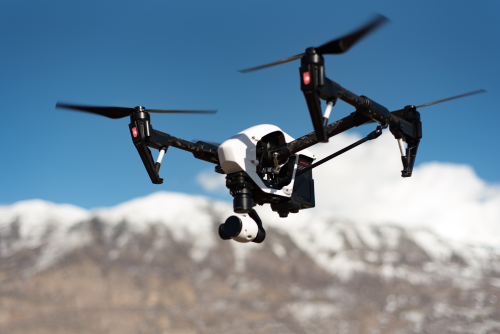
Spare batteries are one of the first drone accessories people buy, and one of the easiest ways to overspend. If you want to know how to choose spare batteries for your drone without wasting money, start by matching battery count, battery type, and charging workflow to the way you actually fly. A weekend hobbyist, a travel creator, an FPV pilot, and a commercial team can all make smart choices, but they should not buy the same way.
Quick Take
- Most camera-drone owners should start with one or two spare batteries, not a full stack.
- Use real working airtime, not the manufacturer’s maximum flight-time claim, to decide how many you need.
- For proprietary smart batteries, original manufacturer batteries are usually the safest value.
- For FPV, the right voltage, capacity, connector, weight, and cell quality matter more than buying the biggest pack.
- Batteries age even when they sit unused, so “buy once, buy a lot” is often the wrong move.
- A better charger or charging hub can save more money than buying extra batteries.
- If you travel, verify current airline and destination rules for lithium batteries before packing.
Start with how you actually fly
The biggest mistake is buying batteries based on discounts, bundle marketing, or someone else’s setup.
Instead, answer three questions:
- How long is your normal flying session?
- Can you recharge between flights?
- What does downtime cost you: nothing, a missed sunset, or a missed client deliverable?
That last question matters more than most people think. If you fly for fun near home, running out of battery is annoying. If you are filming at golden hour or inspecting a site on a schedule, running out of battery can cost you the entire session.
A practical planning rule for camera drones is to assume you will use only about 60 to 75 percent of the advertised maximum flight time as real working airtime. Wind, climbing, hovering, repositioning, return-to-home reserve, and conservative landings all reduce the useful minutes you actually get.
A simple way to estimate battery count is:
Batteries needed = total planned airtime ÷ real airtime per battery, rounded up
Then add one more only if the flight is important enough that downtime has a real cost.
A realistic starting point
The table below uses total batteries, including the one in the drone.
| Pilot type | Good starting point | Why it usually works | Add more when… |
|---|---|---|---|
| New camera-drone owner | 2 total | Enough for practice, short trips, and learning battery habits | You regularly end sessions because you ran out of power |
| Casual hobbyist or local explorer | 2 to 3 total | Covers most short outings without overbuying | You start planning longer day trips or hikes |
| Travel creator | 3 total | Gives flexibility for reshoots, delays, and locations without guaranteed charging | You often spend full days away from power |
| Aerial photographer shooting sunrise/sunset or events | 3 to 4 total | Short weather or light windows make spare airtime valuable | You are missing shots before the window ends |
| Real estate, inspection, or utility work | 4 to 6 total plus a charging plan | Downtime costs money and rescheduling hurts margins | Your mission profile consistently exceeds your current rotation |
| FPV freestyle or racing pilot | 6 to 12 packs, depending on field charging | Flights are short and pack swaps are part of the workflow | You are waiting too long between packs or cutting sessions short |
If you are unsure, start smaller. It is easier to buy one more battery after five or ten sessions than to recover money tied up in batteries that age in storage.
Know what battery system your drone uses
Not all drone batteries should be judged the same way.
Smart batteries on camera drones
Most mainstream camera drones use proprietary “smart batteries.” These usually include a battery management system, or BMS, that helps monitor charge state, cell health, temperature, and sometimes self-discharge behavior. They are designed to fit one drone model or one product family exactly.
With these systems, compatibility is everything. A battery that is physically similar is not necessarily safe or accepted by the aircraft or charger.
FPV packs and more open systems
FPV drones usually use standard lithium polymer packs, often called LiPo, or sometimes lithium-ion packs for endurance-focused flying. These are less locked down, but choosing correctly is more technical.
Here, you need to match:
- Voltage or cell count, such as 4S or 6S
- Connector type
- Capacity, usually shown in mAh
- Discharge performance
- Weight and physical size
A battery with more capacity is not automatically better if the extra weight hurts handling or cancels out the endurance gain.
Specs that actually matter
When comparing batteries, focus on these first:
- Voltage or cell count: Must match what your drone is designed to use.
- Watt-hours (Wh): A useful way to compare stored energy and to check travel limits.
- Capacity (mAh): More capacity can mean more flight time, but only if the extra weight and size still suit the aircraft.
- Discharge capability: Especially important for FPV, where punch-outs and aggressive maneuvers demand high current.
- Connector and fit: Wrong connector or poor fit is a deal-breaker.
- Firmware or app compatibility: Important for smart batteries.
- Charger compatibility: The battery is only useful if your current charging setup can support it safely.
For FPV pilots, one more note: do not treat claimed C-ratings as perfect truth. Some are optimistic. Real-world reputation and consistent cell performance matter more than a printed number.
New OEM, used OEM, or third-party?
This is where many buyers either overspend or take the wrong shortcut.
The safest default for smart batteries
If your drone uses proprietary smart batteries, new original-manufacturer batteries are usually the lowest-risk choice. They cost more upfront, but they are more likely to fit correctly, communicate properly with the aircraft, work with firmware updates, and preserve warranty support where relevant.
That does not mean third-party batteries are always bad. It means the savings can disappear quickly if you get warnings, shorter life, inaccurate charge reporting, or a battery the drone refuses to accept.
When a used original battery can make sense
For older or discontinued drones, a used original battery can be a better buy than a cheap third-party one, but only if you can inspect health and history.
A used OEM battery may still offer:
- Better physical fit
- Better communication with the drone
- More predictable charging behavior
- Lower compatibility risk
But it may also have:
- Reduced capacity
- More internal resistance
- Unknown storage history
- Fewer useful cycles left
When third-party batteries are more reasonable
Third-party batteries make more sense when:
- The drone uses a simpler, less locked battery system
- The seller has a strong track record
- The model is well known to work with that exact battery
- You understand the tradeoff and can test safely
For FPV, the “third-party” question is different because many popular battery brands are effectively the normal choice. In FPV, cell quality and pack consistency matter more than whether the battery came from the same brand as the frame or flight controller.
Quick comparison
| Option | Best for | Main upside | Main risk |
|---|---|---|---|
| New OEM battery | Most camera drones, travel use, paid work | Highest compatibility and lowest drama | Higher upfront cost |
| Used OEM battery | Older drones, budget buyers who can inspect health | Lower price, still made for the aircraft | Unknown wear, shorter remaining life |
| Third-party battery | Some open systems, some older models, many FPV setups | Lower price or better availability | Fit, firmware, cell quality, and support can vary |
If a missed flight would cost you work, travel footage, or credibility, the “cheap” option often becomes the expensive one.
Buy for workflow, not just for airtime
A battery purchase is really a workflow decision.
Many pilots buy more packs when the real problem is slow or inconvenient charging. If it takes too long to get batteries back into rotation, you may need a better charging setup more than more batteries.
Charging can change the math
One extra battery plus a good charging hub can be smarter than three extra batteries with a slow single charger.
Think about:
- How many batteries you can charge at once
- How long it takes to get from low battery to fly-ready
- Whether you can charge safely from a wall outlet, vehicle, or portable power source if your equipment supports it
- Whether you have enough labeled storage to rotate batteries evenly
Travel creators
If you shoot while moving between locations, you may not need a huge battery count if you can recharge in the car, at your hotel, or during breaks. But if you are hiking, boating, or spending a full day away from power, extra batteries may be more valuable than a charger upgrade.
Commercial and enterprise teams
For site work, mapping, inspection, or public safety support, battery planning should be treated like uptime planning. That means:
- Enough batteries for the mission
- Reserve batteries for delays or repeat flights
- A documented charging and rotation process
- Clear labeling so weaker batteries are identified early
In those situations, buying “just enough” can become false economy if it creates bottlenecks.
Battery age and health matter more than many buyers realize
A battery is not a permanent asset. Lithium batteries age from use, but also from time, heat, and poor storage.
That means a battery sitting unused in a bag is not “fresh.” It is still aging.
This is why bulk-buying can waste money, especially if you fly only once or twice a month. By the time you finally start using the last battery in the set, it may already have lost part of its best life.
What to check before buying used
If you are buying a used battery, inspect as much as possible:
-
Manufacture date or first activation date if available
Old stock can be a bad deal even if it looks clean. -
Cycle count and health data for smart batteries
Some apps show battery status, charge cycles, or cell condition. -
Physical condition
Avoid swelling, dents, cracks, damaged clips, corrosion, or burnt contacts. -
Storage habits
Ask whether the battery was stored fully charged for long periods or in hot conditions. -
Crash or water history
A battery involved in a heavy crash or water exposure is a risk. -
Cell balance for FPV packs
Uneven cells can be a warning sign.
If the seller cannot answer basic questions, assume the risk is higher.
Don’t ignore “new old stock”
A battery can be sealed and still be a poor buy if it has been sitting for years. For discontinued drones, “brand new” does not always mean “best remaining life.”
Travel, safety, and operational limits to know
Spare batteries are not just a buying issue. They affect transport, safety, and operations.
Travel and airline checks
Airlines and airports often have specific rules for lithium batteries, and those rules can vary by airline, route, battery size, and how many spares you carry. Before traveling, verify:
- Whether spare batteries must be in carry-on baggage
- Any watt-hour limits that apply
- Whether terminal covers or individual battery cases are required
- Any quantity limits for the number of spare batteries
Do not assume what worked on one trip will be accepted everywhere.
Safe handling basics
Whether you fly for fun or for work, these habits matter:
- Do not use swollen, punctured, cracked, or overheated batteries
- Let batteries cool after flight before charging
- Do not leave batteries in a hot car or direct sun
- Charge on a stable, non-flammable surface
- Avoid charging unattended
- Store batteries at the level recommended by the manufacturer for longer breaks
- Recycle retired batteries through approved local battery recycling channels
Flying rules are separate from battery transport
Being allowed to carry a battery does not mean you are allowed to fly at your destination. If you are traveling or operating commercially, verify local aviation, land-management, venue, and privacy rules before launch.
Common mistakes that waste money
Buying the biggest bundle before you know your flying style
Bundles look efficient, but extra batteries only save money if you actually cycle them regularly.
Believing advertised flight time is your working flight time
Marketing numbers are usually best-case figures. Plan conservatively and you will buy more accurately.
Choosing the cheapest third-party smart battery for a locked ecosystem
If the drone throws warnings, refuses the pack, or reports charge incorrectly, the low price stops mattering.
Ignoring charger limitations
Four batteries with a slow, awkward charger can be less useful than two batteries with a good charging workflow.
Storing batteries fully charged for long periods
That habit shortens life and turns “spare” batteries into aging inventory.
Mixing battery ages without tracking performance
For commercial work especially, an older weak battery can disrupt the whole day if you assume every pack performs the same.
Keeping damaged batteries “just in case”
That is not thrift. It is risk.
For FPV, chasing only mAh
A heavier pack can hurt handling, stress the build, and fail to deliver the performance you expected.
A simple buying framework that avoids overbuying
If you want a practical way to choose, use this sequence:
-
Identify your battery system
Proprietary smart battery, standard LiPo, or lithium-ion. -
Estimate real airtime
Use your own logs if you have them. If not, plan from a conservative share of advertised time. -
Define your normal session
Local practice, day trip, paid job, race session, or remote hike. -
Check recharge access
Home only, vehicle, hotel, field station, or no charging until you return. -
Buy enough batteries for 80 percent of your real use
Not your most ambitious day of the year. -
Add one reserve only if downtime is costly
Great for travel shoots or commercial work. Often unnecessary for casual flying. -
Budget for charging and storage at the same time
A battery strategy without a charger strategy is incomplete.
That approach keeps you out of both traps: underbuying for important work and overbuying for occasional flying.
FAQ
How many spare batteries should a beginner buy?
For most beginner camera-drone pilots, one spare is enough to start, and two spares is usually the upper end before you know your habits. If you only fly short local sessions, buying more right away often just means more batteries aging unused.
Are third-party drone batteries safe?
Sometimes, but it depends heavily on the drone and the battery system. For proprietary smart batteries, third-party options can bring compatibility, reliability, and warranty risks. For FPV, reputable battery brands are common, but matching the correct specs and buying from trusted sellers still matters.
Is a used original battery better than a cheap new third-party one?
Often, yes, especially for smart-battery camera drones. A used original battery with verified health can be a better choice than a low-cost third-party pack with unknown communication, fit, or longevity. The condition and history still need to be checked carefully.
Can I take spare drone batteries on a plane?
Usually there are special rules for lithium batteries, and they vary by airline and jurisdiction. Many airlines require spare batteries in carry-on baggage with protected terminals, but you must verify current policies for your route, battery size, and quantity before traveling.
How should I store drone batteries between trips?
Follow the manufacturer’s storage guidance for your battery type. In general, avoid storing batteries fully charged for long periods, keep them in a cool and dry place, and protect them from physical damage and heat.
When should I replace a drone battery?
Replace it if you see swelling, damaged casing, abnormal heat, sudden voltage drop, poor runtime, unreliable charge reporting, or any post-crash concern. For commercial work, retire questionable batteries earlier than you would for casual flying.
Do higher-capacity batteries always give more flight time?
No. Higher capacity can help, but extra weight can offset the gain. On FPV builds especially, a bigger pack may change handling and current draw enough that the real-world benefit is smaller than expected.
What should FPV pilots prioritize when choosing spare packs?
Start with the correct voltage, connector, and physical fit for your build. Then balance capacity, weight, and discharge performance for the style you fly. For freestyle and racing, consistency and punch usually matter more than simply buying the biggest mAh number.
The smart move
If you are trying to avoid wasting money, do not buy spare batteries like collectibles. Buy enough to cover your normal flying, choose compatibility over hype, and treat charging, storage, and travel rules as part of the same decision. In most cases, the best battery strategy is not “more” — it is “enough, and the right kind.”