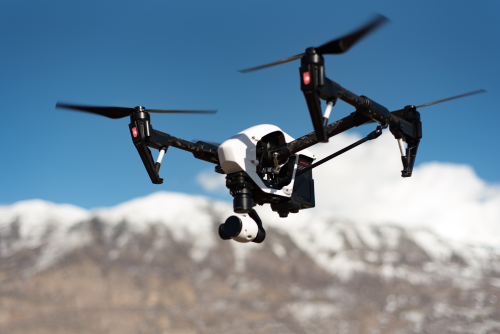
The best drone for farmers is rarely the most expensive one. It is the one that solves a specific farm problem consistently, fits the operator’s skill level, and does not lock the business into costly batteries, software, repairs, or compliance burdens it was not ready for. If you are trying to figure out how to choose the best drone for farmers without overspending or buying the wrong features, start with the job to be done, not the marketing sheet.
Quick Take
If you only remember a few things before buying, remember these:
- Most farmers should begin with the simplest drone that reliably improves scouting, inspection, or mapping.
- A standard camera drone is enough for many farms doing visual crop checks, storm inspections, fencing checks, drainage review, and progress documentation.
- Multispectral and thermal only make sense when you already know how the data will change decisions in the field.
- Spray drones are specialized tools, not “starter drones.” They bring extra training, maintenance, logistics, and legal responsibilities.
- The real cost is the full system: batteries, charging, software, repairs, training, insurance, and downtime support.
- Local dealer support and spare-part availability often matter more than one flashy feature.
- If the drone is too complex to deploy quickly, it may sit on a shelf during the busiest parts of the season.
Start with the farm task, not the drone brand
A farmer does not buy “a drone.” A farmer buys a faster way to inspect, measure, document, or apply something.
That distinction matters because the wrong match leads to wasted money. A beautiful aerial camera is not the same as a mapping tool. A mapping drone is not the same as a spray platform. And a spray platform is not automatically a good choice just because it looks productive on paper.
Here is a practical way to frame the decision:
| Farm goal | Best-fit drone type | Must-have features | Features that are often overkill |
|---|---|---|---|
| Visual scouting after rain, wind, pests, or irrigation issues | Standard camera multirotor | Stable flight, clear camera, easy deployment, good battery ecosystem | Ultra-high-end video specs, cinema features |
| Repeatable field maps and measurements | Mapping-ready multirotor or fixed-wing for very large areas | Reliable geotagging, automated flight planning, mapping software support, optional RTK for higher positional accuracy | Premium video features not used in mapping |
| Crop health trend monitoring | Multispectral-capable platform | Sensor and software workflow that produces usable vegetation-index maps | Buying multispectral without agronomy workflow or staff training |
| Livestock, water line, or heat-stress checks | Camera drone, sometimes thermal-enabled | Fast launch, range appropriate for legal line-of-sight use, durable batteries | Multispectral if the job is not crop analysis |
| Spraying or spreading | Agricultural spray drone | Payload system, reliable pumps/nozzles, training, safe workflow, strong support | Assuming bigger tank always means better ROI |
The main drone types farmers actually need to compare
Standard camera multirotor
This is the best starting point for many farms.
A multirotor is the typical drone with multiple propellers that can take off vertically, hover, and fly slowly over specific areas. For everyday farm use, this type is often the most practical because it is easy to launch, works well for spot inspections, and requires less space than a fixed-wing aircraft.
Best for:
- General crop scouting
- Checking storm damage
- Looking at drainage issues
- Inspecting fences, roofs, barns, and water systems
- Capturing documentation for records, planning, or marketing
This is the category that most often delivers value without overspending. If a farm mainly needs eyes in the sky, a reliable camera drone may be enough.
Mapping-ready multirotor
This is the next step up when the farm needs repeatable maps rather than just visual scouting.
A mapping drone should support automated flight paths and produce images that can be stitched into an orthomosaic, which is a measured aerial map built from many overlapping photos. Some systems also support RTK, short for Real-Time Kinematic, a positioning method that improves location accuracy.
Best for:
- Field boundary maps
- Measuring affected areas
- Stand counts and emergence review
- Drainage and terrain review
- Comparing parts of a field over time
If you need measurements or repeatable map outputs, this class makes sense. If you only need quick visual checks, it may be more system than you need.
Multispectral drone or sensor package
A multispectral sensor captures bands of light beyond what a normal camera sees. The output is often used to create vegetation-index maps, such as NDVI, which can highlight differences in plant vigor.
Best for:
- Crop variability analysis
- Targeted scouting
- Comparing treatment zones
- Supporting precision agriculture workflows
This can be very useful, but it is also where many buyers overspend. Multispectral only pays for itself when:
- Flights are done consistently
- Data is processed correctly
- Someone can interpret the outputs
- The farm actually changes decisions based on those maps
If the workflow ends at “interesting colors on a screen,” the purchase was probably premature.
Thermal-enabled drone
Thermal cameras detect temperature differences rather than visible light.
Best for:
- Irrigation issue detection in some conditions
- Livestock location or heat-stress monitoring where allowed and appropriate
- Building, equipment, or solar inspections on farm property
- Certain specialty crop and operational checks
Thermal is powerful but often misunderstood. It is not a universal crop-health shortcut. Results depend heavily on timing, weather, surface conditions, and the exact question you are trying to answer. For many farmers, thermal is a niche add-on, not the first purchase.
Spray or spreader drone
This is a true agricultural application platform, not just a camera drone with a tank attached.
Best for:
- Targeted treatment
- Hard-to-reach areas
- Wet ground where heavy equipment is a problem
- Steep terrain, terraces, orchards, and some specialty crops
- Labor-constrained operations in places where the rules and economics work
This is also the easiest category to buy too early. A spray drone may look like a labor-saving machine, but the real-world system includes:
- Chemical handling workflow
- Refill logistics
- Battery charging cycle management
- Nozzle and pump maintenance
- Drift control
- Operator training
- Separate regulatory and insurance considerations in many regions
For some farms, it is transformational. For others, it becomes an expensive side project.
Fixed-wing mapping drone
A fixed-wing drone flies more like a small airplane and is mainly used for covering larger areas efficiently.
Best for:
- Large-area mapping
- Faster coverage per flight
- Teams that already have mission-planning discipline
Not ideal for many first-time farm buyers because takeoff, landing, transport, and operating skill can be more demanding. If the acreage is modest or the team is new, a multirotor is usually the safer first choice.
A practical 7-step framework to choose the right farm drone
1. Define the decision the drone should improve
Ask one simple question: what farm decision gets better because of this drone?
Good answers:
- “I want to check irrigation problems faster after hot days.”
- “I need repeatable maps for comparing field zones.”
- “I want to inspect storm damage in 20 minutes instead of half a day.”
- “I need targeted application in areas ground equipment cannot reach.”
Weak answers:
- “I want a drone in case we need it.”
- “Everyone else seems to be buying one.”
- “This model has a lot of features.”
A drone that does not improve a decision or save a real workflow cost will struggle to justify itself.
2. Match the sensor to the job
The camera or sensor determines whether the drone is a scouting tool, a mapping tool, or an analysis tool.
Use this shortcut:
- RGB camera: normal visual inspection, documentation, basic scouting
- Mapping-ready RGB: visual inspection plus measured maps
- Multispectral: crop variability and plant-health analysis workflows
- Thermal: temperature-related inspection and some operational diagnostics
- Spray system: application, not imaging
Many farms can do a lot with RGB before they need anything more advanced.
3. Consider acreage, terrain, and field shape
Bigger farms do not automatically need the most expensive drone.
Instead, ask:
- How many hectares or acres must be covered in a normal week?
- Are fields flat, hilly, terraced, wooded, or broken up?
- Are there power lines, trees, irrigation pivots, or buildings nearby?
- Is this for quick spot checks or full-field mapping?
- Will one person run it, or a trained team?
Examples:
- A vineyard or orchard may value maneuverability, obstacle awareness, and precise low-speed flight more than raw area coverage.
- A broad-acre operation may care more about map efficiency, repeatability, and battery swap speed.
- A livestock property may need fast deployment and dependable line-of-sight checks over roads, water points, and fencing.
4. Budget the total cost of ownership, not just the drone
This is where overspending usually happens.
The airframe is only part of the cost. You also need to consider:
- Extra batteries
- Fast or multi-battery chargers
- Propellers and wear parts
- Rugged transport case
- Tablet or controller upgrades
- Mapping or analytics software subscriptions
- Cloud storage or desktop processing hardware
- Training time
- Repairs and seasonal downtime
- Insurance where appropriate
- For spray drones: nozzles, pumps, filters, cleaning, protective equipment, and workflow setup
A cheaper drone with easy battery access and strong repair support can cost less over three seasons than a “premium bargain” with expensive downtime.
5. Check software before you buy hardware
For farming, software is often the real product.
Before buying, ask:
- What exact outputs will I get?
- Can I export the data easily?
- Does the software require a recurring subscription?
- Can my agronomist, consultant, or farm manager actually use the outputs?
- How long does processing take?
- Can the workflow run offline if connectivity is poor?
- Does the map help with decisions, or just make pretty images?
If possible, ask the seller to show sample outputs from farms like yours, not generic demo footage.
6. Buy for support, not just specs
When the crop window is narrow, support matters more than brochure claims.
Look for:
- Local or regional repair channels
- Reasonable spare-part availability
- Battery availability during peak season
- Training resources in a language your team can use
- Clear warranty terms
- Dealer competence, not just dealership status
A farmer is better off with a slightly less impressive drone from a mature support ecosystem than a spec-heavy system that becomes impossible to maintain.
7. Make sure the workflow is simple enough to get used
This is the most underrated buying test.
If the workflow is too slow, the team will stop using the drone. Ask:
- Can one person deploy it in under 10 minutes?
- How much time does mission planning take?
- How hard is the battery charging routine?
- How long does it take to turn raw imagery into something actionable?
- Can someone else on the team use it if the primary operator is unavailable?
A good-enough drone that gets flown twice a week beats an advanced system that gets flown twice a season.
Features worth paying for, and features that often waste money
Usually worth paying for
- Reliable flight stability
- Strong battery ecosystem and charging convenience
- Clear, usable imagery rather than cinema-grade video
- Accurate geotagging for mapping
- Simple automated mission planning
- Durable build quality suitable for field use
- Good screen visibility outdoors
- Spare-part availability
- Repair and dealer support
- Obstacle sensing if you work around trees, poles, buildings, or orchard rows
- Weather and dust resilience if the manufacturer supports it for your use case
Often not worth the premium
- Extreme video resolutions you will never use agronomically
- Cinematic flight modes for a purely farm workflow
- Multispectral before you have a repeatable agronomy process
- Thermal without a clear temperature-based use case
- Oversized spray capacity without the crew, battery, and refill system to match
- Closed software ecosystems that trap your data
- “AI diagnosis” claims that are vague, hard to verify, or not trusted by your agronomy team
Safety, legal, and compliance checks before buying
Farm use does not exempt a drone from aviation rules.
Before operating, verify the current requirements with the relevant aviation authority in your country or region. Rules vary widely depending on drone weight, pilot qualifications, whether the work is recreational or commercial, where you fly, and whether you are doing imaging, mapping, or application work.
Pay special attention to these points:
- Farms may still sit near controlled or restricted airspace.
- Flying over your own land does not automatically mean unrestricted flight rights.
- Operations near workers, roads, homes, power lines, livestock, or neighboring property need extra caution.
- Spray and spreader drones may trigger additional approvals tied to aviation, pesticide use, environmental protection, worker safety, or chemical labels.
- Insurance needs can differ for simple scouting versus application operations.
- Battery charging, storage, and transport deserve serious attention, especially during peak-season field work.
- If contractors or consultants are involved, clarify who owns the imagery, maps, and derived farm data.
Also remember that a drone can help you see a problem, but it can also create one if it is flown carelessly around people, animals, vehicles, or overhead lines.
Common mistakes farmers make when buying a drone
Buying the “most advanced” drone first
Many first-time buyers jump straight to multispectral or spray platforms before mastering basic flight, battery management, mission planning, or data handling. Start with the tool that solves your current problem, not your imagined future one.
Confusing useful data with attractive visuals
A sharp aerial image is not the same as actionable crop intelligence. If no one on the farm knows what decision to make from the data, the feature may be unnecessary.
Ignoring software and workflow costs
A drone that needs expensive processing or subscription tools may end up costing far more than expected. Always ask what the full yearly workflow costs.
Underbuying batteries
A single-battery or two-battery setup often becomes frustrating fast. Farm work usually needs enough battery depth to finish useful tasks without constant waiting.
Believing one drone will do everything
A camera drone, mapping drone, thermal drone, and spray drone can overlap, but no single system perfectly covers every task. Trying to force one platform into every role often leads to disappointment.
Overestimating spray drone ROI
Spray drones can be excellent in specific conditions, but they are not automatically the cheapest or fastest answer for large-scale blanket application. Refill time, chemical logistics, crew needs, and regulations all matter.
Neglecting serviceability
A drone that cannot be repaired quickly during the season may cost far more in lost opportunity than it saved at purchase.
Which type of buyer should choose what?
Small mixed farm or family operation
Start with a reliable camera multirotor unless you already know you need measured maps. It is the lowest-risk entry point and often the highest-use tool.
Large row-crop farm
Consider a mapping-focused system if you need repeatable field outputs. Add multispectral only if you already have a precision-ag workflow that can use it.
Orchard or vineyard
Prioritize control, stability, obstacle awareness, and support for targeted inspections. In some operations, thermal or spray platforms may be justified sooner than in broad-acre crops.
Livestock operation
Look for fast deployment, dependable battery life, and a simple workflow for checking water, fencing, herd movement, and inaccessible ground. Thermal may help in specific conditions, but it is not always essential.
Co-op, agronomist, or farm service provider
You may justify higher-end mapping, multispectral, or specialized systems sooner because the cost is spread across multiple clients or farms. Even then, support, training, and data delivery standards matter more than headline features.
FAQ
Is a normal camera drone enough for most farmers?
Often, yes. For visual scouting, storm checks, irrigation inspection, fence review, and general observation, a good camera drone can deliver most of the value at much lower cost and complexity than a specialized sensor platform.
Do farmers really need multispectral?
Only some do. Multispectral is valuable when the farm already has a repeatable workflow for comparing plant vigor, targeting scouting, or supporting precision decisions. If there is no clear plan for using the data, it is easy to overspend.
Are spray drones worth it?
They can be, especially for targeted application, difficult terrain, wet ground, or labor-constrained operations. But they are specialized systems with more maintenance, training, logistics, and compliance responsibilities than imaging drones.
Should I choose fixed-wing or multirotor?
Most first-time farm buyers should choose multirotor because it is easier to launch, land, and use for varied tasks. Fixed-wing makes more sense when large-area mapping efficiency is the main goal and the team is ready for the added complexity.
How many batteries should a farm drone setup include?
Enough to make a normal field session productive without long charging delays. The exact number depends on the drone and task, but too few batteries is one of the most common buying mistakes.
Is thermal useful for crop monitoring?
Sometimes, but not universally. Thermal can reveal temperature differences that relate to irrigation, stress, or equipment issues, but results depend heavily on timing, weather, and interpretation. It is best bought for a defined temperature-based use case.
Can one drone handle scouting, mapping, and spraying?
Usually not well. Some overlap exists between scouting and mapping, but spraying is a different category with different hardware, maintenance, and regulatory demands. Most farms should not expect one platform to do all three at a high level.
Do I need a license or approval to use a drone on my farm?
Possibly. Requirements vary by country, drone weight, operation type, and whether you are doing commercial work or agricultural application. Always verify current rules with the relevant aviation authority, and for spraying, also check agricultural and chemical-use requirements.
The smartest buying move
The best farm drone is the one that improves a real farm decision this season, not the one with the longest feature list. If you are unsure, start with a dependable scouting or mapping-ready multirotor from a supportable ecosystem, then move into multispectral, thermal, or spraying only when your workflow, staff, and compliance setup are ready for it.