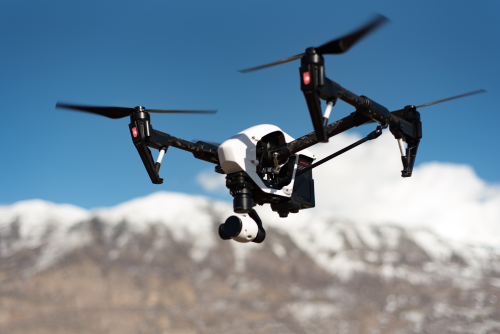
Choosing the best drone for inspectors is usually not about buying the most advanced aircraft on the market. It is about getting the right camera, the right standoff distance, and a workflow that produces useful evidence without adding cost, training burden, or compliance risk you do not need. If you want to avoid overspending or buying the wrong features, start with the inspection job and work backward from the deliverable.
Quick Take
If you only remember a few things from this guide, make them these:
- The best drone for inspectors is the one that captures the defect clearly, safely, and repeatably, not the one with the longest feature list.
- Most inspection buyers should choose based on three things first: camera type, required standoff distance, and operating environment.
- A compact enterprise drone is the sweet spot for many roof, facade, HVAC, insurance, and light commercial inspection jobs.
- Pay extra for thermal, strong zoom, better weather tolerance, or high-accuracy positioning only when your jobs or clients actually require them.
- Budget for the full system: batteries, charging, software, repairs, training, reporting workflow, and backup plans.
- A poor fit usually shows up in one of two ways: you cannot safely see the defect, or you bought expensive capabilities you rarely use.
What “best” really means for inspection work
In inspection work, “best” is not the same as “highest spec.”
A drone is a good buy if it helps you do one or more of these things better than your current method:
- Reach hazardous or hard-to-access areas without putting people at risk
- Capture enough visual detail to identify defects from a safe distance
- Repeat flights consistently for comparison over time
- Produce reports or imagery clients can actually use
- Keep downtime, retakes, and training overhead manageable
That means a solo roof inspector, a solar operations team, and an industrial asset manager may all need very different drones.
The fastest way to waste money is to buy for brand prestige, marketing claims, or headline specs instead of the actual inspection task.
Start with the inspection, not the aircraft
Before you compare drones, answer these questions.
1. What assets are you inspecting?
Examples include:
- Residential roofs
- Commercial roofs and facades
- Towers and masts
- Solar arrays
- HVAC and mechanical systems
- Bridges and infrastructure
- Industrial plants and stacks
- Indoor confined spaces
Each one changes what matters most.
2. What defect are you trying to see?
This is the question that should drive your sensor choice.
You may be looking for:
- Cracks
- Loose fittings or missing fasteners
- Corrosion
- Delamination
- Water ingress signs
- Heat loss
- Hotspots in electrical or solar systems
- Storm or insurance damage
- Deformation over time
If the defect is primarily visual, a standard color camera may be enough. If the defect is thermal or heat-related, you may need a thermal payload. If you need to inspect from farther away for safety, zoom becomes critical.
3. How close can you safely fly?
This often decides whether a compact drone will work or whether you need a more capable enterprise platform.
You may need to stay back because of:
- Fragile structures
- Energized assets
- Wind around buildings
- Restricted access areas
- Industrial safety rules
- Obstacles such as cables, antennas, or steelwork
If you cannot get close, zoom matters more than raw camera resolution.
4. What does the client actually need as a deliverable?
Possible outputs include:
- Annotated still images
- Thermal images
- Short video clips
- Repeatable progress comparisons
- Orthomosaics or measured maps
- Asset condition reports
- Live remote viewing for engineers or adjusters
If the final deliverable is a simple inspection report with marked images, do not overspend on cinema-grade video features. If the client needs measurement-grade mapping, that changes the buying criteria completely.
5. How often will you use it?
A drone used once a month should not be bought like a drone used every day.
High-volume teams should care more about:
- Battery rotation
- Charging speed
- Repair turnaround
- Spare parts
- Fleet management
- Mission repeatability
- Training multiple pilots
- Software integration
A low-volume operator can often stay far leaner.
Match the drone to the inspection type
The table below is a practical starting point.
| Inspection type | Must-have priorities | Nice to have | Often unnecessary |
|---|---|---|---|
| Roof and building exterior | Reliable color camera, stable hover, obstacle sensing, 3 to 5 batteries, decent zoom | Thermal for moisture, insulation, or heat-loss work | Heavy industrial airframe, interchangeable payload system, RTK if not mapping |
| Facades and envelopes | Strong zoom, wind stability, bright controller screen, obstacle awareness | Thermal, waypoint repeatability | Cinema video features, mapping-grade positioning if you only need visual reports |
| Solar PV inspection | Thermal camera, repeatable flight planning, safe standoff, good report workflow | High-accuracy positioning, automated analytics | Oversized heavy-lift platform for small or mid-size sites |
| Towers and utilities | Strong zoom, stable hover in wind, good situational awareness, reliable signal | Thermal, better weather tolerance | Consumer-first platform with limited support |
| Industrial plant inspection | Zoom, thermal, robust controller, good asset labeling and reporting workflow | Dust or light rain resistance, interchangeable payload options | Basic hobby drone with weak support and limited safety features |
| Indoor or confined-space inspection | Collision-tolerant design, stable no-GNSS flight, lighting | 3D capture or mapping tools | Standard outdoor inspection drone with no protective design |
The four buying decisions that matter most
1. Camera type: RGB, zoom, thermal, or all three?
Your first sensor decision is usually the most important.
Standard RGB camera
RGB means a normal color camera.
It is enough for many jobs, especially:
- Roof overviews
- Storm damage documentation
- Surface condition checks
- Progress photos
- Marketing-style handoff visuals for clients
If you mostly inspect accessible buildings and only need clear evidence photos, a strong RGB camera on a compact enterprise drone may be all you need.
Zoom camera
Zoom is often what separates a “nice camera drone” from a serious inspection tool.
A good zoom camera helps when:
- You need to stay farther from the asset
- The structure is tall or hazardous
- You are checking bolts, joints, connections, or small defects
- Flying close would be unsafe or inefficient
Many buyers overfocus on resolution and underfocus on usable zoom. For inspection, zoom often saves more time and risk than a higher-spec main camera.
Thermal camera
Thermal can be extremely valuable, but it is one of the most overbought features in inspection.
Thermal is worth paying for when you inspect:
- Solar systems
- Electrical equipment
- Building envelope heat loss
- Moisture-related patterns in some cases
- Mechanical overheating
- Industrial process heat anomalies
Thermal is not a magic x-ray. It has limits. Reflective materials, weather, sun loading, surface emissivity, and inspection timing all affect results. If your clients need reliable thermal interpretation, make sure your team also has the right training and reporting process.
Multisensor setups
Some enterprise drones combine wide, zoom, and thermal views in one payload. That can be a major efficiency gain for industrial or utility teams, but it is often unnecessary for smaller property inspection operations.
2. Airframe class: compact, mid-size enterprise, or heavy platform?
You do not buy a drone. You buy a class of drone.
Compact inspection drones
This is the value zone for many inspectors.
Typical fit:
- Roofers
- Insurance documentation teams
- HVAC inspectors
- Building envelope consultants
- Small solar teams
- Solo or small business operators
What they do well:
- Fast deployment
- Easier travel and transport
- Lower cost of ownership
- Less intimidating on small sites
- Enough capability for many common inspection tasks
Where they fall short:
- Limited weather tolerance
- Less stand-off performance than larger zoom platforms
- Shorter endurance under real working conditions
- More compromise if you need advanced thermal or industrial reliability
A compact enterprise platform such as DJI’s Mavic Enterprise line or similar aircraft from other major manufacturers is often the right first buy for inspection businesses that do not need heavy industrial capability.
Mid-size enterprise drones
This is where serious inspection fleets often move once jobs get more demanding.
Typical fit:
- Utility contractors
- Telecom and tower teams
- Larger solar operations
- Industrial facility inspectors
- Teams working in tougher wind or more complex sites
What they do well:
- Better zoom and multisensor options
- Stronger weather and wind performance
- Better control link reliability
- Improved visibility and handling for industrial work
- Better support for repeatable enterprise workflows
Where they can be too much:
- Higher upfront and ongoing cost
- More transport and setup burden
- Overkill for routine roofs and low-rise buildings
- Greater training and maintenance demands
Platforms in the Matrice-class category are often justified when inspection distance, weather, or client expectations exceed what compact drones can handle.
Heavy or modular enterprise systems
These are for specialist teams, not most buyers.
Typical fit:
- Large industrial sites
- Asset owners with multiple payload needs
- Survey-plus-inspection teams
- Advanced utility and infrastructure programs
They can make sense when you need:
- Swappable payloads
- High-accuracy mapping and inspection on one fleet
- Strong site integration and repeatability
- Higher operational resilience
But many buyers should avoid them unless they already know why they need them. Large modular systems can become expensive fast and are rarely the best first inspection drone.
3. Positioning and repeatability: do you really need RTK?
RTK stands for real-time kinematic positioning. In simple terms, it improves location accuracy.
It is useful when:
- You need highly repeatable inspection positions
- You are creating maps or measured models
- You are managing large assets over time
- Your inspection reports depend on precise geolocation
It is usually not essential when:
- You are doing standard roof inspections
- Your deliverable is an annotated photo set
- You are not measuring or mapping
- Your client cares more about defect visibility than exact coordinates
RTK is valuable, but it is not a default requirement for every inspector. Many buyers overspend here because “more accurate” sounds universally better. It is only better if your workflow uses that accuracy.
4. Environment: wind, weather, obstacles, and site complexity
A drone that looks great on paper may still be the wrong tool if your inspection sites are difficult.
Think about:
- Wind around tall facades
- Magnetic interference near steel structures
- Heat and updrafts around industrial assets
- Signal complexity near dense construction
- Dust, moisture, or light rain exposure
- Indoor or GPS-denied environments
If your work is mostly suburban roofs in calm weather, a compact aircraft may be perfect. If your work includes exposed towers, coastal facades, or industrial plants, a more robust platform can pay for itself in fewer aborted flights and clearer results.
Features worth paying for
These features tend to create real value for inspectors.
A useful zoom camera
This often matters more than a better main camera.
Strong obstacle sensing
Not for reckless close flying, but for additional situational awareness around structures.
Repeatable flight planning
Very helpful for recurring inspections, solar, and before-and-after comparisons.
A bright, reliable controller
Important for outdoor work, especially on reflective sites and long days.
Battery depth
A drone with too few batteries is a slow drone. Most field kits need enough batteries for a realistic work block, not just one short flight.
Local support and repair path
Downtime can cost more than the hardware. Service access matters.
Reporting workflow
If the platform exports clean images, thermal files, annotations, or compatible project data, it saves real time.
Features many inspectors overbuy
This is where budget creep usually happens.
Thermal, when the business case is weak
If you do not bill for thermal inspections or solve thermal problems, it may not pay back.
RTK, when no one uses the coordinates
Precision without workflow value is just added cost.
Heavy modular platforms for routine jobs
Large drones can slow down simple inspections and complicate transport, approvals, and crew habits.
Cinema video features
Inspectors usually need evidence, not film-production codecs.
“Maximum range” marketing
Most legitimate inspection work is still limited by visual line of sight, local rules, and site realities. Published range figures rarely matter.
Dock or automation systems too early
Useful for mature programs, usually wasteful for low-volume teams.
AI claims without proof
Automated defect detection can be helpful, but only if it works on your assets, in your reporting flow, with acceptable false positives.
Budget the whole system, not just the aircraft
This is one of the biggest buying mistakes in inspection work.
Your real cost includes:
- The aircraft
- Extra batteries
- Charging hub or field charging
- Spare props and maintenance items
- Carry case and transport setup
- Controller or monitor
- Thermal analysis or reporting software, if needed
- Pilot training
- Insurance, if required in your market or by clients
- Repair downtime
- Backup aircraft or contingency plan
A cheaper drone with weak support can cost more than a better-supported platform if it causes delays, repeat site visits, or missed contracts.
For many solo inspectors, the best-value purchase is not the cheapest drone. It is the smallest reliable system that can complete 80 to 90 percent of paid jobs without rework.
A simple buying process that avoids regret
If you are close to purchasing, use this sequence.
1. Write down your top five real jobs
Not dream jobs. Real jobs you already do or expect to win soon.
2. List the evidence each job requires
Ask: photo, zoom detail, thermal image, map, repeat visit, or live viewing?
3. Decide your minimum safe standoff distance
If you cannot safely get close, prioritize zoom and platform stability.
4. Eliminate features that do not affect those jobs
This is the step that prevents overspending.
5. Ask for a live demo on a similar asset
Do not buy from a spec sheet alone. Test whether the drone can actually capture the defects you care about.
6. Price the working kit, not the airframe
Include batteries, charger, software, and support.
7. Check the upgrade path
Can the platform grow with you, or will you replace it entirely in a year?
Safety, legal, and compliance checks before you buy
Inspection drones are commercial tools, and commercial flying often brings more obligations than casual recreational use.
Before committing to a platform, verify the rules that apply in the countries or regions where you operate, including:
- Registration requirements
- Pilot certification or competency rules
- Commercial operation requirements
- Flights near airports or controlled airspace
- Flights over people, roads, or dense urban areas
- Night operations
- Visual line of sight requirements
- Privacy, data protection, and site permission expectations
- Local restrictions around critical infrastructure, industrial sites, and utilities
Also check non-aviation requirements, such as:
- Property owner permission
- Site-specific safety rules
- Contractor or client insurance requirements
- Thermal inspection standards or reporting expectations
- Worker safety procedures when operating near active equipment
One more practical point: obstacle sensing and automation do not remove pilot responsibility. Around cables, antennas, glass, steel, cranes, or cluttered industrial assets, always assume the drone may not “see” every hazard reliably.
Common mistakes inspectors make when buying a drone
Buying thermal because it sounds more professional
If the jobs do not justify it, thermal can become an expensive checkbox.
Choosing based on megapixels alone
For inspection, lens quality, zoom, stability, and usable distance usually matter more.
Ignoring the reporting workflow
A great aircraft with a clumsy export or annotation process can waste hours.
Underestimating batteries
Real field work rarely matches brochure endurance.
Buying too large for routine jobs
Bigger is not always better. It can mean slower setup, more friction, and more training burden.
Assuming one drone will cover every inspection type
Sometimes it is better to own one core platform and subcontract niche work than to overbuy for rare jobs.
Trusting automation too much near structures
Even advanced systems need conservative piloting.
Forgetting support, repairs, and parts
The best drone on the day of delivery is not the best drone if it sits grounded waiting for service.
FAQ
Do most inspectors need a thermal drone?
No. Thermal is valuable for certain inspections, especially solar, electrical, heat-loss, and some moisture-related workflows, but many roof, facade, and insurance documentation jobs can be done well with a strong RGB and zoom setup.
Is a consumer drone good enough for professional inspections?
Sometimes, but many inspectors are better served by a compact enterprise platform because it usually offers better workflow tools, support, mission planning, and sometimes thermal or enhanced zoom options. The more client-facing and repeatable your work is, the more enterprise features tend to matter.
How much zoom do I need for inspection work?
Enough to see defects from a safe distance. The exact level depends on the asset and stand-off requirements, but the key point is this: if you cannot safely get close, zoom becomes more important than headline resolution.
Is RTK worth it for inspections?
Only if your workflow benefits from improved positional accuracy. It is often valuable for repeatable inspections, mapping, or asset management, but it is unnecessary for many standard visual inspections.
Can one drone handle roofs, solar, towers, and industrial inspections?
Sometimes, but not always efficiently. A compact enterprise drone may cover a lot of roof and light commercial work, while towers, utility assets, or industrial sites may push you toward a more capable multisensor platform.
How many batteries should an inspection kit include?
Enough to complete a realistic site visit without pressure. For many inspection teams, that means more than the minimum bundle. Think in terms of productive work time, weather delays, retakes, and travel time, not just one ideal flight.
Should I prioritize flight time or image quality?
For inspection, usable image quality and safe defect capture usually come first. Good endurance matters, but a drone that flies longer yet cannot clearly document the problem is not saving you money.
Is obstacle avoidance enough to fly very close to structures?
No. It is a safety aid, not permission to push risk. Thin wires, reflective glass, complex geometry, and industrial clutter can all reduce reliability. Conservative standoff, planning, and pilot skill still matter.
The buying decision that usually works best
If you want to choose the best drone for inspectors without overspending, buy the smallest reliable platform that can clearly capture your most common paid inspection tasks, in the environments you actually work in, with a reporting workflow your team can sustain. For most buyers, that means saying no to at least a few flashy features.
Before you purchase, arrange a real-world demo on a similar asset, price the full kit instead of the airframe, and make sure every premium feature has a clear use case or revenue path. That is how you avoid buying the wrong drone for the right intentions.