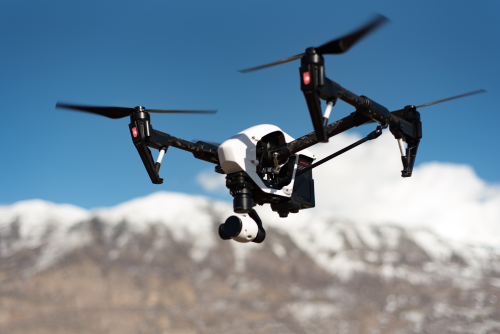
Choosing the best drone for small businesses is rarely about buying the most advanced aircraft. It is about matching the drone to the work, the pilot, the client deliverable, and the operating environment. Most small businesses overspend on premium features they never bill for, while underinvesting in batteries, training, software, and compliance that actually make the drone useful.
Quick take
If you want to choose the best drone for small businesses without overspending or buying the wrong features, use this rule: buy for the job you do now, not the job you might do someday.
Key points:
- Most small businesses do not need an enterprise drone as their first purchase.
- The best first business drone is often a reliable folding camera drone with strong image quality, safe flight behavior, and easy-to-manage files.
- A lightweight sub-250g drone can be enough for travel-heavy content, social media, hospitality, and simple marketing work, but it is not automatically exempt from business rules everywhere.
- Features worth paying for early include flight reliability, obstacle sensing, repeatable flight modes, good support, spare batteries, and a workable editing or delivery workflow.
- Features that often cause overspending include thermal cameras, survey-grade positioning, large zoom systems, interchangeable lenses, and specialized payloads before you have paying demand for them.
- The real budget is not the aircraft alone. It includes batteries, charging, storage cards, repair support, insurance, training, software, and downtime risk.
- If a feature will not improve safety, output quality, or billable deliverables within the next 6 to 12 months, delay it.
Start with the business outcome, not the drone
Before looking at brands, specs, or reviews, answer one question:
What exactly will this drone need to deliver for your business?
That answer changes everything.
A restaurant, resort, or real estate agent usually needs short marketing clips, still photos, and occasional site overviews. A roofing contractor may need close exterior documentation and safer visual checks. A construction consultant may need repeatable monthly progress captures. A survey or engineering team may need georeferenced maps and consistent data, not just pretty footage.
Those are completely different buying decisions.
Which small-business use case fits which drone class?
| Business use case | Best starting point | Prioritize | Usually not worth paying for first |
|---|---|---|---|
| Real estate, hospitality, tourism, social content | Lightweight or mid-tier camera drone | Good stills and video, portability, fast setup, stable app workflow | Thermal, RTK, heavy zoom, cinema extras |
| Local marketing agency or in-house brand team | Mid-tier camera drone | Reliable image quality, obstacle sensing, repeatable shots, multiple batteries | Enterprise mapping tools, large payload systems |
| Roofing, exterior checks, solar visuals | Mid-tier camera drone | Safe stand-off viewing, good wind handling, obstacle sensing, zoom if truly useful | Interchangeable lenses, advanced cinema codecs |
| Construction progress updates | Mid-tier camera drone with waypoint support | Repeatable flight paths, image consistency, battery efficiency, organized file management | Thermal unless specifically sold, ultra-premium video features |
| Survey, mapping, engineering | Enterprise mapping drone | Flight automation, mapping software support, higher positional accuracy, service plan | Creator-first camera features |
| Dynamic brand shots, motorsport, chase footage | FPV as a second system | Skilled pilot, safety process, specialized shot planning | Treating FPV as the default all-purpose business drone |
A simple test helps: if the client only sees edited photos, video clips, or basic overviews, you probably do not need a specialized aircraft. If the client needs measurable, repeatable, inspection-grade, or survey-grade data, you may.
The three drone classes that cover most small-business needs
Lightweight content drones
This is the sub-250g or travel-first class: small folding drones designed for convenience, easy packing, and fast deployment.
These are often a smart fit for:
- solo creators
- travel businesses
- tourism brands
- hospitality teams
- real estate agents
- social media managers
- founders who need aerial content occasionally, not all day
Why they make sense:
- easier to carry every day
- less intimidating on smaller shoots
- quicker to launch for simple content
- lower replacement cost if something goes wrong
- often good enough for web, social, and standard marketing use
Where they fall short:
- weaker performance in stronger wind
- less margin for demanding low-light work
- fewer advanced inspection or data features
- less ideal for routine professional use in harder environments
You will regret buying this class first if your work regularly involves windy coastlines, larger sites, detailed inspection tasks, or repeatable data capture where consistency matters more than convenience.
Mid-tier camera drones
For most small businesses, this is the sweet spot.
A mid-tier camera drone gives you a meaningful jump in image quality, safety features, wind handling, endurance, and professional workflow without pushing you straight into enterprise complexity and cost.
This class usually fits:
- real estate teams doing regular listings
- marketing agencies
- construction progress capture
- tourism and destination marketing
- roofing and exterior documentation
- creators who need polished client work, not just social clips
Why this class is often the best value:
- better image quality for client-facing work
- stronger flight stability and wind performance
- more confidence-inspiring obstacle sensing
- better repeatability for recurring jobs
- more room to grow before you outgrow the system
You will regret buying this class if your work is mostly casual travel content and the extra size or cost reduces how often you actually take it with you. You will also regret it if you truly need survey-grade mapping, thermal inspection, or specialized enterprise support from day one.
If you are unsure, this is the safest default category for many small businesses.
Enterprise inspection and mapping drones
These are business tools, not just flying cameras.
They make sense when your revenue depends on things like:
- thermal imaging
- higher positional accuracy
- repeatable mapping missions
- stand-off inspection from a safer distance
- fleet management
- standardized team workflows
- integration with mapping or inspection software
These platforms can be the right answer for survey firms, inspection specialists, utilities contractors, engineering teams, and technical service providers.
But they create new costs fast:
- higher acquisition cost
- more expensive batteries and accessories
- more training requirements
- software subscriptions
- more formal operating procedures
- higher repair stakes if the aircraft goes down
You will almost certainly overspend if you buy an enterprise drone to produce marketing footage, general social content, or occasional basic site overviews.
FPV is a specialty business tool, not a default first buy
FPV means first-person view flying, usually with goggles and a more manual, high-agility flight style. It can create impressive indoor fly-throughs, action sequences, and dynamic chase shots.
For the right project, FPV is powerful. For most small businesses, it should not be the first drone purchase.
Why:
- steeper learning curve
- higher crash risk during training
- more repair and tuning time
- more specialized safety planning
- not the best tool for standard photography, inspections, or routine documentation
If your business mainly needs dependable aerial photos and video, start with a stabilized camera drone. Add FPV later when there is real demand for that specific look.
Features worth paying for, and features that can wait
The fastest way to overspend is to buy based on the longest feature list. The smartest way is to buy based on what improves safety, output quality, or billable work.
Features worth paying for early
Reliable flight behavior
The drone should hold position well, return safely, and inspire confidence. A slightly less exciting drone that behaves predictably is better for business than a flashy one that creates stress.
Strong basic image quality
You do not need to chase every headline spec. You do need footage and stills that look clean, hold up in editing, and satisfy client expectations.
Obstacle sensing
This is not a license to fly carelessly. It is a useful risk-reduction feature, especially for newer pilots and commercial environments with trees, buildings, or tight spaces.
Repeatable flight modes
If you revisit the same site, waypoint or repeatable route support can save time and help create consistent progress documentation.
Good controller experience
A bright screen, stable connection, and usable interface matter more than many buyers realize. If the controller is frustrating, the drone gets used less.
Service and repair support
For a business, downtime matters. Buy from a brand with real repair options, parts availability, and support where you operate.
Features worth paying for only when the work requires them
Zoom or telephoto cameras
Useful for inspections when you need to stay farther away from roofs, facades, or assets. Not essential for general marketing work.
Thermal imaging
Only worth it if you are selling thermal inspection services and understand the limits of thermal interpretation, local operating rules, and client expectations.
RTK
RTK means real-time kinematic positioning, which improves positional accuracy for mapping and surveying workflows. It is valuable when your deliverable depends on spatial precision. It is wasted money for standard photo and video work.
Weather resistance
Worth considering if your business must operate in tougher conditions. Still not a replacement for conservative flight decisions.
Advanced codecs and cinema features
Helpful for high-end production teams with established editing workflows. Overkill for many small businesses delivering web, social, property, or progress content.
Features that often cause buyer regret
- interchangeable lenses before you have production clients who need them
- large payload systems for hypothetical future uses
- speaker or spotlight accessories without a real operational need
- long-range marketing claims that do not matter in normal legal operations
- premium enterprise features on a drone used mostly for social clips
Budget the whole system, not just the aircraft
A lot of bad drone purchases happen because the buyer spends almost everything on the drone body and ignores the rest of the working kit.
Your real business budget should include:
- The drone and controller
- Enough batteries for a real job, not a short test flight
- Charger or charging hub
- Spare propellers
- Reliable storage cards
- Carry case or safe transport solution
- A landing pad if your sites are dusty, wet, or uneven
- Insurance where appropriate or required
- Training and pilot time
- Editing, mapping, or file-delivery software
- Repair plan, replacement plan, or backup rental option
A cheaper drone with four batteries and a proper workflow is often a better business purchase than a premium drone with one battery and no backup plan.
A good rule: if losing the aircraft would stop client work for days or weeks, your buying plan is incomplete.
Safety, legal, and compliance checks before the first paid flight
Because this is a small-business buying guide, this part matters as much as the hardware.
Drone rules vary by country, and business use can trigger different obligations than recreational flying. Before you accept paid work, verify the requirements that apply in your area.
Check these first:
- whether the drone or operator must be registered
- whether the pilot needs training, certification, or authorization for business use
- whether electronic identification or remote identification applies where you fly
- airspace restrictions near airports, cities, critical infrastructure, parks, coastlines, or sensitive sites
- whether local site permission is required in addition to aviation permission
- whether flights near people, roads, traffic, or events are restricted
- whether privacy, consent, or data-handling rules affect your filming
- whether your client contract requires specific insurance coverage
- battery transport rules if you travel for work
Two important realities:
- Property owner permission is not the same as airspace permission.
- A client asking for a shot does not make the shot legal or safe.
Operationally, you should also have:
- a preflight checklist
- weather limits
- an emergency procedure
- a file-naming and backup system
- a clear go/no-go decision process
The drone that looks cheapest can become the most expensive if it pushes you into risky jobs you are not ready to operate.
Common mistakes small businesses make when buying drones
Buying for imaginary future jobs
If you are not already selling mapping, thermal, or technical inspection services, do not buy a drone for those markets just because they sound lucrative.
Underbuying batteries
One battery is not a business plan. Jobs take longer than expected, conditions change, and repeats happen.
Ignoring software and file delivery
The aircraft captures data. Your business still needs to edit it, process it, organize it, and deliver it.
Assuming the most expensive drone is the most professional choice
Clients usually care about results, reliability, safety, and turnaround. Not your spec sheet.
Treating sub-250g as a universal legal shortcut
In some places, lighter drones can reduce certain burdens. In other places, business use still triggers rules. Always verify locally.
Buying FPV when you really need stable client deliverables
FPV can be amazing, but most standard commercial work needs controlled, repeatable, stabilized footage first.
Forgetting repair and downtime risk
If your drone is essential to weekly work, think about turnaround time, replacement availability, and whether you need a second aircraft later.
FAQ
What is the best first drone type for most small businesses?
Usually a reliable mid-tier camera drone. If your work is mostly travel, social media, hospitality, or occasional marketing content, a lightweight travel-first drone may be enough.
Is a sub-250g drone good enough for paid work?
Sometimes, yes. It can be excellent for light marketing and creator work. But it is not ideal for every environment, and business-use rules may still apply depending on where you operate.
Do I need thermal imaging for inspections?
Only if thermal is part of your actual service offering and you understand how to use and interpret it properly. For many small businesses, standard visual documentation is the better first step.
When is RTK worth paying for?
When your clients need accurate maps, models, or measurement-linked outputs. If your deliverables are mainly photos and video, RTK is usually unnecessary.
Should I buy one premium drone or two simpler drones?
If drone operations are central to your business, redundancy matters. One premium aircraft may produce the best images, but a backup option can be more valuable than maximum specs when deadlines are tight.
How many batteries should a small business start with?
Enough to complete a normal job with margin for delays, repeat takes, and conservative reserves. For many small operators, that means several batteries, not one or two.
Is it better to rent first?
Yes, if your use case is specialized, infrequent, or still uncertain. Renting can prevent a costly mistake. Buying makes more sense once the workflow is recurring and revenue-backed.
What should I verify before my first commercial flight?
Your local aviation rules, airspace restrictions, site permissions, privacy obligations, insurance needs, weather, and emergency procedures. Also confirm that your client’s requested shot is actually legal and safe to fly.
The purchase that usually makes the most sense
For most small businesses, the smartest first buy is not the biggest or most expensive drone. It is a reliable camera drone that fits your current deliverables, has solid support, and leaves room in the budget for batteries, training, software, and compliance.
If your work is mostly marketing and content, start small or mid-tier. If your business depends on maps, thermal data, or technical inspection outputs, buy specialized hardware only when the revenue case is already clear. The best drone for small businesses is the one that gets used often, produces client-ready results, and does not force you to pay for features your business will not monetize.