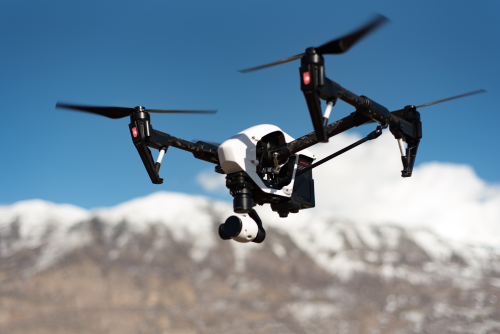
Knowing how to choose the best drone for students without overspending or buying the wrong features comes down to three things: what you actually need it to do, what the full setup will really cost, and what rules apply where you fly. Most student buyers do not need the most advanced drone on the shelf. They need the one that is easiest to learn, affordable to maintain, and suited to the kind of work they will do this semester, not a fantasy setup for some future job.
Quick Take
If you want the short answer, this is it:
- The best drone for students is usually not the most powerful one. It is the one that fits your main use case, budget, and local rules with the least friction.
- For most students, the sweet spot is a lightweight beginner-friendly camera drone or a small indoor trainer, not a large professional model.
- Budget for the full kit, not just the aircraft. Batteries, spare propellers, memory storage, a charger, and possible repairs matter.
- In many countries, lighter drones can be easier to own and operate, but “under 250 g” does not mean rule-free. Always verify local aviation and campus requirements.
- Do not pay extra for enterprise features, long-range marketing claims, or advanced camera tools you will not use.
- If you want FPV, start with a simulator and a tiny indoor-friendly “whoop” before buying a bigger outdoor rig.
- If you only need a drone for one class project, borrowing, renting, or using a school-owned drone can be smarter than buying.
Key Points
- Start with your use case: learning, content creation, coding, mapping, or FPV.
- Set an all-in budget before looking at brands.
- Prioritize reliability, repair support, spare batteries, and ease of flying.
- Be skeptical of spec-sheet traps like extreme range, inflated megapixel marketing, and oversized bundles.
- Check local flight rules, privacy expectations, and school policies before purchase.
Start with the job, not the drone
There is no single best drone for students worldwide. A journalism student filming campus scenery, an engineering student learning coding, and an FPV pilot training for freestyle do not need the same machine.
Before comparing brands or models, answer one question:
What will this drone actually do most of the time?
Use that answer to guide the purchase.
| Student goal | Best drone type | What matters most | Where students overspend |
|---|---|---|---|
| First-time flying, school club, basic learning | Small indoor trainer or beginner drone | Stability, propeller protection, easy controls, low repair cost | Buying a large outdoor drone too early |
| Campus content, travel clips, social media, light photography | Lightweight camera drone | Portability, stabilized camera, easy app workflow, spare battery availability | Paying for pro video features they never edit |
| Film or photo portfolio work | Midrange camera drone | Better camera quality, stronger wind handling, manual camera control, repair ecosystem | Jumping straight to premium pro platforms |
| Robotics, coding, STEM education | Programmable educational drone | Software development support, safe indoor use, classroom workflow | Buying a cinematic camera drone for coding tasks |
| FPV racing or freestyle | Simulator plus micro FPV “whoop” | Repairability, low crash cost, simple parts ecosystem | Buying a fast outdoor FPV setup as a first drone |
That table alone can save a student buyer a lot of money.
Set a real student budget before you shop
The biggest buying mistake is treating the drone price as the full price. It is not. A drone that looks “affordable” can become expensive once you add essentials.
A realistic student drone budget includes:
- The drone and controller
- At least one extra battery, often two
- Spare propellers
- Memory card if required
- Charger or charging hub
- Carry case or pouch
- Replacement costs for the first minor crash
- Any required registration, training, or insurance in your location
- Editing or storage costs if you plan to shoot a lot of video
A smart rule is this:
Try to keep the aircraft itself to about 60 to 75 percent of your total first-month budget.
That forces you to leave room for the things that make a drone usable.
Broad budget bands that usually make sense
These are rough global ranges in USD equivalent, not live pricing promises.
Under $150
Best for:
- Indoor learning
- Very basic flying practice
- Entry-level coding or classroom use
- Toy-grade experimentation
Limits to expect:
- Weak wind performance
- Basic cameras or no usable camera
- Lower durability
- Less reliable positioning outdoors
This can be enough if your goal is simply to learn orientation, controls, and confidence. It is usually not enough for serious aerial photography.
Around $200 to $600
This is often the best value zone for students.
Best for:
- Beginner to intermediate camera drones
- Lightweight travel drones
- Used or refurbished quality drones
- Serious hobby use without pro-level spending
This is where many students should focus.
Around $600 to $1,000
Best for:
- Students building a better photography or video portfolio
- Buyers who already know they will use the drone often
- Students in windy locations who need a stronger airframe
- More demanding creative work
You should only spend here if the drone is going to be used regularly, not just for one assignment.
Above $1,000
Usually only justified when:
- A school, lab, or business is funding the purchase
- You already have flight experience
- You are doing paid work where permitted and properly compliant
- Your workflow truly needs advanced camera or enterprise capabilities
For most student buyers, this is where overspending begins.
The features students should actually pay for
A student buyer can save a lot of money by separating useful features from expensive distractions.
Features worth paying for
1. Stable flight and easy recovery tools
Look for:
- Reliable positioning outdoors
- A dependable return-to-home feature, which automatically brings the drone back if signal is lost or battery gets low
- Predictable takeoff and landing behavior
- Beginner modes or speed limits
These features help new pilots avoid damage and learn faster.
2. A stabilized camera
A gimbal is a stabilized camera mount that smooths movement. For most students shooting real video, a good stabilized camera matters more than headline resolution.
A clean, steady 1080p or 4K result from a stable platform is far more useful than shaky footage from a cheaper drone that claims big numbers.
3. Lightweight, portable design
Students carry laptops, chargers, books, and bags already. A compact drone is more likely to be taken out and used.
A drone that stays in your room because it is bulky was a bad purchase, even if it is technically better.
4. Spare parts and repair support
Check whether you can easily find:
- Propellers
- Batteries
- Chargers
- Arms or shell parts
- Service or repair help in your region
A slightly less exciting drone from a brand with good parts support is often the better long-term choice.
5. Simple software and a good beginner workflow
Some drones are easy to update, connect, fly, and export footage from. Others create avoidable friction.
A student setup should be quick to learn. If every flight becomes an app, firmware, pairing, and file-management battle, you will use it less.
6. Safe indoor or small-space compatibility, if needed
If you plan to fly inside gym halls, classrooms, labs, or sheltered spaces, a small drone with propeller protection may matter more than camera quality.
Features students often overpay for
1. Extreme range claims
Most students should not buy based on the maximum advertised transmission range.
Why not?
- Local laws often require you to keep the drone within visual line of sight
- You are unlikely to use that headline number legally or safely
- Other factors like signal stability and ease of orientation matter more
2. Enterprise features
You probably do not need:
- Thermal cameras
- RTK, or real-time kinematic positioning, for high-accuracy surveying
- Zoom payloads
- Interchangeable lenses
- Specialized mapping systems
Those tools can be excellent, but only when the workflow truly demands them.
3. “Pro” video features you will never grade or edit
If you do not color grade, deliver commercial footage, or need advanced post-production control, you may not need to pay extra for high-end recording formats and professional color profiles.
4. Oversized combo bundles
Some bundles are useful. Many are padded with accessories students barely touch.
Buy the aircraft for your needs, then add only what you learn you actually use.
5. Megapixel marketing
Sensor size, stabilization, dynamic range, and low-light performance often matter more than a flashy megapixel number.
In plain terms: a better camera system beats bigger marketing numbers.
Which kind of student drone fits you best?
1. The first-time flyer
If you are new and mostly want to learn safely, you have two sensible paths:
Option A: Small indoor trainer
Best if you:
- Want to learn controls without high crash costs
- Have limited open outdoor space
- Plan to fly in a club, lab, or classroom setting
- Want something less intimidating
Great for orientation, takeoff, landing, and confidence.
Option B: Lightweight beginner camera drone
Best if you:
- Want usable outdoor photos and video
- Care about travel portability
- Need a drone that can grow with you for a year or more
For many students, this is the best all-round choice.
2. The content creator or travel student
If you want campus videos, trip clips, YouTube shorts, reels, or lightweight aerial photos, a compact camera drone is usually the smartest buy.
Priorities:
- Fast setup
- Good stabilization
- Low bag weight
- Quiet operation
- Easy charging and battery swaps
- Beginner-friendly safety features
What to skip:
- High-end cinema features
- Large heavy airframes
- Complex controllers if you already carry a phone and laptop everywhere
For this buyer, convenience often beats raw power.
3. The film or photography student
If your portfolio matters more than just casual sharing, your priorities change.
You may benefit from:
- Better image quality in varied light
- Stronger wind handling
- More manual camera control
- Better repair support
- More consistent footage for editing
But be careful. Many students in creative programs jump too quickly to premium drones they barely fly because the cost of crashing them feels too painful.
A better path is often:
- Learn on a beginner-friendly camera drone.
- Build flight discipline and shot planning.
- Upgrade only when your current drone is clearly limiting your work.
4. The engineering, robotics, or STEM student
This is where buyers often choose the wrong category.
If your real goal is:
- Coding
- Autonomous flight experiments
- Classroom demos
- Robotics club work
- Introductory STEM learning
Then an educational drone or programmable platform can be far more useful than a photography drone.
Examples in this space include classroom-friendly models such as the Ryze Tello and education-focused variants, depending on availability in your market.
If your goal is mapping or research, be more cautious. A consumer camera drone may capture useful visuals, but that does not automatically make it a proper surveying tool. Mapping accuracy depends on the aircraft, the camera, the flight plan, the software, the ground control method, and the output requirements.
Before buying for technical fieldwork, verify:
- What level of accuracy the project actually needs
- Which software your school or lab uses
- Whether your intended drone is supported
- Whether local rules allow the operations you plan to perform
5. The FPV student
FPV means first-person view flying, where the pilot flies through goggles or a live video feed. It is exciting, creative, and skill-heavy, but it is a separate category from a beginner camera drone.
The lowest-regret path is:
- Start with an FPV simulator on a computer.
- Learn with a radio controller and virtual practice.
- Move to a small micro FPV drone, often a “tiny whoop,” for low-risk real flights.
- Only then consider larger freestyle or cinematic FPV setups.
Many FPV beginners waste money by buying a powerful outdoor rig before they can manage throttle control or crash repair.
New, used, or refurbished?
Students should absolutely consider used or refurbished drones. This is often the best way to avoid overspending.
New
Best if you want:
- Warranty support
- Predictable battery condition
- The least setup uncertainty
- Fewer hidden problems
Best for first-time buyers who do not have experienced friends to help inspect used gear.
Manufacturer-refurbished
Often the sweet spot.
You may get:
- Better pricing than new
- Some inspection or service standard
- Lower risk than random secondhand sellers
For many student buyers, refurbished is the smartest value play if available.
Used from a private seller
This can save money, but inspect carefully.
Used drone checklist
Before buying secondhand, check:
- Is the drone still linked to the previous owner’s account or activation system?
- Are the batteries swollen, damaged, or unusually weak?
- Do the arms, shell, motors, and camera show crash damage?
- Does the gimbal move smoothly and hold level?
- Has the drone been flown into water or heavy rain?
- Are the controller, charger, propellers, and cables included?
- Is the model still supported with current app and firmware access in your region?
- Can the seller show a short recent test flight or hover video?
A cheap used drone becomes expensive quickly if the battery is worn out or the account lock prevents normal activation.
Safety, legal, and campus rules you must check
A drone is not just a gadget. It is an aircraft in the eyes of many regulators. That matters, especially for students flying near campuses, parks, roads, public events, or travel destinations.
What to verify before buying or flying
1. National or local aviation rules
Check with your country’s civil aviation authority or equivalent regulator for:
- Registration requirements
- Pilot competency or theory test requirements
- Weight-based rules
- Remote identification rules where applicable
- Limits on altitude, distance, or airspace access
A lightweight drone may reduce your regulatory burden in some countries, but not all.
2. Campus and school policies
Even if the surrounding airspace allows drone operations, your school may still restrict:
- Takeoff and landing on school property
- Flying over athletic fields, dorms, courtyards, or event spaces
- Student filming for privacy reasons
- Research flights without faculty approval
- Club or classroom use without risk assessment
Do not assume the airspace map is the only thing that matters.
3. Privacy and people
Students often fly around friends, campuses, and travel locations. Be careful.
Do not:
- Fly over crowds
- Film people in ways that invade privacy
- Fly near protests, emergency scenes, or busy roads
- Assume social acceptance just because flying is technically allowed
4. Insurance and institutional responsibility
If a drone is used for a university project, fieldwork, or club activity, confirm:
- Who is responsible if something goes wrong
- Whether personal or institutional insurance applies
- Whether a faculty sign-off is required
These details vary widely by country and institution. Verify them before flight, not after an incident.
Common mistakes students make
Buying for the dream use case instead of the real one
If you mostly want simple outdoor clips and occasional photos, buying a heavy advanced platform “just in case” is usually money wasted.
Spending everything on the airframe
A drone without spare batteries, storage, and basic replacement parts is not a complete setup.
Assuming one drone can do everything well
Indoor training, cinematic travel footage, engineering research, and FPV freestyle are different jobs. One drone rarely excels at all of them.
Choosing too much drone for your confidence level
If you are scared to fly it, you will not learn on it.
Falling for range and resolution marketing
Smooth footage, reliable control, and a simple workflow matter more than spec-sheet bragging rights.
Ignoring the editing and storage side
Higher-quality footage can demand more from your laptop, phone, storage space, and editing software. A student with an older computer should factor that in.
Not checking replacement batteries before buying
A drone may look cheap until you discover batteries are hard to find or unusually expensive in your region.
A simple 5-step framework for choosing the right student drone
If you are still undecided, use this sequence.
1. Write down your primary use case
Pick one:
- Learn to fly
- Make content
- Build a portfolio
- Learn coding or robotics
- Start FPV
If you have two goals, choose the one you will do most often.
2. Set your all-in budget
Include the drone, batteries, storage, props, case, and repair margin.
3. Decide whether a lightweight class makes more sense
In many places, smaller and lighter drones are easier for beginners from both a travel and compliance standpoint. But verify your local rules first.
4. Choose a category, not a hype model
Your category is usually one of these:
- Indoor trainer
- Lightweight camera drone
- Midrange creative camera drone
- Programmable education drone
- FPV simulator plus micro drone
5. Buy the minimum complete kit
For most students, that means:
- Drone
- Controller
- At least one extra battery
- Spare propellers
- Storage card if needed
- Safe carrying solution
Add advanced accessories only after real use shows you need them.
If you want the lowest-regret answer
If you want the safest buying advice without chasing the wrong features, here is the practical version:
- Most students should start with a lightweight beginner-friendly camera drone from a major brand with good parts support.
- Students focused on coding or classroom STEM should look at education-oriented drones instead of camera-first drones.
- FPV students should start with a simulator and tiny whoop, not a powerful outdoor rig.
- If you only need the drone for one short project, borrowing or renting may beat buying.
FAQ
Is an under-250 g drone always the best choice for students?
Not always, but it is often a smart starting point. Lighter drones are easier to carry, usually less intimidating, and in some countries may involve fewer regulatory hurdles. Still, you must verify the rules where you live and fly.
Should students buy a cheap toy drone first?
Sometimes, yes. A cheap indoor trainer can help you learn orientation and control without high crash anxiety. But if your real goal is quality photo or video work, a toy drone may become a dead-end purchase very quickly.
Is a used drone a good idea for a student budget?
Yes, if you inspect it carefully. Refurbished units are often the best middle ground. With private used sales, watch for battery wear, crash history, water damage, missing parts, and account-lock issues.
What is the best type of drone for a photography or media student?
Usually a lightweight or midrange camera drone with a stabilized camera, easy manual control, and good repair support. You do not necessarily need a premium pro drone to build a strong student portfolio.
Can I fly a drone on my university campus?
Maybe, but do not assume so. You need to check both local aviation rules and your school’s property or safety policies. A campus can restrict takeoff, landing, or filming even if surrounding airspace is not otherwise restricted.
Do students need registration, training, or insurance?
Possibly. It depends on your country, drone weight, use case, and where you plan to fly. If the drone is being used for coursework, fieldwork, or club activity, also check what your institution requires.
Should I choose FPV or a camera drone as my first drone?
Choose based on your actual goal. If you want stable aerial photos and video, get a camera drone. If you want immersive flying, racing, or freestyle, start with FPV training in a simulator and then move to a micro FPV drone.
How many batteries does a student really need?
One battery is rarely enough for meaningful practice or filming. For most students, one extra battery is the minimum sensible add-on, and two extras can make the drone much more useful.
Final decision
Choose the drone for the work you will actually do this term, not the version of yourself you imagine a few years from now. If you keep your budget realistic, prioritize ease of use and repair support, and verify the rules before flying, you will avoid the two most common student regrets: overspending and buying features that never leave the box.