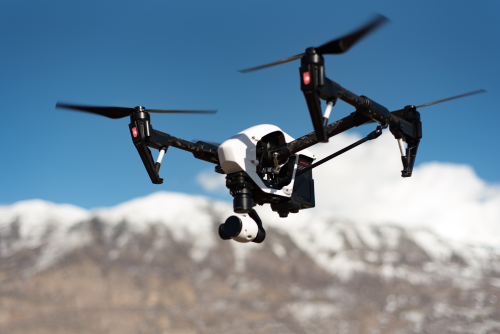
Pricing drone work is where many pilots stop thinking like operators and start guessing. If you are trying to figure out how to price drone services, the goal is not to find one magic hourly number. The goal is to build a pricing system that covers your costs, protects your time, and leaves room for real profit instead of busy work.
Quick Take
- Price the full job, not just the minutes the drone is in the air.
- Build a minimum sustainable rate from your costs, desired pay, replacement reserve, and realistic billable time.
- Use a minimum booking fee for short jobs, because even simple shoots consume prep, travel, battery cycles, backups, and admin.
- Choose a pricing model that fits the work: package, day rate, retainer, per deliverable, or custom technical quote.
- Separate scope clearly: flight time, editing, travel, revisions, rush delivery, licensing or usage, and data processing.
- Add more for complexity, not just duration. Tight locations, extra approvals, industrial sites, special crews, and urgent turnaround should not be priced like easy open-field shoots.
- Never underquote by assuming you can skip legal, safety, insurance, or site-access requirements. Verify those first.
- Review your quotes against actual profit, not just whether the client accepted them.
What clients are really paying for
Most clients are not buying “20 minutes of flying.” They are buying a business outcome.
That outcome might be:
- marketing photos for a property listing
- a brand video asset for paid campaigns
- construction progress documentation
- inspection imagery for maintenance decisions
- mapped data for planning or measurement
- social content delivered in multiple formats
That matters because pricing based only on airtime pushes you into commodity work. A good operator is not just a person with a drone. You are combining planning, safe execution, image capture, post-production, data handling, communication, and liability.
The faster and better you get, the more valuable your service becomes. If you charge only by the hour, your efficiency can actually reduce your revenue.
Step 1: Calculate your pricing floor
Before you think about market demand, competitors, or packaging, you need a floor rate. This is the minimum amount your business must earn to stay healthy.
A simple version looks like this:
Minimum annual revenue target = owner pay + business overhead + equipment reserve + compliance/insurance/admin costs + profit target
Then:
Minimum sustainable day rate = minimum annual revenue target / realistic billable days
The keyword is realistic. A solo drone operator rarely invoices every workday. Weather, travel, editing, sales, maintenance, client calls, and empty calendar days all reduce billable time.
What to include in your cost base
| Cost bucket | What to include |
|---|---|
| Owner pay | The salary or income you need to take home from the business |
| Overhead | Software, storage, internet, marketing, website, accounting, office costs, subscriptions |
| Equipment reserve | Drone replacement, batteries, props, cases, chargers, repairs, sensor cleaning, backup gear |
| Operational costs | Insurance, permits or authorizations where required, crew costs, vehicle use, travel admin |
| Profit target | Money left in the business after paying yourself and covering costs |
A common mistake is treating owner pay as profit. It is not. If the business pays you but never keeps a margin, you have no cushion for downtime, growth, unexpected repair, or slow-paying clients.
A simple example
Use your own currency and local costs, but here is the math:
- Owner pay needed: 50,000
- Business overhead: 12,000
- Equipment reserve: 6,000
- Insurance/compliance/admin cushion: 7,000
- Profit target: 10,000
That gives you a minimum annual revenue target of 85,000.
If you believe you can realistically bill 110 days per year, your floor day rate is:
85,000 / 110 = 773
So your minimum sustainable day rate is about 773 in your currency.
That does not mean every job should be sold as a day rate. It means any pricing model you use should, on average, recover that level of revenue.
Convert your floor into useful quote anchors
From that day rate, you can create internal benchmarks:
- minimum call-out fee
- half-day rate
- full-day rate
- editing hour rate
- travel surcharge
- rush turnaround fee
One important note: a half-day should not automatically be 50 percent of a day rate. A short booking can still block a prime part of your schedule and include most of the same prep and travel. Many operators keep half-days much closer to a full day than new pilots expect.
Why a minimum booking fee matters
Even a “quick” job often includes:
- charging and checking batteries
- preflight planning
- travel
- on-site coordination
- setup and teardown
- backups and file organization
- invoicing and follow-up
If you do not set a minimum booking fee, you will fill your week with low-value jobs that feel busy but leave no real revenue.
Step 2: Choose the right pricing model
There is no single best way to price drone work. The right model depends on how predictable the scope is and what the client actually values.
| Pricing model | Best for | Strengths | Watchouts |
|---|---|---|---|
| Fixed package | Real estate, hospitality, simple creator shoots | Easy for clients to buy, easy to compare internally | Scope creep if deliverables are vague |
| Half-day or day rate | Events, productions, tourism content, agency support | Simple scheduling, useful when shot list may evolve | Clients may expect unlimited output unless scope is defined |
| Hourly | Consulting, standby, small add-on tasks | Useful for uncertain support work | Encourages price-shopping and punishes efficiency |
| Per deliverable | Photo sets, social edits, reports, stitched outputs | Aligns price with output volume | Can get messy if quality tiers are unclear |
| Retainer | Construction progress, property groups, recurring brand content | Predictable revenue, better planning | Must define visit limits, turnaround, and overages |
| Custom technical quote | Inspection, mapping, industrial capture | Reflects risk, site complexity, and reporting needs | Requires strong scoping and client education |
A simple rule
- If scope is stable, package it.
- If the client needs your time and flexibility, use a half-day or day rate.
- If the work is recurring, propose a retainer.
- If the work is technical or operationally complex, custom-quote it.
For many operators, the best mix is not one model but three: packaged work for simple shoots, day rates for production support, and custom quoting for technical jobs.
Step 3: Build the quote around deliverables, not flight time
A strong drone quote usually has more than one line item, even if the client only sees a single final number.
Your internal pricing should account for these parts:
-
Pre-production – brief review – site research – scheduling – shot list or mission planning – risk assessment
-
Flight operation – pilot time – aircraft use – standard on-site time – battery cycles – capture execution
-
Crew or specialty add-ons – visual observer, meaning an extra crew member helping monitor surroundings – second operator – FPV setup – special camera payload – talent or presenter coordination
-
Post-production or processing – photo editing – video edit – color grading – format exports – data processing – report assembly
-
Travel and logistics – distance – parking or tolls – accommodation if needed – extra transit time
-
Usage, storage, and delivery – client handoff – archive period – raw footage if included – licensing terms where relevant
-
Rush or premium timing – urgent turnaround – weekend or night work – short-notice bookings
A helpful internal formula is:
Quote = base production fee + deliverables fee + travel/logistics + complexity adjustment + turnaround premium + usage or data-handling additions
You do not need to present the formula to the client exactly like that. But you should know how the number was built.
Step 4: Adjust for complexity, risk, and urgency
Many pilots undercharge because they price based on duration but ignore difficulty.
A one-hour job can be simple and profitable, or stressful and expensive.
Build internal complexity tiers
Standard job
- open, straightforward location
- daylight
- easy access
- normal turnaround
- no unusual coordination
Complex job
- multiple takeoff points
- moving vehicles or active public areas
- tight schedule windows
- detailed client shot lists
- difficult parking or access
- extended travel
- more post-production
Advanced or custom job
- industrial sites
- sensitive or controlled areas requiring extra coordination
- night or low-light planning where permitted
- additional crew
- heavy data processing
- strict reporting standards
- multi-day scheduling dependency
The exact premium is your decision, but the principle is simple: when planning burden, operational risk, or client dependency rises, price should rise too.
Do not absorb complexity for free just because the drone is only airborne briefly.
Step 5: Package your services by use case
Good pricing becomes easier when you stop treating every inquiry as a blank page.
Real estate and hospitality
These buyers usually respond well to fixed packages.
A package might be built around:
- number of edited photos
- one short video edit
- one vertical social cut
- property size bracket
- basic travel zone
- standard turnaround
Useful add-ons:
- twilight shoot
- extra vertical edits
- agent walk-through segments
- longer edited video
- faster delivery
What matters here is convenience. The client wants to know what they get, how fast they get it, and what changes the price.
Brand, tourism, and creator work
This work often needs more flexibility, so a project fee or half-day/day rate usually works better than a tiny package.
Price should reflect:
- concept development
- shot planning
- multiple locations
- client stakeholders on set
- alternate formats for different platforms
- edit complexity
- revision rounds
If the footage will be used in paid advertising, long-term campaigns, or broadcast-style distribution, many markets treat usage rights differently from simple delivery. If that is standard in your region or niche, spell it out clearly instead of leaving it vague.
Events and live experiences
For events, the client often buys coverage capacity rather than a perfectly fixed output. Day rates are often easier.
Make sure you define:
- coverage window
- expected highlight deliverables
- turnaround time
- whether social cutdowns are included
- whether raw footage is included
- whether you are on standby between key moments
This prevents the classic problem where a client books “a few aerial clips” and later expects a full edit suite.
Inspection, mapping, and construction progress
Technical jobs should almost never be priced like creative shoots.
Price should account for:
- site size or number of assets
- access and safety briefing time
- repeatability requirements
- processing time
- reporting format
- data retention
- decision impact of the deliverable
Recurring construction or property documentation is often a strong fit for retainers because it smooths scheduling and gives the client consistent outputs.
One important caution: if your jurisdiction restricts survey-grade outputs, formal measurements, or engineering-signoff work, verify what you are legally allowed to offer before marketing those services.
Step 6: Protect your profit with clear scope and terms
A profitable price can still turn into a bad job if your scope is sloppy.
Every quote should clearly state:
- what is being delivered
- how many final files are included
- turnaround time
- how many revisions are included
- whether raw files are included or extra
- whether travel is included and within what area
- whether local taxes, VAT, or similar charges are included or excluded
- payment timing
- cancellation or rescheduling terms
- weather policy
- how long files will be stored
- what happens if site access is delayed by the client
This is where many operators quietly lose margin. They price the shoot correctly, then give away extra editing, extra exports, extra travel, or repeated reschedules.
A good quote reduces negotiation because it makes the boundaries obvious.
Safety, legal, and compliance realities that should affect price
Commercial drone work is not just a creative service. It is an aviation activity wrapped inside a client deliverable.
Before you confirm a job, verify what applies in the country, region, city, site, or venue involved. That may include:
- commercial operating rules
- airspace restrictions
- site or property permissions
- event organizer approval
- privacy or data-handling obligations
- protected area restrictions
- insurance requirements
- special conditions for night operations or populated locations
- cross-border equipment or battery transport if traveling
If a job requires extra coordination, paperwork, crew, or insurance certificates, that effort belongs in the price.
Just as important, do not quote a job assuming shortcuts. If the client expects you to fly where you should not, skip permissions, ignore privacy concerns, or operate unsafely, the answer is not “discounted rate.” The answer is “no.”
Your pricing should reflect compliant work. If compliant work makes the job unprofitable, the job was never priced correctly to begin with.
Common pricing mistakes pilots make
Charging only for flight time
The flight may be the shortest part of the job. Planning, travel, editing, communication, and backups count too.
Copying competitors without knowing their economics
You do not know their costs, their debt, their market, their quality, or whether they are underpricing and struggling.
No minimum booking fee
Short jobs can destroy your day if they are priced like a quick favor.
Treating revisions as unlimited
One included revision round is a business decision. Unlimited revisions are a margin leak.
Giving away raw footage by default
Raw files create extra transfer time, storage burden, and sometimes unrealistic client expectations.
Forgetting equipment wear and replacement
Batteries age. Props get replaced. Aircraft need servicing. Revenue must cover future gear, not just today’s job.
Mixing creative work and technical work on one cheap rate card
A property promo shoot and an industrial inspection are not interchangeable services.
Discounting too early
If a client says you are expensive, the answer is not always a lower price. It may be a narrower scope, smaller package, or fewer deliverables.
Never reviewing profitability
A job that “felt worth it” may still have paid poorly after travel, delays, and edits. Track actual time and adjust.
FAQ
Should I charge hourly or per project?
Use hourly pricing sparingly. Per-project or package pricing is usually better when the scope is clear, because clients buy outcomes, not your stopwatch. Hourly can work for standby support, consulting, or uncertain add-on work.
How do I price my first paid drone job?
Start with your pricing floor, then create a tightly scoped beginner-friendly package. Do not guess a number just to get the work. A small, clearly defined job at a sustainable rate is better than a cheap job that teaches the client your time is disposable.
Do I need a minimum booking fee?
Yes, in most cases. Even simple jobs consume setup, travel, admin, and equipment life. A minimum booking fee protects you from filling your calendar with low-margin work.
Should editing be included in the quote or charged separately?
Either can work, but it must be visible in your pricing logic. For packaged content work, including standard editing often makes buying easier. For larger or variable projects, separating editing and revisions gives you more control.
Should I charge extra for raw footage?
Usually, yes, if you provide it at all. Raw delivery adds transfer time, storage load, and sometimes removes part of the value you normally create in post-production. If raw files are included, define exactly what format, how they are delivered, and whether edited outputs are still part of the package.
What if a client says another pilot is cheaper?
Do not race to the bottom. Ask what is included in the other quote and compare scope. Often the difference is editing, travel, insurance, experience, usage, compliance, or turnaround. If needed, reduce scope rather than simply cutting price.
How should I handle weather delays?
Set the policy before the shoot. Clarify what happens if conditions are unsafe, unsuitable, or legally non-compliant for flight. Some jobs can roll to the next available date; others need a rescheduling fee if significant time was already committed. The key is to define it in advance.
When should I raise my rates?
Raise them when your calendar fills consistently, your quality and reliability improve, your costs rise, or your clients are buying more complex outcomes than they were before. Many operators start by increasing rates for new clients first, then updating existing clients with notice and clearer packages.
The practical next step
Do not wait for a perfect market rate card. Build your own.
This week, calculate your pricing floor, create a minimum booking fee, and define three offer types: a simple package, a day-rate option, and a custom quote workflow for complex jobs. If your pricing covers your costs, reflects your risk, and matches the outcome the client actually wants, you stop selling drone time and start building real revenue.