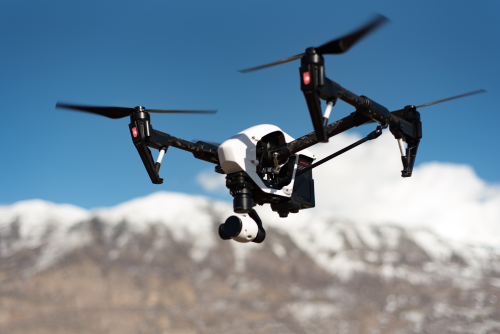
Quoting repeat drone missions is where many pilots either build a real business or end up stuck with a full calendar and thin margins. If you want real revenue, the goal is not to shave a random percentage off your one-off rate. It is to turn recurring flights into a clearly scoped service with predictable costs, reliable deliverables, and terms that protect your time when weather, site access, or client requests change.
Quick Take
If you only remember five things about how to quote repeat missions, make them these:
- Start with your full cost to deliver each mission, not just flight time.
- Only discount recurring work where the work truly gets easier or faster.
- Pick a pricing model that matches the workflow: per visit, retainer, per site, per asset, or hybrid.
- Define deliverables, turnaround, reschedules, storage, and revision limits in writing.
- Never lock in a fixed repeat rate before checking legal, safety, insurance, and site-access realities.
The best repeat-mission quotes do two jobs at once: they look simple to the client, and they protect margin behind the scenes.
What “repeat missions” actually means
A repeat mission is any drone job you perform on a recurring basis for the same client, site, route, or output type.
Common examples include:
- Weekly construction progress flights
- Monthly roof or facade inspections
- Quarterly solar or infrastructure checks
- Seasonal agricultural scouting and mapping
- Ongoing resort, hotel, or tourism content creation
- Multi-site property portfolio documentation
- Regular environmental monitoring
These jobs are attractive because they can create predictable revenue. But they are also where pilots often underquote.
Why? Because recurring work feels easier than winning a new client. So the pilot assumes they should offer a big discount. In reality, some parts get easier, and some do not.
A repeat mission is not just “the same flight again.” It is a service cycle that usually includes:
- Scheduling
- Preflight checks and planning
- Travel and mobilization
- On-site coordination
- Flight operations
- Data handling
- Editing, stitching, or reporting
- Delivery and client follow-up
- Storage and possible re-delivery later
If you quote only the flying, you are underpricing the business.
Start with unit economics, not optimism
The cleanest way to price repeat work is to understand your cost per mission first. That becomes your floor. Then you can decide how much margin, risk protection, and convenience premium the quote needs.
What should be inside your true mission cost
| Cost area | What it includes | What pilots often miss |
|---|---|---|
| Flight operations | Pilot time, observer time if needed, batteries, setup, preflight, pack-down | Charging only for time in the air |
| Travel and mobilization | Drive time, fuel, tolls, parking, ferries, remote access, security check-in | Treating travel as “free” because it feels normal |
| Processing and reporting | Editing, stitching, image sorting, quality checks, file export, report prep | Assuming office time does not count |
| Equipment reserve | Wear and tear, repairs, spare props, battery aging, sensor upkeep, replacements | Thinking gear is “already paid for” |
| Compliance and admin | Risk assessment, site induction, insurance allocation, client paperwork, invoicing | Forgetting commercial admin work scales with volume |
| Data management | Cloud storage, archive time, transfer, backup, re-sending files later | Giving unlimited storage without charging for it |
A repeat mission quote should cover all of that, not just your takeoff-to-landing window.
A simple pricing formula that keeps you honest
You do not need fancy accounting software to build a reliable quote. A basic formula is enough:
True cost per mission = direct labor + travel + processing + equipment reserve + admin/compliance + data management + contingency
Then decide your target profit level and turn that cost into a price.
A useful reminder: markup and margin are not the same thing.
If a mission costs you 600 in your local currency and you want a 40% gross margin, your quote is not 840. It is 1,000.
Why? Because 400 profit on 1,000 revenue is 40% margin. If you quote 840, your margin is much lower than you think.
You do not need to use that exact target. The point is simpler: decide your margin before the client starts negotiating.
Where recurring work really gets cheaper
A repeat client can absolutely justify a better rate than a one-off client. But that lower rate should come from real efficiency, not wishful thinking.
Legitimate efficiency savings
Recurring missions usually get easier in these areas:
- Less site discovery after the first visit
- Reusable flight paths and shot lists
- Faster client communication because expectations are set
- Standardized reporting templates
- Lower sales effort because you are not constantly re-selling the job
- More predictable scheduling and route planning
- Batch processing when several visits or sites are handled together
These are real savings. They can support a recurring rate, a volume tier, or a retainer.
Costs that often do not fall much
Some costs stay the same, or only drop a little:
- Travel to the site
- Weather delays
- Compliance checks
- Insurance exposure
- Equipment wear
- On-site waiting time
- Data transfer and archiving
- Revision requests from changing stakeholders
This is why “same site every week” does not automatically mean “cheap.”
A good rule is this:
Discount the repeatable efficiency, not the mission risk.
Choose the right pricing model for the job
There is no single best way to quote repeat missions. The best model depends on how predictable the work is, how similar the sites are, and how much admin sits around each flight.
Common quoting models compared
| Pricing model | Best for | Strength | Watch-out |
|---|---|---|---|
| Fixed fee per visit | One site, consistent deliverables, known schedule | Easy for the client to understand | Weak if travel, access, or scope changes often |
| Monthly retainer | Weekly or monthly recurring work | Predictable revenue and easier forecasting | Needs clear limits on included visits and deliverables |
| Per site / per asset / per area | Property portfolios, inspections, mapping, agriculture | Scales neatly across many units | Can fail if site complexity varies too much |
| Hybrid model | Complex or enterprise clients | Lets you charge setup, recurring work, and extras separately | Slightly more complex to present |
| Regional day block | Many nearby sites in one trip | Rewards route efficiency and full-day planning | Poor fit for one remote location |
Which model fits which client
Use a fixed fee per visit when the mission is highly repeatable and the client just wants the same result each time.
Use a monthly retainer when the client cares about availability and continuity as much as the individual flight. Construction, tourism content, and recurring inspections often fit here.
Use per site, per asset, or per area pricing when the client manages many similar units and wants scale. For example, a property manager with 20 roofs or a land manager with repeat surveys across defined blocks.
Use a hybrid when the first job requires onboarding, route design, site documentation, or report setup, and later visits are more efficient. This is often the cleanest model for serious commercial work.
How to build a repeat-mission quote that makes money
Here is a practical quoting sequence you can reuse.
1. Quote the outcome, not just the flight
Clients rarely care about your airtime. They care about what they receive.
That could be:
- A weekly progress photo set from fixed angles
- A monthly orthomosaic map
- Thermal inspection outputs
- Edited social clips
- A condition report
- Tagged images by asset or area
- Side-by-side time-series comparison
If your quote only says “drone flight,” the client will compare you to every low-price operator who owns a drone. If your quote says “four recurring progress visits with matched viewpoints, delivery within 48 hours, and monthly summary report,” you are selling a service.
2. Lock down the variables that change cost
Before you price anything as recurring, define the variables that drive cost:
- Number of sites
- Distance and travel time
- Site size and complexity
- Access windows
- Indoor or outdoor operation
- Need for a second crew member
- Night or early-morning work
- Deliverable type
- Turnaround time
- Data volume
- Safety requirements on site
If you skip this step, the client can quietly change the job while expecting the same rate.
3. Separate onboarding from recurring delivery
Many repeat missions are not truly “repeatable” until after the first one.
The first visit may require:
- Site familiarization
- Test shots or route design
- Safety onboarding or induction
- Deliverable template setup
- Stakeholder alignment
- Sample reporting format
- Data folder structure
That work has value. Charge for it.
A simple way to do this is to split the quote into:
- Setup or onboarding fee
- Recurring mission fee
- Optional extras
This protects you from spending unpaid time getting the account ready.
4. Decide where the discount comes from
Once your cost base is clear, decide whether recurring work deserves a better rate.
Good reasons to offer a recurring rate:
- The client commits to a minimum number of visits
- Scheduling becomes more efficient
- Travel can be grouped with other work
- Reporting is templated
- Communication overhead drops
- Payment terms are faster and more reliable
Bad reasons:
- The client said there will be “lots more work later”
- They want your lowest number before giving details
- They are comparing you only on flight time
- They want unlimited flexibility at a fixed low rate
A recurring rate should be tied to commitment. If the client wants the benefit of volume pricing, ask for a minimum term, minimum number of visits, or minimum monthly spend.
5. Put weather and rescheduling rules in writing
Weather is one of the fastest ways for a repeat mission to become unprofitable.
Your quote should spell out:
- What counts as unsuitable weather
- Whether a weathered-out visit rolls to the next available slot
- How many reschedules are included
- Whether a same-day site abort triggers a call-out fee
- What happens if the client cancels after you have already traveled
- Whether missed visits expire or carry forward
You do not need harsh terms. You need clear terms.
Otherwise, the client assumes they bought unlimited flexibility, and you end up holding time without getting paid.
6. Define deliverables, revisions, and storage
This is where many pilots quietly lose margin.
Your quote should answer:
- How many edited photos, maps, clips, or report pages are included
- What file format will be delivered
- What turnaround is included
- How many revision rounds are included
- Whether raw files are included or billed separately
- How long files will be stored
- What re-delivery or archive retrieval costs later
Data work can become the hidden second half of the mission. Price it like it matters, because it does.
7. Offer tiered options instead of one number
When appropriate, present two or three service levels.
For example:
Option 1: Essential monitoring
- Scheduled flights
- Standard image delivery
- Basic turnaround
- Minimal reporting
Option 2: Managed reporting
- Scheduled flights
- Standardized viewpoints or route
- Organized reporting package
- Faster turnaround
- Limited revisions included
Option 3: Priority program
- Scheduled flights
- Priority booking window
- Fast delivery
- Monthly summary or analytics
- Extended archive or stakeholder-ready reporting
This lets you capture more value from clients who need more than “a pilot with a drone” without forcing every client into the same structure.
What your quote should actually include
A strong repeat-mission proposal should be easy to scan. The client should understand both the service and the boundaries.
Include these sections:
- Scope of work
- Mission frequency and schedule
- Sites or assets covered
- Deliverables
- Turnaround time
- Pricing model
- What is included
- What triggers extra charges
- Weather and cancellation terms
- Client responsibilities, such as site access and approvals
- Payment terms
- Contract duration or minimum commitment
- Assumptions and exclusions
The cleaner this document is, the less likely the client is to treat your service like an open-ended favor.
Three repeat-mission scenarios and the pricing logic behind them
Construction progress flights
This is one of the clearest repeat-mission use cases. The site stays mostly the same, the viewpoints are repeatable, and the reporting can become standardized.
Best fit: – Monthly retainer or fixed fee per visit – Minimum commitment – Clear weather carry-forward policy – Optional premium for faster reporting
Main pricing trap: – Underestimating site delays, safety check-ins, and stakeholder requests for “just one extra shot”
Multi-site property or roof inspections
A property manager may want 10, 20, or 100 similar locations checked over time. This looks efficient, but travel and site variation can destroy margin if you quote one blended low rate.
Best fit: – Per site pricing with travel bands – Regional day block for clustered assets – Separate pricing for complex or restricted sites
Main pricing trap: – Treating every site as equally easy when parking, access, and risk differ a lot
Recurring tourism or hospitality content
Hotels, resorts, venues, and destination brands may want regular aerial content across seasons, events, or campaigns.
Best fit: – Monthly retainer – Defined shot list and deliverable count – Included edit rounds cap – Usage and archive terms clarified
Main pricing trap: – Letting “content support” become unlimited creative work, social edits, re-cuts, and last-minute reshoots
Safety, legal, compliance, and operational checks before you promise a fixed repeat rate
Repeat work can make pilots complacent. That is risky.
Before finalizing a quote, verify what applies in the location where you will fly and what the client expects from you operationally.
Check at least these points:
- Whether the mission can be conducted legally under local aviation rules
- Whether the client controls the site or has the necessary landowner or venue permission
- Whether additional approvals may be needed for sensitive areas, controlled airspace, night work, dense urban environments, or higher-risk operations
- Whether your insurance covers the operation type, equipment, and jurisdiction
- Whether local privacy, data protection, and image-use rules affect what you capture or store
- Whether the site requires inductions, safety briefings, personal protective equipment, or a second crew member
- Whether the mission depends on travel to another country, which may affect licensing recognition, battery transport, equipment entry, and insurance acceptance
A smart quote often includes language that pricing is based on safe operating conditions and any required approvals being available. That protects both you and the client from pretending the schedule is guaranteed when it may not be.
Common mistakes pilots make when quoting repeat missions
Discounting before calculating costs
This is the classic error. A client promises repeat work, the pilot gets excited, and the rate drops before the math is done.
Charging by flight minutes only
Commercial drone work is not a taxi meter in the sky. The value is in planning, execution, and usable outputs.
Treating the first visit like every later visit
Setup work is real work. If you ignore it, your first month becomes unpaid consulting.
Ignoring weather friction
Recurring work needs clear reschedule rules. Without them, your calendar gets blocked by “maybe” flying days.
Bundling unlimited revisions
A client may approve the flight, then add internal reviewers later. If revisions are not limited, the reporting phase expands without pay.
Forgetting storage and re-delivery
Many clients come back months later asking for old files again. If archive expectations are not defined, you become a free file librarian.
Giving volume pricing without volume commitment
A discounted repeat rate should be earned by real commitment, not vague future intent.
Using one pricing model for every industry
A weekly construction mission is not the same as a tourism content retainer or a portfolio inspection program. Match the pricing model to the workflow.
FAQ
Should repeat missions always be cheaper than one-off jobs?
Not always. They should only be cheaper where repeat work creates real efficiency. Travel, risk, weather, equipment wear, and data handling may still cost the same.
Is a monthly retainer better than charging per visit?
A retainer is better when the client needs ongoing availability, frequent scheduling, or predictable monthly service. Per-visit pricing is better when the work is regular but simple and tightly defined.
How should I handle weather cancellations?
Set the rule before the first mission. Define unsuitable weather, how rescheduling works, whether visits roll forward, and when a call-out or cancellation fee applies if you have already mobilized.
Should travel be billed separately?
Often, yes. Separate travel or mobilization charges make the quote clearer and protect you when site location changes. If you bundle travel into one flat fee, make sure your margin can absorb longer days.
Do I include editing, mapping, or analytics in the mission price?
Only if the quote clearly says so. Many pilots undercharge by including heavy post-production without naming it. If processing time varies a lot, price it as its own line item or package tier.
How long should a repeat-mission agreement run?
Long enough to justify the recurring rate. That could be a minimum number of visits, a monthly term, or a quarterly or annual commitment. The key is that the discount should match a real commitment.
What if the client adds extra sites or changes the deliverables mid-contract?
That is a change in scope. Your quote should say what is included and what triggers a revised fee. New sites, larger coverage areas, faster turnaround, or new output types should not be absorbed for free.
Can I quote repeat missions in another country the same way I quote local work?
Only after verifying the local operating rules, insurance validity, travel time, battery transport realities, site permissions, and any licensing or authorization requirements. International recurring work often looks attractive on paper but carries extra friction.
The practical next step
If you want repeat missions to create real revenue, build one standard quote template this week. Include your cost structure, your preferred pricing model, your weather terms, your deliverable limits, and your minimum commitment rules.
Do that once, and future quoting gets faster, cleaner, and more profitable. Skip it, and repeat work can turn into repeated underpayment.