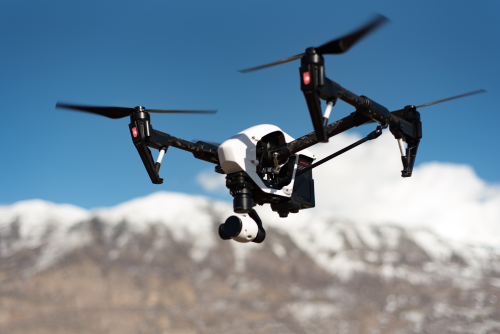
Setting drone pricing for day rates is where many pilots either build a real business or trap themselves in low-margin work. If you want to set drone pricing for day rates that actually pays you, the answer is not copying a local competitor, charging by flight time, or guessing based on how expensive your drone was. A strong day rate comes from your costs, your billable time, your compliance burden, and the value the client is truly buying.
Quick Take
If you only remember a few things, remember these:
- A drone day rate should be built from your annual income target, business overhead, equipment replacement, and realistic billable days.
- Clients are not paying for minutes in the air. They are paying for availability, planning, skill, risk management, compliant operations, and usable deliverables.
- Your base day rate should cover a standard production day only. Editing, travel, permits, assistants, rush delivery, and extra revisions should usually be separate line items.
- Half-day jobs are rarely worth half price. Travel, setup, planning, and admin still exist.
- Complex airspace, hard-to-access sites, brand campaigns, inspections, and rush work should cost more than a simple local content shoot.
- Never promise a flight until you verify legal, safety, site access, weather, and operational requirements in the relevant location.
What a drone day rate really means
A drone day rate is the price for reserving your time, aircraft, operational skill, and standard production capacity for a defined workday.
That sounds obvious, but many pilots price as if the client is only paying for actual airborne time. That is the fastest way to undercharge.
A client booking you for a day is usually buying:
- Preflight planning
- Travel and mobilization
- Equipment prep and battery readiness
- Site assessment and safety setup
- Flight execution
- Data handling
- Basic file organization
- Your judgment about weather, airspace, people, property, and shot feasibility
- The opportunity cost of blocking your calendar for that job
In other words, the rate is not about “my drone was in the air for 28 minutes.” It is about professional availability and a usable result.
That is also why day rates work best when the scope is production-focused and the time window matters. They work less cleanly when the job is heavily based on data processing, mapping outputs, engineering accuracy, or complex post-production.
What should a base day rate include?
There is no universal rule, so define it clearly in writing. As a starting point:
| Usually included in a base day rate | Usually billed separately |
|---|---|
| Standard preflight planning | Extensive travel or overnight stay |
| A defined on-site production window | Permits, location fees, or access fees |
| Normal battery use for agreed capture goals | Extra crew, visual observers, spotters, assistants |
| Basic data offload and file organization | Advanced editing, motion graphics, complex color work |
| Standard local travel if you choose to include it | Rush delivery |
| Use of your standard drone kit | Specialist sensors, backup aircraft requests, special gear |
If you leave these items vague, clients will assume more is included than you intended.
Build your day rate from the business backward
The simplest way to price properly is to start from the business you want, not the shoot in front of you.
Step 1: Decide what your business must earn
Your day rate needs to cover more than today’s fuel, batteries, and memory cards.
At minimum, your annual revenue target should account for:
- The amount you need to pay yourself
- Insurance
- Training and recurrent training
- Certifications, registrations, or compliance-related costs where applicable
- Drone maintenance and repairs
- Equipment replacement
- Software subscriptions
- Storage, backup, and computing
- Vehicle, transport, and parking
- Marketing, website, and sales costs
- Accounting and admin
- A profit cushion, not just break-even survival
A lot of pilots calculate cost recovery and forget profit. That creates cash flow, not a healthy business.
Profit matters because drones wear out, markets change, jobs fall through, weather cancels days, and clients sometimes pay slowly. If your pricing only keeps you alive when everything goes right, it is too low.
Step 2: Estimate your realistic billable days
This is where many drone operators ruin their pricing.
A year has plenty of calendar days, but far fewer days you can actually invoice. Your non-billable time includes:
- Prospecting and sales calls
- Writing quotes
- Pre-production planning
- Editing
- Travel
- Maintenance
- Practice and training
- Weather cancellations
- Bookkeeping
- Social media and portfolio work
- Client revisions
- Days blocked but not fully used
If you divide your revenue goal by every weekday in the year, your day rate will look attractive and your business will quietly bleed.
A better approach is to be conservative. Use actual history if you have it. If you are new, assume your billable days will be much lower than your total working days until proven otherwise.
Step 3: Calculate your pricing floor
Here is the straightforward formula:
(Owner pay target + annual overhead + equipment reserve + profit target) / realistic billable days = base day rate floor
That number is your floor, not your ideal rate.
Here is a simple example using placeholder figures in your local currency:
| Cost bucket | Example amount |
|---|---|
| Owner pay target | 60,000 |
| Overhead and subscriptions | 15,000 |
| Insurance, training, compliance | 7,000 |
| Equipment replacement reserve | 8,000 |
| Profit cushion | 10,000 |
| Total required annual revenue | 100,000 |
Now assume you can realistically invoice 80 days in a year.
100,000 / 80 = 1,250
That means your base day rate floor is 1,250 in your local currency before project-specific extras.
This is not a magic market rate. It is a business survival number. If the market you are targeting will not support that rate, you do not have a pricing problem alone. You may have a niche, positioning, client mix, or service design problem.
Step 4: Separate production from post-production
One of the biggest pricing mistakes in drone work is bundling too much invisible work into a single day rate.
A drone job often has three separate work blocks:
- Pre-production
- Production day
- Post-production
If you quote a “day rate” and then spend another half day editing, exporting, uploading, and revising, your real daily earnings collapse.
For most service businesses, it is cleaner to separate:
- Drone capture day rate
- Editing or post-production rate
- Travel costs
- Permit or compliance admin
- Additional crew
- Rush delivery
- Extra revisions
- Data processing or reporting
That does not mean you cannot offer packages. It means you should know the internal math behind the package.
Step 5: Define the standard day before the client does
A day rate without boundaries turns into unlimited work.
Define:
- How long the standard booking covers
- How many locations are included
- Whether local travel is included
- What deliverables are included
- How many revision rounds are included
- What counts as overtime
- What happens if the client changes scope on site
Your quote does not need to be complicated. It just needs to stop assumptions from expanding.
A simple drone day-rate structure that works for many pilots
If you want a practical starting structure, build around this:
1. Minimum booking or call-out fee
This protects you from small jobs that still consume planning, travel, setup, and admin time.
Even if the client only needs “a few quick shots,” your business still mobilizes.
2. Half-day rate
A half-day should usually be more than half of your full-day rate.
Why? Because these costs barely change:
- Planning
- Packing
- Travel
- Site setup
- Risk assessment
- Data handling
- Invoicing
For many operators, a half-day makes sense only if it stays inside a tightly defined scope.
3. Full-day rate
This is your base production rate for a clearly defined workday.
Use it as the anchor for standard commercial shoots, location days, brand content days, property batches, and recurring site visits.
4. Overtime or additional hour rate
If the client extends the day, changes the schedule, or adds locations, you need a pre-agreed method for pricing that change.
Otherwise, your “day” becomes elastic and your margin disappears.
5. Post-production rate
Charge separately for editing, file prep, basic culling, social crops, color correction, maps, reports, or specialized deliverables.
6. Add-ons
Common add-ons include:
- Travel beyond your local area
- Accommodation
- Permits and site fees
- Visual observer or assistant
- Special sensor or payload
- Rush turnaround
- Raw footage delivery
- Extra usage or licensing terms for commercial campaigns, where relevant in your market and contract practice
When to charge more
Your base day rate is not supposed to fit every job. Some work is simply harder, riskier, or more valuable.
Charge more when the job includes factors like these:
Operational complexity
- Controlled or sensitive airspace
- Dense urban environment
- Tight takeoff and landing options
- Crowd management concerns
- Difficult terrain
- Remote operations with long travel or poor access
Compliance burden
- Site inductions
- Client safety paperwork
- Additional risk documentation
- Third-party coordination
- Location permissions or access administration
Rules vary widely by country and site. Always verify what the job legally requires before you promise a flight.
Time pressure
- Sunrise or sunset timing windows
- Live events
- One-chance-only operations
- Same-day or next-day delivery
Speed has value. Price it.
Deliverable complexity
- Long edits
- Multiple versions for different platforms
- Branded outputs
- Reporting or data formatting
- Large file management
- Extra revision cycles
Business value to the client
If your footage is supporting a major campaign, commercial launch, hotel promotion, tourism brand piece, or corporate asset library, the value is not the same as a quick local content grab.
You do not need to overcomplicate this. Just do not pretend every drone day is equal.
When a discount makes sense, and when it does not
Discounting is not always bad. Random discounting is.
A discount can make sense when:
- The client books multiple consecutive days at one location
- The workflow is standardized and repeatable
- Travel and setup happen once, then spread across several days
- The client commits to recurring work with predictable scope
- The job fills otherwise idle capacity without damaging your positioning
A discount usually does not make sense when:
- The client is vague about scope
- Every day involves new travel and planning
- The job carries significant compliance burden
- The client expects fast turnaround
- Revisions tend to expand
- They are asking for a discount simply because they asked
Only discount when your cost per day goes down, your lifetime value goes up, or the operational efficiency is genuinely better.
How day-rate logic changes by use case
The same drone can support very different businesses. Your pricing should reflect the workflow, not just the aircraft.
| Use case | How well day rates fit | Common extras | Biggest pricing mistake |
|---|---|---|---|
| Real estate and property media | Good for batching and short production days | Editing, travel between properties, rush delivery | Charging too little for fast turnaround and multiple stops |
| Construction progress | Very good when recurring and standardized | Reporting, portal upload, safety induction time | Forgetting admin and site compliance time |
| Tourism, hospitality, brand content | Good, but often needs pre-production and usage clarity | Shot planning, editing, talent coordination, extra versions | Treating it like a simple local shoot |
| Inspection and mapping | Sometimes better as project-based pricing | Data processing, QA, specialist software, reporting | Pricing like a normal video shoot when the real work is after the flight |
If you are doing inspections, surveying, or mapping, a pure day rate may not capture the value or workload properly. In those cases, use a day rate for field time but pair it with separate pricing for processing, analysis, QA, and reporting.
Legal, safety, and operational risks must be priced in
Commercial drone work is not just a creative service. It is regulated activity in many places, often with local site rules layered on top.
Before you confirm a job, verify:
- Whether the operation is allowed under the relevant aviation rules
- Whether you, your crew, and your aircraft are properly authorized, registered, or qualified for that jurisdiction
- Whether the site owner or venue permits takeoff, landing, and overflight
- Whether local privacy, data, or property rules affect the planned work
- Whether the client requires specific insurance or contractor documentation
- Whether the job needs a visual observer, extra crew, or a site safety process
- Whether weather, people, or nearby structures make the operation unsafe
Do not price a job assuming you can “figure it out on the day.” If the flight ends up restricted, delayed, or impossible, your margin can vanish.
Put weather and rescheduling in writing
Drone work is unusually sensitive to weather and changing site conditions.
A clear quote should say:
- What happens if weather makes the flight unsafe or non-compliant
- Whether planning time is still billable if the shoot moves
- How long a reschedule can be held
- When cancellation fees apply
- Whether travel or access costs are refundable
This protects both you and the client.
A practical quoting workflow
If you want a simple decision process, use this every time:
1. Qualify the job
Ask:
- What is the client trying to achieve?
- What will they do with the footage or data?
- What exactly needs to be delivered?
- What date, location, and timing are involved?
2. Identify the real scope
Clarify:
- Number of locations
- Expected on-site duration
- Deliverables
- Editing level
- Revision rounds
- Travel distance
- Special access or paperwork
3. Check operational feasibility
Before quoting too confidently, verify:
- Airspace and site restrictions
- Safety constraints
- Local authority requirements
- Client access permissions
- Need for extra crew or planning
4. Apply your base rate plus modifiers
Start with your base day rate, then add:
- Travel
- Compliance/admin time
- Crew
- Post-production
- Rush fees
- Complexity premium
- Usage or raw file terms if relevant
5. State assumptions and exclusions
Write down what is not included. This is one of the easiest ways to protect margin.
6. Confirm payment terms
Use clear terms for:
- Deposits or booking confirmation
- Balance due date
- Rescheduling
- Cancellations
- Late changes
- Additional work approvals
Common mistakes drone pilots make with day rates
1. Pricing off drone cost alone
A more expensive drone does not automatically justify a better rate.
Clients pay for outcomes, reliability, legal operation, and business usefulness. A high-end aircraft helps, but it is not the whole argument.
2. Charging by flight time
Flight time is a tiny part of the work.
If you charge for “30 minutes in the air,” you ignore planning, travel, safety, data handling, and all the expertise that makes those 30 minutes possible.
3. Copying competitors without understanding their business
You do not know their overhead, debt, niche, insurance, experience, local demand, or whether they are profitable at all.
Bad market pricing spreads because too many pilots copy unprofitable operators.
4. Including editing without noticing it
This is one of the biggest hidden margin killers.
A job that feels like “one day” often turns into:
- Pre-shoot planning
- Production
- File transfer
- Edit
- Export
- Review
- Revisions
That is not one day anymore.
5. Letting half-day jobs consume full-day energy
If the client blocks your morning, requires travel, adds last-minute requests, and wants delivery tonight, that “small job” may have destroyed the rest of your day.
6. Ignoring scope creep
If you do not define locations, deliverables, revisions, timing, and usage clearly, the client will often assume the broader version of the deal.
That is not always malicious. It is often just what happens when quotes are vague.
7. Failing to reserve money for gear replacement
Drones, batteries, controllers, tablets, props, storage drives, and computers all age out.
If your rate does not fund replacements, every job is slowly borrowing from your future.
FAQ
Should I charge a half-day rate or set a minimum booking?
Both can work, but most pilots need some form of minimum booking. Very small jobs still require planning, travel, setup, and admin. If you offer a half-day, keep the scope tight and make sure it remains profitable.
Should editing be included in my day rate?
Usually only if it is very light and clearly defined. In most cases, separate editing from on-site capture so the client sees where the work actually happens and you protect your margin.
How should I handle travel?
Define a local area that is included, if you want to include one at all. Beyond that, charge for travel time, mileage, transport, parking, accommodation, or other actual costs as appropriate for your business model.
What if the client wants raw footage?
State that clearly in the quote. Raw footage often creates larger file handling demands and may have licensing or brand-control implications depending on the job. If you normally deliver edited assets, treat raw delivery as a separate option, not an automatic inclusion.
Can I charge more for difficult airspace or permits?
Yes. If a job requires extra planning, approvals, paperwork, crew coordination, or risk management, it creates real cost and liability. Just make sure you first verify what is actually required in that location rather than guessing.
How do I price recurring work like monthly construction updates?
Recurring work can justify better pricing efficiency if the site, deliverables, and workflow are standardized. That may support a reduced per-visit cost, but only if your planning and travel burden actually drops.
What should happen if weather cancels the shoot?
Set the policy before the booking is confirmed. Many operators charge for non-recoverable planning, travel already incurred, or last-minute cancellations, while moving the flight date when conditions make the operation unsafe. The exact policy should be clear in writing.
Is day-rate pricing always the best model for drone work?
No. Day rates work well for production-led work where time on location is the main constraint. They are less ideal when the real value sits in editing, reporting, mapping, inspection analysis, or a tightly defined deliverable. In those cases, use project pricing or hybrid pricing.
Final takeaway
Your drone day rate should not be a guess, a race to the bottom, or a number borrowed from someone else’s social post. Build it from your actual cost structure, protect it with a clear scope, and adjust it for complexity, risk, and post-production. If you do that, you stop selling flights and start running a service business that can still make money after the batteries cool down.