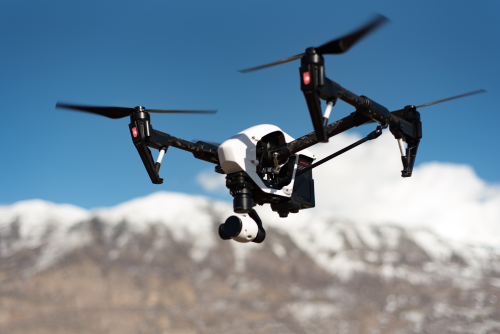
Starting a drone business is not really about flying. It is about solving a problem that a client will pay to solve again and again. If you are a pilot who wants real revenue, the shortest path is to pick a market, build a clear offer, stay compliant, and price your work like a business instead of a hobby.
Quick Take
- The best drone businesses sell outcomes, not flight time.
- Beginners usually do better with one niche and one simple offer than with a long list of vague services.
- Real revenue usually comes from repeat work: construction progress, inspection support, tourism content, property marketing, industrial documentation, and similar ongoing needs.
- Do not buy expensive gear first and hope demand appears later.
- Before accepting paid work, verify the rules that apply in your country and at the specific location: pilot qualifications, aircraft registration, airspace permissions, privacy rules, insurance, and site access.
- Your quote should include planning, travel, flight time, editing or processing, revisions, risk, and usage terms where relevant.
- Partnerships often beat cold outreach. Photographers, agencies, survey firms, roofers, builders, and production teams already have clients.
- A simple, repeatable service package is usually more profitable than custom one-off jobs.
What a drone business actually sells
A drone is just the tool. The business is the result.
Clients rarely care that you flew a quadcopter. They care that they received something useful on time: listing photos, inspection imagery, progress reports, social clips, orthomosaics, stockpile measurements, marketing assets, or visual records for compliance and documentation.
That means a healthy drone business is built around three things:
- A clear customer problem
- A useful deliverable — the final files, footage, maps, reports, or data you hand over
- A repeatable workflow that lets you deliver profitably
If you skip that thinking and only focus on flying, you can stay busy without making much money.
A good example:
- Weak offer: “I do drone work.”
- Strong offer: “I provide monthly construction progress photo and video updates with labeled site views, edited highlights, and organized cloud delivery for project teams.”
The second one is easier to sell, easier to price, and easier for a buyer to approve.
Step 1: Choose a market before you choose more gear
Most new pilots make the same mistake: they start with the drone they want, then try to find customers afterward.
Flip that.
Pick the market first, then build the service around that market’s needs.
Which drone business models are most realistic?
Here is a practical way to compare common service paths.
| Niche | Best for | Revenue pattern | Sales cycle | Operational complexity | What buyers care about most |
|---|---|---|---|---|---|
| Real estate and property marketing | Aerial photographers, creators, beginners | Mostly project-based | Short | Low to medium | Fast turnaround, attractive visuals, easy booking |
| Hospitality and tourism content | Travel creators, social teams, small agencies | Project-based with repeat campaigns | Medium | Low to medium | Brand style, editing quality, licensing clarity |
| Construction progress documentation | Organized operators | Recurring monthly or milestone-based | Medium | Medium | Consistency, labeling, reliability, site safety |
| Roof and exterior documentation | Property service providers, inspectors | Project-based with repeat referral work | Short to medium | Medium | Clear imagery, safety, speed, useful reporting |
| Mapping and survey support | Technical operators | Project or contract-based | Medium to long | Medium to high | Accuracy, workflow fit, deliverable quality |
| Event and venue coverage | Creators, production teams | Project-based | Short | Medium | Timing, safety around crowds, fast edits |
| Industrial inspection support | Experienced operators | Higher-value contract work | Long | High | Compliance, safety systems, precision, trust |
| Agriculture imaging support | Operators with local access to farms | Seasonal and recurring | Medium | Medium to high | Actionable outputs, timing, area coverage |
A few patterns matter:
- Fastest to start: property marketing, simple tourism content, basic exterior documentation
- Best for recurring revenue: construction, inspection programs, agriculture, industrial documentation
- Harder but often stronger long-term: mapping, industrial, utility, infrastructure support
- Easy to enter but competitive: generic aerial photo and video work
How to choose your first niche
Choose the niche where these five things line up:
Access
Who can you reach today without paying for ads?
Think real estate agents, builders, hotels, wedding planners, roofers, marketers, municipalities, resorts, surveyors, or local tourism operators.
Proof
Can you show sample work that looks relevant to that market?
A construction manager does not care about your cinematic mountain reel. A resort marketer does not care about your roof inspection shots.
Repeat demand
One-off jobs can help you start. Repeat jobs help you survive.
Look for businesses that need regular updates, recurring documentation, or seasonal campaigns.
Workflow fit
Can you realistically deliver what that niche needs?
For example: – Edited short-form video requires strong storytelling and post-production – Mapping requires flight planning discipline, overlap consistency, and processing workflow – Inspections require careful imagery and risk management, sometimes with industry-specific knowledge
Compliance fit
Some niches have lower operational friction than others. Others may require permissions, insurance, site induction, specialized training, or extra approvals.
Do not enter a field just because the headline rates sound attractive. High-value sectors usually expect high reliability and high compliance.
Step 2: Validate demand before you overspend
Before buying more batteries, a second drone, a bigger monitor, or specialized sensors, validate the market.
A simple demand test works well:
- List 20 potential buyers in one niche
- Ask what they currently use
- Find out what is annoying, slow, risky, or expensive in their current process
- Show a specific sample
- Offer one small pilot project or trial package
- Measure response, not compliments
You are looking for signals like:
- “Can you do this every month?”
- “What would turnaround time be?”
- “Can you include labeled stills or a summary?”
- “Do you have insurance and site documents?”
- “Can you invoice the company?”
- “Can you coordinate with our marketing team or site manager?”
Those are buying signals.
“Nice footage” is not.
A good market-validation question set
When speaking to potential clients, ask:
- What problem would drone imagery or data help you solve?
- How do you solve it today?
- What is missing from your current solution?
- How often does this need come up?
- Who approves the budget?
- What format do you actually need: photos, clips, map outputs, measurements, reports?
- What would make this worth paying for again?
This saves months of guessing.
Step 3: Build a legal, safety, and compliance foundation
If you want real revenue, you need to act like a professional operator early.
The exact rules vary widely by country, region, and flight location, so avoid assuming that what works in one place applies everywhere. Before doing paid work, verify your requirements with the relevant civil aviation authority and, where needed, local site managers, landowners, park authorities, venue operators, or municipal authorities.
Compliance and operational checks to handle from day one
Pilot and aircraft requirements
Depending on the jurisdiction, commercial work may require some combination of:
- Pilot competency or certification
- Aircraft registration
- Electronic identification requirements where applicable
- Operational authorization for certain airspace or risk categories
- Recordkeeping or maintenance logs
Airspace and location permissions
Commercial work often fails because the operator only checks the drone rules and forgets the site rules.
You may need approval from:
- Airspace authorities
- Property owners
- Construction site managers
- Park or heritage authorities
- Venue operators
- Event organizers
- Local government bodies
A legal airspace status does not automatically mean you have permission to take off from private land or operate over a managed site.
Insurance
Insurance is not always legally required everywhere, but many clients will expect it. Even when optional, it is often a sensible business decision.
Verify what level of coverage is expected for:
- Public liability
- Professional indemnity or errors and omissions where relevant
- Equipment
- Vehicle or travel-related exposure
- Crew or subcontractor work
Privacy and data handling
Drone business owners often underestimate privacy risk.
Know how you will handle:
- Filming around people
- Neighbor complaints
- Sensitive sites
- Data storage
- Client confidentiality
- Sharing raw files
- Retention and deletion policies
If you collect imagery for inspection, security, or enterprise purposes, data handling matters as much as flight safety.
Site safety
Some paid jobs include hazards that hobby flying never prepared you for:
- Moving vehicles
- Power lines
- Cranes
- Confined access areas
- Coastal wind shifts
- Busy public spaces
- Heat, dust, snow, or rain exposure
- Crew coordination failures
For commercial work, create a repeatable preflight process that covers weather, obstacles, emergency actions, communication, takeoff and landing zones, and no-fly contingencies.
A practical rule
If you are not fully sure that a job is legal, insured, safely operable, and contractually clear, do not rush the booking. Verify first.
Short-term revenue is not worth an incident, a claim, a lost aircraft, or damage to your reputation.
Step 4: Build an offer that buyers understand in one minute
Most new operators describe themselves by capability. Buyers respond better to packaged outcomes.
Instead of saying:
- aerial video
- drone photography
- FPV
- mapping
- edits
- social media
Build a simple offer with:
- What problem it solves
- What is included
- What the client receives
- Delivery timeline
- Revision policy
- Weather rescheduling policy
- Travel terms
- Usage or licensing terms where relevant
Example starter offers
Property marketing package
Good for: real estate agents, developers, holiday rentals, boutique hotels
Includes: – Exterior aerial photos – Short highlight video – Edited vertical clips for social use – Delivery within a defined number of days – Basic revision terms
Monthly construction progress package
Good for: builders, developers, project managers, investors
Includes: – Scheduled monthly site visit – Repeatable camera angles from the same positions – Labeled overview photos – Short progress video – Organized archive by date – Optional summary notes or collaboration with the site team
Roof and exterior documentation package
Good for: roofers, insurers, facility managers, property maintenance firms
Includes: – High-resolution stills of key areas – Close-up documentation of damage or wear – File naming by roof section or issue – Fast turnaround – Optional simple issue summary
Tourism and hospitality content day
Good for: resorts, tours, destination brands, activity operators
Includes: – Shot list planning – Lifestyle aerials – Landscape reveals – Social-first edits – Brand-safe asset delivery
Notice the difference: these are easy to picture, easy to quote, and easy for a buyer to compare with their need.
Step 5: Buy only the gear your offer actually requires
A drone business can fail under the weight of unnecessary gear.
Start with the minimum reliable kit that lets you deliver paid work professionally:
- One dependable drone that fits your target service
- Enough batteries for a normal job day
- Reliable storage and backup workflow
- Charging solution for field work
- Basic safety kit and site PPE where needed
- Editing or processing setup that will not choke on client deadlines
- Phone or tablet workflow that supports flight planning and mission management if applicable
What not to buy too early
Avoid buying specialized tools until there is clear demand and you know how to use them profitably.
Examples: – Thermal payloads – LiDAR systems – Spray platforms – Large cinema rigs – Enterprise-only accessories – Expensive monitors and cases that do not improve delivery
In many cases, it is smarter to:
- rent specialized equipment
- subcontract specialist work
- partner with a technical operator
- refer jobs outside your current capability
That protects cash flow and reputation.
Step 6: Price for margin, not for airtime
One of the fastest ways to kill a drone business is pricing based only on the minutes you spend in the air.
Clients are paying for the full workflow: – planning – travel – risk review – site coordination – flying – editing or processing – delivery – revisions – file management – equipment wear – insurance – admin time
Pricing models that actually make sense
| Pricing model | Best for | Strength | Risk |
|---|---|---|---|
| Fixed package | Real estate, simple marketing, repeatable documentation | Easy for clients to buy | Can undercharge if scope is vague |
| Hourly or half-day/day rate | Production support, flexible creative work | Good for changing shoot conditions | Clients may focus on time instead of value |
| Per deliverable | Edited clips, photo sets, mapped outputs | Aligns with output | Needs very clear definitions |
| Retainer or monthly contract | Construction, recurring marketing, inspection cycles | Best for predictable revenue | Requires consistency and reliable operations |
| Subcontractor rate | Agency, survey, production, inspection support | Fast way to start | Lower margins and less brand control |
A simple quoting formula
Your quote should account for:
- Pre-production and planning
- Travel and on-site time
- Flight complexity and risk
- Editing or processing time
- Asset delivery and storage
- Revision expectations
- Licensing or usage if relevant
- Permit, site access, or special compliance costs where applicable
If you skip any of those, you may win the job and lose money.
Know your floor
Before you price anything, calculate your minimum sustainable rate.
Include: – software subscriptions – insurance – equipment replacement – batteries – storage – travel – taxes and fees – assistant or spotter costs if needed – office/admin time – non-billable time spent selling
This is the difference between a side hustle that feels busy and a business that can survive slow months.
Step 7: Get first clients by being specific, not flashy
A polished cinematic reel helps, but it does not replace positioning.
The easiest early sales usually come from one of four channels:
Your existing network
Friends and contacts in property, hospitality, events, tourism, construction, maintenance, or marketing are a faster starting point than broad social media posting.
Partner channels
Some of the best first work comes from businesses that already sell adjacent services:
- photographers
- video agencies
- social media managers
- survey firms
- roofers
- builders
- architects
- destination marketers
- production companies
They already have the client relationship. You become the specialist.
Local direct outreach
This works best when the message is specific.
Bad: – “Hi, I offer drone services.”
Better: – “I help hotels create short aerial content packages for website banners and social campaigns.” – “I provide monthly drone progress updates for building sites with repeatable angles and fast file delivery.” – “I help roofing companies document hard-to-access areas safely before and after work.”
Proof-driven content
Your portfolio should match the niche you want, not the flying you enjoy most.
Three strong examples in one niche are more persuasive than thirty random clips.
What your first portfolio should include
For each sample project, show:
- the type of client
- the problem being solved
- the deliverables
- the visual quality
- the organization of the final output
- the professionalism of the workflow
If possible, show the result in context. For example: – listing assets used in marketing – progress images organized by month – exterior documentation by building section – short social clips built for mobile formats
Clients buy clarity.
Step 8: Build operations that make repeat revenue possible
The pilots who last are usually not the best stick operators. They are the best operators of the business.
Create simple systems for:
- lead tracking
- quoting
- contracts
- preflight checklists
- weather rescheduling
- shot lists
- client approvals
- file naming
- backup and archive
- invoice follow-up
- testimonial requests
- repeat booking reminders
A small drone business becomes more profitable when each job creates less friction.
For example, monthly construction progress work gets easier when you already have: – the site map – safe launch area – approved contact list – repeat camera positions – delivery folder structure – invoice template
That is how recurring revenue becomes efficient revenue.
Common mistakes new drone business owners make
1. Buying gear before getting demand
Expensive equipment does not create a market.
2. Offering everything to everyone
Generalists are harder to remember and harder to refer.
3. Underpricing because “it only takes 20 minutes to fly”
The flight may take 20 minutes. The job probably does not.
4. Ignoring editing and delivery time
Post-production is where many “profitable” jobs quietly lose money.
5. Copying competitors without understanding their client base
Two operators can own similar drones and have completely different businesses.
6. Treating compliance as optional
One incident, complaint, denied access issue, or insurance problem can undo months of progress.
7. Taking on technical work too soon
Mapping, thermal, industrial inspection, and enterprise jobs may look attractive, but weak process and poor deliverables can damage trust fast.
8. Chasing one-off gigs instead of repeatable services
A business built only on random shoots is harder to forecast, staff, and grow.
What people get wrong about “real revenue”
Real revenue is not just high invoice totals.
It is revenue that is: – legal to earn – profitable after costs – repeatable – low enough in friction to deliver consistently – attached to a service clients actually need again
That is why a modest monthly documentation contract can be more valuable than a flashy one-time campaign.
If your goal is stability, prioritize: – recurring clients – narrow offers – reliable turnaround – strong communication – a reputation for showing up prepared
FAQ
Do I need a license or certification to start a drone business?
Maybe, and in many places the answer is yes for at least some kinds of commercial work. Requirements vary by country, aircraft type, operation type, and airspace. Verify with your local civil aviation authority before offering paid services.
What is the easiest drone business for a beginner?
Simple property marketing, basic tourism content, and straightforward exterior documentation are often easier entry points than industrial inspection or advanced mapping. The best option depends on your local access, compliance requirements, and editing ability.
Can I start with one drone?
Yes, many solo operators do. But you should still think about reliability, battery coverage, data backup, maintenance, and what happens if your only aircraft becomes unavailable during an active client project.
How should I price my first few jobs?
Use a fixed package or clearly scoped project quote instead of guessing based on flight minutes. Include planning, travel, flight time, editing, delivery, revisions, and business overhead. Do not price below sustainability just to get work.
Should I specialize right away?
Usually, yes. Specializing makes your marketing clearer and your workflow more efficient. You can expand later, but starting with one niche and one offer is often the fastest route to traction.
Is the drone business market too crowded?
Generic aerial content is crowded in many places. Specific business outcomes are much less crowded. “Drone pilot” is a crowded label. “Monthly construction progress reporting” or “roof documentation for contractors” is a clearer market position.
Should I form a company before getting clients?
That depends on local business, tax, and liability rules. In some places you can validate demand first, while in others you may need formal registration, insurance, or invoicing capability before doing commercial work. Verify what applies where you operate.
Do I need expensive enterprise gear to land better clients?
Not always. Many clients care more about reliability, compliance, turnaround, and usable deliverables than about the most advanced hardware. Buy specialized tools only when your target service truly requires them and demand is proven.
The best next move
If you want to start a drone business and earn real revenue, do not begin with a shopping spree. Pick one niche, define one offer, speak to real buyers, and verify the compliance path before taking payment. The pilots who build durable businesses are not the ones with the most gear. They are the ones who make it easy for clients to say yes again.