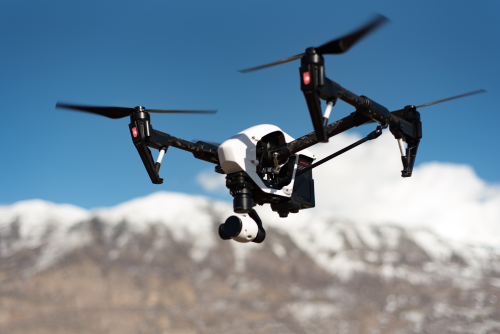
If you already own a capable camera drone, you do not need a hangar full of aircraft to build a real drone business. In many markets, one drone can support several service lines, as long as those services share clients, workflows, and deliverables. The smart move is not chasing every possible gig. It is building adjacent offers that let one flight create more than one billable outcome.
Quick Take
Turning one drone into multiple service lines works when you focus on problems, not just footage.
Key points
- One drone can often support multiple revenue streams in property marketing, visual documentation, progress tracking, and basic site mapping.
- The best service lines share the same buyer, similar flight plans, and similar editing workflow.
- Real revenue usually comes from bundling deliverables and winning repeat work, not from one-off aerial clips.
- Price for planning, travel, editing, risk, and file delivery, not just time in the air.
- Be careful with regulated claims: do not market survey-grade, thermal, LiDAR, spraying, or professional inspection outcomes unless your aircraft, workflow, and qualifications truly support them.
- Before any commercial job, verify the local rules for pilot certification, commercial authorization, airspace access, site permission, insurance, privacy, and flights near people or sensitive locations.
The real shift: stop thinking like a pilot, start thinking like a service provider
A lot of drone pilots get stuck because they sell “drone footage” as if that is the product.
It usually is not.
Clients buy outcomes: – A property sold faster – A roof issue documented clearly – A construction site tracked every month – A resort marketed before peak season – A development site shown to investors – A contractor’s before-and-after proof organized and usable
That is why one drone can become multiple service lines. The aircraft stays the same, but the business offer changes based on the client’s need.
Service line vs deliverable
This distinction matters.
A service line is the business problem you solve for a type of client.
A deliverable is what you hand over.
For example:
- Service line: Real estate marketing
- Deliverables: 15 edited aerial photos, 45-second listing video, 3 vertical clips, neighborhood overview shots
Or:
- Service line: Roof documentation for contractors
- Deliverables: Defect photos, annotated image set, before-and-after folder, short marketing clip
Once you understand that, scaling revenue gets simpler. You do not need five different drone businesses. You need a few strong service lines with multiple useful deliverables.
What one drone can realistically do well
A single modern camera drone is usually enough for several commercial use cases if it can reliably provide:
- Stable video from a 3-axis gimbal
- High-resolution still photos
- Decent dynamic range for outdoor scenes
- Consistent flight performance
- Safe obstacle awareness or conservative operating habits
- Clean file handling and dependable battery management
That opens up four practical categories.
1. Marketing content
This is the most obvious one: – Property listings – Hotels and resorts – Golf courses and marinas – Tourism businesses – Outdoor venues – Brand and social media content for local businesses
2. Visual documentation
This includes: – Roof and facade imagery – Solar array visuals – Gutter and drainage overviews – General property condition documentation – Contractor before-and-after records
Important: documentation is not the same as licensed engineering, surveying, claims adjustment, or formal building diagnosis. Be clear about what you provide.
3. Progress monitoring
This is one of the most practical ways to turn a drone into recurring revenue: – Construction progress photos – Monthly site updates – Developer stakeholder reports – Archive footage for end-of-project marketing – Change-over-time visuals for land or infrastructure projects
4. Basic site mapping and context capture
With the right planning and processing workflow, one camera drone may support: – Orthomosaic creation – Site overview imagery – Parcel or development context visuals – Basic volumetric or layout-support visuals in some workflows
But this area has strict limits. If a client needs survey-grade accuracy, legal boundary work, or engineering-grade measurement, verify whether your aircraft, software, ground control process, and professional standing are sufficient.
What one drone usually cannot cover without upgrades
This is where pilots lose credibility by overpromising.
A single camera drone does not automatically qualify you for: – Thermal work – Multispectral agriculture analysis – LiDAR capture – Crop spraying – Heavy-lift cinema payloads – High-end indoor protected work in complex confined spaces – Survey-grade deliverables without the right workflow and control points – Expert inspection conclusions if you are not qualified in that field
If you want real revenue, credibility matters more than range. Stay inside the lane your aircraft and process can support.
The best multi-service combinations from one drone
The easiest way to expand is not random diversification. It is adjacency.
Good adjacency means: – same client type – same region – similar risk profile – similar flight pattern – similar postproduction – repeat demand
Here are some of the strongest combinations.
Five service bundles that work especially well
| Bundle | Typical clients | What one site visit can produce | Extra investment needed | Recurring potential | Main limitation |
|---|---|---|---|---|---|
| Property marketing bundle | Real estate agents, brokers, vacation rental managers, developers | Listing stills, hero video, vertical clips, neighborhood context, seasonal refreshes | Editing templates, maybe basic ground camera support | Medium to high | Often fast-turn, competitive, privacy-sensitive |
| Contractor documentation bundle | Roofers, solar installers, facade contractors, property managers | Problem photos, before-and-after sets, sales-support visuals, completion archive, short promo clips | Annotation/report formatting | High | Do not present yourself as a licensed inspector unless you are one |
| Construction progress bundle | Builders, developers, owners, engineering teams | Monthly fixed-angle photos, progress video, stakeholder summaries, end-of-project archive | Repeatable SOP, waypoint discipline if available | High | Site access, safety induction, urban airspace complexity |
| Site overview and basic mapping bundle | Architects, planners, land developers, utilities, farms in some cases | Orthomosaic, context images, top-down overview, change records | Flight planning and processing software | Medium to high | Accuracy expectations must be managed carefully |
| Hospitality and tourism content bundle | Hotels, resorts, venues, marinas, tour operators | Seasonal promos, amenity stills, social reels, campaign library | Storyboarding, light editing consistency | Medium | Guest privacy, crowd restrictions, venue permissions |
Mini-scenario: one roofer, three revenue lines
A roofing company may hire you first for pre-job aerial documentation.
From that same relationship, you can often add: – before-and-after project sets – completion marketing clips – property portfolio updates for the contractor’s website – periodic condition documentation for property managers
Same drone. Same local travel radius. Similar flight envelope. Better revenue density.
Mini-scenario: one builder, recurring work all year
A small developer may start by asking for site overview photos.
You can turn that into: – monthly progress monitoring – investor update visuals – marketing footage once the project nears completion – archive footage for the builder’s future sales materials
This is often more valuable than chasing unrelated one-off gigs every week.
Mini-scenario: one hotel, multiple seasonal campaigns
A resort or hospitality property can need: – summer hero shots – off-season update content – new amenity launch visuals – short vertical clips for social media – surrounding area context footage
Again, one drone becomes multiple service lines because the client has more than one visual need over time.
How to choose your first three service lines
If you try to sell everything, your offer gets vague and your portfolio gets weak.
A better move is to choose three service lines max to start.
Use this scorecard. Rate each potential service line from 1 to 5:
- Can my current drone do this safely and reliably now?
- Can I build a credible portfolio for it within two weeks?
- Is there repeat demand in my local market?
- Can one flight create more than one deliverable?
- Are the compliance and insurance requirements manageable for me?
A strong service line usually scores 18 or higher out of 25.
A good starter combination for many pilots
For many general-purpose camera drone owners, the cleanest first stack is:
- Property marketing
- Contractor documentation
- Construction progress
Why this combination works: – mostly visual deliverables – similar editing tools – similar operating style – easy to explain to clients – real repeat-work potential – no need to claim advanced sensor capability
A stronger but more technical second-stage combination
Once your workflow improves, you can add:
- Construction progress
- Site overview and basic mapping
- Developer marketing content
This combination works well because one development client may need all three.
Build offers around one flight, not one video
One of the easiest ways to raise revenue without buying another drone is to turn a single flight into a deliverable stack.
For example, a single property visit might include: – 12 edited aerial stills – 1 short horizontal video – 3 vertical cutdowns – 4 top-down context shots – 1 archive folder for future reuse
A contractor site visit might include: – defect documentation photos – annotated image set – overview footage – completion photos – social media clip
The point is simple: if you only sell “a drone video,” you cap your invoice.
If you sell a structured package of useful outputs, you increase value without dramatically increasing flight time.
Pricing for real revenue, not hobby cash
A lot of pilots undercharge because they think the drone itself is the product.
It is not.
Clients are paying for: – planning – travel – site risk management – legal and operational readiness – capture skill – editing – revisions – file organization – delivery speed – commercial reliability
A simple quoting formula
Your quote should account for:
Preproduction + travel + on-site time + postproduction + admin + risk + licensing or usage terms + revision buffer
That does not mean every client needs a complicated proposal. It means you should know what is inside your number.
Better pricing structures than “per flight”
These models usually work better than charging only for airtime:
Per deliverable package
Best for: – real estate – contractor documentation – local business content
Example logic: – base package for stills – add video – add vertical clips – add annotated reporting – add rush turnaround
Retainer or scheduled repeat visits
Best for: – construction progress – hospitality seasonal content – property management portfolios
Example logic: – monthly or biweekly site visit – fixed shot list – fixed delivery structure – end-of-quarter recap option
Day rate for complex or multi-site jobs
Best for: – agencies – developers – larger contractors – multiple-location site capture
This works when the client needs flexibility more than a standard package.
What not to do
Avoid pricing only by: – number of batteries used – minutes flown – vague “cheap because I’m new” logic
Those approaches make you look like a hobbyist renting a toy, not a service provider solving a business problem.
The business systems that make one drone profitable
Revenue is not created by flying alone. It is created by repeatable operations.
Here is a practical workflow.
1. Qualify the client before you quote
Ask: – What decision will these images help you make? – Who will use the files? – Do you need stills, video, annotations, or repeat visits? – What is the deadline? – Who controls site access? – Are there people, roads, power lines, cranes, water, or privacy issues nearby? – Will the content be used internally, publicly, or in paid marketing?
This shapes both pricing and risk.
2. Plan the capture list around multiple outputs
Before you arrive, decide what you need for: – hero shots – reference stills – top-down context – detail frames – before-and-after matching angles – vertical clips – repeatable monthly angles if this is a progress job
Pilots who improvise everything usually leave money on the table.
3. Capture in repeatable sequences
A strong repeatable sequence might include: 1. Establishing wide shots 2. Cardinal direction stills 3. Top-down or near-top-down coverage if appropriate 4. Detail passes for problem areas or assets 5. Short cinematic clips for marketing use 6. Matching angles for future repeat visits
Now one site visit serves several needs.
4. Edit with templates
Build reusable templates for: – photo color workflow – construction progress folders – annotation pages – delivery naming conventions – short-form social exports
Templates protect margin. Starting from zero every time kills it.
5. Deliver cleanly
Your files should make sense to a non-pilot.
A good delivery set might be: – Edited Photos – Social Clips – Annotated Documentation – Archive Originals – Progress Comparison Folder
Good delivery increases referrals because the client feels organized, not overwhelmed.
6. Ask for the next job before the first one goes cold
This is where real revenue shows up.
After delivery, ask: – Do you want this repeated monthly? – Do you need a before-and-after version when work is complete? – Would vertical social edits help your marketing team? – Do you want a seasonal refresh in 90 days?
You are not “selling more drone stuff.” You are extending the business value of the same visual asset.
Safety, legal, compliance, and operational limits
If you want a drone business that lasts, treat compliance as part of the service, not an afterthought.
Because this is a global topic, the exact rules vary. Before any commercial work, verify the requirements with the relevant aviation authority and site owner.
At minimum, verify these points
- Whether you need a commercial pilot credential, registration, or operational authorization
- Local airspace restrictions near airports, cities, critical infrastructure, or sensitive locations
- Rules for flights near people, roads, vehicles, or crowds
- Site-specific permission from the property owner, contractor, venue, or project manager
- Insurance expectations, including third-party liability if applicable
- Privacy and data-handling expectations, especially on residential, hospitality, or industrial sites
- Whether local labor, safety, or site-induction rules apply on construction projects
Special caution areas
Inspections and regulated professions
Drone imagery can support inspections, but that does not always make you the inspector. If a licensed professional is required to issue findings, keep your role clear.
Mapping and measurement
Do not market survey-grade outputs unless your equipment, processing method, control workflow, and professional standing truly support that claim.
Events and hospitality
Outdoor event work can sound attractive, but rules around flights over people can be strict. Confirm what is allowed before promising coverage.
Construction sites
These sites often involve cranes, workers, moving equipment, radio interference, dust, and pressure to “just get the shot.” A disciplined no-go decision is part of being professional.
Common mistakes pilots make when trying to diversify
1. Selling too many unrelated services
If your website lists weddings, roof inspections, tourism promos, agriculture analytics, and cinematic car commercials on day one, buyers may doubt your depth.
Start with adjacent services, not chaos.
2. Confusing deliverables with businesses
Adding a vertical reel is not a whole new service line. It is an add-on. Keep your offer structure simple.
3. Underpricing postproduction
Editing, revisions, file organization, and reporting often take longer than the flight.
4. Ignoring recurring revenue
The healthiest service lines are often the least glamorous: – monthly progress visits – quarterly property updates – repeat contractor documentation – seasonal venue refreshes
5. Overpromising technical outcomes
If your drone is not built for thermal, RTK, LiDAR, or professional measurement workflows, do not sell those results.
6. Forgetting that clients buy confidence
Fast communication, clean proposals, organized files, and safe operations often matter as much as your reel.
FAQ
Do I need a different drone for real estate and contractor work?
Usually not. A capable camera drone can often handle both property marketing and contractor documentation. The bigger difference is your workflow, deliverables, and client communication.
Which service line is usually the easiest first add-on?
For many pilots, contractor documentation or construction progress is easier to add than a totally new niche. The capture style is practical, repeatable, and often leads to recurring work.
Can I offer mapping with a normal camera drone?
In some cases, yes, for basic orthomosaics or site context. But accuracy expectations matter. If a client needs survey-grade or legally defensible measurement, verify whether your equipment and process are truly suitable.
Should I charge per hour or per project?
Per-project or per-package pricing is often better for common drone services because clients care about outputs, not how long you hovered. Hourly or day-rate pricing can make sense for flexible, multi-site, or agency work.
How many deliverables should I include in one package?
Enough to solve the client’s problem without creating unnecessary editing overhead. A good package feels complete, not bloated. Most pilots do better with a few clear package tiers than with endless options.
Do I need special insurance for commercial drone work?
That depends on your country, local rules, the site, and the client. Many commercial clients expect proof of liability coverage even when the law is less explicit. Verify both regulatory and contractual requirements before the job.
Is it better to sell directly to businesses or through agencies?
Direct clients often give better long-term relationships and repeat work. Agencies can give access to larger projects but may squeeze margins. Many operators benefit from having a mix.
When should I buy a second drone instead of adding more services?
Buy another aircraft when reliability, redundancy, specialized sensors, or job type clearly demand it. Do not buy a second drone just because your first one is under-monetized.
The next move that actually makes sense
Pick two or three adjacent service lines your current drone can deliver well, build packages around one flight producing multiple outputs, and target clients who need repeat work. If your offer is clear, compliant, and operationally tight, one drone is often enough to build a serious business foundation before you spend another dollar on new hardware.