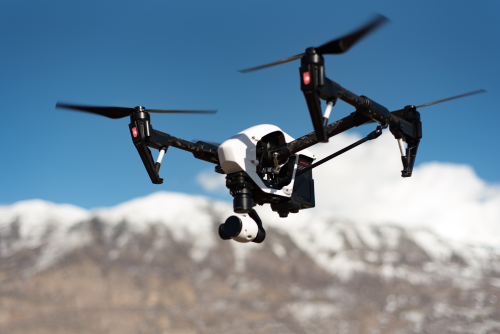
A showreel can win attention, but it rarely closes serious clients on its own. If you want to know how to use case studies to close clients, the real shift is simple: stop selling drone footage as a creative extra and start proving business outcomes. The best case studies show the problem, your process, your operational discipline, and a result the client actually cares about.
Quick Take
If you are a drone pilot trying to turn interest into real revenue, a useful case study should do five things fast:
- Show who the client was or what type of buyer they were
- Explain the business problem, not just the flight
- Prove you handled constraints like safety, permissions, weather, timing, or site access
- Show what you delivered and how it fit the client’s workflow
- Tie the work to a result, even if the result is operational rather than financial
A strong drone case study is usually more persuasive than a longer portfolio because it reduces buyer uncertainty. It tells a prospect, “We have solved a similar problem before, and we can likely do it for you too.”
Why case studies close clients better than pretty footage
Many pilots build their marketing around what looks impressive from the air. That helps, but buyers do not usually purchase “impressive.” They purchase reduced risk, saved time, better reporting, stronger marketing, safer inspections, or clearer project communication.
A case study works because it answers the question running through every buyer’s mind:
“Can this provider solve my problem without creating new problems?”
That is especially true in drone services, where prospects often worry about:
- Airspace or permission issues
- Insurance and liability
- Delays caused by weather or regulations
- Inconsistent quality
- Deliverables that look good but are hard to use
- Paying for footage that does not move a business goal
A portfolio says, “Here is what I can shoot.” A case study says, “Here is what I can solve.”
That difference is where deals get won.
What buyers actually want your case study to prove
Before you write a case study, understand what your prospect is evaluating. In most commercial drone sales, the client is not just judging your flying. They are judging whether hiring you feels safe, useful, and worth the spend.
Your case study should prove some or all of the following:
- You understand the buyer’s industry
- You can plan and communicate clearly
- You know how to operate within local rules and site limits
- You can produce deliverables that fit the client’s decision-making process
- You can manage logistics, crew expectations, and timing
- You can create an outcome that matters to the client
Match the proof to the buyer
Different clients care about different outcomes. A hotel marketer, a construction manager, and a roof inspection company are not buying the same thing, even if all of them hire a drone operator.
| Buyer type | What they care about most | What your case study should emphasize | Useful proof points |
|---|---|---|---|
| Real estate or property marketing | Better presentation, faster listings, buyer interest | Turnaround time, visual quality, site storytelling | Listing package delivered, timeline met, content used across channels |
| Construction or infrastructure teams | Progress visibility, documentation, fewer site visits | Repeatable workflow, reporting consistency, site discipline | Scheduled capture cadence, map/report integration, stakeholder updates |
| Inspection clients | Safety, access, reduced manual risk, usable findings | Risk reduction, image clarity, reporting process | Hard-to-reach assets captured, defect documentation, faster review |
| Tourism, hospitality, or destination brands | Marketing performance, stronger storytelling | Brand alignment, location planning, content versatility | Campaign asset mix, seasonal content, social/video usage |
| Event or media clients | Timing, reliability, legal operation around crowds or venues | Coordination, permissions, backup plans, delivery speed | Shot list achieved, same-day selects, crew communication |
The key is this: do not show the same case study to everyone. Show the most similar proof to the buyer in front of you.
The 7-part case study structure that actually sells
Most drone case studies fail because they are either too vague or too technical. Use this simple structure instead.
1. Start with the client context
Open with who the client was, or if confidential, what kind of client they were.
Good examples:
- A regional construction contractor managing multiple site stakeholders
- A boutique hotel needing short-form video and stills for seasonal marketing
- A roofing company needing visual inspection support for difficult-access structures
This tells the prospect, “This project looked like your world.”
2. Define the problem in business terms
Do not start with gear. Start with the reason the project existed.
Examples:
- The client needed weekly aerial updates to reduce confusion across remote teams.
- The property listing needed a stronger sense of location and scale than ground photos alone could provide.
- The inspection team needed visual access to elevated surfaces without sending staff into unnecessary risk.
When you describe the problem well, the buyer feels understood.
3. Show the constraints and risks
This is where many pilots accidentally sell themselves better than they realize.
Explain what made the project difficult:
- Tight weather window
- Limited site access
- Sensitive location
- Active worksite
- Need for coordination with client staff
- Short delivery deadline
- Privacy or confidentiality considerations
- Flight restrictions requiring careful planning and verification
This is powerful because clients do not just want good results. They want good results under real-world pressure.
4. Explain your approach simply
Now tell the reader what you actually did. Keep it practical.
Include things like:
- Preflight planning
- Location coordination
- Shot planning tied to the client’s goal
- Safety checks
- Capture schedule
- Crew setup if relevant
- Data handling or editing workflow
- Delivery format
Avoid turning this into a gear list unless the equipment choice truly mattered to the outcome.
A client rarely hires you because you own a specific drone. They hire you because you know how to use the right setup for their problem.
5. Describe the deliverables in client language
This is one of the most overlooked parts of a good case study.
Do not just say, “I delivered edited footage.” Be specific about what the client received and how it was used.
Examples:
- 20 edited aerial stills for listing and brochure use
- A 60-second brand video plus vertical cutdowns for social platforms
- Weekly progress captures organized by date and viewpoint for stakeholder reporting
- Inspection images tagged and sorted for engineering review
Buyers want to imagine the output landing inside their workflow.
6. Show the result with numbers when possible
A result does not always have to be dramatic revenue. It just has to be relevant.
Useful result categories include:
- Faster turnaround
- Reduced site visits
- Better stakeholder visibility
- More usable marketing content
- Better campaign engagement
- Safer asset review
- Shorter approval cycles
- Repeat booking or expanded scope
If you have numbers, use them carefully and honestly. If you do not have exact ROI data, use credible operational outcomes instead.
Examples:
- Delivered all campaign assets within five days ahead of launch
- Reduced the need for repeated manual site photo collection
- Created a repeatable monthly capture workflow across multiple locations
- Helped the client produce a more complete property package for sales outreach
7. End with a credibility anchor and next step
Finish with one of these:
- A short client quote
- A note that the client rebooked
- A note that the scope expanded
- A short line on what type of client this service suits next
For example:
“This workflow now suits developers, contractors, and property teams who need consistent aerial updates without building an in-house capture process.”
That ending turns one finished project into a sales bridge for the next one.
A simple template you can use for every drone case study
If you want a straightforward format, use this fill-in-the-blank structure:
-
Client type: – Who they are and what industry they are in
-
Goal: – What business problem were they trying to solve?
-
Constraints: – What made the job operationally sensitive or commercially important?
-
Solution: – What did you plan, capture, and deliver?
-
Deliverables: – What files, assets, or reports did the client receive?
-
Result: – What changed after your work?
-
Why it matters: – Why should a similar buyer care?
Keep the finished version short. In many cases, 250 to 500 words is enough.
If you are new, you can still build case studies without faking authority
A lot of good pilots delay outreach because they think they need a famous client first. You do not. You need believable proof.
Here are honest ways to build early case studies:
Use small paid jobs as proof
A local business, property manager, travel operator, or contractor can give you more useful proof than a flashy unpaid project with no business outcome.
Turn test projects into “self-initiated” case studies
If you create your own sample project, label it clearly. For example:
- Self-initiated tourism campaign example
- Demo property marketing workflow
- Sample inspection reporting layout
That is fine. Just do not imply a paying client or invent results.
Borrow trust from adjacent experience
If you come from photography, video production, construction, surveying, or marketing, mention the relevant process discipline. Buyers often care about industry fluency as much as flight hours.
Ask for one sentence of feedback
You do not need a long testimonial. A simple line such as “Fast communication, smooth coordination, and assets delivered on time” can add credibility.
Show process maturity early
Even if your client list is short, you can still prove professionalism through:
- Clear pre-project planning
- Organized deliverables
- Consistent naming and file structure
- Good communication
- Realistic turnaround times
- Compliance awareness
Early-stage buyers are often judging reliability as much as artistry.
The best case study formats for closing work
Not every prospect wants the same format. The smartest move is to turn one project into multiple versions.
| Format | Best use | Strength | Limitation |
|---|---|---|---|
| One-page PDF | Sales calls, email follow-up, proposals | Fast to scan and easy to send | Limited room for detail |
| Website case study page | Inbound leads and SEO support | Builds trust at scale | Requires good structure and writing |
| 5-slide mini deck | Higher-value clients, procurement, teams | Easy to present in meetings | Slightly heavier to prepare |
| 60-second verbal version | Discovery calls and networking | Useful in live selling | Needs practice to stay sharp |
| Short proof video | Social proof and top-of-funnel marketing | Strong emotional impact | Can be weak without context |
For most pilots, the best combination is:
- One website version
- One one-page PDF version
- One short spoken version for calls
That gives you proof in the three places it matters most.
How to use case studies inside your sales process
A case study is not just content for your website. It is a sales tool. Use it at each stage.
In outreach
Do not send a general portfolio link and hope. Send one relevant example.
Bad outreach: – “Here is my drone reel if you ever need aerial video.”
Better outreach: – “We recently helped a hotel property create aerial content for seasonal marketing, including stills, a short brand video, and vertical edits for social use. Happy to share the exact workflow if you are planning a similar campaign.”
The point is relevance, not volume.
On the discovery call
Use case studies to ask smarter questions.
For example: – “On a similar construction project, the main value was consistent updates for stakeholders rather than cinematic footage. Is that what matters most here too?” – “For another property client, turnaround speed mattered more than a large final edit. How are you planning to use the content?”
A case study helps you sound experienced without sounding generic.
In the proposal
Add a short, tailored proof section. Not a huge appendix. Just a relevant example with:
- Similar client type
- Similar challenge
- Similar deliverables
- Relevant result
This lowers the fear of hiring you.
When handling objections
Case studies are especially useful when a prospect says:
- “Your price is higher than another quote.”
- “We are not sure a drone is necessary.”
- “We have had mixed results with freelancers before.”
- “We are worried about access, timing, or compliance.”
The right case study reframes price around outcome and reliability.
In follow-up
If a prospect goes quiet, do not just ask if they are still interested. Send a relevant proof point.
Example: – “Thought this might be useful. We recently handled a time-sensitive site capture with similar access constraints and delivered organized updates the same week. If helpful, I can outline what that process would look like for your team.”
That is a better follow-up than a generic nudge.
How to measure results when the client cannot give you hard ROI numbers
Many drone pilots get stuck here. They think a case study is weak unless it includes a big revenue figure. That is not true.
In many industries, the buyer cares about operational value more than direct revenue attribution.
If you do not have sales numbers, use these alternatives:
Operational results
- Fewer site visits needed
- Faster project updates
- Easier remote stakeholder review
- Safer access to hard-to-reach areas
- More consistent documentation over time
Marketing results
- Asset library created for multiple channels
- Faster campaign launch
- Improved content variety
- Better presentation of scale, location, or amenities
- Reuse across ads, web, and social
Process results
- Clearer shot planning
- Faster approvals
- Reduced back-and-forth
- More predictable delivery cycle
- Better coordination between teams
A modest but specific result beats a vague claim every time.
Compliance, safety, and confidentiality risks to handle carefully
Because this is commercial drone work, case studies should never push reckless or non-compliant behavior.
Make sure your case studies and sales claims respect the following:
Verify local flight rules before each job
Commercial requirements vary by country and sometimes by region, city, site type, or airspace class. Do not imply that a method used on one job can be used everywhere. Verify rules with the relevant aviation authority and any site-specific authority before flying.
Do not promise access you cannot legally obtain
A good case study can show that you plan around permissions and constraints. It should not imply automatic access to airports, urban cores, government facilities, parks, heritage sites, or private venues. Those often require separate checks or approvals.
Be careful with privacy and sensitive locations
Do not publish identifying details, geotagged imagery, or operational footage from sensitive sites unless you have permission to do so. This matters even more for industrial sites, critical infrastructure, private estates, and inspection work.
Match your claims to documented reality
Do not exaggerate results, edit timelines, or compliance capabilities. If you say you reduced risk, explain how. If you say you improved reporting, show the workflow.
Check insurance and contractual obligations
If you mention insured work, make sure your policy and project documentation actually supported that operation in that location and use case. If a client has confidentiality or non-disclosure terms, honor them fully in your case study.
A strong case study should make you look more trustworthy, not more reckless.
Common mistakes that stop case studies from closing clients
Most weak case studies fail for predictable reasons.
They focus on the drone instead of the client
Your aircraft, lens choice, or flight mode may matter, but not before the buyer understands the business outcome.
They are just photo galleries with a title
A gallery is not a case study. If there is no problem, process, and result, it is only a portfolio sample.
They use vanity metrics that do not matter
Views and likes can be useful, but only when tied to the client’s actual goal. A hotel owner may care more about asset reuse and booking funnel support than raw social reach.
They hide the operational difficulty
Many pilots undersell the real work: planning, timing, safety, coordination, weather decisions, data management, and delivery discipline. That is often the part that justifies your fee.
They are too long
A prospect should be able to understand the story in two minutes. Save the extra detail for a call.
They are not tailored to the prospect
Sending an event video case study to an inspection buyer is lazy. Relevance matters more than production value.
They have no next step
Every case study should make the next action obvious:
- Book a call
- Request a similar package
- Ask for a sample workflow
- Get a quote for a comparable scope
If you do not guide the reader forward, the case study becomes passive content.
FAQ
Do I need a big-name client for case studies to work?
No. Similarity beats fame. A prospect is usually more persuaded by a case study from a comparable business than by a famous brand with a totally different use case.
What if a client will not let me name them publicly?
Use an anonymized version. Describe the sector, job type, challenge, and result without exposing confidential details. Just make sure the story is still specific enough to feel real.
How many case studies should a drone business have?
Start with three. Ideally, build one case study for each service line or buyer type you target most. That is enough to make your sales process feel much stronger.
Can unpaid or personal projects be used as case studies?
Yes, if you label them honestly. Call them self-initiated, demo, or sample projects. Never present them as paid client work if they were not.
What if I do not have hard numbers?
Use operational outcomes, process improvements, or client feedback. Specific non-financial value is still useful if it clearly connects to the client’s goal.
Should I still have a showreel?
Yes. A showreel is good for attention. A case study is better for trust and conversion. They do different jobs, and most service businesses should use both.
How often should I update case studies?
Review them at least every six to twelve months, or whenever your services, target industries, workflow, or compliance setup changes in a meaningful way.
Should I build case studies by industry or by service type?
Usually both. A real estate buyer may want to see property marketing proof, while another buyer may care more about a specific service like recurring progress capture or inspection documentation.
The next move if you want more revenue
Pick one completed job this week and turn it into a one-page case study using this sequence: client type, problem, constraints, solution, deliverables, result. Then make three versions of it: a website story, a PDF you can send after calls, and a 60-second spoken version for outreach.
That single asset will usually close more business than another hour spent polishing your reel. In drone services, buyers do not pay most for footage alone. They pay for proof that you can solve a problem professionally, safely, and repeatedly.