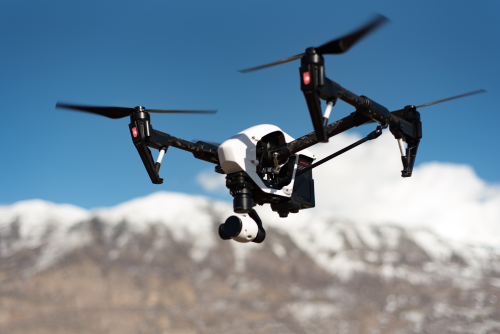
Using drones in a marketing agency can be profitable, but only if you stop selling “cool aerial shots” and start selling marketing outcomes. Agencies pay for footage that helps win attention, tell a location story, support a campaign, and arrive on time without creating legal or brand risk. If you want to learn how to use drones in a marketing agency and turn flying into real revenue, the key is packaging drone work as a reliable service, not a one-off creative extra.
Quick Take
- The best agency drone work is usually tied to a bigger marketing goal: property launches, tourism campaigns, hospitality promos, event coverage, retail openings, brand films, and recurring social content.
- Agencies care less about your drone model and more about whether you can deliver the right clips, in the right formats, on schedule.
- Real revenue usually comes from one of four models: capture-only subcontracting, white-label production support, packaged content delivery, or recurring retainers.
- Quote the full job, not just the flight: planning, travel, permits or approvals where needed, shoot time, editing, revisions, and delivery.
- Build offers around deliverables such as vertical clips, horizontal edits, stills, raw footage, and versioned cutdowns.
- Never promise shots before verifying local aviation rules, site permissions, privacy limits, and event or crowd restrictions.
- If you want repeat work, act like an agency partner: clear briefs, clean file delivery, fast communication, and no surprises.
Where drones actually create value for marketing agencies
A drone is not the product. It is one capture tool inside a campaign.
That matters because agencies are rarely buying airtime. They are buying visual proof, attention, scale, movement, and context. A drone helps when the audience needs to understand place, size, energy, traffic flow, atmosphere, or access.
Best-fit use cases
Property and development marketing
This is the obvious one, but it still works because the value is clear.
Agencies use drone footage to show:
- lot size and boundaries, where allowed
- neighborhood context
- proximity to transport, coastline, parks, or business districts
- commercial property scale
- new development progress and launch visuals
Hospitality and travel campaigns
Hotels, resorts, vineyards, golf venues, marinas, and destination brands benefit from aerial context. A drone can show the experience in seconds.
Useful outputs include:
- hero establishing shots
- amenity overviews
- sunrise or sunset sequences
- short social clips for ads and reels
- stills for web banners and booking pages
Events and brand activations
Drones can help show crowd energy, venue scale, sponsor presence, and activation footprint. This only works if it is legally and operationally possible at that location, which often requires extra caution.
Retail, venues, and multi-site businesses
Agencies handling franchises, shopping centers, schools, clubs, or large campuses often need repeatable location content. That is where recurring revenue lives.
Corporate brand storytelling
Factories, logistics sites, campuses, headquarters, industrial facilities, and regional offices often need polished brand visuals. Aerials give instant scale and help make routine locations look more premium.
When drone footage is a weak fit
Drone work is less valuable when:
- the message depends on close human emotion rather than location
- the campaign is product-detail heavy
- the location is too restricted for practical approvals
- the client only wants one flashy shot with no broader use
- the footage will not be edited into a bigger story
If the drone is just there to make the video feel “more cinematic,” you may win the job once. If it solves a real content problem, you can win it repeatedly.
How agencies buy drone services
Most pilots lose money because they think like operators, not like service partners. Agencies want predictable inputs they can plug into their production workflow.
Here are the most common ways drone work is sold into agencies:
| Model | Best for | What you deliver | Revenue profile | Main risk |
|---|---|---|---|---|
| Capture-only subcontractor | New pilots building relationships | Flight planning, on-site capture, raw footage | Lower margin but easier to sell | You become a commodity |
| White-label drone partner | Pilots who work well behind the scenes | You act under the agency’s brand and process | Good repeat potential | You need strict professionalism and discretion |
| Packaged content provider | Pilots with editing and delivery skills | Capture plus edited clips, stills, cutdowns, selects | Better margins | More post-production time than expected |
| Recurring retainer partner | Pilots with niche focus and reliable scheduling | Monthly or quarterly content production | Best long-term revenue stability | Requires consistent quality and account management |
| FPV add-on specialist | Skilled FPV pilots with strong safety discipline | Fast-motion interior or action sequences | Premium in the right jobs | Smaller market and higher execution risk |
Which model is best for most pilots?
If you are starting out, the easiest entry is usually capture-only or white-label work for an existing agency.
If you want better margins, move toward packaged delivery. That means you are not just handing over raw files. You are giving the agency usable assets.
If you want stable income, pursue retainers with verticals that need repeat content, such as:
- hospitality groups
- real estate marketers
- tourism boards or destination agencies
- venue and event marketers
- developers with ongoing launch cycles
- multi-location retail or service brands
What agencies will actually pay for
A marketing agency does not want to manage your process for you. The more you reduce friction, the more valuable you become.
Agencies pay for reliability more than flight time
The following are all billable value, even if clients do not always call them out by name:
- pre-production planning
- shot list development
- local rule and airspace review
- location coordination
- weather planning and backup dates
- efficient on-site execution
- clean, usable file delivery
- color-corrected selects
- vertical and horizontal format awareness
- fast communication
- revision discipline
A pilot who captures beautiful footage but misses the edit deadline is less useful than a pilot who delivers solid footage in a clean, agency-friendly package.
Build offers around deliverables, not batteries
A strong offer might include:
- one shoot window or one production day
- a defined shot list
- a set number of edited clips
- both vertical and horizontal exports where needed
- a small set of still images
- raw footage by request
- one or two revision rounds
- a stated delivery timeline
- a reschedule policy for weather
That is easier for an agency to resell than vague language like “drone coverage included.”
Three offer structures that are easy to sell
1. Capture Day
Best for agencies with in-house editors.
Include:
- planning call
- on-site flight capture
- organized raw footage
- same-day or next-day upload
- simple usage terms
2. Social Content Pack
Best for social and content agencies.
Include:
- planned shot list for short-form content
- multiple short edits
- vertical-first exports
- thumbnail stills or frame grabs
- light color correction
3. Campaign Add-On Package
Best for brand films, launch campaigns, hospitality, and property.
Include:
- aerial hero shots
- supporting stills
- versioned cutdowns for ads and web
- optional ground capture if you also shoot handheld
How to price drone work without wrecking your margin
There is no universal global rate card that stays accurate for every market, location, risk level, and client type. Instead of copying someone else’s number, use a quoting structure that protects your time and leaves room for real profit.
Price the whole assignment
Your quote should usually account for some or all of these:
-
Pre-production – briefing – concept alignment – site research – rule and restriction checks – schedule planning
-
Production – travel – shoot time – crew support if needed – backup time for weather or changing light
-
Post-production – file organization – culling – color correction – editing – format versions – revisions
-
Risk and logistics – complex locations – difficult access – permit coordination where applicable – site-specific restrictions – special insurance requirements if the client asks for them
-
Usage and urgency – tight turnaround – expanded campaign usage – larger asset libraries – archiving requests
Good pricing habits
- Quote by scope, not by how many batteries you think you will use.
- Separate capture, editing, and extras so the client sees what adds cost.
- Limit revision rounds in writing.
- Add travel and waiting time when a client controls access or timing.
- Charge more when the job complexity increases, even if the actual flight is short.
- Protect your weather policy. Drone work is not fully schedule-proof.
Where the margin usually is
The lowest-margin work is often simple raw-footage capture for agencies that treat operators as interchangeable.
Better-margin work usually includes:
- pre-planned shot lists
- edited deliverables
- content versioning
- recurring location shoots
- niche expertise, such as hospitality, tourism, or premium property
- white-label reliability for agencies that need a trusted specialist
The highest-value position is not “best pilot.” It is “least stressful specialist to hire.”
A simple workflow that agencies trust
If you want repeat bookings, your workflow matters as much as your footage.
A clean process looks like this
-
Qualify the brief – What is the campaign goal? – Where will the footage be used? – What formats are needed? – Who approves the final work?
-
Confirm feasibility – Can you legally and safely fly there? – Does the client have site access permission? – Are there people, traffic, or event constraints?
-
Lock the deliverables – Number of clips – edit length – aspect ratios – stills – raw footage – turnaround time
-
Plan the shot list – hero shots – approach shots – reveal shots – contextual location shots – safety-friendly alternatives if a preferred shot is not possible
-
Shoot efficiently – capture the must-have assets first – work around light and weather – keep a backup plan if conditions change
-
Deliver in an editor-friendly way – logical folder names – clear file labeling – selects separated from full raw footage – export versions in the formats requested
-
Turn the job into the next job – suggest seasonal updates – recommend cutdowns for ads – propose a monthly or quarterly content calendar
Safety, legal, compliance, and operational risks
This is where many agency relationships go wrong. The account manager may assume the pilot “handles all that.” You need to be clear about what you can handle, what must be verified, and what cannot be promised upfront.
Before any commercial drone job, verify:
- whether commercial operation is allowed under the local aviation rules
- whether you, your aircraft, and your operation meet local requirements
- whether the site sits in restricted or controlled airspace
- whether takeoff and landing are allowed from that property
- whether the landowner, venue, or organizer has granted permission
- whether the planned shots involve people, traffic, crowds, roads, coastlines, parks, heritage sites, or protected areas with extra limits
- whether privacy or data protection rules affect filming identifiable people
- whether the client expects proof of insurance
- whether local authorities require special approvals for events or city-center operations
If you travel for agency shoots across borders, also verify airline battery rules, local import requirements for professional gear, and any temporary flight restrictions at the destination.
Put responsibilities in writing
Your agreement or scope document should state:
- who secures location permission
- who secures talent or model releases if recognizable people are featured
- who handles brand approvals
- what happens if weather prevents the shoot
- what happens if a requested shot is not legal or safe
- how revisions are handled
- what usage the client receives
That last point matters. “Usage” means where and how the content can be used. If you do not define it, misunderstandings are common.
Common mistakes that keep pilots from real revenue
Selling “drone shots” instead of campaign results
Agencies are not buying elevation. They are buying content that helps their client market something.
Sending one generic reel to every agency
A property agency, tourism agency, and event agency do not care about the same proof. Build niche examples.
Underquoting post-production
Many pilots price the flight and forget the hours spent organizing, selecting, editing, exporting, and revising.
Ignoring vertical content
A lot of agency demand now lives in short-form social. If you only think in horizontal widescreen, you limit your value.
Promising risky shots
If the requested shot may not be legal, safe, or practical, say so early. A good agency partner protects the client from bad ideas.
No revision boundaries
Unlimited revisions quietly destroy margin.
Breaking white-label trust
If an agency brings you in under its brand, do not try to go around them to the end client unless that relationship is clearly agreed.
Treating every job like an art project
Commercial work rewards consistency, not endless experimentation. Get the required assets first. Then get the creative extras.
How to land your first recurring agency client
You do not need a massive portfolio. You need a tight offer and evidence that you understand agency pressure.
A practical path
-
Pick one niche first
Hospitality, real estate, tourism, venues, and local business content are all easier than trying to serve everyone. -
Build a niche-specific sample set
Even three strong examples beat a long, unfocused cinematic montage. -
Create three clear packages
For example: Capture Day, Social Content Pack, and Campaign Add-On. -
Reach out to agencies with a useful angle
Show that you understand their client needs, formats, and deadlines. -
Make the first job low-friction
Fast planning, clear deliverables, neat file delivery, and no drama. -
Ask for the next use case before the project ends
Seasonal update, new location, ad cutdowns, or monthly content refresh.
The goal is not just to be hired. The goal is to become the drone person the agency does not want to replace.
FAQ
Should I target agencies or end clients first?
If you want steady volume and less selling on every project, agencies are often a smart route. End clients can pay well too, but agencies can bring repeat work across multiple accounts if you become trusted.
Do agencies usually want raw footage or edited deliverables?
Both exist, but edited deliverables usually create better margins. Many agencies like raw footage for flexibility, but they still value clean selects, fast organization, and versioned exports.
Is FPV necessary for agency work?
No. FPV can be a strong niche for tours, venues, gyms, automotive, and certain brand campaigns, but most agency drone revenue still comes from reliable standard aerial capture and well-packaged deliverables.
Should I charge by hour, half-day, or project?
Project or scope-based pricing usually works best because it reflects planning, risk, editing, and delivery. Hourly pricing can make sense for extra editing or waiting time, but it rarely captures the full value of the assignment.
What if the agency asks for a shot that may not be legal or safe?
Do not agree first and figure it out later. Explain the constraint, verify the rules, and offer a safe alternative. Your credibility goes up when you protect the client and the agency from avoidable risk.
Do I need expensive gear to work with agencies?
Not necessarily. Agencies care more about dependable image quality, backup batteries, clean workflow, and consistent results than about owning the biggest aircraft. Reliability beats spec-sheet bragging rights.
How do I turn a one-off shoot into a retainer?
Propose a repeatable content rhythm. That could be monthly property updates, quarterly venue refreshes, seasonal hospitality shoots, or regular social asset days for multi-site brands. Retainers happen when the client sees an ongoing content need, not just one successful flight.
The next move
If you want real revenue from drones in a marketing agency, stop leading with flying and start leading with usefulness. Pick one niche, build one clear offer, tighten your compliance process, and make delivery easy enough that an agency can resell your work without worrying. That is how drone work becomes a business, not just a booking.