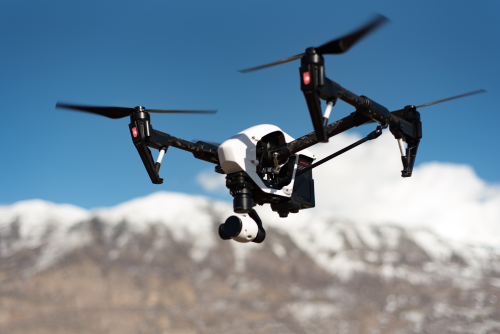
If you want to know how to use drones in a marketing agency without looking generic or undercutting your value, the short answer is this: stop selling “drone footage” and start selling clearer campaign outcomes. The drone should serve the brief, the audience, and the distribution plan, not become the whole creative idea. Agencies that win with drones treat them as a strategic production tool, price them like a specialized workflow, and manage the operational risk properly.
Quick Take
A marketing agency should use drones to add perspective, context, scale, and movement that ground cameras cannot easily deliver. But the fastest way to look cheap is to pitch the drone as a novelty, recycle the same reveal shots, or quote it like a commodity add-on.
Here is the practical approach:
- Tie every drone sequence to a campaign goal, not just aesthetics.
- Build shot plans around audience questions: location, scale, access, atmosphere, trust, or proof.
- Package drone work with strategy, pre-production, editing, and multi-platform deliverables.
- Choose the right operating model: in-house, contractor, or specialist partner.
- Price for planning, compliance, crew skill, weather risk, and business value, not just flight time.
- Verify local aviation, privacy, property, and venue rules before committing to a commercial shoot.
Why agencies get drone content wrong
Drone footage is now common enough that clients no longer see it as automatically premium. That is not bad news. It just means the value has moved.
The old pitch was:
- “We can make it look cinematic.”
- “We’ll get a cool aerial reveal.”
- “We’ll add drone clips to the edit.”
The better pitch is:
- “We’ll show the location advantage your buyers care about.”
- “We’ll make the property, venue, project, or brand easier to understand in 10 seconds.”
- “We’ll create a campaign asset set that works across ads, web, social, sales, and events.”
The difference is strategic clarity.
Generic drone work usually happens when agencies do one or more of these things:
- Use the same orbit, pullback, and top-down shots on every job
- Skip pre-production and hope the location creates the story
- Ignore where the content will actually be used
- Treat drone footage as a cheap add-on instead of a specialized production layer
- Deliver one hero video when the client actually needs 15 cutdowns, stills, and vertical variants
- Compete on “we also have a drone” instead of a better marketing outcome
When that happens, the agency looks replaceable. Worse, it trains the client to compare you on day rate alone.
The real job of drones in a marketing agency
A drone should answer a specific communication problem. That is how you use drones in a marketing agency without looking generic or undercutting your value.
What a drone does better than most other tools
A drone is strongest when the viewer needs to understand one of these fast:
- Scale
- Context
- Location
- Access
- Progress
- Atmosphere
- Spatial relationship
- Movement through a place
That makes drones especially useful in campaigns for:
- Hospitality and tourism
- Real estate and development marketing
- Events and destination marketing
- Education campuses
- Industrial and logistics brands
- Construction progress for client-facing communications
- Retail centers and mixed-use projects
- Resorts, venues, and attractions
- Corporate brand films and employer branding
- Urban, infrastructure, and place-based storytelling
Match the drone to the funnel
A lot of agencies make drone content prettier than it is useful. A better system is to map aerial content to the buyer journey.
Top of funnel: attention and emotion
Use the drone to create:
- Opening sequences that establish a place quickly
- Sense of ambition, prestige, energy, or calm
- Visual differentiation in social ads and brand videos
This is where cinematic movement matters, but it still needs brand intent.
Middle of funnel: understanding and trust
Use the drone to show:
- What is nearby
- How large the site really is
- What access routes look like
- How the venue, property, or destination is organized
- Proof that the experience matches the promise
This is where aerials stop being decoration and start reducing buyer hesitation.
Bottom of funnel: conversion support
Use the drone for:
- Sales presentations
- Leasing or investor materials
- Website headers that orient visitors instantly
- Recruitment content that shows workplace environment
- Project updates that make progress easy to grasp
At this stage, clarity often matters more than “cinematic.”
Use the drone as a role, not a style
One of the best ways to avoid generic work is to assign the drone a role in the story before the shoot.
Here are five useful roles.
The establisher
Shows where the brand or site sits in the wider environment.
Best for:
- Hotels
- Campuses
- Retail centers
- Office parks
- Resorts
- Event venues
The explainer
Makes layouts, access points, or site relationships understandable.
Best for:
- Developments
- Warehouses
- Industrial facilities
- Transport-linked locations
- Large visitor destinations
The proof shot
Confirms what the client claims.
Best for:
- “Close to the beach”
- “Minutes from downtown”
- “Large-scale operations”
- “Crowd energy”
- “Scenic setting”
- “Easy access”
The transition tool
Moves the viewer between story beats without a hard cut.
Best for:
- Brand films
- Tourism edits
- Recruitment content
- Event recaps
- Lifestyle campaigns
The repetition engine
Creates a reusable visual system the agency can deploy across campaigns.
Best for:
- Multi-location brands
- Franchise groups
- Property portfolios
- Year-round tourism accounts
- Ongoing social retainers
When you define the role first, the shot list becomes more intentional and less copy-paste.
The best operating model for your agency
Not every agency should buy drones, train staff, and build an in-house flight operation. For many teams, the smartest move is a trusted partner network.
Compare the main models
| Model | Best for | Main upside | Main downside | Margin logic |
|---|---|---|---|---|
| In-house pilot and drone kit | Agencies with frequent local production and tight creative control needs | Fast turnaround, direct control, easier content batching | Training, compliance, insurance, maintenance, operational risk | Best when utilization is consistently high |
| Freelance drone operator network | Agencies with varied geography or irregular volume | Flexible, lower fixed cost, easier scaling | Quality can vary, less standardization, scheduling risk | Good if you have clear briefs and review process |
| Specialist white-label production partner | Agencies selling larger campaigns or enterprise work | Strong process, higher reliability, advanced capabilities | Lower raw margin than pure in-house, less spontaneity | Strong when client expectations and risk are high |
| Hybrid model | Agencies with regular work plus occasional complex jobs | Balanced flexibility and control | More process management needed | Often best for growing agencies |
When in-house makes sense
Build in-house only if most of these are true:
- You have repeat need, not occasional curiosity
- Your projects are concentrated in a manageable geography
- You have someone who can own operations, not just flying
- You want repeatable branded coverage for retainer clients
- You can support maintenance, batteries, backups, and insurance
- You understand that weather and compliance affect schedules
When outsourcing is smarter
Use contractors or partners if:
- Drone work is still a sales enhancer, not a production core
- Your clients are spread across regions or countries
- You need flexibility more than daily access
- You want to avoid compliance overhead
- Your team is strong in creative direction but not aviation operations
A lot of agencies should not become mini aviation departments. They should become excellent commissioners of aerial work.
A better workflow: how to build drone content that feels strategic
Here is a practical process that improves both creative quality and commercial value.
1. Start with the distribution plan
Before anyone talks about aircraft, ask:
- Where will this content run?
- What aspect ratios are required?
- How many assets does the campaign need?
- What does success look like: awareness, leads, bookings, leasing interest, investor confidence, attendance?
A single horizontal hero edit is rarely enough now. Agencies create more value when they turn one shoot into:
- Brand film sequences
- Vertical social edits
- Short paid ad cutdowns
- Website header loops
- Sales deck clips
- Still frames for display or print
2. Write the aerial brief around business questions
Aerials should answer business questions, not just creative impulses.
Examples:
- Hospitality client: What does the guest get by being here?
- Developer: How do we show access, scale, and surrounding demand?
- Manufacturer: How do we prove operational footprint and seriousness?
- Tourism board: How do we make the destination feel distinct, not stock?
- Event organizer: How do we capture turnout and atmosphere credibly?
3. Build a shot architecture, not a loose wish list
A good drone brief is more like a system than a list of random moves.
Include:
- Story purpose of each shot
- Time of day
- Flight direction
- Subject movement
- Ground camera companion shots
- Platform use for each asset
- Backup options if weather or site conditions change
For example, a resort campaign might include:
- Wide location context for the opening
- Access route shot for ease-of-arrival messaging
- Amenity reveal for paid social
- Quiet atmospheric top-downs for the website
- Vertical passes for reels and stories
- Sunset hero movement for the brand film close
That is already more valuable than “we got some nice aerials.”
4. Pair drone footage with ground footage on purpose
Drone-only edits often feel distant and generic. The fix is simple: make the drone one layer of the visual system.
Use aerials to do one of three things:
- Open a scene
- Re-orient the viewer
- Raise the energy
Then let ground footage deliver:
- Faces
- Product detail
- Emotion
- Interaction
- Texture
- Conversion cues
The mix is what makes the campaign feel owned, not stock-like.
5. Plan for edit variants before the shoot
One of the easiest ways to protect your margin is to think in asset families.
From one well-planned shoot, an agency may deliver:
- 1 main brand or campaign edit
- 3 to 6 platform-specific cutdowns
- 5 to 20 stills or frame grabs where quality allows
- 2 to 5 website motion loops
- Localized versions for different markets or sites
- Seasonal refresh edits from the same footage set
That is how you stop selling a “drone video” and start selling a content engine.
How to price drone work without undercutting your agency
The moment you quote drone work as if the client is renting a gadget, you lose ground.
Clients should not mainly pay for propellers in the air. They should pay for the full production layer required to get useful, compliant, campaign-ready content.
What belongs in the price
Your quote should account for:
- Creative planning
- Shot design
- Location research
- Risk review and operational planning
- Pilot time and crew time
- Travel and on-site logistics
- Weather contingency
- Editing and color work
- Asset versioning
- Revisions
- Licensing and usage terms where relevant
- Project management
Better pricing structures than “drone add-on”
1. Production package pricing
Best when the drone supports a broader shoot.
You price the campaign production, not the aircraft separately. The drone is one production method inside the package.
Good for: – Brand films – Property marketing – Recruitment campaigns – Tourism promos
2. Deliverable bundle pricing
Best when clients care about output more than shoot details.
Example bundle logic: – 1 hero edit – 4 social cutdowns – 8 still exports – Website motion loop set
Good for: – Retainer clients – Multi-platform launches – Hospitality and destination work
3. Campaign day plus post-production pricing
Best when the scope is still forming.
You separate: – Production day – Specialty aerial capture – Editing/versioning – Optional extra locations or weather contingency
Good for: – Agencies testing a new service line – Clients with changing approval layers
4. Retainer content system pricing
Best when drone coverage repeats across months.
You sell: – Planned quarterly or monthly capture windows – Refresh assets – Seasonal updates – Location portfolio coverage
Good for: – Real estate groups – Tourism accounts – Large venues – Franchise or multi-site brands
How to protect your margin
Do these things consistently:
- Avoid quoting on flight minutes
- Avoid “free drone included” as a sales tactic
- Scope revision rounds clearly
- Scope weather rescheduling terms clearly
- Define who handles location permissions and property access
- Specify final deliverables, formats, and usage
- Charge for complexity, not just airtime
A 15-second aerial sequence can carry more business value than 3 minutes of random footage. Price accordingly.
A simple test for whether drone footage deserves to be in the campaign
Before adding drone work, ask these five questions:
- Does the aerial view make the offer easier to understand?
- Does it show something ground footage cannot show efficiently?
- Will it improve performance on the channels that matter?
- Can we integrate it with the campaign story, not just the edit style?
- Can we capture it safely, legally, and reliably in this location?
If the answer is no to most of these, skip the drone. Restraint can make your agency look more senior, not less capable.
Compliance, safety, and operational risks agencies need to manage
Commercial drone work is not just a creative decision. It is an operational one.
Rules vary by country and sometimes by city, park, venue, or landowner. Before promising a shoot, verify what applies in the actual location with the relevant aviation authority and any local property or venue manager.
Core checks before a commercial shoot
Aviation and operator legitimacy
Verify:
- Whether the pilot is authorized for the type of operation in that jurisdiction
- Whether any location-specific approvals are required
- Whether the planned area has airspace restrictions or special conditions
- Whether the operation involves extra restrictions because of nearby people, roads, infrastructure, or sensitive sites
Insurance and liability
Verify:
- Whether the operator has appropriate commercial insurance
- Whether the client or venue requires proof of insurance
- Whether subcontractor insurance aligns with your agency contract terms
Property and venue permissions
Flying law and property permission are not always the same issue.
You may need to verify: – Permission to take off or land on private property – Venue rules for events, resorts, campuses, or attractions – Site access windows and safety procedures – Brand or reputation concerns around visible people, vehicles, or neighboring property
Privacy and data protection
Be careful with: – Capturing identifiable people without proper consent where relevant – Filming homes, private spaces, or sensitive facilities – Using footage beyond the agreed purpose – Storing and sharing location-sensitive media carelessly
Weather and production risk
Build margin and schedule room for: – Wind – Rain – Low visibility – Harsh midday light – Last-minute access issues – Crowd density that changes the operational plan
A good agency does not promise what safe operations may not allow.
Common mistakes agencies make with drones
1. Selling the tool instead of the outcome
Clients buy results. They do not buy your excitement about flight.
2. Repeating the same shot grammar
Every market has seen the standard orbit, pullback, and straight-up reveal. Use them only when they serve the brief.
3. Treating drone footage as enough on its own
Aerials without human context often feel cold, distant, or stock-like.
4. Forgetting platform-specific framing
A shot that looks great in wide format may fail in vertical or cropped paid placements.
5. Quoting too cheaply to win
This trains the client to expect premium risk and planning at budget content rates.
6. Ignoring operational complexity
Urban shoots, waterfronts, active venues, and industrial sites can add real planning burden.
7. Not owning post-production value
The footage is only half the asset. Sequencing, pacing, text overlays, brand consistency, and multi-version delivery are where agencies often create the most value.
8. Using drones when they are not needed
Sometimes a gimbal, crane, rooftop, or static telephoto shot will tell the story better and faster.
What better agency drone proposals look like
A stronger proposal usually includes:
- Campaign objective
- Why aerial content matters specifically for this brief
- Planned deliverables by platform
- Production approach and who is responsible for what
- Compliance and approval assumptions that still need verification
- Weather and scheduling terms
- Revision scope
- Clear statement of value beyond “capturing drone footage”
Example positioning language
Instead of: – “Drone package included”
Try: – “Aerial production layer to establish location, scale, and access across campaign hero edit, vertical cutdowns, and website motion assets.”
Instead of: – “One drone video”
Try: – “Multi-use aerial asset set designed for paid social, landing page engagement, and sales support content.”
That change alone makes the service feel more senior.
FAQ
Should every marketing campaign include drone footage?
No. Use drones when they add context, scale, location clarity, atmosphere, or proof that ground cameras cannot provide efficiently. If the message is more about people, product detail, or conversation, aerials may be optional.
Is it better to hire a freelance pilot or build an in-house drone team?
It depends on your volume and control needs. If drone work is frequent, local, and process-heavy, in-house can make sense. If your demand is irregular or geographically spread out, a vetted contractor or specialist partner is often the smarter commercial choice.
How do agencies stop drone content from looking like stock footage?
Tie each aerial shot to a brand message, a customer question, or a campaign placement. Pair aerials with on-the-ground storytelling, capture custom location-specific moments, and build edits around the client’s actual sales narrative rather than generic cinematic moves.
What should be included in a drone quote for client work?
At minimum: planning, production scope, aerial capture, editing, deliverables, revisions, weather assumptions, travel or location factors, and any compliance or permission dependencies that still need confirmation. Do not reduce the quote to flight time alone.
Can FPV drone footage help an agency stand out?
Sometimes. FPV can create high-energy interior-to-exterior or dynamic movement shots that standard camera drones cannot match easily. But it has a distinct style, a steeper operational skill curve, and it only fits certain brands and campaigns. Use it when the energy supports the brief, not just to look flashy.
Do clients care which drone model you use?
Usually less than agencies think. Most clients care about results, safety, reliability, and deliverables. The model matters mainly when it affects image quality, portability, low-light performance, noise, indoor suitability, or workflow. Sell outcomes first.
What approvals do agencies need for commercial drone shoots?
There is no single global answer. Requirements vary by country, airspace, location type, and operation complexity. Verify commercial flight rules, local airspace restrictions, property permissions, privacy considerations, insurance expectations, and venue policies before the shoot.
How should agencies handle weather delays?
Set expectations in the proposal and contract. Explain that aerial work is weather-dependent, define what counts as unsuitable conditions, and outline rescheduling terms in advance. That protects both the client relationship and your margin.
The move that separates premium agencies from generic ones
The premium move is not “having a drone.” It is knowing when aerial content changes the marketing result, designing the capture around that result, and packaging it into useful deliverables the client can actually deploy.
If you are adding drones to your agency, make one decision first: will you sell footage, or will you sell strategic visual advantage? The first gets compared on day rate. The second is where your value holds.