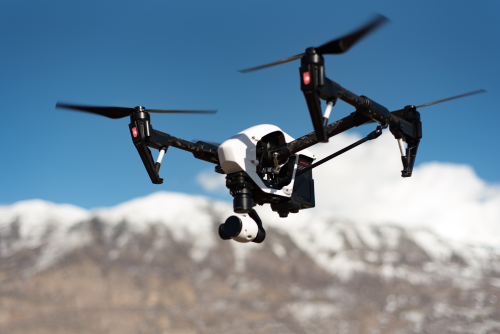
Portable drones or heavy-lift drones? For most buyers, this decision is less about size and more about friction, payload needs, and how often the aircraft will realistically leave the case. The smarter drone path is the one that fits your actual flights, your actual deliverables, and your actual tolerance for setup, compliance, transport, and risk. In many cases, the wrong choice is not buying too little drone. It is buying far more drone than your work truly requires.
Quick Take
If you want the shortest answer, here it is:
- Choose a portable drone if you mostly fly solo, travel often, create photo or video content, do quick site checks, shoot real estate or tourism work, or need a drone you will carry and deploy frequently.
- Choose a heavy-lift drone if your work depends on specialized payloads, such as interchangeable cameras, high-end cinema rigs, thermal and zoom combinations, LiDAR, or other enterprise sensors that a compact drone cannot carry.
- Portable is usually the smarter first buy for beginners, hobbyists, creators, and many small commercial operators because lower friction leads to more flight hours and faster return on investment.
- Heavy-lift is usually the smarter buy only when the aircraft’s extra capacity is directly tied to revenue, mission-critical data, or operational requirements.
- For many buyers, the real winner is a hybrid path: own a portable drone for daily work, then rent or subcontract heavy-lift capability until demand is regular and clearly profitable.
What these two drone paths really mean
Before comparing them, it helps to define the categories in practical terms.
What counts as a portable drone
A portable drone is usually:
- Compact or foldable
- Easy for one person to transport
- Fast to set up
- Built around an integrated camera or fixed payload
- Better suited to travel, quick deployment, and frequent everyday use
This category covers most consumer and many prosumer drones, plus some compact enterprise models.
What counts as a heavy-lift drone
A heavy-lift drone is usually:
- Larger and more case-intensive
- Designed to carry more weight, called a payload
- Built for modular sensors or interchangeable camera systems
- More demanding in batteries, logistics, maintenance, and crew discipline
- Better suited to specialized commercial, industrial, cinema, or public safety workflows
Not every larger enterprise drone is a true heavy-lift platform, but the buying logic is similar: you are trading portability and speed for payload flexibility, capability, and sometimes greater redundancy.
Portable drones vs heavy-lift drones at a glance
| Factor | Portable drones | Heavy-lift drones | Why it matters |
|---|---|---|---|
| Deployment speed | Very fast | Slower | Faster setup means more actual flights |
| Transport | Backpack or small case | Large case(s), more planning | Travel and vehicle space change everything |
| Crew needs | Often solo-friendly | Often better with a more structured crew workflow | Labor cost and complexity go up |
| Camera flexibility | Usually integrated | Usually modular or payload-based | Critical if deliverables vary by client |
| Sensor ceiling | Good to very good | Potentially much higher | Matters for cinema, thermal, LiDAR, zoom, mapping |
| Operating cost | Lower | Much higher | Batteries, props, repairs, insurance, and downtime add up |
| Risk footprint | Smaller | Larger | Bigger aircraft raise safety and compliance stakes |
| Travel friendliness | Strong | Weak to moderate | Airline batteries and bulky cases can be a major barrier |
| Repair and downtime | Usually simpler | Usually more expensive and disruptive | A grounded platform can delay paid work |
| Client perception | Efficient, modern, discreet | Serious, industrial, high-spec | Some clients care, but results matter more |
| Upgrade path | Easy first step | Better as a justified investment | Wrong timing leads to buyer regret |
Use this 7-step test before you buy
If you are truly stuck between portable and heavy-lift, do not start with brand names or spec sheets. Start with your mission profile.
1. Review your last 10 to 20 real flights or your next 10 likely jobs
Ask:
- What did you actually shoot or inspect?
- What file or output did the client or project really need?
- Could an integrated camera have completed the job?
If most of your work is standard photo, video, basic mapping, social content, property marketing, tourism, or documentation, portable usually wins.
If a meaningful share of your work depends on thermal, zoom, LiDAR, high-end cinema payloads, or specialized sensors, heavy-lift starts to make sense.
2. Identify whether the payload is the product
This is the key question.
If your product is mainly:
- Aerial photos
- Standard video
- Quick visual inspections
- Progress updates
- Social-first content
You probably do not need heavy-lift.
But if your product is:
- Advanced inspection data
- Survey-grade capture using specialized hardware
- Cinema footage that must match a ground camera workflow
- Multi-sensor operations
- Industrial or public safety data collection
Then the payload is not a nice extra. It is the product itself. That is where heavy-lift earns its keep.
3. Be honest about how often you travel or deploy alone
Portable drones win this category by a mile.
If you regularly:
- Hike to locations
- Fly while traveling
- Pack light for creator work
- Run solo site visits
- Move between multiple small jobs in one day
A heavy-lift system can become a burden fast. Bigger aircraft often mean bulkier cases, more batteries, more charging needs, longer setup, and fewer spontaneous flights.
A drone that is easy to carry tends to get used more. That matters more than most buyers admit.
4. Count how much setup friction you can tolerate
Many buying mistakes happen because people shop for peak capability instead of repeatable workflow.
Portable drones are usually better if you value:
- Quick launch
- Minimal assembly
- Fast battery swaps
- Short turnaround between locations
- Low mental overhead
Heavy-lift platforms are better if your team can support:
- Preplanned operations
- Longer setup and teardown
- More formal preflight procedures
- Higher battery management demands
- Payload calibration and integration checks
If your real-world flying style is casual, agile, frequent, and time-sensitive, heavy-lift may look exciting on paper but feel exhausting in practice.
5. Calculate the whole system cost, not just the aircraft
The aircraft is never the full bill.
Ask what else you need:
- Extra batteries
- Chargers or power solutions
- Cases and vehicle space
- Spare props and maintenance parts
- Payloads or camera systems
- Mission planning or data software
- Insurance
- Training time
- Repair support
- Downtime coverage if the aircraft is grounded
Portable drones usually keep the whole ecosystem more manageable. Heavy-lift systems can be justified, but only when the mission value clearly offsets the larger operating burden.
6. Check the compliance load that comes with the aircraft and mission
This is where buyers often get surprised.
Globally, drone rules vary widely, but heavier aircraft and more complex operations often bring:
- Stricter operating categories
- More conservative separation from people or property
- Additional pilot competency requirements
- Stronger maintenance and documentation expectations
- More insurance scrutiny
- More demanding site and risk assessment
Even if a larger aircraft is legal where you operate, it may be less practical in the places you need to work most.
7. Ask whether renting is smarter than owning
This question saves buyers from expensive overreach.
If you only occasionally need:
- LiDAR
- Thermal plus zoom payloads
- A cinema rig with interchangeable lenses
- A larger aircraft for a specific client contract
Renting or subcontracting is often the smarter move until those jobs become routine. Ownership makes more sense when the capability is used consistently enough that availability, margin, and workflow control outweigh the capital and operating cost.
When portable is the smarter drone path
For most pilots and many businesses, portable is not the compromise. It is the correct tool.
You need the drone to come with you everywhere
If you are a travel creator, location photographer, real estate operator, tourism business, field marketer, or solo media professional, carrying the drone easily matters almost as much as image quality.
A drone you leave behind because it is annoying to pack is not a professional asset. It is shelf décor.
Your deliverables are fast, frequent, and repeatable
Portable drones are ideal when your workflow is built around:
- Short shoots
- Fast turnarounds
- Standardized editing
- Social and web delivery
- Routine site documentation
- Repeat visits across many locations
Integrated systems reduce friction. You do not waste time matching payloads, balancing camera setups, or managing a large transport footprint.
You are still learning what kind of pilot or operator you are
Beginners and early-stage buyers often overestimate how quickly they will grow into a complex platform.
A portable drone is usually the better first step because it lets you learn:
- Flight discipline
- Airspace awareness
- Battery management
- Client expectations
- Shot planning
- Weather judgment
- Preflight habits
Those skills transfer upward. Buying heavy-lift too early often means paying more to learn slower.
You want more flights, not just more specs
A practical truth: the best drone for many buyers is the one they will fly three times a week, not the one they are proud to own but rarely deploy.
Portable drones tend to win because they lower the barrier to action.
When heavy-lift is the smarter drone path
Heavy-lift is the right choice when smaller platforms stop meeting the mission, not when you simply want something more serious-looking.
Your client or mission needs a specialized sensor
This is the clearest reason to go heavy.
Examples include:
- LiDAR, which uses laser pulses to build 3D models and terrain data
- Advanced thermal systems for inspection or emergency use
- Long-range zoom and visual payload combinations
- Interchangeable-lens cinema camera systems
- Multi-sensor workflows that compact drones cannot support
If the sensor is the reason you win the job, the aircraft carrying it is a justified business tool.
You need modularity, not just portability
Portable drones are strong when the built-in system matches most of your work. Heavy-lift becomes smarter when your workload changes by project and you need the aircraft to adapt.
That may mean switching between:
- Mapping payloads
- Inspection payloads
- Cinema payloads
- Specialized public safety tools
- Different camera and lens combinations
Your operations are already structured enough to support it
Heavy-lift systems fit best when you already have:
- Planned field operations
- Trained pilots and observers where required
- Standard operating procedures
- Strong battery and maintenance discipline
- Secure transport and storage
- Clients who understand and pay for higher-spec operations
Without that structure, a heavy-lift platform can create more operational drag than business value.
The job economics genuinely support ownership
Heavy-lift should usually be tied to one or more of these:
- Higher-value deliverables
- Consistent mission volume
- Time savings versus outsourcing
- Stronger margin control
- Better service reliability because you control scheduling
If none of those are clearly true yet, ownership may be early.
Total cost of ownership changes the answer more than buyers expect
A lot of portable-versus-heavy-lift debates get distorted because buyers compare only aircraft capability, not operational reality.
Portable usually wins on total ownership efficiency
Why?
- Lower battery spend
- Simpler charging
- Smaller cases
- Easier transport
- Lower repair shock
- Less crew overhead
- Less intimidating deployment in everyday environments
For many creators and small operators, that efficiency turns into actual profit because the drone gets used more often and with less wasted time.
Heavy-lift only wins when the mission value is repeatable
Heavy-lift can absolutely be the smart buy, but usually only when one or more of these are true:
- The payload directly generates billable value
- A compact system cannot meet the deliverable
- Clients specifically expect that class of capability
- Your team can keep utilization high enough to justify the ecosystem
If your heavy-lift need is occasional, ownership may be the least efficient path.
The smartest upgrade path for many buyers
A common low-regret progression looks like this:
- Start with a portable drone that covers the majority of your real work.
- Build flight hours, workflow discipline, and client understanding.
- Add accessories, batteries, storage, and software only where they improve output.
- Rent or subcontract heavy-lift for rare specialized jobs.
- Buy heavy-lift only after that work becomes consistent, profitable, and operationally supportable.
That path is less glamorous than jumping straight to a large platform, but it is often the financially smarter move.
Safety, legal, and operational limits to know
This choice is not only about budget and image quality. It is also about risk.
Heavier aircraft usually bring more consequences
In many jurisdictions, larger or more capable aircraft can mean stricter rules or more limitations. The exact details vary by country and operation type, so verify with the relevant civil aviation authority before you buy or fly.
Things to check include:
- Weight-based operating categories
- Rules around flying near people, roads, or built-up areas
- Night operation requirements
- Visual line of sight expectations
- Commercial operation rules
- Pilot qualification or registration requirements
- Remote identification or electronic conspicuity rules where applicable
- Maintenance and recordkeeping expectations
Payload missions can trigger extra scrutiny
Thermal, zoom, LiDAR, loudspeaker, spraying, delivery, or other non-basic operations may involve extra permissions, privacy concerns, or sector-specific rules. A drone that can technically carry a payload is not automatically cleared for every kind of operation.
Travel gets harder as battery size and kit size grow
Airline and airport handling of lithium batteries can be strict, and rules vary by carrier and country. Before traveling, verify:
- Airline battery limits
- Packaging requirements
- Carry-on versus checked rules
- Customs treatment for professional equipment
- Destination-country drone import and flight rules
A heavy-lift system that is easy to use locally may be awkward or impractical for frequent air travel.
Bigger aircraft need a bigger safety mindset
Larger drones generally need:
- More takeoff and landing space
- More conservative crowd and property management
- Better weather judgment
- More disciplined emergency planning
- More careful site control
Do not choose heavy-lift simply because you assume bigger means safer in wind or more professional in public. Safety comes from disciplined operations, not from mass alone.
Common mistakes buyers make
Buying for dream jobs instead of real jobs
If your booked or recurring work does not require specialized payloads, heavy-lift is often premature.
Confusing bigger with better footage
A larger drone can support better camera systems, but size alone does not guarantee better storytelling, editing, composition, or usable client outcomes.
Ignoring transport and battery burden
The best spec sheet in the world does not help when the kit is too annoying to move, charge, or maintain.
Underestimating compliance and documentation
As aircraft and missions become more complex, the paperwork, planning, and operational expectations usually grow too.
Assuming clients will pay more because the drone is bigger
Clients usually pay for outcomes, reliability, data quality, and safety. They do not automatically pay a premium because the aircraft looks expensive.
Forgetting downtime risk
If a portable drone is grounded, replacement or repair may be relatively manageable. If a heavy-lift system goes down, the impact on operations, crew, and client timelines can be much more severe.
Best buying path by pilot or team type
| Buyer type | Smarter first move | Why |
|---|---|---|
| Beginner or hobbyist | Portable | Easier learning curve, lower cost, more frequent flying |
| Travel creator or vlogger | Portable | Packing, deployment speed, and mobility matter most |
| Aerial photographer or solo videographer | Portable | Fast commercial workflow and strong everyday utility |
| Real estate or property media operator | Portable | Integrated camera systems handle most needs efficiently |
| Mapping startup | Portable first, heavy-lift later if needed | Many jobs can start compact; advanced sensors justify bigger systems later |
| Industrial inspection team | Depends on sensor needs | Portable may handle visual work; heavy-lift makes sense for advanced multi-sensor missions |
| Cinema production company | Heavy-lift if camera matching matters | Interchangeable payloads and lens flexibility can be mission-critical |
| Public safety or utility team | Heavy-lift or modular enterprise platform | Reliability, sensor choice, and structured operations often matter more than portability |
FAQ
Is a portable drone enough for most commercial work?
Often, yes. Many commercial jobs involve standard photo, video, documentation, marketing, or basic inspection tasks that a good portable drone can handle efficiently. The answer changes when your deliverable requires advanced sensors or a modular payload setup.
Do heavy-lift drones always fly better in wind?
Not automatically. Larger aircraft can offer more stability and authority in some conditions, but safe wind performance depends on the exact platform, payload, environment, and operating limits. Never assume size alone solves weather.
Should a beginner ever buy a heavy-lift drone first?
Usually not. Unless you are entering a very specific enterprise or cinema workflow with proper training and team support, a portable drone is usually the better place to build experience and reduce expensive mistakes.
Are portable drones good enough for mapping and inspection?
Sometimes. Compact drones can be very capable for many mapping and inspection tasks, especially visual and light-data workflows. Heavy-lift becomes more compelling when you need higher-end sensors, modular payloads, or advanced enterprise integration.
Is renting better than buying a heavy-lift drone?
For occasional specialized work, often yes. Renting or subcontracting lets you access advanced capability without carrying the full burden of ownership, maintenance, storage, compliance planning, and downtime risk.
Do heavier drones always produce better image quality?
No. Image quality depends on the camera, sensor, lens, stabilization, lighting, and operator skill. A well-used portable drone can outperform a poorly deployed heavy-lift system in real-world results.
What if I need both portability and advanced sensors?
Start by checking whether a compact enterprise drone can meet your mission. If not, the smart path may be two-tiered: portable for daily flying and a heavy-lift option for specialized contracts.
How do I know when it is time to upgrade to heavy-lift?
Upgrade when the limitation is no longer convenience or desire, but repeatable job requirements. If you are regularly turning away work, renting often, or needing payloads your portable platform cannot support, the timing may be right.
The decision that saves most buyers from regret
Buy the smallest system that can reliably complete the work you do most often, not the work you imagine doing someday. If 80 to 90 percent of your real flights are solo, travel-friendly, fast-turnaround missions, portable is probably your smarter drone path. If your revenue, data quality, or mission success clearly depends on specialized payloads and structured operations, heavy-lift is the right tool. And if you are in between, own portable, rent heavy-lift, and let real demand make the upgrade decision for you.