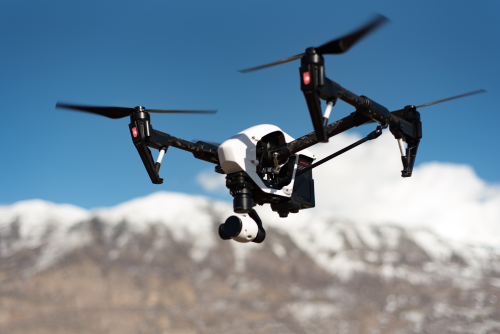
Portable drones vs heavy-lift drones is not really a size contest. It is a decision about what work you need to do, how much risk and complexity you can manage, and how much money you can afford to lock into gear before that gear earns its keep. For most first-time buyers and many solo operators, portable drones are the better fit, but heavy-lift systems make sense when your deliverables truly depend on larger cameras, specialized sensors, or a crew-based workflow.
Quick take
If you want the short answer, here it is:
- Choose a portable drone if you are a beginner, hobbyist, travel creator, solo real-estate shooter, small business marketer, or operator doing straightforward aerial photo and video work.
- Choose a heavy-lift drone if you already know you need a larger or interchangeable payload, industrial sensor workflow, cinema-grade camera package, or a more formal team operation.
- If you are unsure, start portable and rent heavy-lift when needed. That is the lowest-regret path for most buyers.
- Portable drones win on budget, convenience, travel, and learning curve.
- Heavy-lift drones win on payload flexibility, high-end output, and specialized commercial capability.
A good buying rule is simple: buy the smallest drone that can reliably deliver the work you actually do, not the work you imagine you might do one day.
What “portable” and “heavy-lift” usually mean
Before comparing them, it helps to define the categories clearly.
Portable drones
Portable drones are usually:
- Small enough to fit in a shoulder bag or backpack
- Quick to unfold, power on, and launch
- Built around an integrated camera
- Designed for one-person operation
- Easier to travel with than larger systems
This category includes travel-friendly consumer and prosumer camera drones. Some are ultra-light, while others are compact but still capable enough for paid work.
Heavy-lift drones
Heavy-lift drones are usually:
- Much larger aircraft, often transported in hard cases
- Designed to carry bigger cameras or specialized sensors
- More expensive to run, maintain, and insure
- More likely to involve preplanned operations and crew support
- Less convenient for casual flying or fast travel
In this context, “payload” means the camera or sensor the drone carries. A heavy-lift drone is useful when that payload is too large, too specialized, or too valuable for a compact drone setup.
One important nuance: not every enterprise drone is truly “heavy-lift.” Some mid-size industrial aircraft sit between these categories. But the buying logic stays the same: the more your work depends on payload flexibility, redundancy, and operational discipline, the closer you are to heavy-lift territory.
Portable vs heavy-lift drones at a glance
| Buying factor | Portable drones | Heavy-lift drones |
|---|---|---|
| Best for | Beginners, hobbyists, travel creators, solo operators, basic commercial capture | Cinema teams, advanced industrial work, specialized sensing, established enterprise programs |
| Upfront spend | Lower | Much higher |
| Ongoing costs | Moderate | High to very high |
| Setup and pack-down | Fast | Slower |
| Crew needs | Usually solo | Often better with trained crew support |
| Travel convenience | Strong | Limited |
| Payload flexibility | Low to moderate | High |
| Learning curve | Shorter | Steeper |
| Repair and replacement pain | Lower | Higher |
| Compliance pressure | Often lighter, but still regulated | Often stricter and more operationally demanding |
| Typical regret risk | Outgrowing capability later | Overbuying and underusing the system |
Budget: the real cost is bigger than the aircraft
Most buyers look at the drone price first. That is understandable, but it is also how people end up overcommitted.
Portable drone budget logic
Portable drones are usually the easier purchase because the full system is relatively contained. A typical buyer still needs to budget for:
- Extra batteries
- Spare propellers
- Charging hub or travel charger
- Case or bag
- Memory cards
- Possibly filters, depending on video use
- Replacement or backup plan if the drone is mission-critical
Even after those extras, a portable setup usually stays within a much more forgiving budget band than heavy-lift.
This matters because beginners rarely just buy a drone. They also buy time to learn, room for mistakes, and flexibility to upgrade later.
Heavy-lift budget logic
A heavy-lift purchase is rarely just one aircraft. It is usually a system. That system can include:
- The aircraft
- Payload or camera package
- Multiple large battery sets
- Higher-capacity chargers
- Transport cases
- Spare props and wear parts
- Ground station or monitor setup
- Maintenance and calibration support
- Insurance
- Team training
- Backup planning for downtime
Once you include all of that, the cost difference is not “a bit more.” It is often a completely different class of financial commitment.
If your business depends on that system, you also need to think about what happens when it is unavailable. Can you rent a replacement quickly? Do you have a backup aircraft? Can you still deliver on a deadline?
Total cost of ownership matters more than sticker price
When deciding between portable drones and heavy-lift drones, ask yourself these budget questions:
- How much will the complete kit cost, not just the drone?
- How much will battery management cost over time?
- What is the likely repair downtime?
- Can you afford insurance that matches the operational risk?
- Do you need a backup aircraft to protect paid work?
- Will the drone generate repeat revenue, or only occasional use?
If you do not have confident answers yet, a portable drone is usually the safer financial move.
Match the drone to the job, not the fantasy
A lot of buyers drift toward heavy-lift because it feels more “professional.” In reality, the professional choice is the one that completes the mission efficiently and safely.
Choose portable if your work looks like this
Portable drones are usually the smarter buy if you mainly need:
- Travel photography and video
- Tourism and destination content
- Social media content creation
- Real-estate marketing
- Hotel, resort, or property visuals
- Construction progress updates
- Basic roof and site visual inspections
- Simple mapping or documentation tasks supported by compact systems
- A second drone for quick scouting or establishing shots
Portable drones are also ideal if you are:
- A first-time buyer
- A hobbyist who may later monetize
- A solo operator
- A creator who works from a backpack
- An FPV pilot who wants a stabilized GPS camera drone as a second tool
In these use cases, speed matters. So does travel convenience. So does not having to build an entire operation around the aircraft.
For many creators and small businesses, a portable drone is not the “starter” option. It is the correct long-term option.
Choose heavy-lift if your deliverables genuinely require it
Heavy-lift starts to make sense when the job depends on things a portable drone cannot realistically provide, such as:
- Larger cinema cameras
- Interchangeable lens workflows
- Advanced thermal, zoom, or multisensor packages
- LiDAR or other specialized surveying payloads
- Mission-specific industrial inspection setups
- Higher-end production environments where payload choice is part of the deliverable
- Team operations with formal safety procedures and logistics support
This is where heavy-lift earns its cost. Not because it is bigger, but because the output is different enough to justify the complexity.
A production company filming high-end branded content may need a specific cinema camera look. A surveying team may need a sensor a compact drone cannot carry. An industrial operator may need a payload combination that supports inspection, thermal review, and zoom work in one program.
That is a real business case.
When heavy-lift is overkill
Heavy-lift is usually the wrong buy if:
- You are still learning basic piloting
- Your clients mainly need standard photo and video
- You travel often
- You shoot alone
- Your commercial demand is not yet proven
- You are buying “for future opportunities” that do not yet exist
- Renting or subcontracting would cover the rare specialized job
This is where buyer regret happens. People spend enterprise-level money for capability they use a handful of times a year.
Learning curve: one is a drone, the other is an operation
The control sticks are only part of the learning curve.
Portable drones are easier to learn responsibly
That does not mean “easy” in an unsafe sense. You still need to learn:
- Airspace awareness
- Weather judgment
- Preflight checks
- Battery discipline
- Camera movement
- Return-to-home behavior
- Emergency decision-making
- Local flight rules and location restrictions
But the overall experience is simpler. Portable drones are built for fast deployment, streamlined menus, and one-person use. Mistakes can still be expensive and unsafe, but the system itself is easier to understand.
Heavy-lift adds operational complexity fast
A heavy-lift drone is harder not just because it is larger, but because everything around it gets more serious:
- The safety consequences of a mistake are higher
- Setup takes longer
- The payload may need more care
- Battery handling is more demanding
- Crew coordination may be needed
- Site planning becomes more formal
- Transport is more involved
- Maintenance discipline matters more
- The data workflow is often heavier too
Many heavy-lift systems also involve more detailed checklists and role clarity. Even if local law does not explicitly require a crew, the safest and most efficient operation may still benefit from one.
A smart upgrade path for most buyers
For most people, the best progression looks like this:
- Learn with a portable drone.
- Build consistent skill in planning, flying, and post-processing.
- Take paid work that matches what the aircraft can do well.
- Rent, subcontract, or assist on heavy-lift jobs before buying into that category.
- Buy heavy-lift only when the demand is repeatable and profitable.
That path reduces risk and usually leads to better decisions.
Safety, legal, and compliance risks to factor in before you buy
This comparison touches regulated flight activity, so it is worth being conservative.
Rules vary widely by country and sometimes by local region, park, city, or venue. Before flying, especially for paid work or travel, verify current requirements with the relevant civil aviation authority and any local landowner, event organizer, venue, park manager, or protected-area authority.
What usually gets stricter as the drone gets larger
While exact rules differ, larger and more capable drones often bring more scrutiny around:
- Registration
- Pilot qualifications
- Operational approvals
- Airspace authorization
- Insurance expectations
- Flights near people, roads, or buildings
- Logging and maintenance procedures
- Risk assessment requirements
Do not assume a heavy-lift drone is simply a bigger version of a travel drone. In many places, larger aircraft can move you into more demanding categories.
Travel and batteries can become a real constraint
If you plan to fly internationally or even domestically by air, check:
- Airline battery carriage rules
- Destination drone registration rules
- Customs declarations where relevant
- Local import sensitivity for professional gear
- Venue and park restrictions at the destination
Portable drones are much easier to travel with. Heavy-lift kits can create friction before you even reach the takeoff point.
Privacy, public perception, and site control matter too
A large drone attracts attention. That can affect:
- Public comfort
- Site access
- Security questions
- Venue permissions
- Local complaints
Even where aviation rules allow a flight, the location itself may not. Always confirm the right to operate from the site, not just the right to fly in the airspace.
What people get wrong when choosing between these categories
Bigger does not automatically mean better footage
A heavy-lift platform can support higher-end imaging, but only if your camera, lens, lighting, and workflow really take advantage of it. For many viewers, composition and timing matter more than platform size.
Most people buy for imaginary future jobs
If the specialized work is not already on your calendar, buying a heavy-lift rig is often premature. Renting is usually cheaper than owning unused capability.
Portable drones can be serious business tools
A lot of paid work worldwide is done on compact drones. Real-estate media, tourism content, marketing visuals, construction progress, and general aerial coverage often do not require a heavy-lift setup.
Heavy-lift is not automatically easier in real conditions
Larger aircraft may handle some conditions better, but that does not make them simple. Wind, setup time, transport, landing area, crew coordination, and payload risk all become more demanding.
The wrong drone can damage margins
A portable drone can lose you a job if the payload is not enough. But a heavy-lift drone can hurt you more often by increasing operating costs, slowing deployment, and sitting idle between niche assignments.
A practical decision framework
If you are ready to buy, use these seven questions.
1. Is the built-in camera enough for your actual deliverable?
If yes, portable is probably the right starting point.
If no, you may need heavy-lift or at least a more specialized enterprise system.
2. Will you usually work alone?
If yes, portable wins most of the time.
If you already operate with crew support, heavy-lift becomes more realistic.
3. How often will you travel with the drone?
If the answer is “a lot,” portability matters more than most buyers expect.
4. Are your specialized jobs already repeatable and paid?
If not, do not buy heavy-lift yet. Rent first.
5. Can your budget handle the full system, not just the aircraft?
If extra batteries, cases, spares, training, insurance, and downtime planning feel like a stretch, stay portable.
6. How expensive would a mistake be?
A heavy-lift incident can cost far more in gear, liability, and lost trust. That should affect your choice.
7. Could renting solve your high-end needs?
If yes, buy portable and rent upward only when needed.
The simplest answer for most readers
Buy a portable drone if you are:
- New to drones
- Budget-sensitive
- A travel or lifestyle creator
- A solo commercial operator
- Testing the market
- Doing standard photo and video work
Buy a heavy-lift drone if you are:
- Running an established production or industrial workflow
- Serving clients who specify high-end payloads
- Prepared for higher operating cost and complexity
- Building a formal, repeatable drone operation rather than just owning a drone
FAQ
Can a portable drone be used for paid work?
Yes, often. Many commercial jobs do not require a heavy-lift system. Real-estate content, hospitality marketing, tourism visuals, construction progress, and general aerial video are commonly handled by compact drones, subject to local legal requirements.
Should a beginner ever start with a heavy-lift drone?
Usually no. The learning curve, cost of mistakes, and operational risk are much higher. The exception is someone joining a structured enterprise or production team with proper training, supervision, and a clear operational reason.
Are heavy-lift drones always better in wind and tough conditions?
Not automatically. Some larger aircraft are more capable in demanding conditions, but payload weight, flight time, setup needs, and safety margins all matter. Never choose a drone assuming size alone solves weather limitations.
Is it smarter to rent a heavy-lift drone before buying one?
In many cases, yes. Renting helps you test whether the workflow, transport burden, setup time, and client demand are real enough to justify ownership.
Can I travel internationally with a heavy-lift drone?
Sometimes, but it is much less convenient than traveling with a portable drone. Airline battery rules, customs processes, local registration, and site permissions can all become more complicated. Verify each destination before you go.
Do I need a crew to operate a heavy-lift drone?
Not everywhere by law, but many heavy-lift operations are safer and more efficient with trained support. That may include a visual observer, payload operator, or general crew help depending on the job and local requirements.
Will I outgrow a portable drone too quickly?
Not necessarily. Many pilots use portable drones profitably for years. You only outgrow one when your actual deliverables, not your ambitions, consistently exceed what it can do.
The buying answer most people need
If your main concerns are budget, fast learning, travel, and getting useful results quickly, buy a portable drone. If your revenue already depends on specialized payloads, cinema-grade capture, or industrial mission requirements, heavy-lift is the right tool.
If you are still debating, that usually means you are not ready to own heavy-lift yet. Start portable, build skill and income, and move up only when the work forces the upgrade.