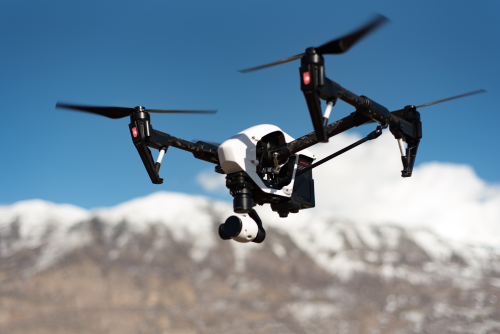
Field charging problems usually come from the same few causes: the wrong hub, the wrong power source, and too much trust in cheap accessories. The best charging hubs for drone pilots who want fewer problems in the field are rarely the ones with the flashiest marketing. They are the ones that match your battery system, your power setup, and the way you actually fly, travel, or work.
A good charging hub reduces downtime, cable mess, heat, guesswork, and battery-related stress. A bad one creates exactly the kind of field failure that ruins a shoot, delays a job, or cuts a travel day short.
Quick Take
If you want fewer problems in the field, start here:
- For most camera-drone pilots, the safest default is the official charging hub made for your exact battery family.
- For travel creators, the best option is usually a USB-C-ready hub that works from a compact power brick, power bank, or travel adapter setup.
- For repeated commercial flights, buy for turnaround speed, battery visibility, and reliable power input, not just battery count.
- For FPV pilots, the best answer is often not a “hub” at all, but a high-quality balance charger from a reputable brand.
- The cheapest charging setup often becomes the most expensive once it causes missed flights, battery confusion, or avoidable wear.
| Pilot type | Best fit | Why it causes fewer field problems |
|---|---|---|
| Beginner or hobbyist | OEM charging hub for the exact drone battery | Simple, predictable, low compatibility risk |
| Travel creator | USB-C-capable OEM hub | Fewer bricks, easier packing, better hotel/car/power-bank use |
| Real estate or aerial photo pilot | OEM hub plus a second hub or faster dock | Better turnaround and less waiting between jobs |
| Enterprise or team operation | Fleet charging station or multi-battery dock from the drone maker or trusted vendor | Better battery tracking, faster workflows, fewer crew mistakes |
| FPV pilot | Quality smart balance charger, not a generic camera-drone hub | Safer charging logic for non-smart packs |
Charging hub, charger, and dock: know what you are actually buying
A lot of frustration starts with confusing three different products.
Charging hub
A charging hub usually holds multiple batteries and manages charging order through one main power input. In many drone ecosystems, the hub itself is not the full charger. It may still need a separate power adapter.
Charger
A charger is the device that converts wall, vehicle, or external power into the correct charging output. Sometimes the charger and hub are combined. Sometimes they are separate.
Dock or charging station
A dock or station is the higher-end version used for heavier field work, enterprise teams, or repeat missions. These often support more batteries, clearer status lights, better thermal behavior, and faster turnaround.
One more term matters here: a smart battery. That means the battery has onboard electronics, often called a battery management system, that help monitor charging, balancing, temperature, and communication with the drone or hub. Camera drones commonly use smart batteries. Many FPV batteries do not.
What “fewer problems in the field” really means
The best charging hubs solve boring problems, and that is exactly why they matter.
They help you avoid:
- Waiting too long for the next flyable battery
- Carrying too many power bricks and cables
- Guessing which battery is ready
- Charging from the wrong power source
- Overheating batteries in cars or in direct sun
- Mixing up battery sets during jobs
- Buying a third-party accessory that behaves unpredictably
- Wasting travel time in airports, hotels, or vehicles
- Running a commercial day with no repeatable charging routine
For most pilots, a “better” hub is the one that makes the workflow calmer and more repeatable, not the one that wins a spec-sheet race.
The best charging hub type by workflow
Best for most pilots: the official OEM charging hub
If you fly a camera drone from a major ecosystem, the best charging hub for fewer field problems is usually the official hub designed for that exact battery family.
That is especially true for:
- beginners
- hobbyists
- travel pilots
- creators
- solo professionals
- anyone who does not want to troubleshoot accessories in the field
Why OEM hubs usually win
- They are built for the battery’s communication and safety logic
- Firmware compatibility is generally more predictable
- Battery status lights and charging behavior are easier to trust
- Support and replacement options are clearer
- Fit and connector tolerances are usually better than bargain alternatives
The main downside
Many OEM hubs charge sequentially, not all batteries at once. Some pilots see that as a flaw. In practice, it often works well because it gets one battery back into service sooner, which is what matters most in many real flight days.
If you shoot a property, a short travel clip, or a small inspection, having one battery ready quickly can be more useful than charging three slowly in parallel.
Best for
- DJI, Autel, and similar smart-battery camera drone users
- People who want the least compatibility risk
- Pilots who care more about reliability than squeezing every minute out of a budget setup
Best for travel creators: a USB-C-ready hub
If you travel often, the best charging hub is usually one that accepts USB-C Power Delivery input or works cleanly with a compact travel power setup.
That matters because travel charging is rarely ideal. You may be charging in:
- airports
- hotel rooms
- trains
- rental cars
- creator backpacks
- shared power outlets on location
Why USB-C matters
A USB-C-ready setup can reduce the number of dedicated chargers you carry. In the best case, one quality power brick can support your drone hub, phone, tablet, controller, and laptop without turning your bag into a cable graveyard.
It also gives you more flexibility if your original power supply fails on the road.
What to watch
USB-C convenience can be overrated if the power source is weak.
A few common problems:
- The power brick cannot deliver enough wattage for the hub to charge at full speed
- The charger splits output across multiple ports and slows everything down
- The cable is poor quality or not rated for higher-power delivery
- The hub technically charges over USB-C, but only at travel-friendly, not field-fast, speeds
For travel, that may still be a good trade. The point is to verify how the hub behaves with the power source you actually plan to carry.
Best for
- travel creators
- lightweight camera-drone users
- pilots who want one charger kit for drone, phone, and laptop
- anyone who values packability over maximum throughput
Best for aerial photographers and busy solo pros: two hubs or a faster dock
If you shoot real estate, events, tourism content, resorts, construction progress, or repeated client stops in one day, the best charging hub setup is often not one hub. It is either:
- two matching OEM hubs, or
- a faster dock or higher-throughput charging station from the drone maker or a trusted professional accessory brand
Why this setup works
Your problem is not just charging. Your problem is turnaround.
A solo commercial pilot loses money when:
- golden light disappears
- the client is waiting on site
- a property queue stacks up
- travel time between locations is too short for recovery charging
- there is no clear battery rotation plan
A second hub can be a smarter upgrade than a more exotic accessory. It gives you redundancy if one hub fails, reduces waiting, and makes it easier to separate “used” and “ready” batteries.
Best for
- real estate photographers
- tourism and hospitality shooters
- wedding venue marketers
- solo inspection operators
- pilots who regularly burn through full sets in a workday
What to avoid
Do not assume a third-party multi-battery charger is automatically better because it has more slots. If it runs hot, charges unpredictably, or makes battery status unclear, it may create exactly the field problems you were trying to remove.
Best for enterprise and team operations: a fleet charging station
For enterprise crews, the best charging hub is really a charging system.
If multiple pilots, visual observers, technicians, or crews share batteries, you need more than convenience. You need:
- clear battery identification
- repeatable charging routines
- visible status
- standard operating procedures
- less room for human error
What a good enterprise charging setup looks like
- One charging standard per aircraft platform
- Clear battery labeling and retirement tracking
- Spare power supplies and cables in every kit
- A dedicated workflow for “ready,” “cooling,” and “used” batteries
- Charging gear that is rugged enough for vehicles, cases, and repeat handling
The goal is not just fast charging. The goal is reducing mistakes across people, vehicles, and locations.
Best for
- inspection teams
- public safety support units
- utility and infrastructure operators
- mapping and survey crews
- larger media teams
- any fleet with handoffs between staff
Best for FPV pilots: a quality balance charger, not a generic hub
FPV pilots often get bad advice from camera-drone buying guides because the battery workflow is different.
If you use loose LiPo or Li-ion packs without the same smart-battery system found in many camera drones, the best “charging hub” is usually a high-quality balance charger from a reputable brand, not a simple multi-bay hub designed for smart batteries.
Brands commonly trusted in this space include established charger makers such as ISDT, Hota, SkyRC, and ToolkitRC.
Why FPV is different
FPV batteries often require:
- cell-by-cell balancing
- closer monitoring
- more deliberate charging discipline
- storage charging between sessions
- better understanding of pack condition
A camera-drone-style hub is built around the battery’s own intelligence. FPV packs often need more from the charger itself.
Best for
- freestyle pilots
- racing pilots
- long-range FPV flyers
- builders using multiple pack sizes
- anyone charging loose packs instead of smart batteries
Important caution
If you parallel charge, do it only within the guidance of your charger and battery manufacturers, and only if you understand the process and risks. A fast workflow is not worth a damaged pack or unsafe charging routine.
How to choose the right charging hub in 5 steps
1. Start with the battery, not the charger
Match the hub to the exact battery model and drone platform first.
Check:
- exact battery generation
- whether the battery is “smart” or not
- whether your aircraft line has multiple battery variants
- whether the hub is made for standard and extended batteries, if both exist
Small compatibility assumptions create big field headaches.
2. Decide where you really charge
Most pilots do not charge only from a wall outlet. Think through your actual field reality.
Your charging environment may include:
- home base
- office
- vehicle
- hotel
- portable power station
- generator
- client site
- outdoor staging area
A hub that is perfect on a desk may be annoying in a backpack or useless in a vehicle.
3. Buy for turnaround, not total battery count
Ask one question: how quickly do you need the next usable battery?
For a hobby flight, sequential charging may be fine.
For commercial work, ask:
- How many batteries do I use per stop?
- Do I need one battery ready fast, or the whole set ready later?
- Am I topping up between flights or recovering a drained set?
This changes what “best” means.
4. Check the whole power chain
A charging hub is only as good as the power feeding it.
Confirm:
- input type
- supported charger type
- likely power draw
- cable quality
- whether your preferred power brick can sustain the load
- whether the setup slows down when other devices are plugged in
A premium hub paired with a weak adapter is still a slow setup.
5. Prefer reliability over tiny savings
The money you “save” on an unreliable charging accessory disappears quickly if it causes:
- a missed client window
- one less flight on a travel day
- uncertain battery health
- wasted packing space
- replacement purchases later
In this category, the sensible buy is often the one with the least drama.
Features that matter more than marketing
When comparing charging hubs, these are the features that actually reduce problems.
Clear battery status
You should be able to tell at a glance which battery is charging, full, or waiting. Good status lights matter more than many buyers expect.
Sensible charging order
Some hubs prioritize the battery with the highest remaining charge so you can get back in the air sooner. Others simply work in sequence. Neither is automatically better, but you should know which behavior you are buying.
Input flexibility
Useful options include:
- AC wall power
- USB-C Power Delivery
- 12V or 24V vehicle-friendly input
- compatibility with a power station
The more mobile your workflow, the more this matters.
Thermal behavior
A good hub should not make you nervous about heat. Batteries coming straight from flight may already be warm. Add sun, a parked car, or a hard case, and charging can become inefficient or risky.
Cable and connector quality
Loose, fragile, or proprietary cables are field failure points. Strong cable fit and easy replacement matter.
Compact footprint
A hub that fits cleanly in your bag or case gets used properly. A bulky setup often gets left behind, which defeats the point.
Support and ecosystem fit
OEM or well-supported accessories usually make life easier when batteries, firmware, or product generations change.
Reverse charging or power-bank mode
This can be genuinely useful for a controller or phone in an emergency. Just do not rely on flight batteries as your main general-purpose power source unless you accept the tradeoff.
Common mistakes that create field headaches
Buying by slot count alone
More battery bays do not automatically mean a better workflow. If the hub is slow, hot, or confusing, more slots just mean bigger disappointment.
Assuming “multi-battery” means simultaneous charging
Many hubs handle several batteries but charge them one at a time. That is not bad, but you should know it before buying.
Using underpowered USB-C chargers
A weak or shared-output charger is one of the most common reasons pilots think a hub is defective or “slow.”
Charging hot batteries immediately
Let flight packs cool before charging if the manufacturer recommends it or if the battery is obviously warm from use. Heat is the enemy of both battery life and charging consistency.
Mixing batteries without a system
On solo and team jobs, label batteries and track usage. Otherwise you end up with half-used packs, unequal rotation, and bad decisions under time pressure.
Treating FPV packs like camera-drone smart batteries
They are different workflows. The wrong charger logic can create inconvenience at best and safety issues at worst.
Buying unknown-brand field chargers to save a little money
This is one accessory category where support, reliability, and predictable behavior matter a lot.
Safety, travel, and compliance limits to know
Charging gear seems simple until you add travel, vehicles, commercial work, or large battery sets.
Battery transport rules vary
Airlines and transport authorities may apply different rules to spare lithium batteries based on battery type, watt-hour rating, packaging, and where the batteries are carried. Verify current airline, airport, and national transport rules before flying with batteries or charging gear.
Never charge damaged or swollen batteries
If a battery is damaged, punctured, swollen, water-affected, or behaving abnormally, stop using it and follow the manufacturer’s guidance for handling and disposal.
Avoid unattended charging
Do not treat battery charging as “set and forget,” especially in vehicles, hotel rooms, tents, or makeshift field setups.
Heat and sunlight matter
A safe charger can still become part of a bad setup if it is used inside a hot car, under direct sun, or on a poor surface with limited airflow.
Commercial teams should write this into SOPs
If you operate professionally, your standard operating procedures should cover:
- battery labeling
- charging locations
- cooling periods
- retirement criteria
- transport handling
- incident reporting
The best charging hub cannot fix a bad battery management culture.
FAQ
Are third-party charging hubs safe for drone batteries?
Sometimes, but this is where caution pays off. If a third-party hub is from a reputable brand with clear compatibility support and strong field reputation, it may be a valid option. If it is vague, cheap, or poorly documented, the safer choice is usually the official hub for your battery system.
Is sequential charging a dealbreaker?
Not usually. For many pilots, getting one battery ready sooner is more useful than slowly charging several at once. Sequential charging becomes a limitation mainly when you are running repeated sorties or supporting a busy commercial day.
Can I charge drone batteries from a power bank?
Sometimes, yes, if the hub supports that input and the power bank can deliver the required output consistently. The key is not just connector fit, but whether the power bank can sustain the right charging standard and enough power for useful charge times.
Can I charge batteries in the car between flights?
Often yes, but it depends on the hub, vehicle power method, and environmental conditions. Vehicle charging works best when the setup is designed for it and batteries are not being charged in excessive heat. Avoid improvised, overheated, or poorly ventilated charging setups.
Do I need more than one charging hub for commercial work?
If you regularly fly through full battery sets on client days, a second hub or a more capable charging station often makes sense. It adds redundancy, can improve turnaround, and reduces the stress of a single point of failure.
What is the best charging setup for FPV pilots?
Usually a reputable balance charger, not a generic smart-battery hub. FPV packs often need cell balancing, closer monitoring, and storage-charge discipline that camera-drone hubs are not designed to provide.
Should I leave drone batteries fully charged after a job?
For long-term battery health, follow the battery manufacturer’s storage guidance rather than leaving packs full for long periods unnecessarily. Some smart batteries manage this automatically after a set time, but not all systems behave the same way.
Is a USB-C charging hub always the best option?
No. It is often the most travel-friendly option, but not always the fastest or best for high-volume field work. For some professionals, a dedicated higher-output charger or charging dock is still the better tool.
The buying decision that usually works
If you want fewer field problems, buy the charging hub that best fits your battery ecosystem and your real-world power setup, not the one that sounds fastest in a store listing. For most camera-drone pilots, that means the official hub for the exact battery family. For FPV pilots, it means a quality balance charger. For commercial operators, it means building a repeatable charging system, not just buying another accessory.