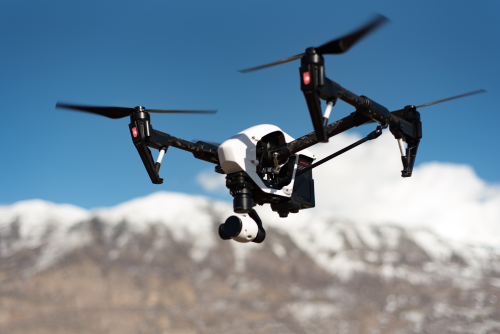
The best portable power stations for drone pilots are not the biggest ones or the ones with the flashiest app. They are the units that quietly solve real field problems: dead batteries, long waits, cable clutter, and the temptation to improvise when you should be focused on flying safely. For most pilots, the sweet spot is a compact LiFePO4 power station in the 500Wh to 1kWh range, but the right choice depends on your charger, your travel habits, and how much gear you actually carry.
Quick Take
If you want fewer problems in the field, buy for workflow fit, not headline specs.
- Best overall class for most drone pilots: a 500Wh to 1kWh LiFePO4 power station with solid AC output, at least one fast USB-C port, a useful car input, and a readable display.
- Best for light travel creators: 200Wh to 300Wh if you mostly need to top up a controller, phone, tablet, action camera, or a small battery hub.
- Best for FPV pilots and all-day pro work: 1kWh and up, especially if you run field chargers, laptops, monitors, or several drone systems in one day.
- Best way to avoid buyer regret: check your actual charging path first. If your drone hub accepts USB-C PD, you may not need a big AC inverter at all.
- Most common mistake: buying by wattage only. For drone work, battery capacity in Wh, port mix, recharge speed, and weight matter more than marketing.
What “best” really means for drone pilots
A good portable power station should reduce friction in four places:
-
Before the flight – You can leave home fully charged. – You know how many packs you can realistically refill.
-
During the session – You can recharge without babysitting a noisy, overheating brick. – You are not wasting time hunting for the right cable or port.
-
Between locations – The unit is light enough to carry. – It recharges fast enough from a wall outlet or vehicle.
-
When something changes – It can also run a laptop, phone, remote controller, or monitor. – It has enough reserve to save the day if the shoot runs long.
That is why the “best portable power stations for drone pilots” are usually not the same ones marketed at campers or emergency backup buyers. Drone pilots care more about usable energy, carry weight, charging compatibility, and downtime reduction than about powering a kettle or a microwave.
The four portable power station sizes that actually make sense
| Class | Typical fit | Best for | Main strengths | Main compromise |
|---|---|---|---|---|
| Ultralight | Around 200Wh to 300Wh | Travel creators, hobbyists, controller and phone charging, occasional small battery hub use | Easy to carry, simple, low-regret purchase | Usually too small for heavy drone charging days |
| Mid-size | Around 500Wh to 800Wh | Most drone pilots, aerial photographers, day trips, light commercial work | Best balance of capacity, portability, and flexibility | Still limited for FPV marathons or multi-operator crews |
| All-rounder | Around 1kWh to 1.2kWh | All-day creators, inspection teams, FPV pits, laptop-heavy workflows | Enough headroom for real field work and longer sessions | Heavier and less fun to carry far from the vehicle |
| Basecamp | 1.5kWh and above | Vans, remote crews, multi-day jobs, backup power at a field base | Maximum endurance and fewer recharge interruptions | Weight, bulk, airline impracticality, and overkill for most pilots |
For most solo pilots, the mid-size category is where value and convenience meet. It is usually enough to recharge several batteries, run a laptop, and keep small devices alive without turning your bag into a gym session.
The best fits by pilot type
Instead of pretending there is one universal winner, it is more useful to shortlist strong product families by use case.
Best for light travel and minimal kits
If you hike to launch points, pack light, or mostly need to support a small drone, controller, phone, and camera accessories, a compact station is usually the right answer.
Strong options to compare include:
- Jackery Explorer 300 Plus
- EcoFlow River 2
- Bluetti EB3A
Why this class works:
- Easy to throw in a backpack or day bag
- Enough for controllers, phones, tablets, lights, and small hub top-ups
- Lower cost and lower regret if you do not fly long sessions
Where it falls short:
- Running AC drone chargers repeatedly can empty it faster than expected
- Less reserve for a laptop, field monitor, or several charging cycles
- Not the best choice for commercial days where delays are expensive
This is the right lane if your real problem is supporting the whole content kit, not trying to run a mobile charging station for eight drone packs.
Best for most hobbyists, creators, and day-shoot pilots
If you want one station that handles typical drone work without becoming burdensome, this is the sweet spot.
Strong options to compare include:
- DJI Power 500
- EcoFlow River 2 Pro
- Bluetti AC70
- Anker Solix C800
Why this class works:
- Enough capacity for several drone battery top-ups
- Better AC performance for OEM charging hubs
- Still manageable for car-to-location use
- Often a better balance of weight and output than bigger “just in case” units
Who should buy here:
- Aerial photographers doing half-day shoots
- Travel creators working from a car
- Hobbyists who want reliable backup without hauling a brick
- DJI-heavy users who want cleaner ecosystem fit
If you fly modern consumer drones and want fewer field problems, this is the safest starting point.
Best for FPV pilots and heavier field charging
FPV days can consume more energy than people expect, especially if you use a charger with multiple LiPo packs, goggles, cameras, and a laptop.
Strong options to compare include:
- DJI Power 1000
- EcoFlow Delta 2
- Anker Solix C1000
- Bluetti AC180
- Jackery 1000-class models
Why these make sense:
- More headroom for parallel charging
- Better for running chargers, laptops, and support gear together
- More forgiving if the day runs longer than planned
- Usually a better fit for paid work where downtime costs more than the unit itself
The tradeoff is obvious: once you cross into 1kWh territory, weight becomes a real workflow factor. If you are walking deep into a location, the “bigger is better” idea can quickly become “I should have brought a smaller unit and more drone packs.”
Best for vehicle-based crews and remote basecamp setups
If your workflow is built around a car, van, chase vehicle, or mobile production kit, bigger stations start to make sense.
Strong families to compare include:
- EcoFlow Delta 2 Max
- Jackery 2000-class models
- Bluetti AC200-class models
- Goal Zero Yeti larger-capacity units
This is the right tier when:
- Several operators share one power source
- You need a field base for multi-day production
- You also power laptops, data transfer, monitors, lighting, or networking gear
- You can leave the station near the vehicle or a secure work area
For a solo drone pilot, this category is often overkill. For a crew, it can be the difference between a smooth day and a schedule collapse.
How to choose the right size without guessing
The easiest way to buy the right station is to work backwards from your real charging needs.
A simple sizing method
-
List what you charge in the field – Drone batteries – Controller – Phone – Tablet – Laptop – FPV goggles – Camera batteries – Field monitor
-
Check the battery size or charger demand – Drone batteries are usually listed in Wh or can be estimated from volts and amp-hours. – Laptops and camera systems may also show Wh ratings. – If you only know charger wattage, use it to estimate how long the device will run.
-
Account for conversion losses – If you use the station’s AC outlet and a wall charger, assume you will not get the full rated capacity in real use. – A rough planning rule:
- AC charging path: plan around 80% usable
- Direct USB-C or DC charging path: often closer to 85% to 90% usable
-
Keep reserve – Do not plan to drain the station to zero in the field. – Keep some reserve for your controller, phone, or an unexpected extra flight.
-
Buy for your longest normal day, not your fantasy expedition – If 90% of your sessions are short, do not buy a giant unit for the 10% edge case unless paid work justifies it.
A fast example
If your drone battery is around 60Wh and your station is 500Wh, you are not getting eight perfect full recharges in the real world.
A more realistic planning approach might look like this:
- 500Wh station
- About 80% usable through AC
- Around 400Wh practical energy
- 400Wh divided by 60Wh per battery
- Roughly 6 full battery recharges, before you also count the controller, phone, or laptop
That kind of math prevents the most common field surprise: buying a station that looks huge on paper but feels small by lunchtime.
Features that matter more than marketing
Capacity in Wh matters more than “peak” output
Portable power station ads love talking about surge power and peak watts. That matters for appliances. For drone pilots, it is usually less important than:
- Battery capacity in Wh
- Continuous AC output
- USB-C PD power
- How many ports you can use at once
- How fast the station itself recharges
If your charger pulls modest power but runs for hours, capacity wins.
Port mix can save you real energy
The best setup is often the one that avoids unnecessary power conversion.
If your charging hub accepts USB-C PD, you may be able to go:
- Power station battery
- Straight to USB-C
- Into the hub
That is usually more efficient than going:
- Power station battery
- To AC inverter
- Into an AC wall brick
- Back to DC
- Into the battery hub
Before buying, verify:
- Input type on your battery hub
- Required voltage and wattage
- Whether fast charging needs a specific USB-C PD level
- Whether your field charger prefers AC or DC input
LiFePO4 is usually the low-drama choice
For drone work, LiFePO4 battery chemistry is often the smartest default because it tends to offer:
- Better cycle life
- Better thermal stability
- Lower long-term degradation for frequent users
The downside is usually weight. But for most field use, the durability trade is worth it.
If you only use the station occasionally and care most about minimal weight, other battery chemistries can still make sense. Just compare lifespan and support carefully.
Fast self-recharge matters more than many buyers realize
A good station is not just about how long it lasts. It is also about how quickly it recovers.
That matters when:
- You top up at home between shoots
- You recharge at a cafe, hotel, office, or vehicle
- You run back-to-back jobs
- You travel with limited time at the wall outlet
For drone pilots, a smaller station that recharges fast is often more useful than a giant station that takes forever to fill.
Weight and handles matter because “portable” is relative
This sounds obvious, but many buyers ignore it until they carry the unit for real.
Ask yourself:
- Will you carry it in one hand plus a drone bag?
- Does it fit in your backpack plan?
- Is the handle comfortable for repeated short carries?
- Will you actually bring it, or leave it in the car because it is annoying?
The best power station is one you will actually use.
Fan noise and heat can become workflow annoyances
Some stations are excellent on paper but loud in practice. That matters if you:
- Record ambient sound near set
- Recharge in a quiet vehicle
- Work in hot climates
- Use the station in a hotel room or small indoor staging area
Read real user feedback on:
- Fan behavior under AC load
- Heat management
- Display clarity in sunlight
- Whether ports stay active as expected during low loads
Brand support and repairability matter more for pros
For hobby use, any decent mainstream brand may be fine. For commercial operations, support becomes part of the purchase.
Look at:
- Regional availability
- Warranty support in your market
- Battery service and replacement policy
- Accessory availability
- Reliability history of that product line
A slightly less exciting unit from a support-heavy brand can be the better business choice.
Safety, travel, and compliance limits to know
Portable power stations touch more than gear buying. They affect travel, field safety, and worksite behavior.
Airline travel is the big one
Most portable power stations use lithium batteries, and many are not realistic for passenger air travel.
Before flying with one, verify:
- Your airline’s lithium battery rules
- Airport security restrictions in both directions
- Local dangerous goods rules for your route
- Whether the battery size is allowed in carry-on, checked baggage, or not at all
In practice, many larger power stations are fine for road travel but a bad fit for airline-based creator trips. If you regularly fly to assignments, this should heavily influence your buying decision.
Field charging needs basic fire and heat discipline
- Do not charge on wet grass, unstable surfaces, or inside a sealed bag
- Keep the unit out of direct sun where possible
- Do not leave it cooking inside a hot vehicle
- Use manufacturer-approved chargers and cables
- Stop using damaged batteries, swollen packs, or questionable adapters
Avoid improvised charging shortcuts
Drone pilots sometimes get tempted by custom cables and “field hacks” to charge faster or lighter. Unless the solution is supported by the equipment maker or a reputable charging ecosystem, it can create:
- Battery damage
- Unstable charging
- Warranty problems
- Fire risk
- Lost packs at the worst possible time
Respect site rules
If you are flying commercially or from managed property, verify whether the site has rules for:
- Charging gear on location
- Vehicle access and idling
- Generator or equipment use
- Battery handling in sensitive environments
Quiet battery stations are easier than fuel generators, but they are not exempt from site policies.
Common mistakes drone pilots make with portable power stations
Buying too big
A 1kWh unit sounds reassuring until you have to carry it with a drone case, tripod, and camera bag. If you mostly shoot near your car, fine. If you hike, maybe not.
Buying too small because the number “looks big”
A 300Wh unit can be great, but not if you expect it to run a laptop, a drone charger, and a long afternoon of battery swaps.
Ignoring your actual charger input
Many people buy AC-heavy stations when their real gear would work better from USB-C PD or DC.
Forgetting energy losses
The rated battery capacity is not the same as usable output in the field. AC conversion eats into the total.
Treating airline travel as an afterthought
This is one of the most expensive mistakes. Many power stations that are perfect by car are useless for airline travel.
No cable plan
Bring the wrong cable or adapter and your fancy station becomes a heavy box. Build a dedicated pouch with:
- AC charger
- USB-C cable rated for the right power
- Car input cable if needed
- Spare short cable
- Labelled adapters
Never testing the full setup before the job
Do one complete dress rehearsal at home:
- Charge the station
- Charge the drone batteries you plan to carry
- Run the laptop
- Confirm port behavior
- Time how long your real-world recharge takes
That one habit prevents a lot of field frustration.
FAQ
How big a portable power station do most drone pilots need?
For most hobbyists, creators, and aerial photographers, 500Wh to 1kWh is the best overall range. It gives enough capacity for multiple battery top-ups and support gear without becoming excessively heavy.
Can a portable power station charge drone batteries directly?
Sometimes. It depends on your drone’s charging hub or battery charger. If the hub accepts USB-C PD or DC input, you may be able to charge more efficiently without using the AC outlet. Always verify the required voltage, wattage, and connector type before buying.
Are DJI Power stations the best choice for DJI drone owners?
They are certainly worth shortlisting if you are heavily invested in DJI gear, especially if you value ecosystem fit and cleaner field charging. But they are not automatically the best for every buyer. Compare them against EcoFlow, Bluetti, Anker, Jackery, and others based on your actual port needs, weight limits, and regional support.
Is solar charging worth it for drone pilots?
Usually as a secondary option, not as your main plan. Solar can help on multi-day remote trips or vehicle-based basecamps, but it is weather-dependent, slower than many buyers expect, and often awkward for fast-turn drone work. For most pilots, wall and vehicle charging matter more.
Can I take a portable power station on a plane?
Often not, especially once you move beyond small-capacity units. Airline and airport security rules for lithium batteries vary by carrier and route. Always verify directly with the airline and relevant airport guidance before travel. Do not assume a road-trip-friendly power station is flight-friendly.
Is LiFePO4 better than other battery chemistries for drone field work?
For many buyers, yes. LiFePO4 usually offers better cycle life and strong everyday durability, which makes it a good low-drama choice for repeated field charging. The main downside is extra weight.
How many drone batteries can a power station recharge?
It depends on the station capacity, the battery size, and whether you charge through AC or directly through DC or USB-C. As a rough rule, estimate 80% usable energy through AC and a bit more through direct DC paths. Divide that usable energy by your battery’s Wh rating for a more realistic field estimate.
Should I buy a portable power station or just more drone batteries?
If you usually fly short sessions near home, extra OEM batteries may be the smarter first purchase. A power station becomes much more valuable when you do long days, remote work, travel by car, FPV sessions, or multi-device creator workflows.
The smarter buying move
If you want one low-regret recommendation, start by shortlisting a 500Wh to 1kWh LiFePO4 power station from a brand with solid support in your region, then verify your charger inputs before you spend anything. Test the full charging workflow at home, not on the first remote shoot. The best portable power station for a drone pilot is the one that quietly removes friction from the day and lets you think about flying, not power management.