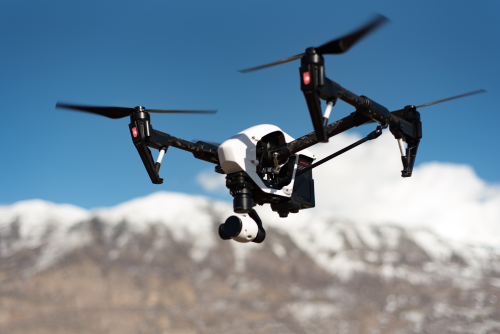
The biggest mistakes people make when they try to build a drone portfolio usually have less to do with flying skill than with business thinking. A portfolio that impresses other pilots can still fail with real clients if it does not show clear deliverables, safe operating judgment, and work that fits a buyer’s actual needs. If you want your portfolio to win work, it has to function as proof, not just as a highlight reel.
Quick Take
A strong drone portfolio should answer five client questions fast:
- What kind of work do you actually do?
- Can you deliver it consistently?
- Do you understand my industry?
- Will you operate safely and legally?
- What is the next step if I want to hire you?
The most common portfolio mistakes are:
- trying to appeal to every type of client at once
- showing beautiful footage with no business context
- keeping too much average work
- relying on trendy edits instead of usable deliverables
- including footage that raises safety, privacy, or compliance concerns
- making it hard for a buyer to understand scope, format, and fit
If your portfolio does not help a client imagine a real job from brief to delivery, it is probably costing you inquiries or pushing you into low-value work.
Why most drone portfolios miss the mark
A drone portfolio is not just a gallery. It is a sales tool, a trust signal, and often the first screening filter a client uses before they ever ask for a quote.
That matters because buyers are not evaluating you the same way pilots do.
Another drone operator may admire a difficult line, a risky-looking reveal, or an aggressive FPV move. A client is usually asking something more practical:
- Can this person capture my property, site, event, or brand clearly?
- Can they deliver the right formats on time?
- Will they make my team look good?
- Will they create compliance or insurance headaches?
- Do they understand the outcome I am paying for?
The more commercial the client, the more this shifts from “wow factor” to “workflow confidence.”
That is why the best drone portfolios do three things at once:
- They show quality.
- They show relevance.
- They show reliability.
Miss any one of those, and even strong footage can underperform.
The biggest mistakes people make when they try to build a drone portfolio
1. Treating the portfolio like a reel for other pilots
This is the most common mistake.
A lot of drone pilots build portfolios that are really showreels for peers: dramatic speed ramps, flashy transitions, tight gaps, epic music, and “look what I can do” flying. That can attract likes. It does not always attract buyers.
Most clients do not need the hardest shot you have ever flown. They need the most useful shot you can deliver repeatedly.
For example:
- A hotel wants clean, elegant establishing shots and polished stills.
- A construction client wants repeatable progress angles over time.
- An inspection client wants clarity, stability, and defect visibility.
- A real estate agent wants a fast-turnaround package that helps sell a listing.
If your portfolio leads with spectacle instead of service fit, clients may assume you are more interested in art than outcomes.
2. Trying to serve every market at once
A portfolio that says you do real estate, weddings, resorts, industrial inspection, mapping, tourism, automotive, agriculture, and FPV brand films can look ambitious. It usually reads as unfocused.
Different drone buyers want different evidence.
A property marketer wants composition, polish, and sales-friendly output. An infrastructure manager wants precision, consistency, and operational discipline. A tourism board wants storytelling and destination sensitivity. Those are not the same pitch.
You do not always need separate websites, but you usually need a clear primary lane.
A better approach is:
- choose one main market you want to grow
- choose one secondary market that uses similar skills
- organize work by service or industry
- make sure the first thing a visitor sees matches the work you want more of
If you want higher-value clients, stop making them decode what you really do.
3. Showing footage without showing deliverables
A short reel can open interest, but it rarely closes trust by itself.
Clients buy deliverables, not just clips. They want to know what the finished work looks like in the formats they will actually use.
That may include:
- horizontal video edits
- vertical social cuts
- high-resolution stills
- progress documentation sets
- orthomosaic or mapping outputs
- inspection imagery
- edited selects
- branded cutdowns
- fast-turnaround preview files
If your portfolio only shows a 45-second montage, the client still does not know what working with you produces.
A better portfolio often includes mini case studies with details like:
- project type
- shooting conditions
- shot objectives
- final outputs delivered
- turnaround time
- any special constraints handled
That helps buyers picture scope, which also makes quoting easier and more accurate.
4. Keeping too much average work
Pilots often keep weak material because it feels painful to delete it. Clients do not care how hard it was to get.
One soft shot, one crooked horizon, one overly sharpened image, or one awkward clip can drag down ten good ones. Buyers often judge the whole portfolio by the weakest item they notice.
A better rule is simple: fewer, stronger examples beat a long gallery of mixed quality.
Good portfolio discipline means:
- remove anything that looks dated
- cut repeated shots that add no new value
- keep only work that supports your target market
- update regularly as your skill improves
- lead with your best three examples, not your most recent three
Most drone portfolios improve the moment they become smaller.
5. Copying trends that make the work less usable
Not every trend helps you get hired.
Overdone color grades, aggressive motion effects, constant speed ramps, giant captions, and music-driven edits can make footage feel current on social platforms. But they can also hide image quality, reduce clarity, and make buyers wonder whether you can deliver clean commercial assets.
This is especially risky in business categories like real estate, construction, tourism marketing, and industrial work, where the client needs usable footage, not just vibe.
Trend-heavy editing can also date your portfolio fast.
A better balance is:
- keep one short attention-grabbing reel if you want
- also show clean, minimally processed samples
- include shots long enough for a buyer to assess framing and stability
- let the subject matter do some of the work
If all your best footage depends on transitions, it may not be your best footage.
6. Leaving out context, captions, and results
Without context, a buyer is forced to guess:
- Was this a real paid assignment?
- Was the shoot planned or just personal travel content?
- Was access controlled?
- What did the client receive?
- What challenge did you solve?
That guesswork creates friction.
Even a simple caption can make a portfolio stronger. For each project, include a few lines such as:
- client type or industry
- objective
- deliverables
- timing
- notable constraint
- outcome
For example:
“Resort launch campaign. Captured sunrise and twilight aerials plus ground support footage. Delivered 20 edited stills, one 60-second hero cut, three vertical social edits, and same-week selects for press.”
That tells a buyer far more than a beautiful clip alone.
If you are under confidentiality restrictions, you can still anonymize the client and describe the workflow.
7. Ignoring the formats clients actually ask for
Many pilots build portfolios around cinematic horizontal video and forget that real jobs often require mixed output.
Today, clients may need:
- website banners
- vertical reels
- social cutdowns
- print-friendly stills
- before-and-after comparisons
- repeat monthly documentation
- cropped versions for different platforms
- raw files for an in-house editor
If you never show still photography, some clients assume you do not offer it. If you never show vertical edits, marketing teams may move on. If you only show final stylized pieces, agencies may not know whether your source footage is strong.
A more useful portfolio includes multiple output types, especially if you want business clients rather than one-off creator gigs.
What different drone clients actually want to see
| Client type | What builds trust | What hurts trust |
|---|---|---|
| Real estate and hospitality | Clean exteriors, property flow, stills plus video, day and twilight examples, stable movement | Only travel landscapes, heavy effects, no listing-style output |
| Construction and development | Repeatable angles, date-based progress examples, clear site overview, disciplined framing | Random cinematic shots, no evidence of consistency over time |
| Inspection and industrial | Sharp detail, controlled approach, readable imagery, process awareness, risk-sensitive language | Motion blur, dramatic grading, reckless proximity, no safety context |
| Tourism and destination marketing | Storytelling, sense of place, respectful location choices, mixed aerial and ground examples | Footage that appears intrusive, protected-area ambiguity, generic mountain reels |
| Events and brand content | Energy, coverage variety, turnaround speed, social formats, coordinated shooting style | One-note slow cinematic footage, unclear delivery options |
| FPV commercial work | Controlled route design, smooth indoor or close-proximity lines where appropriate, production coordination | “Danger reel” energy, unclear permissions, shots that seem impossible to repeat safely |
Safety, legal, and operational mistakes that can quietly ruin a portfolio
A portfolio can hurt your business if it appears to document unsafe or non-compliant flying.
Even if a dramatic shot gets attention, it may also raise questions from clients, agencies, insurers, or enterprise procurement teams. A buyer may not tell you why they passed. They may simply move to someone whose work feels easier to defend internally.
Be especially careful with footage that appears to involve:
- flights near airports or other sensitive airspace
- crowds, traffic, or dense urban environments
- protected wildlife or conservation areas
- private homes or private property without clear context
- public events, stadiums, or venues
- night operations or controlled environments where extra permissions may be required
- risky close-proximity maneuvers around people, vehicles, or structures
Rules vary by country and sometimes by city, park, venue, or landowner. Before you fly for a portfolio or publish footage commercially, verify what applies with the relevant aviation authority, property manager, park authority, event organizer, or local regulator.
A good rule for commercial positioning is this: do not build your brand around shots you cannot legally, safely, and consistently repeat for a paying client.
Also remember that enterprise and government buyers may care about more than pilot skill. Depending on the job and region, they may ask about:
- operator registration or licensing status
- insurance
- risk assessments
- maintenance records
- data handling and privacy practices
- crew roles
- permissions for launch or site access
You do not need to turn your portfolio into a compliance manual. But you should avoid anything that undermines trust.
8. Failing to show consistency and process
One great sunset does not prove a business.
Clients hire operators who can perform under less-than-perfect conditions, communicate clearly, adapt to a brief, and deliver on schedule. Your portfolio should hint at that.
Ways to show consistency include:
- the same site documented across different dates
- matched framing from progress work
- day and twilight examples from similar jobs
- multiple clips from one assignment, not just one hero shot
- brief notes on turnaround and delivery structure
Ways to show process include:
- pre-production planning references
- shot list thinking
- deliverable packages
- edit versions for different platforms
- how you handled weather windows or site constraints
Process makes your work feel real and repeatable. That is what businesses pay for.
9. Claiming services you cannot yet deliver end to end
It is tempting to list every service you hope to offer: mapping, inspections, surveying support, cinematic FPV, events, live production, thermal work, asset documentation, and more.
The problem is that buyers do not hire hopes. They hire proven capability.
If you advertise a service, your portfolio should support it with believable evidence. That means not just footage, but also understanding of the workflow and outputs involved.
For example:
- Mapping work needs more than pretty overhead shots.
- Inspection work needs defect visibility and risk-aware operations.
- Construction documentation needs consistent repeat capture.
- FPV commercial work often needs crew coordination, route planning, and a controlled environment.
If you are still learning a service line, position it honestly. Use test projects, practice studies, or pilot programs with clear labels rather than pretending you already run a mature operation.
10. Making it hard for a client to hire you
A surprising number of drone portfolios end with no clear next step.
A buyer should not have to hunt for basic information like:
- your service area
- whether you travel
- what industries you focus on
- what formats you deliver
- whether you shoot stills, video, or both
- what a project inquiry should include
Even if you do not publish prices, you should reduce friction.
At minimum, your portfolio should make it easy for a prospect to understand:
- who you work with
- what kind of projects are a fit
- what they can request
- how to contact you
- what information helps you quote accurately
Good portfolios do not just attract attention. They convert attention into qualified inquiries.
How to rebuild a drone portfolio that actually wins work
If your current portfolio feels messy, do not start by buying new gear or redesigning your whole brand. Start with selection and positioning.
1. Pick one target client type
Choose the market you want more of in the next 6 to 12 months.
Examples:
- real estate and hospitality
- construction and development
- tourism and destination marketing
- industrial and inspection support
- events and branded content
Your portfolio should primarily serve that buyer.
2. Audit every piece of work you have
For each project, ask:
- Is this technically strong?
- Is this relevant to my target market?
- Would I be happy to repeat this for a paying client?
- Does this raise any compliance, privacy, or safety concerns?
- Does it show something meaningfully different?
If the answer is no, cut it.
3. Build around case studies, not just a reel
Aim for:
- one short top-level reel
- three to six strong project examples
- mixed deliverables where relevant
- short captions with context and outcome
This immediately makes you easier to trust and easier to quote.
4. Show outputs in the formats buyers use
Depending on your niche, include:
- stills
- horizontal edits
- vertical edits
- progress sequences
- before-and-after views
- raw or lightly processed sample clips
- delivery package examples
Think like the client’s marketing lead, site manager, or producer.
5. Add operational trust signals
Without overloading the page, clarify things like:
- commercial focus areas
- geographic coverage
- whether travel is available
- standard turnaround expectations
- any relevant insurance or compliance readiness, where appropriate and accurate
- whether additional documentation is available on request
Do not claim anything you cannot back up.
6. If you have no paid work yet, create legal spec projects
Beginners often think they need clients before they can build a portfolio. Not true.
You can create strong spec work by:
- getting permission from property owners or venues
- choosing locations and flights that are legal and repeatable
- shooting as if it were a real assignment
- creating full deliverable sets, not just one montage
- labeling the work honestly as self-initiated or spec work
Do not invent clients, fake logos, or imply commercial results you did not achieve.
7. Ask for feedback from non-pilots
Before you publish, show the portfolio to someone who buys media, manages projects, markets properties, or works in your target industry.
Ask them:
- What do you think I actually sell?
- What kind of client would hire me?
- What feels missing?
- What made you trust or distrust the work?
- Would you know what to request from me?
That feedback is usually more valuable than praise from other drone pilots.
Common mindset problems behind bad portfolios
Most portfolio mistakes come from one of these false assumptions:
- “If it looks cinematic, it will sell.”
- “More work makes me look more experienced.”
- “Clients care most about my drone model.”
- “One reel is enough for every service.”
- “If I can fly it, I should show it.”
- “I can add services now and figure them out later.”
The fix is to think less like a pilot showing skill and more like a business solving a client’s problem.
FAQ
How many projects should a drone portfolio include?
Usually fewer than you think. One short reel plus three to six strong, relevant case studies is often enough. If you add more, make sure each example proves something new.
Do I need separate portfolios for different drone services?
If the buyer, deliverables, and workflow are very different, yes. Real estate, inspections, mapping, and FPV brand work are usually better separated by service page, section, or dedicated portfolio version.
Is Instagram or social media enough to count as a portfolio?
Not usually. Social platforms are useful for discovery, but they are poor at showing structured deliverables, case context, and clear service fit. You still need a portfolio you control.
Should I include personal travel footage?
Only if it supports the kind of work you want. A few strong travel shots can help for tourism or destination marketing. But if you want commercial service clients, do not let personal content dominate the portfolio.
Do clients care which drone I use?
Less than many pilots think. Most clients care more about output quality, reliability, safety, turnaround, and fit. In specialized sectors, the sensor type, data quality, or workflow compatibility may matter more than the brand or model itself.
Can I use footage if I am not sure the flight permissions were valid?
It is better not to. If a shot creates doubt about legality, safety, privacy, or permissions, it can damage trust. Verify local requirements before flying or using footage commercially.
What if I do not have paid client work yet?
Build spec projects. Get permission, choose realistic scenarios, create full deliverables, and label the work honestly. A well-made spec case study is far better than pretending a personal trip was a commissioned job.
Should I publish pricing in my portfolio?
You do not have to. For many drone services, scope varies too much. But it helps to show what affects pricing, what deliverables you commonly offer, and what information a client should send for a quote.
The move that matters most
If you want better drone clients, stop asking whether your portfolio looks impressive and start asking whether it makes buying easy. Cut the average work, choose a target market, turn your best projects into clear case studies, and remove anything you cannot safely and legally repeat. A drone portfolio should not just show what you flew. It should prove what you can deliver.