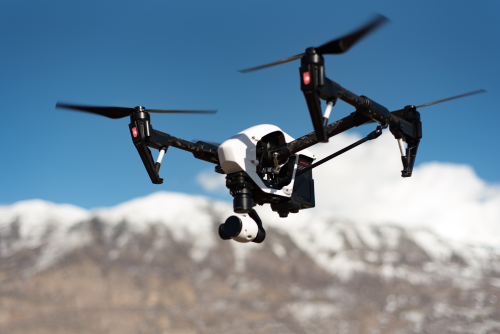
Lots of drone operators say they want recurring revenue, but what they often build is repeat work with long gaps, constant re-selling, and thin margins. The biggest mistakes people make when they try to build recurring revenue with drones usually have less to do with flying skill and more to do with offer design, pricing, operations, and compliance. If you want predictable income from drone work, you need to solve an ongoing business problem on a repeatable schedule.
Quick Take
Recurring revenue in drones is hard because many popular drone jobs are naturally one-off or campaign-based.
Here’s the short version:
- Recurring revenue works best when the client has an ongoing need, not just occasional content demand.
- The strongest offers sell outcomes, reports, monitoring, and decisions, not just flight time.
- Good recurring models rely on standardization: same workflow, same deliverables, same schedule, same expectations.
- Many operators underprice because they only charge for flying and ignore planning, travel, processing, storage, reporting, and support.
- Scope creep kills recurring profit faster than lack of leads.
- Compliance, insurance, site access, privacy, and local airspace rules must be checked before promising repeat operations.
- Reliable recurring income usually comes from boring consistency, not flashy gear.
What recurring revenue actually means in a drone business
A lot of people confuse repeat clients with recurring revenue.
They are not the same.
If a real estate agent calls you five times over three months, that is repeat business. It is helpful, but it is not truly recurring revenue unless there is an ongoing agreement, expected schedule, and retained budget.
Recurring revenue in a drone business usually means one of these:
- A monthly or quarterly service agreement
- A retained inspection or monitoring program
- A scheduled reporting workflow for the same site, asset, or portfolio
- A managed service where flight, processing, reporting, and account support are bundled together
That distinction matters because recurring revenue changes how you price, staff, plan, and sell.
The drone is only one part of the service. The real product is often visibility, documentation, measurement, inspection support, or progress reporting.
Which drone services are naturally better for recurring revenue?
Not every drone use case is built for repeat monthly billing. Some are strong fits. Some are weak fits. Most failed drone subscription attempts happen because the operator picks the wrong type of demand.
| Use case | Why it can recur | Recurring strength | Common trap |
|---|---|---|---|
| Construction progress reporting | Stakeholders need regular updates across a project timeline | High | Underestimating site coordination and report prep |
| Asset and facility monitoring | Owners need periodic condition records and comparison over time | High | Leaving inspection criteria too vague |
| Solar or roof portfolio documentation | Repeated checks across many sites can be standardized | Medium to high | Treating each property like a custom project |
| Agriculture scouting | Repeats during crop cycles and decision windows | Medium, but seasonal | Pretending the work is evenly recurring year-round |
| Quarry or stockpile measurement | Inventory and operations may require regular updates | Medium to high | Poor consistency in capture method and data processing |
| Infrastructure programs | Maintenance teams may need repeat records on planned cycles | Medium to high | Promising operations you cannot legally or safely perform |
| Real estate listing media | Tied to individual property sales | Low | Mistaking busy months for stable recurring income |
| Events, tourism, creator shoots | Demand is campaign-based and irregular | Low | Calling repeat bookings a subscription business |
The pattern is simple: recurring revenue is easiest when the same client needs the same deliverable on the same cadence for the same operational reason.
The biggest mistakes people make when they try to build recurring revenue with drones
1. Trying to force a subscription onto a one-off market
This is the most common mistake.
Some drone services are naturally transactional. A wedding happens once. A property listing gets sold. A tourism campaign ends. A travel creator may book you again, but not on a reliable monthly cycle.
That does not make those services bad. It just makes them poor foundations for predictable recurring revenue.
A better recurring target usually has:
- A scheduled reporting need
- An asset that changes over time
- A maintenance or risk-management cycle
- Multiple stakeholders who need updates
- A budget that renews operationally, not creatively
If the client’s need only exists when they launch a campaign or sell an asset, you are probably building a project business, not a recurring business.
2. Selling “drone services” instead of a business outcome
Clients rarely wake up wanting “a drone pilot.”
They want one of these:
- Weekly site visibility
- Faster issue detection
- Documented asset condition
- Better stakeholder reporting
- Easier portfolio oversight
- Reduced need for manual site visits
When operators lead with generic language like “aerial photography, mapping, and inspections,” they sound interchangeable. That makes recurring revenue harder because there is no clear reason to stay.
The stronger pitch is outcome-based.
Instead of: – “We provide monthly drone flights”
Try: – “We deliver a standardized monthly condition report for each roof in your portfolio” – “We provide weekly construction progress updates formatted for project stakeholders” – “We capture repeatable site data on a set schedule so your team can compare changes over time”
Recurring revenue depends on being embedded in the client’s workflow, not sitting on the edge of it.
3. Pricing recurring work like a day-rate flying job
This mistake destroys margins.
Many operators quote recurring work by asking, “How many hours will I be onsite?” That logic works for some one-off shoots. It usually fails for recurring service contracts.
A recurring drone service includes much more than the flight:
- Preflight planning
- Site coordination
- Travel and mobilization
- Risk assessment
- Battery management and maintenance
- Data transfer
- Processing
- Quality assurance
- Reporting
- Revisions
- File storage
- Client communication
- Reflights when conditions or access fail
If you only charge for airtime, you are subsidizing the rest of the workflow.
A better pricing model usually accounts for:
- Flight frequency
- Complexity per site
- Turnaround time
- Processing and reporting load
- Travel distance
- Risk and contingency
- Required service level
If the client wants reliable recurring delivery, they should be paying for reliability, not just for the minutes the propellers are turning.
4. Leaving the deliverable too vague
A vague recurring contract almost always becomes an unprofitable recurring contract.
If your agreement says “monthly drone inspections,” but does not define what the client actually receives, two things happen:
- The client assumes more is included than you intended
- Your team ends up improvising every cycle
That is scope creep in slow motion.
Productized recurring services are clearer. “Productized” simply means turned into a standard package with defined outputs and limits.
A strong recurring drone offer should clearly define:
- Flight cadence
- Site assumptions
- Deliverables
- Format of outputs
- Turnaround time
- Revision limits
- Weather policy
- Rescheduling rules
- Data retention period
- What is not included
For example, “monthly report” is vague.
“Monthly portfolio condition summary with annotated images, issue flags, and site-by-site comparison delivered within two business days” is much harder to misunderstand.
5. Ignoring the data workflow
Many people think recurring drone revenue is built in the field. In reality, a lot of it is won or lost after the flight.
Clients renew when the service fits their workflow. That means your data handling matters almost as much as your piloting.
Common workflow failures include:
- Inconsistent file naming
- Late uploads
- Hard-to-read reports
- No version control
- No historical comparison
- Poor storage discipline
- Manual steps that break when volume grows
If you are doing any kind of inspection, monitoring, or mapping, your workflow should be built for repeatability. The same client should receive the same structure every time.
That might include:
- Standard folders
- Standard report templates
- Clear issue categories
- Consistent capture angles
- Predictable delivery schedules
- Defined review and approval steps
The more recurring the service becomes, the more important operational cleanliness becomes.
6. Customizing every client until the model stops scaling
At first, customization feels like good service. Later, it feels like chaos.
One client wants a dashboard. Another wants raw media only. Another wants a PDF plus annotated stills. Another wants different flight paths every month. Another wants same-day turnaround.
If you say yes to all of it, you may win accounts, but you will struggle to make recurring revenue profitable or manageable.
The operators who build durable recurring revenue usually create tiers, not endless exceptions.
For example:
- Basic monitoring package
- Standard reporting package
- Enterprise or multi-site package
Each tier can have its own:
- Site limits
- Deliverables
- Turnaround
- Meeting support
- Storage period
- Support level
You can still handle custom work. Just do not let custom work become your default operating model.
7. Building the service around one pilot, one drone, and one good month
A recurring business must be reliable.
That sounds obvious, but many drone operators still build recurring contracts on a fragile operational base:
- One pilot
- One aircraft
- One charger setup
- No backup batteries
- No replacement plan
- No written procedure
- No handoff process
- No maintenance discipline
That is manageable for occasional gigs. It is risky for recurring delivery.
Clients paying on a monthly or quarterly basis expect continuity. If one broken gimbal, delayed repair, staffing issue, or battery problem stops delivery, your “recurring revenue” becomes churn.
Before you aggressively sell ongoing contracts, make sure you have:
- A documented operating procedure
- Backup aircraft or a replacement plan
- Maintenance logs
- Battery health tracking
- Data backup routines
- A clear weather delay process
- Access to alternate crew support if needed
You do not need a huge team. But you do need operational redundancy.
8. Chasing clients without a real internal owner
Not every company that likes drone content is a good recurring client.
The best recurring clients usually have a named person or team that feels the problem directly. They also have a reason to keep the service active.
Examples of strong internal ownership:
- A project manager who needs weekly site progress visuals
- A facilities lead responsible for asset condition reporting
- A portfolio manager who needs consistent site comparisons
- An operations team that depends on periodic measurement or documentation
Weak ownership looks like this:
- “Our marketing team thought this might be useful”
- “Let’s try a few flights and see”
- “We do not yet know who will review the reports”
- “There is no specific budget line, but we may find one”
If no one inside the client organization is accountable for using the deliverable, recurring revenue is fragile from the start.
9. Neglecting legal, safety, insurance, and privacy realities
This is one of the most expensive mistakes because it can damage both revenue and reputation.
Recurring drone work creates repeated exposure to operational risk. If you are flying regularly near worksites, buildings, people, infrastructure, or restricted airspace, you need to verify requirements before promising the service.
Depending on the country, region, and site, you may need to confirm:
- Commercial operating rules
- Pilot credentials or operator registration
- Airspace or location restrictions
- Landowner or site permission
- Privacy expectations
- Insurance coverage
- Data handling responsibilities
- Local safety induction or contractor requirements
Do not assume a one-time approval covers everything forever. Do not assume a client’s invitation means you are authorized to fly. Do not assume your insurance automatically covers every type of commercial operation.
And never let recurring schedules pressure you into unsafe flying.
A good contract should allow for:
- Weather-based delays
- Site access issues
- Safety hold decisions
- Legal compliance checks
- Alternative delivery windows
If you work across borders, verify rules separately for each jurisdiction rather than assuming your home-country practices transfer cleanly.
10. Promising consistency that real-world operations cannot always deliver
“Every Monday by 9 a.m.” sounds attractive in a proposal. It can also be reckless if your work depends on weather, site access, satellite conditions, crew availability, and local operating rules.
Recurring clients do want consistency. But they need realistic consistency.
A better promise is usually structured around a service window and delivery standard, such as:
- One site visit per agreed period within safe operating conditions
- Delivery within a set time after successful capture
- Defined rescheduling rules if weather or access prevents flight
The same applies to automation claims.
Some operators sell recurring work as if software, AI analysis, or autonomous operations remove most of the labor. In practice, many commercial drone workflows still need human review, quality assurance, client interpretation, and occasional rework.
Do not sell the fantasy version of the workflow. Sell the one you can execute repeatedly.
11. Failing to manage renewals, concentration risk, and churn
Winning a recurring contract is not the finish line. It is the start of an ongoing retention process.
A lot of drone businesses land one or two monthly clients, relax, and then panic when one cancels. That is not just a sales problem. It is a portfolio problem.
Watch for these warning signs:
- One client makes up too much of total revenue
- You have no formal renewal conversation
- You do not measure client retention
- You cannot explain why clients stay or leave
- You do not review whether the reports are still being used
- You have no expansion path into more sites or more frequent service
Recurring revenue becomes healthier when you track a few simple business metrics:
- Renewal rate
- Gross margin by service type
- Average revenue per account
- Client concentration
- On-time delivery rate
- Reflight rate
- Contract length
- Upsell rate across additional sites or use cases
The goal is not just to keep billing. The goal is to become hard to replace.
What people get wrong about recurring revenue with drones
A few beliefs cause trouble again and again:
- More bookings do not automatically mean more recurring revenue.
- A better drone will not fix a weak offer.
- Monthly billing is not the same as a monthly service the client truly needs.
- Custom work feels premium, but too much customization destroys scale.
- Fast flying does not matter if the reporting is late or confusing.
- A retainer without defined outputs often becomes a client-managed mess.
- The safest growth path is usually deeper process quality, not faster sales promises.
How to build a recurring drone offer that actually renews
If you want a more durable model, start here.
1. Pick a problem with a natural cadence
Look for a client need that repeats because of operations, maintenance, reporting, or risk management.
Good questions to ask:
- What changes over time?
- Who needs visibility on that change?
- How often do they need it?
- What decision happens after the report arrives?
If there is no clear recurring decision, the recurring offer will struggle.
2. Define one standard service unit
Do not sell “anything drone-related.”
Sell a clear unit such as:
- Weekly site progress update
- Monthly condition documentation
- Quarterly asset monitoring cycle
- Portfolio-based roof or solar check program
Make it easy to describe, price, and deliver.
3. Build a repeatable capture and delivery workflow
Standardize:
- Capture method
- Safety checks
- Report structure
- Naming conventions
- Turnaround expectations
- Client communication
This is where recurring revenue becomes operational, not just sales-driven.
4. Price for the whole service, not just the flight
Your price should reflect the entire system:
- Mobilization
- Flight execution
- Data handling
- Processing
- Quality assurance
- Reporting
- Account management
- Overhead
- Margin
If you cannot explain your margin account by account, the model is not ready to scale.
5. Start with a pilot phase, then convert
Many good recurring programs begin as a short trial or pilot engagement. That lets both sides validate:
- The cadence
- The usefulness of the deliverables
- Operational constraints
- Internal adoption on the client side
But the pilot should have a conversion path. If a “trial” has no next step, it often stays informal and easy to cancel.
6. Put renewal logic into the service
Do not wait until the end of the contract to prove value.
Use regular reviews to show:
- What was delivered
- What changed over time
- What decisions were supported
- What sites or teams could benefit next
Renewal is easier when value is being documented throughout the term.
Safety, legal, and operational risk section
Recurring drone revenue can create a dangerous kind of pressure: the urge to fly because the schedule says so.
Do not let that happen.
Before any recurring operation, verify the rules and site conditions that apply in the relevant jurisdiction. Requirements vary widely by country, airspace type, site category, and job nature. In some cases, the client may also have contractor onboarding, privacy, safety induction, or insurance requirements of their own.
At a minimum, recurring drone services should have a documented approach to:
- Preflight risk assessment
- Weather go/no-go decisions
- Airspace and site authorization checks
- Crew roles and communication
- Battery and equipment maintenance
- Incident reporting
- Data privacy and storage
- Rescheduling due to unsafe or non-compliant conditions
A recurring contract should support safe operations, not undermine them.
FAQ
What drone services are best for recurring revenue?
The best candidates are services tied to repeated operational needs, such as construction progress reporting, facility monitoring, asset condition documentation, and scheduled measurement workflows. The weaker candidates are usually campaign-based shoots like events or one-time listings.
Can a solo drone pilot build recurring revenue?
Yes, but only if the service is standardized and operationally manageable. A solo operator needs clear procedures, backup plans, disciplined scheduling, and enough margin to handle delays, maintenance, and occasional reflights.
How should recurring drone services be priced?
Price the full service, not just the flight. Include planning, travel, processing, reporting, communication, storage, contingency, and profit margin. If your quote is based only on flight time, it is usually too low.
Is a monthly retainer better than charging per flight?
Not always. A retainer works well when the client needs ongoing availability, defined reporting, or a regular service level. Per-flight billing may be better when the schedule is variable or the client’s usage is uncertain. The right model depends on the client’s actual workflow.
What should be included in a recurring drone contract?
At minimum: service cadence, deliverables, turnaround time, weather and rescheduling rules, scope limits, site assumptions, payment terms, data handling expectations, renewal terms, and any exclusions. If the work is regulated or sensitive, compliance and safety responsibilities should also be clearly stated.
Do recurring drone jobs require different legal or insurance checks?
Often, yes. Repeated commercial operations can create recurring exposure to airspace, privacy, site access, and liability issues. Operators should verify local aviation rules, property permissions, client contractor requirements, and insurance coverage before starting and as conditions change.
How many recurring clients do I need before the business feels stable?
That depends on your costs and pricing, but stability usually comes from diversification, not just volume. Three well-scoped clients in different sectors can be healthier than one large client providing most of your revenue.
Should I invest in better hardware before trying to sell recurring contracts?
Only if your current equipment is limiting safe, reliable delivery. Most failed recurring drone models are not caused by weak hardware. They are caused by weak positioning, unclear deliverables, poor workflow, underpricing, or lack of operational redundancy.
The real next step
If you want recurring revenue with drones, do not start by buying more gear or inventing a subscription. Start by identifying one business problem that repeats on a real schedule, then package a service around that problem with clear deliverables, realistic pricing, and reliable operations. The drone gets you in the air, but the recurring revenue comes from the system you build around it.