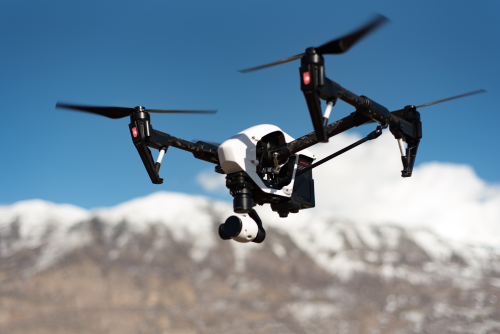
Choosing business insurance looks simple until you compare what actually happens after a loss. The biggest mistakes people make when they try to choose business insurance usually come from assumptions: assuming the cheapest policy is “good enough,” assuming a client’s certificate request tells you everything you need, or assuming one policy covers every part of the job. For drone businesses, creators, survey teams, and service providers, the right insurance decision starts with understanding your real operational risk, not just buying a document.
Quick Take
If you only remember a few things, remember these:
- Start with your exposure, not the premium.
- Separate third-party liability from cover for your own drones, cameras, sensors, and laptops.
- Check whether your policy matches the way you actually work: countries, clients, subcontractors, vehicles, data handling, and specialist operations.
- Read exclusions, territorial limits, deductibles, and sublimits. A sublimit is a smaller cap inside the policy for a certain item or loss type.
- Make sure your cover fits client contracts before you quote the job.
- Review insurance whenever your business changes, not just at renewal.
A cheap policy can still be the wrong policy. In drone work especially, the painful gaps often appear around equipment damage, overseas jobs, data deliverables, subcontracted pilots, and activities the insurer was never told about.
Why business insurance is so easy to get wrong
Insurance is hard to compare because two quotes can look similar while covering very different risks.
A drone business might face several kinds of loss at once:
- damage to someone else’s property
- injury to a third party
- damage to your own aircraft or payload
- a client claiming your deliverable was wrong or incomplete
- theft while traveling
- loss involving a freelancer or subcontractor
- data breach, privacy complaint, or corrupted files
- contract issues when a client requires specific wording or limits
That mix is why many buyers focus on the wrong thing. They see insurance as a box to tick, when it is really part of operational planning, client delivery, and cashflow protection.
Here is a simple way to separate the cover types people often confuse.
Coverage types people mix up
| Coverage type | What it usually protects | Common misunderstanding |
|---|---|---|
| Third-party liability for drone operations | Injury or property damage caused to others, subject to policy terms | “This will pay for my own drone too.” |
| Hull or equipment cover | Your drone, payload, controllers, batteries, cases, and sometimes other portable kit | “I already bought liability, so my gear is covered.” |
| Professional liability or errors and omissions | Claims that your service, advice, data, or deliverable caused financial loss | “If nobody was physically hurt, there’s no real claim risk.” |
| Cyber, data, or privacy cover | Certain costs tied to data incidents, ransomware, breaches, or digital disruption | “I’m too small to need that.” |
| Employer, crew, or worker injury cover | Employee or crew-related injury exposure, depending on local law and policy structure | “Freelancers are automatically covered” or “automatically excluded.” |
| Vehicle, transit, or business property cover | Loss involving cars, vans, storage, and equipment while moving or stored | “My home policy or personal auto policy will handle it.” |
Exact policy names and requirements vary by country and insurer, so always verify how a policy is classified in your market.
The biggest mistakes people make when they try to choose business insurance
1. Starting with price instead of risk
The most common mistake is treating insurance like a commodity.
A low premium can mean:
- lower limits
- higher deductibles
- more exclusions
- narrower territory
- slower or less specialized claims support
- sublimits on expensive sensors or accessories
- no cover for rented, borrowed, or in-transit equipment
If your work includes infrastructure inspections, branded commercial shoots, mapping, or international travel, the “cheap” option may only be cheap because it excludes exactly what you do.
A better starting point is this question: what could put this business under real financial pressure if it happened next week?
2. Copying someone else’s policy
What works for another operator may be wrong for you.
Two businesses can both say they “do drone work” and still have completely different exposure. A solo travel creator filming scenic locations has a different risk profile from:
- a survey team producing measurement-based outputs
- a roof inspection company
- a multi-country production crew
- a real estate media business using freelancers
- an enterprise team flying around industrial assets
Copying a friend’s insurer, a forum recommendation, or a competitor’s certificate is one of the fastest ways to buy the wrong cover.
Insurance should match your actual operations, not your industry label.
3. Confusing liability cover with cover for your own equipment
This mistake causes a lot of disappointment at claim time.
Third-party liability usually addresses damage or injury you cause to other people or their property. It does not automatically mean the insurer will pay for your own drone, camera, lidar unit, thermal payload, controller, tablet, laptop, or ground kit.
If your business depends on specialized gear, ask specifically about:
- aircraft and payload values
- replacement value versus depreciated value
- cover while transporting gear
- cover in storage
- cover in hotels or temporary locations
- cover for rented or borrowed equipment
- theft from vehicles, if relevant
For many drone businesses, equipment downtime is just as painful as the repair bill.
4. Assuming personal, hobby, home, or travel insurance will extend to business use
Many people start a drone side business before updating their insurance properly. That creates a dangerous gray area.
Personal policies often treat commercial activity differently from hobby activity. Home, travel, or personal auto cover may also limit or exclude business property, aviation-related exposure, or higher-value equipment.
That matters when:
- your drone work becomes paid work
- your gear value grows quickly
- you store equipment in a vehicle
- you travel for client shoots
- you rent or borrow equipment
- you hire local operators or assistants
Do not assume your existing personal cover “probably includes it.” Verify in writing.
5. Buying limits that satisfy a quote request but not the job
A lot of businesses only think about insurance limits after they win the client. By then, the wrong policy can become a margin problem.
A client may require:
- a minimum liability limit
- a specific type of liability wording
- proof of cover before site access
- their company to be listed in a certain way on documentation
- evidence that subcontractors also carry insurance
If you price a project assuming one insurance structure and the contract requires more, the job can suddenly become less profitable.
Beyond contracts, the bigger question is practical exposure. A low limit may look fine until you think about a loss involving vehicles, buildings, public spaces, industrial equipment, or a high-value set location.
Your limits should be based on both contract requirements and realistic worst-case scenarios.
6. Not reading exclusions, territorial limits, and operating conditions
This is where the real policy lives.
Many buyers read the summary, see the premium, and stop there. But policies often narrow cover through exclusions and conditions. Common problem areas can include:
- international work
- specialist or higher-risk operating environments
- work at certain sites or events
- night operations or unusual schedules
- specific aircraft sizes or payload types
- theft from unattended vehicles
- work subcontracted to others
- unlisted countries or territories
Even if a policy sounds broad, it may still depend on how the insurer classified your operations when you applied.
If you ever plan to travel, expand services, or take on less typical jobs, ask scenario-based questions before you buy.
7. Under-describing what your business actually does
Some buyers unintentionally make themselves look lower-risk than they really are. Others rush through the application and use vague descriptions like “media production” or “content creation.”
That can be a problem if the business really does things like:
- inspections
- mapping
- thermal surveying
- work on industrial, construction, or utility sites
- recurring operations for enterprise clients
- flying in multiple countries
- using subcontract pilots
- carrying expensive specialist payloads
Insurance works best when the insurer clearly understands what you do.
If your business changes over time, update the insurer. A policy bought when you were shooting small local projects may not reflect what you are doing a year later.
8. Ignoring professional liability
Many drone businesses focus only on physical damage. But some of the most expensive disputes are about the service, not the aircraft.
Professional liability, sometimes called errors and omissions, usually relates to claims that your work product caused financial loss. For example:
- a client says your map, model, inspection output, or report was wrong
- footage was unusable and caused production delay
- a deliverable was incomplete or misinterpreted
- a client relied on your output and now alleges loss
If you provide more than raw flying — especially analysis, measurement, reporting, or decision-support material — this category matters.
A business that sells results, not just flight time, should think beyond basic flight liability.
9. Overlooking cyber, data, and privacy exposure
Drone companies increasingly handle sensitive information:
- imagery of private property
- location data
- client files
- survey outputs
- cloud storage
- field laptops and tablets
- remote collaboration tools
That creates risks that traditional flight liability may not address well.
A stolen laptop, compromised cloud account, ransomware incident, misdirected file transfer, or privacy complaint can cost time, money, and client trust. Even a small operator can face disruption if a project archive disappears before delivery.
If your business relies on digital assets, ask whether your insurance strategy includes data and cyber risk in a meaningful way.
10. Assuming employees, freelancers, and subcontractors are automatically covered
This is one of the biggest scaling mistakes.
Businesses often grow by using:
- second pilots
- visual observers
- editors
- freelance camera operators
- subcontracted local crews
- project-based field teams
But insurance treatment can differ depending on whether someone is an employee, a temporary worker, an independent contractor, or an outside vendor. Those distinctions vary by country, contract, and insurer.
Key questions to ask:
- Who is insured while operating the drone?
- Who is insured while driving, loading, spotting, or handling gear?
- Does the policy cover subcontracted operations?
- Do subcontractors need their own insurance?
- Do you need proof of their cover before assigning them work?
Never assume “they’re helping on my job, so they’re covered.”
11. Choosing a deductible your business cannot comfortably absorb
A deductible is the amount you pay yourself before the insurer contributes, where the policy structure uses one.
Higher deductibles can lower premiums, which makes them tempting. But if your deductible is larger than your real cash reserve, you may still struggle to recover after a loss.
A practical insurance choice has to match cashflow.
Ask yourself:
- Could I pay this deductible next month without delaying payroll or debt payments?
- If one drone is grounded, can I still deliver client work?
- Would I need to rent replacement gear, and is that covered?
- How quickly could I replace a key payload or controller?
Insurance should help your business survive a bad day, not create a new cash crisis.
12. Treating insurance as a once-a-year admin task
A lot of businesses buy a policy, file the certificate, and forget it.
That works until the business changes. Common trigger points for review include:
- buying more expensive drones or payloads
- hiring staff
- moving into inspections, mapping, or analytics
- working across borders
- storing more equipment in vehicles or temporary sites
- signing larger enterprise clients
- adding recurring contract work
- increasing revenue significantly
Insurance that fit a solo creator often does not fit a growing drone service business.
Review at renewal, but also review when the business changes materially.
Safety, legal, and operational risks to check before you buy
Insurance does not replace compliance. A policy is not a permission slip to fly, travel, or operate in restricted environments.
Before you rely on any insurance arrangement, verify these points for the places and clients you work with:
- local aviation rules for commercial or non-recreational drone operations
- pilot competency, registration, or authorization requirements where applicable
- site-specific permissions for parks, venues, private land, construction areas, or industrial facilities
- contract wording required by clients, landlords, event organizers, or site owners
- whether your territory of cover includes every country or region where you plan to work
- whether local law requires specific insurance formats or locally issued cover
- privacy and data-handling obligations when collecting imagery or mapping outputs
- vehicle and worker-related cover for crews transporting gear or working on-site
If you do unusual work — such as specialist industrial operations, offshore jobs, or projects involving sensitive locations — ask the insurer or broker to confirm in writing that the activity sits within the policy you are buying.
A smarter way to compare policies
If you want to avoid the usual mistakes, compare quotes in a structured way.
1. List your real operations
Write down:
- all services you sell
- countries or regions where you work
- number of pilots and crew
- whether you use subcontractors
- equipment values
- typical clients and sites
- whether you store or travel with gear frequently
- whether you deliver data, analysis, or reports
2. Build your risk map
Think in scenarios, not products.
Examples:
- your drone damages a vehicle
- your payload is damaged during transport
- a client claims your map was inaccurate
- a freelancer on your project causes a loss
- equipment is stolen during travel
- project files are lost before delivery
3. Ask for cover by exposure type
Do not just ask for “business insurance.”
Ask how the quote handles:
- third-party liability
- your own equipment
- professional liability
- data or cyber exposure
- employees or crew
- vehicles and transit
- territorial cover
4. Compare the same details line by line
When comparing quotes, look at:
- limits
- deductibles
- exclusions
- sublimits
- territorial restrictions
- covered activities
- definitions of insured persons
- claims reporting process
5. Check client and contract fit
Before you accept bigger jobs, confirm whether your policy can support the insurance wording, certificates, and limits your client requires.
A certificate is useful, but the actual policy wording usually governs the real cover.
6. Test the insurer with practical questions
Ask questions like:
- If my drone damages a client asset, what part of the policy responds?
- If my aircraft is damaged on the same day, is that separate?
- If I use a subcontract pilot, how is that handled?
- If I work abroad, what changes?
- If my deliverable is challenged, what cover applies?
The clarity of the answers tells you a lot.
7. Review after every meaningful business change
Insurance should evolve with the business. If the way you earn money changes, your cover should probably be reviewed too.
Common signs a quote is wrong for your business
Watch for these red flags:
- The quote process asked almost nothing about your operations.
- The policy looks cheap because it excludes the kind of work you actually do.
- Equipment values are understated.
- International work is not clearly addressed.
- There is no clear answer on subcontractors.
- Your policy only solves a client certificate request, not your real exposure.
- The deductible looks manageable on paper but not in your actual cashflow.
- You still cannot explain, in plain language, what is and is not covered.
If you cannot clearly describe the protection, you probably do not understand the gap yet.
FAQ
What insurance does a drone business usually need?
Many drone businesses start with third-party liability and separate cover for their own equipment. Depending on the work, they may also need professional liability, cyber or data cover, worker-related cover, vehicle-related cover, and contract-specific extensions. The exact mix depends on local law, client requirements, and the services you sell.
Is general business liability enough for commercial drone work?
Often not. Drone operations are frequently treated as a distinct aviation-related exposure, and some standard business policies may not respond the way you expect. Always verify whether drone activity is specifically covered.
What is the difference between liability cover and hull or equipment cover?
Liability cover generally relates to injury or damage you cause to others. Hull or equipment cover generally relates to your own drone, payloads, controllers, and related gear. They solve different problems.
How much insurance limit should I buy?
Start with three things: client contract requirements, the environments where you operate, and the largest realistic loss your business could face. Urban jobs, industrial sites, enterprise clients, and higher-value assets usually call for more careful limit planning than low-risk local content work.
Are freelance pilots or subcontractors covered under my policy?
Not automatically. Coverage depends on policy wording, legal status, contract structure, and country-specific rules. If you use outside pilots or crews, get clear written confirmation from your insurer or broker and collect proof of their own insurance where needed.
Does business insurance cover international travel and overseas work?
Sometimes, but not always. Territory, sanctions, transit conditions, local insurance rules, and admitted-policy rules can all affect cover. Confirm this before traveling or committing to work in another country.
Do I need professional liability if I mostly fly and deliver files?
Maybe. If clients rely on your footage, maps, reports, inspection outputs, or analysis to make decisions, professional liability becomes more relevant. The more your business sells an outcome rather than simple flight time, the more important it is to review.
Is a certificate of insurance enough?
No. A certificate is usually only evidence that some insurance exists at a point in time. It does not replace the actual policy wording, exclusions, limits, and conditions that determine whether a claim will be paid.
The next move
Do not shop for business insurance by asking, “What is the cheapest policy I can get?” Ask, “What could seriously hurt this business, and which policy actually responds to that?” For drone operators and service teams, the best insurance choice is the one that matches your real work, your contracts, your gear, and your growth plan before the claim ever happens.