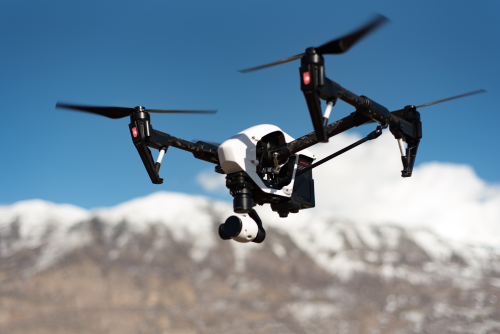
The biggest mistakes people make when they try to create drone service contracts usually are not about fancy legal language. They come from copying a generic photo or video agreement, leaving key risks undefined, and promising things the pilot cannot fully control once weather, airspace, site access, and safety enter the picture. A strong drone contract protects both sides, but it also does something just as important: it keeps a normal job from turning into lost margin, awkward disputes, or unsafe pressure on the day of the flight.
Quick Take
- Most bad drone contracts fail because they are too vague, not because they are too short.
- A drone service agreement should clearly define scope, deliverables, client responsibilities, rescheduling rules, safety authority, rights to footage or data, payment triggers, and revision limits.
- If your contract does not account for weather, access restrictions, legal feasibility, and changing site conditions, you are probably pricing risk without realizing it.
- Never sign terms that let a client force unsafe or unlawful operations, or that make you responsible for everything happening at a site you do not control.
- The best structure for most providers is a base agreement plus a project-specific statement of work, often called an SOW.
Why drone service contracts break down so often
Drone work looks simple from the client side. They want aerial photos, a marketing reel, a site inspection, a map, or progress documentation. But from the operator side, every job depends on moving parts that do not exist in ordinary creative work.
A normal photographer can usually show up and start shooting. A drone operator may need lawful flight conditions, location access, takeoff and landing suitability, on-site safety buffers, weather that supports stable operation, and a workable mission plan. On top of that, many clients do not understand the difference between what they want creatively and what is actually feasible on the day.
That is why weak drone contracts cause so many avoidable problems. They leave the hard parts unstated, and the unstated parts are exactly where disputes begin.
The biggest mistakes people make when they try to create drone service contracts
1. Using a generic photography or videography contract
This is the most common mistake.
A standard creative contract may cover payment, edits, ownership, and cancellation. That is not enough for drone work. It usually does not deal with flight feasibility, aviation compliance, access restrictions, safety stop authority, airspace limitations, or weather-driven delays.
That gap matters. A contract built for ground cameras assumes the service can happen as planned if the crew arrives. Drone work cannot make that assumption.
What to do instead:
- Start with a drone-specific contract framework.
- Add clauses for flight conditions, rescheduling, site access, and legal compliance.
- Make sure the agreement matches the kind of work you actually do: marketing, inspections, events, mapping, construction, or enterprise documentation.
2. Leaving the scope of work too vague
“One drone shoot at client location” is not a real scope of work. It is an invitation to disagreement.
A proper scope should answer basic operational questions:
- What is being filmed, photographed, or captured?
- At which location or locations?
- On what date, time window, or weather window?
- How much on-site time is included?
- What deliverables are included?
- What format, resolution, duration, or file type will be delivered?
- Is editing included, and if so, how much?
Vague scope is how a half-day job becomes a full-day job without extra pay. It is how a client expects two reels, thirty edited photos, social cutdowns, and raw footage after buying “aerial content.”
If you do only one thing better in your contracts, do this: define exactly what the client is buying.
3. Forgetting to spell out the client’s responsibilities
Many operators write detailed obligations for themselves and almost nothing for the client.
That is a mistake, because clients often control the variables that make the job possible. They may need to provide site access, owner approval, security clearance, staging, a ground contact, closed work areas, rooftop access, parking, or a safe place to launch and recover. If they do not provide those things, the operator should not silently absorb the failure.
A construction progress shoot is a good example. If your crew arrives and the site manager is unavailable, the elevator is locked, and the agreed takeoff area is blocked, that is not just “bad luck.” It is a contract issue.
Your agreement should identify client responsibilities such as:
- Providing accurate site information
- Securing access to private property or controlled locations
- Obtaining any non-aviation permissions assigned to them
- Making the subject or site ready
- Providing an on-site point of contact
- Informing you about hazards, restrictions, or sensitive areas
If the client fails to do those things, the contract should explain what happens next: wait time, rescheduling fees, additional travel charges, or cancellation treatment.
4. Ignoring weather, airspace, and site-access contingencies
Drone jobs fail in perfectly ordinary ways. Wind is stronger than forecast. Light is wrong for the promised look. Temporary restrictions appear. The venue changes its policy. A security team denies access. A launch area turns out to be unsafe.
If the contract does not say what happens in those cases, both parties fill in the blanks with their own assumptions.
Your contract should address:
- What counts as unsafe or unsuitable conditions
- Who decides whether the flight proceeds
- Whether weather-based rescheduling is included
- How many reschedule attempts are reasonable
- Whether travel, standby, or setup time is still billable
- What happens if the mission is partially completed
- What happens if the location is inaccessible or materially different from what was disclosed
A force majeure clause can help too. In plain English, that means events outside either party’s control, such as severe weather, emergency restrictions, or sudden site closures. But do not rely on that clause alone. Drone-specific contingency language is much more useful.
5. Letting the client, not the pilot, control flight decisions
This is one of the most dangerous contract mistakes.
A client can request a shot. They should not control the go or no-go decision. The remote pilot or responsible operator must retain final authority over whether the mission can be flown lawfully and safely.
That should be stated clearly in the contract. Not implied. Not buried.
The agreement should say, in plain language, that the operator may delay, modify, relocate, or cancel all or part of the mission if conditions are unsafe, illegal, or materially different from what the client described. That protects the pilot, the crew, the public, and the client.
Just as important, the contract should make clear that no client instruction will require the operator to violate aviation rules, local restrictions, privacy law, venue rules, or basic safety practice.
A contract cannot legalize an unlawful flight. It can only allocate responsibility and set expectations.
6. Confusing time, deliverables, and outcomes
Drone operators often mix three different pricing models without realizing it:
- Time-based work, such as a half-day or full-day shoot
- Deliverable-based work, such as twenty edited photos and one 45-second reel
- Outcome-based work, such as complete roof coverage or a map of a site
Problems start when the contract prices one model and the client expects another.
Example: you quote a day rate, but the client believes that means every desired shot is guaranteed. Or you quote a finished video, but the client expects unlimited on-site experimentation because “the drone is already there.”
The solution is to define what is included and what is not. If you are selling time, say that deliverables depend on conditions and feasible capture within that time. If you are selling deliverables, say how much capture, editing, and revision work is included. If you are selling a technical output such as mapping or inspection data, define the methodology, assumptions, and limits of use.
This is especially important for survey, mapping, and inspection work. Do not let a contract imply engineering conclusions, legal certification, or guaranteed accuracy unless that is truly part of your service and supported by the right workflow and qualifications.
7. Leaving ownership, licensing, and raw files undefined
This is where many drone service contracts become quietly expensive.
Clients may assume that paying for the shoot means they own everything: final exports, raw footage, project files, and unrestricted commercial rights. In many jurisdictions, default copyright rules are not that simple. More importantly, you should not leave them to default rules at all.
Your contract should say:
- Who owns the captured material
- What usage rights the client receives
- Whether the license is exclusive or non-exclusive
- Whether the license is limited by territory, duration, platform, or campaign
- Whether raw files are included, excluded, or separately priced
- Whether you may use the work in your portfolio or marketing
- Whether third-party transfers are allowed
This matters beyond creative work. If you produce orthomosaics, 3D models, inspection media, or processed datasets, define who may use them and for what purpose. A deliverable created for internal asset review is not automatically licensed for resale, public advertising, or transfer to another contractor.
8. Overpromising results, accuracy, or turnaround
Bad contracts often promise too much because the provider wants to close the deal.
The risky promises usually sound harmless:
- guaranteed sunset look
- complete coverage of every area
- exact shot list completion
- perfect tracking of moving subjects
- fixed turnaround regardless of client delays
- precise data accuracy without stating assumptions
Drone work is too dependent on conditions for that kind of certainty.
A better approach is to promise professional execution and clearly defined deliverables, subject to safe and lawful operation. If you have technical outputs, define the conditions that support the result. If you promise editing turnaround, say when the clock starts. Usually that should be after successful capture and after all required client inputs are received.
If the client takes five days to send logo files, captions, comments, or selection notes, your deadline should move accordingly.
9. Using weak payment, cancellation, and change-order terms
A lot of operators write contracts that protect against a lawsuit but not against margin erosion.
That is backwards. The most common damage in small and mid-sized drone services is not a major legal claim. It is unpaid time, repeated scope creep, wasted travel, and extra work that nobody priced.
Your contract should define:
- Deposit or retainer terms
- When the balance is due
- Whether booking dates are reserved only after payment
- Late payment consequences where enforceable
- Cancellation windows and fees
- Weather rescheduling terms
- Additional charges for travel, waiting time, extra locations, extra edits, or rush delivery
- How scope changes are approved and billed
A simple change-order rule can save a lot of frustration. If the client adds a second site, extra deliverables, a different edit style, or another round of shooting, there should be a clear written process for repricing the work.
For cross-border work, also clarify currency, tax treatment, and who bears transfer fees or withholding issues where applicable.
10. Failing to define revisions, acceptance, and delivery boundaries
Many operators are careful about flight clauses and careless about post-production. That creates a second wave of scope creep after the job is flown.
Your contract should say:
- How many revision rounds are included
- What counts as a revision versus new work
- What format the files will be delivered in
- When the client is deemed to have accepted the work
- How long files will be stored or archived
- Whether re-delivery after archive removal carries a fee
Without an acceptance process, a client can drag comments out for weeks and keep the project operationally open. Without revision boundaries, “quick tweaks” become unpaid re-edits.
A good rule is to set a defined review period and to specify that silence after that period counts as acceptance, where local law and contract practice allow. For recurring commercial work, that one clause can materially improve cash flow.
11. Signing one-sided liability, indemnity, or insurance language
This is where many small operators get hurt in enterprise work.
A client procurement team may send a contract that looks standard, but its risk terms can be wildly mismatched to the job. The dangerous language usually shows up in three places:
- unlimited liability
- broad indemnity
- insurance requirements you have not actually verified
Indemnity means a promise to cover another party’s losses in certain situations. That can be reasonable when tied to your own negligence or breach. It becomes risky when it covers anything “arising out of the project,” including site conditions, client instructions, third-party behavior, or business losses far beyond your control.
Be especially careful with clauses that make you responsible for:
- all site safety
- all permits of every kind
- all third-party claims, even if caused by the client
- lost profits, project delays, or downstream business losses
A liability cap is often worth discussing. So are exclusions for indirect or consequential damages, which usually means business losses that are not the direct cost of fixing your work. Enforceability varies by jurisdiction, so local legal review matters here.
Do not assume your insurance will save you if the contract language is poor. Verify requirements with your insurer or broker before you agree.
12. Treating every drone job as if it needs the same contract
A real estate content package is not the same as a tower inspection. A tourism promo is not the same as construction progress documentation. A mapping project is not the same as an event recap.
Yet many operators use the same agreement for everything.
That creates blind spots. Different jobs need different terms around:
- technical accuracy
- site safety protocols
- confidentiality
- data retention
- crew requirements
- subject-matter assumptions
- turnaround urgency
- licensing scope
- acceptance criteria
The best fix is simple: use a base agreement for your general business terms, then attach a project-specific statement of work. The SOW is where you tailor the job details, deliverables, assumptions, and pricing for that exact mission.
That structure works for solo operators and larger teams alike.
Safety, legal, and compliance risks your contract cannot ignore
Any contract for drone services sits next to regulated activity. That means your paperwork should support compliant operations, not pretend compliance is someone else’s problem.
A few practical rules matter everywhere:
- A contract does not override aviation law.
- Permission from a property owner is not the same thing as permission to operate in that airspace.
- Site access, filming permission, privacy permission, and aviation permission may all be separate issues.
- Local rules on flights near people, roads, airports, parks, stadiums, infrastructure, wildlife areas, or urban centers vary by jurisdiction.
- Privacy, surveillance, image rights, and data protection rules also vary widely.
- Foreign operators, visiting pilots, or cross-border projects may face extra restrictions, permit requirements, or insurance complications.
Your contract should allocate responsibilities, but it should do so carefully. For example, the client may be responsible for property access and certain filming permissions, while the operator remains responsible for determining whether the flight can be conducted lawfully and safely. That is a reasonable split. Shifting everything to one side usually creates confusion.
Before high-risk, enterprise, or international work, verify the details with the relevant aviation authority, site owner, venue, local regulator, and insurer. For sensitive sectors such as utilities, energy, infrastructure, industrial sites, or government property, the contract should reflect the actual approval chain, not guess at it.
A simple framework for building a better drone service contract
If you want a practical starting point, use this structure.
1. Build a short base agreement
This should cover the core business terms that rarely change:
- parties and legal names
- payment terms
- ownership and licensing
- confidentiality
- liability and insurance
- cancellation and dispute terms
- governing law and venue for disputes, if relevant
2. Add a project-specific statement of work
For each job, define:
- location
- date or date window
- mission purpose
- deliverables
- turnaround
- price
- included revisions
- assumptions
- client responsibilities
This is where most operational clarity lives.
3. Write the contingency rules in plain English
Do not hide these in legal boilerplate. Spell out what happens if:
- weather prevents safe flight
- the site is inaccessible
- conditions differ from the brief
- the client changes scope
- the flight is partially completed
- the operator declines a requested shot for safety or compliance reasons
4. Put money triggers wherever uncertainty can appear
If extra work is possible, price it in advance or define how it will be billed.
Typical examples:
- extra location
- extra hour on site
- extra revision round
- urgent turnaround
- raw media delivery
- archive retrieval
- second travel day
- reshoot caused by client changes
5. Match the rights language to the real business use
A hotel chain running international ads needs different rights from a contractor using imagery for an internal monthly report. If you always give away unlimited rights by default, you may be underpricing your work.
6. Review it before using it at scale
Even a strong draft should be reviewed by qualified local counsel before you rely on it widely, especially if you do enterprise, inspection, cross-border, or higher-risk work. If clients regularly send you their own terms, that review becomes even more valuable.
FAQ
Can I use a normal photography contract for drone jobs?
You can use it as a starting point, but not as a finished solution. Drone work needs clauses for flight feasibility, rescheduling, safety authority, site access, compliance, and sometimes data handling or technical limitations.
Who should be responsible for permits and permissions?
The contract should assign responsibilities explicitly instead of assuming. Often the client handles property access and site permissions, while the operator handles aviation-related operational decisions, but the exact split depends on the job and local rules. Always verify with the relevant authorities.
Should the client own the raw footage?
Only if that is part of the deal. Many operators deliver finished edits or selected files and charge separately for raw media. The contract should state this clearly so there is no assumption that payment equals full ownership of all captured material.
What should happen if weather stops the flight?
The contract should say whether the job is rescheduled, partially billed, or treated as a standby or travel day. It should also state who decides conditions are unsuitable and whether travel or setup costs remain payable.
Do mapping, surveying, and inspection jobs need different terms from marketing shoots?
Yes. Those jobs often need extra language around methodology, accuracy assumptions, intended use, data formats, and limits on interpretation. Do not use a simple promo-video contract for technical deliverables.
How much insurance should a drone operator carry?
There is no universal answer. It depends on the jurisdiction, aircraft type, client requirements, site risk, and the kind of work you perform. Check local rules, contract requirements, and your insurer rather than copying someone else’s number.
Do small drone jobs still need a written contract?
Yes, even if it is a short one. For smaller work, a signed quote or proposal with clear terms can be enough in some markets, but it still needs scope, price, rights, timing, and rescheduling terms. Verify what is enforceable where you operate.
When is it worth paying a lawyer to review my contract?
Before you use it across many jobs, and especially before enterprise, infrastructure, industrial, or international work. One review can save far more than it costs if it prevents a bad indemnity clause or a rights dispute.
Final takeaway
The biggest contract mistake in drone services is not failing to sound legal enough. It is failing to describe the real job clearly enough. If your agreement does not cover scope, safety authority, contingencies, rights, revisions, and pricing for change, the client will fill those gaps with their own expectations. Tighten the contract before the next quote goes out, and you will protect your margin, your workflow, and your ability to say yes only to jobs you can do well and lawfully.