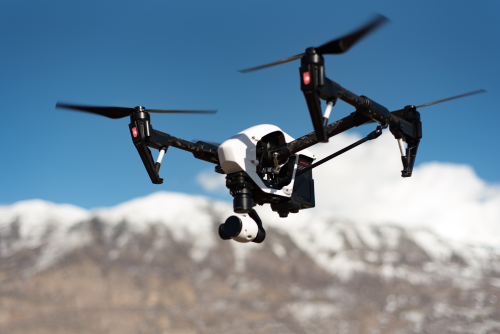
Most maintenance plans fail before the first inspection ever happens. People either make them too generic to prevent problems, or so complicated that nobody actually follows them during busy operations. In drone work, that usually leads to the same result: more downtime, more preventable wear, and more risk when a client, regulator, or insurer asks what happened.
The biggest mistakes people make when they try to create maintenance plans are not usually technical. They are planning mistakes, ownership mistakes, and recordkeeping mistakes. Fix those first, and the rest becomes much easier.
Quick Take
A good drone maintenance plan is not just a service schedule. It is a working system for keeping aircraft safe, reliable, and commercially usable.
Key points:
- The biggest mistake is relying on calendar dates alone instead of combining time-based, usage-based, and event-based maintenance.
- Generic templates often fail because different drones, payloads, environments, and job types wear out parts in different ways.
- Batteries, firmware, calibrations, transport damage, and environmental exposure are often ignored, even though they cause many real-world issues.
- A maintenance plan only works if it includes clear grounding rules, named responsibilities, and records that people can actually update.
- For commercial operators, maintenance is not just a technical task. It affects client delivery, margins, insurance conversations, and compliance confidence.
- Local aviation and workplace rules vary. Always verify what records, inspections, repairs, and authorized service processes apply in your country and operation type.
What a workable drone maintenance plan actually includes
Before talking about mistakes, it helps to define what a maintenance plan is supposed to do.
At minimum, it should answer these questions:
- What assets are covered?
- What needs to be checked, cleaned, updated, calibrated, repaired, or replaced?
- When is each task due?
- What events trigger extra inspection?
- Who is responsible for each decision?
- What conditions mean the aircraft should be grounded?
- Where are the records stored?
Here is what a usable plan usually contains:
| Component | What it should include | Why it matters |
|---|---|---|
| Asset register | Drone model, serial number, batteries, controllers, payloads, chargers, props, cases | You cannot maintain what you have not identified |
| Maintenance triggers | Calendar intervals, flight hours, battery cycles, mission count, incident triggers | Prevents both under-maintenance and wasted maintenance |
| Inspection checklists | Preflight, postflight, periodic, and after-incident checks | Makes the plan usable in daily operations |
| Pass/fail criteria | What counts as acceptable wear, damage, or abnormal behavior | Reduces guesswork and inconsistent decisions |
| Roles and approvals | Who inspects, who grounds, who approves return to service | Avoids confusion and unsafe pressure to keep flying |
| Recordkeeping | Logs for flights, battery health, repairs, firmware, part changes, incidents | Essential for trends, audits, claims, and client trust |
| Spare parts and service path | Approved propellers, batteries, replacement parts, service centers, turnaround expectations | Cuts downtime and prevents unsafe improvisation |
The biggest mistakes people make when they try to create maintenance plans
1. They build the whole plan around dates
This is the most common failure.
A plan that says “inspect every month” sounds organized, but drones do not wear out based on the calendar alone. A drone flown twice a day in dusty, hot conditions ages differently from one flown once a month indoors. The same goes for batteries, motors, gimbals, landing gear, and payload connectors.
What works better is a mix of:
- Time-based triggers, such as monthly or quarterly reviews
- Usage-based triggers, such as flight hours, mission count, or battery cycles
- Event-based triggers, such as hard landings, rain exposure, transport impact, or firmware changes
If you only use dates, you will either miss real wear or do unnecessary maintenance that eats time and margin.
2. They copy a template that does not match the operation
A generic maintenance template can be a useful starting point, but it should never be the finished product.
A solo travel creator, an FPV pilot, a real estate photographer, and an enterprise inspection team do not have the same maintenance risks. Even within one business, a mapping aircraft and a cinematic aircraft may need different checks, different accessories, and different service intervals.
What gets missed when people copy templates:
- Payload-specific issues like gimbal balance or sensor cleanliness
- Weather and terrain exposure
- Transport frequency
- Repetitive takeoff and landing stress
- Client-driven turnaround pressure
- Multi-battery rotation complexity
The better approach is to start with manufacturer guidance, then adapt it to your actual use case.
3. They treat batteries like accessories instead of core assets
Many maintenance plans focus on the drone body and forget the batteries. That is a serious mistake.
For most operators, batteries are one of the most failure-prone and operationally sensitive parts of the system. They are affected by charging habits, storage level, heat, cold, transport conditions, impact history, and cycle count. A drone with a perfect airframe can still become unreliable if battery management is sloppy.
A strong plan should track:
- Battery identification and pairing
- Charge cycles
- Storage practices
- Physical swelling or casing damage
- Temperature-related performance concerns
- Abnormal voltage behavior or inconsistent discharge
- Retirement criteria
For business use, battery logs are often just as important as aircraft logs.
4. They ignore the operating environment
A maintenance plan designed for clean, mild conditions will fail quickly in the real world.
Salt air, sand, farm dust, humidity, cold mornings, heat-soaked vehicles, mountain travel, and repeated road vibration all change the maintenance burden. So does indoor flying in tight spaces where prop strikes and light impacts are more common.
Environmental stress often shows up in these areas:
- Motor smoothness and debris buildup
- Propeller wear
- Corrosion risk
- Gimbal contamination
- Connector reliability
- Lens cleanliness
- Battery temperature stress
- Case and transport protection failures
If your plan does not account for where and how the drone is actually used, it is not really a maintenance plan. It is a document.
5. They write vague tasks with no pass/fail standard
“Inspect props” is not a proper maintenance instruction.
Neither is “check battery condition,” “look for damage,” or “test the gimbal.” Those phrases sound responsible, but they leave too much to personal interpretation. One pilot may ground the aircraft for small edge damage. Another may keep flying because “it still looks fine.”
A better plan defines what people should look for and what action follows. For example:
- Propeller nick, crack, chip, or deformation: replace before next flight
- Loose arm movement or unusual vibration: ground until inspected
- Battery swelling, case damage, or abnormal temperature behavior: remove from service
- Moisture exposure after landing: do not relaunch until inspection is completed
You do not need to turn the plan into a legal document. But you do need to reduce ambiguity.
6. They forget to define who can ground the drone
This is a business problem as much as a safety problem.
In many teams, everyone is expected to “use common sense.” In practice, that often means nobody wants to be the person who delays a paid job. The result is avoidable pressure to keep flying with questionable equipment.
Your plan should clearly state:
- Who performs daily checks
- Who can declare an aircraft unserviceable
- Who approves return to service after repair or incident inspection
- What happens if there is disagreement between pilot, technician, and manager
This matters most when deadlines are tight. A plan that depends on courage alone will break under commercial pressure.
7. They keep poor records or split records across too many places
A maintenance plan is only as good as its records.
A common pattern looks like this:
- Flights logged in one app
- Battery notes in a phone note
- Repairs in email
- Firmware updates remembered informally
- Crash details only discussed in chat
- Spare parts tracked nowhere
That makes trend detection almost impossible. It also makes it hard to answer basic questions like:
- Has this issue happened before?
- Which battery was used on the mission with the problem?
- Was the aircraft updated before the fault appeared?
- Did the same propeller set survive a transport incident?
For a solo operator, one clean spreadsheet or operations log may be enough. For a growing fleet, a maintenance management system may make more sense. The exact tool matters less than consistency.
8. They ignore firmware, calibration, and software compatibility
People often separate “maintenance” from “software,” but in drones the two are closely linked.
Firmware updates, controller updates, payload firmware, app versions, calibration procedures, and battery firmware can all affect operational reliability. That does not mean you should update constantly. It means changes should be managed deliberately.
Good practice usually includes:
- Recording when updates were applied
- Testing after major changes before client work
- Verifying compatibility across aircraft, controller, batteries, and software
- Treating unusual behavior after updates as a maintenance issue, not just a flying issue
Randomly updating the night before a job is not a maintenance strategy.
9. They make the plan too complicated to use
Some maintenance plans look excellent in a document review and fail completely in real operations.
Common signs of overcomplication:
- Too many forms
- Long checklists full of low-value items
- Duplicate data entry
- Technical language the field team does not use
- No mobile-friendly workflow
- Procedures that add time without improving decisions
If the plan is painful to use, people will bypass it, pencil-whip it, or only complete it after the fact. That creates false confidence, which is worse than openly admitting the process is broken.
A better plan is short where it can be and detailed where it must be. Preflight checks should be fast and decisive. Deeper periodic inspections can be more detailed.
10. They never revise the plan after the operation changes
Maintenance plans are not static.
A plan that worked when you owned one drone may fail when you have six. A plan built for weekend photography may not fit weekly roof inspections. A plan designed around one aircraft model may become messy after you add another platform with different batteries, payloads, and support channels.
You should review the plan when:
- Utilization increases
- You add new aircraft or payloads
- You start flying in harsher environments
- You take on higher-risk client work
- You notice repeat faults or near-misses
- Repair turnaround starts hurting delivery times
If the operation changes but the plan does not, the plan slowly becomes fiction.
A simple framework for building a maintenance plan that people will actually use
If you are starting from scratch, keep it practical. You do not need an aviation-sized manual to build a reliable process.
1. List every asset that matters
Include more than just the aircraft.
Track:
- Drone airframes
- Batteries
- Controllers
- Chargers
- Propellers
- Payloads and lenses
- Storage media if relevant to client workflows
- Cases and transport gear
- Spare parts kept in service stock
Assign each item an identifier so issues can be traced back to a specific unit.
2. Use official guidance as your baseline
Start with the manufacturer’s user documentation, service recommendations, and approved parts guidance. Then verify whether your local aviation authority, insurer, workplace safety process, or client contract expects anything additional.
If you operate commercially, this step matters. Some jurisdictions or contract environments may require records or maintenance procedures beyond what casual hobby use would involve. Verify rather than assume.
3. Set three kinds of maintenance triggers
Create tasks under three buckets:
-
Calendar-based
Weekly, monthly, quarterly, or seasonal checks -
Usage-based
Flight hours, mission count, battery cycle count, or transport frequency -
Event-based
Hard landings, water exposure, prop strikes, abnormal vibration, firmware changes, storage issues, or crash recovery
This is usually where maintenance plans become realistic.
4. Build tiered checklists
Separate the work by depth.
A simple structure looks like this:
- Preflight: visible damage, battery fit, prop condition, payload security, firmware status, sensor cleanliness
- Postflight: heat issues, impact signs, contamination, battery condition, log notes
- Periodic inspection: deeper airframe, fasteners, motors, connectors, landing gear, gimbal behavior, cases, chargers
- After-incident inspection: detailed review before the aircraft returns to service
Not every task belongs on every checklist.
5. Define grounding and escalation rules
This is the point many people skip.
Write down:
- What defects require immediate grounding
- What can be monitored until the next planned inspection
- Who must be informed
- Whether the aircraft can be reassigned to lower-risk work or removed entirely
- What evidence is needed before it goes back into service
That protects both safety and team culture.
6. Track batteries, parts, and software changes in the same system
Do not let maintenance data scatter.
At minimum, the same system should show:
- Aircraft history
- Battery history
- Repair history
- Firmware and calibration changes
- Incident notes
- Part replacement dates
- Next due actions
That can be a spreadsheet for a small operator or a dedicated platform for a larger fleet. The point is visibility.
7. Review the plan on a fixed schedule
Put a review date in the calendar.
A monthly operational review or a quarterly formal review is often enough for small and mid-sized teams. Look for:
- Repeat defects
- Parts failing sooner than expected
- Battery retirement trends
- Jobs with unusual environmental stress
- Delays caused by lack of spares
- Checklist items nobody uses or understands
The plan should get sharper over time.
Safety, compliance, and client-risk issues to verify
Maintenance planning for drones is not only about keeping gear in good condition. It can affect whether you should fly at all.
Verify these points for your own country, aircraft type, and job type:
- Whether your aviation authority expects maintenance records for your category of operation
- Whether certain repairs must be performed or approved by authorized service providers
- Whether your insurer expects documented inspections, incident reporting, or proof of proper battery handling
- Whether client contracts require maintenance logs, airworthiness declarations, or evidence of equipment suitability
- Whether firmware changes, payload changes, or modifications alter your approved operating conditions
- Whether a crash, hard landing, or water exposure should trigger mandatory internal review before the next mission
A simple rule: if the aircraft’s condition is uncertain, do not try to “fly one quick job” before checking it properly.
FAQ
How often should a drone maintenance plan be updated?
Review it whenever your operation changes in a meaningful way, and also on a regular schedule. For most small teams, a monthly check-in and a quarterly review works well. Update sooner after incidents, repeat faults, new aircraft purchases, or changes in job type.
Do hobby pilots really need a maintenance plan?
Yes, but it can be simpler. A hobby pilot may only need an asset list, battery tracking, a preflight and postflight checklist, and clear rules for grounding after a strike or abnormal behavior. The more often you fly, travel, or film for others, the more formal the plan should become.
Should battery care be part of the maintenance plan or a separate system?
It should be part of the same overall maintenance system, even if the battery log has its own sheet or app. Batteries are too important to treat as a side note.
Is firmware updating part of maintenance?
Yes. In drone operations, software changes can affect reliability and flight behavior. Record updates, test after significant changes, and avoid making unverified changes right before important jobs.
Can one maintenance template cover multiple drone models?
Only at a high level. You can share the same structure across the fleet, but each model or payload setup may need different check items, intervals, and retirement criteria. One master format is fine. One identical checklist for everything usually is not.
What should trigger immediate grounding?
Common examples include visible airframe damage, cracked or damaged propellers, abnormal vibration, battery swelling or impact damage, water exposure, unexplained flight behavior, or post-crash uncertainty. Always follow the manufacturer’s guidance and your internal escalation rules.
Do clients ever ask for maintenance records?
Some do, especially in inspections, surveying, industrial work, public sector work, and higher-risk commercial environments. Even when they do not ask upfront, good records help when there is a delay, incident, insurance question, or quality dispute.
What is the biggest sign that a maintenance plan is not working?
When the team stops trusting it. That can show up as skipped checks, repeated faults, avoidable downtime, undocumented repairs, or pilots making judgment calls that the process should have handled. A maintenance plan should reduce uncertainty, not hide it.
Final takeaway
The best maintenance plan is not the most detailed one. It is the one your operation will actually use, trust, and improve over time. If you want a practical next step, audit your current process against four questions: Are your triggers realistic, are your battery records solid, are your grounding rules clear, and can you trace every repair and update in one place? If the answer to any of those is no, start there first.