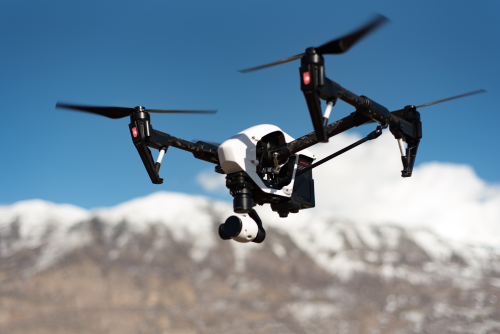
Growing a drone business from one pilot to a team sounds like a simple capacity problem. In practice, most operators do not struggle because they lack aircraft or flight skill. They struggle because they try to scale a personal craft business without building a repeatable company. The biggest mistakes people make when they try to expand from solo pilot to team usually show up in hiring, pricing, process, quality control, and compliance.
Quick Take
If you are moving from solo pilot to team, the biggest mistake is assuming growth means “hire another pilot.”
In many drone businesses, the real bottleneck is one of these instead:
- quoting and client follow-up
- editing and file delivery
- scheduling and travel coordination
- permits, paperwork, and risk assessment
- founder approval on every job
- inconsistent pricing and unclear scope
A healthy team expansion usually looks like this:
- standardize your core service first
- document how jobs are planned, flown, and delivered
- understand your true cost per job
- hire for the actual bottleneck, not just flight time
- build a training and quality-control system
- verify insurance, pilot authorizations, and local compliance before sending anyone out
When you are solo, clients mostly buy your judgment. When you become a team, they buy your system.
Start With the Bottleneck, Not the Headcount
Before you hire, ask one uncomfortable question: what is actually stopping growth right now?
If you answer that honestly, your first addition may not be another pilot.
| If your bottleneck is… | What it usually looks like | Better first addition |
|---|---|---|
| Editing and delivery | Late nights, delayed turnaround, inconsistent exports | Editor or post-production support |
| Scheduling and admin | Missed follow-ups, messy calendars, permit stress | Operations coordinator or admin support |
| Sales pipeline | Empty days between jobs, random revenue swings | Sales or business development help |
| Flight capacity | You are turning down work you could profitably fulfill | Second pilot or trusted subcontractor |
| Specialized work | You are declining mapping, indoor FPV, inspections, or larger productions | Specialist pilot or niche crew support |
| Founder bottleneck | Every quote, brief, and approval depends on you | Better process first, then targeted hiring |
A lot of solo pilots hire another flyer because it feels like the obvious next step. But adding a second pilot to a messy operation often creates more management work than useful capacity.
The Biggest Mistakes People Make When They Try to Expand From Solo Pilot To Team
1. Hiring before they understand the real bottleneck
Being busy is not the same as being ready to scale.
Many solo operators feel overwhelmed and conclude they need more hands. But “overwhelmed” can come from too many different causes: poor quoting, scattered job types, weak scheduling, long travel days, too much editing, or too many revisions.
Do this first:
- Review your last 15 to 20 jobs.
- Note where time was really spent.
- Mark which steps created delay, stress, or lost margin.
- Separate flying time from admin, travel, editing, sales, and rework.
If only a small part of your week is actual flight time, another pilot may not solve the problem.
2. Assuming the first hire must be another pilot
This is one of the most common expansion mistakes in the drone industry.
A second pilot sounds like growth. But in many service businesses, the founder is actually trapped by tasks around the flight, not the flight itself. New pilots also create new work: onboarding, briefing, scheduling, reviewing footage, maintaining gear, and managing client expectations.
For many small operators, a better first step is one of these:
- part-time editing help
- operations support
- a producer or client-facing project coordinator
- a bench of trusted subcontractors for overflow days
If your calendar is full but your quoting, delivery, and follow-up are weak, another pilot can increase chaos instead of revenue.
3. Expanding a service that is still too custom to scale
Custom work feels premium, but too much custom work makes team operations fragile.
A solo pilot can carry lots of complexity in their head. A team cannot. If every client gets a different scope, different file structure, different turnaround promise, and different revision rules, your new crew will keep making expensive judgment calls.
Before you expand, tighten your offer:
- define your most profitable service categories
- set standard deliverables for each one
- create clear turnaround windows
- write revision limits
- standardize shot plans where appropriate
- set weather and rescheduling rules in advance
This does not mean becoming rigid. It means building a default way of working so exceptions are priced and managed, not improvised.
4. Keeping solo-pilot pricing after adding team costs
A solo pilot can sometimes survive on pricing that would damage a team business.
Why? Because solo operators often undercount their own admin time, ignore replacement costs, and absorb overtime personally. A team cannot run on that logic. Once you expand, your real cost per job usually rises faster than expected.
Your pricing now needs to cover:
- pilot or crew pay
- non-billable prep and travel time
- training and supervision
- insurance changes
- software and storage
- extra batteries, chargers, cases, and backup gear
- maintenance and repairs
- rework and quality review
- idle days caused by weather or client delay
This is where unit economics matter. In plain English, that means the money left from each job after direct operating costs are counted. If your margin only works when you do everything yourself, you do not have a scalable business yet.
5. Leaving the whole operation in the founder’s head
Solo operators often underestimate how much invisible knowledge they use.
You know how to brief a client, how early to arrive, what site photos to capture on the ground, how to back up files, when to stop because wind is changing, and how to recover when a location is more crowded than expected. None of that is obvious to a new team member unless you document it.
At minimum, create standard operating procedures, or SOPs, for:
- pre-job planning
- weather and site checks
- client arrival and brief
- preflight and postflight routines
- battery handling and charging
- file naming and backup
- incident and near-miss reporting
- delivery and client handoff
If your business stops functioning when you take two days off, you do not have a team model yet. You have assistants orbiting a founder bottleneck.
6. Hiring for flying skill alone
A strong pilot is not automatically a strong team member.
Commercial drone work often depends just as much on judgment, communication, discipline, and consistency as it does on stick skills. A technically talented flyer who ignores process can create client friction, safety exposure, and expensive rework.
When evaluating people, look for:
- calm decision-making
- clean communication with clients and crew
- respect for checklists
- willingness to document and debrief
- ability to say “no” when conditions or permissions are unclear
- reliable media handling and file hygiene
For higher-risk or specialized missions, such as inspections, mapping, indoor flights, or fast-moving cinematic work, skill matching matters even more. Do not treat every pilot as interchangeable.
7. Ignoring compliance, insurance, and paperwork until after the hire
This is where small drone businesses can get into real trouble.
Rules vary by country, operation type, aircraft category, airspace, and client environment. The permissions or operating conditions that worked for a solo owner may not automatically extend to a team member, a contractor, or a new business structure.
Before assigning work, verify:
- what pilot qualifications or authorizations are required where you operate
- whether your insurance covers additional pilots, contractors, or specific mission types
- whether your client requires documented risk assessments or site-specific procedures
- whether local permits, landowner permission, or venue rules are needed
- how you handle privacy, personal data, and image use
- how incidents, losses, or near misses must be reported
Also verify labor rules in your market if you plan to use contractors rather than employees. Misclassification risk is not a drone-specific issue, but it can still hurt a drone company badly.
8. Buying too much gear too early
When teams grow fast, gear lists often get messy fast too.
More aircraft and more payloads do not automatically create more value. They can create training sprawl, maintenance burden, extra batteries, inconsistent footage, different workflows, and more failure points.
A better approach is to standardize around a small number of core platforms that fit your main jobs. Then add specialized gear only when demand is regular enough to justify the complexity.
Good questions to ask before buying:
- Does this aircraft support a service we already sell consistently?
- Will at least two people be trained to use it properly?
- Do we have spare batteries, parts, transport, and repair planning?
- Does it fit our insurance and compliance setup?
- Are we buying to solve a real workflow need, or just chasing capability?
For occasional edge cases, renting or partnering is often smarter than purchasing.
9. Expanding without a training and quality-control system
A drone team does not become consistent by accident.
Even if every pilot is licensed and experienced, you still need a company standard for how jobs are prepared, flown, reviewed, and delivered. Without that, your clients get different results depending on who shows up.
Build a simple training ladder:
- Observe and shadow
- Assist on lower-risk jobs
- Fly under supervision where allowed and appropriate
- Pass internal sign-off for specific job types
- Deliver work that is reviewed before final client release
- Join periodic debriefs and spot checks
Quality control should cover more than just safe flight. It should also cover whether the final output matches your brand promise: framing, exposure, naming, mapping completeness, edit consistency, delivery format, and turnaround time.
10. Adding fixed costs before demand is stable enough
The jump from solo pilot to team gets dangerous when payroll grows faster than pipeline.
Drone demand can be seasonal, project-based, region-specific, and vulnerable to weather, permits, construction delays, or client budget changes. A full-time hire can look affordable when your last six weeks were busy and painful. That same hire can become a burden when the market cools for a month.
Signs you are expanding too early:
- revenue swings wildly month to month
- most work comes from one or two clients
- you do not know your close rate on quotes
- you do not know average margin per service type
- you have no cash buffer for slow periods or gear downtime
- you are hiring to feel bigger, not because delivery is predictably constrained
A hybrid model often works better first: a small core team plus specialist contractors or local partner operators for overflow.
Safety, Legal, and Operational Risks That Get Bigger With a Team
As soon as more people fly under your brand, operational risk multiplies.
That does not mean team growth is unsafe. It means your system has to get more disciplined.
Pay special attention to these areas:
Pilot qualifications and local permissions
Commercial drone requirements differ across jurisdictions. Do not assume that because one person in the company can legally perform a mission, everyone can. Verify what each pilot needs for the countries, regions, aircraft types, and job categories involved.
Insurance scope
Insurance may depend on aircraft type, location, use case, named pilots, liability limits, and whether subcontractors are covered. Confirm the details with your insurer before assigning work.
Site access and client rules
Some jobs require more than aviation compliance. Industrial sites, stadiums, tourist venues, construction projects, and private land may each have their own access, safety, and documentation rules.
Privacy and data handling
A growing team usually captures more client data, more imagery, and more location-specific information. Create clear rules for storage, access, retention, sharing, and deletion. This matters even more when you work across borders or with enterprise clients.
Equipment maintenance and battery safety
More crew means more charging, transport, firmware management, wear, and field handling. Keep maintenance logs, retire damaged batteries promptly, and make postflight reporting normal, not optional.
Incident response
Near misses, hard landings, lost links, client complaints, and data mistakes should all have a documented response path. People need to know who gets informed, what gets recorded, and when a job must stop.
If any of the above is unclear, verify with the relevant aviation authority, insurer, client safety team, venue owner, and local legal or privacy requirements before operating.
A Smarter Expansion Path for Drone Businesses
If you want to grow from solo pilot to team without creating a fragile mess, use this sequence.
1. Audit your current business
Review recent jobs and identify:
- which services are most profitable
- which tasks consume the founder’s time
- where delays happen
- which jobs create the most rework
- which clients are recurring versus one-off
This gives you a real hiring brief instead of a guess.
2. Productize your core services
Choose the services you want to scale first. For each one, define:
- scope
- deliverables
- turnaround
- revision policy
- exclusions
- weather policy
- travel assumptions
The clearer the package, the easier it is to price, brief, and delegate.
3. Pick the right team model
Common options include:
- solo founder plus subcontractor bench
- founder plus one support role
- small core crew plus freelancers for surge periods
- regional partner network for multi-location work
The right model depends on demand consistency, control needs, compliance requirements, and local labor law.
4. Write the operating system
Document the essentials:
- quoting rules
- client intake checklist
- preflight planning
- risk assessment
- flight-day checklist
- media handling
- delivery workflow
- invoicing and follow-up
If it happens twice, it should probably have a documented process.
5. Standardize gear and software
Keep your stack simple. Fewer platforms usually mean easier training, cleaner backups, fewer charger problems, and more predictable output. Build redundancy where it matters most, not everywhere at once.
6. Train, shadow, and sign off
Do not confuse legal eligibility with company readiness. Create internal sign-offs by task type or job category. A pilot may be ready for basic exterior capture long before they are ready for a demanding industrial site or a high-pressure commercial shoot.
7. Track the numbers that actually matter
If you are scaling, watch these metrics:
- lead response time
- quote-to-booking rate
- average margin by service type
- on-time delivery rate
- rework rate
- pilot utilization
- client retention
- incident and near-miss reporting
- revenue concentration by top clients
These numbers tell you whether the team is becoming more resilient or just more expensive.
FAQ
When is a solo drone pilot actually ready to expand to a team?
Usually when demand is consistent, the service is repeatable, margins are healthy, and the founder can clearly identify a bottleneck. A few busy weeks are not enough. You want proof that more capacity will create profitable delivery, not just more overhead.
Should my first hire be another pilot?
Not necessarily. If editing, scheduling, quoting, or client management is slowing growth, another pilot may not help much. In many cases, operations or post-production support creates more immediate relief and better client experience.
Is it better to use contractors or employees when starting out?
That depends on demand stability, how much control you need, the type of work, and local labor rules. Contractors can help with flexibility, but you still need clear standards, insurance alignment, and legal classification that fits your jurisdiction. Verify the rules before choosing a model.
How many aircraft should a small team standardize on?
Usually as few as you can while still covering your main services. Standardization makes training, batteries, parts, media workflow, and repair planning much easier. Add specialized platforms only when repeat demand justifies the added complexity.
How do I keep quality consistent across multiple pilots?
Use standard briefs, shot lists where appropriate, internal sign-offs, review checklists, and a final QA step before client delivery. Consistency comes from process, not assumptions.
Do all team pilots need the same certifications or permissions?
Not always the exact same ones, because requirements can vary by role, aircraft, location, and job type. But every mission must still comply with the local rules that apply to that specific operation, and your insurance conditions must also be met. Verify both before assigning the job.
What metrics matter most when scaling a drone service business?
Start with margin by service type, on-time delivery, quote conversion, pilot utilization, rework rate, client retention, and revenue concentration. These show whether the business is becoming more reliable and profitable, not just busier.
The Next Move That Actually Helps
If you are trying to expand from solo pilot to team, resist the urge to “just hire another flyer.” First identify the constraint, standardize the offer, document the workflow, and make sure the economics still work when someone else touches the job. The operators who scale well are not the ones with the most drones in the air. They are the ones who turn personal skill into a repeatable, compliant, profitable service.