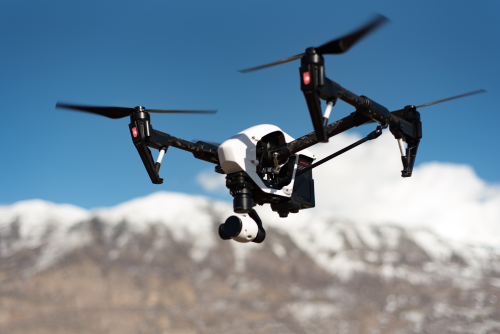
Hiring a freelance drone pilot sounds easy until you realize you are not just buying flight time. You are buying planning, legal judgment, airspace awareness, location access, risk management, and a finished deliverable that has to work for your project. The biggest mistakes people make when they try to hire freelance pilots usually happen before the drone ever leaves the ground.
Quick Take
If you want a smoother hire and a better result, focus on these fundamentals first:
- Hire for the exact mission, not the lowest rate.
- Ask for examples of similar work, not just a flashy highlight reel.
- Define the deliverable before requesting quotes.
- Clarify who handles site permissions, airspace checks, insurance, editing, travel, and weather rescheduling.
- Verify local legal and operational requirements for the location before the shoot.
- Put usage rights, raw file delivery, revision limits, and payment terms in writing.
- Treat drone work as both aviation and production, because it is both.
Why hiring a freelance drone pilot goes wrong so often
A lot of buyers treat drone work like regular freelance camera work: pick a creator, agree on a date, and show up. That approach breaks down fast.
A drone job combines several moving parts:
- Flight safety
- Local aviation rules
- Property and venue permissions
- Weather and light
- Ground logistics
- Camera movement and shot planning
- Data handoff and editing
That is why a pilot who is excellent at cinematic travel clips may not be the right person for a roof inspection, construction progress update, live event, or FPV indoor fly-through. FPV means first-person view flying, where the pilot flies through goggles for highly dynamic movement. Mapping and photogrammetry, which use overlapping images to create maps or 3D models, are different again.
The mistake is not hiring a freelancer. The mistake is hiring one as if all drone jobs are interchangeable.
The biggest mistakes people make when they try to hire freelance pilots
1. Choosing the cheapest quote without checking what is actually included
A low quote can look attractive until you discover it excludes travel, scouting, editing, permits, observer support, insurance paperwork, or revision rounds.
Drone pricing varies because the work varies. One pilot may quote only for on-site flying. Another may include preflight planning, risk assessment, ground coordination, editing, and final exports in multiple formats. Those are not equivalent offers.
Instead of asking, “Who is cheapest?” ask:
- What is included in the quote?
- How many shooting hours or days are covered?
- Is editing included?
- Are travel and access costs included?
- Are backup dates included if weather changes?
The cheapest day rate often becomes the most expensive project when the missing pieces start showing up as add-ons.
2. Assuming any experienced pilot can handle any kind of job
Drone work is specialized. A great real-estate pilot may not be a strong industrial inspector. A strong mapper may not be the best choice for an action-heavy tourism reel. A cinematic operator may not be your best option for a repeatable monthly progress workflow.
Ask for work that matches your actual use case:
- Real estate and hospitality
- Construction progress
- Roof or facade inspection
- FPV fly-throughs
- Events
- Tourism content
- Agriculture
- Mapping and 3D modeling
- Utility or infrastructure work
Also ask what part of the job they handled. Did they only pilot? Did they also plan the shoot, manage permissions, and edit the final assets?
A beautiful reel is helpful, but relevant experience matters more than broad style.
3. Sending a vague brief and expecting comparable quotes
If your message says only, “Need drone footage next month, what’s your rate?” you will get a range of quotes that are impossible to compare fairly.
Good pilots need context to quote properly. Without it, they either underquote and protect themselves later with extras, or overquote to cover unknowns.
A usable brief should include:
- Location or approximate area
- Type of project
- Desired date or date range
- Expected deliverables
- Final use case
- Whether you need raw footage, edited footage, stills, or all three
- Any time-of-day requirements
- Any site restrictions, crowds, or indoor elements
- Whether travel is required
A precise brief does two things: it improves the quote, and it immediately shows you which freelancers ask smart questions.
4. Ignoring local airspace, site access, and property permissions
Many clients assume that if a pilot is licensed or legally eligible to work in their area, the job can happen anywhere. That is not how it works.
A location can be blocked or limited by:
- Nearby airports or heliports
- Temporary restrictions
- Public park rules
- Heritage or conservation rules
- Venue rules
- Private property access limits
- Event restrictions
- Crowd safety constraints
In some cases, the airspace may be usable but the takeoff location is not. In others, the venue owner may allow filming but not drone operations. In others, the pilot may be allowed to fly, but not in the way the client imagined.
This matters globally. Drone rules and access rules differ widely by country, region, city, park system, and venue. Always verify the relevant requirements with the local aviation authority, land manager, property owner, and event or venue operator before treating a shot as guaranteed.
5. Treating compliance as the pilot’s problem only
A professional pilot should understand their operational responsibilities. But compliance is not something the client can fully outsource and forget.
Your choices affect whether the shoot is even viable:
- You choose the location.
- You choose the timeline.
- You may choose to film near people, traffic, or private property.
- You may be asking for a type of shot that is not legal or safe at that site.
- You may be booking a venue that has its own drone restrictions.
A good pilot will push back on unrealistic requests. A weak one may simply say yes until the day of the shoot.
If a freelancer promises, “No problem, I can fly anywhere,” treat that as a warning sign, not a selling point.
Professional operators usually explain what they can do, what they need to verify, and what may require a different plan.
6. Skipping insurance, risk planning, and crew questions
Too many buyers ask only about the drone and the camera. They do not ask about risk planning.
At minimum, you should understand:
- Whether the pilot carries insurance appropriate for the type of work and venue
- Whether the client or venue requires additional insurance documents
- Whether the site needs a spotter or visual observer
- Whether a larger crew is needed for safety, access, or production reasons
- Whether there is a written risk assessment or site plan for complex work
A simple sunrise landscape shot in an open area is very different from a hotel shoot near guests, a live event, or an industrial site.
Some jobs can be handled well by a solo pilot. Others should not be. If a freelancer insists they can do every type of job alone, you may be paying for confidence instead of judgment.
7. Not planning for weather, light, and rescheduling
Weather is not an excuse in drone work. It is a core production variable.
Wind, rain, visibility, temperature, and light angle affect both safety and image quality. A pilot may be technically able to fly in conditions that are still bad for your footage. Likewise, beautiful weather for a human on the ground may still produce harsh light, heavy gusts, or poor contrast for aerial images.
Before you book, clarify:
- What weather conditions would delay the shoot
- Whether there is a backup date
- What happens to travel costs if weather shifts
- Whether the quote includes one weather reschedule
- What time of day is best for the desired look
Clients who do not discuss this upfront often end up frustrated by delays that were completely predictable.
8. Buying flight time instead of buying an outcome
The question is not, “How long will the drone be in the air?” The question is, “What do I need to receive at the end?”
A short, well-planned session can deliver exactly what you need. A longer session can still fail if no one defined the output.
Be specific about outcomes:
- 20 edited still images
- 60-second vertical reel for social platforms
- Raw 4K clips plus a color-corrected edit
- Monthly progress photos from fixed angles
- Orthomosaic map and 3D model
- Roof defect photos with labeled findings
When deliverables stay vague, quality becomes subjective and disputes become more likely. Clear outputs also make it easier to compare pilots who have different creative styles but similar operational ability.
9. Forgetting that post-production and file delivery matter as much as the flight
Many buyers focus entirely on the shoot day and barely discuss what happens after.
That is a mistake, because post-production is often where value is created or lost.
Ask about:
- Turnaround time
- File format
- Resolution and aspect ratio
- Whether color correction is included
- Whether raw footage is included
- How files will be transferred
- How long files will be retained
- Whether naming conventions or project organization can match your workflow
For enterprise teams, agencies, and repeat clients, these details matter even more. A pilot who delivers clean, organized files on time can be more valuable than someone with slightly better footage but a messy handoff.
10. Leaving ownership, usage rights, and approvals unclear
A very common misunderstanding: paying for a shoot does not automatically mean the client owns everything in every possible way.
Some freelancers transfer full ownership. Others license the finished assets for specific uses. Some include raw footage; others charge separately for it. Some allow broad commercial reuse; others limit reuse, resale, or third-party handoff.
Clarify in writing:
- Who owns the final edited assets
- Whether raw footage is included
- What usage rights are included
- Whether agency, client, and brand reuse is allowed
- Whether the pilot can use the work in their own portfolio
- How many review rounds are included
This is especially important if the footage will appear in paid campaigns, client work, broadcast, large-scale commercial use, or multi-market brand assets.
11. Hiring from the reel instead of hiring from the process
A highlight reel shows best moments. It does not show communication, planning, consistency, or what happens when conditions change.
A stronger hiring decision comes from understanding the freelancer’s process:
- Do they ask useful preproduction questions?
- Do they explain constraints clearly?
- Do they confirm deliverables and timing in writing?
- Do they show examples of full project outputs, not only hero shots?
- Can they provide references or repeat-client context?
- Do they flag risks early rather than hide them?
Reliability is a business asset. A freelance pilot who communicates well, protects the project, and delivers consistently is often worth more than one who looks more impressive on social media.
A better way to compare freelance pilots
When you have several candidates, compare them on business fit, not just style.
| What to compare | Strong answer | Red flag |
|---|---|---|
| Relevant experience | Shows similar projects and explains the workflow | Only sends a generic reel |
| Scope clarity | Breaks down what is included in the quote | Gives a one-line rate with no detail |
| Compliance approach | Explains what must be verified for the location | Says every shot is possible |
| Crew and safety | Recommends observer or extra support when needed | Promises to do any complex job solo |
| Deliverables | Defines formats, turnaround, and revision limits | Says “I’ll send the files after” |
| Commercial terms | Uses a simple written agreement | Wants to work on verbal assumptions only |
Safety, legal, and operational risks to verify before any flight
Because this is commercial drone work, there are real regulatory and liability considerations. The exact rules vary by country and sometimes by region, city, park system, or venue, so do not rely on assumptions.
Before confirming a shoot, verify the following with the relevant authorities and site stakeholders:
Legal eligibility and operating rules
Check that the pilot is legally eligible to perform the work in that jurisdiction and for that type of operation. Requirements differ globally, especially for commercial work, higher-risk locations, flights near people, night operations, and specialized missions.
Airspace and restricted-area checks
Do not assume a usable-looking location is legal to fly. Airports, heliports, military zones, government areas, ports, critical infrastructure, and temporary restrictions can all affect whether the operation is possible.
Property and venue permission
A legal flight is not the same as permission to launch, recover, or operate from a site. Private property, resorts, stadiums, parks, event sites, and managed attractions may have their own rules.
Privacy and data handling
If the shoot involves people, homes, private land, or sensitive sites, consider local privacy and data-protection expectations. This is especially important for inspections, hospitality, residential marketing, and event work.
Insurance and contractual requirements
Venues, agencies, and enterprise clients may require specific insurance documentation, minimum coverage levels, named parties, or operational paperwork. Confirm those requirements before shoot day.
Travel and logistics for cross-border work
If you are hiring a pilot to travel internationally, also verify entry rules, temporary import considerations, battery transport rules, local drone eligibility, and whether using a local operator would be simpler.
A simple hiring process that works
If you want to avoid most of these mistakes, use a repeatable process.
1. Define the mission in one paragraph
State the location, purpose, desired output, timeline, and where the footage will be used.
2. Shortlist by specialization
Do not start with “best drone pilot.” Start with “best fit for this specific type of work.”
3. Send the same brief to each candidate
That gives you more comparable quotes and reveals who understands the job fastest.
4. Review the non-creative details early
Confirm:
- Location feasibility
- Access requirements
- Weather flexibility
- Insurance
- Crew needs
- Post-production
- Delivery timeline
5. Lock commercial terms in writing
Keep it simple but clear:
- Scope
- Price
- Payment schedule
- Weather policy
- Cancellation terms
- Deliverables
- Usage rights
- Revision limits
6. Treat the flight as one phase, not the whole project
The real project includes planning, shoot execution, file handoff, editing, approvals, and archiving. Budget and schedule for the whole chain.
FAQ
How much should I expect to pay a freelance drone pilot?
There is no reliable global flat rate. Pricing depends on complexity, location, deliverables, travel, editing, site risk, and compliance burden. The best way to compare quotes is to standardize the brief and check what is included.
Is it better to hire a local pilot or bring in someone I already know?
Often, a local pilot has better knowledge of weather patterns, access issues, venue behavior, and location-specific restrictions. Bringing in a trusted pilot can still make sense for brand consistency or specialized work, but compare that benefit against travel cost, local compliance, and scheduling risk.
What should I ask to see before hiring?
Ask for relevant portfolio samples, a written scope, confirmation of what is included in the quote, an explanation of how they handle planning and safety, and proof of insurance or other required documentation where appropriate.
Do I need to check permits and permissions if the pilot is handling the flight?
Yes. The pilot may handle operational planning, but clients often still need venue approval, property access, event coordination, or internal sign-off. Clarify who is responsible for each approval before the shoot.
Should I always ask for raw footage?
Only if you actually need it. Raw files can be large, harder to manage, and not always useful for clients without an editing workflow. If you do want them, make sure that is written into the agreement along with delivery method and usage terms.
Can one freelancer handle flying, filming, and editing?
Sometimes, yes. For straightforward shoots, one person can be enough. For more complex jobs, such as events, inspections, multi-location campaigns, or high-pressure commercial productions, a larger crew may be safer and more effective.
What happens if bad weather cancels the shoot?
That should be covered before booking. Agree on the weather threshold, backup dates, whether a reschedule is included, and how travel costs are handled if the date changes.
Who owns the footage after I pay?
Do not assume. Ownership and usage rights should be stated clearly in writing. The client may receive full ownership, a usage license, edited assets only, or separate terms for raw footage.
Final takeaway
The smartest way to hire a freelance drone pilot is to stop thinking like you are buying a gadget operator and start thinking like you are commissioning a regulated production service. The right pilot is not the one with the cheapest rate or the flashiest reel. It is the one whose experience, planning, compliance judgment, and delivery process match the job you actually need done.