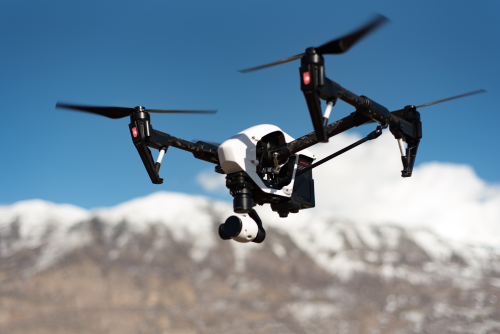
When people try to pitch drone inspections to utilities, they often lead with the drone, the camera, or the demo reel. Utilities rarely buy any of those things. They buy safer inspection workflows, better asset data, fewer unnecessary field visits, and a process they can trust at scale.
That is why so many otherwise capable drone service providers fail to get traction in this market. The biggest mistakes usually have less to do with flying skill and more to do with how the service is framed, priced, integrated, and de-risked.
Quick Take
If you want to win utility inspection work, stop pitching “drone services” and start pitching a specific inspection outcome.
The most common failures are:
- talking about aircraft features instead of maintenance value
- treating all utilities like the same buyer
- not understanding the asset, defect type, and required deliverable
- ignoring safety, compliance, and data governance
- giving weak ROI math or creative-style pricing
- overpromising on AI, autonomy, or regulatory access
- proposing a vague pilot with no path to a repeatable program
A stronger pitch is narrow, operational, and measurable. It targets one asset class, one inspection problem, one deliverable set, one safety method, and one success metric.
Why utilities are a different kind of client
Utilities are not buying aerial content in the way a real estate agent, tourism board, or construction marketer might. They are usually responsible for critical infrastructure, regulated service delivery, public safety, worker safety, and asset reliability.
That changes the buying conversation.
A utility buyer may care about:
- whether your data can help detect defects earlier
- whether your method reduces climbing, shutdowns, or truck rolls
- whether your team can work within strict site safety rules
- whether your reports fit existing maintenance and asset systems
- whether the workflow can be repeated across regions, teams, and seasons
- whether your data handling meets internal security expectations
You are also rarely selling to one person. Depending on the utility and country, the conversation can involve operations, engineering, maintenance, health and safety, procurement, legal, IT, geographic information system teams, and cybersecurity reviewers.
That means a pitch that works for a small commercial client often falls flat here. Utilities need evidence that your service is operationally mature, not just technically interesting.
The biggest mistakes people make when they try to pitch drone inspections to utilities
| Mistake | Why it fails | Better move |
|---|---|---|
| Selling the drone instead of the outcome | Utilities do not buy aircraft features | Lead with inspection objective, risk reduction, and decision value |
| Treating utilities as one market | Electric, water, and gas workflows differ | Pick one utility type and one asset class |
| Lacking asset knowledge | Buyers lose confidence fast | Learn defect types, inspection intervals, and maintenance context |
| Offering pretty imagery instead of usable data | Nice visuals do not automatically support maintenance action | Define reports, tags, asset IDs, and turnaround clearly |
| Hand-waving safety and compliance | Critical infrastructure buyers are risk-sensitive | Show operating approvals, site safety method, and escalation process |
| Ignoring data integration | Reports get stranded outside client workflow | Map output into GIS, asset registers, or work-order systems |
| Weak pricing and ROI logic | Creative pricing does not fit industrial programs | Price by repeatable scope and quantify practical savings |
| Overpromising AI, autonomy, or approvals | Utility teams distrust hype | Separate what works now from what still needs validation |
| Starting too broad | Vague pilots create vague results | Propose one narrow, measurable use case |
| Pitching the wrong people | A single champion is not enough | Build technical, operational, safety, and procurement alignment |
1. Selling the drone instead of the inspection outcome
This is the most common mistake.
A utility does not care that your drone has obstacle sensing, a 45-minute battery, or a high-resolution sensor unless those features clearly improve an inspection task they already struggle with.
Bad pitch: “We use a high-end drone with excellent image quality and thermal capability.”
Better pitch: “We can reduce the need for manual access on this asset type, deliver geotagged defect imagery within 24 hours, and give your maintenance team a structured list of exceptions to review.”
The difference is huge. One is a product description. The other is a business case.
When you pitch utilities, frame your service around questions like:
- What existing inspection method are you replacing or improving?
- What risk, delay, or cost does that method create today?
- What decision becomes faster or safer with your data?
- What measurable outcome improves if they adopt your workflow?
If your opening slide is mostly about your drone fleet, you are probably already off track.
2. Treating all utilities like the same buyer
“Utilities” is a broad label, not a single market.
An electric transmission operator, a municipal water utility, a gas distribution network, and a renewable energy operator may all use drones, but they do not buy for the same reasons, inspect the same assets, or review the same outputs.
That matters because a generic pitch signals shallow understanding.
For example, the inspection logic differs across:
- overhead lines and poles
- substations and switchyards
- solar farms
- wind turbines
- reservoirs, dams, and water towers
- pipelines and related facilities
Each asset type has different defect signatures, site constraints, safety rules, image requirements, and maintenance workflows.
A better approach is to narrow your offer: “We help power distribution teams inspect pole-top assets and produce exception reports.” Or: “We help solar operations teams identify thermal anomalies and prioritize field checks.”
The more specific your pitch, the more credible it becomes.
3. Not learning the asset and defect language
Utility buyers quickly notice when a drone provider understands flying but not inspection.
If you cannot speak clearly about the asset, the defect types being looked for, the required image angle, or the likely inspection frequency, the buyer will assume you are still at the hobbyist-to-commercial transition stage.
You do not need to pretend to be a utility engineer. You do need to understand enough to ask smart questions.
Learn things like:
- what defect or anomaly the team is trying to identify
- whether RGB, thermal, LiDAR, or another sensor is actually needed
- how precise the imagery or data needs to be
- whether the client needs visual confirmation, measurement, or trend monitoring
- what level of false positives is acceptable
- how findings are validated in the field
This is where many providers oversell thermal imaging, AI defect detection, or 3D models without confirming whether those outputs actually drive maintenance decisions.
If the inspection output does not connect to a real maintenance action, it is just expensive media.
4. Delivering pretty footage instead of decision-ready data
A cinematic reel may win attention. It usually does not win a utility contract.
Utilities want data that can be reviewed, compared, filtered, assigned, stored, and acted on. In practical terms, that often means some combination of:
- geotagged images
- asset IDs
- defect categories
- severity ratings
- standardized report formats
- maps or layers for geographic information systems
- turnaround times that support operations
If your pitch says “we will provide all raw images and a summary video,” you are speaking like a content producer, not an inspection partner.
Instead, define the output in operational language:
- What exactly will the client receive?
- How will anomalies be labeled?
- How quickly after capture will reports be delivered?
- Can findings be matched to asset registers or work orders?
- Who performs quality assurance and quality control before delivery?
The more structured your deliverable, the less work the utility has to do after your flight. That is real value.
5. Ignoring safety, compliance, and critical infrastructure reality
Utilities care deeply about safety for obvious reasons. Their teams work around energized systems, restricted sites, field crews, roads, water structures, and critical infrastructure.
So one of the fastest ways to lose credibility is to treat safety and compliance as an afterthought.
Even if your drone operation is legal in a general sense, utility work may still require extra planning around:
- local aviation rules and permissions
- airspace restrictions near sensitive infrastructure or populated areas
- site inductions and client safety protocols
- takeoff and landing restrictions on utility property
- operations near live electrical equipment
- emergency procedures, crew roles, and communication plans
- privacy and security concerns around image capture
Rules vary by country and sometimes by site. Do not assume that a standard commercial drone approval covers everything you want to do. Verify requirements with the relevant aviation authority and the client’s own safety and site-management teams before you promise a scope.
A strong pitch makes safety boring in the best possible way: clear, documented, repeatable, and well understood.
Compliance, safety, and operational risk you cannot hand-wave
Before you pitch aggressively, make sure you can answer basic operational questions without guessing.
Be ready to explain:
- what flight rules apply in the jurisdictions you serve
- whether your intended operation is visual line of sight or needs additional approval
- how you manage weather limits, battery procedures, emergency landings, and lost-link events
- what training or competency standard your pilots and observers follow
- how you protect people, vehicles, and third parties near the work area
- how data is stored, transferred, and access-controlled
- how incidents, near misses, or damaged equipment would be reported
Also remember that some utility sites are treated as sensitive or critical infrastructure. Access, photography, data storage, or cloud transfer may be subject to internal client policies beyond public aviation law.
If you cannot confidently discuss these topics, pause the sales push and tighten your operational foundation first.
6. Failing to show how your data fits the client’s workflow
A report that looks good in a PDF but dies in someone’s inbox is not a strong utility solution.
Many utilities already use systems for mapping, asset records, maintenance scheduling, or enterprise asset management. If your data cannot be connected to those workflows, the internal team has to do extra manual work to translate your findings into action.
That is a hidden cost, and buyers notice it.
Ask questions like:
- Where do inspection findings go after review?
- Who validates defects?
- Are assets identified by pole number, structure ID, GPS location, or another naming standard?
- Does the team need GIS layers, spreadsheets, image folders, or API-based transfer?
- Who owns the final defect classification?
Even if you do not offer deep software integration, you should at least show that your output will arrive in a usable structure.
This is especially important if you use cloud-based processing, AI review, or third-party platforms. Some clients will ask about data residency, user access, retention periods, and cybersecurity review. If you are unprepared for that conversation, the deal can stall even if your flying capability is strong.
7. Pricing like a creative job and proving ROI badly
Utilities usually do not buy industrial inspections the way a brand buys a shoot day.
If your proposal is just a pilot day rate plus edited footage, your commercial logic is probably mismatched to the buyer.
A better pricing model reflects repeatable scope and operational reality, including:
- mobilization and travel
- site-specific risk planning
- sensor use
- flight time and standby time
- processing and analysis
- quality assurance
- report delivery
- reflight assumptions
- scale discounts for recurring programs
Just as important, your ROI math needs to be believable.
Weak ROI claim: “Our drone solution will save millions.”
Stronger ROI claim: “This workflow can reduce manual access on low-complexity inspections, shorten documentation turnaround, and help field teams prioritize which assets need follow-up inspection first.”
Utilities prefer grounded economics over dramatic promises. Good ROI inputs might include:
- reduced need for climbing or manual access
- faster identification of exceptions
- fewer unnecessary site visits
- better maintenance prioritization
- improved audit trail and record quality
- shorter outage planning cycles in some cases
If you do not know the client’s baseline cost or current process, do not invent a big savings number.
8. Overpromising on AI, autonomy, or regulatory access
Few things damage trust faster than industrial hype.
Yes, AI-assisted review, autonomous workflows, docked systems, and large-scale corridor inspections are real parts of the market. But they are not plug-and-play in every jurisdiction, every utility, or every asset environment.
Common overpromises include:
- “The AI will find all defects automatically.”
- “We can fly beyond visual line of sight everywhere.”
- “This can replace all manual inspections immediately.”
- “The dock will make the whole system hands-off.”
- “Thermal will reveal every problem.”
Utility buyers have heard versions of this before. Many have seen pilots that looked impressive but failed in scale, false-positive rates, or change management.
A smarter pitch separates three things:
- what works reliably today
- what can be tested in a controlled pilot
- what depends on future approvals, site conditions, or system integration
That honesty often wins more trust than a flashy roadmap.
9. Starting too broad instead of one narrow, repeatable use case
Another major mistake is trying to win everything at once.
Providers often show a broad deck covering power lines, solar, wind, substations, water assets, gas infrastructure, emergency response, mapping, AI analytics, and training. The buyer walks away unsure what problem you actually solve first.
Start smaller.
A strong first proposal might focus on one of the following:
- one asset class
- one geography or operating district
- one defect category or inspection objective
- one output format
- one success metric
- one review timeline
For example, instead of saying, “We can inspect all your assets,” say, “Let’s run a pilot on this asset type across a defined sample set, compare it with your current method, and measure safety exposure, turnaround time, and defect documentation quality.”
Narrow scopes are easier to approve, easier to evaluate, and easier to expand after success.
10. Pitching the wrong people and not designing the path from pilot to program
A utility deal often dies because the provider found one interested person and assumed that was enough.
In reality, one enthusiastic contact may not control budget, site access, safety approval, procurement, data acceptance, or rollout decisions.
You usually need alignment across at least some of these groups:
- the asset owner or maintenance lead
- the field operations team
- health, safety, and environment staff
- procurement or vendor management
- data, GIS, or IT stakeholders
- the manager who will champion scale if the pilot works
That means your pilot should not just prove the drone can fly. It should prove the service can fit the organization.
Define pilot success in advance:
- what assets are included
- what deliverables are expected
- what timeline matters
- what baseline method it is being compared against
- what counts as a win
- who signs off technically and operationally
- what the next phase would look like if successful
If you do not design the post-pilot path before the pilot starts, many pilots turn into interesting dead ends.
What a stronger utility pitch looks like
If your current deck feels too generic, rebuild it around this sequence.
1. Start with one inspection problem
Choose one asset class and one operational pain point.
Examples: – repeated manual access for routine visual inspection – slow documentation after field checks – poor visibility into which assets need follow-up first – inconsistent imagery quality across contractors or regions
2. Describe the current-state friction
Show that you understand how the work happens now.
You do not need exact internal numbers. You do need a realistic picture of the current workflow, its constraints, and its bottlenecks.
3. Define your method clearly
Explain:
- aircraft and sensor only as needed
- crew configuration
- site setup and safety controls
- expected data capture method
- turnaround time
- quality checks
4. Show the deliverable, not just the flight
Give a concrete example of what the client receives:
- image package
- defect log
- map layer
- severity score
- report template
- review workflow
5. Address compliance and governance upfront
Include:
- jurisdictional operating assumptions
- site safety coordination
- incident process
- insurance and client-required documentation, where applicable
- data ownership, storage, and access controls
Because requirements vary globally, make it clear that final operating and site conditions will be verified with the relevant authorities and the utility’s own governance teams before execution.
6. Make the pilot measurable
Set pilot metrics such as:
- turnaround time
- usable data rate
- number of actionable findings
- reduction in manual access for the sampled scope
- internal reviewer satisfaction
- reinspection rate
7. Show the scale path
End with the commercial future, not just the demo.
Spell out what happens if the pilot works:
- expanded district rollout
- recurring inspection cycles
- larger asset sample
- integration into maintenance workflows
- training or managed service model
That is how you stop looking like a one-off contractor and start looking like a program partner.
FAQ
Who should I pitch first inside a utility?
Start with the team that owns the inspection problem, not just the person who likes drones. That is often a maintenance, asset management, operations, or engineering lead. But expect safety, procurement, and data stakeholders to become important quickly.
What is the best first use case to pitch?
Usually the best first use case is narrow, repetitive, and easy to evaluate. Pick one asset class and one inspection objective where current access is slow, costly, or safety-sensitive. Avoid a broad “we can inspect everything” proposal.
Do I need advanced sensors to win utility work?
Not always. Many successful utility workflows start with standard RGB imagery and disciplined reporting. Thermal, LiDAR, or other specialized payloads can create value, but only if they match the inspection objective and the client’s decision needs.
How should I price a utility pilot?
Price the full workflow, not just flight time. Include planning, mobilization, field work, processing, quality control, reporting, and reasonable rework assumptions. Utilities care more about repeatable scope and dependable delivery than a low headline day rate.
How long do utility sales cycles usually take?
Often longer than new providers expect. Timelines vary by region, budget cycle, procurement rules, safety review, and internal sponsorship. Some pilots move quickly, but enterprise rollout usually takes more patience and more stakeholder alignment than general commercial drone work.
Can a small drone service provider still win utility work?
Yes, especially if you are specialized, operationally disciplined, and realistic about scope. Small firms often win by being excellent at one use case, one geography, or one asset type. Trying to look like a giant full-stack utility platform too early usually hurts credibility.
Do I need every regulatory approval before I start pitching?
You do not need to claim approvals you do not yet have, and you should not. What you need is a clear understanding of the likely regulatory pathway in your jurisdictions and an honest explanation of what must be verified before execution with aviation authorities and the client.
Should I lead with AI, automation, or digital twin language?
Only if it directly supports the client’s immediate inspection problem. Buzzwords are a weak opening. Utilities respond better to clear operational outcomes, measurable pilot design, and evidence that your data can fit their maintenance workflow.
The next move that actually wins meetings
If you want to pitch drone inspections to utilities more effectively, cut your offer down, not up. Pick one utility segment, one asset class, one inspection problem, one deliverable format, and one measurable pilot.
Utilities do not need another drone demo. They need a low-drama inspection process that is safe, credible, useful, and easy to scale. Build your pitch around that, and your odds improve immediately.