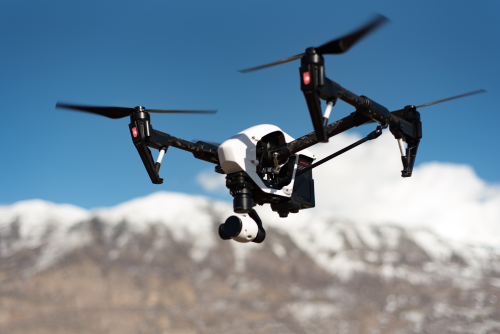
Running paid ads for a drone business looks easy: show great aerial footage, add a contact button, and wait for inquiries. But the biggest mistakes people make when they try to run drone ads that bring leads usually happen before the ad ever goes live. Paid traffic magnifies weak offers, generic messaging, poor qualification, and slow follow-up far more than it rewards flashy video.
Quick Take
If your drone ads are not bringing leads, the problem is rarely just the ad platform.
Most campaigns fail because people:
- sell “drone services” instead of a business outcome
- target everyone instead of one buyer type
- send traffic to a generic homepage
- use cinematic creative that looks impressive but proves nothing
- make the offer vague and the next step unclear
- ignore trust signals like compliance, insurance, and process
- respond too slowly or track the wrong metrics
A simple rule helps: buyers do not want a drone. They want a result that the drone helps produce, with less risk, less delay, and less hassle.
Why drone ads often fail before media buying even matters
A lead-generation campaign is not just an ad.
It is a chain:
- the right audience
- the right promise
- the right landing page
- the right proof
- the right form
- the right follow-up
- the right close process
If one link breaks, the campaign feels like “ads do not work” when the real issue is offer-market fit, buyer intent, or sales operations.
That is especially true in drone services, where the gap between “this looks cool” and “this solves a business problem” is huge.
The biggest mistakes people make when they try to run drone ads that bring leads
1. Leading with the drone instead of the result
This is the most common mistake.
Ads that say things like:
- aerial drone services
- professional UAV solutions
- cinematic drone content
- high-quality aerial imaging
sound polished, but they are usually too vague to trigger action.
Most buyers do not wake up wanting “aerial imaging.” They want something more specific:
- a real estate listing marketed faster
- a roof documented after storm damage
- a construction site tracked monthly
- solar panels inspected without sending people onto the structure
- a resort or destination filmed before peak season
- stockpiles measured with repeatable reporting
- a tourism venue refreshed with new content
The drone is the method. The buyer pays for the outcome.
A better ad angle sounds like this:
- Next-day real estate photo and drone package for premium listings
- Roof documentation for insurers, contractors, and property managers
- Monthly construction progress media with consistent site viewpoints
- Drone inspection content that reduces manual access time
- Resort and travel content packages built for social, web, and paid campaigns
The more specific the result, the better the lead quality.
2. Trying to target everyone who might ever need a drone
A drone business can serve many markets. That does not mean one campaign should.
A single ad trying to speak to real estate agents, roofers, survey teams, construction firms, farms, tourism brands, and event organizers will usually feel generic to all of them.
Each market has different:
- urgency
- vocabulary
- proof requirements
- average deal size
- sales cycle
- compliance concerns
- buying objections
A roofer may want speed, documentation clarity, and storm-response capacity. A hotel group may care more about brand quality, licensing rights, and delivery formats. A construction manager may want consistency, safety process, reporting cadence, and stakeholder-ready outputs.
When you mix those together, the message gets diluted.
A better approach is to build campaigns by:
- one industry or use case
- one geography or service area
- one offer
- one landing page
- one call to action
If you serve multiple sectors, create separate campaigns and separate proof for each one.
3. Choosing the ad platform by habit instead of buyer intent
People often ask, “Should I run Google Ads, Facebook Ads, Instagram Ads, LinkedIn Ads, or YouTube?”
The better question is: where is my buyer in the moment before they become a lead?
Different platforms match different levels of intent.
| Platform | Usually strongest for | Common mistake | Better angle |
|---|---|---|---|
| Search ads | Buyers actively looking for a service now | Bidding on broad terms like “drone” | Use problem-led services and local intent |
| Meta ads | Visual services, local awareness, remarketing | Expecting cold buyers to convert from one pretty video | Use niche creative and clear offers |
| LinkedIn ads | B2B, enterprise, commercial stakeholders | Running broad awareness without a strong case study | Lead with ROI, safety, reporting, and workflow fit |
| Video platforms | Education, proof, retargeting | Expecting instant lead flow from cold traffic | Use explainers, process videos, and case examples |
If your buyer already knows they need help, search can work well.
If your service must be seen to be understood, visual platforms can work well, especially for retargeting people who already visited your site.
If you sell into enterprise, infrastructure, inspection, or longer sales-cycle work, professional targeting and proof-heavy nurture campaigns may make more sense than broad consumer-style ads.
4. Ignoring deal size and sales cycle economics
Not every drone service is a good fit for paid lead generation.
This is where many operators burn money.
If your average job is small, one-off, and operationally messy, paid acquisition can get expensive fast. A business selling low-ticket standalone shoots may struggle to make ads profitable unless the workflow is highly efficient or the client often returns.
Before you spend on ads, know:
- your average job value
- your gross margin after travel, batteries, editing, and revisions
- your close rate from inquiry to booked work
- how many jobs a client is likely to bring over time
- how much time quoting and admin consume
For example:
- A one-time basic property shoot may not support aggressive paid acquisition.
- A recurring monthly construction progress contract often can.
- A roof inspection business may justify higher acquisition cost if the lead value is high and follow-up is fast.
- A tourism creator offering seasonal packages may need bundled retainers, not single posts, to make ads worthwhile.
If the economics are weak, ads do not fix the business model. They expose it.
5. Sending traffic to a generic homepage
This mistake kills conversion.
A homepage usually tries to explain everything to everyone. A paid ad should do the opposite. It should continue one clear conversation.
If someone clicks an ad about roof documentation, they should land on a page that says roof documentation, not a homepage with menu items for weddings, mapping, real estate, inspections, and content creation.
A strong landing page should answer, quickly:
- Who is this for?
- What problem does it solve?
- What deliverables do I get?
- How fast is turnaround?
- What area do you cover?
- Why should I trust you?
- What happens next?
A good page also reduces uncertainty with specifics:
- sample outputs
- turnaround expectations
- coverage area
- industries served
- process steps
- typical project fit
- response time
Paid traffic needs message match. That means the ad promise, page headline, proof, and call to action should all line up.
6. Using creative that looks impressive but proves nothing
Drone operators often create ads that impress other drone operators.
Buyers are not your peers.
A smooth orbit shot over a building may look beautiful, but it does not automatically answer the buyer’s real questions:
- Can you handle my kind of site?
- Can you work safely and legally?
- Will the files be useful for my team?
- Can you deliver consistently?
- Will this save time or make money?
- Have you done this before?
For lead generation, “cool” is weaker than “credible.”
Stronger proof assets include:
- before-and-after marketing examples
- side-by-side progress updates over time
- report screenshots or inspection output examples
- a short case study with a clear result
- client testimonials tied to a use case
- a quick walkthrough of how the process works
- examples of final deliverables, not just raw footage
For real estate, show the listing-ready package.
For construction, show consistent monthly capture and stakeholder-ready outputs.
For inspections, show the reporting clarity and workflow.
Make the buyer see themselves in the result.
7. Making the offer too vague
“Contact us for all your drone needs” is not a strong offer.
It creates work for the buyer. They have to guess whether you fit their project, budget, timeline, and location.
A better offer reduces ambiguity.
Examples:
- Request a quote for multi-site roof documentation
- Book a 15-minute call about monthly construction progress capture
- Get a sample deliverables pack for hospitality content production
- Check availability for next-day listing media in your area
- Ask for a site review for solar inspection planning
Good offers are specific enough to feel real but flexible enough to fit a range of jobs.
If you can, match the offer to buyer readiness:
- cold traffic: guide, sample pack, short audit, or simple consultation
- warmer traffic: quote request, site review, or scheduling
- returning visitors: case study, proof asset, or direct booking inquiry
The more expensive or complex the service, the more the offer should lower perceived risk.
8. Forgetting the trust signals that matter in commercial drone work
When money, property, schedules, people, and airspace are involved, trust is not optional.
Many drone ads fail because the business looks visually competent but operationally vague.
Clients often want reassurance around:
- pilot qualifications and commercial authorizations where required
- insurance
- safety process
- weather policy
- site coordination
- turnaround reliability
- backup equipment
- file delivery standards
- revision terms
- data handling for sensitive work
You do not need a wall of jargon. You do need to show that the job will be handled professionally.
For enterprise buyers, trust goes even further:
- standard operating procedures
- repeatable capture methods
- crew coordination
- data security
- stakeholder communication
- contractor management
- subcontractor vetting
A simple sentence about your process can outperform a dramatic reel if it removes doubt.
9. Asking for the wrong information on the lead form
A bad form either scares away good leads or lets through too many poor ones.
If your form is too long, people leave.
If it is too short, you spend time chasing junk.
The goal is to collect just enough information to qualify and respond intelligently.
Useful fields often include:
- service type
- project location
- timeline
- site size or asset count
- deliverables needed
- company name for B2B work
- preferred contact method
For higher-intent traffic, a short quote form is often enough.
For more complex services, consider a two-step flow:
- short initial form
- fast follow-up with a structured intake
That keeps ad friction low without sacrificing sales quality.
If you use instant lead forms inside ad platforms, be careful. They can increase volume, but sometimes lower intent. They often work best when paired with strong qualification and very fast follow-up.
10. Responding too slowly
Many drone businesses lose leads because they treat inbound inquiries like email, not like sales.
Speed matters.
A prospect comparing operators may contact three to five providers in a short window. The first one to respond clearly and professionally often gains the advantage, especially in time-sensitive work like property marketing, roof documentation, events, or urgent inspections.
A good follow-up system usually includes:
- immediate confirmation
- fast human response
- a qualification script
- a quote template
- a booking process
- at least one follow-up if the lead goes quiet
If you cannot answer instantly, set expectations:
- when you will respond
- what information you need
- what happens next
You do not need a large sales team. You do need discipline.
11. Measuring clicks and cheap leads instead of revenue and margin
A campaign can look healthy on the platform dashboard and still be bad for the business.
High click-through rate does not guarantee qualified leads. Cheap form fills do not guarantee booked jobs. Video views do not guarantee pipeline.
The numbers that actually matter are deeper in the funnel:
- qualified lead rate
- response speed
- show rate on calls
- quote rate
- close rate
- average job value
- repeat business rate
- gross margin by service type
- revenue by campaign source
If one campaign brings fewer leads but better-fit clients, it may be the better campaign.
Drone businesses often make the mistake of celebrating attention instead of profitable work.
12. Changing everything too quickly and learning nothing
A lot of operators panic after a slow week and start changing audience, creative, copy, page design, offer, and budget all at once.
That makes it impossible to learn.
A better testing discipline is simple:
- keep the audience steady and test one message
- keep the message steady and test one offer
- keep the offer steady and test one landing page
- keep the page steady and test one follow-up method
Give each test enough time to produce useful signal. Also remember that drone demand is often seasonal, local, and event-driven. Not every dip means the campaign is broken.
A better way to structure drone ads that actually bring leads
If you want a cleaner path, use this framework.
1. Pick one service, one audience, one region
Start narrow.
Examples:
- luxury real estate media in one metro area
- roofing documentation for contractors in a storm-prone region
- monthly construction progress for commercial sites
- hospitality content for resorts and tourism brands
2. Build one offer tied to a business outcome
Not “drone services.”
Think:
- faster listing media
- repeatable progress updates
- safer access for visual inspection
- content packages for launches and campaigns
3. Create one dedicated landing page
Match the ad exactly.
Include:
- headline for that service
- who it is for
- sample deliverables
- proof
- coverage area
- response expectation
- CTA
4. Use proof that matches the buyer
Portfolio quality matters, but relevance matters more.
A construction manager does not care that you filmed a beach resort beautifully. A hotel marketer does not care that you can create an orthomosaic map unless it connects to their goal.
5. Add a fast follow-up system
Even a simple setup helps:
- automatic confirmation
- same-day outreach
- intake checklist
- quote template
- calendar option if appropriate
A basic customer relationship management system, or CRM, can help you track leads and avoid losing them in email.
6. Track business metrics, not just ad metrics
At minimum, know:
- which campaign produced the lead
- whether the lead was qualified
- whether it turned into a quote
- whether it booked
- job value and margin
7. Scale only after the numbers make sense
Do not scale a campaign because it feels busy.
Scale when you know:
- lead quality is acceptable
- follow-up is consistent
- your close process works
- the average deal supports the ad cost
- operations can handle more work without quality dropping
Compliance, safety, and operational risks to consider before you advertise
Drone advertising is still tied to regulated activity, commercial claims, and client expectations. Before pushing ads, verify the requirements that apply where you operate.
Key areas to check:
- commercial pilot and operator requirements in your country or region
- airspace and site authorization rules
- insurance expectations for your market and client type
- property access and privacy considerations
- permissions for parks, venues, events, or private sites
- sector-specific rules for inspections, mapping, thermal work, spraying, or surveying
- data protection and consent rules for lead forms and remarketing
A few practical cautions matter:
- Do not advertise flights or capabilities you are not authorized, trained, or insured to perform.
- Do not imply that every location is easy to access by drone. Some sites require extra approvals or are not practical to fly.
- Do not use client footage, site imagery, or maps in ads unless you have the right to use them.
- Be careful with technical claims such as measurement accuracy, defect detection, or “inspection-grade” outputs unless your workflow truly supports them.
- If you use subcontracted pilots, verify their qualifications, insurance, consistency, and data handling standards.
- If you advertise in markets you travel into, verify local customs, battery transport, and local commercial permissions before promising availability.
Trust is not just a sales tool here. It is a risk-management tool.
FAQ
What is the best ad platform for drone leads?
There is no universal best platform. Search ads are often strongest when the buyer already knows they need a service. Visual social platforms work well for proof, local awareness, and remarketing. LinkedIn can be useful for B2B and enterprise offers. Choose based on buyer intent, not habit.
Should I send traffic to a landing page or use an in-platform lead form?
A landing page usually gives you better control over messaging, proof, and qualification. In-platform lead forms can increase volume, but sometimes at lower intent. They work best when your offer is simple and your follow-up is very fast.
Do I need separate pages for each drone service?
Usually, yes. Separate pages help you match the ad promise to the buyer’s problem. A page for roof documentation should not look like a page for resort marketing or construction progress reporting.
Should I show pricing in my ads or landing pages?
Only if your service is standardized enough that published pricing will help rather than confuse. For custom B2B work, pricing ranges, package anchors, or “starting from” language may be more useful than fixed numbers. Be careful not to create expectations you cannot meet once travel, access, weather, or deliverables are considered.
Can paid ads work for low-ticket drone photography services?
They can, but the margin is often tighter. Ads tend to work better when you have efficient operations, strong local reputation, a fast booking flow, upsells, or repeatable packages. If every job is small and custom, profitability can be difficult.
How fast should I follow up on a new lead?
As fast as realistically possible. Same-day is a good baseline, and faster is better for time-sensitive work. Even if you cannot quote immediately, confirm receipt, set expectations, and ask the next qualifying question.
What trust signals should a drone landing page include?
Include the signals your buyer needs to reduce risk: qualifications, insurance, examples of work, process clarity, turnaround expectations, service area, and any relevant operational detail. For enterprise work, add consistency, reporting standards, and data handling confidence.
How do I know if my ads are actually working?
Look beyond clicks and form submissions. Track qualified leads, quotes, closed work, average project value, repeat business, and margin by service line. The best campaign is the one that produces profitable jobs, not just activity.
Final takeaway
If you want drone ads that bring leads, stop trying to advertise “drone services” in the abstract. Pick a buyer, tie your message to a business outcome, prove you can deliver it, make the next step obvious, and follow up like the lead matters. The ad is only the amplifier; the real conversion engine is the offer, the proof, and the process behind it.