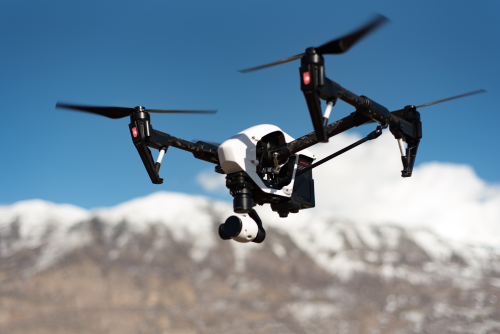
The biggest mistakes people make when they try to separate hobby flying from client work usually have less to do with flying skill than with business discipline. The drone, controller, and pilot may be the same, but once a client, brand, employer, or deliverable enters the picture, the job changes. What feels fine on a casual weekend flight often breaks down when deadlines, liability, compliance, and client expectations are involved.
Quick Take
If you only remember a few things, remember these:
- A flight does not stay “just a hobby” simply because you enjoy it. In many places, the purpose of the flight matters as much as payment.
- Client work needs a different standard of planning, documentation, communication, and risk control than personal flying.
- The most expensive mistakes usually happen before takeoff: bad scope, unclear permissions, weak pricing, or no insurance.
- Clients are not buying your flight time. They are buying an outcome, a deadline, and confidence that the job will be done safely and legally.
- You can often use the same aircraft for personal and commercial work, but you should not use the same casual workflow.
- If a job is not clearly scoped in writing, it is not really separated from hobby flying yet.
Where hobby thinking breaks down
| Area | Hobby flying mindset | Client-work mindset |
|---|---|---|
| Goal | Enjoy flying, practice, create for yourself | Deliver a business result for someone else |
| Planning | Flexible, spontaneous | Documented, repeatable, deadline-driven |
| Risk | Personal choice | Shared liability affecting client, bystanders, property, and your business |
| Output | “Got some good shots” | Specific deliverables, formats, turnaround, and revisions |
| Costs | Batteries, travel, personal gear | Planning time, insurance, editing, backups, admin, taxes, wear, reshoots |
| Compliance | Basic awareness may feel enough | Must be verified for the exact job, site, and use case |
That is why the hobby-versus-client split feels confusing. The aircraft may be identical, but the standard of care is not.
The biggest mistakes people make
1. Assuming payment is the only thing that makes a flight “commercial”
This is one of the most common misunderstandings in the drone world.
Many pilots think a flight becomes client work only when cash changes hands. But in many jurisdictions, the relevant question is broader: is the flight being done for a business purpose, for compensation of any kind, or in furtherance of someone’s commercial interests?
That can include situations like:
- filming a hotel in exchange for a free stay
- capturing footage for a friend’s business “just to help out”
- shooting a property listing before you decide what to charge
- collecting roof imagery for a contractor you hope will hire you later
- flying for your employer even if “drone pilot” is not your main job title
The mistake is not just legal. It changes how you prepare. If the imagery is tied to a client outcome, your responsibilities change whether or not the invoice has been paid yet.
A better approach:
- Decide in advance what you will treat as business use.
- Include barter, promotional work, internal company work, and portfolio-building jobs in that decision.
- Verify how your local aviation authority classifies the operation before you fly.
If you wait until after the shoot to decide whether it was “commercial,” you are already too late.
2. Treating client work like a better-funded hobby session
A lot of first-time operators think client work is basically the same as personal flying, just with more pressure and maybe nicer locations.
It is not.
A hobby session can be flexible. You can change your mind, chase light, fly one battery, go home, and edit later if you feel like it. Client work requires a plan that survives real-world constraints:
- site access
- weather changes
- surrounding people and property
- local airspace restrictions
- takeoff and landing limitations
- client timing
- safety buffers
- alternate shots if the original plan fails
This matters across use cases. A real estate shoot, a resort promo, an FPV fly-through, a construction progress visit, and a roof overview all demand different planning.
What people get wrong is assuming flying skill can compensate for weak preparation. In business, preparation is part of the service.
A better approach:
- Build a simple pre-job checklist.
- Confirm the purpose of the footage, shot list, timeline, and site conditions before the day of flight.
- Use a go/no-go decision process for weather, safety, access, and compliance.
- Brief the client on what may change if conditions are not suitable.
If your plan is “I’ll show up and see what looks good,” you are still thinking like a hobbyist.
3. Pricing only the time in the air
The drone may be airborne for 18 minutes. The job may take five hours.
New operators often quote based on the visible part of the work: the flight itself. That leads to underpricing, rushed execution, low margins, and eventually resentment. It can also create safety pressure, because when the budget is too thin, people start cutting corners on planning, backup gear, and rescheduling.
A client job usually includes much more than airtime:
- pre-job calls and messages
- location research
- compliance checks
- travel
- setup and pack-down
- on-site waiting
- image review
- editing and export
- revisions
- file delivery and storage
- equipment wear
- admin and invoicing
For some jobs, post-production is the real cost center, not the flight.
A better approach:
- Quote the project, not just the flight minutes.
- Set a minimum charge below which small jobs do not make sense.
- Decide in advance how you handle travel, editing, rush delivery, and extra revisions.
- Price reshoot risk into the job where appropriate.
If you do not know your true job cost, you are not separating hobby from client work. You are subsidizing client work with your personal time and gear.
4. Leaving permissions, insurance, and site approvals until the last minute
Many pilots focus on aircraft rules and forget that a paid or business-related job often involves multiple layers of permission.
Even where flight itself may be allowed, you may still need to verify things like:
- site access
- takeoff and landing permission
- property owner or venue approval
- event organizer approval
- local privacy expectations
- client insurance requirements
- whether your policy actually covers the job you are doing
This is where a lot of trouble starts. A pilot books the work, the client starts promoting the shoot, and only then does someone ask whether the location permits takeoff, whether the insurer covers commercial operations, or whether the venue wants proof of coverage.
A better approach:
- Run a feasibility check before accepting the job.
- Separate “can this be flown safely and legally?” from “does the client want it?”
- Confirm insurance terms before the shoot, not after the incident.
- Verify the specific location with the relevant authority, venue, property manager, or organizer.
Globally, rules differ widely. In some places, the distinction between recreational and business flying is strict. In others, site restrictions, people proximity, or airspace rules matter more than the payment model. Never assume your hobby habits transfer cleanly.
5. Failing to define deliverables, revisions, and usage rights
Hobby flying usually ends with, “I got some nice footage.”
Client work begins with, “What exactly will you deliver?”
This sounds obvious, but many new service providers still agree to vague requests like:
- “Can you get us some shots?”
- “Just a quick promo video”
- “We need drone coverage for the property”
- “Send the raw footage too”
That vagueness becomes expensive fast.
Clients may assume one thing while you assume another. They may expect edited vertical clips for social media while you planned a horizontal cinematic reel. They may want stills, map outputs, or specific angles for marketing. They may expect unlimited revisions. They may think payment includes full raw files and unrestricted usage everywhere forever.
A better approach is to define deliverables in plain language:
- what you will deliver
- in what format
- by when
- how many revision rounds are included
- whether raw files are included
- how the client may use the content
“Usage rights” simply means where and how the client can use your work. Even if you keep this simple, it needs to be clear.
If you do not write the scope down, the client will fill in the gaps with their own assumptions.
6. Showing up without redundancy, logs, or a recovery plan
On a personal flight, forgetting a card reader or flying with one battery may just mean disappointment.
On a client job, it can mean a refund, a damaged reputation, or a lost customer.
One of the biggest differences between hobby and professional operations is not fancy gear. It is operational resilience. That means you can recover when something goes wrong.
Examples include:
- spare propellers
- enough batteries for the mission and delays
- healthy storage media
- a charger plan
- file backups after the shoot
- aircraft and battery condition checks
- maintenance records
- a rain date or contingency plan
- alternate shot options if the original one is not safe or legal
Not every job requires a backup aircraft. But every job requires a backup mindset.
This is especially important for one-time opportunities such as live events, travel shoots, resort access, or construction milestones. If you lose the footage or cannot fly, the moment may be gone.
A better approach:
- Create a minimum job kit and never go below it.
- Use naming, storage, and backup habits that protect client files.
- Track maintenance and battery health.
- Promise only shots you can reliably reproduce.
The goal is not perfection. It is reducing avoidable failure.
7. Mixing personal and business workflows
A lot of pilots try to “separate” hobby flying from client work mentally, but not operationally.
That creates chaos.
Common examples:
- client files mixed with vacation footage on the same card
- job details buried in personal chat threads
- no consistent folder structure
- no invoice trail
- no records of which batteries and aircraft were used on paid jobs
- expenses mixed with personal spending
- no clear archive or retention process
This is not just admin. It affects trust, margins, and quality control. If a client asks for a re-export three months later, can you find the right files quickly? If a battery starts behaving unpredictably, do you know its history? If you need to evaluate whether a service line is profitable, do you have the numbers?
A better approach:
- Use separate folders, naming conventions, and backups for client jobs.
- Keep quotes, approvals, and invoices in one system.
- Track equipment use and maintenance.
- Separate business finances from personal spending wherever practical.
You do not need a huge company stack. You do need a clean process.
8. Forgetting that the client is buying an outcome, not just aerial footage
This is where many talented hobby pilots stall commercially.
They know how to fly. They know how to capture beautiful shots. But they are still selling “drone footage” instead of solving a problem.
Clients usually care about something more specific:
- faster property marketing
- proof of construction progress
- a more engaging hospitality campaign
- a safer visual overview than climbing onto a roof
- social-first event content
- a documented site condition
- a repeatable content workflow for multiple locations
If you focus on your favorite moves instead of the client’s business need, you may deliver footage that looks good but has low practical value.
A better approach is to ask better questions before quoting:
- What is the footage for?
- Who will use it?
- Where will it be published?
- What does success look like?
- Is speed more important than polish?
- Are stills, video, or data outputs the priority?
- Is this a one-off shoot or an ongoing service?
The better you understand the business outcome, the easier it becomes to separate hobby creativity from professional service.
9. Letting client pressure override your go/no-go decision
A hobby pilot can choose to take extra risk for personal reasons. A service provider should not do that on behalf of a client.
This mistake appears when the client says:
- “We only need a quick flight”
- “It’ll be fine, nobody will care”
- “Can’t you just launch from here?”
- “We have to get this today”
- “Another pilot said they’d do it”
Urgency does not change local law, weather, site risk, or aircraft limits. It only increases the chance of a bad decision.
A better approach:
- Keep a written go/no-go standard for weather, access, people, and compliance.
- Explain early that unsafe or noncompliant conditions may require delay, relocation, or a different shot plan.
- Offer alternatives instead of forcing the original concept.
A client may remember a missed shot. They will remember an incident much longer.
Compliance, insurance, and operational risks to verify every time
Because this topic touches real-world flight activity and business use, the conservative approach is the right one.
Before any client-related operation, verify the following with the relevant authority, site owner, and insurer as needed:
- whether the operation is classified differently from personal recreation in your jurisdiction
- whether the pilot needs a specific certificate, registration, authorization, or operating category for that type of work
- whether the location has airspace, park, venue, property, or event restrictions
- whether takeoff and landing permission is separate from airspace legality
- whether people, traffic, property, or privacy considerations create extra limits
- whether your insurance covers the aircraft, the location, and the exact type of operation
- whether your contract covers scope, cancellation, delays, and revisions
- whether any captured imagery or data needs controlled handling, client approval, or retention rules
None of those points are universal in the same way everywhere. That is exactly why you should verify instead of assuming.
A simple way to separate hobby flying from client work
You do not need to build a giant company overnight. You do need a repeatable system.
1. Decide what counts as business use
Write your own trigger list. Include cash jobs, barter, brand work, employer tasks, portfolio shoots for businesses, and anything done to support a commercial outcome.
2. Create a basic client intake form
Ask for:
- purpose of the shoot
- exact location
- deliverables needed
- intended use
- timeline
- on-site contact
- known restrictions
- weather flexibility
This alone will filter out many bad-fit jobs.
3. Standardize three documents
At minimum, create:
- A quote and scope document
- A preflight and compliance checklist
- A delivery checklist with file formats and due dates
These documents create the separation that many pilots try to manage informally.
4. Build a minimum pricing model
Know your floor. Include planning, travel, editing, revisions, admin, and equipment wear. If the math only works when everything goes perfectly, the pricing is too low.
5. Set a non-negotiable go/no-go policy
Weather, access, safety, and compliance are not client preferences. They are operating conditions. Decide your limits before you are standing on-site under pressure.
6. Review each job like a business, not a memory
After delivery, ask:
- Was the scope clear?
- Did the price cover the work?
- What caused delay or confusion?
- What should be added to the checklist next time?
That review loop is how a hobbyist becomes a reliable operator.
FAQ
Can I use the same drone for hobby flights and client work?
Often yes, but that depends on local rules, registration status, insurance, and the nature of the operation. The bigger issue is not whether the aircraft is the same. It is whether your planning, compliance, documentation, and business process are appropriate for client work.
If I shoot for free to build a portfolio, is that still client work?
It may be. In many places, flights done for business purposes, promotional value, barter, or future commercial benefit can be treated differently from pure recreation. Verify with your aviation authority before assuming “free” means “hobby.”
What if a brand offers products, travel, or exposure instead of cash?
That is exactly the kind of situation where pilots get into trouble. Non-cash compensation can still make the flight business-related. Treat the job as commercial until you have verified otherwise.
Do I need separate insurance for hobby and business flying?
That depends on your market and policy terms, but many pilots discover too late that personal coverage does not automatically extend to client work. Check with your insurer before the job, and confirm whether the location or client has any proof-of-coverage requirements.
How should I quote my first small client job?
Do not quote by battery count or flight minutes alone. Start with the client outcome, then estimate planning, travel, flight time, editing, revisions, and delivery. If it is a very small job, use a minimum project fee rather than trying to win on price.
Can I practice client-style shots on my own time as a hobby pilot?
You can practice skills, but practice does not automatically make the eventual client operation recreational. Once the flight is tied to a client deliverable, business use, or promotional outcome, different rules and responsibilities may apply.
Should I give clients raw files?
Only if that is agreed in advance. Raw files can create workflow, storage, and expectation issues. Some clients genuinely need them. Others only ask because they assume they are included. Decide your policy before quoting and put it in writing.
The real separation is not the drone
The cleanest line between hobby flying and client work is not two separate aircraft. It is two separate standards. If you want to work with clients, start acting like an operator before you start calling yourself one: scope clearly, verify compliance, price the full job, protect your margin, and never let urgency override safety.