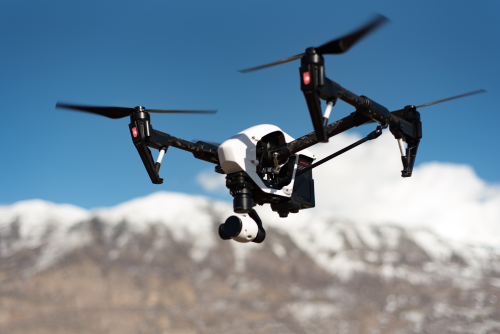
The biggest mistakes people make when they try to train in-house operators usually have very little to do with basic hand-eye coordination. Many teams buy a drone, send an employee to a short course, and assume they now have an internal flight capability. In reality, safe and commercially useful drone operations depend on much more than flying: compliance, mission planning, repeatable procedures, data quality, maintenance, and the judgment to know when not to launch.
Quick Take
If your business wants to train in-house drone operators, the main risk is not “can they lift off and land?” It is whether your team can deliver reliable, legal, safe, and client-ready results under real working conditions.
Key points:
- In-house training works best when missions are frequent, repeatable, and tightly tied to internal workflows.
- The most common mistake is treating drone training as a one-time flying lesson instead of building an operating system.
- A confident hobby pilot is not automatically a commercial operator.
- Good programs train by mission type, not just by aircraft model.
- You need written procedures, competency records, emergency drills, and recurrent training.
- Before any live mission, verify local aviation rules, site permissions, insurance coverage, privacy obligations, and client-specific restrictions.
Why in-house training is attractive — and where teams go wrong
The business case for in-house operators can be strong. Internal teams can respond faster, reduce scheduling friction, protect sensitive project data, and avoid paying external service providers for routine work.
That said, many companies underestimate what they are actually trying to build.
They are not just teaching an employee to fly a drone. They are creating a mini flight operation inside the business, with all the process, safety, legal, maintenance, data, and quality-control demands that come with it.
That gap between “we need a pilot” and “we need an operational capability” is where most mistakes begin.
The 10 biggest mistakes people make when they try to train in-house operators
| Mistake | What it looks like | Better approach |
|---|---|---|
| Starting with the drone, not the task | Buying equipment before defining use cases | Define mission types and outputs first |
| Training the wrong people | Picking whoever is interested or available | Choose people with judgment, consistency, and time to train |
| Confusing confidence with competence | Strong stick skills but weak planning and safety decisions | Assess mission readiness, not just flight smoothness |
| Leaving compliance until the end | Rules, permits, and insurance handled after purchase | Map legal and insurance requirements before launch |
| Using ad-hoc training | Informal tips from the “best flyer” on staff | Create a written training standard and sign-off process |
| Practicing only in ideal conditions | Wide open field flights only | Train for realistic sites, weather, and interruptions |
| Ignoring crew and emergency procedures | No briefing, no abort criteria, no incident workflow | Rehearse communication and abnormal situations |
| Focusing on flying, not deliverables | Good flights, poor data or unusable footage | Train to mission outputs and client needs |
| Neglecting maintenance and software | Weak battery care, no update policy, missing logs | Treat the fleet like operational equipment |
| Treating training as one-and-done | No refreshers or reassessment | Use recurrent training and mission-specific currency rules |
1. Starting with the drone, not the business task
This is probably the most expensive mistake.
A lot of organizations begin with hardware: they buy a drone because someone on the team wants one, or because a manager assumes it will “save money.” Only later do they ask what problem the drone is meant to solve.
That order usually creates weak training. The team learns the aircraft, but not the job.
A construction firm, for example, may need repeatable progress photos from fixed angles. A solar contractor may need defect spotting and consistent image coverage. A marketing agency may need smooth reveal shots and fast turnaround editing. Those are different missions, and they demand different skills, checklists, and quality standards.
A better approach is to define:
- What missions the team will actually fly
- What outputs the business needs
- How often those missions will happen
- What risk level each mission carries
- What “good enough” looks like for the end result
Train around those answers, not around the excitement of owning a drone.
2. Training the wrong people
Not every good employee should become an operator.
Companies often choose trainees based on enthusiasm, seniority, job title, or availability. That sounds practical, but it often backfires. The best in-house operators tend to be people with calm decision-making, strong procedural discipline, comfort with checklists, and the maturity to stop a mission when conditions are wrong.
The “creative person” may still be the right choice. So might the survey technician, project engineer, or site manager. But the decision should be based on role fit and personal fit, not who raised a hand first.
Watch for these bad selection signals:
- The employee is already overloaded
- They dislike documentation and routine checks
- They are overconfident around safety rules
- They are likely to move departments soon
- Their job requires flying only occasionally, so skills may fade
In many businesses, it is smarter to train one lead operator and one backup than to try to make everyone on the team a pilot.
3. Confusing confidence with competence
Some people learn takeoffs, landings, and basic maneuvers quickly. That can create false confidence for both the trainee and the company.
Commercial or operational flying requires more than moving the aircraft smoothly. It requires sound judgment before and during a mission: airspace awareness, obstacle recognition, weather assessment, battery planning, site selection, go/no-go decisions, crew communication, and emergency response.
This is why a strong hobby pilot is not automatically ready for work missions. Someone may be excellent at flying for fun in open areas and still struggle with a client site, nearby workers, reflective surfaces, wind funneling around buildings, or pressure to “just get the shot.”
A competent operator can answer questions like:
- What is the mission objective?
- What are the main hazards on this site?
- What is the abort plan?
- What changes if GPS signal is poor, the weather shifts, or a bystander enters the area?
- What result does the client actually need?
If your assessment only checks whether the drone stays in the air, the assessment is too shallow.
4. Leaving compliance, insurance, and permissions to the end
This is one of the most common business errors because it often sits outside the training conversation until late in the process.
Depending on the country, region, aircraft type, and operation, your organization may need pilot competency proof, operator registration, airspace authorization, site permission, night-operation approval, operations manuals, or other documentation. Insurance requirements can also vary by jurisdiction, client, venue, or contract.
Some teams do the reverse of what they should: they train first, market services internally or externally, and only then discover they cannot legally perform certain missions under their current setup.
Before live work begins, verify:
- Civil aviation authority requirements in your operating area
- Whether the planned flights fall into a basic or higher-risk category
- Registration or identification rules for aircraft and operators
- Restrictions around people, roads, airports, sensitive sites, or controlled airspace
- Privacy and data-capture rules for the environments you will film or map
- Insurance coverage for training flights and commercial missions
- Property owner, client, venue, or municipal permissions where relevant
Do not assume that a training certificate from a school or manufacturer automatically covers regulatory compliance in your jurisdiction. It often does not.
5. Using ad-hoc training instead of a written standard
Many in-house programs start with this sentence: “Our best flyer will train the others.”
That person may be skilled, but informal coaching is not the same as a training system.
Without a written standard, every trainee gets a different version of the job. One person learns battery care properly. Another never gets taught site briefing. A third learns camera settings but not incident reporting. The result is uneven performance and avoidable risk.
At minimum, your internal standard should cover:
- Ground knowledge and local rules to verify
- Preflight planning steps
- Equipment setup and checks
- Flight profiles by mission type
- Communication and crew roles
- Abort criteria
- Emergency procedures
- Post-flight logging
- Data handling and storage
- Sign-off criteria for supervised and unsupervised work
Written standards also help if staff change, teams grow, or an incident forces a review of what the organization actually trained people to do.
6. Practicing only in ideal conditions
A quiet field on a calm day is useful for early learning. It is not enough.
Real work happens around variables: wind, glare, uneven terrain, metal structures, time pressure, moving vehicles, changing light, intermittent signal quality, and people who do not understand why the drone is there.
Companies often create a false sense of readiness by training only in easy environments. Then the first real site becomes the true training event, which is exactly what you do not want.
A better progression looks like this:
- Basic control and aircraft orientation in a low-risk area
- Structured flight tasks under supervision
- Mission planning exercises without launching
- Controlled site work with realistic obstacles and communication demands
- Supervised live missions within defined limits
- Sign-off only after consistent performance, not one good day
You do not need to create artificial danger to train effectively. You do need to expose operators to realistic complexity before they are sent out alone.
7. Ignoring crew communication and emergency procedures
A surprising number of in-house programs teach flying but not operating.
That means trainees know the controls, but not how to brief a site, coordinate with a spotter or visual observer, manage interruptions, or respond when something stops being normal.
Good internal operators should be able to handle situations such as:
- A pedestrian walks into the planned operating area
- Wind increases beyond the team’s comfort limit
- The aircraft gives a battery, compass, or signal warning
- The client asks for a shot that changes the risk picture
- Another aircraft or local activity makes the area unsuitable
- A takeoff zone becomes blocked
- The mission must be aborted quickly and calmly
Emergency procedures should not be treated as paperwork. They should be rehearsed. Even simple drills improve performance: lost-link response, immediate landing decisions, communication phrases, alternate landing areas, and who documents the event afterward.
This matters for safety, but it also matters for professionalism. Clients trust calm operators.
8. Focusing on flying instead of deliverables
Businesses do not train operators just to keep drones airborne. They train them to produce a result.
That result might be inspection imagery, orthomosaic maps, roof condition photos, social content, construction progress records, or internal documentation. If the training program does not teach what “usable output” looks like, the operation may be technically safe but commercially weak.
Common output problems include:
- Inconsistent framing between site visits
- Footage that is cinematic but not useful for the client
- Images with missing overlap for mapping
- Poor file naming and storage
- Missing metadata or location context
- Slow handoff to the next team in the workflow
- No quality-control check before leaving site
This is where many businesses waste money. They train flying, but the downstream team still cannot use what comes back.
Every in-house program should define mission-ready output standards. A pilot should know not only how to capture data, but how the data will be used, reviewed, stored, and delivered.
9. Neglecting maintenance, batteries, and software management
A drone operation is not just pilots. It is also fleet management.
Organizations often underestimate the hidden operational layer: battery health, charging routines, storage conditions, propeller inspections, firmware and app updates, controller compatibility, spare parts, calibration needs, and flight logs.
If this is handled casually, even a well-trained operator will get inconsistent results.
Typical warning signs:
- No battery labeling or cycle tracking
- Updates installed at random, including right before field work
- No spare propellers or charging plan
- No process for grounding equipment after a hard landing
- No maintenance record
- No standard checklist after transport or travel
Training should include equipment discipline from day one. Otherwise, the business builds a fragile operation that depends on luck and last-minute improvisation.
For teams that travel with drones, there is an added layer: battery transport, airline rules, customs sensitivity, and varying local flight rules. Those details should be verified before each trip, not assumed.
10. Treating training as a one-time event
Passing a course is not the end of training. It is the beginning of controlled responsibility.
Skills decay. Rules change. Software changes. New sites create new hazards. If operators do not fly often, they may remain legally qualified in some places but still be operationally rusty.
Strong in-house programs set currency and recurrence standards, such as:
- Minimum recent flight activity
- Periodic knowledge refreshers
- Reassessment after incidents or long gaps
- Mission-specific sign-offs
- Simulator or tabletop scenario practice
- Review of near misses, not just actual accidents
This matters even more if your business expands from simple photography into inspection, mapping, thermal work, or operations near more complex environments. New use cases need new training.
The goal is not bureaucracy. The goal is keeping capability real.
Safety, legal, and operational risks companies underestimate
Because drone operations involve aircraft, cameras, people, property, and sometimes sensitive locations, in-house training has real risk exposure.
The safest assumption is that your internal program needs checks from more than one department. At minimum, someone should review operational safety, local aviation compliance, insurance, privacy or data handling, and client contract requirements.
Areas to verify before live operations include:
- Pilot and operator eligibility in the jurisdiction
- Airspace or site access permissions
- Rules around flights near people, roads, buildings, or critical infrastructure
- Night, urban, or higher-risk operation approvals if relevant
- Insurance terms for training and commercial work
- Privacy, surveillance, and data-retention obligations
- Incident reporting requirements
- Employer health and safety policies for field work
- Local venue, park, municipal, or landowner restrictions
If your team works across borders, do not assume one approval or training pathway carries over cleanly into the next country. Verify every location with the relevant aviation and site authorities before flying.
What a good in-house operator training program looks like
If you want a practical model, keep it simple and structured.
1. Define mission classes
Do not start with “we need drone pilots.” Start with categories such as:
- Marketing and social media capture
- Construction progress documentation
- Roof and facade observation
- Basic mapping and surveying support
- Internal asset records
Each class should have its own output standard and risk profile.
2. Pick a small first team
Choose one lead operator and one backup if possible. Do not scale training before you know the workflow works.
3. Map the compliance and insurance picture early
Before operational training, verify what legal, insurance, and site-permission requirements apply in the countries or regions where you will fly.
4. Build standard operating procedures
Create a standard operating procedure (SOP) for planning, preflight, launch, in-flight decision-making, post-flight logging, and data handling.
5. Train in layers
A solid progression usually includes:
- Ground school
- Aircraft familiarization
- Simulator or scenario work where available
- Supervised field training
- Mission-specific supervised work
- Formal sign-off
6. Sign off by mission, not by ego
A person may be ready for simple marketing footage but not for structured mapping. They may be ready for rural sites but not dense urban work. Qualification should reflect that.
7. Review performance regularly
Track:
- Flight frequency
- Incident and near-miss reports
- Output quality
- Turnaround time
- Equipment issues
- Refresher training needs
That is how you turn training into a business capability instead of a side project.
When outsourcing or a hybrid model is smarter
Not every company should train in-house, at least not immediately.
You should strongly consider outsourced or hybrid support when:
- Missions are infrequent
- Sites are spread across multiple jurisdictions
- The work is higher risk
- The deliverable quality bar is very high
- Your internal team lacks time for ongoing practice
- Compliance and insurance complexity outweigh likely savings
A hybrid model often works well: keep simple, repeatable missions in-house, and contract specialist providers for advanced inspections, complex mapping, or unfamiliar locations.
That usually protects margins better than forcing one internal team to do everything.
FAQ
How do we know if in-house operator training makes financial sense?
It usually makes sense when flights are frequent, repeatable, and tied to an internal workflow that benefits from fast response. If you only need occasional missions, outsourcing is often cheaper once training time, supervision, compliance, equipment downtime, and maintenance are included.
Is a manufacturer onboarding course enough for commercial work?
Usually not on its own. Manufacturer training can help with platform basics, but it rarely covers your full mission profile, internal procedures, local legal requirements, client communication, and data workflow.
How many employees should we train first?
Start smaller than you think. One lead operator and one backup is often enough to validate the workflow before expanding. Training too many people too early usually creates inconsistency and skill fade.
Can we train one employee and have them train the rest?
Yes, but only if you document the standard clearly and make sure that internal trainer is genuinely qualified for the mission types involved. Informal shadowing without a defined syllabus leads to uneven performance and weak accountability.
Should all departments use the same training program?
Only at the foundation level. Basic safety, planning, and equipment discipline can be shared, but mission-specific training should differ. A marketing team, inspection team, and mapping team do not need the same sign-off criteria.
What should we document in an internal training program?
Document the syllabus, checklists, supervised flights, sign-off criteria, emergency procedures, currency standards, and any incidents or remedial training. You should also document which operators are approved for which mission types and equipment.
How often should operators be reassessed?
There is no single global answer, but reassessment should happen regularly and after long gaps, incidents, or changes in mission type or equipment. A practical approach is to combine scheduled refreshers with event-based reviews.
What is the biggest sign our training program is weak?
If your team talks mostly about flying and rarely about planning, permissions, checklists, output quality, and post-flight review, the program is probably too shallow. Mature operations sound like operations, not hobbies.
Final takeaway
If you want to avoid the biggest mistakes people make when they try to train in-house operators, stop thinking of training as a course and start thinking of it as an operational system. Define the mission, choose the right people, document the workflow, verify the compliance picture, and sign people off only when they can produce safe, repeatable, usable results. Start small, build discipline early, and only scale once the process works.