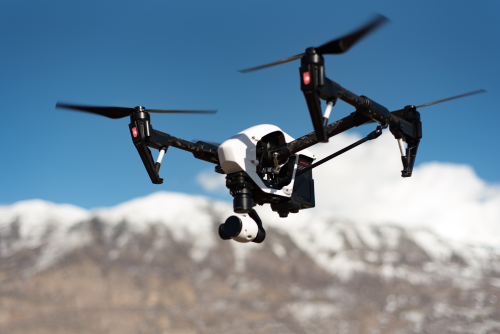
Trying to win government and NGO drone work looks straightforward until you see how these buyers actually decide. They are rarely buying a drone, or even a pilot. They are buying a controlled outcome: safer operations, usable data, accountable spending, local fit, and a delivery plan they can defend to managers, donors, auditors, and the public.
Quick Take
The biggest mistakes people make when they try to win government and NGO drone projects are usually commercial and operational, not technical.
- They pitch the aircraft instead of the problem being solved.
- They submit generic proposals and miss mandatory requirements.
- They assume a great demo flight outweighs weak compliance, training, or documentation.
- They ignore local operating realities, local partners, and community acceptance.
- They underprice the job by forgetting support, permissions, data processing, and handover.
- They overpromise on accuracy, automation, or AI without proving quality control.
- They fail to show how the project will keep working after the first delivery.
If you want to win more of these projects, think like a risk-managed service provider, not like a drone enthusiast with a strong reel.
What these buyers often care about more than sellers expect
| Many bidders emphasize | Government and NGO evaluators often care more about | Better way to frame your offer |
|---|---|---|
| Drone model and camera specs | Whether the mission produces reliable, decision-ready outputs | State deliverables, quality checks, turnaround time, and operational limits |
| Flight time | Mission completion under local conditions | Explain battery rotation, redundancy, crew plan, and weather limits |
| Low price | Total cost, sustainability, and auditability | Show full lifecycle budget, support, training, and maintenance plan |
| Impressive demo footage | Safety, legality, documentation, and data governance | Include standard operating procedures, permissions approach, privacy handling, and sample reports |
| “AI-powered” claims | Accuracy, validation, and trust in the outputs | Explain review workflow, human quality assurance, and error handling |
Why these projects are different from normal commercial drone jobs
A real estate shoot or one-off inspection can often be sold on speed, visuals, and price. Government and NGO projects usually involve more layers:
- procurement rules or formal tenders
- public accountability
- donor or internal reporting
- local stakeholder management
- training or knowledge transfer
- security, privacy, and data sensitivity
- long-term support expectations
That changes what “best offer” means.
A ministry, municipality, public utility, conservation group, humanitarian agency, or development NGO may be using drone data for flood mapping, infrastructure inspection, agriculture, disaster response, health logistics planning, land management, or environmental monitoring. In each case, the buyer is asking a bigger question than “Can you fly?”
They are asking:
- Can you operate safely and legally here?
- Can you work with our staff and local stakeholders?
- Can you turn raw imagery into something useful?
- Can we keep this running after the initial project?
- If something goes wrong, can your process withstand scrutiny?
A lot of experienced pilots lose these projects because they bid like freelancers. These buyers select like risk managers.
The biggest mistakes people make when they try to win government and NGO drone projects
1. Chasing every tender instead of qualifying the opportunity
Not every opportunity is worth pursuing.
Some projects look open but already favor an incumbent supplier, a local organization, or a firm with a very specific compliance history. Others are simply outside your real capacity.
Common red flags include:
- mandatory local registration you do not have
- required past performance in a sector you have never served
- language requirements you cannot support
- deliverables that depend on software or staff you do not have
- unrealistic timelines for permissions or mobilization
- weak signs that the budget is actually approved
A disciplined no-bid decision is a business strength. Spending two weeks on an unwinnable bid is not “business development.” It is lost margin.
2. Selling the drone instead of the outcome
This is the classic mistake.
You talk about sensors, range, mapping apps, thermal payloads, and flight endurance. The buyer wants to know whether roads will be surveyed faster, whether crops will be monitored more consistently, whether flood zones will be mapped accurately enough to guide action, or whether internal staff will be able to continue the work.
Better proposal language sounds like this:
- baseline survey completed in X days under defined conditions
- orthomosaic, 3D model, inspection report, or asset inventory delivered in a clear format
- decision workflow explained from flight to final report
- training and support included so the system can be used after handover
The aircraft matters, but only as part of a delivery system.
3. Submitting a generic proposal and missing mandatory requirements
Many public and NGO procurement documents are dry, repetitive, and easy to skim badly. That is how good companies get disqualified.
The terms of reference, or TOR, explain what the buyer wants done. The request for proposal, tender, or request for quotation explains how they want suppliers to respond. Inside those documents are often mandatory requirements that are not negotiable.
Examples can include:
- legal registration documents
- insurance evidence
- pilot credentials
- relevant experience
- local presence or partner requirements
- staffing structure
- methodology format
- financial forms
- references
A beautiful deck does not rescue a non-compliant submission.
What works better is a compliance matrix: a line-by-line table that shows every requirement and exactly where your response addresses it. That makes the evaluator’s job easier and reduces preventable rejection.
4. Assuming a good demo flight will outweigh weak delivery planning
Demo flights help, but they do not replace an operational plan.
Government and NGO buyers often worry less about whether the drone can fly and more about everything around the flight:
- site access
- permissions
- weather delays
- backup equipment
- battery management
- data processing capacity
- file handoff
- staff training
- support after the demo team leaves
A live demonstration may impress a field team and still fail to win the contract if finance, legal, procurement, IT, or program leadership sees gaps.
Treat the demo as evidence inside a complete system, not as the system itself.
5. Underestimating compliance, safety, and data risk
This is one of the fastest ways to lose credibility.
In regulated or sensitive environments, buyers want to know that you understand aviation rules, land access, public safety, privacy, and data handling. They also want to know that you will not create reputational problems for them.
You do not need to pretend certainty where rules vary. You do need to show a process for verification.
Strong proposals usually address:
- which approvals must be verified before operations
- who is responsible for obtaining them
- pilot qualification and supervision approach
- incident reporting and emergency procedures
- insurance approach and coverage verification
- privacy and consent considerations
- data ownership, storage, access, and retention
- any restrictions on flying near critical sites, protected areas, or communities
For humanitarian and development work, this becomes even more important. Drone imagery can expose vulnerable people, critical infrastructure, or sensitive locations. A technically correct flight can still be a bad project if the data governance is weak.
6. Ignoring local operating realities
A workflow that works perfectly in one country can fail completely in another.
Global bidders often underestimate local reality:
- limited power supply for charging
- weak internet for cloud upload
- rough roads and long mobilization times
- seasonal weather patterns
- security issues
- customs delays for imported equipment
- cultural concerns around filming
- language barriers with field teams or communities
For example, a firm that excels at industrial inspections in stable urban environments may struggle in a rural conservation or humanitarian setting where charging, spares, connectivity, and community coordination are constant constraints.
Proposals get stronger when they show adaptation, not just capability.
7. Treating local partnerships as optional
For many projects, local delivery capacity is not a nice extra. It is part of the value.
A local partner may help with:
- permits and operational coordination
- site access and stakeholder communication
- language and documentation
- field logistics
- maintenance and troubleshooting
- training continuity after deployment
This does not mean adding a local name to look compliant. Weak partnerships are obvious. Buyers can tell when roles are vague or when the “partner” is only there for optics.
A good partnership model clearly defines:
- who leads what
- who is accountable for flight safety
- who owns client communication
- who handles data processing
- who supports users after delivery
8. Overpromising on accuracy, automation, or AI
Drone providers sometimes talk as if every mapping output is precise, every inspection is automated, and every AI model is production-ready. That may sound modern, but experienced evaluators hear risk.
Accuracy depends on mission design, terrain, lighting, overlap, control methods, operator skill, and processing discipline. Automated detection tools can be useful, but they are not magic. Many still need human review, especially in complex terrain, cluttered infrastructure, or sensitive humanitarian contexts.
Be careful with claims like:
- centimeter accuracy everywhere
- fully automated analysis
- no need for trained staff
- instant processing in low-connectivity conditions
- guaranteed detection rates without validation
What wins trust is honest performance language:
- expected accuracy range under stated conditions
- quality assurance process
- limits of automation
- manual review steps
- reflight criteria if data quality fails
9. Pricing the project like a one-off gig
Many operators quote government and NGO work as if it were a short commercial shoot. That is usually a mistake.
These projects often include costs people forget:
- tender preparation time
- mobilization and local transport
- permissions and coordination
- extra crew days due to weather or access delays
- data processing and storage
- training time
- documentation and reporting
- spare parts and battery replacement
- support after delivery
- project management and stakeholder meetings
When you underprice, two bad outcomes follow. Either you lose money and perform badly, or you try to recover margin by cutting support and quality. Buyers may not always choose the lowest number anyway. They often want the best defensible value.
A stronger quote separates:
- implementation cost
- equipment cost, if any
- training cost
- recurring software or data cost
- support and maintenance
- optional expansions
That helps the buyer understand total cost of ownership instead of comparing day rates blindly.
10. Treating training and handover as optional
Many buyers do not want a forever dependency on an outside pilot. They want internal capability, local resilience, or at least a sustainable support model.
This matters even more in public-interest work. A donor or ministry may ask, “What happens after the pilot phase?” If the answer is “Call us every time,” your bid may feel fragile.
Training should not be a single slide that says “operator training included.”
A better handover plan includes:
- role-based training for pilots, analysts, and managers
- standard operating procedures, or SOPs
- maintenance basics
- data workflow guides
- refresher sessions
- train-the-trainer options
- clear support channels
Good handover planning also helps with adoption. Teams often fail with drones not because the aircraft is bad, but because no one knows how to fit the workflow into normal operations.
11. Using weak case studies and vague proof
“Experienced drone company” is not proof.
If you want a road agency, health program, municipality, conservation NGO, or disaster-response team to trust you, your evidence needs to feel relevant. Wedding reels, tourism footage, and unrelated marketing shoots do not create confidence for technical public work.
Stronger proof includes:
- similar operating environments
- similar deliverables
- similar stakeholder complexity
- lessons learned from difficult field conditions
- sample reports or output structures
- references who can speak to reliability, not just image quality
If you are newer to this market, be honest. Then compensate with process quality:
- strong team credentials
- clear methodology
- specialist partners
- realistic scope
- pilot project design with measurable success criteria
12. Failing to show how success will be measured
A lot of proposals stop at “we will deliver maps” or “we will train staff.” That is not enough.
Government and NGO projects often need evidence that the drone program improved something. NGOs may call this monitoring and evaluation, or M&E. Public agencies may frame it as performance, service improvement, or operational efficiency.
Possible measures include:
- inspection turnaround time reduced
- area surveyed per week increased
- repeatability of environmental monitoring improved
- fewer site visits needed for initial assessment
- faster damage documentation after events
- internal staff able to execute defined missions independently
When you define success clearly, your proposal becomes easier to approve and easier to defend.
Operational, legal, and compliance risks you must not gloss over
If your project involves commercial drone operations, cross-border deployment, or work in sensitive areas, be conservative.
Do not assume that permissions, insurance, import rules, or data practices are the same across countries. They are not.
Before any project starts, verify with the relevant aviation authority and, where applicable, land managers, municipal authorities, protected-area managers, venue owners, emergency coordinators, and the client’s own compliance team.
Key areas to verify include:
- whether the planned flight type is allowed
- whether pilot credentials or operator authorizations are recognized locally
- whether special approvals are required for advanced operations such as flying beyond visual line of sight
- whether insurance must meet local rules or contractual minimums
- whether the drone and batteries can be imported, transported, or stored lawfully
- whether privacy, mapping, or geospatial restrictions apply
- whether cloud storage location or data export raises legal or contractual issues
- whether community notification or consent is needed
- whether work near disaster zones, conflict-affected areas, or critical infrastructure requires extra coordination
For NGO work especially, never self-deploy into an emergency or sensitive field setting just because drones could be useful. Coordination and authorization matter.
A smarter way to pursue these projects
If you want a practical improvement plan, use this sequence.
1. Qualify before you bid
Ask:
- Is the budget real and active?
- Can we meet the mandatory requirements?
- Do we understand the sector problem?
- Do we have local delivery capacity?
- Can we deliver the outputs with evidence, not hope?
If too many answers are weak, pass.
2. Build around the mission, not the aircraft
State:
- the operational problem
- the exact outputs
- the workflow from capture to decision
- what success looks like
Make the drone one part of the system.
3. Prepare a compliance package early
Keep core documents current:
- company registration
- insurance evidence
- staff CVs and credentials
- safety management documents
- SOPs
- relevant case studies
- references
- privacy and data-handling overview
Many teams lose time because they assemble these only after the tender arrives.
4. Price the full lifecycle
Budget for the real project, not the ideal week.
Include:
- mobilization
- delays
- training
- data processing
- reporting
- support
- maintenance
- replacement risk
If you want to be competitive, be transparent, not artificially cheap.
5. Partner where it improves delivery
Use partners to fill real gaps, not cosmetic ones.
The best partnerships add one or more of these:
- local operations
- sector credibility
- regulatory familiarity
- GIS or data expertise
- training capacity
- support coverage
6. Make adoption easy
Your proposal should answer a final question buyers often leave unspoken: “Will our team actually be able to use this?”
That means simple deliverables, clear training, defined support, realistic expectations, and a workflow that fits the client’s staff, connectivity, budget, and decision cycle.
FAQ
Can a small drone company really win government or NGO projects?
Yes, especially if the scope is local, specialized, or pilot-stage. Small firms usually win when they are disciplined about qualification, partner well, respond carefully to requirements, and offer a realistic delivery plan instead of trying to look bigger than they are.
Do I need a local partner for international projects?
Often, it helps a lot, and sometimes it may be practically necessary. A local partner can support logistics, language, stakeholder coordination, and continuity. Verify procurement requirements and local operating rules before assuming you can deliver alone.
Is the lowest price usually the winner?
Not always. Many public and NGO buyers care about value, compliance, and delivery risk, not just headline cost. A very low bid can raise concern if it seems to ignore training, support, or operational reality.
What documents should I prepare before tenders are released?
At minimum, keep your company profile, registration papers, insurance evidence, staff credentials, case studies, references, SOPs, and data-handling overview ready. You should also have a standard methodology format you can adapt quickly.
Are free pilot projects or demos worth doing?
Sometimes, but only if the scope is controlled and success criteria are clear. A free demo without a decision path can turn into unpaid consulting. Make sure the client understands what the demo proves, what it does not prove, and what the next commercial step looks like.
Should I bid hardware only, service only, or a full program?
That depends on the buyer. Some want a managed service. Others want equipment plus training and support. Many of the strongest offers combine hardware, operations, data workflow, training, and after-sales support into a program the client can actually sustain.
How important is data governance in NGO and public-sector work?
Very important. Data ownership, privacy, storage, access, and retention can be as important as the flight itself. Sensitive imagery or location data can create legal, ethical, and reputational risks if handled poorly.
What is the biggest mindset shift for winning these projects?
Stop thinking like a pilot selling flights. Start thinking like a service provider selling a reliable, compliant, measurable program.
Final takeaway
If you want to win more government and NGO drone projects, do not lead with hardware hype or a cheap quote. Lead with problem understanding, compliance discipline, local realism, measurable outcomes, and a support model the buyer can trust. If your bid does not make the project easier to approve, safer to run, and simpler to sustain, it is probably not ready yet.