Introduction
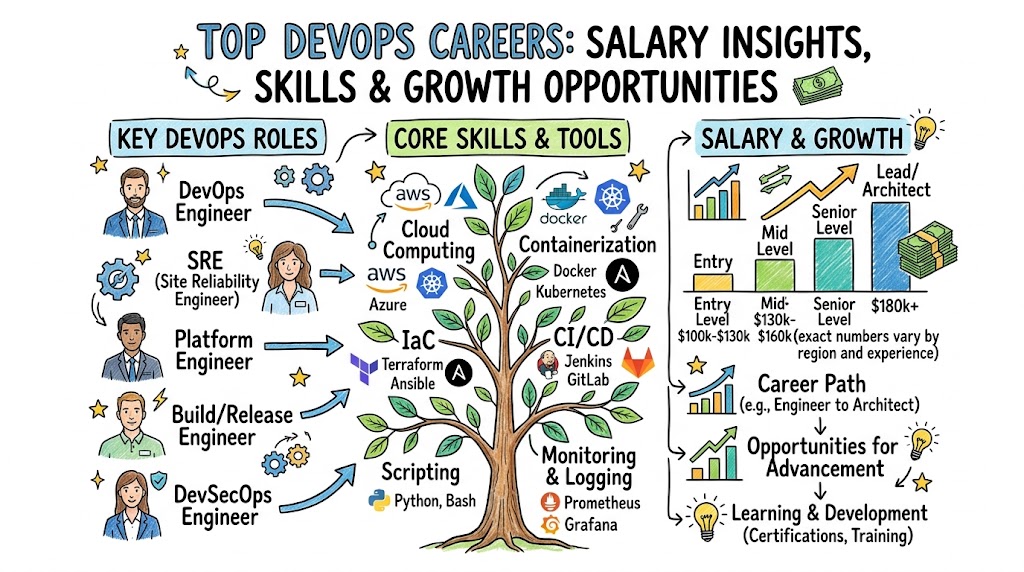
DevOps has shifted from a trendy tech buzzword to the backbone of modern software infrastructure. In the current IT landscape, businesses do not just want fast deployment; they require secure, cost-effective, and highly reliable operations. Because infrastructure failure directly impacts business revenue, engineering professionals who can bridge the gap between development and operations are among the highest-paid technical talents globally
DevOps compensation is increasingly fragmented into three core pay markets: high-scale product organizations or Big Tech (which lean heavily on equity), regulated enterprises (which focus on stable base salaries and bonuses), and IT services or outsourcing firms (driven by strict rate cards). This means the title “DevOps Engineer” can imply drastically different responsibilities—and paychecks—depending on where you land.
True career and salary growth in this field track business risk, not just tool knowledge. The minute your day-to-day work ties directly to revenue uptime, regulatory exposure, or gross cloud margins, your compensation ceiling changes. While certifications can help structure your learning, hands-on architectural skills, reliability ownership, and operational decision rights are what ultimately command a premium.
This comprehensive guide breaks down real-world global DevOps salary numbers, experience levels, high-paying roles, and practical skill paths to help freshers, cloud engineers, systems administrators, and IT professionals successfully maximize their career value.
Why DevOps Salaries Are High
The substantial earning potential in DevOps is driven by fundamental shifts in how modern software is built, scaled, and protected:
- Cloud Adoption & Multi-Cloud Infrastructure: Organizations are moving away from legacy on-premise hardware to complex multi-cloud ecosystems. Architecting stable cloud environments requires rare specialized expertise.
- The Mandate for Automation: Standard manual deployments are too slow and error-prone. Organizations pay a premium for professionals who can build resilient Continuous Integration and Continuous Deployment (CI/CD) pipelines to safely deliver code multiple times a day.
- Kubernetes and Containerization: Containers have revolutionized software portability. However, managing orchestrated environments like Kubernetes at scale is notoriously difficult, creating a steep supply-and-demand mismatch for skilled container engineers.
- Shift-Left Security (DevSecOps): Security can no longer be an afterthought handled at the end of a software cycle. Embedding compliance and policy-as-code into early automation tracks dramatically reduces corporate liability, making DevSecOps professionals highly valuable.
- Scarcity of True Engineering Talents: There is a major shortage of engineers who possess a balanced mix of deep systems infrastructure knowledge, software programming logic, and strong operational communication.
Who Should Read This Guide
This report is a strategic roadmap designed for:
- Freshers & Graduates: Beginners looking to enter the IT space through a high-growth, future-proof operational path.
- Software Developers: Programmers seeking to expand into cloud infrastructure, architectural design, and system deployment to command higher SWE-level salaries.
- Linux & System Administrators: Traditional infrastructure professionals looking to modernize their skill sets by moving from manual server management to Infrastructure as Code (IaC).
- Cloud, SRE, & Platform Engineers: Existing specialists seeking to audit where their current compensation lands compared to global averages and identify the best skills for advancement.
- DevSecOps & Security Professionals: Security practitioners looking to benchmark the premium value of automated compliance and pipeline protection.
DevOps Salary Overview & Experience Levels
The global DevOps job market heavily rewards specialized experience over title alone. While title inflation exists, corporate leveling systems are getting stricter. To understand your true salary potential, look at your ownership scope: junior roles focus on executing clear tasks and learning on-call basics, mid-levels independently ship infrastructure modifications, and seniors actively architect distributed systems and lead major incident responses.
The matrix below maps out what you can realistically expect across your career ladder, highlighting the skills and scope required to climb to the next compensation tier:
DevOps Salary Growth Matrix by Experience
| Experience Level | Typical Roles | Skills Expected | Salary Growth Potential | Career Scope |
| Fresher / Junior | Junior DevOps Engineer, Cloud Associate | Basic Linux, Git, scripting, executing minor pipeline changes, learning on-call protocols. | Baseline entry market rates. | Task-focused; heavily guided by senior engineers. |
| Mid-Level | DevOps Engineer, SRE, Cloud Specialist | Independent infrastructure delivery, CI/CD management, IaC configuration, monitoring setup. | Strong upward curve (Average baseline). | Component-focused; owns complete features or deployment tracks. |
| Senior | Senior DevOps Engineer, Senior SRE | System architecture, advanced Kubernetes orchestration, incident command, team mentorship. | Significant premium over mid-level bands. | System-focused; leads multi-component infrastructure designs. |
| Lead / Principal | Lead Engineer, Principal Engineer | Cross-team reliability strategies, org-wide standards, platform product management. | High earning bracket (SWE ladder equivalent). | Organization-focused; sets long-term technical direction. |
| Architect | Platform Architect, Cloud Architect | Multi-cloud governance, high-scale reliability engineering, cost optimization (FinOps). | Top-tier executive/IC market compensation. | Enterprise-focused; ties technical infrastructure to business gross margins. |
Highest Paying DevOps Roles
Not all titles carry equal weight. As the market matures, generic “CI/CD engineers” or “Kubernetes operators” who only look after basic deployments are experiencing a flattening of compensation. In contrast, roles focused on internal developer platforms (treating infrastructure as an internal product) and reliability leadership command distinct market premiums.
The comparison table below outlines how specific sub-specializations stack up against each other in complexity and compensation potential:
Specialized DevOps Role Comparison
| Role | Main Skills | Difficulty Level | Salary Potential vs. Baseline | Career Demand |
| DevOps Engineer | CI/CD, Infra Automation, Deployment Reliability | Medium | Baseline | Steady / Broad market adoption |
| Site Reliability Engineer (SRE) | SLOs, Error Budgets, Incident Response, Toil Reduction | High | +0% to +15% | Exceptionally high in scale-up environments |
| Platform Engineer | Internal Developer Platforms (IDP), Paved Roads, Adoption | High | +5% to +20% | Surging as companies centralize infrastructure |
| DevSecOps Engineer | Policy-as-Code, Secure SDLC, Secrets Management | High | +10% to +30% | Critical in regulated & enterprise sectors |
| Security Platform Engineer | Scalable Security Controls, Developer Enablement | Very High | +15% to +35% | Premium tier for niche security infrastructure |
| FinOps / Cost Engineer | Capacity Economics, Unit Cost Governance, Cloud Billing | Medium-High | +5% to +25% | Rising rapidly due to corporate cloud cost cuts |
| Cloud Engineer | Landing Zones, IAM Patterns, Baseline Cloud Delivery | Medium | -5% to +10% | High volume, but highly competitive |
| Release / CI/CD Engineer | Pipeline Orchestration, Release Tooling | Tool-Specific | -15% to 0% | Slowing down; being absorbed by broader roles |
DevOps Salary by Skills & Certifications
Your toolbelt directly dictates your market value, but context matters. Knowing how to run a tool is different from knowing why a system broke under heavy loads. High earners pivot away from simple “tool implementation” toward building wider platform ecosystems.
Essential Skills That Shift Compensation Upward
- Foundational Core: Deep Linux system mechanics, solid shell scripting, and master-level Git version control form the non-negotiable floor of your career. Without these, advanced tools crumble.
- Infrastructure & Orchestration: Terraform for declarative code infrastructure and Kubernetes for production container deployments carry massive weight. Knowing how to troubleshoot a broken Kubernetes cluster at 3 AM is highly lucrative.
- The Cloud Providers: Mastery of major ecosystems—AWS, Azure, or Google Cloud—especially regarding identity access management (IAM), networking topology, and system architecture.
- Modern Paradigms: Moving to GitOps workflows, establishing Observability platforms (using advanced tracing, logging, metrics, and Service Level Objectives), and implementing automated compliance checks directly increases your value.
The Role of Certifications
Certifications are highly effective door-openers for freshers and professionals switching careers. They validate a baseline technical baseline to recruiters and show personal dedication. However, the market quickly flattens out if certification acquisition is not backed up by functional engineering skill. Senior-level premiums are earned through architectural decision-making, distributed systems design, and reducing operational toil, which can only be proven through deep project experience.
DevOps Salary by Country or Region
DevOps compensation varies widely across different regions based on localized market maturity, available tech talent pools, and local currencies. Below is an official, data-backed regional snapshot of base-salary bands for flagship roles (DevOps, SRE, Platform, and DevSecOps) for key international tech hubs, captured in early 2026.
Note: All data reflects annual gross base salaries for full-time employees, exclusive of variable equity, signing bonuses, or unique localized allowances. Conversions are calculated using mid-market exchange rates.
Global Base Salary Benchmarks (Early 2026)
| Country | Currency | DevOps Engineer (Min / Median / Max) | Site Reliability Engineer (SRE) (Min / Median / Max) | Platform Engineer (Min / Median / Max) | DevSecOps Engineer (Min / Median / Max) |
| United States | USD | $92,058 / $115,072 / $143,840 | $99,422 / $124,278 / $155,347 | $103,105 / $128,881 / $161,101 | $108,628 / $135,785 / $169,731 |
| Switzerland | CHF | $114,682 / CHF 111,204 / $179,191 | $123,857 / CHF 120,100 / $193,526 | $128,444 / CHF 124,548 / $200,694 | $135,325 / CHF 131,221 / $211,445 |
| Netherlands | EUR | $71,629 / EUR 75,757 / $111,921 | $77,360 / EUR 81,818 / $120,874 | $80,225 / EUR 84,848 / $125,351 | $84,523 / EUR 89,393 / $132,066 |
| Canada | CAD | $66,734 / CAD 114,006 / $104,271 | $72,072 / CAD 123,126 / $112,613 | $74,742 / CAD 127,687 / $116,784 | $78,746 / CAD 134,527 / $123,040 |
| Singapore | SGD | $71,319 / SGD 113,412 / $111,436 | $77,025 / SGD 122,485 / $120,351 | $79,878 / SGD 126,600 / $124,809 | $84,157 / SGD 133,500 / $131,495 |
| France | EUR | $64,408 / EUR 68,120 / $100,638 | $69,561 / EUR 73,570 / $108,689 | $72,137 / EUR 76,294 / $112,715 | $76,002 / EUR 80,382 / $118,753 |
| Sweden | SEK | $57,782 / SEK 651,680 / $90,284 | $62,404 / SEK 703,814 / $97,506 | $64,715 / SEK 729,882 / $101,118 | $68,182 / SEK 768,982 / $106,535 |
| Israel | ILS | $62,517 / ILS 243,752 / $97,682 | $67,518 / ILS 263,252 / $105,497 | $70,019 / ILS 273,002 / $109,404 | $73,770 / ILS 287,627 / $115,265 |
| Spain | EUR | $55,148 / EUR 58,326 / $86,169 | $59,560 / EUR 62,992 / $93,062 | $61,766 / EUR 65,325 / $96,509 | $65,075 / EUR 68,825 / $101,679 |
| Poland | PLN | $47,310 / PLN 211,077 / $73,921 | $51,094 / PLN 227,963 / $79,835 | $52,987 / PLN 236,407 / $82,792 | $55,825 / PLN 249,071 / $87,227 |
| South Korea | KRW | $43,423 / KRW 79.6M / $67,848 | $46,897 / KRW 85.9M / $73,276 | $48,634 / KRW 89.1M / $75,990 | $51,239 / KRW 93.9M / $80,061 |
| UAE | AED | $63,247 / AED 290,345 / $98,824 | $68,307 / AED 313,200 / $106,730 | $70,837 / AED 325,400 / $110,683 | $74,632 / AED 342,900 / $116,612 |
| India | INR | $18,424 / INR 2,085,429 / $28,788 | $19,898 / INR 2,252,263 / $31,091 | $20,635 / INR 2,335,681 / $32,242 | $21,740 / INR 2,460,806 / $33,969 |
| Kenya | KES | $12,223 / KES 1,965,270 / $19,099 | $13,201 / KES 2,122,100 / $20,627 | $13,690 / KES 2,201,300 / $21,391 | $14,424 / KES 2,319,200 / $22,537 |
| Nigeria | NGN | — / NGN 2,947,906 / — | — / NGN 3,183,738 / — | — / NGN 3,301,655 / — | — / NGN 3,478,529 / — |
DevOps Salary by Company Type
The structure of the company hiring you often dictates the ceiling of your compensation package, the speed of your career progression, and your day-to-day work environment:
- Big Tech & Cloud-Native Product Companies: These organizations are highly mature and manage massive user traffic. They view DevOps and SRE as foundational SWE functions, matching their standard engineering ladders. While base salaries are high, the true differentiator here is significant equity and stock compensation. Learning exposure to massive distributed systems architecture is unparalleled, though leveling structures are incredibly strict.
- Startups & Scale-ups: Startups often don’t have specialized, siloed teams. A “DevOps Engineer” in an early-stage company frequently acts as a multi-disciplinary cloud generalist, handling deployment pipelines, core infrastructure, security, on-call, and basic development tasks. While base compensation may be lower or equity-heavy, learning exposure is dense, and career growth speed can be incredibly rapid.
- Established Enterprises (Finance, Healthcare, Telecom): These highly regulated, large corporate entities offer stable base salaries with robust, predictable annual bonuses. They prioritize governance, risk management, and security, creating a strong market for DevSecOps specialists. The learning focus is centered on compliance-as-code, high availability, and legacy-to-cloud migration.
- Service-Based & Outsourcing Firms: Compensation in these businesses is heavily rate-card driven, meaning salary is bound to client contract budgets. They value high volumes of certified professionals to win enterprise delivery bids. These positions offer great exposure to diverse client projects and structured training pathways, making them a fantastic starting ground for juniors and career-switchers.
Factors That Affect Your DevOps Salary
To command top-of-market compensation, understand that your earning potential is decided by a combination of high-value technical capabilities and practical organizational leadership:
- Reliability & Uptime Ownership: If you can design high-availability systems across multiple regions, handle major operational incidents calmly, and reduce system failure rates, your organization will pay heavily to retain you.
- Platform Thinking & Toil Reduction: Shaving off manual, repetitive operations (toil) by treating your internal infrastructure platform as a reusable product that helps internal developers move faster is a massive compensation lever.
- FinOps & Cost Architecture: Cloud bills are a major line-item expense for tech companies. Engineers who understand cloud economics and actively optimize architecture to lower operational costs directly protect the business’s gross margins.
- Advanced Containerization Mastery: Operating, troubleshooting, and securing Kubernetes clusters at scale under production traffic represents a rare, premium skill tier.
- Security Integration (Shift-Left): The ability to build security policies directly into automated infrastructure code eliminates bottleneck risks and vastly lowers business compliance liabilities.
Practical Skill Roadmap for DevOps Engineers
Building a high-paying DevOps career requires step-by-step progression. Trying to learn complex service meshes before understanding how basic Linux permissions work leads to poor architectural choices. Follow this structured learning roadmap:
1. Beginner Path (The Core Foundations)
Before jumping into cloud dashboards, build your engineering baseline. Master the operating system and fundamental collaboration tools:
- Linux Systems: File systems, user permissions, networking stack, process tracking, and bash scripting.
- Git & Version Control: Branching models, pull requests, merge conflict resolution, and history management.
- Networking Basics: Subnets, DNS management, HTTP/S mechanics, routing, and SSH configurations.
2. Intermediate Path (Automation & Standardization)
Once you can manage single environments, focus on automating consistent setups and shipping software repeatedly:
- Containerization (Docker): Writing clean Dockerfiles, managing isolated container networking, and local multi-container development.
- Infrastructure as Code (IaC – Terraform): Writing declarative cloud configurations, state management, and modular infrastructure code.
- CI/CD Tooling (Jenkins, GitHub Actions): Setting up automated build runs, artifact testing, and progressive validation tracks.
3. Advanced Path (High-Scale Architecture & Ownership)
At this tier, you transition from an infrastructure builder to a platform and reliability owner:
- Production Orchestration (Kubernetes): Cluster architecture, managing network ingresses, configuration secrets, and high-availability scaling.
- Observability Architecture: Setting up deep logging, distributed tracing, metric dashboards, and defining actionable SLO budgets.
- DevSecOps & Platform Engineering: Building internal developer platforms (IDPs), designing automated compliance guardrails, and managing multi-region cloud landing zones.
Real-World Career Scenarios
Scenario A: The Career Fresher Starting Out
A new graduate or IT newcomer shouldn’t expect top-tier SRE pay on day one. Your realistic path starts with mastering Linux and Git fundamentals, aiming for service-based or associate cloud positions to build baseline execution experience. Focus on learning how production code gets built and deployed safely. Your salary will naturally scale as you take on independent infrastructure responsibilities.
Scenario B: The Developer Moving into DevOps
Software developers already possess strong programming logic, code structures, and algorithmic understanding. By expanding your skill set to cover advanced cloud architecture, CI/CD automation, and container orchestration, you become highly valuable. Developers who transition into DevOps or SRE frequently bridge the team gap smoothly, quickly moving into elite engineering compensation brackets.
Scenario C: The System Administrator Transitioning to Cloud DevOps
Traditional system administrators bring deep, invaluable knowledge of core Linux infrastructure, bare-metal operations, networking configuration, and troubleshooting. Your primary career growth lever is moving away from manual console clicking toward declarative, automated Infrastructure as Code (IaC) via Terraform and learning modern containerization workflows.
Common Mistakes That Reduce Salary Growth
Avoid these common professional pitfalls that can stall your compensation trajectory:
- Learning Tools Abstractly Without Real Projects: Memorizing tool syntax or documentation without understanding how those systems behave under real production traffic or failure modes will fail in high-level interviews.
- Skipping Core Linux & Systems Basics: Jumping straight into high-level orchestration abstractions while lacking an understanding of core Linux processing, networking sockets, or storage volumes leads to weak troubleshooting.
- Focusing Exclusively on Collecting Certifications: Accumulating a long list of paper credentials without backing them up with practical execution and deep portfolio evidence creates an engineering imbalance that hiring managers spot immediately.
- Neglecting Communication & Incident Leadership: DevOps is fundamentally a cultural and collaborative discipline. Engineers who display weak communication skills, struggle to coordinate teams during high-stakes outages, or cannot explain architecture simply will miss out on senior leadership pay.
- Failing to Maintain a Visible Portfolio: Lacking a clean GitHub or GitLab portfolio showing structured IaC templates, automated pipeline scripts, and clear project documentation makes it harder to showcase technical capabilities to top-paying employers.
Hands-On Projects to Increase Salary Opportunities
To successfully clear senior interviews and negotiate higher salary brackets, you must prove practical engineering execution. Build these public projects to demonstrate real-world competence:
- The Declarative Multi-Tier Infrastructure Run: Use Terraform to construct an isolated, secure multi-region cloud landing zone featuring private subnets, highly restricted IAM permissions, and clean modular structures.
- The Zero-To-Hero GitOps Pipeline: Construct a fully automated CI/CD pipeline using GitHub Actions that triggers on code commits, runs automated security scanning tools, builds optimized containers, and uses GitOps to update a staging cluster.
- The Multi-Node Kubernetes Deployment: Architect a functional, localized Kubernetes cluster. Deploy an active application utilizing proper ingress controllers, secrets management, persistent storage volumes, and clear resource limits.
- The Production Observability Stack: Deploy an end-to-end telemetry system using industry-standard tracing and metrics tools. Configure visual dashboards displaying real-time application health, and build actionable alerting structures tied to simulated system downtime.
Frequently Asked Questions
Is DevOps a high-paying career?
Yes, DevOps is consistently ranked among the highest-paying engineering tracks in the global tech industry. Because system reliability, automation efficiency, and cloud costs directly impact a company’s bottom line, organizations willingly pay top-tier compensation for professionals who can protect and scale their platforms.
Which DevOps skill provides the highest salary?
Advanced distributed systems reliability (SRE paradigms), Internal Developer Platform design (Platform Engineering), automated policy-as-code deployment (DevSecOps), and cloud infrastructure cost architecture (FinOps) command the highest salary premiums.
Is Kubernetes good for salary growth?
Absolutely. Production-level container orchestration via Kubernetes remains one of the steep learning curves in operations. Mastering complex cluster management, custom controllers, and ingress troubleshooting sets you apart from baseline administrators and unlocks premium pay.
Does certification increase salary?
Certifications provide immense structural value for beginners, freshers, and career-switchers by verifying a core baseline of skills to recruiters. However, for senior and principal engineering levels, salary growth is driven by real-world system architecture design, incident command experience, and platform ownership.
How long does it take to become a DevOps engineer?
For a complete tech newcomer, mastering core systems, version control, networking, scripting, and baseline automation typically takes 6 to 12 months of dedicated, hands-on learning. For existing system administrators or software developers, transitioning can happen much faster by mapping their current skills to IaC and cloud patterns.
Final Recommendation
As you map out your career progression, remember this fundamental reality: DevOps rewards capabilities, not credentials. Top-paying companies do not hire engineers who simply collect certificates; they hire professionals who solve critical operational problems, reduce engineering bottlenecks, and secure revenue uptime.Best DevOps Salary Resource
Commit to deep, hands-on learning. Write real code, build actual automation pipelines, intentionally break your local environments to learn how to fix them, and continually share your progress publicly through structured engineering portfolios. By aligning your daily learning to real-world reliability ownership, cloud economics, and platform product thinking, you will naturally position yourself at the top of the global DevOps compensation market.
