
Introduction
Navigating healthcare decisions regarding the urinary system and male reproductive organs involves understanding complex medical options, specialist roles, and facility capabilities. Whether individuals are researching routine urinary issues or advanced surgical interventions, having access to reliable, structured information is essential. UrologyHospitals.com provides an informational platform designed to help patients understand urological conditions, explore therapeutic approaches, and connect with appropriate medical resources. Educated patients are better equipped to participate in shared decision-making with their healthcare providers, leading to more informed and personalized care pathways. This guide outlines key aspects of urological health, diagnostic procedures, treatment modalities, and practical steps for selecting specialist care.
Overview of Urological Care and Medical Facilities
Urology is the surgical and medical specialty dedicated to disorders of the urinary tract across all genders, as well as the male reproductive system. The organs involved—including the kidneys, ureters, bladder, and urethra—are responsible for filtering waste, producing and storing urine, and maintaining fluid and electrolyte balance. When these intricate structures experience infections, functional disorders, or malignant growths, specialized medical attention is required. Modern Urology Hospitals feature specialized infrastructure designed to support comprehensive urological care. These institutions house advanced diagnostic laboratories, dedicated imaging suites, and specialized operating theaters capable of performing everything from standard endoscopic procedures to complex robotic-assisted surgeries. Selecting an appropriate facility ensures that patients have access to multidisciplinary care teams, experienced specialists, and structured post-treatment support.
Common Symptoms and Warning Signs
Urological conditions frequently manifest through specific physical symptoms that signal the need for professional medical evaluation. While individual symptoms vary depending on the underlying pathology, common warning signs include:
- Burning pain or discomfort during urination
- Urinary urgency or a sudden, intense need to pass urine
- Increased frequency of urination, particularly during nighttime hours
- Gross hematuria (visible blood or pink/brown discoloration in the urine)
- Weak urinary stream, hesitancy, or difficulty emptying the bladder completely
- Dull or sharp pain in the lower abdomen, flank, or pelvic region
- Recurrent fevers or chills accompanying urinary disturbances
Recognizing these indicators early prompts timely consultation. However, symptoms alone do not provide a definitive diagnosis, as many distinct urological conditions share similar clinical presentations.
Causes and Risk Factors
The development of urological disorders is influenced by a diverse combination of genetic, environmental, anatomical, and lifestyle factors. Understanding these contributors helps individuals recognize potential vulnerabilities. Key factors impacting urological health include:
- Age: Physiological aging increases the likelihood of conditions such as benign prostatic hyperplasia and certain urological malignancies.
- Family History: A genetic predisposition or family history of kidney stone disease or urological cancers elevates personal risk.
- Lifestyle Habits: Inadequate daily hydration, diets high in sodium, animal proteins, or oxalates, smoking, and sedentary lifestyles affect renal and urinary function.
- Chronic Health Conditions: Systemic illnesses such as diabetes mellitus and hypertension frequently impact bladder compliance and kidney filtration.
- Anatomical Variations: Congenital or acquired obstructions within the urinary tract can predispose individuals to recurrent infections and stone formation.
Diagnosis and Medical Evaluation
An accurate and timely diagnosis is essential for effective management. When patients consult Urology Specialists, the evaluation process typically begins with a detailed medical history and physical assessment. Depending on the patient’s symptoms, specialists may recommend specific diagnostic modalities:
- Urinalysis and Urine Culture: Laboratory analysis to identify infection, microscopic bleeding, protein, or abnormal cells.
- Blood Work: Tests such as serum creatinine to evaluate renal function and prostate-specific antigen (PSA) assays where prostate health is assessed.
- Diagnostic Imaging: Ultrasounds, computed tomography (CT) scans, and magnetic resonance imaging (MRI) to visualize structural details of the kidneys, bladder, and surrounding anatomy.
- Cystoscopy: A visual inspection of the urethral and bladder lining using a specialized thin, lighted scope.
- Urodynamic Studies: Functional tests measuring how efficiently the bladder stores and releases urine.
Urology Treatment Approaches
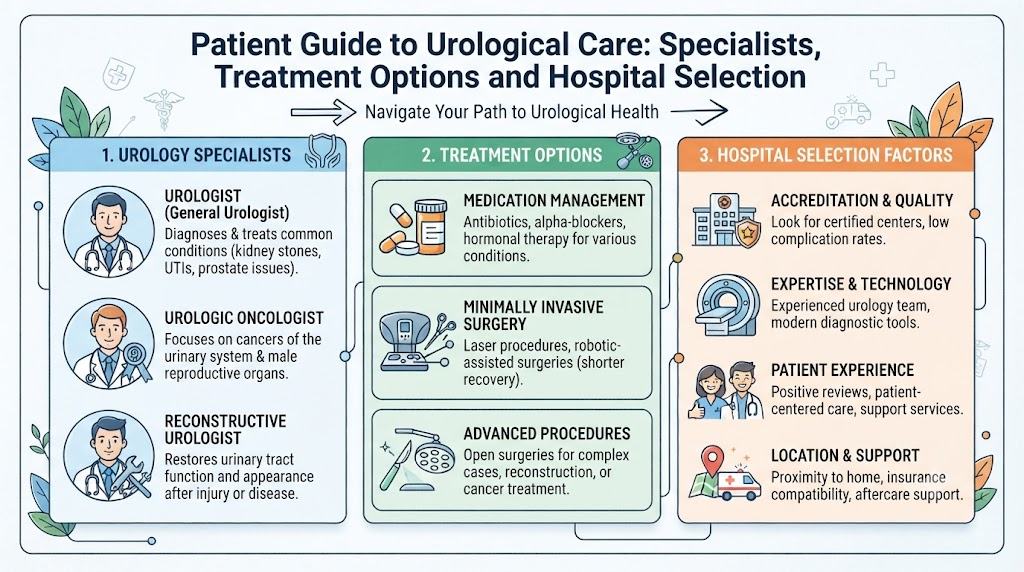
Managing urological disorders involves a wide spectrum of therapeutic strategies tailored to the individual’s diagnosis, overall health status, and personal treatment goals. Comprehensive Urology Treatment plans may incorporate lifestyle modifications, active surveillance, pharmacological interventions, or surgical procedures.
| Treatment Modality | Primary Application | Potential Benefits | Important Considerations |
| Conservative Management & Observation | Asymptomatic conditions, slow-growing findings, mild symptoms | Avoids procedural risks; allows close monitoring of stability | Requires consistent adherence to scheduled follow-up visits and imaging. |
| Pharmacological & Minimally Invasive Care | Infections, symptomatic BPH, overactive bladder symptoms | Alleviates discomfort effectively without major surgery | May require long-term adherence; efficacy varies by patient response. |
| Surgical & Robotic Procedures | Complex stone burdens, localized tumors, severe obstructions | Provides definitive anatomical correction or tissue removal | Involves recovery periods, post-operative care, and inherent surgical risks. |
Role of Urology Specialists in Diagnosis and Treatment
Urologists undergo rigorous medical and surgical training focused exclusively on the urinary system and male reproductive organs. Urology Specialists guide patients through every stage of care, from initial diagnostic workups to complex surgical interventions and long-term recovery. Their expertise enables them to differentiate between benign and malignant conditions, design personalized therapeutic regimens, perform intricate minimally invasive operations, and collaborate closely with oncologists, nephrologists, and primary care physicians to ensure coordinated, comprehensive patient management.
Kidney Stone Treatment
Kidney stones develop when minerals and salts crystallize inside the kidneys, potentially causing intense pain, urinary blockage, or infection as they migrate through the urinary tract. Management depends on stone size, chemical composition, and location.
Modern Kidney Stone Treatment ranges from increased fluid intake and medical expulsion therapy for small stones to advanced procedural interventions. When stones are too large to pass spontaneously, specialists utilize extracorporeal shock wave lithotripsy (ESWL) to fragment stones using acoustic waves, ureteroscopy with laser lithotripsy to access and break stones via the urinary tract, or percutaneous nephrolithotomy (PCNL) for large, complex renal calculi. Dietary modifications and hydration strategies are emphasized post-treatment to minimize recurrence.
Prostate Cancer Treatment
Prostate cancer represents one of the most frequently diagnosed malignancies in men. Because tumor aggression and patient health profiles vary extensively, management strategies are highly individualized following staging and risk stratification.
For localized, low-risk tumors, active surveillance may be recommended to monitor the condition safely without immediate intervention. When therapeutic intervention is indicated, options for Prostate Cancer Treatment include radical prostatectomy, external beam radiation therapy, brachytherapy, and systemic approaches such as hormone therapy. Specialists work closely with patients to weigh oncological control against the preservation of urinary continence and sexual function.
Enlarged Prostate Treatment
Benign prostatic hyperplasia (BPH) involves the non-malignant enlargement of the prostate gland, which can compress the urethra and cause bothersome lower urinary tract symptoms, including weak urinary streams, frequency, and straining.
Initial management often involves lifestyle adjustments and pharmacotherapy to relax prostate smooth muscle or reduce glandular volume. When medications are insufficient, various minimally invasive treatments or surgical options, such as transurethral resection of the prostate (TURP) or laser enucleation, are available to restore normal urinary flow and relieve obstruction.
Urinary Tract Infection Treatment
Urinary tract infections (UTIs) occur when pathogenic bacteria enter and multiply within the urinary tract. Proper diagnosis is vital to ensure appropriate antimicrobial selection and prevent ascending infections that could affect the kidneys.
Effective management relies on urinalysis, culture testing, and targeted antibiotic therapy prescribed by a healthcare professional. For patients experiencing frequent recurrences, urologists evaluate potential underlying anatomical or functional contributors to formulate long-term preventive strategies and minimize recurrent infection risks.
Bladder Cancer Treatment
Bladder cancer originates in the urothelial lining of the bladder. Early identification through diagnostic evaluation, such as cystoscopy and biopsy, significantly influences management success.
Therapeutic strategies depend heavily on whether the disease is non-muscle-invasive or muscle-invasive. Initial management often involves transurethral resection of bladder tumor (TURBT), sometimes supplemented by intravesical therapies. Advanced stages may require radical cystectomy, urinary diversion, and coordinated systemic chemotherapy or immunotherapy regimens managed by a multidisciplinary oncology team.
Robotic Urology Surgery
Technological advancements have integrated robotic-assisted platforms into contemporary surgical practice. Robotic Urology Surgery employs computer-enhanced instrumentation managed by a trained surgeon, offering high-definition 3D visualization and precise instrument articulation during complex operations.
Frequently utilized in procedures such as radical prostatectomies and partial nephrectomies, robotic approaches offer potential advantages such as smaller incisions, reduced blood loss, and shorter hospital stays. Nonetheless, surgical success depends fundamentally on the specialized expertise and technical proficiency of the operating surgeon within an advanced medical facility.
Choosing the Right Urology Hospital
Selecting a healthcare facility is a pivotal decision for patients facing significant urological conditions. When evaluating options among various Urology Hospitals, individuals should consider several practical criteria:
- Specialist Credentials: Availability of board-certified urologists and fellowship-trained surgical experts.
- Diagnostic Capabilities: Access to advanced imaging technology, pathology services, and specialized urodynamic testing labs.
- Surgical Infrastructure: Modern operating theaters equipped for minimally invasive and robotic-assisted procedures.
- Quality and Safety Standards: Adherence to strict infection-control protocols, institutional accreditations, and quality benchmarks.
- Patient Support Services: Dedicated nursing staff, comprehensive patient education, and structured follow-up care pathways.
Finding a Urologist Near You
Identifying a qualified specialist involves researching healthcare professionals whose clinical focus aligns with specific medical requirements. When searching for a Urologist Near Me, patients can consult primary care physicians for recommendations, verify board certifications and hospital affiliations, and review insurance network participation. Scheduling an initial consultation helps patients evaluate the physician’s communication style and establish a collaborative care relationship.
Questions to Ask a Urologist
Preparing thoughtful questions for a medical consultation enables patients to engage actively in their healthcare decisions. Useful inquiries include:
- What is the precise diagnosis, and what are the underlying causes of this condition?
- What additional diagnostic evaluations are needed before determining a treatment plan?
- What therapeutic options are available, encompassing both non-surgical and surgical approaches?
- What are the expected benefits, potential risks, and recovery timelines for each option?
- How might this treatment impact my daily routine, organ function, and long-term health?
- What lifestyle modifications or follow-up monitoring will be required?
- Is a second opinion advisable given this specific diagnosis?
When to Seek Medical Attention
Certain urological symptoms demand prompt or urgent medical evaluation. Patients should seek immediate medical care if they experience:
- Sudden, complete inability to urinate (acute urinary retention)
- Severe, unrelenting flank, abdominal, or pelvic pain
- Significant or persistent gross hematuria with blood clots
- High fever accompanied by chills, severe back pain, and urinary symptoms
- Rapid worsening of chronic urological discomfort
Timely professional intervention in these situations prevents acute complications and ensures appropriate emergency management.
Practical Tips for Preparing for a Urology Consultation
Arriving well-prepared for a urology appointment optimizes the consultation experience. Patients can follow these practical steps:
- Compile a detailed written list of all current symptoms, noting onset dates and frequency.
- Bring a complete list of all prescribed medications, over-the-counter drugs, and supplements.
- Gather and bring physical or digital copies of previous medical records, lab reports, and imaging scans.
- Write down prioritized questions to discuss with the specialist during the visit.
- Be ready to share relevant personal and family medical history transparently.
Common Challenges in Urological Care
Patients navigating urological conditions often encounter various hurdles, including delayed diagnoses due to overlapping symptoms, anxiety surrounding potential surgical interventions, and the challenge of interpreting complex medical terminology. Additionally, coordinating care across diagnostic and therapeutic providers requires organization. Recognizing these common obstacles encourages patients to seek structured guidance, utilize reliable educational resources, and ask informed questions throughout their medical journey.
Best Practices for Patients
Adopting proactive healthcare habits supports long-term urological wellness and optimizes clinical outcomes. Effective patient best practices include:
- Never ignoring persistent, recurring, or worsening urinary symptoms.
- Seeking professional medical evaluation promptly rather than relying solely on self-management strategies.
- Maintaining organized personal health records, including diagnostic reports and medication logs.
- Following prescribed treatment and medication regimens strictly.
- Participating actively in shared decision-making by communicating personal health goals with specialists.
- Attending all scheduled follow-up appointments to monitor recovery and manage chronic conditions effectively.
- Seeking a second opinion when facing major surgical interventions.
Frequently Asked Questions
What conditions do urology specialists treat?
Urologists diagnose and manage conditions affecting the urinary tract across all genders—including the kidneys, ureters, bladder, and urethra—as well as the male reproductive system, covering issues such as kidney stones, infections, incontinence, and urological cancers.
How do I know if I need to see a urologist?
Primary care physicians frequently refer patients to a urologist when encountering persistent symptoms like blood in the urine, recurrent urinary tract infections, severe voiding dysfunction, abnormal prostate screening results, or suspected kidney stones.
Is robotic surgery used for all urological procedures?
No. Robotic-assisted surgery is primarily selected for complex procedures like radical prostatectomies and partial nephrectomies where precision in confined anatomical spaces is advantageous. Many conditions are effectively managed through medical therapy or standard endoscopic techniques.
What should I expect during my first urological examination?
The initial appointment typically focuses on a detailed review of your medical history, current symptoms, and previous test reports. Depending on your condition, the specialist may perform a physical assessment and recommend specific diagnostic investigations such as urine tests or imaging.
How can I help prevent kidney stone recurrence?
Staying well-hydrated by maintaining high daily fluid intake helps dilute urine and reduces mineral crystallization. Patients with a history of stones benefit from specialist metabolic evaluations and personalized dietary guidance.
Are all enlarged prostates cancerous?
No. Benign prostatic hyperplasia (BPH) is a non-cancerous enlargement of the prostate gland that occurs commonly with age. It is entirely distinct from prostate cancer, though both can cause overlapping lower urinary tract symptoms.
What is the typical recovery timeline following urological surgery?
Recovery varies widely depending on the specific procedure performed, ranging from a few days for minor endoscopic interventions to several weeks for major open or robotic surgeries. Specialists provide customized post-operative instructions covering activity levels and follow-up care.
Why are regular follow-up appointments necessary in urological care?
Follow-up visits allow healthcare professionals to assess healing, evaluate treatment efficacy, manage chronic urological conditions, and monitor for any potential recurrence of issues like kidney stones or malignancies.
Conclusion
Understanding urological health, treatment alternatives, and facility capabilities empowers patients to navigate their healthcare journey with clarity. From addressing common issues like urinary infections and kidney stones to managing complex conditions such as prostate and bladder disorders, specialist care plays an essential role in preserving health. Utilizing reliable educational resources such as UrologyHospitals.com helps individuals connect with qualified specialists and make informed healthcare decisions. Anyone experiencing persistent, severe, or concerning urological symptoms should consult a qualified healthcare professional for a comprehensive evaluation and individualized guidance.
