
Introduction
Stepping into Bihar feels like walking through the living archives of human history. Long before modern metropolises rose, this fertile land along the Gangetic plains served as the cradle of powerful empires, groundbreaking spiritual philosophies, and some of the world’s earliest centers of higher learning. For anyone curious about what makes this region tick—beyond the surface-level travel brochures—platforms like MeraApnaBihar.com offer a genuine window into the state’s daily life, traditions, and ongoing developments. Whether you are piecing together an itinerary or simply trying to understand the local ethos, looking at Bihar through a grounded, human lens changes everything.
Getting to Know MeraApnaBihar.com
Navigating regional information online can often feel overwhelming, with scattered facts hiding behind clickbait or heavy advertising. MeraApnaBihar.com takes a refreshingly straightforward approach by acting as a dedicated information hub for all things Bihar. Rather than trying to sell you commercial tour packages, the website focuses on organizing practical details for everyday readers. You will find clean categories dedicated to everything from regional news updates and government career notifications to deep dives into ancient temple architecture and local culinary traditions. It serves as a digital neighborhood guide, helping students, travelers, and locals find reliable, structured information without wading through corporate fluff.
The Heartbeat of Bihar: History and Identity
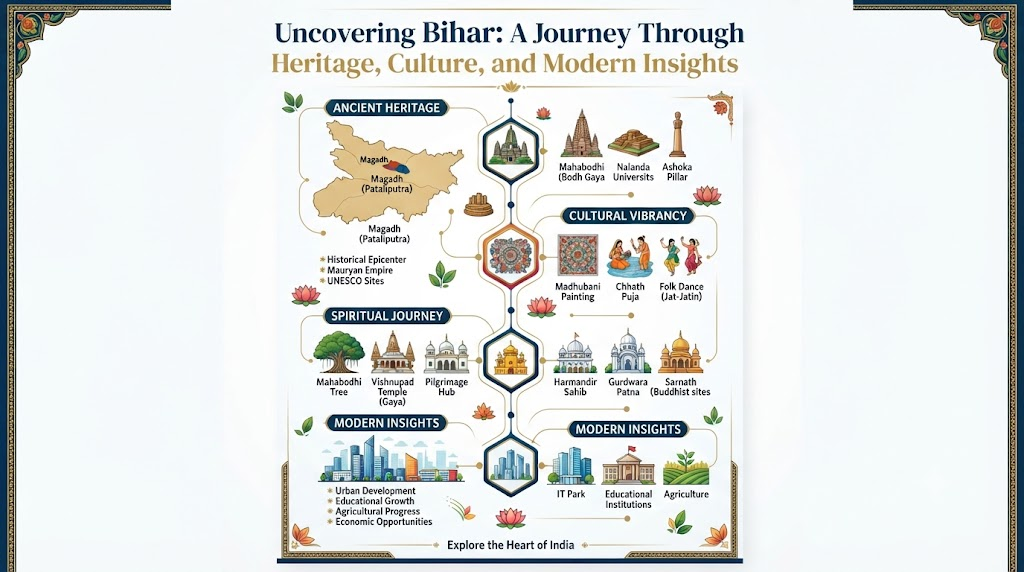
To truly grasp what makes Bihar unique, you have to look past modern urban sprawl and examine its deep historical roots. This is where monumental figures like Buddha and Mahavira walked, preached, and laid down spiritual foundations that shaped global thought. It is the soil that nurtured the Mauryan Empire and built the brick towers of ancient Nalanda and Vikramshila, where thousands of students once gathered to study medicine, astronomy, and philosophy. Today, that ancient legacy blends seamlessly into a resilient rural culture. Life here moves to the rhythm of agricultural seasons, village markets, and multigenerational craft traditions. The state’s true identity isn’t locked away in glass museum cases; it lives on in the handmade pottery of roadside artisans, the complex patterns of Mithila wall paintings, and the communal warmth found in rural courtyards.
Exploring the Landscapes of Bihar Tourism
If you are packing your bags for a journey through the region, Bihar Tourism offers an itinerary that looks vastly different from a standard beach vacation or hill station retreat. It is an immersive dive into antiquity.
- Walking Through Ancient Ruins: Exploring the vast red-brick complexes of ancient university sites where philosophers debated centuries ago.
- Following the Spiritual Trail: Visiting the quiet, meditative spaces of Bodh Gaya, the thermal springs and hill paths of Rajgir, and the historic pillars of Vaishali.
- Immersing in Folk Art: Meeting local families in the Mithila belt who continue to paint intricate motifs using natural dyes and handmade paper.
- Finding Quiet Nature: Discovering peaceful riverside ghats, wildlife sanctuaries, and rural landscapes that offer a quiet escape from crowded city life.
Navigating Bihar Tourist Places and Places to Visit
Crafting a meaningful travel plan requires choosing destinations that resonate with your personal interests, whether that means quiet spiritual reflection or tracking down ancient architectural marvels.
Historical Landmarks
Sites like the excavated remains of Nalanda University allow visitors to trace the blueprint of ancient residential classrooms, prayer halls, and libraries that once attracted scholars from across Asia.
Spiritual Sanctuaries
Bodh Gaya remains a globally revered destination where travelers gather beneath the descendants of the original Bodhi Tree. Nearby, Rajgir provides a rugged landscape of hills and ancient stupas linked to early monastic life.
Traditional Craft Hubs
Exploring regional craft clusters reveals the immense skill behind local handlooms and indigenous art forms, offering a direct connection to the artists keeping these centuries-old practices alive.
A Practical Bihar Travel Guide for Your Next Trip
Venturing across the region is deeply rewarding, but because attractions are spread across different districts, thoughtful planning makes all the difference.
| Planning Factor | What to Check | Why It Matters |
| Ideal Season | Early winter months (October through March) | Milder temperatures make walking through open-air historical ruins comfortable. |
| Transit Options | Train connectivity, regional buses, and private hires | Distances between rural heritage sites require clear logistics to avoid lost time. |
| Lodging Choices | Availability in key hubs like Patna or Bodh Gaya | Advance bookings are crucial during major regional festivals and peak pilgrim seasons. |
Things to Do Beyond Sightseeing
If you want to experience the region like a local rather than a rushed tourist, try mixing a few immersive activities into your schedule.
- Spend an afternoon wandering through a bustling rural haat (weekly market) to observe local trade and pick up regional snacks.
- Sit down for a quiet evening by the Ganges to watch the rhythm of local life along the riverbanks.
- Try your hand at a local pottery or painting workshop if you visit traditional artisan villages.
- Sample street-side culinary staples prepared fresh by local vendors.
- Attend a morning meditation session at one of the international monasteries in Bodh Gaya.
Unpacking Bihar Culture and Heritage
The cultural fabric of the state is woven tightly into its daily practices, seasonal folklore, and visual arts. Bihar Culture and Heritage is most famously expressed through Madhubani (Mithila) painting, a domestic art form traditionally passed down from mothers to daughters on mud walls, now recognized worldwide. Folk music also plays an essential role in daily existence. Songs like Sohar celebrate births, while seasonal melodies accompany harvests and weddings. This living heritage means that wherever you travel—from urban neighborhoods to quiet farming villages—you are surrounded by stories, customs, and artistic expressions that have survived centuries of political and social change.
Savoring the Famous Food of Bihar
Traditional cooking here is deeply comforting, relying on wholesome grains, fresh seasonal produce, and spice profiles designed to handle regional weather shifts.
- Litti Chokha: The undisputed king of local cuisine—whole wheat dough balls stuffed with spiced roasted gram flour (sattu), baked over open coals, and served with smoky mashed vegetables.
- Thekua: A dense, sweet, fried cookie made from wheat flour, jaggery, and ghee, traditionally baked in massive batches during major family and community festivals.
- Khaja: A delightfully crispy, multi-layered pastry drenched in sugar syrup, famous for its melt-in-the-mouth texture.
- Sattu Sharbat: A savory, protein-rich chilled drink made from roasted gram flour, lemon juice, roasted cumin, and black salt, perfect for hot afternoons.
Celebrating the Festivals of Bihar
Festivals here are rarely quiet affairs; they are massive, community-driven events rooted in agricultural cycles and deep spiritual devotion.
- Chhath Puja: Easily the most emotionally significant festival in the state, where families gather by rivers at sunrise and sunset to offer thanks to the Sun God.
- Tila Sankranti: Marking the end of winter with feasts centered around sesame sweets, flattened rice, and jaggery.
- Sama Chakeva: A folk festival celebrating the love between brothers and sisters through traditional clay figures and evening songs.
Practical Tips for Your Journey
- Build Buffer Time Into Your Itinerary: Travel times between rural historical sites can often take longer than expected due to local road conditions.
- Dress Respectfully: Opt for modest clothing when visiting active temples, monasteries, and conservative rural villages.
- Carry Cash: While digital payments are growing, smaller vendors and rural markets still rely heavily on cash transactions.
- Verify Opening Hours: Always double-check museum timings and site access before heading out for the day.
Common Travel and Research Mistakes
- Cramming Too Much Into One Day: Trying to visit multiple distant districts in a single afternoon usually results in exhaustion rather than enjoyment.
- Ignoring Seasonal Realities: Underestimating the intensity of the summer heat can make exploring uncovered brick ruins miserable.
- Depending Solely on Outdated Guides: Assuming that local transport routes or attraction schedules never change.
Who Can Benefit From This Information?
Tourists and Travelers
Visitors looking to step off the beaten tourist track can use structured insights to build comfortable, realistic itineraries.
Students
Learners researching Indian history, sociology, or geography will find valuable context on the region’s ancient roots and modern evolution.
Families
Family groups can easily locate welcoming travel hubs, educational landmarks, and child-friendly cultural experiences.
History and Culture Enthusiasts
Hobbyists and researchers interested in archaeology, folklore, and indigenous art can explore rich background details.
Local Residents
Inhabitants of the state can discover well-organized guides celebrating their own regional heritage, cuisine, and community updates.
Job Seekers
Candidates tracking local employment can find straightforward guidance on official recruitment notices, eligibility rules, and exam prep.
Step-by-Step Guide to Planning Your Trip
- Clarify Your Goal: Decide whether your primary focus is historical travel, culinary exploration, cultural research, or career tracking.
- Browse Reliable Hubs: Use platforms like MeraApnaBihar.com to read up on specific regional categories and background guides.
- Cross-Check Logistics: Verify current transport schedules, accommodation availability, and seasonal weather patterns.
- Draft a Realistic Itinerary: Group nearby attractions together to minimize long, fatiguing road journeys.
- Prepare Essentials: Pack appropriate clothing, comfortable walking shoes, and necessary health supplies.
- Engage With Respect: Learn a few basic local phrases and familiarize yourself with regional customs before you arrive.
- Stay Flexible: Leave room in your schedule for unexpected local discoveries, village fairs, or friendly conversations.
- Reflect and Share: Take time to process your experiences and share helpful tips with fellow travelers.
Common Challenges You Might Face
- Scattered Information: Piecing together details about off-the-beaten-path historical sites can sometimes require consulting multiple local sources.
- Navigating Rural Transit: Figuring out local bus schedules outside major cities requires patience and advance inquiry.
- Coping With Weather Shifts: Managing travel plans around heavy monsoon rains or peak summer temperatures.
Best Practices for a Great Experience
- Consult Trustworthy Platforms: Pair independent travel blogs with official tourism boards to keep your facts straight.
- Support Local Artisans: Buy direct from village craftspeople whenever possible to support local economies.
- Be Mindful of Heritage Sites: Treat ancient monuments and natural water bodies with care so they remain preserved for future generations.
Frequently Asked Questions
What kind of content can I find on MeraApnaBihar.com?
The site offers structured articles covering regional tourism, local food, festivals, cultural heritage, news updates, and job notifications.
Is Bihar a good destination for history lovers?
Absolutely. It holds some of the world’s most significant ancient Buddhist sites, monastic ruins, and Mauryan-era artifacts.
When is the most comfortable time of year to visit?
The cooler winter months from October to March offer the most pleasant weather for outdoor exploration.
What are the must-try dishes in the region?
Litti Chokha, Thekua, Khaja, and Sattu Sharbat are essential culinary highlights.
How is Chhath Puja typically observed?
It involves rigorous multi-day fasting, ritual cleanliness, and offering prayers to the sun at riverbanks.
Where is Madhubani art traditionally practiced?
It originates primarily from the Mithila region in northern Bihar, historically painted on mud walls during weddings and festivals.
Are professional guides available at major monuments?
Yes, authorized guides can usually be found at major tourist hubs like Nalanda and Bodh Gaya.
What is the best way to travel between districts?
A combination of the extensive rail network and pre-booked local cabs offers the most reliable transit.
Does the platform cover government job openings?
Yes, it features dedicated sections to help candidates track recruitment notices and exam guidelines.
Why are places like Vaishali and Rajgir historically important?
They played pivotal roles in early republican governance, spiritual teachings, and the development of Buddhism and Jainism.
Conclusion
Immersing yourself in Bihar’s story means opening up to a world of deep historical roots, vibrant festivals, and unmatched culinary traditions. Whether you are walking through ancient brick courtyards, sitting by a river during Chhath Puja, or simply reading up on regional updates, having access to honest, well-organized information makes all the difference. Platforms like MeraApnaBihar.com help bridge the gap between curious readers and the rich reality of the state. By approaching your research and travels with an open mind and practical preparation, you will discover a side of Bihar that stays with you long after you leave.
