Introduction
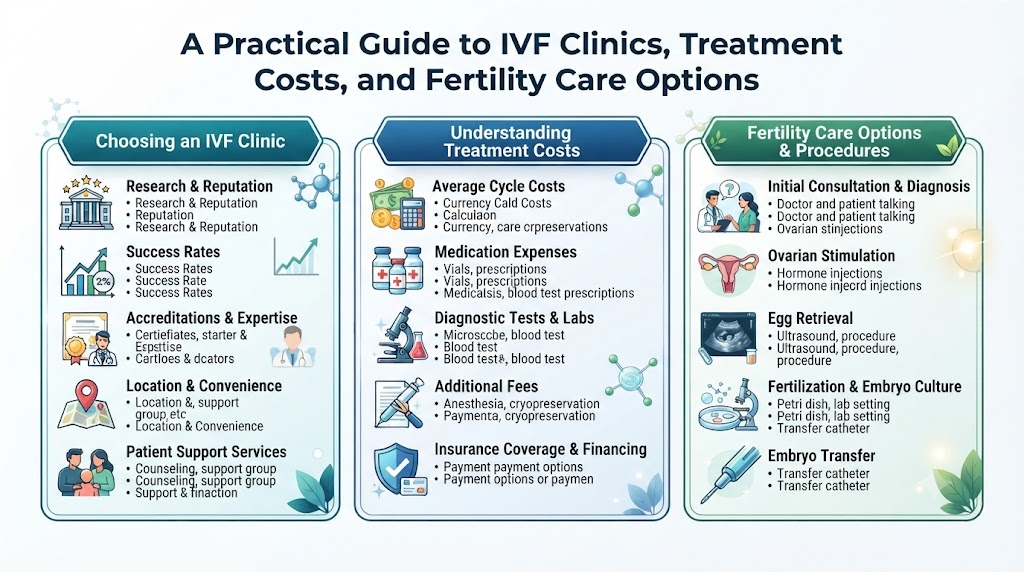
Starting a family can sometimes take an unexpected path. For individuals and couples exploring reproductive medicine, trying to make sense of medical procedures, clinic options, and financial details can feel overwhelming all at once. Taking the time to understand the fundamentals of IVF treatment, looking closely at realistic IVF success rates, and figuring out the full IVF treatment cost are essential steps toward making confident choices. Informational resources like IVFHospitalsNow help patients research various IVF clinics, learn how to compare fertility clinics, and explore a wide range of fertility treatment options before ever stepping foot in a doctor’s office.
What Is In Vitro Fertilization (IVF)?
In vitro fertilization, universally known as IVF, is a specialized medical process used to address fertility challenges or prevent genetic conditions. In simple terms, the process involves collecting mature eggs from the ovaries and combining them with sperm in a specialized laboratory dish. Once fertilization takes place and embryos begin to develop, a specialist places one or more embryos directly into the uterus with the hope of achieving a healthy pregnancy. While IVF is one of the most prominent forms of assisted reproduction, it is not a one-size-fits-all remedy. Every treatment plan is uniquely tailored to a patient’s age, medical history, specific diagnosis, and prior healthcare experiences. A thorough evaluation with a qualified reproductive endocrinologist is always the best way to determine if IVF is the right path forward.
Walking Through the IVF Journey
Understanding how a treatment cycle unfolds can take away much of the uncertainty. While protocols vary, a standard journey typically includes several key stages:
Initial Fertility Assessment
Before any treatment starts, specialists review medical histories, conduct hormone blood tests, perform pelvic ultrasounds, and analyze sperm samples. These diagnostic evaluations help pinpoint underlying factors and shape a personalized care plan.
Ovarian Stimulation
Patients often take prescribed hormone medications designed to encourage the ovaries to mature multiple eggs during a single cycle, rather than the single egg naturally released each month.
Egg Retrieval
Once the follicles reach the right size, a minor outpatient procedure called egg retrieval is performed under mild sedation. Using ultrasound guidance, a specialist gently collects the fluid and eggs.
Fertilization and Laboratory Development
The retrieved eggs are combined with prepared sperm in an advanced embryology lab. Specialists monitor the resulting embryos over the next several days to see how they grow and divide.
Embryo Transfer
During this brief procedure, a thin, flexible tube places a selected embryo into the uterine cavity. It is usually quick and performed without anesthesia.
Pregnancy Testing
About ten to fourteen days after the transfer, a simple blood test checks hormone levels to confirm if pregnancy has been successfully established.
Breaking Down IVF Treatment Cost
Financial planning plays a huge role in reproductive healthcare. When looking at the overall IVF treatment cost, it helps to understand what is typically bundled into standard fees versus what might be billed separately. A comprehensive financial overview usually includes:
- Initial Consultations: Meetings with your specialist to discuss test results and map out a strategy.
- Diagnostic Workups: Blood panels and imaging required prior to starting medications.
- Pharmaceuticals: The cost of hormone injections and other required medications.
- Cycle Monitoring: The frequent ultrasounds and blood tests needed to track your body’s response.
- Retrieval Surgery: Operating room fees, anesthesia, and the clinical team’s time.
- Lab Services: Fertilization, culture media, and continuous embryo monitoring by embryologists.
- Transfer Procedures: The clinical fees associated with placing the embryo.
- Post-Procedure Follow-Up: Early monitoring visits and pregnancy confirmation tests.
Because every patient reacts differently to medications, unexpected adjustments can occasionally influence the final tally. Asking clinics for an itemized estimate helps prevent surprises.
Key Factors That Influence Total Treatment Expenses
No two fertility budgets look identical. Several variables can cause the final cost of care to shift:
- Age and Medical Background: Older patients or those with complex diagnoses may require higher medication doses or specialized lab techniques.
- Number of Cycles: Because success is rarely guaranteed on the first attempt, some families budget for multiple cycles or frozen embryo transfers.
- Advanced Laboratory Procedures: Additional services, such as genetic testing or specialized sperm preparation, add to the baseline investment.
- Clinic Location: Regional economic differences and operating overhead affect clinic pricing structures.
- Medication Responses: Varying bodily reactions to hormones can alter the amount of medication needed.
- Cryopreservation: Storing remaining viable embryos for future use incurs ongoing annual fees.
Interpreting IVF Success Rates
When patients look at IVF success rates, it is easy to fixate on a single percentage. However, statistics are deeply personal and depend heavily on individual circumstances. Outcomes are heavily influenced by the patient’s age, ovarian health, sperm quality, and the expertise of the laboratory team. Furthermore, success rates should always be examined with context—such as whether the data reflects live births per retrieval cycle or per transfer, and whether fresh or frozen embryos were used. Asking clinics how they calculate their metrics ensures you are looking at an accurate picture.
How to Compare Fertility Clinics
Choosing where to receive treatment is one of the most important decisions you will make. When patients compare fertility clinics, they should look past surface-level advertisements and focus on core operational standards:
- Specialist Credentials: The board certifications and background of the medical team.
- Laboratory Quality: The air filtration systems, incubator technology, and experience of the embryology staff.
- Financial Transparency: Clear, straightforward communication regarding fees, success reporting, and potential hidden costs.
- Patient Communication: Responsive nursing staff and supportive coordinators who make you feel heard.
- Service Availability: Whether the center offers the specific technologies or donor services required for your care.
What to Look for When Choosing IVF Clinics
Evaluating individual IVF clinics comes down to finding a balance between advanced medical technology and compassionate care. Look for facilities that hold recognized accreditations and take the time to answer your questions thoroughly without rushing you into a decision.
Weighing the Options of IVF Abroad
For those seeking alternative pricing structures or specialized care, traveling for IVF abroad has become increasingly common. However, taking care across borders requires careful logistical planning:
- Regulatory Oversight: Understanding local healthcare laws, patient protections, and clinic standards in your destination country.
- Travel Logistics: Managing extended stays, flights, visas, and local transport.
- Language Clarity: Ensuring you can communicate complex medical details directly with your doctor without translation barriers.
- Continuity of Care: Coordinating pre-testing and post-procedure monitoring with a local physician back home.
- Total Financial Picture: Factoring in accommodation, meals, insurance, and currency exchange rates alongside medical fees.
Understanding IVF Cost by Country
The prevailing IVF cost by country can vary dramatically due to local labor expenses, pharmaceutical pricing, government healthcare subsidies, and operating overhead. While international options may offer lower sticker prices, patients must always verify whether those numbers include necessary medications, monitoring, and lab work.
Egg Freezing and Fertility Preservation
For individuals who want to safeguard their reproductive future for personal or medical reasons, egg freezing offers a viable option. The process involves stimulating the ovaries, retrieving mature oocytes, and cryopreserving them via advanced vitrification. While freezing eggs provides wonderful flexibility, the likelihood of future success depends heavily on the age at which the eggs were frozen and the total number of healthy cells successfully stored.
Understanding ICSI Treatment
Intracytoplasmic sperm injection, commonly known as ICSI treatment, is an advanced technique often paired with standard IVF. While conventional IVF places eggs and sperm together in a dish to let nature take its course, ICSI involves a skilled embryologist selecting a single healthy sperm and gently injecting it straight into the center of the egg. This technique is frequently recommended when addressing male factor infertility or previous fertilization hurdles.
Exploring Different Fertility Treatment Options
Assisted reproductive technology offers a wide spectrum of care. Reviewing various fertility treatment options reminds patients that IVF is only one tool among many. Other pathways might include ovulation-stimulating medications, intrauterine insemination (IUI), minor surgical procedures, or donor-assisted reproduction. A specialist will help determine which approach makes the most sense for your health profile.
Preparing for Your First Consultation
Walking into your first appointment feeling prepared makes all the difference. Gather your past medical records, surgical histories, and a list of any current medications. Writing down your questions ahead of time ensures you leave the office with clear answers regarding timelines, costs, and medical recommendations.
Questions to Ask Before Choosing a Fertility Clinic
Before committing to a care provider, consider asking these practical questions:
- Based on my diagnostic results, what specific treatment approach do you recommend?
- Can you provide a detailed, itemized breakdown of all anticipated expenses, including medications and lab work?
- How do you calculate your clinic’s success rates for patients sharing my age and medical background?
- Will my primary specialist perform my procedures, or will it be whichever physician is on duty?
- What diagnostic and laboratory services do you maintain directly on-site?
- What is your protocol for after-hours questions or urgent clinical concerns?
- How are embryos safely stored, and what are the ongoing annual fees?
- What emotional support or counseling resources do you provide during treatment?
Common Mistakes Patients Make When Researching Care
Navigating reproductive medicine is challenging, and certain missteps happen frequently. Keeping these in mind can help you steer clear:
- Focusing Solely on Price: Choosing a clinic purely based on the lowest advertised rate can lead to surprise bills if essential services are excluded.
- Misinterpreting Success Rates: Comparing clinic statistics without factoring in patient age or medical complexity can be misleading.
- Underestimating Logistics: Forgetting to account for travel distance, clinic hours, and frequent morning monitoring can create daily stress.
- Skipping Second Opinions: Accepting a single recommendation without exploring alternative perspectives when complex diagnoses are involved.
- Neglecting Emotional Health: Underestimating the psychological weight of the journey and forgetting to lean on support networks.
Who Can Benefit From Fertility Information Platforms?
Couples Exploring IVF
Partners taking their first steps into reproductive medicine can use structured guides to understand complex terminology and prepare for medical meetings.
People Comparing Fertility Clinics
Individuals evaluating different facilities can review essential criteria like lab standards and reporting transparency to narrow down their search.
Patients Researching Treatment Costs
Those working on financial planning can examine itemized cost categories to see what drives expenses up or down.
People Considering IVF Abroad
Individuals looking into international medical travel can review the logistical, legal, and financial factors that deserve attention.
People Exploring Fertility Preservation
Readers interested in elective egg freezing can learn about the procedure, cryopreservation timelines, and storage considerations.
People Learning About Different Fertility Treatments
Anyone seeking foundational education can explore a broad range of reproductive technologies before speaking with a clinician.
Step-by-Step Guide to Researching Fertility Treatment
- Understand Your Fertility Concerns: Start by gathering your initial diagnostic insights and health history.
- Learn About Available Treatment Options: Familiarize yourself with everything from basic ovulation medications to advanced ART procedures.
- Research Suitable Fertility Clinics: Investigate regional and international centers, focusing on laboratory quality and specialist credentials.
- Compare Treatment Costs: Request comprehensive fee schedules and itemized estimates from prospective clinics.
- Review IVF Success-Rate Information: Evaluate outcome metrics with proper context regarding age and diagnosis.
- Check Clinic and Laboratory Details: Verify facility accreditations and the experience level of the embryology team.
- Ask Questions During Your Consultation: Use your prepared list of questions to clear up uncertainties with your doctor.
- Make a Decision With Qualified Medical Guidance: Finalize your care plan in close partnership with a trusted specialist.
Fertility Treatment Options Overview
| Fertility Treatment Option | General Purpose | Important Consideration |
| Fertility Medicines | Stimulates ovulation and regulates hormonal cycles | Requires close ultrasound monitoring to manage multiple-birth risks |
| Intrauterine Insemination (IUI) | Places washed sperm directly into the uterus | Less invasive than IVF; depends heavily on tubal openness and sperm health |
| In Vitro Fertilization (IVF) | Combines eggs and sperm in a lab for uterine transfer | Involves multiple clinical steps and customized hormone protocols |
| ICSI Treatment | Injects a single sperm directly into an egg | Frequently used for severe male factor infertility or previous low fertilization |
| Egg Freezing | Preserves unfertilized oocytes for future family planning | Success depends significantly on the patient’s age at freezing |
| Embryo Freezing | Cryopreserves created embryos for subsequent transfer cycles | Allows for future sibling attempts or delayed transfers |
| Donor-Assisted Treatment | Utilizes donor eggs, sperm, or embryos | Involves distinct legal, ethical, and counseling considerations |
IVF Clinic Comparison Matrix
| Clinic Comparison Factor | What to Check | Why It Matters |
| Treatment Cost | Itemized fee schedules and package inclusions | Helps prevent unexpected financial strain during active cycles |
| Success-Rate Reporting | Data broken down by age groups and diagnoses | Offers a realistic window into clinical outcomes |
| Specialist Expertise | Board certifications and reproductive endocrinology experience | Ensures your care is guided by seasoned medical professionals |
| Laboratory Facilities | Air quality systems, incubator technology, and staff credentials | Plays a direct role in successful embryo growth |
| Treatment Options | Availability of advanced reproductive technologies | Ensures your specific medical needs can be handled under one roof |
| Follow-Up Care | Post-transfer monitoring and early pregnancy support | Guarantees continuous medical supervision through early gestation |
| Location | Proximity to home or comfortable travel lodging | Minimizes travel fatigue during frequent morning monitoring visits |
| Additional Costs | Cryopreservation, storage fees, and medication expenses | Clarifies your long-term financial commitment |
Common Hurdles in Fertility Research
It is completely normal to feel overwhelmed by the sheer volume of information available online. Conflicting success statistics, unclear package pricing, and heavy medical terminology can make research difficult. Overcoming these hurdles relies on sticking to evidence-based educational resources, consulting reputable sources, and talking things through with a licensed medical professional instead of relying entirely on internet forums.
Best Practices for Clinic Research
When researching care providers, approach the task methodically. Look beyond initial price tags to evaluate the overall standard of care. Check laboratory accreditations, test how quickly the clinic staff responds to inquiries, and ensure that any recommended treatment plan is customized to your unique health profile rather than a generic template.
Evaluating Online Health Information Responsibly
Evaluating digital health content takes a careful eye. Always check the credibility of the publishing source, ensure that the material reflects current medical standards, and remain cautious of any platform promising guaranteed outcomes. Educational articles should empower your conversations with doctors, never replace them.
Frequently Asked Questions
1. What factors affect IVF treatment cost?
Total expenses are shaped by your geographic location, required medication doses, diagnostic testing, specialized laboratory work, and the number of cycles attempted.
2. How should patients interpret IVF success rates?
Success metrics should always be viewed through the lens of patient age, specific diagnoses, and whether data reflects fresh or frozen transfers rather than guaranteed outcomes.
3. What should people check when choosing IVF clinics?
Important elements include specialist credentials, embryology lab standards, pricing transparency, communication style, and patient support resources.
4. How can patients compare fertility clinics?
You can compare centers by reviewing verified success data, assessing laboratory technologies, requesting itemized price sheets, and scheduling initial consultations.
5. What should patients consider before choosing IVF abroad?
Key considerations include international medical standards, travel logistics, language barriers, continuity of care with local doctors, and total trip expenses.
6. Why can IVF cost by country vary?
National economic factors, healthcare regulations, local labor costs, and government subsidies all influence regional pricing for reproductive care.
7. What is egg freezing?
Egg freezing is a fertility preservation method where mature oocytes are retrieved, vitrified, and stored for potential future family-building.
8. What is ICSI treatment?
ICSI is a specialized lab procedure where an embryologist injects a single healthy sperm directly into an egg to assist with fertilization.
9. What fertility treatment options may be available?
Depending on diagnostic findings, choices range from ovulation-stimulating drugs and IUI to conventional IVF, ICSI, and donor-assisted care.
10. What questions should patients ask before starting IVF treatment?
Patients should ask about personalized success estimates, itemized cost breakdowns, medication protocols, lab standards, and expected treatment timelines.
Conclusion
Researching fertility care is a profoundly personal journey. Whether you are looking into basic diagnostic tests, checking out IVF treatment cost, evaluating IVF success rates, or learning how to compare fertility clinics, having access to reliable guidance makes all the difference. While procedures like egg freezing and ICSI treatment provide specialized options, and international considerations like IVF abroad or understanding the IVF cost by country offer a broader view, every family-building path is completely unique. Patients are always encouraged to use educational resources to inform themselves, carefully review their fertility treatment options, and discuss their personal health circumstances, risks, and goals with a qualified fertility specialist.
