Introduction
Weather is the biggest factor in every drone flight. A calm morning can quickly change into a dangerous situation. Dark clouds roll in, and strong winds start to blow. Many new pilots ignore these small changes. They think their drone can handle any climate. But bad weather ruins control and drains battery fast.
Knowing how weather affects drone flying keeps your equipment safe. It protects people on the ground too. Good pilots always check the sky before takeoff. Weather safety is a core skill for every operator. Smart choices prevent crashes and costly repairs. Always respect nature when you fly your UAV. This guide helps you understand different weather risks. You will learn when it is safe to fly.
How Weather Affects Drone Flying
Weather changes every part of how a drone works. Wind pushes the aircraft off its set course. Stability drops when gusts hit the frame from the side.
Flight time shrinks rapidly in cold or windy air. Motors must work harder to fight the elements. This drains the battery much faster than normal.
Camera quality also suffers in bad weather. Strong winds shake the gimbal and blur photos. Rain drops block the lens and ruin video footage.
Signal reliability drops when heavy clouds or rain block the radio link. Safe landing becomes difficult if visibility drops or wind speeds spike suddenly.
Effects of Different Weather Conditions
Strong Winds and Sudden Gusts
Wind is a major hazard for all pilots. Strong gusts push a drone off course instantly. Motors burn extra power to keep the drone steady. Landing becomes very hard in high winds.
Rain and Moisture
Rainwater can damage sensitive electronic parts inside. Water drops affect sensors and cause control loss. Most drones are not waterproof. Never assume your drone can fly in the rain.
Cold Weather and Batteries
Low temperatures hurt battery performance severely. Cold air shortens your total usable flight time. Always keep batteries warm before takeoff. Follow manufacturer rules for cold weather operations.
Hot Weather and Overheating
High heat causes motors and batteries to overheat. Long flights in hot sun create serious risks. Let your equipment cool down between sessions. Find shade during hot summer days.
Fog, Mist, and Poor Visibility
Fog and low clouds block your view of the drone. Visual line of sight is a legal requirement. Poor visibility makes safe navigation almost impossible. Wait for clear skies before flying.
Storms and Lightning
Thunderstorms and lightning create extreme danger. Heavy rain and sudden wind shifts will crash your drone. Never fly when a storm is near. Wait until all severe weather passes completely.
Wind Speed Versus Wind Gusts
Steady wind is a constant airflow in one direction. Gusts are sudden, fast bursts of wind. Average wind speed does not show the true danger.
A calm day can have dangerous sudden gusts. These bursts catch pilots by surprise. They flip or push drones into trees or buildings.
Safe wind limits depend on your specific drone model. Physical condition and pilot skill also matter. Always check manufacturer limits and leave a safety margin.
Weather and Battery Performance
Batteries react poorly to extreme temperatures. Cold weather reduces total capacity quickly. Hot weather causes internal heat spikes.
Strong winds force motors to draw extra power. Battery levels drop much faster than expected. Always monitor your screen closely during flight.
Keep enough power for a safe return journey. Land early when weather conditions start to worsen. Never push your battery to the absolute limit.
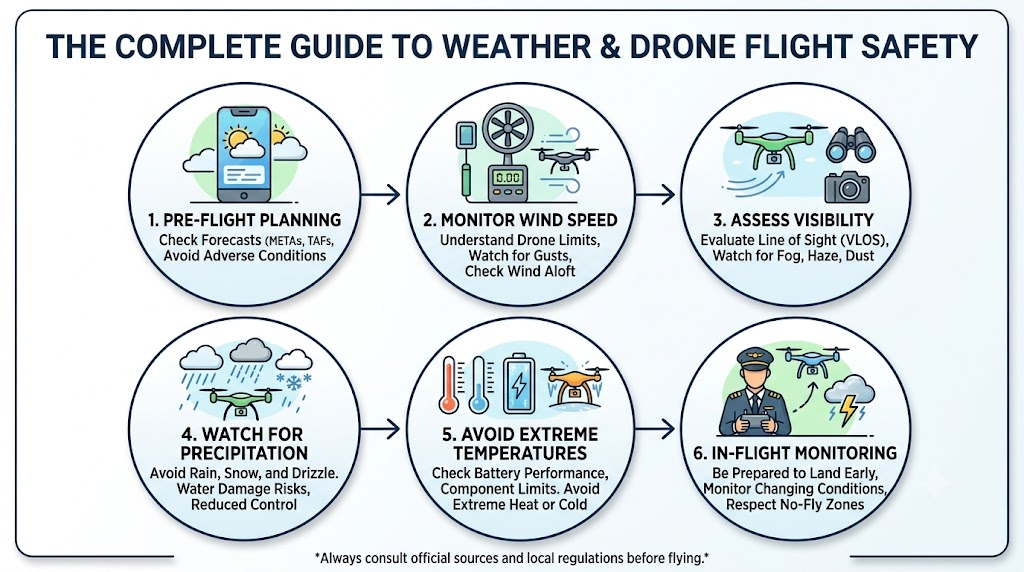
Practical Pre-Flight Weather Checklist
A good checklist prevents costly crashes. Run through these steps before every flight:
- Check the local forecast before leaving home.
- Review wind speed, gusts, rain chances, temperature, and visibility.
- Look for storm warnings and sudden weather changes.
- Read the drone manufacturer operating limits.
- Inspect the drone, propellers, and battery closely.
- Choose a safe takeoff and landing area.
- Plan a safe return route and backup landing option.
- Check local flight rules and required permissions.
When to Delay Your Drone Flight
Safety must always come first. Postpone your flight if you spot warning signs. High winds beyond your drone limits mean stay grounded.
Rain, lightning, and thunderstorms require immediate cancellation. Poor visibility or unsafe temperatures are also clear stop signs.
Protecting people and property matters more than getting a shot. No photo is worth destroying your drone. Wait for better conditions.
Weather Safety Tips for Different Users
Beginners should stick to calm, clear days. Practice in open fields without high wind. Master basics before handling mild breezes.
Aerial photographers must watch lighting and wind. Smooth wind ensures stable camera shots. Avoid turbulent spots near tall buildings.
Professional operators need strict site planning. Surveying, mapping, and farm inspections require detailed weather logs. Check site conditions constantly during commercial work.
Common Weather Mistakes to Avoid
Many pilots check only the average wind speed. They ignore sudden gusts. Always check peak gust forecasts.
Flying with a low battery in strong winds is dangerous. The drone cannot fight the headwind home. Always keep a high power reserve.
Assuming a drone handles light rain causes water damage. Keep your drone dry at all times.
Ignoring temperature limits ruins batteries. Recheck the forecast right before takeoff. Weather changes fast.
Weather Conditions and Safety Reference Tables
| Weather Condition | Possible Effect on Drones | Pilot Safety Action |
| Strong Gusts | Pushes drone off course, drains battery | Land immediately, check wind limits |
| Light Rain | Risks water damage, blurs camera lens | Ground the drone, wait for dry air |
| Extreme Cold | Shortens battery life and flight time | Keep batteries warm, reduce flight duration |
| Heavy Fog | Reduces visibility, breaks visual line of sight | Postpone flight until skies clear |
| Checklist Item | Why It Matters | Action to Take |
| Local Forecast | Reveals approaching storms and wind shifts | Check weather apps before leaving |
| Manufacturer Limits | Defines safe operating boundaries | Read your drone manual |
| Battery Inspection | Prevents power loss in flight | Charge fully and check health |
| Takeoff Area | Ensures clear path away from hazards | Scout location on foot first |
Learning with Dronesbee.com
Mastering weather safety is an ongoing journey. Dronesbee.com provides valuable resources for drone pilots. Explore educational guides, industry news, and UAV technology insights. Keep learning to become a safer and smarter drone pilot.
Frequently Asked Questions
1. How does weather affect drone flying? Weather impacts drone control, stability, battery life, camera quality, and signal strength.
2. Can you fly a drone in strong winds? No, strong winds push drones off course and drain batteries quickly. Always check model limits.
3. Is it safe to fly a drone in the rain? No, water damages electronics and sensors. Most drones are not waterproof.
4. How does cold weather affect drone batteries? Cold temperatures reduce battery performance and shorten total flight time.
5. Can hot weather affect drone performance? Yes, high heat causes motors and batteries to overheat during long flights.
6. Does fog make drone flying unsafe? Yes, fog reduces visibility and makes it hard to keep visual line of sight.
7. How can I check the weather before flying a drone? Use reliable local weather apps and check wind gusts, temperature, and rain forecasts.
8. What wind speed is too high for a drone? Limits vary by drone model. Check your manufacturer manual for exact thresholds.
9. When should I cancel a planned drone flight? Cancel if you face storms, lightning, high gusts, heavy rain, or poor visibility.
10. How can I improve drone flight safety in changing weather? Monitor conditions constantly, keep power reserves, and follow pre-flight checklists.
Final Thought
Weather checks are an essential part of responsible drone flying. Understand your drone limits before every trip. Prepare carefully and watch for changing conditions. Delay your flight whenever safety is uncertain. Careful planning ensures every flight ends safely. Would you like me to adjust any other section or prepare the next blog topic for Dronesbee.com?
