Introduction
Stepping into the world of unmanned aerial vehicles can feel like opening a manual written in a foreign language. When you start searching for your very first drone, you are instantly greeted by an overwhelming wave of choices, numbers, and marketing buzzwords. Terms like GPS lock, camera resolution, megabits per second, obstacle sensing, and various flight modes quickly blur together. It is easy to wonder whether you need a professional cinematic rig or a simple toy just to learn the basics. The truth is that choosing a first drone becomes much simpler once you stop looking at marketing claims and start focusing on your actual needs. You do not need to understand every complex aerospace engineering term to find a reliable flying companion. By breaking down categories, practical features, and realistic budgets, you can cut through the confusion and find a model that matches your skill level. Welcome to the DronesBee guide on navigating your initial purchase with confidence, clarity, and practical insight.
Understanding What a First Drone Should Offer
Choosing a first drone requires a fundamentally different mindset from buying an advanced or professional model. While seasoned pilots look for specialized cinema sensors, extreme wind resistance, and long-range transmission systems, a beginner needs something entirely different. Your priority should always center on ease of use, physical stability, durability, reasonable operating costs, and accessible support. Many first-time buyers make the mistake of purchasing a drone packed with every available feature, only to find it too complicated to operate or too stressful to fly. A suitable first drone should help you develop fundamental hand-eye coordination and spatial awareness without requiring a degree in aviation. By focusing on your intended use rather than chasing spec sheets, you will secure a machine that builds your confidence rather than draining your patience.
Identify Your Main Purpose Before Buying a Drone
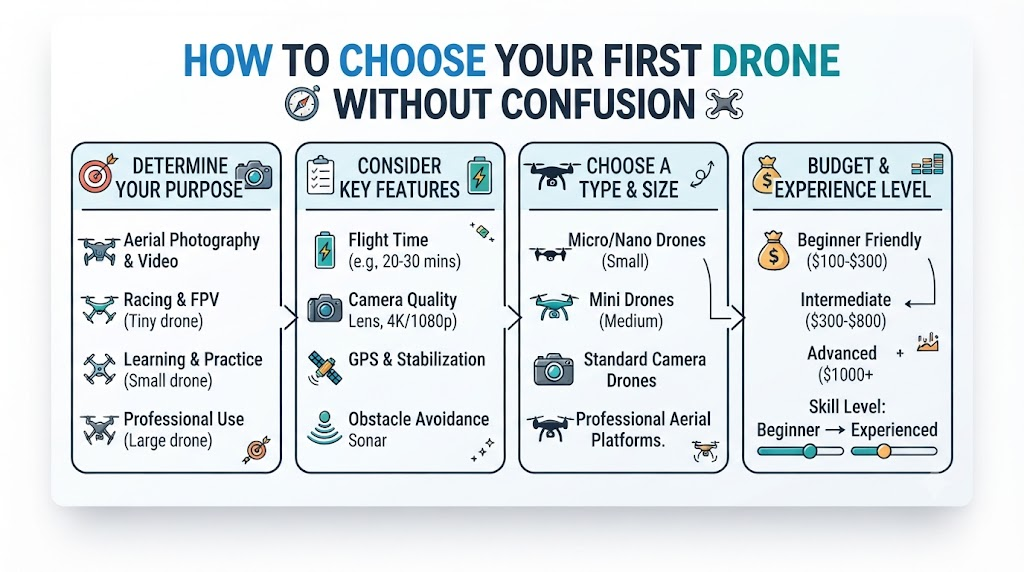
Before you begin comparing specific models, take a step back and decide how you actually intend to use your first drone. Your intended purpose dictates every other decision you will make, from size and camera requirements to flight capabilities and budget.
- Casual flying: If you simply want to experience the thrill of flight in an open park, look for a small beginner drone with simple controls and durable construction.
- Aerial photography: If your goal is capturing landscape photos, you will need a stable camera drone with reliable image stabilization.
- Travel: If you plan to pack light, a compact folding drone offers the best balance of portability and performance.
- Content creation: If you are building a video portfolio, look for a camera drone with smooth video recording modes and reliable stabilization.
- FPV learning: If you want an immersive flying experience, a beginner first-person-view drone or simulator provides the necessary responsive controls.
- Educational use: If you are exploring the technology for learning, an entry-level training drone offers accessible resources and straightforward mechanics.
| Intended Use | Suitable Drone Type | Important Features | Main Consideration |
| Casual flying | Small beginner drone | Simple controls and durable construction | Ease of learning |
| Aerial photography | Camera drone | Stable camera and suitable image quality | Image requirements |
| Travel | Compact drone | Portable design and practical battery options | Size and weight |
| Content creation | Camera drone | Camera stabilization and useful recording modes | Video requirements |
| FPV learning | Beginner FPV drone or simulator | Responsive controls and training support | Learning curve |
| Educational use | Entry-level training drone | Simple controls and accessible learning resources | Skill development |
Keep in mind that these are general categories. Your ideal option will ultimately depend on your personal comfort level, patience, and previous exposure to remote-controlled devices.
Understand the Different Types of Drones
The market is filled with various aircraft designs, each built for distinct purposes. Understanding these categories in simple terms will save you from buying the wrong machine.
Beginner and Toy Drones
These small, lightweight models are designed specifically for practice. They usually feature basic controls, lightweight plastic frames, and limited cameras. While they lack advanced stabilization, their low cost and durable frame guards make them excellent tools for learning basic stick movements without high financial risk.
Camera Drones
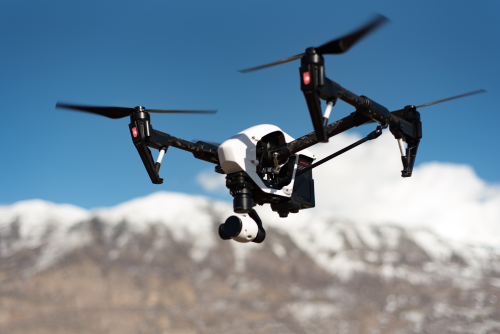
Camera drones are engineered to capture stable photos and videos from above. They typically feature mechanical gimbals or electronic stabilization to keep footage smooth even when the aircraft moves. They are ideal for hobbyist photographers and travelers who want clean visual records of their adventures.
Mini Drones
Mini drones prioritize portability and low weight, often falling under specific regulatory weight thresholds. Their compact design makes them easy to slip into a backpack. However, their small size can make them more susceptible to strong winds, and their battery capacity is usually smaller than larger counterparts.
FPV Drones
First-person-view flying involves wearing goggles that display a live video feed directly from the drone’s onboard camera, making you feel as though you are sitting in the cockpit. While thrilling, FPV drones handle very differently from standard camera drones. Beginners should generally start with a flight simulator or a stabilized trainer before stepping into manual FPV flight.
Set a Realistic Budget Before Shopping
Deciding on a budget before you start browsing prevents impulse purchases and hidden financial surprises. Drone pricing varies widely based on build quality, sensor capabilities, flight intelligence, and brand ecosystem support. When planning your budget, remember that the initial purchase price of the drone is rarely your total cost. You must also account for essential accessories such as spare batteries, extra propellers, carrying cases, and potentially micro-SD cards. Choosing a low-cost beginner drone allows you to learn the ropes without a steep financial commitment, whereas investing in a more capable camera drone makes sense only if you are fully committed to visual storytelling. Avoid paying for premium commercial features that you do not yet know how to use.
Essential Drone Features Every Beginner Should Understand
Marketing materials love to list dozens of technical specifications, but only a handful of features truly matter when you are learning to fly.
Flight Stability
Flight stability refers to how well a drone maintains its position in the air without drifting. Good stability makes it significantly easier for new pilots to focus on learning controls rather than constantly fighting wind gusts.
GPS and Position Holding
Global Positioning System integration allows compatible drones to lock onto satellites, helping them hold a stationary hover even if you let go of the control sticks. While GPS availability depends on clear skies and connection quality, it provides a vital safety net for beginners.
Camera Quality
Resolution and megapixel counts often dominate advertisements, but camera stabilization matters far more than raw numbers. A lower-resolution camera mounted on a stable gimbal will produce much cleaner footage than a shaky high-resolution sensor.
Battery Life and Flight Time
Actual flight times almost always fall short of manufacturer claims because advertised numbers are tested under perfect, controlled conditions. Real-world wind, aggressive maneuvering, and temperature all reduce active battery life. Having spare batteries is essential for extended sessions.
Obstacle Sensing and Avoidance
Some modern drones feature sensors that detect objects in their path. While helpful, these systems have blind spots and limitations. Beginners should treat obstacle sensing as a backup safety measure rather than an excuse to fly carelessly.
Beginner Flight Modes
Many aircraft offer beginner modes that software-limit maximum speed, altitude, and distance. These modes give new pilots a safe sandbox to practice maneuvers before unlocking the drone’s full performance capabilities.
Return-to-Home Features
Return-to-home functionality allows the drone to fly back to its takeoff point automatically when triggered or when signal is low. This feature relies on accurate GPS data, correct home-point recording, and sufficient battery power. It is not an absolute guarantee of recovery, but it is a helpful safety feature.
Compare Drone Specifications Without Getting Confused
When comparing multiple models side by side, it is easy to get bogged down by technical jargon. To keep your head clear, focus on real-world utility rather than marketing claims. Compare how each drone handles stabilization, how easily you can source replacement batteries, whether the controller feels comfortable in your hands, and what kind of support the manufacturer provides. Two drones might boast identical camera resolutions on paper, but one might offer vastly superior stabilization and user-friendly software. Always cross-reference advertisements with official manufacturer specifications to ensure you understand what you are actually getting.
Choose Between a Camera Drone and a Basic Flying Drone
Deciding whether you want a machine built primarily for flying practice or one built for capturing imagery is a major fork in the road for new buyers.
| Comparison Aspect | Basic Flying Drone | Camera Drone |
| Main purpose | Basic flying and practice | Photography, video, and flying |
| Camera | Often absent or basic | Designed for aerial imaging |
| Learning experience | Usually focused on basic controls | Combines flying with camera operation |
| Cost | Often lower | Varies with camera and flight features |
| Portability | Depends on design | Depends on size and model |
| Maintenance | Depends on construction and parts | May require additional camera-related care |
| Suitable users | Beginners and casual hobbyists | Beginners interested in aerial photography |
Neither category is universally superior. Your choice should be dictated entirely by whether you want to master the art of flight mechanics or jump straight into recording cinematic views from above.
Check Drone Weight, Size, and Portability
A drone’s physical dimensions play a major role in your day-to-day ownership experience. If a drone is too bulky or heavy, you are less likely to pack it along for weekend hikes, family trips, or casual outings. Furthermore, weight often dictates local aviation classifications and registration rules. Many countries enforce specific regulatory tiers based on whether an aircraft weighs above or below specific gram thresholds. Keep in mind that a lightweight designation does not exempt you from local airspace rules or safety responsibilities. Always check your regional aviation authority guidelines before heading out to fly.
Check Battery Availability, Spare Parts, and After-Sales Support
Your relationship with a drone does not end the moment you open the box. Accidents happen, propellers break, and batteries degrade over time. Before committing to a purchase, check whether replacement parts, spare batteries, and official chargers are readily available on the market. A brand that offers robust customer support, accessible replacement components, and clear user manuals will save you immense frustration down the road. Avoid obscure brands with zero spare parts availability, as a single minor crash could turn your drone into an expensive paperweight.
Common Mistakes to Avoid When Buying Your First Drone
First-time buyers frequently fall into a few common traps. Being aware of these pitfalls will save you money and disappointment:
- Buying solely based on high camera megapixel counts while ignoring flight stability.
- Choosing the cheapest, most obscure brand online without checking for spare parts support.
- Overlooking the essential cost of extra batteries and memory cards.
- Purchasing complex FPV racing equipment before mastering basic line-of-sight flying.
- Believing exaggerated marketing claims regarding flight times and transmission ranges.
- Failing to check local flying restrictions and safety laws prior to purchase.
A Simple Checklist for Choosing Your First Drone
Use this quick, actionable checklist to narrow down your choices and make a confident final decision:
- Intended Use: Have you defined whether you want casual flight, photography, or travel portability?
- Experience Level: Does the drone match your current skill set with gentle learning modes?
- Budget: Does the total cost include batteries, accessories, and potential replacement parts?
- Drone Type: Have you selected the category that best aligns with your goals?
- Essential Features: Does the model offer reliable stability and practical battery life?
- Support: Are replacement propellers and customer support easily accessible?
- Portability: Is the drone light and compact enough that you will actually take it with you?
- Regulations: Do you understand the weight and airspace rules in your flying area?
Drone Buying Comparison Table for First-Time Buyers
| Buying Factor | What to Check | Why It Matters |
| Purpose | Recreational flying, photography, travel, or FPV | Helps narrow down suitable drone types |
| Budget | Drone price and total ownership cost | Prevents unexpected expenses |
| Ease of use | Controls and beginner features | Helps new pilots learn |
| Stability | Hovering and positioning features | Supports basic flying practice |
| Camera | Resolution and stabilization | Determines suitability for photography |
| Battery | Practical flight time and replacement availability | Affects flying sessions |
| Safety | Available safety features and their limitations | Helps manage flying risks |
| Support | Warranty, service, and spare parts | Helps with long-term ownership |
| Regulations | Local weight, registration, and flight requirements | Supports responsible and lawful flying |
Use these core factors to evaluate your shortlisted models side by side. If a drone meets your practical criteria across these categories, you can safely ignore flashy marketing gimmicks and unnecessary specifications.
Learn the Basics Before Your First Flight
Purchasing the right drone is only the first chapter of your journey. Once your aircraft arrives, take time to read the manufacturer manual thoroughly before attempting takeoff. Inspect your propellers for cracks, ensure your battery is fully charged and securely seated, and choose a wide-open outdoor space away from people, trees, and power lines for your first practice session. Pay close attention to weather forecasts, avoiding windy or rainy days. Start by practicing simple hovering, gentle forward movements, and soft landings before attempting complex maneuvers. Responsible piloting protects your investment and ensures a safe environment for everyone around you.
How DronesBee Helps Beginners Explore the Drone Ecosystem
Navigating the skies can feel like a solo journey, but you do not have to figure everything out alone. Platforms like DronesBee exist to bridge the gap between complex technology and everyday enthusiasts. By offering educational articles, clear technology breakdowns, community resources, and guidance on the broader drone ecosystem, the platform helps beginners make sense of industry terminology and equipment options. Whether you are comparing specs or looking for advice on your first flight, utilizing reliable educational resources ensures you step into the hobby with clarity and confidence.
Making a Confident First Drone Purchase
Choosing your first drone does not need to be a confusing guessing game. By clearly defining your purpose, setting a realistic budget, prioritizing essential features over marketing hype, and verifying safety and support options, you can cut through the noise with ease. Compare a small, manageable shortlist of models rather than trying to evaluate every option on the market. When your aircraft matches your actual needs and experience level, you are set up for a rewarding and enjoyable journey into the skies.
Frequently Asked Questions
What should beginners look for in their first drone? Beginners should prioritize flight stability, ease of use, physical durability, accessible spare parts, and reliable manufacturer support rather than complex cinematic features.
Which type of drone is suitable for beginners? Small beginner drones, entry-level camera drones, and lightweight mini drones are generally the most suitable options for those just starting out.
How much should I budget for my first drone? Your budget should cover not just the drone itself, but also essential accessories like extra batteries, replacement propellers, and a suitable memory card.
Is a camera drone suitable for first-time buyers? Yes, provided it features reliable stabilization and flight assistance modes that make it easy to control while operating the camera.
How important is GPS in a beginner drone? GPS is very important because it helps the drone hold a steady hover, resist drift, and execute automated return-to-home functions.
How much flight time should a beginner drone offer? Most beginner drones offer between 15 and 30 minutes of flight time per battery, making extra backup batteries a smart investment.
Are mini drones suitable for learning to fly? Mini drones are great for portability and indoor or calm-weather practice, though their lightweight frames can make them sensitive to strong winds.
Do beginners need obstacle avoidance in their first drone? While helpful, obstacle avoidance is a backup safety aid rather than a substitute for careful piloting and should not be solely relied upon.
What accessories should I buy with my first drone? Essential accessories include spare propellers, at least one extra flight battery, a multi-battery charger, a carrying case, and a compatible micro-SD card.
What should I check before flying a new drone? Always check weather conditions, inspect propellers and battery seating, ensure your GPS lock is established, and verify local airspace regulations before takeoff.
Conclusion
Choosing your first drone does not need to be an overwhelming guessing game. By clearly defining your purpose, setting a realistic budget, prioritizing essential features over marketing hype, and verifying safety and support options, you can cut through the noise with ease. Compare a small, manageable shortlist of models rather than trying to evaluate every option on the market. When your aircraft matches your actual needs and experience level, you are set up for a rewarding and enjoyable journey into the skies. Platforms like DronesBee remain valuable companions on this journey, offering the educational resources and ecosystem insights you need to explore drone technology with absolute confidence.
