Introduction
Launching your very first drone feels exciting. You unpack the aircraft, unfold the propellers, power up the controller, and watch the GPS lock in. Within moments, the motors spin to life, and the drone lifts off the ground. For many beginners, the immediate instinct is to push the joysticks forward, climb high into the air, and capture sweeping cinematic views. However, a drone is not a simple toy. It is an aircraft operating in shared airspace. Even a small consumer drone can create safety risks if it is flown carelessly. Safe drone operation requires more than knowing how to maneuver the joysticks. True piloting skill starts with preparation, situational awareness, and responsible habits before the propellers ever spin. Understanding basic safety rules helps you protect your equipment, avoid unexpected crashes, respect the privacy of others, and ensure that everyone around you stays safe.
Why Drone Safety Matters
Every flight involves a set of physical variables, environmental conditions, and legal boundaries. When a new pilot ignores these factors, the risks increase rapidly. A poorly controlled drone can collide with trees, power lines, buildings, or vehicles. It can injure pedestrians or startle domestic animals and wildlife. Responsible flying protects you, the people around you, private property, local wildlife, and your investment in the aircraft. Good safety habits make each flight more controlled, predictable, and enjoyable.
Know Your Drone Before Flying
One of the most common mistakes a new pilot makes is flying a brand-new drone without reading the manual. Every drone model has unique characteristics, weight limits, control layouts, and flight behaviors.
Read the Manufacturer Manual
The manufacturer instructions should always take priority for model-specific operation. Take time to read through the user guide before your first outing. Learn how the controller layout works, understand what the status lights mean, and review the emergency procedures recommended by the builder.
Understand Flight Modes and Settings
Modern drones come equipped with multiple flight modes, such as normal mode, sport mode, and tripod or cinematic mode. Each mode changes how fast the drone responds and how it handles braking. Make sure you know which mode your drone is in before takeoff so you never experience unexpected acceleration.
Perform a Pre-Flight Safety Check
Safety starts long before the motors start. Skipping a pre-flight inspection is a fast track to avoidable equipment failure. You should always inspect your drone on the ground before every single flight.
What to Inspect
- Drone Body: Check the main frame for cracks, loose screws, or signs of impact damage.
- Propellers: Inspect every blade for nicks, cracks, chips, or bends. Damaged propellers can cause severe vibrations or mid-air failure.
- Motors: Spin each motor by hand to ensure they turn smoothly without grinding or catching debris.
- Battery: Ensure the battery clicks securely into place and shows no signs of physical swelling or damage.
- Sensors and Camera: Wipe down any downward or forward obstacle sensors and ensure the camera lens and gimbal move freely.
- Firmware and Connection: Check your mobile device and controller to ensure firmware is up to date and your signal link is stable.
| Component | What to Look For | Safe Action |
| Propellers | Nicks, cracks, or chips | Replace immediately with a fresh set |
| Battery | Loose fit, cracks, or swelling | Never fly; store safely and recycle |
| Motors | Grinding, dirt, or resistance | Clean gently or service before flight |
| Sensors | Smudges, dust, or obstruction | Wipe clean with a soft microfiber cloth |
Drone Battery Safety
Lithium-ion and LiPo batteries power modern consumer drones. While these batteries pack incredible energy into a small space, they require careful handling.
Battery Handling and Storage
Always inspect your battery before charging. Never fly with a battery that has physical dents, punctures, or swelling. Use only manufacturer-approved chargers designed specifically for your drone model. Avoid leaving batteries charging completely unattended, and never store them in extreme heat or direct sunlight.
Managing Temperature
Cold weather can drain battery capacity much faster than expected, while excessive heat can cause batteries to overheat. If your battery feels very hot after a flight, allow it to cool down naturally in a well-ventilated area before attempting to recharge it.
Check the Weather Before Flying
Conditions that feel pleasant for a human walking outside may still be completely unsuitable for a drone. Wind speed, moisture, and temperature all dictate whether it is safe to launch.
Wind and Gusts
Wind is one of the leading causes of beginner drone crashes. Wind speeds increase significantly at higher altitudes, even if ground-level air feels calm. Check a reliable local weather forecast before you head out, and avoid flying in strong winds, sudden gusts, or stormy conditions that exceed your drone model’s rated limits.
Rain, Fog, and Visibility
Most consumer drones are not waterproof. Flying in rain, heavy mist, or snow can moisture-damage internal electronics, cause short circuits, or cloud your camera lens. Always ensure clear visibility so you can physically keep eyes on your aircraft.
Choosing a Safe Place to Fly
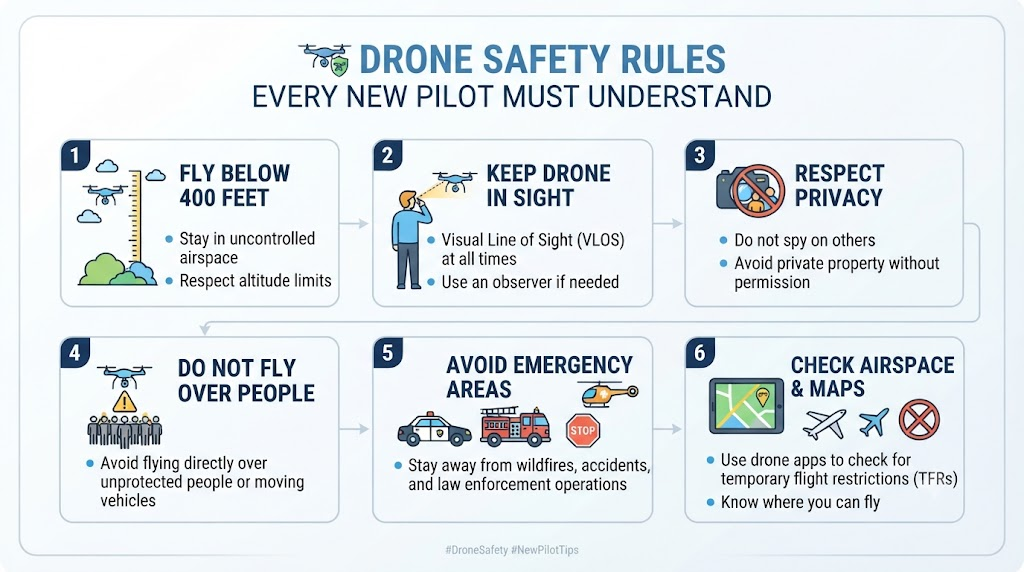
Location selection is one of the most critical safety decisions you will make. Beginners should always look for wide-open spaces far away from obstacles and crowds.
Finding a Good Practice Area
Look for large, open parks, sports fields, or rural spaces where you have plenty of room to react if something unexpected happens. Stay well away from busy roads, power lines, tall trees, construction sites, and populated public areas until you have built up confidence and basic control skills.
Keeping People and Property Safe
Even a small recreational drone can cause property damage or injury if it collides with someone. You must always maintain appropriate separation from pedestrians, children, vehicles, private homes, and animals. Local aviation authorities often set specific distance guidelines regarding how close you can fly to people not involved in the operation. Always verify the rules applicable to your jurisdiction and weight category before taking off.
Maintaining Visual Line of Sight
Visual line of sight means that you can see your drone with your own eyes—without relying solely on binoculars, FPV goggles, or your mobile device screen—at all times during flight.
Why Screen Gazing is Dangerous
Staring exclusively at your phone or controller screen makes it easy to lose track of nearby tree branches, birds, or changing weather. Trees, buildings, distance, and direct sunlight glare can quickly obscure your view. Always keep your head up, glance between your screen and your physical aircraft, and ensure you or a designated visual observer can see the drone clearly.
Avoiding Obstacles
Modern drones often feature obstacle-sensing systems, but these sensors are not foolproof.
Limitations of Obstacle Sensors
Obstacle avoidance sensors rely on lighting, surface reflectivity, and camera angles. Thin tree branches, power lines, guy-wires, glass windows, and reflective surfaces can easily trick sensors. Never rely entirely on automation to dodge objects. Always plan your flight path carefully and keep a wide safety buffer around all structures.
Understanding Return-to-Home (RTH)
Return-to-Home, commonly known as RTH, is a built-in safety feature designed to bring your drone back to its takeoff location or a saved home point automatically when triggered or when signal is lost.
How RTH Works
Before takeoff, your drone records a home point using GPS satellites. If you lose connection or trigger the button, the drone climbs to a preset RTH altitude and flies back. However, RTH is a backup tool, not a cure-all. If your RTH altitude is set lower than nearby trees or buildings, the drone can collide with them on its way back. Always verify your home point is recorded successfully and check your RTH altitude settings before every flight.
Never Rely Completely on Automation
GPS locking, automatic landing, intelligent flight modes, and obstacle detection make flying easier, but they do not replace human judgment.
Software glitches, compass interference, weak GPS signals, or sudden sensor errors can occur. New pilots must practice basic manual flight control in a safe area so they know how to take over and land safely if automated systems misbehave or disengage.
Understanding Drone Warnings
Your controller screen and mobile app will display various notifications, warnings, and alerts during flight. Never ignore these messages.
If you see a low battery alert, a high wind warning, a compass calibration error, or a sensor warning, investigate the cause immediately. Dismissing warnings without understanding them often leads directly to flyaways, crashes, or lost aircraft.
Battery Level and Safe Return Planning
A common beginner mistake is flying until the battery hits critical levels before heading back. Battery drain is affected by head-winds, distance, temperature, aggressive maneuvers, and payload weight.
Always plan your flight so that you begin your return trip with plenty of reserve battery power remaining. Follow the manufacturer’s recommended percentage guidelines for initiating your return rather than pushing your flight time to the absolute limit.
Avoiding Advanced Maneuvers Too Early
When you first start flying, keep your movements slow, deliberate, and smooth. Master basic hovering, gentle square patterns, slow forward and backward flight, and controlled 360-degree turns before attempting anything complex. Avoid high-speed flying, sharp turns, rapid ascents, acrobatics, or long-distance flights until you have built up solid muscle memory and spatial awareness.
Safe Takeoff and Landing
The first and last few seconds of any flight require the most focus.
Preparing the Launch Surface
Choose a clean, flat, and stable takeoff area. Avoid launching from loose sand, tall grass, dusty dirt patches, or uneven stone surfaces that can kick debris into your motors or tip the aircraft. Give your drone plenty of clearance from surrounding objects during liftoff. When landing, bring the aircraft down smoothly and steadily. Rushing the final few seconds of descent can cause hard bounces or tip-overs.
Privacy and Responsible Filming
Responsible drone operation extends beyond avoiding physical crashes. It includes respecting the privacy of individuals and communities. Avoid flying directly over private backyards, peering through windows, or recording people without their consent. Privacy laws and photography regulations vary widely by region. Always respect local community expectations and operate your camera with consideration for others.
Airspace and Local Drone Regulations
Every drone pilot is subject to local airspace rules and aviation regulations.
Checking the Rules
Airspace restrictions exist around airports, helipads, military bases, national parks, and crowded public venues. Rules change over time and vary heavily by country. For operations in India, verify current requirements through official DGCA and Digital Sky portals before publication or flight. Never assume that a lightweight drone is completely exempt from all operational rules.
Flying Near Airports and Emergency Operations
You must never fly near active airports, landing strips, or heliports unless specifically authorized by air traffic control. Furthermore, stay completely away from emergency scenes, including wildfire firefighting operations, police investigations, search-and-rescue helicopters, and medical response sites. Drones can severely disrupt rescue aircraft and endanger human lives during emergencies.
Wildlife and Animals
Drones can cause extreme stress and panic in birds, wildlife, livestock, and domestic pets. Never chase animals, fly close to nesting areas, or hover above wildlife preserves. Keep a respectful distance to ensure your recreational activities do not disrupt natural animal behaviors or farming operations.
Managing Distractions
Flying requires your undivided attention. Operating a drone while holding a conversation, reading text messages, managing social media, or juggling camera settings increases the risk of a pilot error. Keep your eyes on the aircraft and maintain focus throughout the entire flight.
Alcohol, Drugs, Fatigue, and Impairment
Never operate a drone while under the influence of alcohol, recreational drugs, or medications that cause drowsiness or reduce reaction time. Severe physical fatigue also impairs judgment and coordination. Rest properly before heading out for a flying session.
Flying at Night
Night operations introduce unique challenges, including severely reduced visibility, difficulty judging distance from obstacles, and orientation confusion. Do not assume nighttime flying is universally banned, but always check local aviation rules and equip your drone with required anti-collision lighting if night operations are legally permitted in your area.
What to Do When Something Goes Wrong
Even with careful preparation, unexpected situations can happen. If you lose video feed, experience a sudden wind gust, or receive an unexpected warning:
- Stay Calm: Panic leads to sudden, erratic stick movements that worsen the problem.
- Hover or Pause: If your signal is stable, hover in place to assess the situation.
- Follow Procedures: Rely on your drone model’s specific emergency instructions, such as triggering RTH or switching to a stable manual attitude mode.
What to Do After a Crash
If your drone experiences a hard landing or crash, do not immediately pick it up and restart the motors.
Inspect the frame, arms, motors, and propellers thoroughly. Check the battery for any signs of physical damage or puncture. If a battery is damaged, store it safely away from flammable materials and dispose of it properly. Follow manufacturer service guidelines before flying a repaired aircraft again.
Basic Drone Maintenance
Routine maintenance keeps your drone reliable flight after flight. Clean dust and dirt from sensors and motors regularly, inspect propellers for micro-fractures, store batteries at proper storage voltage when not in use, and install official firmware updates as recommended by the manufacturer.
Keeping a Simple Flight Checklist
Using a standardized pre-flight checklist before every single flight eliminates forgotten steps.
Beginner Pre-Flight Checklist
- Equipment Condition: Frame and propellers inspected.
- Battery Condition: Fully charged, healthy, and securely locked.
- Controller Connection: Signal stable and telemetry active.
- Weather: Wind speeds and visibility within safe limits.
- Flight Location: Open space free of obstacles.
- Airspace: Legal to fly and clear of restrictions.
- People and Obstacles: Safe separation distance confirmed.
- Home Point & RTH: GPS locked and RTH altitude set correctly.
- Visibility: Line of sight established.
- Emergency Plan: Know what to do if signal is lost.
Common Safety Mistakes New Pilots Make
Learning from the mistakes of experienced pilots helps you avoid common pitfalls.
| Common Mistake | Why It Is Dangerous | Safer Alternative |
| Skipping the Manual | Not knowing model-specific limits or controls | Read the user guide thoroughly before first flight |
| Ignoring Weather | Unexpected wind gusts causing a flyaway | Check forecasts and respect wind limits |
| Staring Only at the Screen | Missing nearby trees, wires, or people | Balance screen checks with visual line of sight |
| Waiting Too Long to Return | Battery depletes before reaching home | Set conservative return thresholds |
| Flying in Crowded Areas | Risking injury to bystanders or property | Choose open, unpopulated practice locations |
Building Safe Habits Over Time
Safety is not a checklist you complete once; it is a continuous mindset. By maintaining consistent pre-flight checks, practicing gradual skill progression, respecting local airspace rules, and learning from every flight, you will build confidence and become a skilled, responsible pilot.
For continued learning, resources like DronesBee offer helpful beginner guides, technology explanations, and practical safety articles designed to support your journey into safe drone piloting.
Responsible Drone Culture
When you operate a drone safely, you contribute to a positive culture that respects public privacy, protects wildlife, preserves community trust, and keeps our shared airspace safe for everyone.
Frequently Asked Questions
What is the most important rule for a new drone pilot?
The most important rule is to maintain control by preparing thoroughly, checking your equipment, and always keeping your drone within your visual line of sight.
Do I really need to read the drone manufacturer manual?
Yes. Every drone model has unique controls, warning systems, battery behaviors, and emergency features that differ between brands and models.
How do I know if the wind is too strong for my drone?
Check your drone manufacturer’s maximum wind resistance rating and verify local weather forecasts for gust speeds before attempting to launch.
What does visual line of sight mean?
It means you must be able to see your drone directly with your own eyes without relying solely on a phone screen, FPV goggles, or binoculars.
Why should I avoid flying over crowds of people?
Even small drones can fail mechanically or experience signal interference, posing a risk of injury or property damage to people below.
Can I rely entirely on obstacle avoidance sensors?
No. Sensors have blind spots and can struggle with thin branches, power lines, and reflective surfaces, so you must always remain alert.
What should I do if my drone loses its GPS signal?
Stay calm, switch to manual flight mode if necessary, and carefully guide the aircraft back to your location while maintaining visual contact.
How do I set a proper Return-to-Home altitude?
Set your RTH altitude high enough to clear all surrounding trees, power lines, and buildings in your immediate flying area.
Are small drones exempt from local airspace regulations?
No. Weight categories may change certain operational requirements, but basic airspace rules and restrictions generally apply to all drones.
How can I practice safely as a beginner?
Start in a wide-open, unpopulated space, practice basic hovering and slow movements, and avoid advanced maneuvers or long-distance flights until you are comfortable.
Conclusion
Safe drone flying is not about restricting your enjoyment; it is about building the habits that keep every flight controlled, predictable, and rewarding. From performing thorough pre-flight inspections and monitoring your battery reserves to respecting airspace rules, maintaining visual line of sight, and protecting the privacy of others, preparation is your greatest asset as a pilot. A drone is an aircraft, and treating it with respect ensures you protect your equipment, the people around you, and the environment. By approaching each session with patience and continuous learning, you will build the confidence needed to enjoy piloting for years to come. For continued learning, beginner guides, and practical safety resources, you can explore more insights on DronesBee.
