
Introduction
Starting a journey toward building a family often begins with a search for reliable answers. Navigating the world of assisted reproduction means sorting through complex medical terminology, comparing different healthcare centers, and trying to understand what treatments actually involve. Having access to clear, organized information helps individuals feel more prepared before they ever step into a consultation room. Platforms like IVFHospitalsNow.com serve as helpful discovery tools, designed to help people research fertility hospitals, understand various procedures, and navigate the process of finding reproductive care in a structured way.
What Is IVFHospitalsNow.com?
IVFHospitalsNow.com is an online fertility-care platform created to help individuals research reproductive health providers and medical centers. Rather than offering medical treatments directly, the website acts as an informational guide, bringing together details about fertility specialists, hospitals, and treatment approaches in one accessible place. The platform allows users to explore IVF clinics, look into geographical options, and review general healthcare logistics without having to jump between countless unorganized websites. By gathering this data into a single resource, the platform helps patients streamline their initial research, making it easier to discover qualified providers and understand what different clinics offer.
Why Reliable Fertility Information Matters
When you are researching family-building options, finding trustworthy and straightforward information is essential. Fertility medicine involves specialized diagnostic steps, advanced laboratory techniques, and specific medical timelines. Without clear educational resources, it is easy to feel overwhelmed by the sheer volume of medical jargon and differing opinions found online. Reliable information helps bridge the gap between complex medical science and everyday understanding. When patients grasp the basics of how treatments work, they can have much more productive conversations with their doctors. Good educational data also helps set realistic expectations regarding timelines and financial planning, reducing anxiety along the way.
What Can People Explore When Researching IVF Clinics?
IVF Treatment Information
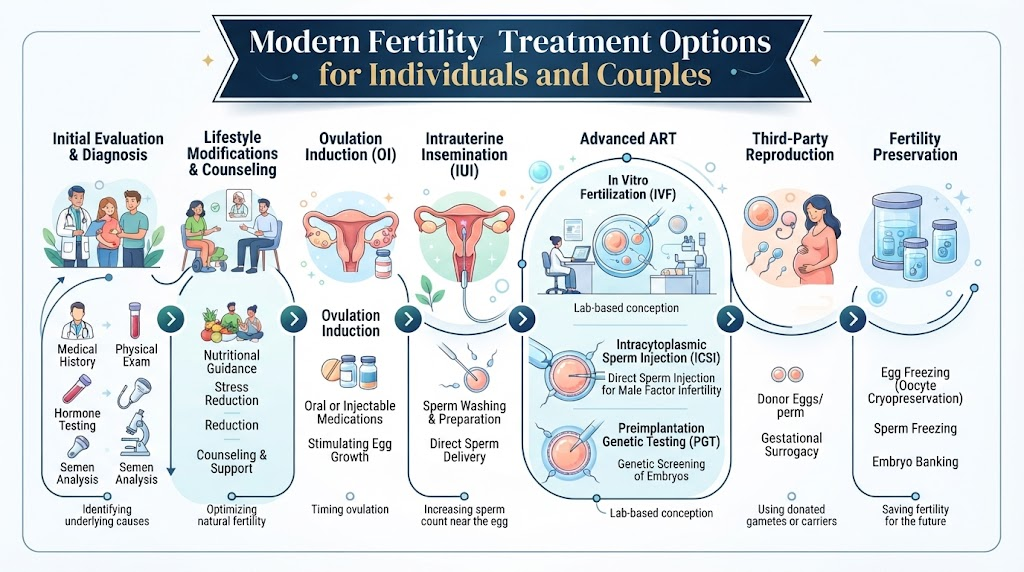
Understanding the general roadmap of in vitro fertilization helps demystify the clinical process. A typical cycle begins with an initial consultation and thorough fertility assessments to check hormone levels and reproductive health. Once testing is complete, patients undergo controlled ovarian stimulation using prescribed medications to encourage the ovaries to develop multiple mature eggs. When the eggs reach the right maturity, a brief outpatient procedure called an egg retrieval is performed under sedation. At the same time, a sperm sample is collected and prepared in the lab. The eggs and sperm are then combined—either through standard methods or microscopic injection—to encourage fertilization. The resulting embryos are monitored in the laboratory for several days, and a healthy embryo is transferred into the uterus, while any remaining viable embryos can be frozen for future use.
Fertility Specialists and Medical Teams
The background and expertise of the medical team are central to the patient experience. When looking into clinics, people often research the credentials, board certifications, and clinical focus areas of reproductive endocrinologists and embryologists. Beyond individual physicians, the quality of care relies heavily on the broader clinical staff, including dedicated nurses, patient care coordinators, and lab technicians. Access to a well-equipped embryology laboratory with modern incubation technology is another key factor that patients look at when evaluating a medical center.
Clinic Location and Accessibility
Logistics play a major part in fertility treatment because cycles often require frequent monitoring visits, blood draws, and ultrasounds over a span of several weeks. When searching for IVF clinics near me, patients need to consider travel distance, appointment scheduling flexibility, and how easily they can manage visits alongside daily responsibilities. For individuals living outside major metropolitan areas, finding a clinic with manageable travel requirements or utilizing nearby satellite offices can make a big difference in reducing the stress of frequent commutes.
Treatment and Support Services
Holistic fertility care goes beyond the laboratory. Patients often look for clinics that offer integrated support services, such as nutritional guidance, psychological counseling, and patient education resources. Emotional support is a valuable part of the reproductive journey, and having access to professionals who understand the emotional aspects of treatment can make the process feel much more manageable.
Understanding IVF Treatment Cost
The financial aspect of assisted reproduction is naturally a major consideration for anyone planning treatment. The total IVF treatment cost can vary widely based on your geographic region, the specific clinic you choose, and the unique medical protocol your doctor prescribes.
Key Factors Influencing Expenses
- Initial Diagnostics: Blood tests, hormone panels, and ultrasound evaluations performed before starting a cycle.
- Medications: Prescription hormones required for ovarian stimulation and preparing the uterine lining.
- Lab Work: Egg retrieval procedures, fertilization processes, embryo monitoring, and culture services.
- Advanced Technologies: Additional procedures like genetic testing or specialized sperm preparation.
- Cryopreservation: Fees associated with freezing and storing embryos, eggs, or sperm for future cycles.
Because pricing formats differ from one provider to another, it is always wise to ask for a detailed, itemized cost estimate during your financial consultation so you know exactly what is included.
Understanding IVF Success Rates
Interpreting clinical success statistics requires looking closely at the details behind the numbers. When reviewing published IVF success rates, patients should look past a single headline percentage and understand what the data actually represents.
Variables That Impact Outcomes
- Age: Maternal age is one of the most influential factors affecting both egg quality and overall treatment success.
- Medical History: The underlying reason for seeking fertility care plays a direct role in how a patient responds to treatment.
- Embryo Quality: The developmental progress and genetic health of the transferred embryos heavily influence implantation.
- How Data Is Reported: Success rates can be calculated per cycle started, per egg retrieval, or per embryo transfer, and may measure clinical pregnancy or live birth.
Comparing clinics based purely on success percentages can be misleading unless you understand the specific patient demographics and clinical complexities behind those numbers.
How to Compare IVF Clinics
Evaluating multiple providers side by side allows you to find a medical center that fits your personal and clinical needs. Rather than relying on advertising claims, patients can use practical, neutral criteria to compare IVF clinics thoughtfully.
Evaluation Criteria
- Range of Services: Availability of comprehensive diagnostic and treatment options in one location.
- Laboratory Standards: Equipment quality, safety protocols, and the experience level of the embryology team.
- Financial Clarity: Transparent pricing structures and clear explanations of insurance or financing assistance.
- Communication Style: How responsive the clinic is to questions and how accessible the care team feels.
- Tailored Care: Whether the medical team customizes treatment plans based on individual health histories.
Finding IVF Clinics Near Me
Locating care close to home means balancing clinical reputation with everyday convenience. When searching for IVF clinics near me, it helps to check whether nearby facilities offer the specific technologies or specialized care required for your diagnosis. Being close to your clinic is especially helpful during the active monitoring phase of a cycle, where visits can happen every couple of days. However, if specialized care requires traveling a bit further, many patients find that the expertise of a regional center of excellence outweighs the longer commute.
Exploring IVF Treatment Abroad
Some individuals choose to look into IVF treatment abroad for reasons related to cost, specific treatment availability, or regional healthcare frameworks. Venturing overseas for medical care requires thorough planning and careful verification of international credentials. Patients need to think about potential language barriers, how medical records will be transferred, regulatory standards in the destination country, and how follow-up care will be handled once they return home. Coordinating details between an international clinic and a local physician ensures continuity and safety.
Understanding IVF Cost by Country
The financial investment required for reproductive care changes significantly around the world. When looking at IVF cost by country, differences are shaped by local healthcare models, operational expenses, medication pricing, and regulatory requirements. While some countries offer more accessible pricing due to lower overhead costs, patients must also factor in travel expenses, lodging, and the cost of any necessary follow-up care when calculating their total budget.
Exploring Different Fertility Treatment Options
Assisted reproduction is not a one-size-fits-all field; different medical situations call for different approaches. Exploring various fertility treatment options helps patients understand the spectrum of care available, from basic lifestyle adjustments and timed cycles to advanced laboratory procedures. Common options range from ovulation medications and intrauterine insemination to in vitro fertilization and specialized micromanipulation techniques, all tailored to a couple’s specific diagnostic findings.
ICSI vs IVF
Patients often wonder about the distinction between ICSI vs IVF when discussing fertilization methods with their doctor. While both processes share the same initial steps of stimulation and egg retrieval, they differ in how fertilization takes place in the laboratory.
| Factor | IVF (Standard Insemination) | ICSI (Intracytoplasmic Sperm Injection) |
|---|---|---|
| Basic Process | Eggs and sperm are placed together in a culture dish, allowing fertilization to occur naturally. | A single sperm is carefully selected and injected directly into the mature egg using a fine microscopic needle. |
| Fertilization Method | Relies on the natural ability of sperm to swim to and penetrate the egg. | Actively assists fertilization by placing the sperm directly inside the egg. |
| Common Clinical Considerations | Usually chosen when sperm parameters fall within normal ranges. | Frequently recommended for severe male factor infertility or past fertilization challenges. |
| Laboratory Involvement | Lower manual handling during the actual insemination phase. | Requires high precision and specialized micro-instrumentation by the embryologist. |
| Treatment Similarities | Uses the exact same ovarian stimulation, retrieval, and transfer protocols. | Uses the exact same ovarian stimulation, retrieval, and transfer protocols. |
| Important Considerations | Does not guarantee fertilization; success relies on natural sperm-egg interaction. | Increases fertilization chances in specific scenarios but does not eliminate underlying genetic factors. |
Understanding Egg Freezing Cost
Preserving fertility through oocyte cryopreservation has become a popular option for individuals wanting to protect their reproductive options for the future. Understanding egg freezing cost means looking at the expenses involved across multiple stages of the process. The overall investment typically covers initial diagnostic blood work, stimulation medications, ultrasound monitoring, the surgical retrieval procedure, laboratory freezing services, and ongoing annual storage fees to keep the samples safely preserved.
How to Evaluate IVF Clinic Information
Reviewing healthcare claims requires a careful and critical eye. Patients should always cross-reference online descriptions with official medical boards, professional associations, and direct questions asked during an intake consultation. Making sure that the information you rely on is current helps you avoid outdated or misleading representations.
Questions to Ask an IVF Clinic Before Treatment
Bringing a prepared list of questions to your first consultation ensures you gather the details needed to make an informed choice.
- What diagnostic workup do you recommend based on our specific health history?
- What treatment protocol are you suggesting, and why is it the right fit?
- Can you provide a complete, itemized cost breakdown including medications and storage?
- How are your clinic’s success rates calculated for patients in our age bracket?
- What emergency contact procedures are in place during an active treatment cycle?
Who Can Use IVFHospitalsNow.com?
People Beginning Fertility Research
Individuals who are just starting to explore reproductive health can use structured platform resources to learn basic terms, understand the general treatment timeline, and get comfortable with common concepts.
Couples Exploring IVF
Couples who have decided to move forward with in vitro fertilization can research specialized clinics, review procedural overviews, and compile thoughtful questions for their upcoming medical consultations.
People Comparing Fertility Clinics
Patients who want to weigh multiple medical centers against one another can examine objective operational factors, geographic locations, and service lists to build a balanced comparison list.
People Researching Treatment Abroad
International patients can investigate cross-border healthcare options, looking into country-specific logistics, regulatory standards, and how to coordinate care between overseas clinics and local doctors.
People Exploring Fertility Preservation
Individuals interested in proactive family planning can find educational material regarding egg freezing, preservation timelines, and what financial factors to expect.
People Seeking Fertility Treatment Information
Anyone looking to expand their knowledge of reproductive medicine can access curated educational guides to help them prepare for meaningful, informed discussions with qualified fertility specialists.
Step-by-Step Guide to Researching Fertility Care
- Understand Your Fertility Information Needs: Figure out what specific topics or questions you need answered before diving into your search.
- Research Available Treatment Options: Learn about the different types of assisted reproductive technologies and diagnostic procedures available.
- Find Relevant IVF Clinics: Use discovery platforms to locate medical centers that fit your geographic preferences and logistical needs.
- Review Clinic and Specialist Information: Look into the professional credentials, board certifications, and lab accreditations of the medical teams you are considering.
- Understand Treatment Costs: Ask for a comprehensive, itemized financial estimate that covers everything from medications to long-term storage.
- Review Success-Rate Information Carefully: Analyze clinical outcome data while keeping patient age and statistical definitions in mind.
- Prepare Questions for the Clinic: Write down a clear list of clinical and financial questions to bring to your initial appointments.
- Discuss Your Options With a Qualified Fertility Specialist: Schedule a formal consultation to review your personal medical history and build a customized plan.
Common Challenges When Researching IVF Treatment
Looking into fertility care can come with a few hurdles along the way. The sheer amount of information online can easily lead to information overload, making it tough to separate evidence-based science from marketing fluff. Comparing prices between clinics can also be tricky because some centers quote base fees while others bundle medications and monitoring into the total. Additionally, interpreting statistical success data requires patience, since different clinics report numbers using different cohorts and definitions. Patients can manage these challenges by sticking to standardized registry data, asking for transparent itemized quotes, and maintaining open conversations with objective medical professionals.
Best Practices for IVF Clinic Research
- Look into multiple relevant providers to get a clear picture of standard pricing and care quality.
- Verify all clinic licenses and medical accreditations through official governing boards.
- Ask for a clear breakdown of what is included in any quoted financial package.
- Take time to understand how a clinic calculates its reported success rates.
- Confirm that the medical team has specific expertise relevant to your diagnosis.
- Inquire about alternative treatment paths if standard IVF is not the immediate answer.
- Keep your medical records, test results, and financial estimates organized in one place.
- Validate all critical healthcare details directly with the clinic’s administrative and clinical staff.
How to Use Online Fertility Information Responsibly
Digital resources are fantastic starting points for learning, but they are meant to support—not replace—professional medical advice. Always check the credibility of your sources, ensure the information is up to date, and avoid making major decisions based purely on online testimonials or guaranteed promises. Because every person’s biology is entirely unique, treatment choices should always be made in direct consultation with a licensed reproductive endocrinologist.
Frequently Asked Questions
What is IVFHospitalsNow.com?
IVFHospitalsNow.com is an online discovery platform designed to help people research fertility clinics, hospitals, specialists, and assisted reproductive technologies in an organized manner.
How can people find IVF clinics?
Users can browse structured provider directories on platforms like IVFHospitalsNow.com to examine clinic locations, available services, and medical team profiles within their preferred region.
What factors affect IVF treatment cost?
Total expenses are shaped by initial diagnostic tests, hormonal medications, laboratory procedures, specialized micromanipulation techniques, cryopreservation, and geographic location.
How should patients understand IVF success rates?
Success rates should be evaluated by looking at patient age, underlying medical diagnoses, and standardized reporting definitions rather than relying on isolated percentages.
How can people compare IVF clinics?
Clinics can be compared objectively by reviewing their laboratory accreditations, treatment offerings, cost transparency, communication practices, and specialist credentials.
What should people check when searching for IVF clinics near me?
Patients should evaluate travel distance, appointment availability, monitoring frequency, and whether local facilities have the advanced lab capabilities needed for their diagnosis.
What should patients consider before IVF treatment abroad?
International patients need to consider travel logistics, language barriers, legal regulations, follow-up care continuity, and the verification of overseas medical credentials.
Why can IVF cost by country vary?
Price differences between countries are driven by varying healthcare systems, operational overhead, pharmaceutical pricing, local regulations, and currency exchange rates.
What is the difference between ICSI and IVF?
Standard IVF allows sperm and eggs to interact naturally in a culture dish, whereas ICSI involves injecting a single selected sperm directly into the egg to assist fertilization.
What factors can affect egg freezing cost?
Egg freezing expenses depend on initial diagnostic evaluations, stimulation medications, surgical retrieval fees, laboratory processing, and long-term storage maintenance charges.
Conclusion
Navigating the world of reproductive healthcare takes patience, careful research, and reliable guidance. Utilizing structured platforms like IVFHospitalsNow.com allows individuals to explore fertility clinics, understand treatment options, and evaluate financial and clinical details in a clear environment. By approaching your research methodically—checking clinic credentials, putting success rates into proper context, and understanding the variables that influence treatment costs—you can prepare effectively for your healthcare journey. Ultimately, all personal medical decisions should be made in close consultation with qualified fertility specialists who can provide individualized care tailored to your specific circumstances.
