Introduction
Buying a new phone or computer brings a mix of joy and small worries. You want your screen to light up, your old photos to appear, and your apps to run fast. Sometimes, hidden menus or sudden software alerts get in the way of a smooth start. This guide breaks down device setup, system updates, backups, and quick fixes into plain steps. Every tip helps everyday iPhone and Mac owners stay organized, safe, and stress-free.
Checking Hardware Limits Before Updating Software
Every year, Apple releases fresh operating systems packed with visual tweaks and safety patches. Older devices eventually reach a point where their chips cannot run the newest code smoothly. Checking support early prevents wasted downloads and sluggish screens.
Before installing a major release, look over the list of iOS 27 compatible iPhones to confirm your phone qualifies. You can check your exact model inside the Settings app under General and About. Phones built within the last five years usually receive full system support.
Desktop and laptop owners should also review macOS 27 compatible Macs prior to starting a big download. Modern Mac systems rely heavily on Apple silicon processors for speed and battery health. If you feel unsure about an older laptop or phone, the Apple Device Compatibility Checker on Osnivo lets you verify support in seconds.
Timing Your Next Big System Upgrade
A red badge on your Settings icon often leaves you wondering what to do next. Many people pause and ask, should I update to iOS 27 on day one, or wait awhile? Installing updates brings vital security fixes that block newly discovered online threats.
Still, brand-new software releases sometimes hold minor bugs during their first week out. Waiting seven to ten days gives Apple time to release quick stability patches. When you feel ready to upgrade, take three easy steps first:
- Plug your charger into a wall outlet so the battery stays above fifty percent.
- Delete large, unused videos to clear out plenty of free storage space.
- Check the Update Readiness Checker and Should I Update Tool on Osnivo to review key changes.
Good preparation stops frozen progress bars and keeps your daily routine running on time.
Easy Walkthrough on How to Set Up a New iPhone
Unwrapping a fresh phone feels much calmer when you follow a simple order. If you want to learn how to set up a new iPhone, start by placing your charger and Wi-Fi password on the table. Having everything within reach keeps the welcome screens moving quickly.
Follow these numbered steps from start to finish:
- Hold down the side button until the glowing Apple logo fills the center of the screen.
- Pick your preferred language and tap your home country from the scrolling menu.
- Join your home wireless network so the phone can verify your device activation.
- Scan your face for Face ID, then type a six-digit passcode that is easy to remember.
- Sign in with your Apple Account details to connect your messages, mail, and cloud storage.
- Adjust your text size and screen brightness so reading feels comfortable right away.
Whenever a setup menu looks confusing, Setup Companion on Osnivo breaks down each screen in plain words. Take your time on these early choices so your phone fits your needs from day one.
Moving Your Files When Switching Phone Brands
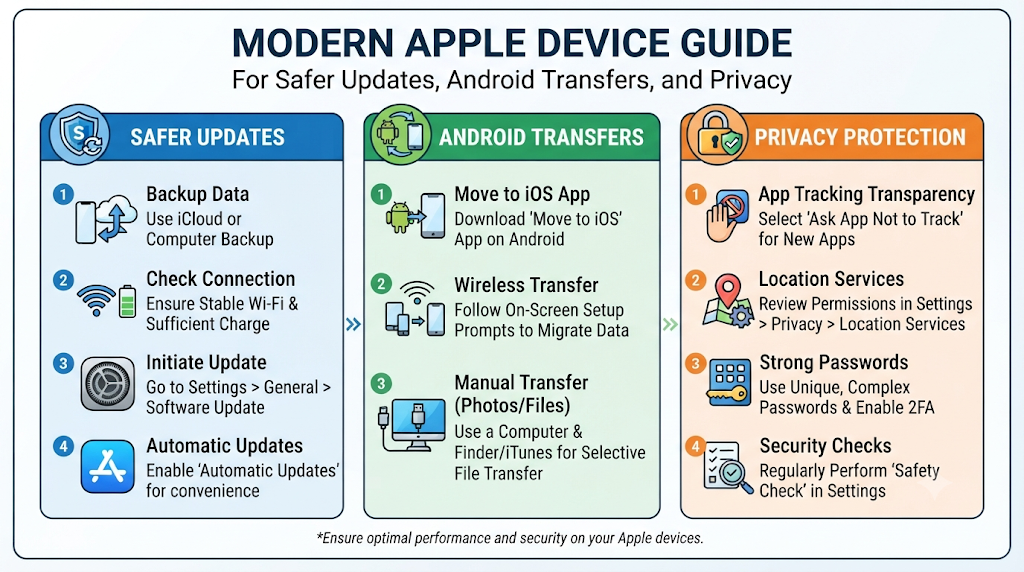
Leaving an Android device behind does not mean leaving your memories behind. You can transfer data from Android to iPhone safely with Apple’s free Move to iOS app. Remember to run this transfer during the initial setup screens before reaching the home screen.
Install the Move to iOS app from the Google Play Store onto your old Android phone first. Keep both phones plugged into wall chargers and connected to the exact same Wi-Fi network. On your new iPhone, tap the option to move data from Android until a special numeric code pops up.
Type that code into your Android screen and check the boxes for photos, contacts, and messages. Keep both devices resting side by side until the loading bar reaches the very end. For tricky app histories, the Migration Planner on Osnivo outlines what moves over and what needs a fresh login.
| Transfer Choice | Ideal Scenario | Wi-Fi Required | Transfer Speed |
|---|---|---|---|
| Move to iOS App | Moving files from an Android phone to a new iPhone | Yes, local network | Steady |
| Quick Start | Copying everything from an older iPhone to a new one | Yes, or wired cable | Very Fast |
| iCloud Restore | Bringing back data when your previous phone is lost | Yes, strong signal | Steady |
| Mac Finder Sync | Moving massive video libraries without cloud limits | No, uses a cable | Fastest |
Smart Tweaks for Your Everyday iPhone Settings Guide
Once your home screen appears, spending five minutes inside Settings improves battery life and screen comfort. Use this short iPhone settings guide to tune the switches that matter most for daily use. You do not need to touch advanced developer menus to get great results.
Open Settings, tap Display & Brightness, and switch on True Tone alongside Night Shift. These features warm up screen colors at night so your eyes relax before sleep. Next, open the Battery section, tap Charging, and turn on Optimized Battery Charging to protect long-term battery health.
Finally, open Notifications and turn off banners for shopping or game apps. Fewer buzzing alerts help you stay focused throughout the workday. If Apple moves a menu after an update, Settings Pathfinder on Osnivo helps you locate the exact switch without endless scrolling.
Quick Fixes When Your iPhone Won’t Connect to Wi-Fi
Losing your wireless signal stops web browsing, video calls, and app downloads in their tracks. When your iPhone won’t connect to Wi-Fi, the root cause is usually a stuck network cache or a sleepy router. Simple resets fix most connection drops in under five minutes.
Work through these steps one by one until web pages load again:
- Swipe down from the top-right corner, tap Airplane Mode on for twenty seconds, then tap it off.
- Unplug your home Wi-Fi router for thirty seconds, plug it back in, and restart your iPhone.
- Open Wi-Fi settings, tap the small blue circle beside your network name, and select Forget This Network.
- Tap your network name again and re-enter the wireless password carefully.
If the signal still drops while other laptops stay online, open General settings and choose Transfer or Reset iPhone. Tap Reset, then pick Reset Network Settings to clear out old wireless glitches. For stubborn hardware faults, Osnivo Fix groups troubleshooting steps by symptom so you find answers fast.
Simple Habits for How to Back Up an iPhone
Accidents happen fast, from cracked screens in parking lots to phones dropped in puddles. Knowing how to back up an iPhone protects your irreplaceable family pictures and work notes before trouble strikes. Apple provides two dependable ways to store a full copy of your phone.
The most hands-free option relies on iCloud over your home wireless connection. Open Settings, tap your profile banner at the top, choose iCloud, and select iCloud Backup. Turn on Back Up This iPhone so your device saves fresh copies every night while plugged in and locked.
If you prefer saving files locally without monthly storage fees, use a Mac or Windows PC. Plug your iPhone into your computer using a USB cable, open Finder on a Mac, and click Back Up Now. Both methods keep your information safe and ready for an easy restore.
| Backup Method | Monthly Price | Runs Automatically | Computer Needed |
|---|---|---|---|
| iCloud Backup | Free up to 5 GB | Yes, overnight on Wi-Fi | No |
| Computer Backup | Always free | No, requires manual plug-in | Yes |
Building Your Essential iPhone Security Settings Checklist
Keeping personal messages, banking apps, and location history private requires just a few smart switches. Following a basic iPhone security settings checklist blocks thieves and snooping apps from reaching your private life. Start by locking down your main Apple Account.
Turn on these five protections today:
- Enable Two-Factor Authentication so strangers cannot sign in even if they guess your password.
- Switch on Find My iPhone so you can locate, lock, or wipe a missing phone from another device.
- Turn on Stolen Device Protection inside Face ID & Passcode to require biometric checks for sensitive changes.
- Visit Privacy & Security, open Location Services, and restrict apps to While Using the App.
- Open Tracking inside Privacy & Security and block apps from following you across other companies’ websites.
Checking these settings every few months keeps your personal information under your control. Pairing strong passcodes with timely software updates builds a solid shield for everyday use.
Capturing Tutorials with QuickTime Player Screen Recording Mac
Sometimes explaining a computer task over text takes way too many words. Using QuickTime Player screen recording Mac features lets you record your exact mouse clicks and share a clear video clip. Every Mac includes this tool free of charge inside the Applications folder.
Launch QuickTime Player, look at the top menu bar, click File, and pick New Screen Recording. A compact toolbar appears near the bottom edge of your screen with clear capture icons. You can click once to record the whole display or drag a frame around a single app window.
Click the Options button on the toolbar if you want to include your voice from the built-in microphone. Press Record to begin capturing your screen, and click the small square Stop icon in the top menu bar when done. QuickTime opens your clip immediately so you can trim extra seconds and save the file.
Frequently Asked Questions
How can I see which iOS version is currently installed on my iPhone? Open the Settings app, scroll down to General, and tap About near the top. Look directly beside the iOS Version label to read the exact software number running on your phone.
Will my iPhone still work normally while an iCloud backup runs? Yes, you can send texts, make calls, and browse websites while iCloud backs up your data. Keep in mind that backups finish much faster when the screen stays locked and plugged into power.
Why does my iPhone feel warm and lose battery right after an update? Right after a major update, your iPhone re-indexes photos, apps, and search files in the background. This extra work drains power faster for about one or two days before battery life settles back to normal.
Does resetting network settings erase my personal photos or contacts? No, resetting network settings never touches your photos, videos, messages, or saved contacts. It strictly clears saved Wi-Fi passwords, paired Bluetooth speakers, and custom VPN settings.
Where do Mac screen recordings go after I stop QuickTime Player? By default, macOS places newly saved QuickTime screen recordings right onto your Desktop. You can pick a different folder beforehand by clicking the Options menu on the recording bar.
Should I choose iCloud backup or a Mac computer backup? Choose iCloud backup if you want automatic nightly saves without remembering to plug in cables. Pick a Mac computer backup if you have a massive photo library and want to avoid monthly storage upgrades.
How much free storage should I clear before installing a big iOS update? Try to keep at least ten to fifteen gigabytes of empty space available before starting a major update. Extra breathing room prevents stalled downloads and keeps your apps running smoothly afterward.
Can Move to iOS copy my WhatsApp chat history from Android to iPhone? Yes, Move to iOS supports transferring your WhatsApp profile photo, individual chats, and group messages. Just make sure you check the WhatsApp box on the transfer screen during initial setup.
What steps should I take before giving away or trading in an old iPhone? Always run a final backup first so you do not lose recent photos or notes. Afterward, sign out of your Apple Account and tap Erase All Content and Settings inside the General menu.
How do I verify if my older MacBook supports the newest macOS update? Click the Apple icon in the top-left corner of your display and select About This Mac. Note your Mac model name and production year, then match those details against Apple’s official support list.
Conclusion
Taking care of your Apple devices becomes easy once you know where the right switches live. Checking hardware compatibility early, keeping regular backups, and locking down privacy controls protect both your money and your memories. Built-in utilities like Move to iOS and QuickTime Player save you from buying extra software for everyday jobs.
Whenever you need plain-English setup steps, compatibility checks, or calm troubleshooting advice, Osnivo offers practical guides tailored for everyday users. Spend a few quiet minutes tuning your settings today so your iPhone and Mac run smoothly all year long.
