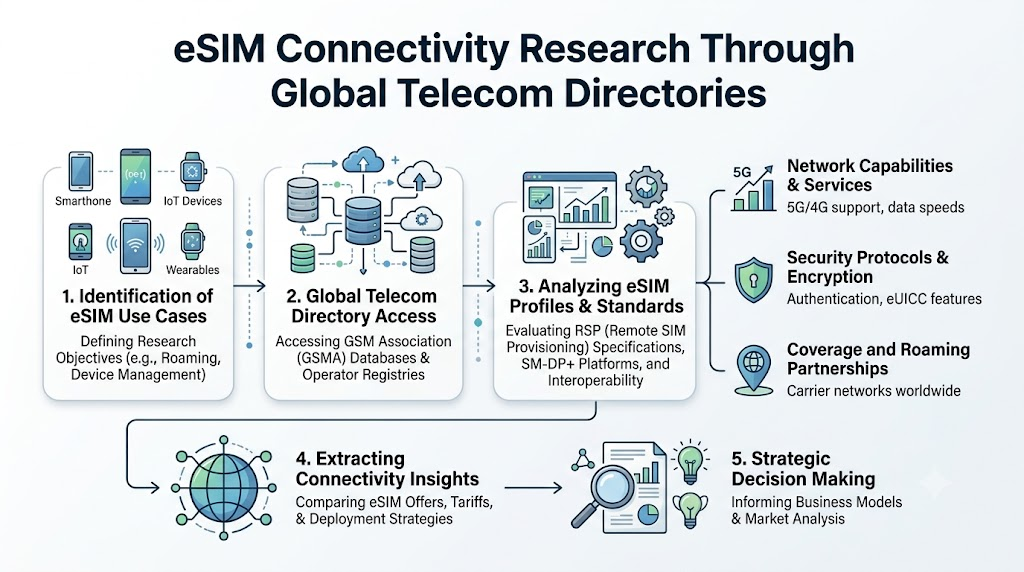
Introduction
Finding an unfamiliar carrier code can slow down your daily workflow. Telecom details are often hidden across many separate government registries. Without a central place to check these details, developers and analysts waste valuable hours. Performing an MCC MNC Lookup helps clear up this confusion right away. Standard codes like Mobile Country Codes and Mobile Network Codes form the core of cellular connections worldwide. Platforms like eSIMGlobo bring these important records together in one clean space. In this article, you will discover how these numeric identifiers work, how directory tools operate, and how to use telecom data properly.
Understanding MCC MNC Lookup Essentials
Cellular networks rely on standard numeric values to route phone calls and data. An MCC, or Mobile Country Code, is a three-digit number representing a specific nation. For instance, Germany uses the country code 262.
An MNC, or Mobile Network Code, comes right after the MCC as a two- or three-digit number. It points directly to a specific cellular carrier within that country. Together, these digits give every mobile operator a clear digital identifier. They ensure your phone connects safely to the correct cellular tower.
PLMN Code Lookup and Its Purpose
A PLMN code merges the country code and network code into one single string. When you run a PLMN Code Lookup, you examine both pieces of data together. This process shows you which exact business operates a specific cellular frequency.
A code lookup reveals who holds the regulatory assignment for that identifier. But remember that an assignment does not guarantee live consumer coverage everywhere. A company might hold a code without operating active cellular towers in every town. Always confirm active service status through separate checks.
Finding Mobile Network Codes by Country
Cellular prefixes differ greatly across international borders. Having an organized list of Mobile Network Codes by Country makes global research much easier. Analysts can filter networks by geographic region instead of searching randomly.
Using a reliable Mobile Country Code List helps you quickly find the correct prefix for any nation. Filtering by country lets you spot parent corporations, local subsidiaries, and active carrier allocations quickly.
Using a Mobile Network Operator Directory
A Mobile Network Operator Directory puts carrier details into one unified view. Instead of browsing dozens of official sites, you can search a single organized list. These directories display official names, network codes, and current operational notes.
Software developers and network researchers rely on these directories for quick verifications. If a mobile app needs to recognize a roaming partner, checking a directory gives instant answers. It transforms raw government registry data into clean, readable text.
Exploring a Global Telecom Provider Directory
Global telecommunications research requires looking past local borders. A Global Telecom Provider Directory connects operators across international boundaries. It allows users to compare carrier details on a worldwide scale.
Platforms like eSIMGlobo provide directory features that map out global providers easily. This helps you track large multinational telecom groups and their regional brands. Having global data in one spot speeds up market research significantly.
Understanding a Telecom Operator Database
A robust Telecom Operator Database stores detailed records of all carrier assignments. These files include official company names, country codes, network IDs, and status notes. Data quality matters immensely when you work with official registries.
Trustworthy databases update their records frequently to reflect new corporate changes. You must separate current operating details from old or unverified entries. Accurate records protect your telecom projects from costly routing mistakes.
Exploring an MVNO Directory
Virtual operators function differently than traditional network owners. An MVNO does not own physical cellular towers or radio spectrum. Instead, it rents network access from a host mobile operator.
Many virtual brands do not hold unique MCC or MNC assignments. They often share network codes with their host provider. An MVNO Directory helps you understand these business ties and find the host network behind a brand.
Finding Providers Through an eSIM Provider Directory
Digital SIM cards have changed how people stay connected abroad. An eSIM Provider Directory lists companies that sell digital roaming profiles. These tools help users compare travel plan providers side by side.
You must separate traditional network operators, virtual brands, and eSIM sellers. A network operator builds the physical towers. An eSIM provider packages data plans for travelers. Knowing this difference prevents confusion during your research.
Understanding an MCC MNC Lookup API
An application programming interface, or API, lets different software systems share data. An MCC MNC Lookup API automates the process of checking network codes. Developers build these tools straight into mobile apps and telecom platforms.
When a user inputs a code, the software queries the database instantly. This returns operator details in a fraction of a second. Always review official platform documentation to confirm if a public API is currently active before building dependencies.
Common Uses of Mobile Network Codes
Network codes serve many practical functions across different industries. Telecom professionals use them for network identification and roaming analysis. Software developers use them to build location-aware applications.
Data analysts use code lists to verify user records and spot routing issues. Keep in mind that code data has strict limits. Codes show regulatory registrations, but they do not measure real-time signal strength or actual network performance.
Common Lookup Mistakes
Researching telecom data demands strict attention to detail. One frequent mistake is confusing country codes with network operator codes. Using incomplete or outdated numbers yields incorrect search results.
Another error is assuming every code holder sells consumer phone plans. Some registered entities are government offices, testing labs, or inactive shells. Always verify multiple data sources before making final business decisions.
How eSIMGlobo Helps With Telecom Research
Platform tools make dealing with complex telecom datasets much simpler. eSIMGlobo offers structured directories and reference lists for network researchers. Users can explore global provider details and country code records in one central location.
The platform helps professionals organize carrier data efficiently while keeping realistic expectations about data limits. Using these structured resources streamlines your workflow and uncovers accurate network facts faster.
MCC, MNC, and PLMN Compared
| Term | Full Form | Simple Meaning | Main Purpose |
| MCC | Mobile Country Code | A three-digit number for a country | Identifies the nation where a network operates |
| MNC | Mobile Network Code | A two- or three-digit number for a carrier | Identifies the specific mobile operator |
| PLMN | Public Land Mobile Network | Combined country and network identifier | Routes cellular traffic and identifies the network |
Common Telecom Lookup Needs
| Lookup Type | Primary Focus | Main Benefit |
| Country-Based Search | Regional network lists | Narrows research to a specific nation |
| PLMN Lookup | Combined code analysis | Identifies the exact network owner |
| Operator Directory | Carrier profiles and records | Provides structured company details |
| MVNO Research | Virtual network tracking | Clarifies host network relationships |
| eSIM Provider Research | Digital plan companies | Compares travel connectivity sellers |
| API Lookup | Automated software queries | Enables fast, real-time data checks |
Frequently Asked Questions
What Is an MCC MNC Lookup?
An MCC MNC lookup is the process of checking a mobile country code and network code. It helps users identify the exact telecom operator tied to a specific numeric identifier quickly.
What Is the Difference Between MCC and MNC?
An MCC identifies the country where a mobile network is located. An MNC identifies the specific mobile network operator operating within those country borders.
What Does a PLMN Code Identify?
A PLMN code combines the MCC and MNC into one identifier. It shows both the country and the specific network operator handling a cellular signal.
How Can I Find Mobile Network Codes by Country?
You can find network codes by using structured country directories. These lists group carriers by geographic region to make regional research much easier.
What Does a Mobile Network Operator Directory Show?
A mobile network operator directory shows official carrier names, assigned codes, and operational status records. It organizes raw registry data into readable lists.
Does Every Telecom Provider Have Its Own MCC and MNC?
No, not every provider has a unique code. Virtual operators often share network codes with their host carriers rather than holding separate assignments.
What Is the Difference Between an MNO and an MVNO?
An MNO owns physical cellular towers and radio spectrum. An MVNO rents network access from an MNO to provide services without owning infrastructure.
How Is an eSIM Provider Directory Different From a Telecom Operator Database?
An eSIM directory lists companies selling digital travel plans. A telecom operator database tracks official network code assignments and registry data.
What Is an MCC MNC Lookup API Used For?
An API allows software applications to query network code databases automatically. Developers use it to build automated telecom tools and lookup features.
Why Should I Verify Network-Code Records?
Verifying records ensures your data is accurate and current. Official registries change often, and checking sources prevents reliance on outdated or inactive code assignments.
Final Thoughts
Navigating global telecom data does not have to be frustrating. By understanding how country codes, network identifiers, and provider directories function, you can research carriers with confidence. Tools like eSIMGlobo bring these vital records together in one accessible location. Remember that network-code records outline regulatory assignments rather than immediate coverage availability. Start exploring structured network directories today to streamline your next telecom research project.
