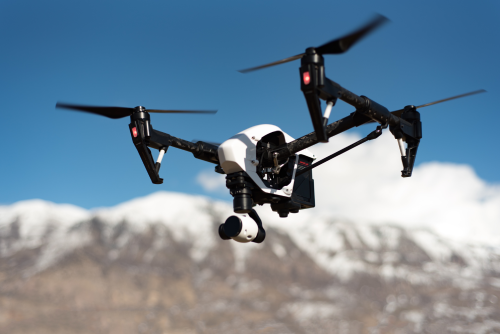
The Safran/Sagem Patroller is a French fixed-wing military/ISR drone built for long-duration surveillance and reconnaissance rather than consumer-style flying. In the supplied data, Patroller is listed as active, with a reported 20-hour endurance, 180 km range, and 200 km/h maximum speed. That makes it most relevant to defense analysts, government operators, and readers comparing tactical unmanned aircraft, even though many deeper specifications are not publicly confirmed in the supplied record.
Quick Summary Box
- Drone Name: Safran/Sagem Patroller
- Brand: Safran/Sagem
- Model: Patroller
- Category: military/ISR fixed-wing drone
- Best For: Defense and government users evaluating long-endurance fixed-wing ISR platforms
- Price Range: Not publicly confirmed in supplied data
- Launch Year: Not publicly confirmed in supplied data
- Availability: Not publicly confirmed in supplied data
- Current Status: Active
- Overall Rating: Not rated due to limited confirmed data
- Our Verdict: A credible long-endurance ISR platform on paper, but public buyer-style details remain limited and must be verified directly through official channels.
- Standout Figure: The reported 20-hour endurance is the single most important published number in the supplied data.
- Main Caveat: Many of the details that actually determine mission value in this class—payloads, ground segment, support structure, and integration—are not fully confirmed in the supplied record.
Introduction
Patroller is a fixed-wing unmanned aircraft from Sagem under the Safran/Sagem brand, positioned in the military/ISR segment. Unlike consumer quadcopters or creator drones, it is designed around persistence, area coverage, and surveillance utility. Readers should care about it because the confirmed figures already suggest a serious long-endurance platform, while the limited public spec depth means any real acquisition decision needs careful verification.
That distinction matters. A drone like Patroller is not judged primarily by how easy it is to unpack, how sharp its social-media footage looks, or how convenient its smartphone app feels. In the defense and government world, the real questions are different: How long can it stay on station? How far can it operate from its launch point or control architecture? What payloads can it support? How well does it integrate with command systems, communications links, and operational workflows? How burdensome is maintenance? What kind of support package comes with it?
Based on the supplied data alone, Patroller appears to belong squarely in that more serious institutional category. Its reported endurance, speed, and active status make it worth attention for anyone surveying the landscape of tactical fixed-wing ISR platforms. At the same time, the record does not provide enough confirmed detail to treat it like a transparent off-the-shelf purchase. That means any evaluation should balance interest in the airframe’s headline performance with caution about the many unanswered questions that can shape real-world capability.
Overview
What kind of drone is it?
The Patroller is a fixed-wing military and ISR drone from France. Its configuration and mission category point to a platform built for extended forward flight, observation, and broad-area monitoring rather than hovering or close-range filming.
That fixed-wing identity is important. Multirotor drones dominate public awareness because they are common in consumer, industrial inspection, and media work. But for long-endurance surveillance missions, fixed-wing aircraft often make more operational sense. They are usually more efficient in cruise, better suited to covering distance, and more capable of remaining airborne for long stretches without the major energy penalties that come with rotor-borne flight. For military and state surveillance roles, that efficiency can translate directly into fewer launches, fewer aircraft rotations, and longer continuous watch over a mission area.
In practical terms, Patroller should be thought of less as a “drone camera” and more as an unmanned observation aircraft. The air vehicle is only one part of the system. Mission usefulness in this category depends on the airframe, payload, control station, communications link, launch and recovery method, sustainment model, operator training, and data exploitation workflow. The supplied data confirms only part of that picture, but even that partial picture clearly places Patroller in the professional defense ISR space.
Who should buy it?
This is not a retail drone for hobbyists or standard commercial operators. The most relevant audience is defense organizations, government surveillance programs, institutional researchers, and procurement teams comparing tactical UAV options.
A realistic buyer profile would include:
- Military users looking for tactical or operational-level airborne surveillance
- Border or frontier security agencies that need long-duration area watch
- Government maritime, coastal, or infrastructure monitoring bodies if fitted with suitable mission sensors
- Defense research institutions comparing European UAV offerings
- Acquisition teams evaluating whether a French or European industrial source aligns with policy, interoperability, or sovereign capability goals
Just as important is who should not treat Patroller as a serious candidate. It is not intended for hobby flight, real-estate photography, basic mapping by small firms, or general-purpose enterprise drone work in the way many commercial VTOL systems are. The likely procurement path, support burden, regulatory environment, and mission specialization all make it unsuitable for casual or lightly resourced users.
What makes it different?
What stands out most in the supplied data is the endurance figure. A reported 20 hours of flight time, paired with a 180 km range and 200 km/h top speed, positions Patroller as a persistence-focused ISR aircraft rather than a short-mission tactical quadcopter. Its French Safran/Sagem lineage also gives it clear defense-industry context.
That combination suggests a platform designed to do three things reasonably well:
- Stay airborne for extended periods
- Transit to and from mission areas at useful speed
- Support observation missions over broad outdoor areas
Those are exactly the traits many government users care about when they are less concerned with hovering over a single point and more concerned with maintaining a persistent surveillance picture across terrain, borders, routes, or coastal spaces.
Another point of differentiation is market identity. Many unmanned aircraft are sold as products. Platforms like Patroller are better understood as systems. Buyers are not only evaluating the aircraft; they are also evaluating lifecycle support, training, data-link security, payload integration, national approvals, and often the strategic implications of choosing one defense supplier over another. That makes Patroller a different kind of decision from almost any consumer or industrial UAV purchase.
Key Features
- Fixed-wing airframe optimized for long-duration flight rather than hover
- Military/ISR market positioning
- Active program status in the supplied data
- Reported endurance of 20 hours
- Reported range of 180 km
- Reported maximum speed of 200 km/h
- French-origin platform from Sagem under Safran/Sagem branding
- Intended for ISR payload carriage, though exact payload options are not publicly confirmed in the supplied data
- Better suited to wide-area outdoor operations than confined, close-quarters work
- Procurement-led platform rather than a standard consumer retail product
To add practical meaning to those bullets:
- The fixed-wing layout usually implies better cruise efficiency than multirotor designs in similar surveillance roles.
- The 20-hour endurance figure is strong enough to make persistence the main talking point.
- The 180 km range figure indicates meaningful reach, but mission usefulness still depends heavily on communications architecture and operating rules.
- The 200 km/h top speed suggests it is not purely a slow loitering aircraft and may be able to reposition with reasonable urgency when needed.
- The active status matters because analysts often review UAV programs that are discontinued, niche prototypes, or legacy systems. Active status at least indicates the platform remains relevant enough to watch.
- The French defense-industrial association may matter to buyers prioritizing European sourcing, national alignment, or non-US supply options.
The main limitation is that several important “feature” areas are still unknown in the supplied record. A platform can look strong on endurance and still be less competitive if its payloads, data links, or sustainment model are weak. So the listed features tell you why Patroller is interesting, but not yet why it is definitively superior.
Full Specifications Table
| Specification | Details |
|---|---|
| Brand | Safran/Sagem |
| Model | Patroller |
| Drone Type | Fixed-wing military/ISR drone |
| Country of Origin | France |
| Manufacturer | Sagem |
| Year Introduced | Not publicly confirmed in supplied data |
| Status | Active |
| Use Case | military/ISR |
| Weight | Not publicly confirmed in supplied data |
| Dimensions (folded/unfolded) | Not publicly confirmed in supplied data |
| Max Takeoff Weight | Not publicly confirmed in supplied data |
| Battery Type | Not publicly confirmed in supplied data |
| Battery Capacity | Not publicly confirmed in supplied data |
| Flight Time | 20 hr |
| Charging Time | Not publicly confirmed in supplied data |
| Max Range | 180 km |
| Transmission System | Not publicly confirmed in supplied data |
| Top Speed | 200 km/h |
| Wind Resistance | Not publicly confirmed in supplied data |
| Navigation System | Not publicly confirmed in supplied data |
| Obstacle Avoidance | Not publicly confirmed in supplied data |
| Camera Resolution | Not publicly confirmed in supplied data |
| Video Resolution | Not publicly confirmed in supplied data |
| Frame Rates | Not publicly confirmed in supplied data |
| Sensor Size | Not publicly confirmed in supplied data |
| Gimbal | Not publicly confirmed in supplied data |
| Zoom | Not publicly confirmed in supplied data |
| Storage | Not publicly confirmed in supplied data |
| Controller Type | Not publicly confirmed in supplied data |
| App Support | Not publicly confirmed in supplied data |
| Autonomous Modes | Not publicly confirmed in supplied data |
| Payload Capacity | Not publicly confirmed in supplied data |
| Operating Temperature | Not publicly confirmed in supplied data |
| Water Resistance | Not publicly confirmed in supplied data |
| Noise Level | Not publicly confirmed in supplied data |
| Remote ID Support | Not publicly confirmed in supplied data |
| Geo-fencing | Not publicly confirmed in supplied data |
| Certifications | Not publicly confirmed in supplied data |
| MSRP / Launch Price | Not publicly confirmed in supplied data |
| Current Price | Not publicly confirmed in supplied data |
A quick caution on reading this table: absent public confirmation should not be interpreted as proof that the feature does not exist. In the defense market, a lot of information is simply not presented in the same transparent way found in consumer product listings. Some details may be restricted, customer-specific, configuration-dependent, or only disclosed under formal engagement. So this table is best used as a map of what is confirmed in the supplied data—not as a claim that all other capabilities are missing.
Design and Build Quality
The Patroller’s fixed-wing layout tells you a lot about its design priorities even before detailed dimensions are known. This type of airframe generally favors aerodynamic efficiency, cruise endurance, and payload-carrying stability over compact transport convenience.
That alone separates it from most drones familiar to the general public. Consumer and enterprise multirotors are often designed around portability, fast deployment by one or two operators, and the ability to hover in place for imaging or inspection. A military ISR aircraft usually works from a different logic. It is expected to spend longer in forward flight, cover larger areas, support more structured mission planning, and integrate into a wider operational system rather than serve as a standalone tool.
Publicly confirmed data does not describe the materials, landing gear setup, propeller arrangement, foldability, or service-access design. What can be said responsibly is that a military/ISR drone in this class is usually built with field-readiness, maintainability, and mission endurance in mind rather than backpack portability. In practical terms, readers should expect a much more infrastructure-dependent system than a consumer drone, with setup, support, and transport requirements that are likely closer to aircraft operations than casual UAV use.
That infrastructure dependence can include things like:
- Dedicated transport or support vehicles
- Ground-control hardware beyond a handheld controller
- Formal pre-flight and post-flight checks
- Mission-specific launch and recovery procedures
- Spares management and maintenance schedules
- Trained crews, not just a single pilot/operator
Even when the airframe itself is efficient and practical, the system footprint may still be substantial. For institutional buyers, that is not necessarily a drawback. In fact, a more structured system can be an advantage if it brings better maintainability, more reliable mission processes, and clearer sustainment planning. But it does mean that “ease of use” should be understood differently here. The right question is not whether Patroller is easy for a hobbyist. The right question is whether it is operationally manageable for a trained, supported government or defense unit.
Another design implication of the fixed-wing format is mission stability. For surveillance work, a stable platform can help payload performance by improving image quality, supporting more predictable tracking, and reducing the burden on stabilization systems. Even though the supplied data does not confirm payload hardware, the airframe concept itself points toward observation efficiency over long periods rather than aggressive maneuvering or close-quarters flight.
Flight Performance
On the confirmed numbers alone, Patroller’s main strength is persistence. A reported 20-hour endurance is a serious figure for tactical or theater-level observation tasks, allowing long dwell times over a mission area or fewer airframe rotations over extended watch periods.
That matters operationally in several ways.
First, long endurance can reduce the number of launches required to sustain surveillance coverage over time. Instead of cycling multiple short-endurance platforms through the same area, an operator may be able to keep one aircraft on task for much longer. That simplifies scheduling, eases launch-and-recovery pressure, and can reduce gaps in coverage.
Second, long endurance can increase mission flexibility. If a drone reaches an area of interest and then the situation changes—a target is delayed, a patrol shifts route, a border crossing does not occur when expected—a longer-endurance platform can remain available rather than immediately turning home due to energy limits. In ISR work, that kind of patience can be extremely valuable.
Third, endurance often affects more than time aloft. It can shape how confidently a force plans operations. A platform that is expected to remain airborne for many hours can support broader watch windows, deeper loiter profiles, and more resilient contingency planning.
The reported 200 km/h top speed suggests that the aircraft is not only endurance-oriented but also capable of reasonably quick repositioning compared with very slow surveillance platforms. While top speed is not the same thing as normal cruise speed, it still indicates that Patroller may be able to respond to changing mission demands more effectively than slower aircraft dedicated purely to station-keeping.
The 180 km range figure indicates useful stand-off reach, though real mission radius can vary significantly depending on payload, communications architecture, airspace constraints, and operating doctrine. Range is one of the most easily misunderstood numbers in drone analysis. It may reflect direct control-link assumptions, particular profiles, or ideal conditions rather than a universally available operational radius. Buyers should therefore ask:
- Does the reported range refer to line-of-sight control?
- Is it a mission radius or a total travel distance?
- How does payload weight affect it?
- What happens under degraded weather or strong winds?
- Does the communications package limit usable distance before fuel or endurance does?
As analysis rather than newly claimed fact, a fixed-wing drone like this would usually handle wind and cruise efficiency better than a multirotor platform in the same mission role. The tradeoff is agility: Patroller is likely suited to outdoor, large-area missions and not to hovering, tight urban maneuvering, or indoor use. Takeoff and recovery method are not publicly confirmed in the supplied data, so operators would need to verify how field deployment actually works.
That missing takeoff-and-recovery detail is not minor. It can strongly affect operational flexibility. A platform that needs more formal launch and recovery infrastructure may still be excellent for sustained surveillance, but it may be less convenient for highly distributed teams operating from austere locations. Conversely, a robust launch-and-recovery approach may improve repeatability and aircraft safety. This is exactly the kind of question that separates paper specifications from real procurement evaluation.
Weather behavior is another unknown area. Wind resistance, icing tolerance, rain exposure, and temperature envelope are not publicly confirmed in the supplied record. For state users, those details matter because surveillance missions rarely happen only in ideal conditions. A long-endurance aircraft that performs well in good weather but struggles in harsher environments may deliver less practical value than its endurance number suggests. Again, that does not mean Patroller has weaknesses here—only that the record does not yet let open-source readers judge them.
Camera / Payload Performance
Patroller should be viewed first as an ISR payload carrier, not as a photography drone. The supplied data does not publicly confirm camera resolution, video resolution, sensor size, gimbal details, zoom capability, or named payload families.
That missing detail matters. For a military/ISR aircraft, mission usefulness often depends less on headline camera specs and more on what sensor packages can actually be integrated, stabilized, and networked into the wider command system. In procurement terms, buyers would want to verify whether the platform supports electro-optical, infrared, or other specialized ISR payloads, and how those payloads affect endurance and mission workflow.
This is a crucial difference between defense UAV assessment and consumer drone shopping. In consumer markets, camera resolution often dominates the conversation. In ISR work, the more relevant questions tend to be:
- Can the sensor detect and identify useful targets at mission-relevant distances?
- Does it perform in both day and night conditions?
- How stable is the imagery during long flight segments?
- Can the payload be slewed, cued, or coordinated efficiently from the ground segment?
- Is the data link robust enough to transmit what operators need in real time?
- Can intelligence products be recorded, replayed, or shared effectively?
- How easily can the aircraft support different payload packages for different missions?
A platform may have a very capable airframe and still disappoint if payload integration is narrow, awkward, or operationally immature. The reverse can also be true: a good sensor and mission system can make a moderate airframe much more valuable. Because of that, Patroller cannot be fully judged on airframe numbers alone.
When analysts look at UAVs in this class, they also care about payload modularity. If one operator wants border surveillance, another wants coastal watch, and another wants general reconnaissance, the same aircraft may need to support different sensor fits or mission kits. The supplied data does not confirm how flexible Patroller is in that respect. For serious buyers, that is a major due-diligence item.
The weight and drag impact of payloads also matter. Endurance figures are often discussed as if they exist independently of mission equipment, but in reality, payload selection can affect time aloft, climb performance, and handling. A “20-hour” platform with one payload configuration may not deliver the same persistence with another. Open data here is too limited to determine how Patroller balances airframe performance against sensor fit.
So while Patroller is clearly positioned as a surveillance platform, its practical payload value cannot be fully judged from the supplied record alone. Any comparison against competing ISR drones should focus on sensor integration and ground-segment capability, not just raw airframe performance.
Smart Features and Software
Publicly confirmed software and autonomy details are limited. The supplied data does not confirm waypoint planning, automated return logic, target tracking, AI analytics, cloud tools, SDK access, or third-party app support.
That said, long-endurance fixed-wing ISR drones typically depend on mission planning software, autopilot-managed navigation, and structured ground-control workflows. It is reasonable to expect some level of automated flight-management capability in this category, but the exact implementation for Patroller should be verified directly through official program documentation. Readers should also confirm data-link architecture, sensor control interfaces, mission replay capability, and any security or encryption-related system features before making comparisons.
Software quality can be as decisive as hardware in a platform like this. For example:
- Mission planning tools influence how quickly operators can build and adjust routes
- Autopilot behavior affects stability, repeatability, and safety
- Sensor tasking interfaces determine how effectively crews can use payloads
- Data handling tools affect what intelligence value can be extracted during and after the flight
- Health monitoring and diagnostics shape maintenance efficiency and fault response
- Cybersecurity features can be mission-critical in government environments
The phrase “smart features” also means something different in this category than it does in consumer drones. For a hobby or creator drone, smart features often mean automated shots, subject tracking, or app-driven convenience. For a military ISR platform, smarter capability may instead mean things like route automation, lost-link procedures, mission-state awareness, secure communications, payload cueing, and operator workload reduction.
Open-source readers should be cautious about assuming modern software sophistication simply because the platform is active. An active program can still vary greatly in user interface quality, data fusion maturity, or integration depth. Conversely, lack of public app-style feature lists does not imply weak capability. Defense systems often emphasize secure, controlled, mission-specific tooling rather than flashy public marketing language.
Use Cases
Given the confirmed endurance and fixed-wing military/ISR role, the most realistic applications are:
-
Persistent area surveillance
Patroller’s published endurance figure makes this its most obvious use. A long-duration aircraft can watch roads, remote sectors, designated zones, or operational corridors without the constant rotation burden associated with shorter-endurance systems. -
Government and defense reconnaissance missions
For military and state users, a fixed-wing UAV in this class is naturally suited to intelligence gathering, route monitoring, and broad-area reconnaissance where staying airborne matters more than hovering. -
Border and frontier observation
Long stretches of border are exactly the kind of mission environment where endurance matters. Operators may need to monitor movement across large, sparsely populated, or difficult terrain areas where deploying many small drones would be inefficient. -
Long-duration patrol and watch operations over wide outdoor areas
This includes security patrol patterns, route observation, remote territory monitoring, and other missions where an aircraft must repeatedly cover significant ground rather than inspect one structure at close range. -
Training and doctrine development for fixed-wing unmanned aviation units
Even beyond front-line deployment, active UAV platforms matter to institutions developing operational methods, crew practices, maintenance concepts, and ISR doctrine. -
Program evaluation by defense researchers and procurement teams
Patroller may also matter as a benchmark in market analysis. Even if a buyer does not choose it, it can still help frame questions around endurance, sovereignty, industrial base, and mission fit. -
Coastal or infrastructure observation when fitted with suitable mission sensors
If configured appropriately, a long-endurance UAV can support surveillance of coastlines, energy infrastructure corridors, remote sites, or maritime-adjacent areas. The key phrase, however, is “when fitted with suitable mission sensors,” because payload specifics are not publicly confirmed in the supplied data.
There are also secondary or adjacent scenarios where a platform like this could be considered, depending on configuration and approvals:
- Monitoring remote transport routes
- Supporting high-level situational awareness during security operations
- Supplementing manned aviation in surveillance-heavy missions
- Serving as an airborne observation asset in exercises, readiness programs, or test campaigns
What Patroller is not naturally optimized for is equally important. It is not the obvious answer for building inspection in confined spaces, indoor operations, rooftop hover work, fast-deploy creator filming, or close-range tactical tasks that depend on multirotor hover precision. The airframe type and mission role point strongly toward open-area, endurance-heavy operations.
Pros and Cons
Pros
-
Reported 20-hour endurance is a major strength for persistent ISR missions
This is the clearest reason the platform stands out in the supplied data and the main number that gives it strategic relevance in comparison discussions. -
Reported 200 km/h top speed supports faster transit and repositioning than many smaller surveillance drones
Speed does not replace endurance, but it improves responsiveness and may help the aircraft reach or shift between operating areas more efficiently. -
Fixed-wing layout is well matched to long-range, wide-area observation work
For surveillance over distance, fixed-wing efficiency is often a strong advantage over hover-capable multirotors. -
Active status is more reassuring than a clearly retired or purely experimental platform
Analysts and buyers generally prefer to study systems that appear current enough to matter. -
French Safran/Sagem origin may appeal to buyers seeking an established European defense supplier
Industrial origin can matter for policy, supply-chain, sovereignty, and interoperability reasons as much as for technical ones.
Cons
-
Many important specifications are not publicly confirmed in the supplied data
Missing details on weight, payload, avionics, software, and support reduce confidence in open-source comparison. -
Payload details are too limited to judge sensor capability from open information alone
An ISR aircraft cannot be meaningfully evaluated by endurance alone. -
Price, support package, and procurement path are not publicly clear
That makes budgeting and ownership planning difficult without direct engagement. -
Fixed-wing aircraft are less flexible than multirotors for hovering or confined-site work
Mission fit is strong for broad-area surveillance, but weaker for tasks needing stationary flight or tight maneuvering. -
This is not a normal retail drone, so adoption is likely complex, contract-based, and region-dependent
Export controls, approvals, and sustainment arrangements may shape access as much as technical suitability.
Comparison With Other Models
Because public Patroller data is incomplete, the comparison below is directional rather than procurement-grade. Public figures for other military UAVs can vary by configuration and customer package.
| Model | Price | Flight Time | Camera or Payload | Range | Weight | Best For | Winner |
|---|---|---|---|---|---|---|---|
| Safran/Sagem Patroller | Not publicly confirmed | 20 hr | ISR payload fit not publicly detailed | 180 km | Not publicly confirmed in supplied data | Long-endurance French tactical ISR | Endurance on supplied figures |
| Thales Watchkeeper WK450 | Not publicly confirmed | Publicly reported around 16 hr | EO/IR ISR payload class | Publicly reported around 150 km class | Publicly reported around 450 kg MTOW class | Tactical ISR programs with integrated ground segment focus | Public visibility of program integration |
| Elbit Hermes 450 | Not publicly confirmed | Publicly reported around 17 hr | EO/IR and ISR mission payload class | Publicly reported around 200 km class | Publicly reported around 450 kg class | Mature tactical ISR fleets | Broad market familiarity |
| Sagem Sperwer | Not publicly confirmed | Publicly reported around 6 hr class | Legacy tactical ISR payload class | Publicly reported around 150 km class | Publicly reported lighter legacy class | Historical benchmark and legacy ISR comparison | Older-generation reference point |
A few cautions help put this table in perspective:
- These are not apples-to-apples retail comparisons
- Different customers may receive different configurations
- Public reporting can mix older and newer data
- Payload, mission system, and support package differences may matter more than headline speed or endurance
- A UAV program’s maturity, fleet history, and training ecosystem can be as important as the raw aircraft numbers
Patroller vs a close competitor
Against Thales Watchkeeper WK450, Patroller appears stronger on endurance based on the supplied figure of 20 hours. That could make it attractive for users who prioritize longer airborne persistence or want fewer rotations during surveillance coverage.
Watchkeeper, however, is often discussed more openly in public program terms, which can make it easier to compare at a high level. That matters because public visibility can reflect how much a system’s operational model, integration pathway, and payload concept are already understood by analysts. Even if Patroller’s endurance advantage is real, buyers would still need to verify the total package: sensors, data links, launch/recovery concept, sustainment, and mission support.
In other words, Patroller may look better on one headline number, but a procurement decision cannot rest on that alone.
Patroller vs an alternative in the same segment
Compared with Elbit Hermes 450, Patroller looks competitive in endurance and sits in a similar broad tactical ISR conversation. Hermes 450 has wider public recognition across export markets, while Patroller’s appeal is more tied to its French industrial base and stated performance profile.
This creates an interesting tradeoff. A buyer comparing the two might think in terms of:
- Patroller: interest driven by endurance, European sourcing, and active status
- Hermes 450: interest driven by broad market familiarity, operational history, and name recognition
The exact winner would likely depend on mission architecture and political-industrial priorities rather than pure airframe performance alone. If a customer values ecosystem maturity and wider reference points, Hermes 450 may feel easier to benchmark. If a customer values the specific combination of French lineage and the supplied endurance figure, Patroller may become more attractive.
Patroller vs an older or previous-generation option
Compared with the older Sagem Sperwer, Patroller represents a more endurance-focused and more modern direction in fixed-wing ISR. Sperwer is most useful as a legacy reference point, not as the obvious like-for-like choice for a current long-endurance requirement.
That comparison is still informative because it highlights how priorities have evolved. Older tactical UAVs often delivered shorter endurance and narrower mission envelopes by current standards. A platform associated with 20-hour endurance reflects a stronger emphasis on persistence and operational efficiency over long watch periods. For analysts interested in how European UAV capability has developed, that contrast is meaningful even if the systems are not direct procurement rivals today.
Manufacturer Details
Sagem is the listed manufacturer, and the Safran/Sagem branding reflects the company’s place within the broader Safran defense and aerospace ecosystem. In practical terms, readers will often see Patroller associated with Safran because Sagem’s defense and electronics activities have long been tied to that larger French industrial group.
France is the country of origin, and that matters in procurement context. Safran-linked defense products are generally associated with avionics, optronics, navigation, and mission systems rather than hobby-grade consumer drones. That gives Patroller a very different market identity from commercial photography UAVs: it belongs to the professional defense systems world, where integration, support, and government relationships matter as much as airframe performance.
For many institutional buyers, manufacturer identity affects several practical questions:
- Is the supplier established enough to support long-term programs?
- Does the company have credibility in aerospace and defense integration?
- Can it provide secure mission systems and related support?
- Does national origin align with the buyer’s industrial or political preferences?
- Is there likely to be a broader ecosystem of compatible defense technologies?
Even without full public program detail, the Safran/Sagem association suggests Patroller should be understood in the context of a serious aerospace-defense supplier rather than a niche drone startup. That does not automatically settle questions of mission fit, cost, or support, but it does help frame the kind of procurement environment in which the platform belongs.
Support and Service Providers
For a platform like Patroller, support is likely to be official and contract-based rather than consumer-style. Buyers should expect support, repairs, training, spare parts, and software maintenance to flow through the manufacturer, official defense sales channels, or authorized regional service partners.
There is no publicly confirmed consumer-style repair network in the supplied data. Warranty terms, depot-level maintenance, field service access, and long-term spares planning should all be verified before procurement. Community help is also likely to be far more limited than for mainstream commercial drones, so institutional buyers should assume they will need formal training and formal support coverage.
Support questions in this category usually go well beyond simple repairs. A serious buyer would want clarity on:
- Initial operator and maintainer training
- Documentation and technical publication access
- Spare parts stocking and lead times
- Software updates and mission-system maintenance
- Data-link and cybersecurity support
- Field-service options during deployments
- Depot-level overhaul or major repair arrangements
- Configuration control and upgrade pathways
- Obsolescence management over the system lifecycle
For military or government users, this matters because downtime can erase the value of strong paper performance. A platform that promises long endurance but is hard to sustain in the field may underperform over the life of the program. Conversely, a well-supported system can remain useful even if its headline numbers are not class-leading. Supportability is often one of the least visible but most decisive parts of a UAV acquisition.
Where to Buy
Patroller should not be treated like a normal retail drone. It is best understood as a procurement-led defense platform, meaning acquisition is likely handled through direct manufacturer engagement, authorized national representatives, defense integrators, or government contracting frameworks.
Readers should not expect standard online storefront availability. Regional access may depend on export controls, national approvals, support agreements, and customer type. If a buyer is seriously evaluating the platform, the correct path is to verify availability directly through official Safran/Sagem channels or authorized defense-sector partners.
In practice, acquisition may involve some combination of:
- Formal requests for information or proposals
- Government-to-industry engagement
- Demonstrations or evaluation campaigns
- Security and end-user screening
- Negotiation of support and training packages
- Industrial participation or local support arrangements
- Export licensing review where applicable
This is why open-source pricing and availability are often vague for systems like Patroller. They are not sold in a simple catalog model. They are usually offered as part of a broader capability package, and the exact package may vary significantly by customer.
Price and Cost Breakdown
No launch price or current price is publicly confirmed in the supplied data. For that reason, any budget estimate based only on open information would be incomplete.
Before budgeting, buyers should verify:
-
Air vehicle cost
The aircraft itself is only the starting point and may not be the dominant share of total program cost. -
Ground control station and communications package
In defense UAV programs, command-and-control equipment can be a major cost driver. -
Sensor or mission payload cost
ISR value often comes from the payload suite, not just the airframe. -
Training and simulation requirements
Operator qualification and maintainer training may require dedicated resources. -
Spare parts and maintenance package
Initial spares, consumables, and support equipment can materially affect acquisition cost. -
Software, data-link, and cybersecurity support
Secure, supportable software is especially important in government use. -
Field service and depot repair terms
Ongoing sustainment arrangements can shape lifetime cost far more than initial purchase price. -
Insurance, logistics, and lifecycle support obligations
Transport, storage, contractor support, and long-term readiness all add to the full cost picture. -
Any launch, recovery, or mission-integration equipment required by the final configuration
If a fixed-wing system needs specialized deployment hardware or infrastructure, that can be significant.
It is also worth asking about several indirect cost drivers that are easy to overlook:
- Personnel footprint per aircraft or detachment
- Data storage and exploitation infrastructure
- Security compliance requirements
- Test and acceptance activities
- Airspace coordination costs
- Training currency and recertification needs
- Software licensing or recurring support fees
- Future upgrade costs if payloads or communications systems evolve
For military/ISR platforms, total ownership cost is often shaped more by the full system package than by the airframe alone. That is why “price” is a less useful single number here than program cost or lifecycle cost. A buyer choosing between platforms should look not only at acquisition expense, but at how much capability can actually be generated over years of use.
Regulations and Compliance
Patroller is not a casual recreational aircraft, and its operation would normally fall under government, military, or specially authorized institutional frameworks. Buyers and operators must verify the rules that apply in their own country and mission environment.
Key areas to check include:
- Aircraft registration or military fleet registration requirements
- Airspace approval for large or long-range unmanned operations
- Operator qualification and licensing
- Radio spectrum and communications permissions
- Privacy and surveillance law
- Export controls and end-user restrictions
- Data handling, imagery retention, and cybersecurity policy
- Any special approval needed for operations in civilian or mixed-use airspace
Remote ID support is not publicly confirmed in the supplied data, and it should not be assumed. The same applies to geofencing, civil certifications, and any claim of universal compliance.
For a platform in this class, regulation is not just about legal flight authorization. It can also affect mission design, cost, and deployment timelines. For example:
- Operating in segregated military airspace may be straightforward for some users but limiting for others
- Integration into civil airspace may require additional equipment, procedures, or approvals
- Surveillance missions may trigger strict rules on imagery collection, retention, and sharing
- Export-controlled systems may face political or diplomatic constraints beyond technical qualification
- Encrypted communications and secure data handling may be mandatory depending on the user and mission
A prospective operator should therefore treat compliance as part of capability planning, not as a final paperwork step. In some programs, regulatory and certification demands can be as decisive as endurance or payload performance.
Who Should Buy This Drone?
Best for
-
Defense organizations seeking a fixed-wing ISR platform with strong published endurance
If long on-station time is a priority, Patroller’s reported 20-hour figure will attract attention. -
Government agencies evaluating long-duration surveillance aircraft
Border, coastal, or other state surveillance users may find the broad mission profile relevant. -
Researchers and analysts comparing European tactical UAV options
Even when full details are not public, Patroller is a meaningful data point in the European ISR UAV discussion. -
Institutional buyers that can support training, maintenance, and contract-based service structures
This is the right kind of platform for organizations prepared to buy and sustain systems, not just products.
Not ideal for
- Consumers or hobby pilots
- Standard commercial photography and videography operators
- Small organizations that need transparent retail pricing and easy self-service support
- Users who need hovering, VTOL convenience, or compact transportability
- Buyers who cannot verify payload, support, and regulatory details directly with the manufacturer
A simple rule of thumb: if your organization normally buys drones through online dealers, compares them by camera specs, and expects one-person field deployment, Patroller is probably outside your operating model. If your organization runs formal procurement, trained crews, structured maintenance, and mission-driven surveillance requirements, then it becomes much more relevant.
Final Verdict
The Safran/Sagem Patroller looks most compelling on one clear point: endurance. A reported 20-hour flight time, combined with a 180 km range and 200 km/h top speed, makes it appear well positioned for persistent fixed-wing ISR work. That is the core reason it matters.
Its biggest drawback is information depth. Publicly available buyer-style data is thin, and critical details such as payload options, takeoff weight, launch price, autonomy stack, and support structure are not fully confirmed in the supplied record. So the Patroller is best understood as a serious, niche, procurement-driven defense platform rather than an off-the-shelf drone purchase.
That does not weaken its relevance. On the contrary, it reinforces what kind of system this is. Patroller is not trying to compete for hobby visibility or creator convenience. It sits in the professional surveillance aircraft category, where long endurance, system integration, and institutional support matter far more than app features or retail accessibility.
If you are a defense or government evaluator looking at active long-endurance ISR aircraft with French industrial backing, Patroller deserves attention. If you need a transparent retail product with fully published specs and pricing, this is not that kind of drone.
In short: Patroller appears promising as a persistence-focused ISR platform, but any serious judgment must go beyond the headline figures and into verified payload, support, and operational-system details.
