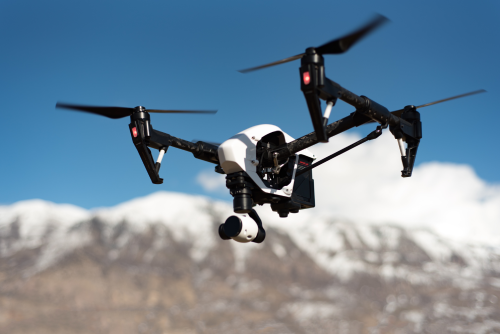
Selex ES Falco EVO is an active Italian fixed-wing military/ISR drone aimed at organizations that need long-endurance airborne observation rather than consumer-style flying or content creation. Based on the limited confirmed public data supplied, the headline figures are 18 hours of endurance, 200 km of range, and a top speed of 220 km/h. That makes it a relevant platform for defense, government, and analyst audiences comparing tactical surveillance UAVs, even though many deeper specifications are not publicly confirmed in the supplied data.
Quick Summary Box
- Drone Name: Selex ES Falco EVO
- Brand: Selex ES
- Model: Falco EVO
- Category: Military / ISR
- Best For: Government and defense users seeking a long-endurance fixed-wing ISR platform
- Price Range: Not publicly confirmed in supplied data
- Launch Year: Not publicly confirmed in supplied data
- Availability: Not publicly confirmed in supplied data
- Current Status: Active
- Overall Rating: Not rated due to limited confirmed data
- Our Verdict: A serious fixed-wing ISR platform with strong confirmed endurance, range, and speed figures, but too little public detail for a conventional consumer-style review
Introduction
The Selex ES Falco EVO sits in the military/ISR segment, where the goal is persistent airborne intelligence, surveillance, and reconnaissance rather than recreational flying or general commercial imaging. As an active fixed-wing platform from Italy, it matters mainly to procurement researchers, defense watchers, and organizations comparing long-endurance UAV families. For most readers, the key point is simple: this is a mission-oriented surveillance aircraft, not a retail drone, and public information appears limited.
That distinction is important because many people arrive at drone pages expecting familiar categories such as camera quality, portability, app experience, and beginner friendliness. Falco EVO belongs to a completely different conversation. In this class, the key questions are usually about how long the aircraft can remain on station, what sort of mission payloads it can carry, how effectively it integrates with a ground control system, and whether it fits an operator’s doctrine, logistics, and regulatory framework. Those are system-level questions, not shopping-list questions.
Even with only a few confirmed figures available, Falco EVO is worth attention because those figures are meaningful. An 18-hour endurance number immediately places the aircraft in a very different performance bracket from the small multirotors and light commercial fixed-wing platforms that dominate public drone awareness. A 200 km range and 220 km/h top speed reinforce the idea that this is designed for operational reach, not close-range convenience.
At the same time, the lack of openly confirmed detail means this should not be treated like a normal “review” in which every line item can be scored. It is better understood as a structured profile: what is clearly known, what can be cautiously inferred from category and role, and what prospective institutional users would still need to verify directly through official channels. That is the lens through which Falco EVO makes the most sense.
Overview
What kind of drone is it?
Falco EVO is a fixed-wing unmanned aircraft in the military/ISR category. In plain terms, that means it is designed around efficient forward flight and longer time on station, which is usually more important for surveillance missions than hover capability. The supplied data confirms an endurance of 18 hours, a range of 200 km, and a top speed of 220 km/h.
Those three numbers tell a surprisingly useful story even without a complete specification sheet. Endurance is the clearest clue to mission intent. An aircraft that can remain airborne for 18 hours is not built primarily for short tactical peeks over a nearby ridge or for quick visual inspections. It is meant for extended observation cycles, the kind of missions where continuity matters: following developments over a broad area, maintaining surveillance over remote territory, supporting border or coastline monitoring, or reducing the frequency of relaunches needed to keep a sensor over a target zone.
The fixed-wing layout also signals priorities. Compared with multirotor drones, fixed-wing systems generally trade away hover and highly flexible low-speed maneuvering in exchange for more efficient cruise performance. That matters in ISR operations because fuel or energy efficiency translates directly into mission persistence. If the task is to watch, patrol, or revisit large areas over time, a fixed-wing aircraft can often do that more effectively than a rotorcraft-style platform of the same broad size class.
It is also useful to distinguish tactical unmanned aircraft like Falco EVO from smaller “drone” products in the public imagination. A military/ISR platform is rarely a single device in a case. It is more often part of a wider unmanned aircraft system that includes the aircraft, control station, communications architecture, mission payloads, trained operators, maintainers, and support equipment. Looking at Falco EVO through that systems perspective makes far more sense than evaluating it as if it were just another flying camera.
Who should buy it?
This model is best understood as a procurement-led platform for defense, government, or similarly authorized institutional users. It is not aimed at hobbyists, filmmakers, survey freelancers, or standard enterprise drone buyers. Researchers, journalists, and analysts may also care about it as a reference point in the broader tactical UAV market.
The ideal buyer profile is therefore very narrow but very specific. Falco EVO is the kind of aircraft that becomes relevant when an organization already has a real-world surveillance requirement and the structure to support it. That could include national armed forces, border agencies, coast guards, state security organizations, or government-backed operators working in large, remote, or sensitive operating environments. It could also interest public-sector teams evaluating alternatives to manned patrol aircraft for certain missions, especially where long-endurance unmanned coverage offers lower risk or different economics.
Just as important is who should not think of Falco EVO as a practical option. Consumer and prosumer buyers have no real overlap with this platform. Small and medium commercial drone operators generally do not either. Even many public-safety users would likely find it well beyond their operational scale unless they are working in a national-level or defense-integrated context. This is not a “buy now, fly tomorrow” product. It implies training, planning, procedures, and sustained support.
For analysts and defense observers, however, Falco EVO has value even without being a direct purchase target. It helps illustrate what the tactical ISR segment prioritizes: endurance, reach, sustained surveillance, and system integration over convenience features or retail accessibility. In that sense, the aircraft is interesting as both a product and a category reference point.
What makes it different?
What stands out most from the supplied record is the balance of fixed-wing endurance and mission-oriented speed. An 18-hour endurance figure is meaningful in a market where many small drones operate for far shorter periods, while 220 km/h suggests better transit performance than slower loiter-focused systems. The main limitation is transparency: many important details, including payload specifics, weight, dimensions, and launch-year data, are not publicly confirmed in the supplied data.
The difference, then, is not just that Falco EVO is a military platform. It is that the confirmed numbers imply a system designed to bridge persistence and responsiveness. Endurance by itself is valuable, but endurance without useful transit performance can mean slower reaction to emerging tasks. By contrast, a top speed of 220 km/h suggests the aircraft may be capable of reaching or repositioning between operating areas more efficiently than platforms that are optimized almost entirely around slow loiter.
This matters in practical ISR planning. A platform that can stay up for a long period but also move relatively quickly may give operators more flexibility in how they allocate assets. It may cover broader patrol routes, support multiple observation windows in one sortie, or spend less mission time simply commuting to the task area. Of course, exact mission effectiveness would still depend on variables not confirmed here, including cruise profile, payload fit, communications architecture, and launch/recovery constraints.
Another thing that makes Falco EVO different is the tension between relevance and opacity. The aircraft is clearly not obscure in the sense of being non-operational or purely conceptual; it is listed as active. Yet public detail remains limited in the supplied material. For researchers, that creates a familiar challenge in defense aerospace analysis: some platforms are important enough to monitor but not transparent enough to review like commercial products. Falco EVO fits squarely into that category.
Key Features
-
Fixed-wing airframe optimized for efficient forward flight
This is one of the defining characteristics of the platform. Fixed-wing aircraft typically provide better energy efficiency over distance than multirotors, which is a major reason they remain central to long-endurance surveillance work. -
Military/ISR mission category rather than consumer or creator use
Falco EVO is built around operational intelligence and reconnaissance requirements, not casual use. That changes everything from payload expectations to support pathways. -
Confirmed endurance of 18 hours
This is the single most important published figure in the supplied data. Long endurance expands mission flexibility, reduces sortie turnover, and can improve persistent coverage in wide-area monitoring scenarios. -
Confirmed range of 200 km
Range contributes to operational reach and helps frame the aircraft as a broader-area surveillance tool rather than a short-hop drone. -
Confirmed top speed of 220 km/h
Top speed is not the whole performance picture, but it does suggest useful transit capability for a fixed-wing ISR platform. -
Active status in the supplied record
An active status matters because it indicates continuing relevance in its market segment, even if exact current procurement or deployment details are not included. -
Italian origin from Selex ES
Country of origin and industrial heritage can matter to institutional buyers evaluating supply chains, alliance relationships, industrial partnerships, and support ecosystems. -
Likely sensor-led mission architecture, though exact payload options are not publicly confirmed in supplied data
In this class, the aircraft exists to carry mission systems. Even without confirmed payload detail, the platform should be understood first as an airborne sensor carrier. -
Better suited to persistent area coverage than close-range hover work, based on its fixed-wing layout
Users comparing it to multirotors should assume it excels in endurance and area coverage, not hovering inspection or tight low-speed positioning.
Taken together, these features define Falco EVO less as a “drone with a camera” and more as an unmanned surveillance aircraft system with a mission profile centered on duration, reach, and operational utility.
Full Specifications Table
| Specification | Details |
|---|---|
| Brand | Selex ES |
| Model | Falco EVO |
| Drone Type | Fixed-wing military/ISR drone |
| Country of Origin | Italy |
| Manufacturer | Selex ES |
| Year Introduced | Not publicly confirmed in supplied data |
| Status | Active |
| Use Case | Military / ISR |
| Weight | Not publicly confirmed in supplied data |
| Dimensions (folded/unfolded) | Not publicly confirmed in supplied data |
| Max Takeoff Weight | Not publicly confirmed in supplied data |
| Battery Type | Not publicly confirmed in supplied data |
| Battery Capacity | Not publicly confirmed in supplied data |
| Flight Time | 18 hr |
| Charging Time | Not publicly confirmed in supplied data |
| Max Range | 200 km |
| Transmission System | Not publicly confirmed in supplied data |
| Top Speed | 220 km/h |
| Wind Resistance | Not publicly confirmed in supplied data |
| Navigation System | Not publicly confirmed in supplied data |
| Obstacle Avoidance | Not publicly confirmed in supplied data |
| Camera Resolution | Not publicly confirmed in supplied data |
| Video Resolution | Not publicly confirmed in supplied data |
| Frame Rates | Not publicly confirmed in supplied data |
| Sensor Size | Not publicly confirmed in supplied data |
| Gimbal | Not publicly confirmed in supplied data |
| Zoom | Not publicly confirmed in supplied data |
| Storage | Not publicly confirmed in supplied data |
| Controller Type | Not publicly confirmed in supplied data |
| App Support | Not publicly confirmed in supplied data |
| Autonomous Modes | Not publicly confirmed in supplied data |
| Payload Capacity | Not publicly confirmed in supplied data |
| Operating Temperature | Not publicly confirmed in supplied data |
| Water Resistance | Not publicly confirmed in supplied data |
| Noise Level | Not publicly confirmed in supplied data |
| Remote ID Support | Not publicly confirmed in supplied data |
| Geo-fencing | Not publicly confirmed in supplied data |
| Certifications | Not publicly confirmed in supplied data |
| MSRP / Launch Price | Not publicly confirmed in supplied data |
| Current Price | Not publicly confirmed in supplied data |
The table above is intentionally conservative. It reflects only what is confirmed in the supplied material and avoids filling gaps with assumptions. For readers used to very complete consumer spec tables, that may feel sparse. In a defense context, however, incomplete public detail is common, especially around payloads, communications, autonomy, support arrangements, and export-sensitive features.
Design and Build Quality
Because Falco EVO is a fixed-wing ISR platform, its design priorities are likely very different from those of foldable consumer drones. Aircraft in this class typically emphasize aerodynamic efficiency, mission endurance, and field deployment practicality over portability in a backpack-sized form. That means buyers should think of it more as a small unmanned aircraft system than as a compact camera drone.
That distinction affects how the airframe should be interpreted. In the consumer market, “design” often refers to how sleek a drone looks, how quickly it folds, how easily it travels in a case, or how simple it is for one person to deploy. In the ISR market, design tends to be judged in more operational terms: can the aircraft withstand repeated field use, does the layout support stable flight over long durations, how straightforward is maintenance access, and how effectively can the airframe support the intended payload and communications equipment?
The exact materials, dimensions, landing gear arrangement, propeller configuration, and service access points are not publicly confirmed in the supplied data. Still, the platform’s role strongly suggests a build philosophy centered on repeatable outdoor operations, maintainability, and integration with mission equipment. Foldability, quick hand launch, and casual transport are not the defining concerns here.
It is also reasonable to assume that robustness matters more than consumer-style finish. Military and government-operated aircraft are often evaluated on sustainment practicality rather than showroom appeal. The durability of control surfaces, the protection of wiring and electronics, the reliability of structural joints, and the ease of swapping or servicing modules are often more relevant than whether the aircraft feels “premium” in the lifestyle-product sense.
Another useful way to think about build quality is through mission tempo. An ISR aircraft that is expected to support recurring operations may need to function within a maintenance and inspection routine rather than a casual flying habit. That usually means design decisions are influenced by logistics: how quickly can operators prepare it, inspect it, repair it, and return it to service? While those specifics are not verified here, the category itself points toward a practical, field-oriented design philosophy.
In other words, Falco EVO should be viewed as field equipment for organized operators, not as a convenience-first drone for casual users. If a buyer’s priorities are compact storage, easy solo deployment, and all-in-one simplicity, they are looking at the wrong kind of aircraft. If the priority is a mission-capable fixed-wing platform integrated into a larger surveillance architecture, the design logic becomes much easier to understand.
Flight Performance
The strongest confirmed performance figure is endurance: 18 hours is substantial for any unmanned aircraft and especially important in ISR work, where time on station often matters more than peak agility. A 200 km range further supports the view that Falco EVO is intended for wide-area coverage rather than local short-hop observation.
Endurance is not just a headline number; it has direct operational consequences. A longer-endurance aircraft can reduce the number of launches required to maintain persistent coverage, which in turn can lower crew workload, decrease interruption risk, and simplify scheduling. In an ISR environment, staying in the air longer can also improve continuity of information. Instead of handing off observation between multiple short-endurance sorties, operators may be able to keep one platform aloft through a much longer surveillance window.
The confirmed top speed of 220 km/h suggests a platform that can move to and from an area of interest more efficiently than many slower surveillance systems. That does not automatically make it a high-agility aircraft in the aerobatic sense, but it does imply useful transit performance for a fixed-wing ISR role. In real missions, that matters because aircraft rarely spend all their time directly over the target area. Some portion of the sortie is almost always spent reaching the area, repositioning, or returning. A higher top speed can help reduce that overhead, although the practical impact depends on cruise profile and mission planning.
Range and endurance together are especially important because they frame how flexible the aircraft may be in deployment. A platform with meaningful endurance but limited useful reach can still be valuable, but it may require launch points close to the operating area. A platform with both long endurance and respectable range is more adaptable for dispersed monitoring roles. The supplied data does not tell us the full communications or operational envelope, so this should not be overstated, but the broad implication is clear: Falco EVO is built for more than local-area observation.
Based on airframe type alone, it is reasonable to expect steadier cruise behavior and better energy efficiency than a multirotor platform, especially outdoors. Fixed-wing systems generally perform best when they can maintain forward motion, which suits patrol loops, linear border observation, coastal surveillance routes, and broad-area scan patterns. They are usually less ideal for tasks requiring a stationary hover over a single precise point. This does not make them better in every scenario, only better aligned with certain mission patterns.
What cannot be fairly judged from the supplied data is just as important. Datalink confidence, wind handling, takeoff and landing behavior, service ceiling, climb rate, loiter efficiency at different altitudes, and low-speed controllability are all critical to real-world performance, yet none of those factors are confirmed here. Without them, Falco EVO can be placed in a class and discussed in strategic terms, but not scored in a detailed flight-test sense.
It is also clearly not an indoor platform, nor is it likely to be a simple “launch from anywhere” system in the way some small fixed-wing drones are marketed. Institutional users would need to understand the operational footprint required: launch and recovery procedure, site preparation needs, crew roles, and environmental tolerances. Those questions often matter as much as raw performance numbers in determining whether a system fits a mission set.
In short, the public performance picture is incomplete but still meaningful. Falco EVO’s confirmed endurance, range, and speed are strong enough to identify it as a serious fixed-wing ISR aircraft. The remaining unanswered questions mostly determine how serious, how flexible, and for which exact operational profiles it is best suited.
Camera / Payload Performance
Falco EVO should be treated as a payload carrier first and a “camera drone” second. In this class, the real value usually comes from the mission sensor package and how long the aircraft can keep that payload in the air, not from creator-style photo specs or cinematic branding.
That is a crucial mindset shift. On consumer drone pages, camera performance often dominates the discussion: megapixels, frame rates, color profiles, obstacle sensing for smooth cinematic moves, and software for quick editing. None of that is the main question here. A military/ISR aircraft is typically judged by whether it can deliver timely, usable information over a meaningful period of time. That might involve electro-optical observation, infrared imaging, maritime monitoring, target detection, or other mission-specific sensing roles depending on configuration.
The exact payload options for Falco EVO are not publicly confirmed in the supplied data. Camera resolution, gimbal details, zoom capability, sensor type, and payload capacity all remain unconfirmed here. That means readers should not assume a specific electro-optical, infrared, radar, or other ISR fit without checking official program information.
Even so, the platform’s relevance depends heavily on payload integration. In aircraft of this type, the airframe’s endurance only becomes operationally valuable if the payload is equally well matched to the mission. A long-endurance aircraft carrying a weak or poorly integrated sensor would not deliver the same utility as one with a capable stabilized observation suite and an effective data distribution chain. Conversely, a strong sensor package placed on a short-endurance airframe may struggle to exploit its full potential over wide areas. The air vehicle and payload architecture must work together.
From an analytical perspective, the 18-hour endurance figure is the key clue: it suggests that persistent observation and coverage continuity are likely more central to this platform’s value than raw image resolution alone. For many surveillance tasks, consistency, revisit frequency, and time-on-target matter more than headline optical numbers. A slightly lower-resolution system that can stay up for a very long time may produce more mission value than a sharper sensor that needs frequent rotation.
Institutional buyers evaluating payload performance would therefore want answers to several questions not covered in the supplied material:
- What sensor packages are supported?
- How modular is the payload architecture?
- Can operators switch between mission kits without major downtime?
- What are the stabilization and tracking capabilities?
- What is the real-world utility of the data feed under different weather and lighting conditions?
- How is sensor data recorded, transmitted, and exploited downstream?
Without those answers, the correct stance is cautious. Falco EVO likely belongs to a serious ISR payload ecosystem, but the exact strength of that ecosystem cannot be assessed from the limited public data provided here.
Smart Features and Software
Specific software capabilities are not publicly confirmed in the supplied data. That includes app support, autonomous modes, return-to-home logic, mapping tools, SDK access, AI-enabled tracking, and fleet-management features.
In a consumer or enterprise review, that absence would be a major problem because software often determines usability. In a defense-oriented platform, the picture is a bit different. Software still matters enormously, but not in the same way. The most important questions are less about user-friendly mobile apps and more about mission planning depth, control authority, communications security, payload tasking, data dissemination, and how the system behaves under degraded conditions.
For a military/ISR fixed-wing aircraft, some degree of flight automation, stabilization, and mission planning would be typical for the class, but that should be understood as general category analysis rather than a confirmed Falco EVO feature list. Prospective institutional users should verify:
-
Mission planning workflow
Can routes, patrol patterns, surveillance boxes, and contingency procedures be prepared efficiently? -
Ground control system design
Is the operator interface optimized for real mission use, and how many crew roles does it support? -
Data-link architecture
What is the communications structure, and how resilient is it in the intended operating environment? -
Failsafe and recovery logic
What happens if communications degrade, weather changes, or the mission must be terminated unexpectedly? -
Payload control software
How easily can operators task sensors, mark points of interest, and manage observation priorities? -
Data exploitation and integration options
Can the system feed into wider command, intelligence, or surveillance networks?
Without those details, this remains a high-level profile rather than a software capability audit. Still, software should not be treated as an afterthought. In many modern ISR systems, the effectiveness of mission planning, data handling, and operator workflow can be nearly as important as the aircraft itself. A capable airframe paired with a weak control environment may underperform in practice, while a well-designed control ecosystem can multiply the value of the aircraft and payload.
Use Cases
Based on its confirmed role and performance class, the most realistic use cases for Falco EVO are:
-
Persistent defense observation
Long endurance makes it suitable for missions where the main requirement is maintaining awareness over time rather than executing a quick sortie. -
Border and coastal surveillance by authorized operators
Fixed-wing aircraft are often well suited to linear patrol patterns over long boundaries, shorelines, and maritime approaches. -
Wide-area ISR missions requiring longer loiter time
The 18-hour endurance figure is especially relevant in scenarios where continuity of observation reduces operational gaps. -
Government security monitoring of large remote areas where legally authorized
This could include sparsely populated regions, critical routes, or areas that are costly or risky to monitor continuously with manned assets alone. -
Maritime or overland reconnaissance support
A platform with endurance and range can be useful for scanning broad operating spaces in support of larger security or defense structures. -
Training, evaluation, and doctrine development for fixed-wing ISR teams
Platforms like this are not only operational assets; they can also shape how organizations develop unmanned surveillance concepts and workflows. -
Strategic comparison and fleet-planning reference for procurement analysts
Even where not purchased, Falco EVO can function as a benchmark in comparing tactical fixed-wing surveillance solutions.
To understand these use cases properly, it helps to think in terms of mission pattern rather than raw specs. Falco EVO appears best aligned with scenarios where an aircraft is expected to cover distance, stay airborne for a long time, and carry an ISR payload consistently. It is much less aligned with highly localized inspection tasks, dense urban close-quarters flying, or workflows requiring repeated vertical takeoff from confined sites.
The wide-area aspect is particularly important. A long-endurance aircraft earns its value when there is enough geography, time pressure, or persistence requirement to justify its complexity. If the task is simply to inspect a small facility or capture short-duration imagery of a local incident, there are many easier and cheaper tools. Falco EVO becomes relevant when the surveillance problem itself is large, ongoing, remote, or operationally sensitive.
This also explains why the aircraft is most meaningful to organizations rather than individuals. The use cases listed above imply command structures, legal authorities, trained crews, maintenance support, and data exploitation chains. An aircraft like this is only one component of that broader capability.
Pros and Cons
Pros
-
Confirmed 18-hour endurance is a major strength
In ISR work, persistence often matters more than flashier specifications. This is Falco EVO’s strongest confirmed advantage. -
Confirmed 200 km range supports wider-area coverage than typical short-range drones
The aircraft is positioned for broader missions, not just local observation. -
Confirmed 220 km/h top speed suggests useful transit performance
Reaching and repositioning between surveillance areas may be more efficient than with slower fixed-wing systems. -
Fixed-wing design is well suited to efficient long-duration ISR work
The airframe concept aligns well with surveillance, patrol, and patrol-route monitoring missions. -
Active status indicates current relevance within its niche
It is not merely a historical reference point. -
Italian/European defense heritage may matter to some institutional buyers
Industrial origin can influence procurement, interoperability preferences, and support considerations.
Cons
-
Publicly available specifications are incomplete
The lack of open detail limits any firm evaluation. -
Payload, sensor suite, and camera details are not publicly confirmed in supplied data
That makes mission capability hard to judge beyond broad category assumptions. -
No confirmed launch price or current market price
Cost assessment is impossible without official package information. -
Not a consumer, prosumer, or casual enterprise product
Its relevance is narrow and institution-specific. -
Support, training, and procurement access may be restricted or region-specific
Even qualified buyers may face policy or channel constraints. -
Takeoff and landing method, control system, and autonomy stack are not publicly confirmed
These are critical to real operational suitability.
The balance of pros and cons tells a clear story. Falco EVO’s known strengths are meaningful, but the unknowns are significant enough that no honest assessment should pretend this is a fully transparent platform. It looks promising in role and performance class; it remains difficult to evaluate in total system terms from public data alone.
Comparison With Other Models
Public comparisons in the military/ISR drone space are often imperfect because specs can vary by payload, customer package, and datalink setup. The table below is a high-level comparison only, not a procurement-grade evaluation.
| Model | Price | Flight Time | Camera or Payload | Range | Weight | Best For | Winner |
|---|---|---|---|---|---|---|---|
| Selex ES Falco EVO | Not publicly confirmed in supplied data | 18 hr | ISR payload fit not publicly confirmed in supplied data | 200 km | Not publicly confirmed in supplied data | Long-endurance fixed-wing ISR | Best confirmed baseline in this article |
| Elbit Hermes 450 | Not publicly confirmed in supplied data | Public reporting commonly places it in a similar long-endurance tactical ISR class | ISR sensor options vary by operator | Varies by configuration and source | Not publicly confirmed here | Established tactical ISR programs | Broader public operator footprint |
| Boeing ScanEagle | Not publicly confirmed in supplied data | Public reporting commonly places it in the long-endurance small-ISR class | Lighter ISR payload class | Varies by configuration and source | Not publicly confirmed here | Smaller-footprint ISR deployments | Smaller deployment footprint |
| Selex ES Falco (earlier family version) | Not publicly confirmed in supplied data | Public reporting generally places it below Falco EVO in capability evolution | ISR payloads vary | Varies by source | Not publicly confirmed here | Legacy Falco-family reference | Falco EVO for newer family positioning |
Military UAV comparisons can be misleading if treated like side-by-side retail shopping. Two aircraft may look similar on paper yet differ substantially in support burden, launch and recovery requirements, payload integration, operator training needs, and available mission packages. For that reason, the comparisons below are best read as market positioning, not as final procurement advice.
Falco EVO vs a close competitor
Against Elbit Hermes 450, Falco EVO looks broadly relevant in the same tactical fixed-wing ISR conversation. Hermes 450 appears to have a wider public operational profile, while Falco EVO’s supplied data gives it a credible endurance and range baseline. A true winner depends on payload integration, support depth, and program requirements that are not publicly confirmed here.
The practical difference may come down less to pure aircraft performance and more to program maturity and ecosystem. A platform with a larger global footprint may benefit from broader field history, more public references, and a potentially deeper sustainment base. On the other hand, a platform with competitive endurance and speed may still be highly attractive if it aligns better with customer requirements, sovereignty preferences, industrial partnerships, or mission system integration pathways.
For buyers, the lesson is simple: if Falco EVO is being considered alongside a Hermes-class system, the comparison should include not just endurance and range, but training structure, local support, payload interoperability, regulatory pathway, and lifecycle cost.
Falco EVO vs an alternative in the same segment
Compared with Boeing ScanEagle, Falco EVO appears to sit in a different part of the ISR spectrum. ScanEagle is often discussed as a smaller-footprint option, while Falco EVO appears more like a larger tactical fixed-wing system. Buyers choosing between those concepts should focus on deployment footprint, payload expectations, and sustainment model rather than chasing a single spec.
That distinction matters because not every mission rewards a larger or faster aircraft. Some operators value minimal footprint, rapid deployment, and simpler expeditionary logistics. Others prioritize payload flexibility, longer reach, or stronger persistence across larger patrol zones. If ScanEagle-style systems represent one end of the long-endurance small-ISR spectrum, Falco EVO appears to push toward a more substantial tactical capability set.
In other words, this is often less a fight over “which aircraft is better” and more a question of “which operating concept is better for the mission.”
Falco EVO vs an older or previous-generation option
Within its own family, Falco EVO is the more modern reference point than earlier Falco variants. If institutional buyers are already familiar with the Falco line, EVO is the model that deserves the closer look, assuming support and acquisition pathways are available through official channels.
Family evolution can matter in several ways. Newer variants may reflect improvements in endurance, mission systems, maintainability, or integration architecture even when public details remain incomplete. They may also be more strategically relevant for organizations seeking future support rather than legacy sustainment. However, without a fully confirmed line-by-line comparison, it is best to say only that EVO represents the newer family positioning rather than claiming specific generational gains not verified in the supplied data.
How to compare Falco EVO fairly
If an organization is building a shortlist, a fair comparison framework should include at least the following:
- Mission persistence – How much usable time on task is available after transit?
- Deployment model – What launch/recovery setup, crew size, and site footprint are required?
- Payload options – What sensor suites are supported, and how quickly can they be adapted?
- Data exploitation – How useful is the output inside the wider intelligence or command system?
- Sustainment burden – What maintenance, spare parts, and training overhead does the platform impose?
- Regulatory and export pathway – How realistic is acquisition and legal operation in the intended country?
- Industrial alignment – Does the supplier fit alliance, local industry, and support preferences?
On that basis, Falco EVO appears credible enough to deserve inclusion in serious tactical ISR discussions. It simply cannot be fully ranked from public data alone.
Manufacturer Details
Selex ES is the brand and manufacturer listed in the supplied record, so there is no distinction between the two on this page. Historically, Selex ES was an Italian defense electronics and aerospace company associated with the Finmeccanica group, and its activities were later absorbed into Leonardo. Because of that corporate evolution, some later support, documentation, or product references may appear under Leonardo branding rather than Selex ES branding.
That background matters because manufacturer identity in the defense market is about more than logo recognition. It can affect procurement pathways, support continuity, documentation sources, and how current product families are branded in official channels. Readers researching Falco EVO may therefore encounter a mix of Selex ES and Leonardo references depending on the source, date, and context.
The company has been known more for defense electronics, sensors, avionics, and mission systems than for consumer drones. That matters because Falco EVO belongs to a defense and ISR ecosystem, not a retail drone catalog. A buyer evaluating the platform is not only evaluating an aircraft; they are also evaluating the industrial base behind it, including mission systems integration, long-term support potential, and the maturity of the surrounding aerospace organization.
For analysts, the manufacturer context also reinforces why public information may be more limited than in the consumer market. Defense-oriented companies often publish enough to signal capability and support procurement engagement, but not enough to enable full open-source benchmarking of every subsystem.
Support and Service Providers
Support for a platform like Falco EVO is unlikely to look anything like consumer drone support. Buyers should expect official assistance, maintenance, training, and sustainment to be handled through manufacturer channels, successor corporate structures, approved integrators, or government procurement frameworks.
This is one of the most important differences between military UAVs and commercial drones. Consumer buyers often think in terms of warranty claims, replacement units, and online chat support. Institutional UAV operators think in terms of sustainment plans, parts availability, depot-level repair, software and avionics updates, field service representatives, and long-term fleet readiness. In many cases, the support arrangement is as important as the aircraft’s flight performance.
Important items to verify before any acquisition include:
- Official support contact path
- Regional service availability
- Spare parts access
- Payload support and calibration
- Training packages for operators and maintainers
- Long-term sustainment and software support
- Airframe and ground-station upgrade path
Warranty terms, repair turnaround, and parts stock are not publicly confirmed in the supplied data. Even so, any serious evaluation of Falco EVO should prioritize these questions. A capable aircraft with weak regional support can become a difficult fleet to sustain. Conversely, a well-supported platform with good training and structured maintenance channels may deliver stronger long-term value than a paper-spec competitor.
Organizations should also pay attention to whether support is centralized or distributed. Some systems rely heavily on direct manufacturer involvement, while others are supported through in-country partnerships or defense-industrial agreements. That distinction can affect sovereignty, turnaround time, and operational independence.
Where to Buy
Falco EVO should not be treated as a normal retail drone purchase. It is not the kind of aircraft most buyers will find through consumer online stores or hobby channels.
Procurement is more likely to be handled through:
- Official defense or aerospace sales channels
- Authorized government tenders
- Approved regional distributors
- Mission-system integrators
- Institutional procurement programs
Availability is likely restricted, region-specific, and subject to export, regulatory, and end-user controls. Readers should verify current sales status directly through official channels.
In practical terms, “where to buy” for an aircraft like this often means “how to begin an acquisition conversation.” That may involve formal requests for information, tender responses, government-to-company engagement, or industrial partnership discussions rather than standard commercial ordering. It is also possible that access varies significantly by country and user type.
Price and Cost Breakdown
No launch price or current price is publicly confirmed in the supplied data. For a platform in this category, that is not unusual, because the real cost is often tied to the full system package rather than a single airframe.
This point is essential. In the consumer market, pricing is often simple: drone, battery bundle, accessories, maybe an extended service plan. In the military/ISR market, the aircraft may be only one line in a much larger acquisition package. The true cost can depend on the number of air vehicles, payload selection, ground control architecture, communications equipment, training, spares, integration work, and sustainment commitments.
Institutional buyers should verify whether quoted pricing includes:
- Air vehicles
- Ground control station
- Mission payloads and sensors
- Data-link and antenna systems
- Launch and recovery equipment
- Training for pilots and maintainers
- Spare parts package
- Software and integration support
- Maintenance and sustainment contracts
In other words, the budget question is not just “How much does the drone cost?” but “What does the complete operational system cost over time?”
Lifecycle cost may be especially important. A cheaper acquisition price can be misleading if the support model is expensive, spare parts are slow to obtain, or payload integration creates ongoing complexity. Likewise, a system that looks expensive up front may prove more efficient if it requires fewer sorties, covers more area, or integrates better with existing command and intelligence infrastructure.
For that reason, procurement teams evaluating Falco EVO should think in terms of total ownership cost, including:
- acquisition,
- training,
- maintenance,
- logistics,
- upgrades,
- data architecture,
- and retirement or replacement planning.
Without official figures, no trustworthy public price estimate should be presented here.
Regulations and Compliance
Falco EVO sits in a more regulated and restricted space than ordinary civilian drones. Any operation would need to comply with the laws and approvals of the country involved, especially where civil airspace access, spectrum use, surveillance authority, and export controls are relevant.
The regulatory burden for a platform like this can be substantial. Unlike small consumer drones, military or government ISR aircraft may need approval not just for flight operations but also for airspace integration, command-link use, sensor operation, cross-border data handling, and, in some cases, political oversight regarding surveillance activities. Depending on the country, rules may differ significantly for military operators, civilian agencies, and contracted service providers.
Key points to verify include:
- National aircraft registration requirements
- Civil or military airspace authorization
- Remote ID obligations where applicable
- Spectrum and communications licensing
- Privacy and surveillance law
- Commercial or government operating permissions
- Import and export restrictions
- Airworthiness or mission-specific approvals
Remote ID support, geo-fencing, and certifications are not publicly confirmed in the supplied data. No reader should assume universal compliance across jurisdictions.
Another important issue is that regulatory suitability can affect acquisition just as much as performance. An aircraft may be technically attractive but difficult to integrate into national airspace structures, especially if the intended missions involve mixed civil-military environments or operations near populated areas. Likewise, export control and end-user restrictions can shape whether a platform is obtainable at all.
For analysts, the takeaway is that compliance is not a side note. In the ISR sector, regulatory and legal fit can determine whether a program succeeds, stalls, or never advances beyond evaluation.
Who Should Buy This Drone?
Best for
- Defense and government organizations needing long-endurance fixed-wing ISR capability
- Procurement teams comparing tactical surveillance UAVs
- Analysts and researchers studying military drone platforms
- Institutions able to handle training, maintenance, and formal support arrangements
The common thread among these users is organizational capacity. Falco EVO makes sense when the operator can absorb a structured aircraft system into an existing framework of doctrine, maintenance, command processes, and lawful mission authority. It is not enough to want a long-endurance drone; the buyer must also be able to support the surrounding ecosystem that makes such an aircraft useful.
Not ideal for
- Consumers and hobbyists
- Aerial photographers and video creators
- Small commercial operators seeking a simple off-the-shelf drone
- Buyers who need transparent public pricing and fully published specifications
- Teams that require compact foldability or easy multirotor-style deployment
Even many enterprise drone buyers would find Falco EVO to be the wrong tool. If the mission depends on easy transport, quick vertical takeoff, minimal crew training, or immediate retail availability, there are better-suited categories. Falco EVO is not a general-purpose platform; it is a specialized aircraft for specialized operators.
A useful rule of thumb is this: if a buyer’s workflow starts with “unbox, update app, and fly,” Falco EVO is irrelevant. If it starts with “define operational requirement, evaluate support structure, confirm legal authority, and integrate into mission planning,” then Falco EVO may be worth serious attention.
Final Verdict
The Selex ES Falco EVO stands out as a serious fixed-wing ISR platform with three meaningful confirmed numbers behind it: 18 hours of endurance, 200 km of range, and 220 km/h top speed. Those figures make it relevant in long-endurance surveillance discussions and help separate it from the much shorter-duration drones most readers know better.
Its biggest drawback is not obvious weakness in the confirmed data, but limited transparency. Payload details, weight, dimensions, software stack, pricing, and support specifics are not publicly confirmed in the supplied data, which makes this a niche, procurement-driven platform rather than a broadly reviewable product.
That said, the limited information still points in a consistent direction. Falco EVO appears designed for organizations that value persistent coverage, operational reach, and mission-focused fixed-wing efficiency. It is not trying to compete with consumer camera drones, small commercial aircraft, or easy-deploy public-safety platforms. It sits in a more demanding category where mission duration, organizational readiness, and full-system integration matter more than convenience.
For procurement researchers and defense analysts, that alone gives the aircraft significance. It provides a credible data point in the tactical ISR landscape and illustrates how some unmanned aircraft are best understood not by their public marketing profile, but by the operational niche they occupy.
Bottom line: Falco EVO looks like a credible option for qualified defense or government users who can verify the full system directly through official channels. Everyone else should view it as a specialist military/ISR aircraft, not a conventional drone-buying option.
