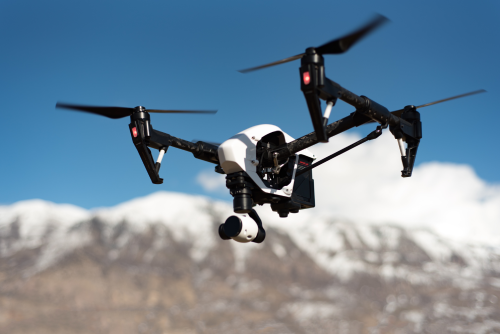
The L-3 Cutlass is a fixed-wing military/ISR drone associated with the US defense company L-3. Publicly confirmed information is limited, but the available record points to a surveillance-focused unmanned aircraft with 1 hour of endurance, a listed 56 km range, and a top speed of 157 km/h. For most readers, this page is best used as a reference profile for comparison, research, and procurement screening rather than as a typical consumer buying guide.
That distinction matters. Many drone articles assume a buyer can compare camera resolution, app quality, battery pricing, and accessory bundles the same way they would for a prosumer quadcopter. The Cutlass does not fit that model. It appears to sit in a restricted, institutional, or at least highly niche category where public brochures may be sparse, procurement may be gated, and mission value depends heavily on payload and support arrangements that are not clearly documented in the supplied data.
In other words, this is less a shopping guide and more a structured profile of what can and cannot be said with confidence. If you are an analyst, researcher, defense-adjacent buyer, or someone building a comparison database of fixed-wing surveillance drones, the Cutlass is worth noting. If you are a mainstream drone buyer, the most important takeaway may be that the available public record is too thin to support a normal recommendation.
Quick Summary Box
- Drone Name: L-3 Cutlass
- Brand: L-3
- Model: Cutlass
- Category: military/ISR
- Best For: Defense procurement research, legacy ISR reference, and authorized fixed-wing surveillance programs
- Price Range: Not publicly confirmed in supplied data
- Launch Year: Not publicly confirmed in supplied data
- Availability: Not publicly confirmed in supplied data
- Current Status: Unknown
- Overall Rating: Not rated due to limited confirmed data
- Our Verdict: A niche, lightly documented fixed-wing ISR platform that is interesting on paper, but too opaque for mainstream buyers
Introduction
The Cutlass sits in the military/ISR segment and is listed under the L-3 brand and manufacturer identity. Based on the limited public record available, it appears to be a US-origin fixed-wing unmanned aircraft intended for surveillance-oriented missions rather than consumer imaging, hobby flying, or standard enterprise inspection work.
Readers should care about this model mainly if they are comparing tactical or legacy unmanned aircraft, tracking defense-adjacent drone programs, or evaluating whether the sparse public data is sufficient for deeper procurement or archival research. As of March 2026, key facts such as payload type, price, support structure, and launch year are still not publicly confirmed in the supplied data.
That gap in public detail is not unusual in the defense and security space. Some unmanned systems are documented extensively because they have broad export histories, large public contracts, or sustained press coverage. Others appear in catalog listings, procurement references, or fragmented databases but never receive the same level of open technical disclosure. The Cutlass falls closer to the second category. It has enough traceable information to establish that it exists as a fixed-wing ISR platform, but not enough to build the kind of complete product picture that most commercial drone reviews depend on.
For that reason, this article should be read with two ideas in mind:
- The confirmed figures matter, because even limited data can still reveal a rough mission profile.
- The unknowns matter just as much, because in military and institutional aviation, supportability, sensor fit, launch/recovery method, software integration, and compliance pathway often determine whether a platform is useful in practice.
Overview
What kind of drone is it?
The L-3 Cutlass is a fixed-wing unmanned aircraft in the military/ISR class. That airframe choice usually favors forward flight efficiency, area coverage, and longer transit legs than similarly sized multirotors, although it also means no hover capability.
From the few confirmed figures available, Cutlass looks more like a compact tactical or short-endurance surveillance UAV than a larger long-endurance system. Its listed 1-hour endurance and 157 km/h top speed suggest a platform built for movement and coverage rather than prolonged stationary observation.
The fixed-wing layout is important because it shapes almost every likely aspect of operation. A drone in this category is typically expected to move efficiently across a route, scan sectors, cover linear infrastructure or perimeter areas, and spend less energy on simply staying airborne than a multirotor would. That can make it effective for reconnaissance and search patterns, but it also introduces operating constraints. Fixed-wing systems often need some kind of launch and recovery plan, more open space, and more pilot or crew familiarity with airspeed-dependent flight behavior. Since none of those Cutlass-specific details are confirmed in the supplied data, the airframe category tells us more than the documentation does.
Another useful way to frame the Cutlass is by what it does not appear to be. It does not look like a consumer camera drone, a vertical inspection platform, or a compact enterprise quadcopter with a fixed pricing page and downloadable app manual. It appears to belong to the kind of UAV segment where platform identity, payload flexibility, and mission integration are more important than retail convenience.
Who should buy it?
This is not a normal retail drone for hobbyists, creators, or small business users. The most relevant audience is:
- Authorized government or defense buyers
- Researchers and journalists tracking unmanned systems
- Analysts comparing small fixed-wing ISR platforms
- Organizations reviewing legacy or niche US-origin UAV options
Most commercial drone buyers will be better served by platforms with public payload specs, known software ecosystems, transparent pricing, and established dealer support.
That point deserves emphasis because the phrase “drone review” can attract the wrong audience. A freelance videographer, farm operator, mapper, or inspection team typically needs clear answers on sensor quality, workflow compatibility, replacement batteries, controller usability, firmware support, and service turnaround. On the current public record, the Cutlass does not provide those answers. Even if the aircraft were technically capable in its intended role, capability alone is not enough for most buyers without a transparent ecosystem around it.
A more realistic buying scenario would involve a formal procurement process, mission requirement definition, direct manufacturer or integrator engagement, support contracting, and legal review. In that environment, a lightly documented platform can still be relevant. In an ordinary market context, it is simply too opaque.
What makes it different?
The main thing that stands out is the combination of a fixed-wing ISR role with a publicly listed top speed of 157 km/h. That is a meaningful figure in a small-UAS context and suggests the aircraft may prioritize transit speed and area access.
The bigger difference, though, is informational rather than technical: Cutlass is far less publicly documented than many well-known surveillance UAVs. That makes it interesting as a database entry and comparison point, but harder to evaluate as a real-world acquisition choice without direct manufacturer verification.
There is also a practical distinction between a drone that is “modestly specced but well documented” and one that is “lightly documented but potentially capable.” The former is easier to procure, train on, insure, support, and compare. The latter can remain attractive in specialist circles but difficult to assess outside those circles. The Cutlass clearly leans toward the second category.
If you are building a comparison matrix, its standout qualities are therefore not just speed, range, and endurance figures. They are the combination of:
- A fixed-wing tactical/ISR orientation
- A relatively fast published top speed
- Sparse public technical disclosure
- Legacy defense-manufacturer lineage
- Unclear current product/support status
That mix makes it notable, but also makes it a platform that should be approached cautiously.
Key Features
- Fixed-wing airframe for efficient forward flight and area coverage
- Military/ISR market positioning rather than consumer or creator use
- Publicly listed endurance: 1 hour
- Publicly listed range: 56 km
- Publicly listed top speed: 157 km/h
- US-origin platform under the L-3 brand
- Likely optimized for outdoor surveillance roles rather than hover-based work such as close inspection
- Current status remains unknown
- Payload, camera, autonomy stack, and launch/recovery method are not publicly confirmed in supplied data
Those bullets summarize the known picture, but each one carries a caveat. A listed endurance value tells you something about potential time aloft, but not how much of that time remains available for actual surveillance after climb, transit, and recovery reserve. A listed range value sounds precise, but without a definition it may refer to line-of-sight control radius, mission radius, one-way distance, or another planning metric entirely. A top speed figure indicates performance potential, but not cruising efficiency or low-speed handling.
So while the feature set is clear enough to identify the Cutlass as a compact fixed-wing ISR system, it is not complete enough to support detailed mission planning on its own. Treat the above features as reference indicators, not a substitute for official technical documentation.
Full Specifications Table
| Specification | Details |
|---|---|
| Brand | L-3 |
| Model | Cutlass |
| Drone Type | Fixed-wing military/ISR UAV |
| Country of Origin | USA |
| Manufacturer | L-3 |
| Year Introduced | Not publicly confirmed in supplied data |
| Status | Unknown |
| Use Case | Military / ISR |
| Weight | Not publicly confirmed in supplied data |
| Dimensions (folded/unfolded) | Not publicly confirmed in supplied data |
| Max Takeoff Weight | Not publicly confirmed in supplied data |
| Battery Type | Not publicly confirmed in supplied data |
| Battery Capacity | Not publicly confirmed in supplied data |
| Flight Time | 1 hour |
| Charging Time | Not publicly confirmed in supplied data |
| Max Range | 56 km |
| Transmission System | Not publicly confirmed in supplied data |
| Top Speed | 157 km/h |
| Ceiling | Not publicly confirmed in supplied data |
| Wingspan / Rotor Span | Not publicly confirmed in supplied data |
| Length | Not publicly confirmed in supplied data |
| Wind Resistance | Not publicly confirmed in supplied data |
| Navigation System | Not publicly confirmed in supplied data |
| Obstacle Avoidance | Not publicly confirmed in supplied data |
| Camera Resolution | Not publicly confirmed in supplied data |
| Video Resolution | Not publicly confirmed in supplied data |
| Frame Rates | Not publicly confirmed in supplied data |
| Sensor Size | Not publicly confirmed in supplied data |
| Gimbal | Not publicly confirmed in supplied data |
| Zoom | Not publicly confirmed in supplied data |
| Storage | Not publicly confirmed in supplied data |
| Controller Type | Not publicly confirmed in supplied data |
| App Support | Not publicly confirmed in supplied data |
| Autonomous Modes | Not publicly confirmed in supplied data |
| Payload Capacity | Not publicly confirmed in supplied data |
| Operating Temperature | Not publicly confirmed in supplied data |
| Water Resistance | Not publicly confirmed in supplied data |
| Noise Level | Not publicly confirmed in supplied data |
| Remote ID Support | Not publicly confirmed in supplied data |
| Geo-fencing | Not publicly confirmed in supplied data |
| Certifications | Not publicly confirmed in supplied data |
| MSRP / Launch Price | Not publicly confirmed in supplied data |
| Current Price | Not publicly confirmed in supplied data |
The table above is intentionally conservative. It includes only what is explicitly reflected in the supplied record and labels all other fields as unconfirmed rather than filling gaps with assumptions. That is especially important for military/ISR platforms, where small differences in payload, data link, or launch method can radically change how useful the system is in the field.
For serious evaluation, the absence of weight, payload, control link, and launch/recovery data is not a minor inconvenience. Those are core planning variables. A one-hour fixed-wing aircraft can be highly portable and hand-launched, or it can require more crew, support equipment, and recovery space than expected. Without official confirmation, it is best to treat the Cutlass specification sheet as incomplete.
Design and Build Quality
Public information does not confirm the Cutlass airframe materials, propeller configuration, wing attachment method, landing gear setup, or field assembly process. That makes it impossible to give a hard verdict on construction quality in the same way you could for a consumer drone with published photos, teardown coverage, or official spec sheets.
What can be said is that a fixed-wing military/ISR drone is usually designed around field deployment rather than casual portability. In this class, buyers would normally expect practical transport, quick setup, and serviceability to matter more than compact folding convenience. However, none of those details are confirmed for this specific model.
The biggest design implication of the fixed-wing layout is mission style. Fixed-wing aircraft generally cover ground more efficiently than multirotors, but they also require more thought around launch, recovery, and operating area. Since Cutlass dimensions and weight are unconfirmed, portability and deployment burden remain open questions.
For anyone assessing this platform seriously, the key design items to verify are:
- Launch and recovery method
- Transport case size
- Wing removal or modularity
- Battery access and swap speed
- Propulsion layout
- Landing durability
- Spare-parts availability
It is also worth considering what “build quality” means in a military or ISR context. For consumer drones, buyers often judge quality through fit and finish, body plastics, hinge feel, or compactness. For an institutional fixed-wing UAV, the more meaningful questions are different:
- Can it survive frequent field handling?
- Is the airframe easy to inspect between sorties?
- Are control surfaces and propulsion components straightforward to maintain?
- Can the aircraft tolerate less-than-perfect launch and recovery conditions?
- Does the design support rapid turnaround between missions?
Even without confirmed Cutlass-specific details, those are the criteria that matter most in this category.
There is also a possibility that the system was designed with modularity in mind, as many tactical UAVs are, but that is speculation unless verified. Some fixed-wing ISR platforms use removable wings, nose sections, or payload bays to support transport and maintenance. Others prioritize simplicity and ruggedness over configurability. Because Cutlass imagery and technical literature are not meaningfully documented in the supplied data, one of the first things a serious evaluator should request is a complete air vehicle and support-equipment breakdown.
In short, the design case for the Cutlass is plausible but undocumented. The aircraft almost certainly reflects mission-driven priorities, yet the exact execution remains unclear in public sources.
Flight Performance
The confirmed performance figures are the strongest public part of the Cutlass profile. A listed top speed of 157 km/h is notably brisk for a small unmanned aircraft, especially compared with many low-speed observation drones. That suggests Cutlass may have been designed to reach an area quickly or maintain efficient forward motion over a search route.
The listed 1-hour endurance is respectable, though not exceptional by fixed-wing ISR standards. It points to a shorter-endurance surveillance role rather than deep long-loiter operations. That makes the aircraft more plausible as a compact tactical coverage platform than as a high-endurance persistent overwatch system.
The listed 56 km range is useful, but it should be interpreted carefully. Public database figures often mix different concepts such as control-link range, mission radius, ferry distance, or total coverage potential. In other words, readers should avoid combining the range and endurance numbers too literally without official documentation.
Likely flight-character analysis, based on the airframe type:
- Better suited to outdoor use than indoor use
- Better for area coverage and route observation than stationary hover work
- Potentially stronger in transit efficiency than a multirotor of similar mission size
- Wind handling, low-speed stability, and landing behavior remain unconfirmed
Signal reliability, control-link resilience, takeoff method, and recovery style are not publicly confirmed in supplied data.
A little more context helps here. On a fixed-wing UAV, top speed and endurance do not automatically describe typical operating behavior. The aircraft may cruise well below its maximum speed for efficiency. If the system really can reach 157 km/h, that could be useful for rapid ingress to a target area, evasive repositioning, or time-sensitive reconnaissance, but it does not mean the platform will spend most of a mission flying that fast. In practical operations, mission planners usually care more about effective on-station time than about peak speed.
The same caution applies to endurance. A one-hour total flight time sounds straightforward, but actual usable observation time depends on mission geometry. If an aircraft must transit to and from a target area, maintain reserve margin, and possibly fly search patterns against wind, the useful time over the area of interest may be substantially lower than the headline figure. That is not a flaw unique to Cutlass; it is simply how UAV endurance should be read.
Another missing factor is launch and recovery overhead. A fixed-wing UAV can perform very differently operationally depending on whether it is hand-launched, catapult-launched, belly-landed, net-recovered, parachute-recovered, or runway-operated. Those methods affect crew size, setup time, required terrain, and sortie tempo. Since none of those elements are confirmed, the Cutlass flight profile remains only partially visible.
Still, among the limited public facts available, flight performance is the strongest positive point. Even if the exact definitions behind the numbers need confirmation, the published combination of speed, range, and endurance suggests a platform built for tactical movement rather than static observation.
Camera / Payload Performance
This is the least transparent part of the public Cutlass profile. No confirmed payload details are included in the supplied data, and there is no publicly confirmed camera resolution, gimbal type, zoom capability, or sensor class listed here.
Because the aircraft is categorized as military/ISR, it is reasonable to view Cutlass as a sensor-carrying surveillance platform rather than a photo-first camera drone. In that context, the payload matters more than the airframe for mission usefulness. A fixed-wing ISR system could potentially carry electro-optical, infrared, or other observation payloads, but that is not publicly confirmed for this model in the supplied data.
That means the practical takeaway is simple:
- For defense researchers: the airframe is interesting, but the missing payload details are a major evaluation gap
- For enterprise users: workflow value cannot be judged without knowing the sensor suite
- For creators or filmmakers: this is not a camera-buying candidate based on current public information
Before treating Cutlass as a viable sensor platform, buyers should verify:
- Payload type
- Sensor stabilization
- Day/night capability
- Data downlink format
- Onboard recording
- Sensor swapping options
- Integration limits
This section is where the Cutlass profile most clearly stops being a conventional review. For a military/ISR UAV, payload details answer the questions that really matter: Can it detect or identify targets? At what range? In what lighting? With what stabilization quality? Can operators slew the sensor independently of flight path? Is there metadata tagging? Is imagery stored onboard, streamed live, or both? Can the platform carry alternate payloads for different mission sets?
Without those answers, the aircraft’s utility remains abstract. A fixed-wing airframe with decent speed and endurance can still be operationally weak if the payload is outdated, poorly stabilized, low resolution, or difficult to integrate. Conversely, a modest airframe can be highly valuable if the sensor package and data workflow are strong. Since the supplied data does not clarify any of this, the payload side of the Cutlass must be regarded as unknown, not merely unspecified.
It is also important to separate surveillance usefulness from marketing-style camera specs. In institutional settings, raw video resolution alone is often less important than stabilization, low-light performance, thermal capability, target handoff, georeferencing, link reliability, and how cleanly the system integrates into command workflows. Public-facing camera numbers, even if they existed, would not tell the full story. But in the Cutlass case, even the baseline payload description is missing.
For anyone evaluating the platform seriously, payload confirmation should be near the top of the checklist.
Smart Features and Software
No public software stack or autonomy features are confirmed in the supplied data. There is no verified information here on app support, waypoint planning, return-to-home logic, tracking modes, SDK access, mapping workflows, cloud fleet tools, or onboard AI functions.
In this segment, some level of autopilot and mission planning would be common, but it would be wrong to claim those features for Cutlass without direct confirmation. The same applies to any assumptions about encrypted links, secure command-and-control, or advanced ISR data workflows.
Serious evaluators should verify the following directly through official channels:
- Ground control station type
- Mission planning software
- Supported autonomous modes
- Telemetry and data export format
- Sensor control interface
- Firmware support status
- Integration with larger fleet or command systems
Until those details are confirmed, Cutlass should be treated as a platform with unknown smart-feature depth.
This matters more than it might seem. In modern UAV operations, software often determines whether the hardware is practical. Two aircraft with similar flight performance can produce very different operator experiences depending on planning tools, interface quality, autopilot maturity, logging, map support, and post-mission data handling. For ISR missions in particular, software is often the glue between the aircraft, the payload, the operator, and the wider mission environment.
For example, a capable fixed-wing drone might need:
- Route-based mission planning
- Orbit and loiter commands
- Return or contingency logic
- Fail-safe behaviors on link loss
- Live map overlays
- Telemetry logging
- Multi-user viewing or data relay
- Exportable mission records
Any of those features could exist in the Cutlass ecosystem, but none are publicly confirmed in the supplied data. That makes operational maturity difficult to judge.
There is also the question of lifecycle support. With niche or legacy platforms, the biggest software risk is not whether features existed originally, but whether they are still supported now. Firmware maintenance, ground-station compatibility, security updates, and spare controller availability can become serious issues over time. Since the Cutlass current status is itself unclear, software supportability becomes an even bigger unknown.
Use Cases
Based on the confirmed segment and airframe type, the most realistic use cases for the Cutlass are:
- Authorized military or government surveillance and observation
- Area coverage where forward-flight efficiency matters more than hovering
- Perimeter or route monitoring in approved institutional contexts
- Program evaluation of compact fixed-wing ISR aircraft
- Training and familiarization within controlled unmanned aviation environments
- Research, journalism, and database comparison of legacy or niche US-origin UAV platforms
It is not a realistic fit for consumer photography, indoor flying, casual hobby use, or mainstream enterprise inspection workflows based on the current public record.
A few of those use cases are worth unpacking. Area coverage is a natural match for fixed-wing UAVs because they can scan broader spaces more efficiently than multirotors when the mission does not require hovering over one point. Perimeter or route monitoring also makes sense, especially where there is a need to traverse corridors, boundaries, or patrol areas repeatedly. A faster top speed can be helpful in such roles if the platform needs to move between sectors quickly.
Training and familiarization is another plausible niche. Even if a system is older or less publicly visible, fixed-wing UAVs can still serve value in teaching mission planning, launch/recovery discipline, airspace management, and surveillance workflows inside structured organizations. That said, this remains a general observation about the category rather than a confirmed Cutlass deployment role.
For researchers and journalists, the Cutlass has a different kind of usefulness. It represents a real example of how many defense-linked UAVs exist in the public record with only partial visibility. That makes it relevant for cataloging, comparative analysis, lineage tracing, and understanding the broader ecosystem of compact ISR aircraft.
Pros and Cons
Pros
- Confirmed 1-hour endurance is respectable for a compact ISR-oriented airframe
- Confirmed 56 km range figure suggests more reach than many short-range small drones
- Confirmed 157 km/h top speed implies strong transit pace
- Fixed-wing layout should favor efficient area coverage over shorter multirotor-style hops
- US defense manufacturer lineage may matter to institutional buyers and researchers
Cons
- Payload and camera details are not publicly confirmed
- Current status is unknown
- Price, launch year, and availability are not publicly confirmed
- Software, autonomy, and support ecosystem are not publicly documented here
- Fixed-wing format is unsuitable for hover-dependent tasks
- Sparse public data makes comparison and procurement screening harder
The pros list is meaningful, but it is narrower than it would be for a fully documented platform. In essence, the Cutlass earns credit for the few metrics that are visible and for fitting a mission-efficient fixed-wing category. The cons list is broader because procurement reality depends on much more than three performance numbers.
That imbalance is the defining trait of this aircraft’s public profile: promising top-line indicators, limited operational transparency.
Comparison With Other Models
Because public information on the Cutlass is thin, any comparison should be treated as approximate. The table below uses widely reported public positioning for other small fixed-wing ISR platforms, while Cutlass data is limited to the supplied record.
| Model | Price | Flight Time | Camera or Payload | Range | Weight | Best For | Winner |
|---|---|---|---|---|---|---|---|
| L-3 Cutlass | Not publicly confirmed in supplied data | 1 hour | Not publicly confirmed; ISR role | 56 km | Not publicly confirmed in supplied data | Niche fixed-wing ISR reference and authorized program review | Range on supplied data |
| AeroVironment RQ-11 Raven | Contract/program pricing, not standard retail | Up to about 60-90 min in public reporting | Small tactical ISR payloads, commonly EO/IR class in public descriptions | Around 10 km class in public reporting | About 1.9 kg in public reporting | Lightweight hand-launched reconnaissance | Portability and documentation depth |
| AeroVironment Puma AE | Contract/program pricing, not standard retail | Up to about 2 hours in public reporting | Stabilized ISR payload options in public reporting | Around 15 km class in public reporting | About 6.8 kg in public reporting | Better-documented small fixed-wing surveillance | Endurance and payload maturity |
Cutlass vs a close competitor
Against Raven-class systems, Cutlass appears faster and shows a longer public range figure. The tradeoff is transparency: Raven is much better known publicly, which makes it easier to assess supportability, mission fit, and historical use.
That matters because defense buyers and analysts do not compare aircraft on raw specs alone. Documentation depth, operating concept, field handling, and user familiarity all influence whether a system is viable. A platform with lower headline range but stronger public record can actually be easier to justify, support, and benchmark than a faster but more opaque one.
Cutlass vs an alternative in the same segment
Compared with Puma AE, Cutlass looks more like a lightly documented option with stronger public speed figures but less confirmed detail overall. Puma AE is generally easier to understand from a payload and mission-system perspective, while Cutlass remains more opaque.
This makes Puma AE a better baseline if you want to understand the practical expectations of a small fixed-wing ISR platform: endurance, known payload classes, operational history, and general market recognition. Cutlass, by contrast, is harder to place confidently because too many supporting variables are missing.
Cutlass vs an older or previous-generation option
A clear Cutlass predecessor or previous-generation variant is not publicly confirmed in the supplied data. For now, it is safer to compare Cutlass with adjacent fixed-wing ISR platforms than to assume a documented internal product lineage.
More broadly, this comparison section highlights a key procurement lesson: a drone should not be judged only by what is printed in a summary field. In institutional markets, a platform with middling specs but excellent documentation, training support, and sustainment can outperform a theoretically faster or longer-range system that lacks those advantages. On current public evidence, Cutlass is easier to note than to rank.
Manufacturer Details
L-3 is the listed brand and manufacturer for the Cutlass. In legacy industry context, L-3 generally refers to the US defense and aerospace company L-3 Communications, which became part of L3Harris Technologies after a merger with Harris Corporation in 2019.
For this page, the important point is that brand and manufacturer are the same legacy identity. This is not a case where a separate consumer-facing sub-brand is involved. The Cutlass belongs in a defense and mission-systems context rather than a hobby or prosumer retail one.
L-3’s broader reputation comes from defense electronics, avionics, communications, ISR systems, training, and mission integration. That gives the Cutlass a credible institutional background, but it does not automatically make the aircraft easy to buy, support, or compare in the public market.
That manufacturer context cuts both ways. On the positive side, a defense-oriented origin can imply serious systems engineering, integration experience, and an understanding of mission environments that go well beyond hobby or commercial photography markets. On the less convenient side, it can also mean lower public transparency, more restricted sales channels, contract-based support, and fewer publicly accessible technical materials.
For researchers, the L-3 association is one of the strongest reasons the Cutlass remains interesting despite limited disclosure. It places the platform within a recognized US defense-industrial lineage rather than an unknown or generic OEM context. For ordinary buyers, however, that same lineage mostly reinforces that this is not a retail-oriented aircraft.
Support and Service Providers
Support for a platform like Cutlass would typically come through official defense support channels, contracted sustainment arrangements, or program-specific service agreements rather than consumer repair shops. Public details on warranty coverage, depot repair, spare parts, and regional service access are not confirmed in the supplied data.
Things buyers should verify directly include:
- Official product support status
- Spare-parts availability
- Battery replacement path
- Repair turnaround options
- Training support
- Documentation access
- Software maintenance status
- Regional service coverage
Community help is also likely to be limited. Unlike mass-market drones, niche defense-linked systems usually do not benefit from large independent repair ecosystems or broad user forums.
This is one of the most important practical filters for any older or niche UAV. Even if the aircraft itself is technically sound, weak sustainment can turn it into a risky acquisition. A lack of batteries, outdated control hardware, unavailable payload spares, or unsupported software can quietly undermine the whole program.
In fact, for a platform with unknown current status, support questions may outweigh airframe questions. Before evaluating performance claims too deeply, buyers should determine whether the system is still maintained, whether training materials are accessible, and whether parts or payload upgrades are realistic. A drone with decent flight numbers but no sustainment path is often less attractive than a more modest system with a living support ecosystem.
Where to Buy
The L-3 Cutlass does not appear to be a normal off-the-shelf consumer drone. If it is still obtainable, access would most likely be through:
- Official manufacturer procurement channels
- Defense or government contracting pathways
- Authorized institutional integrators
- Region-specific distributors serving approved customers
Standard marketplace availability, hobby-shop stocking, and consumer e-commerce access are not publicly confirmed in supplied data. Depending on jurisdiction and end use, procurement may also be restricted or review-based.
Potential buyers should also be cautious about assuming that “used market” availability solves the problem. Defense-linked UAVs can involve export controls, restricted documentation, specialized support equipment, and software dependencies that do not transfer cleanly with hardware alone. Even if an airframe appeared through surplus, third-party liquidation, or secondary channels, that would not guarantee legal usability, operability, or access to the full system package.
So the realistic buying route, if one exists, is almost certainly formal and institutionally mediated rather than retail.
Price and Cost Breakdown
No launch price or current market price is publicly confirmed in the supplied data for the Cutlass. That alone makes budgeting difficult, especially because defense-oriented UAV programs often include much more than the air vehicle itself.
Potential cost items to verify before any budget planning include:
- Air vehicle quantity per system
- Ground control station inclusion
- Batteries and chargers
- Payload or sensor package
- Launch and recovery equipment
- Training package
- Spare parts kit
- Software licensing
- Sustainment and support agreement
- Shipping and regulatory handling costs
With the Cutlass, the biggest financial risk may not be purchase price but ownership uncertainty. If current support status is limited or unclear, long-term sustainment could matter more than the initial acquisition figure.
That is a crucial difference between military/ISR drones and many commercial drones. The quoted aircraft price, if you can get one, may represent only a fraction of true program cost. Training, maintenance tooling, replacement components, software updates, batteries, launch gear, technical documentation, and operator certification can all materially affect total ownership cost.
There is also an obsolescence question. If a platform is no longer actively marketed or supported, its nominal purchase price can be deceptively low relative to lifecycle burden. Buyers may end up spending more on workarounds, part sourcing, integration adaptation, and compliance review than they would on a newer, better-supported alternative.
For procurement screening, the right question is not “How much does a Cutlass cost?” but rather “What would a fully supportable Cutlass capability package cost over its useful life?” On current public information, that answer is unavailable.
Regulations and Compliance
Any drone operation must follow local aviation, privacy, and radio-use laws. For a military/ISR-linked platform like the Cutlass, compliance can be even more sensitive because procurement, transfer, import/export, and end-use restrictions may apply depending on region and operator type.
Important points to verify:
- Aircraft registration requirements
- Pilot or operator licensing rules
- Airspace authorization needs
- Privacy and surveillance law implications
- Radio spectrum approval
- Import/export controls
- Institutional procurement restrictions
- Local Remote ID rules, where applicable
Remote ID support is not publicly confirmed in supplied data.
Certifications and geo-fencing are also not publicly confirmed in supplied data.
If this aircraft were ever used outside a government-specific framework, operators would need to verify civil aviation eligibility very carefully. No universal compliance claim should be assumed.
For institutional buyers, compliance is often multi-layered. It may include not only aviation rules, but also procurement law, data handling requirements, security accreditation, operator training standards, and mission-specific surveillance authorities. A drone that is technically flyable is not automatically lawful or administratively acceptable in every context.
The lack of confirmed Remote ID, civil certifications, and public compliance information makes the Cutlass especially hard to position outside specialized channels. Even if the aircraft originated in a defense context, any crossover into civil or hybrid use would require careful review rather than assumption.
Who Should Buy This Drone?
Best for
- Authorized government or defense organizations already working through formal procurement channels
- Researchers, analysts, and journalists cataloging US fixed-wing ISR platforms
- Buyers evaluating legacy or niche surveillance UAVs and willing to verify all details directly
- Institutions that value airframe reference data more than retail convenience
Not ideal for
- Consumers, hobbyists, and recreational pilots
- Content creators looking for camera specs, stabilization details, and media workflows
- Enterprise teams that need transparent pricing, app support, and easily sourced accessories
- Buyers who want strong public documentation, community support, and clear service options
- Hover-based inspection, indoor flying, or close-quarters observation work
The dividing line is simple: if your process can accommodate ambiguity, direct manufacturer engagement, and formal verification, the Cutlass may be worth investigating as a reference or procurement candidate. If you need immediate clarity on features, price, support, and legality, it is a poor fit.
That is not necessarily a criticism of the aircraft itself. It is a reflection of the public-information environment around it.
Final Verdict
The L-3 Cutlass is best understood as a lightly documented fixed-wing ISR UAV with a few notable public figures rather than as a normal reviewable product. The confirmed numbers—1 hour endurance, 56 km range, and 157 km/h top speed—suggest a capable short-endurance surveillance platform with meaningful transit performance.
Its biggest strengths are its fixed-wing efficiency, credible defense lineage, and the fact that the known specs at least hint at a serious mission-oriented aircraft. Its biggest drawbacks are equally clear: unknown current status, no publicly confirmed payload details, no transparent pricing, and very limited public support information.
If you are an authorized institutional buyer or a researcher comparing military UAVs, the Cutlass is worth noting. It occupies an interesting place in the record: documented enough to identify, but not documented enough to evaluate fully without direct inquiry. In that sense, it is useful as a reference profile, a comparison point, and a reminder that many defense-linked UAVs remain only partially visible in open sources.
If you are a typical drone buyer looking for a practical, supportable platform with clear specs and purchase options, this is a niche reference entry, not an easy recommendation. Before anyone treats it as a serious acquisition candidate, they should insist on confirmation of the areas that matter most:
- current support status
- payload and sensor configuration
- launch/recovery method
- control and software environment
- regulatory pathway
- total ownership and sustainment cost
Until those answers are available, the L-3 Cutlass remains more interesting as a subject of comparison than as a straightforward buying decision.
