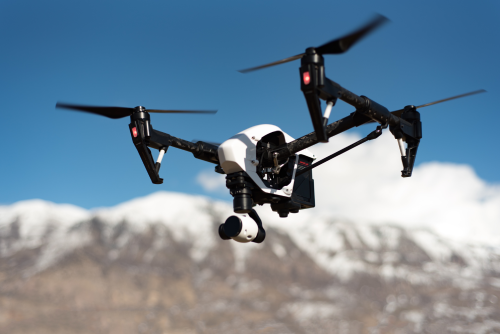
Oqualia Nomad B is a fixed-wing military/ISR drone with very limited public information, but the confirmed headline numbers already make it notable. Based on the supplied record, it is linked to Singapore and stands out for a stated 20-hour endurance and 130 km/h top speed. That combination suggests a platform aimed at persistent observation rather than consumer imaging, short-hop inspection work, or hobby flying.
At the same time, the lack of detailed public specifications is a major part of the story. For some drones, scarce information usually means the platform is either niche, government-facing, still emerging, or not marketed through the kind of consumer channels that produce easy spec sheets and independent reviews. That seems to be the case here. So while the Nomad B looks intriguing on paper, especially for endurance-sensitive ISR missions, it remains difficult to assess as a procurement option without direct clarification from the manufacturer or a trusted operator source.
Quick Summary Box
- Drone Name: Oqualia Nomad B
- Brand: Oqualia
- Model: Nomad B
- Category: Military/ISR fixed-wing drone
- Best For: Organizations, analysts, and researchers evaluating endurance-focused ISR UAVs
- Price Range: Not publicly confirmed in supplied data
- Launch Year: Not publicly confirmed in supplied data
- Availability: Not publicly confirmed in supplied data
- Current Status: unknown
- Overall Rating: Not rated due to limited confirmed data
- Our Verdict: A potentially capable long-endurance ISR platform on paper, but public details are too limited to judge payload quality, procurement value, support maturity, or operational fit with confidence.
Introduction
The Oqualia Nomad B appears to be a Singapore-linked fixed-wing drone positioned in the military/ISR segment. Publicly confirmed data for this model is thin, but the available record points to an endurance-oriented aircraft designed for longer surveillance-style missions rather than short-range hover work. For readers comparing defense and security UAVs, the Nomad B is interesting mainly because its endurance figure is strong while most other practical details remain unconfirmed.
That makes this less of a conventional “review” in the consumer-electronics sense and more of a careful profile based on the small set of facts currently available. With camera drones, buyers usually expect a complete list of specs, sample footage, pricing, app compatibility, and a clear support channel. Here, those elements are missing. Instead, what we have is a sparse but potentially meaningful performance outline: fixed-wing design, military/ISR use case, Singapore association, 20-hour flight time, and 130 km/h top speed.
Those numbers matter because endurance remains one of the hardest things to achieve efficiently in unmanned aviation. Multirotor drones are excellent for hovering, close inspection, and short-response tasks, but they are generally less efficient over long durations. Fixed-wing drones can stay aloft much longer because they generate lift more efficiently in forward flight. So when a platform is identified as fixed-wing and carries a 20-hour endurance claim, it immediately enters a more serious conversation about persistent surveillance, perimeter watch, maritime overwatch, and wide-area reconnaissance.
Still, headline specs alone do not determine mission value. In the ISR world, airframe endurance is only one part of a much bigger system. Buyers also need to know the payload type, sensor quality, day/night capability, stabilization, downlink resilience, autonomy features, launch and recovery method, sustainment cost, and support network. Since those areas are largely unconfirmed in the supplied data, any judgment on the Nomad B has to remain provisional.
Overview
What kind of drone is it?
The Nomad B is listed as a fixed-wing drone in the military/ISR category. That means it is best understood as an aircraft optimized for forward-flight efficiency, longer airborne duration, and area coverage rather than hovering, close-range filming, or recreational use.
In broad terms, a fixed-wing UAV is closer in behavior to a small aircraft than to the quadcopters many people associate with the word “drone.” It typically needs airspeed to stay aloft, follows wider turn paths, and is often far better suited to long-route missions than stationary observation above a single point. That matters because it shapes everything from launch method to operator training. A fixed-wing ISR system often implies mission planning, route design, landing-zone considerations, and payload operation discipline that go well beyond the user experience of a consumer drone.
The military/ISR label also narrows the likely mission intent. ISR stands for intelligence, surveillance, and reconnaissance. In practical terms, that means the platform is likely intended for information gathering, area monitoring, or target observation rather than cargo delivery, cinematic content production, or mapping for general commercial use. Of course, fixed-wing aircraft can sometimes be adapted for other roles, but the supplied record places the Nomad B squarely in the surveillance-oriented category.
Who should buy it?
This is not a mainstream retail drone. The most relevant audience is likely defense organizations, public-sector evaluators, aerospace researchers, and journalists tracking unmanned ISR platforms. It may also interest enterprise readers comparing endurance-first fixed-wing UAV concepts, but only after direct verification of payload, support, and compliance details.
Institutional buyers evaluating this aircraft would probably include teams looking for persistent aerial presence rather than compact portability. For example, agencies concerned with wide-area observation, border monitoring, coastal surveillance, infrastructure corridor watch, or training in long-endurance UAV workflows may find the Nomad B worth investigating. But that interest should be tempered by the fact that public documentation appears limited.
For private buyers, enthusiasts, or media creators, this drone is almost certainly the wrong fit. Even if it were legally available in some markets, a military/ISR-class fixed-wing platform is not a normal plug-and-play purchase. The likely buying process would involve direct vendor contact, package definition, mission-specific configuration, and possibly user screening or export controls.
What makes it different?
What stands out is the combination of a confirmed 20-hour endurance and 130 km/h maximum speed. Even with incomplete public specifications, that suggests a platform aimed at persistent missions over distance rather than quick-deploy multirotor operations. The other major differentiator is information scarcity: Nomad B is easier to place as a program-class ISR aircraft than as a transparent off-the-shelf product.
In other words, this drone is notable not because it is easy to evaluate, but because the few available data points imply an aircraft with meaningful endurance potential. A 20-hour figure is not a cosmetic spec. It signals that the aircraft, power system, and mission profile are all likely centered on staying aloft for long periods. If accurate in operationally realistic conditions, that kind of endurance changes how a UAV can be used. It can reduce turnover between sorties, extend observation windows, and help maintain coverage over remote or dispersed areas.
What also sets it apart is that the Nomad B currently appears to exist more in the world of institutional reference and niche procurement research than in the consumer-visible drone ecosystem. That does not necessarily reduce its capability, but it does raise the bar for due diligence.
Key Features
- Fixed-wing airframe for efficient forward flight and longer-duration operations
- 20-hour endurance listed in the supplied record
- 130 km/h maximum speed listed in the supplied record
- Military/ISR mission category
- Singapore origin in the supplied record
- Brand and manufacturer both listed as Oqualia
- Program-style positioning rather than consumer or creator focus
- Payload details not publicly confirmed in supplied data
- Range, ceiling, weight, and dimensions not publicly confirmed in supplied data
- Current operational status listed as unknown
Those bullets capture the hard facts, but each one deserves context. The fixed-wing layout is important because it is the design choice most closely associated with endurance and efficient area coverage. The 20-hour endurance figure is the most compelling number attached to the aircraft and likely the main reason anyone would shortlist it for closer review. The 130 km/h top speed suggests it is not merely a slow loitering platform; it may also be able to reposition with reasonable efficiency.
At the same time, the missing information is just as significant as the known information. Without payload details, it is impossible to know whether the aircraft carries a simple EO camera, a stabilized EO/IR turret, a multisensor package, communications relay hardware, or other specialized ISR systems. Without a stated range or control-link description, the endurance figure does not translate neatly into an operational radius. Without weight or dimensions, logistical assumptions remain weak. And with status listed as unknown, procurement confidence is naturally limited.
Full Specifications Table
| Field | Specification |
|---|---|
| Brand | Oqualia |
| Model | Nomad B |
| Drone Type | Fixed-wing |
| Country of Origin | Singapore |
| Manufacturer | Oqualia |
| Year Introduced | Not publicly confirmed in supplied data |
| Status | unknown |
| Use Case | military/ISR |
| Weight | Not publicly confirmed in supplied data |
| Dimensions (folded/unfolded) | Not publicly confirmed in supplied data |
| Max Takeoff Weight | Not publicly confirmed in supplied data |
| Battery Type | Not publicly confirmed in supplied data |
| Battery Capacity | Not publicly confirmed in supplied data |
| Flight Time | 20 hr |
| Charging Time | Not publicly confirmed in supplied data |
| Max Range | Not publicly confirmed in supplied data |
| Transmission System | Not publicly confirmed in supplied data |
| Top Speed | 130 km/h |
| Wind Resistance | Not publicly confirmed in supplied data |
| Navigation System | Not publicly confirmed in supplied data |
| Obstacle Avoidance | Not publicly confirmed in supplied data |
| Camera Resolution | Not publicly confirmed in supplied data |
| Video Resolution | Not publicly confirmed in supplied data |
| Frame Rates | Not publicly confirmed in supplied data |
| Sensor Size | Not publicly confirmed in supplied data |
| Gimbal | Not publicly confirmed in supplied data |
| Zoom | Not publicly confirmed in supplied data |
| Storage | Not publicly confirmed in supplied data |
| Controller Type | Not publicly confirmed in supplied data |
| App Support | Not publicly confirmed in supplied data |
| Autonomous Modes | Not publicly confirmed in supplied data |
| Payload Capacity | Not publicly confirmed in supplied data |
| Operating Temperature | Not publicly confirmed in supplied data |
| Water Resistance | Not publicly confirmed in supplied data |
| Noise Level | Not publicly confirmed in supplied data |
| Remote ID Support | Not publicly confirmed in supplied data |
| Geo-fencing | Not publicly confirmed in supplied data |
| Certifications | Not publicly confirmed in supplied data |
| MSRP / Launch Price | Not publicly confirmed in supplied data |
| Current Price | Not publicly confirmed in supplied data |
The table above highlights the core challenge in evaluating the Nomad B: the spec sheet is mostly empty beyond a handful of identifying data points. That does not mean the drone lacks those features or measurements. It simply means they are not confirmed in the supplied record.
For institutional procurement, those blanks are not minor omissions. They directly affect mission planning, transportation, sustainment, operator training, and compliance. For example:
- Weight and MTOW influence regulatory handling, launch equipment, transport demands, and field crew requirements.
- Power-system details matter for logistics, safety, turnaround time, and endurance realism.
- Transmission and control link information determines whether the aircraft is practical for line-of-sight work, extended-range relay missions, or more sophisticated command architectures.
- Autonomy features can dramatically alter manpower needs and mission consistency.
- Payload specifications are essential, since ISR performance depends heavily on the sensor package.
In short, the current specification profile is sufficient to flag the Nomad B as interesting, but not sufficient to rank it confidently against more documented alternatives.
Design and Build Quality
Because the publicly available specification set is very limited, the Nomad B’s exact construction, size, materials, and field portability cannot be confirmed here. What can be said is that a fixed-wing ISR aircraft is usually designed around aerodynamic efficiency, cruise stability, and longer-duration operations rather than compact foldability.
In practical terms, that typically means a more aircraft-like layout than a multirotor, with better endurance potential but less convenience for tight-space deployment. Whether the Nomad B uses detachable wings, belly landing, runway takeoff, launcher-assisted launch, or another recovery method is not publicly confirmed in the supplied data. The same applies to landing gear, ruggedization, and service access.
That launch-and-recovery question is especially important for fixed-wing UAVs. A drone that can be hand-launched or catapult-launched offers a very different field experience from one that requires a runway or more elaborate support equipment. Likewise, a parachute recovery system, skid landing, or net capture method changes the kind of terrain and infrastructure needed for deployment. Without that information, it is difficult to judge how expeditionary or infrastructure-light the Nomad B really is.
Build quality in this category also includes more than the physical shell. Buyers usually care about how the airframe handles repeated field assembly, whether maintenance panels are accessible, how easy it is to swap payloads, and whether the aircraft has been engineered for operational tempo rather than demonstration flights. An ISR drone may look impressive in presentation materials but still prove cumbersome if batteries are awkward to service, wiring is fragile, or wing connections wear quickly under real use.
Another unknown is environmental robustness. Fixed-wing military or public-sector UAVs are often expected to operate in heat, humidity, coastal air, dust, or moderate wind. Since the Nomad B is associated with Singapore, some buyers may wonder whether it is tuned for tropical conditions, but that would be speculation without official confirmation. Until materials, ingress protection, and operating-temperature limits are documented, environmental readiness remains an open question.
So, from a build-quality perspective, the Nomad B currently looks like a mission-focused airframe whose real-world field-readiness can only be judged after direct manufacturer documentation or operator disclosure.
Flight Performance
The clearest performance takeaway is the stated 20-hour endurance, which is significant for a fixed-wing UAV in ISR-oriented discussions. Even without a confirmed range figure, that level of endurance strongly suggests a design priority around persistence, station time, or longer transit efficiency.
The listed 130 km/h top speed indicates faster repositioning than most civilian camera drones and aligns with the idea of a platform that needs to cover distance effectively. That does not automatically mean high agility, but it does suggest mission flexibility over larger operating areas.
Those two figures together tell a useful story. Endurance without meaningful speed can still be useful, especially for loitering missions, but it can limit repositioning efficiency. Speed without endurance may help on short-response missions but does less for persistent watch. The Nomad B’s stated numbers imply a balance more aligned with operational persistence than with tactical hovering or close-quarters observation.
A few important caveats remain:
- Range is not publicly confirmed, so endurance should not be treated as a direct substitute for operational radius.
- Ceiling is not publicly confirmed, so high-altitude mission suitability cannot be assessed.
- Takeoff and landing behavior are not publicly confirmed, which matters a lot with fixed-wing UAVs.
- Indoor use is unrealistic for a drone of this type; it is clearly an outdoor mission platform.
The difference between endurance and usable mission radius is worth emphasizing. A drone can stay in the air for many hours, but if its control link, relay architecture, or legal operating concept is limited, the practical radius may be far smaller than outsiders assume. Some UAVs are optimized for long loiter near a launch site; others are built for long transits or networked beyond-line-of-sight workflows. Since the Nomad B’s communications and mission architecture are not publicly confirmed, endurance alone should not be overinterpreted.
Wind performance is another missing but important factor. Fixed-wing aircraft often handle forward-flight efficiency well, but small and medium UAVs can still be heavily affected by crosswinds, gusts, and landing conditions. A 20-hour endurance figure is impressive only if the aircraft can operate reliably in real environmental conditions rather than ideal test scenarios.
As analysis rather than confirmed fact, fixed-wing ISR aircraft generally offer better cruise efficiency and broader area coverage than multirotors, but they trade away hover capability and often require more deliberate launch and recovery planning. For perimeter sweep, maritime watch, route patrol, and regional monitoring, that tradeoff can make excellent sense. For close inspection, vertical observation over a single point, or urban operations in constrained spaces, it is usually much less ideal.
Camera / Payload Performance
Payload information for the Nomad B is not publicly confirmed in the supplied data, so this is the biggest unknown in the profile.
That matters because in the military/ISR segment, the payload often defines the aircraft’s real value more than the airframe itself. A 20-hour endurance figure is only as useful as the sensor suite, stabilization, downlink quality, and onboard mission systems attached to it.
For this class of drone, readers would typically want confirmation of:
- Electro-optical and/or infrared sensor support
- Gimbal stabilization
- Zoom capability
- Day/night surveillance suitability
- Payload modularity
- Downlink and recording options
None of those are confirmed here for the Nomad B. As a result, it is not possible to make a serious judgment about imaging quality, low-light performance, target observation utility, or mission workflow efficiency from the supplied record alone.
This is more than a simple missing camera spec. In ISR work, payload questions extend into core mission effectiveness. Buyers often need to know whether the aircraft can identify versus merely detect a target, whether it supports thermal imaging for night work, whether its gimbal provides stable tracking in turbulence, and whether the onboard systems permit georeferencing, metadata recording, or cueing from other sensors. Without those answers, the Nomad B remains an endurance platform with an undefined mission package.
Payload modularity is another critical issue. Some UAVs are sold as fixed-sensor solutions; others are flexible airframes that can support different payloads depending on mission type. A modular system is usually more attractive for agencies with varied requirements, but it can also add integration cost and complexity. Since the Nomad B’s payload capacity and interface standards are unconfirmed, buyers cannot yet know whether it is best understood as a single-role aircraft or as a more adaptable ISR node.
There is also no public confirmation of onboard recording architecture, data encryption, or real-time dissemination capability. In modern ISR operations, the usefulness of a sensor depends not just on what it captures but on how quickly and securely that information reaches operators and decision-makers. A good camera with a weak workflow is often less useful than a moderate camera backed by solid mission software and reliable communications.
So at present, the Nomad B’s payload story is unfinished. That does not mean it lacks capable sensors. It simply means there is not enough public evidence to evaluate them.
Smart Features and Software
No specific smart features or software ecosystem are publicly confirmed in the supplied data.
In this segment, readers would normally look for features such as:
- Waypoint-based mission planning
- Return-to-home or failsafe recovery logic
- Autonomous route execution
- Ground control station integration
- Telemetry and health monitoring
- Payload control software
- Fleet or mission management tools
Those kinds of features are common in fixed-wing ISR systems generally, but they should not be assumed for the Nomad B without direct confirmation. There is currently no publicly confirmed information here on app support, SDK access, mapping workflows, AI tracking, cloud tools, or operator software environment.
Software matters enormously in this category because endurance only creates value if the aircraft can be managed efficiently for the full mission duration. Long flights generate operator workload, telemetry streams, sensor tasking demands, and airspace coordination considerations. A mature ground control system can reduce that burden through route automation, health alerts, link-quality monitoring, and clean payload controls. A weak software stack can turn even a capable airframe into a difficult platform to operate.
For ISR users, another key question is how the aircraft handles contingency logic. If communications degrade, does it return automatically, orbit at a rally point, descend, or continue a preplanned mission segment? How are no-fly areas handled? Can operators update routes dynamically in flight? Are payload and airframe controls integrated into one interface or split across multiple consoles? Those questions are normal in professional UAV procurement, but they remain unanswered for the Nomad B based on current public data.
The same applies to interoperability. Some organizations need aircraft that fit into existing command systems, mapping software, radios, or video distribution networks. Others need APIs, standard output formats, or secure integration pathways. Since no software details are confirmed, interoperability should be treated as unknown rather than assumed.
Use Cases
Based on the confirmed category and flight-endurance figure, the most realistic use cases are the following:
- Persistent aerial observation by authorized defense or security organizations
- Long-duration area monitoring where fixed-wing efficiency matters
- Coastal, maritime, or wide-area watch missions where endurance is more important than hovering
- Training and evaluation for fixed-wing ISR mission workflows
- Research and benchmarking of regional unmanned aircraft programs
- Large-area site or corridor observation where legally authorized and properly regulated
Because payload details are unconfirmed, the exact mission fit still depends heavily on the sensor package and control architecture.
Still, the endurance number lets us sketch the kind of operational logic this platform may support. A drone in this class could be useful where users need broad-area coverage over time rather than detailed hovering over a single asset. That includes maritime approaches, pipeline or corridor surveillance, perimeter overwatch for large facilities, and route monitoring across dispersed terrain. The faster top-speed figure also suggests a platform that may not be limited to one small local operating area.
A second use case is evaluation and doctrine development. Even when a platform is not immediately procured at scale, endurance-focused UAVs can be used by agencies or research institutions to understand mission profiles, operator workload, data flow, and logistics. Since the Nomad B is relatively opaque publicly, it may be of interest to analysts studying regional aerospace capabilities or lesser-known ISR platforms.
There are also use cases where the Nomad B is probably less suitable. Fixed-wing aircraft are typically weaker choices for close urban inspection, confined-space launches, and applications where vertical takeoff, stationary hovering, or low-altitude point observation are essential. Unless the platform has some hybrid VTOL capability—which is not confirmed here—it should be thought of as a forward-flight surveillance aircraft, not a universal drone solution.
Pros and Cons
Pros
- Strong stated endurance: 20 hours is the standout confirmed specification.
- Fixed-wing efficiency: well suited in principle to long-duration forward-flight missions.
- Useful stated top speed: 130 km/h suggests practical repositioning capability.
- Clear segment identity: it is positioned as a military/ISR platform, not an all-purpose consumer drone.
- Singapore origin may interest regional buyers and analysts tracking Southeast Asian UAV programs.
- Database relevance: even limited public visibility gives it value as a reference point in defense UAV comparisons.
A further strength, at least from a strategic perspective, is that the Nomad B occupies an interesting middle ground in public awareness. Well-known systems are easier to benchmark but often already understood. Lesser-known platforms like this can attract attention precisely because they may signal regional manufacturing capability, specialized mission focus, or alternative sourcing options for buyers who do not want to rely exclusively on the most visible suppliers.
Cons
- Public data is very limited: many core buying and technical questions remain unanswered.
- Payload is unknown: camera, sensor, and mission-system details are not confirmed.
- Current status is unknown: that creates adoption and support uncertainty.
- Price is unknown: difficult to compare procurement value.
- Size, weight, range, and ceiling are unknown: major performance context is missing.
- Support, spares, and compliance details are unconfirmed: a major concern for any operational buyer.
The biggest weakness is not any confirmed flaw in the platform itself, but the inability to evaluate it rigorously. In practice, limited documentation increases procurement risk. It makes performance harder to verify, support obligations harder to predict, and training or integration needs harder to budget. For agencies that need a mature, transparent acquisition path, those unknowns may outweigh the attractive endurance figure.
Comparison With Other Models
With the Nomad B, public data is too limited for a fully balanced head-to-head comparison. Still, it can be placed roughly against better-known fixed-wing ISR aircraft to understand where it may sit in the market.
| Model | Price | Flight Time | Camera or Payload | Range | Weight | Best For | Winner |
|---|---|---|---|---|---|---|---|
| Oqualia Nomad B | Not publicly confirmed in supplied data | 20 hr | Not publicly confirmed in supplied data | Not publicly confirmed in supplied data | Not publicly confirmed in supplied data | Endurance-focused ISR evaluation where direct OEM clarification is available | Too little confirmed data for a clean win/loss call |
| Insitu ScanEagle | Program-dependent | Publicly reported at 24+ hr | Publicly reported stabilized ISR payload options | Program-dependent | Publicly reported tactical fixed-wing class | Mature persistent ISR deployments | Better-known endurance benchmark |
| AeroVironment Puma LE | Program-dependent | Publicly reported around tactical mid-endurance class | Publicly reported EO/IR ISR payload options | Program-dependent | Publicly reported portable small-UAS class | Smaller-unit ISR and portability | Better for lighter, more portable deployments |
The point of this comparison is not to declare the Nomad B inferior or superior to these systems. Rather, it helps explain the kind of discussion the aircraft belongs in. It is not competing with camera drones or enterprise quadcopters. It belongs in the broader family of surveillance-oriented fixed-wing UAVs where endurance, coverage, and mission integration matter more than cinematic features or easy retail access.
Nomad B vs a close competitor
Against Insitu ScanEagle, the Nomad B appears to belong in the same broad endurance-minded ISR conversation. The key difference is transparency: ScanEagle is a much better documented platform publicly, while Nomad B currently remains opaque outside a limited database-style record.
That transparency gap has real consequences. With a better-known system, buyers can usually find public references for launch and recovery method, payload categories, use history, and broad support expectations. With the Nomad B, most of those areas still require direct inquiry. So even if the airframe proves capable, it currently lacks the public evidence that helps lower perceived acquisition risk.
Nomad B vs an alternative in the same segment
Compared with AeroVironment Puma LE, the Nomad B looks more persistence-oriented on paper and less clearly optimized for small-unit portability. If a buyer values long-duration coverage, Nomad B’s headline endurance is the more interesting data point. If a buyer values established field portability and widely understood mission profiles, Puma LE is easier to assess.
This is an important distinction because “fixed-wing ISR” covers multiple subcategories. Some systems are optimized for dismounted or vehicle-based tactical units that need fast setup and highly portable operation. Others are optimized for staying aloft much longer, even if that means more planning and support equipment. Based on available data, the Nomad B seems closer to the endurance side of that spectrum.
Nomad B vs an older or previous-generation option
A previous-generation Nomad family reference is not publicly confirmed in the supplied data, so a lineage comparison would be speculative. Buyers should request an official product-family overview if generational differences matter.
That request matters because family lineage can reveal a lot about platform maturity. If the Nomad B is part of an evolved product line, buyers may gain confidence from accumulated support knowledge, spare compatibility, or software continuity. If it is a newer or more isolated design, support and sustainment questions become more important.
Manufacturer Details
The supplied record lists Oqualia as both the brand and manufacturer, so there is no apparent brand-manufacturer split in this case. The company is associated here with Singapore.
Beyond that, public company information is limited in the supplied data. A founding year, parent-company relationship, broader UAV portfolio, and formal market position are not confirmed here. That means Oqualia should currently be treated as a niche or less-publicly-documented manufacturer rather than a mainstream retail drone brand.
In practical terms, that affects buyer confidence. A company can build a capable platform without broad public visibility, but institutional buyers usually need more than headline specs: they need service depth, documentation quality, long-term support, and program stability.
Manufacturer maturity can influence several areas beyond the aircraft itself:
- Documentation quality and training materials
- Firmware maintenance cadence
- Ability to supply spares over multiple years
- Regional support partnerships
- Payload integration flexibility
- Responsiveness during troubleshooting or field failures
For public-sector or defense buyers, corporate stability also matters in relation to contracts, compliance, and security review. A lesser-known manufacturer is not automatically a risky choice, but it generally requires more direct vetting than a company with a large public footprint and a well-established support record.
Support and Service Providers
Official support arrangements for the Nomad B are not publicly confirmed in the supplied data.
For a platform in this segment, buyers should verify the following directly with the manufacturer or authorized representative before making any commitment:
- Official maintenance and repair channels
- Spare parts availability
- Battery and consumables support
- Airframe replacement policy
- Sensor payload servicing
- Firmware and software update process
- Operator training availability
- Regional field support coverage
- Warranty and service-level terms
Because this is not a mass-market drone, community troubleshooting and third-party repair options may be limited. For enterprise or government buyers, verified OEM-backed support is especially important.
Support is often underestimated during early comparison work. A drone with excellent endurance can become impractical if replacement parts are slow to source, training is weak, or firmware changes are poorly managed. ISR operations are especially sensitive to downtime because they often depend on predictable scheduling and mission readiness rather than casual flying windows.
Buyers should also ask how support is structured geographically. Does Oqualia provide direct support from Singapore only, or through regional partners? Are there trained field technicians? Is depot repair required for major failures? Are payloads serviced separately from airframes? These questions directly affect lifecycle cost and readiness.
Where to Buy
The Nomad B does not appear to be the kind of drone typically sold through standard consumer web stores. Procurement is more likely to be handled through direct manufacturer contact, authorized enterprise representatives, or defense/security-oriented distributors where legally permitted.
Buyers should expect:
- Direct inquiry rather than simple cart-based checkout
- Region-specific availability
- Potential end-use or customer screening
- Configuration-based quoting
- Separate pricing for aircraft, sensors, control equipment, and support
If a reseller offers this model without clear documentation, buyers should be cautious and verify authenticity, support eligibility, and spare-part access.
In this category, purchase process matters as much as listed availability. A system may technically be for sale, but only in certain jurisdictions, to certain types of organizations, or with specific export paperwork. It may also be available only as part of a wider package that includes training, support, payloads, and control equipment.
Prospective buyers should therefore treat any informal or secondary-market offer carefully. Without OEM verification, there is a risk of receiving unsupported hardware, outdated software, restricted components, or incomplete systems that cannot be legally or effectively operated.
Price and Cost Breakdown
There is no publicly confirmed launch price or current price in the supplied data.
That means any serious budget estimate should verify whether the quoted package includes:
- Air vehicle
- Ground control station
- Data link equipment
- Sensor payload
- Batteries or power system
- Charging equipment
- Launch and recovery equipment, if required
- Training
- Spare parts kit
- Maintenance support
- Software licensing, if applicable
- Logistics and shipping
For a fixed-wing ISR platform, the total ownership cost can be much higher than the airframe alone. Even when the aircraft price looks competitive, long-term support, operator training, sensor integration, and repair logistics can dominate the real budget.
This is particularly true if the Nomad B is offered in modular configurations. A base airframe may be only one part of the procurement. Different payloads, encrypted links, special antennas, storage systems, launch gear, or mission software can all change the final price substantially. For institutional buyers, a realistic cost model should also include consumables, scheduled maintenance, operator recurrency training, and expected attrition or replacement rates.
Another hidden cost area is integration. If the aircraft needs to connect with existing command systems, video networks, or mission-planning tools, custom integration work may be required. That can be more expensive than the platform itself over time.
Regulations and Compliance
Regulatory treatment of the Nomad B will depend heavily on jurisdiction, operator type, and end use. Since this is a military/ISR-class drone rather than a typical consumer aircraft, buyers should assume that additional restrictions may apply.
Key areas to verify include:
- Aircraft registration requirements
- Operator licensing or military/government authorization
- Airspace approval for fixed-wing unmanned operations
- Radio spectrum and communications licensing
- Remote ID rules, if applicable
- Privacy and surveillance law
- Import/export restrictions
- End-user certification or procurement controls
Remote ID support is not publicly confirmed in the supplied data.
Civil certification status is also not publicly confirmed in the supplied data.
Readers should never assume that a military/ISR drone can be freely purchased or operated like a hobby drone. Always verify local law and official compliance requirements before acquisition or flight planning.
Fixed-wing drones also face operational considerations that can differ from multirotors. Launch and recovery footprints may involve additional safety planning. Range and altitude profiles may trigger more complex airspace coordination. If the aircraft uses specialized radio systems, spectrum approval can become a separate regulatory issue. And where surveillance payloads are involved, privacy and data-handling laws may be as important as aviation rules.
Cross-border procurement adds another layer. Military-adjacent or ISR-capable systems may be subject to export controls, end-use declarations, or import restrictions even when unarmed. That is especially relevant for institutional buyers working across multiple jurisdictions.
Who Should Buy This Drone?
Best for
- Defense or public-sector teams evaluating endurance-focused fixed-wing ISR platforms
- Analysts and researchers comparing lesser-known unmanned aircraft programs
- Organizations that can obtain direct OEM clarification on payload, support, and availability
- Buyers who prioritize long airborne duration over hover capability
This is likely to be most attractive to organizations that already understand fixed-wing UAV tradeoffs and have the procurement discipline to investigate them properly. If your team is comfortable evaluating airframe logistics, payload integration, launch method, support structure, and compliance pathways, the Nomad B is interesting enough to merit a fact-finding conversation.
Not ideal for
- Hobbyists or casual drone users
- Aerial photographers looking for a ready-made camera drone
- Buyers who need transparent retail pricing and easy online availability
- Teams that require fully documented public specifications before shortlisting
- Operators who need a proven civilian support ecosystem
It is also not a good fit for buyers who need immediate clarity. If your shortlist depends on published dimensions, tested payload performance, known support networks, and straightforward purchase availability, there are easier platforms to assess.
Final Verdict
The Oqualia Nomad B is interesting for one main reason: its publicly listed 20-hour endurance gives it immediate relevance in fixed-wing ISR discussions. Add the stated 130 km/h top speed, and it looks like a platform designed around persistence and coverage rather than convenience or consumer features.
The problem is that almost everything else that matters remains unclear. Payload, range, dimensions, launch method, support network, price, and current market status are all unconfirmed in the supplied data. That makes the Nomad B more of a procurement-led or research-led platform profile than a normal product-page buy recommendation.
In practical terms, the Nomad B currently occupies an unusual position. It is too specialized and too underdocumented to recommend casually, but too interesting to ignore if you are seriously studying endurance-focused ISR systems. The endurance claim alone is enough to justify further inquiry from analysts and qualified buyers. Yet without verified details on payload capability and lifecycle support, that endurance remains a promising number rather than a complete value proposition.
Bottom line: if you are seriously comparing endurance-oriented ISR drones and can engage directly with the manufacturer, the Nomad B is worth a closer look. If you need transparent specs, predictable support, and easy market availability, this model currently has too many unknowns to recommend without deeper verification.
