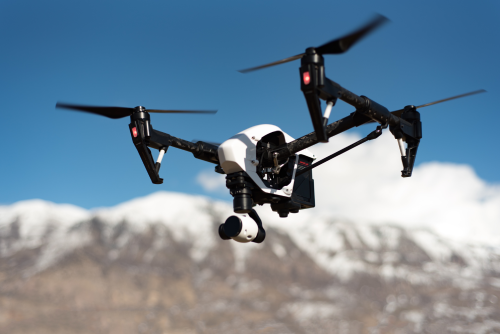
Aurora Orion is a large fixed-wing military/ISR drone prototype from the USA aimed at very long-endurance missions rather than consumer or commercial flying. It matters because the supplied public record points to unusually ambitious paper performance, including a quoted 120-hour endurance and 24,140 km range. For researchers, defense-market watchers, and institutional evaluators, Orion stands out less as a retail product and more as a capability concept worth tracking.
Unlike a consumer drone review, any serious discussion of Orion has to begin with a limitation: the public data appears thin, selective, and heavily oriented toward headline performance numbers rather than complete program transparency. That means this article should be read as a structured assessment of a prototype aircraft concept based on the supplied information, not as a standard hands-on buying guide. Even so, the published figures are significant enough to justify careful attention.
Quick Summary Box
- Drone Name: Aurora Orion
- Brand: Aurora
- Model: Orion
- Category: Military/ISR fixed-wing drone
- Best For: Institutional ISR evaluation, aerospace research, long-endurance UAV comparison
- Price Range: Not publicly confirmed in supplied data
- Launch Year: Not publicly confirmed in supplied data
- Availability: Not publicly confirmed in supplied data
- Current Status: Prototype
- Overall Rating: Not rated due to limited confirmed data
- Our Verdict: A very large, endurance-focused ISR prototype with standout published range and flight-time figures, but too thinly documented for a normal buying recommendation.
A practical takeaway from the summary box is that Orion should not be judged by the same standards applied to retail drones, survey UAVs, or ready-to-deploy enterprise systems. The most relevant questions here are not app polish, camera presets, or dealer support. They are program maturity, mission-system integration, sustainment feasibility, and whether the published endurance concept translates into a useful operational capability.
Introduction
The Aurora Orion is presented in the supplied data as a US-made fixed-wing military/ISR platform in prototype status. That immediately places it outside the normal drone-buying conversation: this is not a camera drone, FPV quad, or even a typical enterprise multirotor. Readers should care about Orion because its published endurance, range, and airframe size suggest a high-persistence surveillance concept with strategic rather than tactical positioning.
That distinction matters. In tactical drone discussions, the focus is often on rapid deployment, local awareness, and mission flexibility over a relatively short period. In contrast, a platform built around multi-day endurance belongs to a very different operational philosophy. Such aircraft are about persistence: staying over or near an area of interest long enough to reduce gaps in coverage, lower sortie turnover, and support missions that depend on continuity rather than quick bursts of activity.
The quoted 120-hour endurance is especially attention-grabbing because it implies a theoretical ability to remain airborne for roughly five days. Even without full public confirmation of payload, propulsion, control systems, or actual operational profile, that kind of number raises useful analytical questions:
- Is the aircraft aiming at a niche between established MALE and larger strategic surveillance platforms?
- Is endurance the main differentiator, even if altitude or speed are less extreme than some alternatives?
- How much of the concept depends on payload fit, communications architecture, and mission planning rather than airframe alone?
Those are the right questions to ask because Orion, based on the supplied record, is not compelling as a consumer product. It is compelling as an indicator of design ambition in long-endurance unmanned aviation.
Overview
What kind of drone is it?
Orion is a fixed-wing unmanned aircraft in the military/ISR segment. The supplied record lists a 5,080 kg maximum takeoff weight, 40 m wingspan, 15 m length, 120-hour endurance, 24,140 km range, 222 km/h max speed, and 9,144 m ceiling. Those figures place it firmly in the large-aircraft class of unmanned systems, not in the portable field-drone category.
The basic type alone tells you a lot. Fixed-wing UAVs are typically selected when efficiency, altitude, speed, or endurance matter more than hovering or vertical takeoff convenience. In other words, Orion belongs to the family of aircraft designed to cover distance and stay aloft, not to inspect a structure from a standstill or operate in a confined urban courtyard.
Its size also pushes it into a different operational world from most systems casually described as “drones.” With a 40 m wingspan, Orion sits much closer to aircraft-scale logistics than backpack-scale deployment. That affects nearly everything:
- handling and storage,
- maintenance philosophy,
- operating base requirements,
- transportation planning,
- crew structure,
- regulatory treatment,
- and likely mission approval processes.
From a classification standpoint, the supplied data supports calling Orion a large long-endurance ISR-oriented unmanned aircraft. It is not possible, based on the limited record alone, to confidently place it into a fully defined MALE or HALE category in the same way analysts might with better-documented platforms. However, it is clearly in the upper end of UAV scale and mission ambition.
Who should buy it?
In practical terms, this page is more relevant to defense analysts, aerospace researchers, institutional buyers, and long-endurance UAV comparators than to ordinary drone shoppers. Because Orion is listed as a prototype and public specifications are incomplete, it is best understood as a program-level platform rather than an off-the-shelf purchase.
That means the “buyer” conversation here is really about evaluators, not shoppers. A likely audience includes:
- government agencies studying persistent surveillance options,
- military planners comparing long-endurance concepts,
- research institutions examining aircraft efficiency and mission persistence,
- aerospace firms interested in partnering, benchmarking, or integrating payloads,
- and defense-market observers monitoring prototype positioning in the US unmanned aviation ecosystem.
What Orion does not appear to be, based on the supplied information, is a straightforward acquisition target for a normal enterprise drone team. If someone needs a system next quarter for mapping, industrial inspection, public safety support, or mainstream ISR operations with known support channels, Orion is the wrong kind of platform to evaluate first.
What makes it different?
The headline differentiator is persistence. A quoted 120-hour endurance is extraordinary on paper and suggests that Orion’s design priority is staying airborne for extended ISR missions. Its 40 m wingspan also signals a very different scale from most unmanned aircraft, pointing to a platform designed around efficiency, mission duration, and large-system integration rather than portability.
Persistence is not just a big number on a brochure. In ISR planning, long endurance can translate into operational advantages such as:
- fewer takeoff and landing cycles,
- reduced handoff gaps between aircraft,
- longer dwell time over surveillance regions,
- more continuity for communications relay roles,
- and potentially lower sortie frequency for equivalent coverage.
Of course, that is only meaningful if the mission systems, control links, and payload package can keep pace with the airframe’s endurance potential. A five-day flight is less useful if sensors, crew rotations, maintenance support, or data exploitation pipelines cannot sustain the mission effectively. Still, as a design signal, Orion’s quoted endurance makes it stand out immediately.
Key Features
- Fixed-wing airframe optimized for long-duration flight rather than hover or confined-space use
- Military/ISR mission category
- Prototype status, indicating a developmental rather than mass-retail platform
- Quoted endurance of 120 hours
- Quoted range of 24,140 km
- Quoted maximum speed of 222 km/h
- Quoted service ceiling of 9,144 m
- Large airframe dimensions with a 40 m wingspan and 15 m overall length
- Maximum takeoff weight of 5,080 kg
- Payload and sensor specifics are not publicly confirmed in supplied data
Each of those features matters for a different reason.
The fixed-wing airframe suggests aerodynamic efficiency and mission persistence, both of which align with the endurance claim. The military/ISR designation indicates that the intended value of the aircraft lies in observation, sensing, relay, or related defense-use missions rather than cargo delivery or photography.
Its prototype status is equally important because it changes how all other specs should be interpreted. Prototype numbers can be aspirational, developmental, or configuration-dependent. They can also shift as testing advances. That does not make them meaningless, but it does mean they should be treated as early indicators rather than final procurement guarantees.
The quoted endurance and range are the obvious highlights, but the maximum takeoff weight and dimensions matter almost as much. They imply that Orion is not simply a lightweight airframe stretched for efficiency; it is a substantial aircraft likely intended to support meaningful onboard systems and long-duration mission architecture.
The biggest unresolved item is the last one: payload and sensor specifics remain unknown in the supplied public record. For an ISR aircraft, that omission is not minor. It is central.
Full Specifications Table
| Specification | Details |
|---|---|
| Brand | Aurora |
| Model | Orion |
| Drone Type | Fixed-wing |
| Country of Origin | USA |
| Manufacturer | Aurora |
| Year Introduced | Not publicly confirmed in supplied data |
| Status | Prototype |
| Use Case | Military/ISR |
| Weight | Not publicly confirmed in supplied data |
| Dimensions (folded/unfolded) | Fixed-wing; folded dimensions not publicly confirmed. Approx. 40 m wingspan, 15 m length |
| Max Takeoff Weight | 5,080 kg |
| Battery Type | Not publicly confirmed in supplied data |
| Battery Capacity | Not publicly confirmed in supplied data |
| Flight Time | 120 hr |
| Charging Time | Not publicly confirmed in supplied data |
| Max Range | 24,140 km |
| Transmission System | Not publicly confirmed in supplied data |
| Top Speed | 222 km/h |
| Wind Resistance | Not publicly confirmed in supplied data |
| Navigation System | Not publicly confirmed in supplied data |
| Obstacle Avoidance | Not publicly confirmed in supplied data |
| Camera Resolution | Not publicly confirmed in supplied data |
| Video Resolution | Not publicly confirmed in supplied data |
| Frame Rates | Not publicly confirmed in supplied data |
| Sensor Size | Not publicly confirmed in supplied data |
| Gimbal | Not publicly confirmed in supplied data |
| Zoom | Not publicly confirmed in supplied data |
| Storage | Not publicly confirmed in supplied data |
| Controller Type | Not publicly confirmed in supplied data |
| App Support | Not publicly confirmed in supplied data |
| Autonomous Modes | Not publicly confirmed in supplied data |
| Payload Capacity | Not publicly confirmed in supplied data |
| Operating Temperature | Not publicly confirmed in supplied data |
| Water Resistance | Not publicly confirmed in supplied data |
| Noise Level | Not publicly confirmed in supplied data |
| Remote ID Support | Not publicly confirmed in supplied data |
| Geo-fencing | Not publicly confirmed in supplied data |
| Certifications | Not publicly confirmed in supplied data |
| MSRP / Launch Price | Not publicly confirmed in supplied data |
| Current Price | Not publicly confirmed in supplied data |
The specification table is notable not only for what it includes, but for what it does not include. For a normal drone review, missing camera specs or software capabilities would be unusual. For a military prototype, that kind of incomplete public disclosure is much less surprising. Still, analysts should recognize that this limits confidence in almost every practical evaluation category beyond raw airframe scale and endurance claims.
A useful way to read the table is to split it into two tiers:
-
Core airframe-performance signals
These include maximum takeoff weight, endurance, range, speed, ceiling, and dimensions. These define the concept at a high level. -
Operational effectiveness unknowns
These include payload type, autonomy, links, navigation resilience, supportability, launch/recovery profile, and mission software. These determine whether the concept becomes a useful system.
In other words, Orion’s public profile is strong on strategic-level identity and weak on tactical-level detail.
Design and Build Quality
Based on the confirmed dimensions alone, Orion is a very large unmanned aircraft. A 40 m wingspan and 15 m length move it far beyond the “drone in a case” category and into aircraft-scale system territory. That has major implications for storage, transport, launch and recovery infrastructure, and maintenance planning.
Even without confirmed information about airframe materials, the physical scale strongly suggests that Orion would need structured ground handling procedures rather than ad hoc field deployment. A platform of this size is likely to affect:
- facility requirements,
- shelter or hangar needs,
- towing or movement procedures,
- inspection routines,
- and personnel training for safe ground operations.
Because the supplied data confirms a fixed-wing design, the airframe likely prioritizes aerodynamic efficiency and persistence rather than compact deployment. That is consistent with the quoted 120-hour endurance. Portability is clearly not the point here.
The wingspan figure is especially telling. Large-span aircraft are often associated with the pursuit of efficient lift and reduced drag in endurance-focused mission profiles. While the supplied data does not provide aspect ratio, propulsion type, or aerodynamic design notes, the overall dimensions still support a broad interpretation: Orion appears designed around staying up, not fitting into a tactical transport package.
Materials, landing gear configuration, propulsion layout, and service access points are not publicly confirmed in the supplied data. Even so, a platform of this class would normally be judged by aircraft-style maintainability, mission availability, and supportability rather than by consumer-drone factors like folding arms or quick-swap prop guards. As a prototype, Orion should also be viewed with caution: build philosophy may still be evolving.
That prototype caveat is worth stressing. In an early or developmental aircraft, external dimensions may remain stable while internal architecture changes significantly. Fuel system design, engine installation, sensor bay arrangements, wiring paths, cooling provisions, and maintenance access can all evolve as testing reveals tradeoffs. For that reason, “build quality” in the usual review sense is almost impossible to score fairly from the supplied public information.
What can be said responsibly is this: the confirmed size and weight class imply a serious aerospace undertaking, not a scaled-up commercial drone. Whether that seriousness translates into operational maturity is a separate question that public data does not yet answer.
Flight Performance
On paper, Orion’s most important flight-performance metric is endurance. A quoted 120 hours is the sort of figure that suggests persistent coverage over very long periods, assuming the final mission configuration can actually support it. The quoted 24,140 km range reinforces that same picture.
A useful analytical point is that the listed range divided by the listed endurance works out to roughly 201 km/h average mission speed. That sits reasonably close to the quoted 222 km/h maximum speed, which suggests a design centered on efficient cruise and long loiter rather than sprint performance. That is analysis, not an additional manufacturer claim.
This relationship between range, endurance, and speed is one of the most interesting parts of Orion’s public profile. It implies an aircraft concept that is not trying to compensate for short endurance with high dash speed. Instead, the performance picture suggests consistency: a UAV meant to travel and remain airborne efficiently over a very long timeline.
That said, analysts should be careful with headline numbers. In aviation, maximum range and maximum endurance are often associated with different operating conditions. Payload weight, fuel state, weather, reserve requirements, climb profile, loiter pattern, communications equipment, and mission routing can all affect what is achievable on a real sortie. So while the published figures are important, they should not be read as guaranteed simultaneous outcomes under every mission loadout.
The 9,144 m ceiling indicates meaningful altitude capability, though not enough public data is available to judge climb performance, hot-and-high behavior, or payload-limited operating envelopes. Wind resistance, takeoff method, landing behavior, and command-link robustness are also not confirmed in the supplied data. Still, as a large fixed-wing aircraft, Orion would be expected to operate outdoors in structured airspace and support environments, not indoors or in improvised small-team deployments.
The service ceiling deserves some interpretation as well. It places Orion at an altitude where surveillance, relay, and persistence missions can benefit from broad line-of-sight geometry and extended coverage footprints, but the aircraft does not appear—based on the supplied numbers—to be competing mainly on ultra-high-altitude access. In other words, the concept seems more endurance-led than altitude-led.
For operational thinking, that matters. Some unmanned aircraft differentiate themselves through speed, some through altitude, some through payload specialization. Orion’s public identity, by contrast, is dominated by time aloft. If that endurance translates effectively into mission service, the platform’s value proposition would be continuous presence rather than aggressive maneuver or extreme ceiling.
Another factor to remember is crew and control burden. A 120-hour sortie is not just an aircraft endurance question. It is also a mission-management question involving:
- command and control continuity,
- staffing rotations,
- maintenance planning before and after flight,
- data exploitation over long windows,
- and recovery risk after extended operations.
So Orion’s published flight performance is impressive, but its real significance depends on whether the broader operational ecosystem can support that persistence efficiently.
Camera / Payload Performance
No camera or payload specification is publicly confirmed in the supplied data, which is a major limitation for evaluating Orion as an ISR platform. In this segment, payload matters just as much as endurance. A long-endurance aircraft only becomes truly useful when paired with a sensor package that can exploit that time aloft.
This is the single biggest information gap in the current public picture. An ISR aircraft can be judged meaningfully only when at least some of the following are known:
- payload type or classes,
- payload weight,
- power and cooling provisions,
- gimbal or aperture configuration,
- radar or SIGINT suitability,
- relay or communications fit,
- onboard processing capability,
- and integration maturity.
What can be said responsibly is that a 5,080 kg maximum takeoff weight and large airframe usually imply room for substantial mission systems, power generation, and communications equipment. That could support electro-optical, infrared, radar, relay, or other surveillance-oriented payload classes, but none of that is specifically confirmed here.
That distinction is important because “ISR” covers a broad mission family. A platform optimized for electro-optical observation is not the same thing as one built around maritime radar, signals intelligence, communications relay, or mixed-sensor persistence. Without payload detail, Orion’s mission identity remains broad rather than precise.
Because sensor details are missing, there is no reliable basis to rate image quality, low-light performance, stabilization, zoom capability, or data-recording workflows. For professional evaluation, payload integration should be treated as the key unknown.
There is also a deeper reason payload matters: it affects the aircraft’s endurance claim itself. Different mission systems impose different penalties in weight, drag, power draw, cooling needs, and communications requirements. A best-case endurance figure in a light configuration may differ substantially from endurance in a fully equipped ISR setup. That does not invalidate the quoted 120-hour figure, but it does mean serious evaluators should ask under what payload and mission conditions that figure applies.
In short, the airframe looks potentially impressive, but the mission usefulness of Orion cannot be fully assessed until the payload story is clearer.
Smart Features and Software
Publicly confirmed software and autonomy details are not available in the supplied data. That means no defensible claims can be made here about waypoint planning, autonomous takeoff and landing, onboard AI detection, return-to-base logic, cloud fleet tools, or API support.
For a platform in this class, prospective evaluators would normally want to verify:
- Mission-planning software maturity
- Beyond-visual-line-of-sight communications architecture
- Sensor management and data-link integration
- Redundancy and fail-safe behavior
- Ground control station design
- Fleet maintenance and diagnostics tools
Because Orion is listed as a prototype, software maturity may be just as important as airframe performance. A big endurance number is only part of the story if the mission system stack is still early-stage.
This point is often underestimated in high-endurance UAV discussions. Aircraft can stay airborne for days, but the mission only works if software can support long-duration control and decision-making with low operator burden and strong resilience. In real-world long-endurance operations, the following software-related issues become critical:
- route replanning,
- lost-link procedures,
- weather avoidance logic,
- payload tasking,
- sensor handoff,
- navigation integrity,
- maintenance alerts,
- and deconfliction in shared airspace.
For a prototype, even seemingly basic features may exist in developmental or restricted form rather than as mature, repeatable capabilities. That is why software and control architecture should not be treated as secondary to endurance. In many cases, they determine whether the endurance is usable at scale.
Another issue is data management. A multi-day ISR mission can generate substantial sensor output, metadata, and communication traffic. Without public detail on onboard processing, downlink bandwidth, storage architecture, or exploitation workflow, there is no sound basis for rating Orion’s mission software environment. The correct stance is cautious neutrality: potentially significant, but currently undocumented.
Use Cases
Based on the confirmed segment and airframe data, the most realistic use cases for Orion are:
- Long-endurance ISR program evaluation
- Wide-area persistent observation for government or defense contexts
- Maritime or border-monitoring concepts, depending on payload fit
- Communications relay or networking experiments
- High-endurance research and test missions
- Systems integration and technology-demonstration programs
- Training and doctrine development for large unmanned aircraft operations
These use cases are plausible because they match what Orion’s published characteristics appear to prioritize: endurance, scale, and mission persistence.
Long-endurance ISR program evaluation is probably the clearest fit. Institutions comparing unmanned surveillance concepts would naturally pay attention to a platform claiming 120 hours of endurance, even before all mission details are public.
Wide-area persistent observation is another logical role. Long-endurance aircraft can reduce surveillance discontinuity by remaining on station longer, especially in cases where operators want fewer launch cycles and more stable mission presence.
Maritime or border-monitoring concepts are plausible because long-duration aircraft often align well with broad-area patrol needs. That said, usefulness in those roles would depend heavily on payload specifics, sensor range, communications resilience, and environmental suitability, none of which are fully confirmed here.
Communications relay or networking experiments also make conceptual sense. An aircraft that can stay airborne for extended periods may serve as a persistent aerial node, assuming mission systems and links support that role. Again, this is a capability hypothesis based on endurance and class, not a confirmed feature set.
High-endurance research and test missions may be especially relevant during prototype life. Even if not fielded in a mature operational role, Orion could still be valuable as a demonstrator for structures, propulsion efficiency, autonomy, networking, sensor integration, or doctrine development.
Training and doctrine development is an underrated use case. Large unmanned aircraft introduce questions about crew workflow, maintenance planning, command architecture, and airspace integration. Even a prototype platform can influence institutional learning if it pushes endurance or mission design in new ways.
Pros and Cons
Pros
- Exceptional quoted endurance of 120 hours
- Very long quoted range of 24,140 km
- Large fixed-wing airframe suited to persistence-focused mission design
- 9,144 m ceiling supports meaningful operating altitude
- 5,080 kg maximum takeoff weight suggests substantial systems capacity
- US-origin platform may interest domestic aerospace and defense observers
Cons
- Prototype status creates maturity, support, and adoption risk
- Payload and sensor details are not publicly confirmed
- No confirmed launch price or current price
- No confirmed launch year or broad market availability
- Large size means major infrastructure and operating burden
- Software, autonomy, and communications details are not publicly confirmed
The pros are meaningful because they describe a platform with a potentially unusual endurance proposition. Even in a market that already includes capable long-endurance UAVs, a published 120-hour figure is notable enough to command analyst attention.
The cons, however, are equally serious. Prototype status does not just mean “not yet mass-produced.” It means performance, reliability, mission integration, support structures, and procurement readiness may all remain uncertain. For normal buyers, that uncertainty is often disqualifying. For researchers and program watchers, it is simply part of the evaluation context.
The missing payload detail is perhaps the strongest negative from an ISR perspective. Endurance without sensor clarity is like horsepower without knowing the vehicle’s purpose: impressive, but incomplete.
Comparison With Other Models
Because Orion is a prototype with limited public detail, comparisons are best kept high-level and focused on airframe class, endurance, and program maturity rather than exact mission-system parity.
| Model | Price | Flight Time | Camera or Payload | Range | Weight | Best For | Winner |
|---|---|---|---|---|---|---|---|
| Aurora Orion | Not publicly confirmed in supplied data | 120 hr | Not publicly confirmed in supplied data | 24,140 km | 5,080 kg MTOW | Prototype long-endurance ISR concept | Paper endurance |
| General Atomics MQ-9B SkyGuardian | Procurement-based; not standardized publicly | 40+ hr | EO/IR and mission payload options | Mission-dependent | About 5,670 kg MTOW | Mature long-endurance MALE ISR | Service maturity |
| Northrop Grumman RQ-4 Global Hawk | Procurement-based; not standardized publicly | 32+ hr | Strategic wide-area ISR payloads | About 22,780 km | About 14,628 kg MTOW | HALE strategic surveillance | Altitude class |
| General Atomics MQ-1 Predator | Legacy procurement platform | About 24 hr | Legacy EO/IR ISR payload class | Mission-dependent | About 1,020 kg MTOW | Historical baseline comparison | Legacy benchmark |
The comparison table is intentionally conservative. Orion should not be presented as a proven replacement for better-known systems on the basis of a small public data set. Instead, the goal is to show where its published numbers appear to position it in relation to recognized long-endurance UAV references.
Orion vs a close competitor
Against MQ-9B SkyGuardian, Orion looks stronger on quoted endurance alone. SkyGuardian, however, has the advantage of being a much more mature and openly discussed program family with clearer integration and support expectations. If a buyer values readiness over headline persistence, the established competitor is easier to assess.
That distinction matters in procurement logic. A mature aircraft with lower endurance may still be the better choice if it offers:
- clearer payload compatibility,
- validated support structures,
- training pathways,
- operational track record,
- and lower integration uncertainty.
So while Orion’s published endurance is more dramatic, the comparison is not automatically favorable in practical acquisition terms.
Orion vs an alternative in the same segment
Compared with RQ-4 Global Hawk, Orion appears oriented toward extreme endurance with a lower operating ceiling than a true HALE platform. Global Hawk sits in a different altitude and mass class, so the better choice depends on whether the priority is strategic high-altitude coverage or extended-duration persistence at somewhat lower altitude.
This is a good example of why raw numbers do not tell the whole story. Endurance, ceiling, payload sophistication, survivability assumptions, and mission architecture all interact. Orion’s public profile suggests a persistence-first concept, whereas a platform like Global Hawk is often discussed in relation to broad strategic surveillance roles at higher altitude. Those are related but not identical value propositions.
Orion vs an older or previous-generation option
Versus MQ-1 Predator, Orion represents a dramatic scale-up in airframe size and published endurance. Predator is mainly useful as a historical reference point showing how far large-ISR UAV ambitions have grown over time.
The historical comparison is helpful because it highlights a larger market trend: unmanned aircraft development has increasingly moved toward specialized mission persistence, broader autonomy, and more strategic operational concepts. Orion fits that trend symbolically, even if full mission detail remains unavailable.
Overall, Orion compares best as a concept signal rather than a like-for-like market substitute. It says something important about design ambition, but less—at least publicly—about mature deployable capability.
Manufacturer Details
The supplied data lists both the brand and manufacturer as Aurora, so there is no separate consumer-facing sub-brand to distinguish from the company name. In practical terms, Orion is presented as an Aurora-built, Aurora-branded aircraft.
In the US aerospace market, Aurora is associated with advanced aircraft development and unmanned/autonomous aviation work rather than mainstream consumer drone sales. That gives the Orion program a different context from camera-drone brands: it sits closer to aerospace R&D and institutional aviation programs than to retail drone channels. Readers should therefore judge the manufacturer more by aerospace-program credibility than by consumer app ecosystems.
That context helps explain why so much of the usual buyer information is absent. Aerospace prototype developers do not market products the way consumer drone brands do. Public disclosure may be selective, timing-sensitive, or shaped by program confidentiality. As a result, it is entirely normal for a prototype like Orion to have:
- incomplete public specifications,
- unclear availability,
- no standardized MSRP,
- and limited visibility into support or sales pathways.
For analysts, the manufacturer angle matters because it affects confidence in technical seriousness. A company rooted in aerospace development brings a different kind of credibility than an unknown startup claiming similar endurance numbers. That still does not validate every published figure on its own, but it does make the program more worthy of sustained attention.
Support and Service Providers
No public support network, warranty structure, or spare-parts program is confirmed in the supplied data. For a prototype military/ISR platform, support would typically be direct-from-manufacturer, program-managed, or handled through specialized institutional service arrangements rather than through retail repair centers.
Prospective operators or analysts should verify:
- Official manufacturer support channels
- Regional service and maintenance coverage
- Spare-parts availability
- Training and certification pathways
- Ground-control and mission-system support
- Long-term sustainment expectations for a prototype airframe
Because Orion is not a consumer drone, after-sales support may matter more than the published airframe numbers.
This is especially true for aircraft intended for long-duration operations. Support for a platform like Orion is not just about fixing broken parts. It includes:
- scheduled maintenance logic,
- reliability data,
- engine or propulsion servicing,
- software update management,
- sensor calibration,
- communications equipment upkeep,
- and configuration control across airframe and mission systems.
A platform with strong endurance but weak sustainment planning can quickly become expensive, underutilized, or operationally fragile. For that reason, supportability is one of the biggest hidden variables in evaluating Orion’s real-world potential.
Where to Buy
There is no public evidence in the supplied data that Orion is sold through normal drone retail channels. As a prototype military/ISR platform, any acquisition path would likely be direct, institution-led, and potentially restricted by government, defense, or export frameworks.
In practical terms:
- Do not expect consumer e-commerce availability
- Do not expect camera-drone dealer listings
- Verify whether the platform is even open to external procurement
- Expect any serious inquiry to go through the manufacturer or specialized aerospace procurement channels
For many readers, the realistic answer to “Where can I buy it?” is simply: you probably cannot buy it in the way you buy a normal drone.
Even institutions would likely need to approach the program through formal channels such as:
- manufacturer contact,
- defense procurement processes,
- research partnership structures,
- testing agreements,
- or government-approved evaluation frameworks.
That does not mean acquisition is impossible; it means availability is likely governed by program status, mission sensitivity, and institutional suitability rather than open market demand.
Price and Cost Breakdown
No launch price, MSRP, or current market price is publicly confirmed in the supplied data. That is normal for non-retail military/ISR platforms, especially prototypes.
For budgeting purposes, buyers would need to verify far more than just airframe cost, including:
- Aircraft procurement cost
- Ground control systems
- Mission payload and sensor package costs
- Communications and data-link equipment
- Training and crew qualification
- Spares and maintenance tooling
- Software and mission-system integration
- Storage, transport, and infrastructure requirements
- Insurance or risk-management costs where applicable
With a platform of this size, total ownership cost is likely to be far broader than the aircraft alone.
This point deserves emphasis because large unmanned aircraft are often misunderstood through the lens of smaller drone purchasing. For a prototype ISR platform, the biggest cost drivers may not even be the airframe itself. Depending on mission setup, organizations might spend heavily on:
- secure data links,
- specialized payloads,
- integration engineering,
- support contracts,
- test range access,
- airspace coordination,
- and long-term sustainment.
A better budgeting concept than “price” is program cost. Orion, if pursued seriously, would likely be evaluated as part of a full capability package rather than as a standalone aircraft. That is another reason the lack of public pricing is not surprising, though it does make outside assessment difficult.
Regulations and Compliance
Orion sits far outside typical hobby or light-commercial drone categories. With a 5,080 kg maximum takeoff weight, it would fall into highly regulated operating environments and would likely require formal aviation approvals, airspace coordination, and organization-level compliance processes rather than simple recreational registration rules.
Key points readers should keep in mind:
- Local and national aviation approval would be essential
- Standard small-UAS rules are unlikely to apply cleanly
- Remote ID support is not publicly confirmed in supplied data
- Privacy, surveillance, and data-handling rules may be strict
- Export-control and restricted-use rules may apply depending on jurisdiction
- Any civil, research, or test use should be cleared with the relevant authorities first
Always verify current law in the country and airspace where the aircraft would be tested, demonstrated, or operated.
The regulatory burden is not just a footnote. It shapes whether a platform like Orion can be used at all outside tightly controlled contexts. Issues may include:
- airworthiness approval,
- certificate or waiver structures,
- BVLOS authorization,
- integration with manned air traffic,
- restricted airspace access,
- and safety-case documentation.
If military or dual-use technologies are involved, export control and end-use restrictions may become major gating factors. Even research institutions may face substantial compliance obligations before operating or even receiving such a platform.
For that reason, Orion’s practical accessibility is not only a matter of price or availability. It is also a matter of legal and operational permission.
Who Should Buy This Drone?
Best for
- Institutional buyers evaluating large ISR airframe concepts
- Aerospace researchers comparing endurance-focused unmanned aircraft
- Defense and security analysts tracking US prototype UAV programs
- Organizations studying persistent airborne mission architectures
These are the readers most likely to extract real value from the available information. For them, Orion is interesting not because it is easy to acquire, but because it reveals a particular design philosophy: large-scale unmanned persistence with very ambitious endurance targets.
Not ideal for
- Hobbyists or recreational pilots
- Content creators and aerial photographers
- Typical enterprise drone teams needing ready-to-fly systems
- Buyers who need transparent pricing and dealer availability
- Operators who need a field-proven, publicly documented platform right now
This list should be taken seriously. Even many professional drone operators are not the intended audience for a platform like Orion. If your requirements involve routine deployment, predictable support, straightforward compliance, and a known sensor package, there are many better-documented alternatives in the broader UAV market.
A simple rule of thumb is this: if you are asking whether Orion is a good drone to purchase for practical near-term operations, the answer is probably no. If you are asking whether Orion is a noteworthy prototype in the evolution of long-endurance unmanned ISR systems, the answer is much more likely yes.
Final Verdict
Aurora Orion is compelling because of what its published numbers imply: a very large fixed-wing ISR prototype built around extraordinary endurance and strategic persistence. The biggest strengths are the quoted 120-hour flight time, 24,140 km range, and aircraft-scale design. The biggest drawbacks are equally clear: prototype status, missing payload details, unknown pricing, and unclear availability or support.
What makes Orion worth watching is not that it can be cleanly recommended today. It cannot. There is too much missing public information for that. Instead, its value lies in the way it sharpens the conversation about what long-endurance unmanned aircraft are trying to become. The supplied data points to an airframe concept focused less on tactical convenience and more on sustained presence over vast distances and long mission windows.
That is a meaningful distinction in a market often crowded with smaller systems and short-duration use cases. Orion appears, at least from the available record, to sit at the high end of persistence ambition. If future disclosures confirm robust payload integration, mature control architecture, and workable sustainment, the platform could become much more than an interesting set of paper specs.
For now, the correct conclusion is measured but clear:
- As a consumer or enterprise purchase recommendation: not applicable.
- As a prototype worth monitoring in the long-endurance ISR space: definitely yes.
- As a fully assessable operational system: not yet, based on the supplied data.
In short, Orion is worth serious attention if you are studying long-endurance military/ISR UAVs or comparing high-persistence unmanned aircraft concepts. It is not a normal “buy now” drone, and it should be treated as a niche, procurement-driven, information-limited platform until more confirmed public data emerges.
