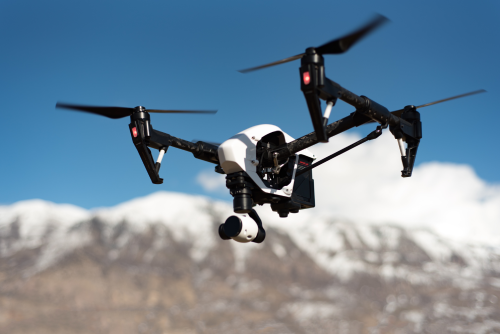
Freefly Astro is an active industrial mapping drone platform from Freefly Systems in the USA. It is aimed at professional users such as survey teams, enterprise operators, and organizations that need a multirotor aircraft for geospatial and site-data work rather than casual flying. Even with limited public specs in the supplied data, Astro matters because industrial drone buying is often decided by workflow fit, payload compatibility, and support quality as much as by headline numbers.
For many professional buyers, the most important question is not whether a drone looks impressive on paper. It is whether the aircraft can reliably collect the data needed for deliverables, fit into a safe and repeatable field workflow, and remain serviceable over years of use. That context is especially important with a platform like Astro. In the industrial world, purchase decisions are often tied to mapping output quality, software integration, procurement requirements, and uptime expectations, not just battery life or top speed.
Quick Summary Box
- Drone Name: Freefly Astro
- Brand: Freefly
- Model: Astro
- Category: Industrial mapping
- Best For: Survey teams, enterprise mapping programs, industrial site documentation
- Price Range: Not publicly confirmed in supplied data
- Launch Year: Not publicly confirmed in supplied data
- Availability: Not publicly confirmed in supplied data
- Current Status: Active
- Overall Rating: Not rated due to limited confirmed data
- Our Verdict: A potentially serious US-made industrial multirotor for mapping work, but buyers should verify payload options, software workflow, and total cost before committing.
Introduction
The Freefly Astro sits in the industrial mapping segment and is presented under the Freefly brand by Freefly Systems. Based on the supplied official manufacturer-sourced record, it is an active multirotor platform intended for professional work rather than consumer recreation. Readers should care about Astro if they are comparing enterprise-grade drone platforms for mapping, surveying, or other structured aerial data missions where reliability and workflow matter more than entertainment features.
Industrial mapping is a different buying category from the consumer drone market. A hobby pilot may care most about cinematic video quality, ease of flying, and travel convenience. A survey manager or enterprise drone lead usually cares more about consistency, documentation, integration, maintenance planning, and whether the aircraft supports the exact sensor package and processing chain their team requires. That is the lens through which Astro should be viewed.
The available data does not provide a complete public spec sheet, so this article cannot responsibly make hard claims about range, flight endurance, payload limits, or camera performance. Still, the platform remains relevant because Freefly is not positioned as a toy or entry-level brand. Astro appears to be designed for buyers who are evaluating a professional system as part of a larger operational workflow. That makes it worth examining in terms of role, likely strengths, procurement considerations, and what questions a serious buyer should ask before placing an order.
Overview
What kind of drone is it?
Astro is a multirotor drone in the industrial mapping category. That places it in the professional UAV class used for repeatable site capture, aerial data collection, and enterprise flight operations rather than beginner or hobby use.
In practical terms, “industrial mapping” usually means missions such as orthomosaic capture, topographic surveys, construction progress documentation, stockpile observation, corridor work, asset context imaging, or regular site record generation. These jobs prioritize stable flight behavior, repeatable mission planning, and sensor compatibility. A drone in this category is not just a camera in the sky. It is part of a data-collection system that often feeds photogrammetry software, GIS platforms, CAD workflows, engineering review, or internal compliance records.
The multirotor layout is also important. Compared with fixed-wing mapping aircraft, multirotors trade away some long-distance coverage efficiency in exchange for vertical takeoff and landing, hovering ability, and easier use in constrained spaces. For many industrial sites, that trade makes sense.
Who should buy it?
The most relevant buyers are survey firms, GIS teams, construction and infrastructure operators, industrial asset managers, and enterprise drone programs that need a vertical-takeoff platform for mapping-related tasks. It may also interest organizations that prefer working with a US manufacturer.
More specifically, Astro is likely to appeal to buyers in situations such as:
- Survey and geospatial companies needing a drone platform that can be integrated into standardized field procedures
- Construction groups documenting progress over time from repeatable aerial positions and flight plans
- Mining, quarry, and aggregate operations performing regular site visibility or stockpile-related imaging
- Infrastructure managers capturing aerial context around utilities, transport assets, or industrial facilities
- Large enterprises building an internal drone program and wanting a more procurement-oriented platform rather than a consumer-style device
- Organizations with supply-chain, compliance, or sourcing preferences that make a US-manufacturer relationship particularly valuable
This does not automatically mean Astro is the best option for all of these users. It means those are the buyers most likely to see the platform as relevant.
What makes it different?
From the confirmed data alone, Astro stands out mainly by its positioning: it is an active industrial platform from Freefly Systems, a known professional-market company in the USA. Compared with consumer-style drones, that usually means the real decision factors are payload path, software integration, and service support. However, the supplied data does not confirm exact endurance, camera package, autonomy stack, or pricing, so direct pre-purchase verification is essential.
That positioning matters because in the enterprise market, a drone is often selected as part of a broader operational strategy. Some buyers are not simply asking, “What flies the farthest?” They are asking:
- Will this aircraft fit our approved procurement channel?
- Can it support the sensors we need now and later?
- Is the manufacturer credible enough for long-term support?
- Does it integrate into our mapping, processing, and reporting workflow?
- Can our field teams deploy it quickly and consistently?
- Is the vendor relationship strong enough for training, repair, and updates?
Astro’s likely differentiator is less about consumer-style flash and more about platform seriousness. For the right buyer, that can matter more than retail-friendly convenience.
Key Features
-
Freefly-branded industrial multirotor platform
The Astro is presented as a professional UAV, not a hobby or prosumer drone. -
Manufactured by Freefly Systems in the USA
This may be meaningful for buyers with sourcing, trust, procurement, or service considerations tied to origin. -
Positioned for industrial mapping workflows
Its intended role appears to be site-data collection and structured aerial operations rather than casual camera flying. -
Multirotor airframe implies vertical takeoff and landing capability
That generally improves usability on job sites, in tight staging areas, and anywhere runway access is unrealistic. -
Hover-capable layout suitable for controlled site work and structured aerial data capture
Hovering and low-speed precision matter for many industrial environments, especially around active work zones. -
Active current-status model rather than a discontinued legacy aircraft
Buyers usually prefer current platforms because they tend to have a more practical support path and fewer continuity risks. -
Professional platform focus, which is typically more relevant to enterprise operations than consumer camera-drone convenience
This suggests Astro should be judged by data workflow, payload support, and reliability rather than lifestyle features. -
Potential value in standardized fleet use
Even without full public specs, industrial buyers may see Astro as a platform candidate for repeated missions and internal SOP-driven operations. -
Likely stronger relevance to workflow-centered buyers than impulse buyers
Its appeal is less about entertainment and more about operational fit. -
Exact endurance, range, top speed, payload details, and software features are not publicly confirmed in the supplied data
Those details should be confirmed directly with the manufacturer or authorized dealer before procurement.
Full Specifications Table
| Specification | Details |
|---|---|
| Brand | Freefly |
| Model | Astro |
| Drone Type | Multirotor |
| Country of Origin | USA |
| Manufacturer | Freefly Systems |
| Year Introduced | Not publicly confirmed in supplied data |
| Status | Active |
| Use Case | Industrial mapping |
| Weight | Not publicly confirmed in supplied data |
| Dimensions (folded/unfolded) | Not publicly confirmed in supplied data |
| Max Takeoff Weight | Not publicly confirmed in supplied data |
| Battery Type | Not publicly confirmed in supplied data |
| Battery Capacity | Not publicly confirmed in supplied data |
| Flight Time | Not publicly confirmed in supplied data |
| Charging Time | Not publicly confirmed in supplied data |
| Max Range | Not publicly confirmed in supplied data |
| Transmission System | Not publicly confirmed in supplied data |
| Top Speed | Not publicly confirmed in supplied data |
| Wind Resistance | Not publicly confirmed in supplied data |
| Navigation System | Not publicly confirmed in supplied data |
| Obstacle Avoidance | Not publicly confirmed in supplied data |
| Camera Resolution | Not publicly confirmed in supplied data |
| Video Resolution | Not publicly confirmed in supplied data |
| Frame Rates | Not publicly confirmed in supplied data |
| Sensor Size | Not publicly confirmed in supplied data |
| Gimbal | Not publicly confirmed in supplied data |
| Zoom | Not publicly confirmed in supplied data |
| Storage | Not publicly confirmed in supplied data |
| Controller Type | Not publicly confirmed in supplied data |
| App Support | Not publicly confirmed in supplied data |
| Autonomous Modes | Not publicly confirmed in supplied data |
| Payload Capacity | Not publicly confirmed in supplied data |
| Operating Temperature | Not publicly confirmed in supplied data |
| Water Resistance | Not publicly confirmed in supplied data |
| Noise Level | Not publicly confirmed in supplied data |
| Remote ID Support | Not publicly confirmed in supplied data |
| Geo-fencing | Not publicly confirmed in supplied data |
| Certifications | Not publicly confirmed in supplied data |
| MSRP / Launch Price | Not publicly confirmed in supplied data |
| Current Price | Not publicly confirmed in supplied data |
Because so many performance fields are unconfirmed in the supplied material, this table should be read as a status snapshot rather than a conventional product spec resource. For enterprise buyers, that is not necessarily a deal-breaker, but it does mean the evaluation process should include a demo, a direct vendor quote, and a detailed configuration review.
Design and Build Quality
With industrial mapping drones, design quality is less about appearance and more about repeatable deployment, field handling, and supportability. Because Astro is a multirotor platform, it should conceptually suit direct launch and recovery from tighter spaces than fixed-wing mapping aircraft typically require. That can be a practical advantage on construction sites, industrial yards, and survey staging points.
This matters more than many first-time buyers expect. A platform that saves five or ten minutes on setup, can be launched from a smaller area, and is easier to inspect between flights may create a meaningful productivity advantage over the course of a project. Industrial teams often work from gravel pull-offs, active work zones, roadside shoulders, rooftops, or temporary field bases. In those environments, ease of deployment becomes a real operational benefit.
The supplied data does not confirm frame materials, foldability, arm design, landing gear arrangement, propeller format, or weather sealing. Those details matter a lot in real enterprise use. Buyers should verify whether the airframe is quick to set up, whether spares are easy to swap in the field, and how transport-friendly the system is when packed with batteries and mission gear.
A few build-quality questions are worth asking in any Astro procurement conversation:
- How quickly can the aircraft be made ready from packed transport state?
- Are components modular enough for field replacement?
- What daily inspection points does the manufacturer recommend?
- How are motors, props, and landing structures serviced?
- Is the transport case sized for realistic field use or only for showroom presentation?
- How many batteries can be stored and moved with the standard kit?
- How robust are connectors, latches, and cable interfaces under repeated use?
Freefly’s professional-market reputation suggests Astro is not intended as a toy-grade aircraft, but exact ruggedness and serviceability claims still need direct confirmation. For industrial operators, the most important design questions are usually practical: how fast can a damaged rotor or arm be replaced, how easy is the aircraft to inspect between missions, and how well does it fit a daily work truck or survey kit.
Another underappreciated design factor is human workflow. A drone may be technically capable, yet still frustrate teams if batteries are awkward to install, storage is poorly thought out, or packing the system takes too long. Good industrial design reduces avoidable field friction. If Astro is on your shortlist, ask for a hands-on demonstration with the full working kit, not just the aircraft by itself.
Flight Performance
Without confirmed figures for endurance, top speed, ceiling, or max range, Astro cannot be fairly judged as a spec-sheet winner or loser. What can be said is that a multirotor mapping platform is usually chosen for controllable low-altitude work, hover capability, and repeatable flight lines rather than maximum area coverage per battery.
In practical terms, that means Astro is likely most attractive for teams that value site access and controlled mission execution. That is analysis based on its airframe type and market segment, not a claim of measured performance. A multirotor can be easier to deploy in constrained areas, but it may not match fixed-wing efficiency on very large-area mapping jobs.
For many professional users, “performance” is not just raw speed. It includes:
- Mission consistency across repeat flights
- Stable behavior in typical site winds
- Predictable battery draw with the actual payload installed
- Precise turns and line tracking during automated mapping routes
- Reliable hovering for visual checks or manual positioning
- Confidence during takeoff and landing in imperfect field conditions
Before buying, operators should ask for current data on real-world flight time with actual mapping payloads, wind tolerance, GNSS behavior, and link stability. None of those are publicly confirmed in the supplied data. If your missions involve difficult weather, long transits, or high-elevation operations, those checks become especially important.
It is also worth thinking in mission terms instead of aircraft terms. A drone that claims strong endurance on paper may deliver much less once a realistic payload is installed, mapping overlap is set conservatively, and reserve battery policy is followed. Enterprise teams should ask vendors for examples such as:
- Approximate acreage or hectares covered per battery on a standard grid mission
- Endurance impact of different payload types
- Performance in steady wind versus gusty wind
- Recommended operating reserve for safe return
- Expected productivity over a full day with the included charger setup
Those answers matter more than marketing language. For mapping work, a predictable aircraft is often more valuable than a theoretically faster one.
Camera / Payload Performance
Astro should be treated first as an industrial platform, not automatically as a fixed camera drone. The supplied data does not confirm a standard camera, included payload, gimbal type, resolution, frame rates, zoom capability, or payload capacity.
That matters because mapping quality depends heavily on the sensor package and mission workflow. A survey buyer should verify the exact camera or sensor options available, the geotagging method, shutter characteristics, calibration workflow, and compatibility with photogrammetry or GIS software. Inspection-focused users should separately confirm whether zoom, thermal, multispectral, or other specialist payload paths exist for their intended configuration.
In a professional mapping context, payload questions often determine whether a drone is useful at all. The aircraft may be excellent, but if the payload does not fit the required deliverable, the platform is the wrong choice. Key payload and imaging considerations include:
- RGB mapping camera suitability for orthomosaics and 3D models
- Mechanical vs rolling shutter behavior, especially for higher-speed mapping runs
- Lens and field-of-view characteristics, which affect ground sampling distance and mission planning
- Geotagging and positioning workflow, including any correction process needed for accuracy goals
- Calibration requirements, both camera-related and operational
- Compatibility with processing software used by your organization
- Specialized sensing options such as thermal or multispectral, if future expansion matters
Because the payload details are not publicly confirmed here, it would be misleading to make image-quality or mapping-accuracy claims. The safer conclusion is that Astro’s value will depend heavily on how well its supported payload setup matches your deliverables.
That point deserves emphasis. A construction company producing visual progress maps may have very different needs from a survey firm delivering measured outputs to engineering teams. Likewise, an environmental program might care more about multispectral flexibility than classic RGB mapping efficiency. Astro may be an excellent fit in one case and a weak fit in another, depending entirely on supported payload configurations.
If possible, buyers should request sample outputs from a mission similar to their own use case. Ask to see not just raw images, but completed deliverables: orthomosaics, point clouds, surface models, thermal outputs, or whatever the workflow demands. A professional drone should be judged by end results, not by generic imaging language.
Smart Features and Software
The supplied data does not publicly confirm Astro’s software stack or autonomy feature list. That includes items such as return to home, waypoint missions, grid mapping tools, obstacle avoidance logic, SDK access, cloud fleet tools, and survey workflow integration.
For industrial buyers, software is often just as important as the airframe. A drone that flies well but creates friction in mission planning, data export, or compliance logging can become costly in day-to-day operations. Likewise, a platform with excellent sensors can still disappoint if the controller experience is awkward or post-flight workflow is too manual.
These are the areas worth verifying directly before purchase:
-
Mission planning and waypoint/grid capture tools
Can crews easily set up repeatable mapping missions with defined overlap, altitude, and route logic? -
Failsafe behavior, including return-to-home logic
Are emergency and lost-link behaviors clear, configurable, and well documented? -
Navigation enhancements such as correction workflows, if required for mapping
If precise mapping is a priority, what positioning workflow is supported? -
Controller and app ecosystem
Is the control interface mature, field-friendly, and usable by multiple operators with different experience levels? -
Data export formats and map-processing compatibility
Will images, metadata, and logs fit into your existing software stack without awkward conversion steps? -
Fleet management, flight logging, and audit trail support
Can operations managers monitor aircraft use, battery health, maintenance events, and pilot records? -
API or SDK access for enterprise integration
Is there a path for custom software, internal dashboards, or program-level automation?
These functions are common decision points in industrial drone procurement, but they are not confirmed in the supplied data for Astro.
For many enterprise teams, software evaluation should include real-world questions such as:
- How easy is it to repeat the same mission weekly or monthly?
- Can multiple pilots use the platform without workflow confusion?
- Are firmware updates controlled and documented?
- Is there a clean handoff from field capture to office processing?
- Can logs support internal safety review or client reporting?
- Does the platform support organizational scaling, not just one-off flights?
If Astro is being considered for a serious deployment, a live software demonstration may be more valuable than a static hardware presentation.
Use Cases
Astro appears best suited to structured professional missions rather than general-purpose hobby flying.
-
Industrial mapping and site documentation
Regular capture of work sites, facilities, yards, and development areas for visual records and internal reporting. -
Surveying and topographic data capture
Use in workflows that require repeatable aerial image collection for later processing into maps or models. -
Construction progress tracking
Routine mission flights over active builds to compare progress over time and support stakeholders with current visual context. -
Infrastructure and industrial asset observation
Collection of aerial context around linear assets, facilities, utility areas, or operational sites where a VTOL drone is easier to deploy than a larger fixed-wing system. -
Mining, quarry, or large-site visual mapping workflows
Situations where regular site-state capture is needed and quick launch from rough operational environments is useful. -
Enterprise drone-program standardization and internal operational use
Organizations that want a more formal UAV platform with repeatable deployment procedures, training, and support considerations.
It may also be suitable for additional professional roles depending on payload support. For example, some teams value a single platform that can serve both mapping and adjacent visual documentation tasks. That possibility is worth exploring with the vendor, but only through confirmed configuration details.
Pros and Cons
Pros
-
Built by Freefly Systems, an established US manufacturer
That can increase buyer confidence for organizations that value vendor credibility and product continuity. -
Active platform rather than clearly retired hardware
Current products tend to offer a more reliable path for updates, repairs, and procurement planning. -
Multirotor format is well suited to vertical takeoff and recovery
Helpful for operations in constrained or uneven field environments. -
Strong fit for industrial mapping use cases on paper
Its category positioning aligns with professional aerial data collection rather than casual use. -
Likely appealing to organizations that prefer professional workflow tools over consumer-style features
Some buyers want a system mindset more than a convenience gadget. -
May be attractive to buyers seeking a US-origin drone option
That can matter for policy, procurement, or internal approval reasons. -
Potentially better aligned with enterprise evaluation criteria
Workflow, service, and long-term support may be a bigger part of its appeal than raw retail visibility.
Cons
-
Major performance specs are not publicly confirmed in the supplied data
That makes early comparison harder for buyers who rely on transparent spec sheets. -
Camera and payload details are not publicly confirmed
This is a major issue because payload fit is central to mapping value. -
Price, launch year, and availability are not publicly confirmed
Buyers will need direct vendor engagement to assess budget and procurement timing. -
Software and autonomy feature set needs direct verification
Enterprise software quality can make or break real-world usability. -
Support coverage, warranty terms, and service turnaround should be checked before purchase
Even a good aircraft can become a poor fleet decision if support is slow or fragmented. -
Hard to compare directly against rivals without a fuller public spec sheet
Competing enterprise drones may be easier to benchmark publicly.
Comparison With Other Models
Because the supplied Astro data lacks confirmed flight time, payload, and price information, the table below is best read as a market-positioning comparison rather than a strict spec-by-spec verdict.
| Model | Price | Flight Time | Camera or Payload | Range | Weight | Best For | Winner |
|---|---|---|---|---|---|---|---|
| Freefly Astro | Not publicly confirmed in supplied data | Not publicly confirmed in supplied data | Payload/camera not publicly confirmed in supplied data | Not publicly confirmed in supplied data | Not publicly confirmed in supplied data | Buyers wanting a Freefly-led industrial mapping platform | Astro if vendor alignment and workflow fit matter most |
| DJI Matrice 350 RTK | Enterprise-priced; verify current quote | Payload-dependent; verify current spec | Broad enterprise payload ecosystem | Region/version dependent | Heavy enterprise class | Multi-payload enterprise operations | Matrice 350 RTK if ecosystem breadth matters |
| DJI Mavic 3 Enterprise | Enterprise compact tier; verify current bundle | Verify with manufacturer | Compact integrated survey/inspection approach | Region/version dependent | Portable class | Fast deployment and lighter field kits | Mavic 3 Enterprise if portability matters most |
| DJI Phantom 4 RTK | Legacy-market pricing varies | Verify with seller/manufacturer info | Older integrated mapping camera approach | Older-generation system; verify current support | Legacy mapping class | Older mapping workflows and budget-sensitive continuity | Phantom 4 RTK only if legacy continuity matters |
Astro vs a close competitor
A close competitor in the broader professional multirotor space is the DJI Matrice 350 RTK. The DJI option is easier to benchmark publicly because its payload ecosystem and documentation are widely known. Astro may be more interesting for buyers who specifically want a Freefly-centered platform or a US-manufacturer relationship, but the exact technical case needs direct validation.
This comparison is really about platform philosophy. A Matrice-class aircraft often appeals to teams that want a broad ecosystem and many well-known enterprise references. Astro may appeal more to buyers who are making a strategic procurement choice tied to vendor preference, workflow design, or sourcing policy. Neither approach is automatically better. It depends on whether your team values ecosystem breadth, manufacturer alignment, platform control, or long-term operational fit more highly.
Astro vs an alternative in the same segment
Against a compact enterprise option such as the DJI Mavic 3 Enterprise, Astro looks more like a platform decision than a convenience purchase. A compact drone can be easier to transport and deploy quickly, while Astro may appeal more if your organization prioritizes platform class, procurement strategy, or workflow alignment over minimal kit size.
In other words, this is often a question of portability versus program structure. A smaller integrated aircraft can be excellent for rapid-response jobs, quick inspections, and teams with limited field kit tolerance. A more formal industrial platform may make more sense when the drone is part of a repeatable internal process rather than an ad hoc tool.
Astro vs an older or previous-generation option
Compared with older mapping staples like the DJI Phantom 4 RTK, Astro has the advantage of being listed here as an active model rather than mainly a legacy reference. That said, the Phantom remains a useful benchmark for buyers used to integrated mapping workflows. Astro should be the more future-oriented shortlist choice, but only after current payload, software, and support details are confirmed.
Legacy platforms can remain useful in organizations that already own batteries, cases, chargers, or established processing templates. However, older aircraft also introduce continuity risk. If Astro is actively supported and properly aligned with your workflow, it may represent a more durable long-term choice than continuing to rely on aging hardware.
Manufacturer Details
Freefly Systems is the manufacturer behind Astro, and the customer-facing brand is Freefly. In this case, the brand and manufacturer are closely aligned: Freefly is the market name most buyers recognize, while Freefly Systems is the company responsible for product development, production, and official support.
The company is based in the USA and has a strong professional-market identity. Freefly is widely associated with higher-end aerial and camera-movement products rather than entry-level consumer drones. That background helps explain why Astro is positioned as an industrial platform instead of a casual flying product.
For buyers, that matters because manufacturer reputation in the enterprise segment often affects training access, repair confidence, and long-term adoption risk as much as the aircraft itself. A credible manufacturer is more likely to be taken seriously by procurement teams, safety departments, operations managers, and clients who expect formal support relationships.
A manufacturer’s broader identity can also influence:
- confidence in product roadmap continuity
- ease of obtaining direct answers during technical evaluation
- trust in training and onboarding materials
- expectations around service professionalism
- comfort level for larger organizational adoption
That does not guarantee Astro is the right drone for every buyer. It does mean the platform comes from a brand context that professional teams are likely to evaluate seriously.
Support and Service Providers
Support quality is a major part of any industrial drone purchase, and it can matter more than small spec differences. The supplied data does not confirm Astro’s exact warranty terms, repair turnaround, spare-parts availability, or regional service network.
Before purchase, buyers should verify:
- Official support channels from Freefly Systems
- Authorized repair or service options in their region
- Spare propeller, battery, and parts availability
- Whether training or onboarding support is offered
- Software support and update policy
- Regional dealer responsibilities versus direct manufacturer responsibilities
If your operation depends on uptime, ask for clear answers on repair process, replacement lead times, and service coverage before committing.
This is especially important for enterprise mapping teams working on scheduled deliverables. A drone that goes down mid-project can create far more cost than the repair invoice alone. Delayed field work may affect survey schedules, construction reporting, client milestones, or internal decision-making. That is why support should be evaluated like part of the product, not an afterthought.
Useful support questions include:
- Is loaner or replacement hardware ever available for urgent cases?
- What are normal repair turnaround expectations?
- Are batteries and wear items easy to reorder?
- Is there technical support for payload integration or software setup?
- Are training materials suitable for standardizing multiple pilots?
- How are firmware or configuration issues handled in the field?
A strong support path can justify choosing one industrial platform over another, even if the spec differences seem minor.
Where to Buy
Astro should be approached as a professional procurement product rather than an impulse retail purchase. The most reliable starting points are the official Freefly sales channel, authorized enterprise dealers, and regional system integrators that support industrial UAV programs.
Depending on location, availability may be regional and quote-based rather than consumer-cart driven. Some buyers may also encounter marketplace or secondary-market listings, but enterprise drone buyers should be cautious there. Used or gray-market purchases can create problems with battery health, parts support, firmware compatibility, and service eligibility.
For most professional teams, the safest route is to buy through official or authorized channels and request a complete, itemized configuration quote.
That quote should ideally break out:
- aircraft package
- controller hardware
- payload or sensor package
- battery count
- charger configuration
- transport case
- spare parts
- software components
- training or onboarding items
- warranty or service add-ons
Buyers should also ask whether the seller can provide a live demo, sample output, or trial evaluation period. In enterprise procurement, the quality of pre-sales support often predicts the quality of post-sales support.
Price and Cost Breakdown
No confirmed launch price or current price is provided in the supplied data, so Astro cannot be responsibly labeled as budget, mid-range, or premium from the information available here.
That said, industrial drone budgeting should go beyond the airframe. Buyers should ask for a full ownership estimate covering:
- Airframe package
- Controller and display hardware
- Mission payload or mapping sensor
- Extra batteries and charging equipment
- Transport case and field power accessories
- Spare props and maintenance parts
- Software or processing subscriptions, if applicable
- Training and onboarding
- Insurance
- Repair and downtime planning
For enterprise mapping work, the true cost of ownership can be much higher than the sticker price of the aircraft alone. If Astro is on your shortlist, request a current quote and confirm exactly what is included.
A realistic cost model should also consider:
- pilot time and training refresh
- internal program administration
- battery replacement cycle
- calibration or positioning accessories
- data processing labor
- software renewals
- planned maintenance
- contingency budget for accidental damage or urgent replacement
This broader view is important because a cheaper aircraft can become more expensive if it causes workflow inefficiency, poor output quality, or weak support response. Likewise, a more expensive system may prove economical if it reduces field time, integrates cleanly, and keeps teams productive.
Regulations and Compliance
Industrial multirotor operations usually fall under stricter oversight than hobby flying. The exact rule set will depend on your country, aircraft weight, mission type, and whether you are flying commercially.
Key points to verify before operating Astro:
- Registration requirements for the aircraft
- Commercial pilot or operator licensing rules
- Airspace authorization and restricted-area rules
- Privacy and data-collection obligations during mapping
- Operations near people, roads, or critical infrastructure
- Battery transport and storage rules
- Any local requirements for enterprise flight logs or maintenance records
Remote ID support is not publicly confirmed in the supplied data, so do not assume compliance in any specific jurisdiction. Because weight is also unconfirmed, the exact regulatory category may vary. Always verify current law before flight.
For enterprise operators, compliance is not just about legal permission to fly. It often includes internal obligations such as:
- documented pre-flight and post-flight procedures
- maintenance and inspection records
- pilot competency tracking
- incident reporting practices
- data handling and retention policies
- client or site-specific safety rules
Organizations operating near industrial assets or on client-controlled property may also need separate site approvals, contractor onboarding, or insurance documentation. In some cases, the drone decision itself is influenced by whether the platform fits internal compliance frameworks.
Who Should Buy This Drone?
Best for
-
Survey and geospatial teams evaluating professional multirotor mapping platforms
Especially those willing to assess the drone as part of a larger data-delivery workflow. -
Construction and industrial operators needing VTOL site access
Useful where launch space is limited and regular documentation matters. -
Organizations that prefer working with a US manufacturer
This can influence procurement decisions for policy, trust, or support reasons. -
Enterprise buyers who can verify payload, software, and support before purchase
Astro makes the most sense for structured buyers prepared to conduct a proper technical evaluation. -
Programs that value platform seriousness over consumer convenience
Teams building repeatable internal procedures may appreciate that orientation.
Not ideal for
-
Casual hobby pilots
Astro is positioned as a professional tool, not a recreational product. -
Buyers who want a simple out-of-box consumer camera drone
Those users may be better served by an integrated compact enterprise model. -
Users who need a fully transparent public spec sheet before shortlisting
Astro currently requires more direct vendor engagement than some alternatives. -
Budget-first buyers without enterprise support process or training resources
Industrial platforms are usually best justified when supported by a real operational plan. -
Teams seeking a plug-and-play answer without evaluating payload workflow
Astro appears to be a platform choice, not a generic one-size-fits-all solution.
Final Verdict
Freefly Astro looks most compelling as an active US-made industrial mapping multirotor from a credible professional manufacturer. Its biggest strengths are its clear enterprise focus, multirotor workflow advantages, and the credibility that comes with Freefly Systems’ market position. Its biggest drawback is information certainty: many of the most important buying details, including endurance, payload package, software features, and price, are not publicly confirmed in the supplied data.
That means Astro is best treated as a serious shortlist candidate, not an automatic recommendation. If you are an enterprise or survey buyer willing to verify the exact configuration, support path, and total ownership cost directly with Freefly or an authorized dealer, Astro deserves attention. If you need instantly comparable public specs and simple retail clarity, other platforms may be easier to evaluate.
The most sensible way to judge Astro is not by missing marketing numbers, but by whether it can support your actual mission set. If it offers the right payloads, clean software workflow, dependable service, and a procurement path your organization trusts, it could be a strong industrial choice. If those pieces are unclear or unsupported, the platform becomes harder to justify no matter how promising its category positioning may be.
In short: Astro appears to have the profile of a serious professional tool. But like many enterprise UAV purchases, the real decision should come from confirmed workflow fit, not assumptions.
