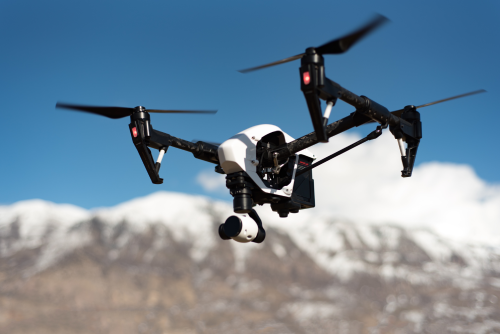
The General Atomics Reaper (MQ-9) is a large fixed-wing military/MALE drone built for long-endurance operations rather than consumer or prosumer flying. It matters because it represents one of the best-known U.S. medium-altitude, long-endurance unmanned aircraft classes, with a confirmed 27-hour endurance, 1,851 km range, and active program status in the supplied data. For researchers, journalists, and professional readers comparing defense-linked UAV platforms, the MQ-9 is a useful benchmark for scale, persistence, and mission flexibility in the MALE segment.
Unlike the drones most people encounter in retail stores or enterprise field kits, the MQ-9 belongs to a category where the aircraft itself is only one part of the overall capability. In practice, platforms like this are evaluated as systems: airframe, sensors, datalinks, ground control, support, training, logistics, and legal authorization all matter. That is why the Reaper is worth understanding even for readers who will never operate one. It helps define what “large unmanned aircraft” means at the upper end of the long-endurance market.
Quick Summary Box
- Drone Name: General Atomics Reaper (MQ-9)
- Brand: General Atomics
- Model: Reaper (MQ-9)
- Category: Military / MALE / fixed-wing
- Best For: Authorized government and defense operators needing long-endurance MALE capability
- Price Range: Not publicly confirmed in supplied data
- Launch Year: Not publicly confirmed in supplied data
- Availability: Restricted procurement; not a consumer retail product
- Current Status: Active
- Overall Rating: Not rated due to limited confirmed data
- Our Verdict: A high-endurance, high-altitude MALE platform with strong confirmed flight figures, but one whose exact payloads, software stack, and procurement costs are not publicly confirmed in the supplied data.
A quick reality check is useful here: this is not the kind of drone a private buyer compares against DJI, Autel, Parrot, or other commercial brands. The MQ-9 exists in a completely different category. Even where some public specifications are known, the more important buying questions are institutional: who is authorized to acquire it, what mission package is included, how the ground segment is configured, and what long-term sustainment structure supports it.
Introduction
The Reaper (MQ-9) is an active General Atomics military/MALE unmanned aircraft from the USA, positioned in the large fixed-wing class rather than the portable drone market. Readers care about it because it sits in a different league from commercial UAVs: its confirmed maximum takeoff weight of 4,763 kg, 20 m wingspan, and 15,240 m ceiling make it a serious long-endurance aircraft platform, not a backpack drone. For analysts and comparison shoppers in the defense and enterprise-adjacent space, it is best understood as a program-driven aircraft system whose value comes from persistence, altitude, and payload flexibility.
That difference in category matters. A consumer drone is usually judged by how quickly it can be deployed, how easy it is to charge, how sharp its camera looks, and how well its mobile app works. A MALE platform like the MQ-9 is judged by how long it can stay on station, how much area it can cover, what mission sensors it can support, how it integrates with command structures, and whether it can sustain repeated operational cycles over time. It is closer to an unmanned aircraft program than to a gadget.
The Reaper also matters historically and analytically because it has become a familiar reference point whenever long-endurance UAVs are discussed in defense, security, and policy contexts. Even where exact configuration details are not public, the MQ-9 is widely recognized as a benchmark for the modern armed and ISR-oriented MALE class. That makes it useful not only for acquisition teams, but also for students, journalists, and professionals trying to understand scale differences across the UAV market.
Overview
What kind of drone is it?
The MQ-9 Reaper is a fixed-wing MALE drone. MALE stands for medium-altitude, long-endurance, which is a category focused on staying airborne for long periods while covering wide areas and carrying mission payloads. In simple terms, this is a large unmanned aircraft designed for sustained operations, not short recreational flights.
The “fixed-wing” part is just as important as the “MALE” part. A fixed-wing aircraft is typically optimized for efficient forward flight over long distances, whereas multirotor drones emphasize hovering, close-range maneuvering, and ease of deployment. That means the Reaper’s strengths are endurance, reach, altitude, and mission persistence. Its design priorities are fundamentally different from those of quadcopters or small VTOL inspection drones.
It is also useful to understand that MALE does not mean “mid-market” or “medium-size” in the everyday consumer sense. In defense aviation, MALE platforms can be very large, expensive, and infrastructure-dependent. The MQ-9’s dimensions and maximum takeoff weight confirm that this is aircraft-scale hardware, not an enlarged hobby drone.
Who should buy it?
In practical terms, this is not a retail-buy drone at all. The relevant audience is government, defense, and institutional procurement teams, along with researchers, journalists, and professionals comparing major ISR-capable aircraft systems. Hobbyists, creators, and small commercial operators should look elsewhere, because the MQ-9 sits far outside normal civilian ownership, training, and operating models.
The “buyer” for a platform like this is usually not an individual pilot, a photo business, or a survey contractor. It is far more likely to be an agency, ministry, military organization, or approved state-linked operator evaluating a complete system package. The decision process would usually involve procurement rules, mission doctrine, training pipelines, sustainment plans, and national or regional authorization pathways.
For non-buying readers, the page is still valuable. If you are building a defense-UAS database, writing about surveillance aircraft, comparing unmanned aviation programs, or trying to understand what separates strategic UAVs from commercial drones, the MQ-9 is an important reference point.
What makes it different?
What stands out from the supplied data is the combination of:
- 27-hour endurance
- 1,851 km range
- 445 km/h top speed
- 15,240 m ceiling
- 4,763 kg maximum takeoff weight
That combination puts the Reaper in a category where persistence and area coverage matter more than convenience or portability. Compared with everyday drones, it behaves more like an unmanned aircraft system program than a simple drone product.
Another point of distinction is how the platform is likely used. Consumer drones are usually purchased as complete products with a fixed camera, battery ecosystem, and app experience. By contrast, a military MALE aircraft is generally valuable because it can support mission-specific configurations. The airframe provides endurance and carrying capacity; the operator determines what package turns that capability into mission value.
Finally, the Reaper’s difference is institutional as much as technical. Its ownership, operation, and support context is shaped by restricted access, government approvals, training regimes, and high-consequence airspace integration. Even if two drones both count as “unmanned aircraft,” that does not mean they belong to the same operational universe.
Key Features
- Large fixed-wing MALE airframe for long-endurance missions
- Active program status, indicating ongoing relevance rather than pure legacy status
- Confirmed maximum takeoff weight of 4,763 kg
- Confirmed endurance of 27 hours
- Confirmed range of 1,851 km
- Confirmed maximum speed of 445 km/h
- Confirmed service ceiling of 15,240 m
- Approximate 20 m wingspan and 11 m length
- Built for large-area coverage and sustained airborne presence rather than short local flights
- Likely supports mission-specific sensor or payload configurations, though exact payload details are not publicly confirmed in the supplied data
- Not a foldable, handheld, or consumer-operable system
- Procurement, support, and operation are likely organization-led rather than individual-user-led
These features are meaningful because they work together rather than in isolation. Endurance without speed can limit repositioning. Speed without endurance reduces time on station. Ceiling without payload flexibility can narrow mission usefulness. The MQ-9’s public profile suggests a platform designed to balance those factors in a way that is useful for prolonged, wide-area missions.
Another important feature, even though it is not a line-item spec, is category fit. The Reaper is a mature reference platform in discussions about MALE UAVs. That means many readers will use it as a baseline for comparing newer or regionally produced alternatives. In that sense, one of its “features” is simply that it is established enough to serve as a benchmark.
Full Specifications Table
| Field | Specification |
|---|---|
| Brand | General Atomics |
| Model | Reaper (MQ-9) |
| Drone Type | Fixed-wing military/MALE unmanned aircraft |
| Country of Origin | USA |
| Manufacturer | General Atomics |
| Year Introduced | Not publicly confirmed in supplied data |
| Status | Active |
| Use Case | Long-endurance military/MALE operations and ISR-oriented missions |
| Weight | Not publicly confirmed in supplied data |
| Dimensions (folded/unfolded) | Fixed-wing airframe; approx. wingspan 20 m and length 11 m. Folded dimensions not publicly confirmed in supplied data |
| Max Takeoff Weight | 4,763 kg |
| Battery Type | Not publicly confirmed in supplied data; battery-style consumer-drone specification may not be applicable to this class |
| Battery Capacity | Not publicly confirmed in supplied data |
| Flight Time | 27 hr |
| Charging Time | Not publicly confirmed in supplied data |
| Max Range | 1,851 km |
| Transmission System | Not publicly confirmed in supplied data |
| Top Speed | 445 km/h |
| Wind Resistance | Not publicly confirmed in supplied data |
| Navigation System | Not publicly confirmed in supplied data |
| Obstacle Avoidance | Not publicly confirmed in supplied data |
| Camera Resolution | Not publicly confirmed in supplied data |
| Video Resolution | Not publicly confirmed in supplied data |
| Frame Rates | Not publicly confirmed in supplied data |
| Sensor Size | Not publicly confirmed in supplied data |
| Gimbal | Not publicly confirmed in supplied data |
| Zoom | Not publicly confirmed in supplied data |
| Storage | Not publicly confirmed in supplied data |
| Controller Type | Not publicly confirmed in supplied data; ground-control-station operation is typical for this class |
| App Support | Not publicly confirmed in supplied data |
| Autonomous Modes | Not publicly confirmed in supplied data |
| Payload Capacity | Not publicly confirmed in supplied data |
| Operating Temperature | Not publicly confirmed in supplied data |
| Water Resistance | Not publicly confirmed in supplied data |
| Noise Level | Not publicly confirmed in supplied data |
| Remote ID Support | Not publicly confirmed in supplied data |
| Geo-fencing | Not publicly confirmed in supplied data |
| Certifications | Not publicly confirmed in supplied data |
| MSRP / Launch Price | Not publicly confirmed in supplied data |
| Current Price | Not publicly confirmed in supplied data |
| Service Ceiling | 15,240 m |
A few of these empty fields deserve interpretation rather than frustration. Many standard drone comparison categories simply do not map neatly onto aircraft in this class. “Charging time,” “app support,” and “folded dimensions” are highly useful for consumer drones but much less meaningful for a large institutional aircraft system. The absence of those details does not imply weakness; it usually means the platform belongs to a different buying framework.
Design and Build Quality
Based on its confirmed size and weight class, the Reaper is best viewed as an aircraft-scale unmanned platform rather than a portable drone. A 20 m wingspan, 11 m length, and 4,763 kg maximum takeoff weight point to a non-folding fixed-wing design optimized for endurance, fuel efficiency, and payload carriage rather than convenience.
That has a few practical implications:
- Portability is not a design goal
- Field deployment likely depends on established infrastructure
- Serviceability is likely organized around trained crews and scheduled maintenance
- Structural design priorities are likely stability, persistence, and mission payload integration
Even without a detailed materials breakdown in the supplied data, the airframe class suggests a rugged, long-life platform intended for repeated operational cycles. It is not the kind of drone you carry to a site, unfold, and launch in minutes. From a build-quality perspective, the important takeaway is scale: the MQ-9 is built as a system-level asset.
It is also worth thinking about what “build quality” means in this segment. In a consumer drone review, build quality usually refers to hinge tolerance, shell rigidity, propeller feel, heat management, and resistance to small knocks during transport. In a MALE aircraft review, build quality is more about airframe durability across repeated missions, maintainability, reliability under institutional use, and the ability to integrate payloads and support hardware over time. The questions are less about cosmetic finish and more about lifecycle resilience.
The Reaper’s large wingspan strongly hints at an airframe tuned for efficient loiter and sustained cruise behavior. Long-endurance aircraft are often designed around aerodynamic efficiency, steady flight, and manageable support loads rather than compact storage. That matters because endurance is rarely achieved by one isolated factor; it usually reflects a design philosophy spanning structure, propulsion, aerodynamics, and operational planning.
There is also a systems-integration angle to design quality. A platform in this class must do more than fly well. It must support sensors, communications, operator workflows, maintenance access, and often evolving mission packages. In institutional procurement, design quality can therefore include how adaptable the aircraft is over years of service, not just how well it performs on day one.
Flight Performance
On confirmed numbers alone, the Reaper’s flight profile is impressive. A 27-hour endurance gives it genuine persistence, while a 445 km/h top speed is high for a long-endurance unmanned platform. The 1,851 km range and 15,240 m ceiling further reinforce that this is designed for wide-area coverage and long-duration presence.
In practical terms, that likely translates into:
- Strong efficiency over long patrol or observation windows
- Better transit performance than slower earlier-generation MALE systems
- More altitude flexibility than small commercial UAVs
- Good suitability for large outdoor operating areas
As analysis rather than a newly claimed fact, a fixed-wing aircraft of this size should generally offer steadier cruise behavior and better wind tolerance than small multirotors. What it will not offer is casual low-speed hovering or simple vertical takeoff convenience. It is also clearly an outdoor-only platform; indoor use is not relevant for this class.
Signal architecture, datalink confidence, and takeoff/landing behavior are not fully described in the supplied data. However, it is reasonable to assume that operation depends on professional ground-control procedures and more infrastructure than consumer drones require.
The key thing to understand is how the public performance figures work together. Endurance tells you how long the aircraft can remain airborne. Range gives a directional sense of how far it can cover or support extended operations. Top speed affects repositioning and transit efficiency. Ceiling matters for both mission geometry and operating flexibility. When all four numbers are strong, the result is a platform suited to persistent presence over large regions rather than point-to-point short-hop missions.
For analysts, the 27-hour figure is especially important because endurance drives mission economics and operational tempo. A platform that can stay up for long stretches can reduce rotation frequency, extend observation windows, and increase flexibility in how missions are planned. It does not automatically make the aircraft better in every category, but it does make it highly relevant wherever persistence is a top priority.
The 15,240 m service ceiling also separates the MQ-9 from most civilian UAV categories. Small enterprise drones usually operate far below that level and are constrained by very different legal and performance realities. A ceiling like this reinforces that the Reaper operates in an aviation context, not just a “drone” context.
At the same time, readers should avoid turning these figures into an oversimplified winner-takes-all narrative. High endurance and high ceiling are valuable, but actual mission effectiveness depends on the payload package, control architecture, support system, and operator doctrine wrapped around the aircraft. A strong airframe can still be underused if the surrounding system is weak.
Camera / Payload Performance
The MQ-9 Reaper should not be judged like a camera drone for creators. Its value is in mission payload capability, not in selling photo specs to content producers.
The supplied data does not publicly confirm:
- Camera resolution
- Video resolution
- Frame rates
- Sensor size
- Gimbal type
- Zoom level
- Payload capacity
That said, public understanding of the MQ-9 family commonly associates it with ISR-oriented sensor carriage and multi-role payload flexibility. The important point for buyers and analysts is that payload performance is likely configuration-dependent. In other words, the airframe is the platform, while mission value depends heavily on the installed sensors, communications package, and system integration.
So the right way to read the MQ-9 is:
- not as a photography drone
- not as a fixed, single-camera product
- but as a large aircraft platform that can support mission-specific payload packages
If your comparison depends on exact EO/IR, radar, signals, or mission-kit details, those specifics must be verified from operator-level or manufacturer-level sources, because they are not confirmed in the supplied dataset.
This distinction is central to understanding defense UAVs. A creator drone is often purchased for the camera and only secondarily for the airframe. A MALE aircraft reverses that logic. The airframe’s endurance, altitude, and carrying capability create the opportunity for multiple mission packages. That means payload discussions are less about “How many megapixels?” and more about “What can the aircraft support, under what power, weight, integration, and mission constraints?”
It is also why public comparisons can become misleading. Two MQ-9s may share the same airframe family name while supporting different operator-selected equipment packages, communications suites, or sensor combinations. That does not make the comparison invalid, but it does mean simple one-line “camera” fields often fail to capture the real capability picture.
For professional readers, a better payload framework is to think in layers:
- Airframe capacity and endurance
- Mission sensor fit
- Data transmission and exploitation
- Operator workflow and intelligence use
- Supportability over time
The MQ-9’s reputation stems less from any single publicly advertised sensor and more from the fact that it is treated as a flexible mission platform. That is why airframe-level analysis remains useful even when payload details are not all public.
Smart Features and Software
Exact smart features are not publicly confirmed in the supplied data, so this section has to stay conservative. There is no confirmed public information here on app ecosystem, AI tracking, creator modes, obstacle avoidance, or mapping software.
What can be said responsibly is that aircraft in this MALE class are typically built around:
- mission planning workflows
- guided route execution
- automated flight management
- structured ground-control-system operation
- integration with wider fleet or command architectures
That is very different from consumer drone software, where the headline features are usually follow-me, quick shots, phone apps, or social-media-friendly automation.
For the Reaper specifically, readers should verify:
- ground control architecture
- autonomy depth
- waypoint and route management features
- return/abort logic
- sensor management software
- interoperability with operator-specific systems
In short, the MQ-9 is likely software-defined in an organizational sense, but the exact software stack is not publicly confirmed in the supplied data.
This is one of the biggest mindset shifts for readers crossing over from commercial drone coverage. “Smart features” in a retail drone often mean convenience automation. In a MALE aircraft, “smart” usually means mission management, redundancy, navigation logic, operator assistance, data handling, and controlled interaction with larger operational systems. The software matters enormously, but not in the same way.
The best way to think about it is that software in this class is part of the aircraft’s operational backbone. It likely affects route execution, sensor tasking, flight safety logic, crew workflow, and mission continuity. It may also influence how easily the aircraft fits into a national procurement ecosystem or a specific command-and-control environment. That is one reason institutional buyers often care as much about systems integration as they do about airframe performance.
Another caution: absence of public app-style feature lists should not be confused with lack of sophistication. Defense and government aircraft systems often have advanced software capability that is simply documented differently, controlled more tightly, or disclosed less openly than consumer products. In short, the MQ-9 should be evaluated as a mission system, not as a phone-controlled drone with special shooting modes.
Use Cases
For an authorized institutional user, the most realistic use cases are tied to persistence and coverage rather than portability.
-
Long-endurance ISR and defense observation
The aircraft’s endurance profile makes it suitable for missions where staying airborne matters as much as getting airborne. -
Border and coastal surveillance by authorized state users
Long-range fixed-wing coverage is especially relevant where large geographic areas need repeated observation. -
Maritime watch and large-area monitoring
Fixed-wing endurance and altitude are advantageous in broad, open operating environments. -
Persistent overwatch of broad operating regions
A platform that can remain present for extended periods can reduce coverage gaps compared with short-flight drones. -
Training, evaluation, and doctrine development for MALE operations
Established programs often become reference platforms for institutional learning and force development. -
Sensor integration and systems testing in government or defense programs
Large unmanned aircraft can serve as useful hosts for mission-package experimentation and evaluation. -
Comparative benchmarking against other large fixed-wing unmanned aircraft
Even when not being procured directly, the MQ-9 is relevant as a baseline for capability comparison.
There is also a broader analytical use case: understanding the MQ-9 helps policymakers, academics, and journalists distinguish between small tactical drones and larger theater-level or region-level unmanned aircraft. The public often uses the word “drone” as if it describes one coherent category, but platforms like the Reaper show how wide the spectrum really is.
Another practical use case is strategic planning. Even if a state or institution is not pursuing the MQ-9 specifically, comparing alternatives against it can clarify tradeoffs in endurance, altitude, integration maturity, industrial dependence, and support requirements. In that sense, the aircraft can function as a planning reference as much as a purchase candidate.
Pros and Cons
Pros
- Strong confirmed endurance at 27 hours
- High confirmed top speed of 445 km/h for its class
- High confirmed ceiling of 15,240 m
- Large coverage potential with confirmed 1,851 km range
- Active status suggests ongoing relevance rather than pure legacy interest
- Aircraft-scale fixed-wing design is well suited to long-duration missions
- Useful benchmark platform for comparing other MALE systems
- Likely strong mission flexibility at the airframe level
Cons
- Not a consumer or ordinary enterprise drone
- Price is not publicly confirmed in the supplied data
- Payload, camera, and software specifics are not publicly confirmed in the supplied data
- Requires major infrastructure, trained personnel, and formal support structures
- Very large size and weight make it impractical outside institutional use
- Procurement and operation are likely shaped by export, defense, and regulatory restrictions
- Comparison shopping is harder because configurations may vary by operator
- Conventional retail-style evaluation categories do not fully apply
The overall pattern is clear: the MQ-9’s strengths are strategic and operational rather than consumer-friendly. Its weaknesses for most readers are not flaws in the airframe so much as signs that it belongs to a highly specialized acquisition environment.
Comparison With Other Models
Public military-UAS comparisons are often messy because configurations, operator packages, sensors, and support contracts vary widely. The table below is best read as a directional comparison rather than a retail-style shopping grid.
| Model | Price | Flight Time | Camera or Payload | Range | Weight | Best For | Winner |
|---|---|---|---|---|---|---|---|
| Reaper (MQ-9) | Not publicly confirmed in supplied data; procurement pricing varies | 27 hr | Config-dependent ISR and mission payloads | 1,851 km | MTOW 4,763 kg | Balanced high-endurance MALE capability | Best all-around on the confirmed figures in this record |
| IAI Heron TP | Not publicly confirmed; government procurement varies | Publicly reported in the 30+ hr class, depending on source | Large ISR-focused payload class | Not consistently published in simple km terms across sources | Publicly reported as large-class MALE | Operators prioritizing very long endurance | Strong if endurance is the deciding metric |
| Bayraktar Akıncı | Not publicly confirmed; government procurement varies | Publicly reported in the 24+ hr class, depending on source | Multi-sensor mission payload flexibility | Not consistently published in simple km terms across sources | Publicly reported as large-class MALE | Programs focused on alternative supply chains and ecosystem fit | Strong if procurement ecosystem matters most |
| MQ-1 Predator | Legacy platform; not meaningful as a current retail purchase | Publicly reported around the 24 hr class | Earlier-generation ISR payload set | Publicly reported shorter or older-generation envelope | Publicly reported as much lighter than MQ-9 | Historical comparison and legacy fleets | MQ-9 for capability growth |
Reaper (MQ-9) vs a close competitor
Against a close competitor such as the Heron TP, the MQ-9 looks strong on the confirmed speed, range, and altitude figures available in this record. The real deciding factors in practice would usually be payload integration, support arrangements, national procurement policy, and operator doctrine rather than a single headline spec.
This is an important point for non-specialist readers. Large UAVs are not bought the way prosumer drones are bought. A buyer does not simply pick the highest endurance number and call it done. They weigh industrial ties, export approvals, operator training burden, mission compatibility, political relationships, and long-term support confidence. In many cases, those factors can matter more than a narrow performance lead in one category.
Reaper (MQ-9) vs an alternative in the same segment
Compared with an alternative such as the Bayraktar Akıncı, the MQ-9’s appeal is its established program identity and strong publicly recognized MALE positioning. An alternative platform may still be more attractive if supply chain access, sovereign industrial strategy, or integration with an existing national ecosystem matters more than direct spec-sheet comparison.
This is where strategic context enters the picture. Some institutions prioritize interoperability with existing allied systems. Others prioritize domestic assembly, local industrial participation, or non-U.S. supply pathways. That means “better” depends on what the operator is trying to optimize: capability, independence, affordability, speed of acquisition, upgrade freedom, or geopolitical alignment.
Reaper (MQ-9) vs an older or previous-generation option
Against the older MQ-1 Predator, the Reaper is the clearer growth platform. Even from the limited confirmed data here, its scale, speed, and overall aircraft-class capability are obviously beyond what readers typically associate with the earlier Predator generation.
The MQ-1 comparison is especially useful for readers who know the Predator name from earlier coverage but are less familiar with how the class evolved. The MQ-9 represents a step up in size, performance envelope, and mission ambition. In simple terms, it is not merely a refreshed older drone; it belongs to a more capable and more demanding tier.
How to read military-UAS comparisons properly
One of the easiest mistakes in this category is to compare only the airframe while ignoring the system package. A better comparison framework asks:
- What mission set is the operator trying to achieve?
- What sensor package is included?
- What support and training model comes with the aircraft?
- What restrictions apply to export or use?
- How strong is the sustainment pathway over the platform’s service life?
- How well does the system fit into the buyer’s existing architecture?
Using that lens, the MQ-9 remains a serious benchmark. Even where another platform wins on a specific metric, the Reaper stays relevant because it defines the level of capability many alternatives are trying to match or strategically work around.
Manufacturer Details
General Atomics is a U.S. aerospace and defense manufacturer with a major reputation in unmanned aircraft. In market discussions, readers will often see the company associated with the Predator-family lineage of UAVs, which includes the MQ-9 Reaper. For this page, the brand and manufacturer are effectively the same: General Atomics.
Why that matters:
- It is a recognized name in large unmanned aircraft systems
- It has long-standing credibility in the defense UAV market
- Its products are typically discussed as programs and systems, not simple retail drones
For buyers and researchers, manufacturer reputation matters here because supportability, lifecycle management, and integration history are often more important than brochure-level features.
In this segment, the manufacturer’s role extends well beyond production. Large UAV suppliers are often judged on training pipelines, technical documentation, support responsiveness, upgrade paths, and confidence that the platform will remain viable over years of service. That makes brand reputation a practical variable, not just a marketing one.
For analysts, manufacturer identity also helps place the MQ-9 within a wider industrial and geopolitical context. The aircraft is not just a product from a known company; it is part of a recognized family of unmanned aviation programs that have shaped public understanding of modern MALE systems.
Support and Service Providers
Support for a platform like the MQ-9 is not comparable to consumer drone support. There is no normal retail expectation of mail-in repair, creator forums, or hobby-grade spare-parts shopping.
What buyers should expect instead:
- official manufacturer-led support channels
- contract-based maintenance and sustainment
- operator training and technical documentation
- structured spare-parts and logistics planning
- region-specific service and approval limits
Warranty details, civilian repair options, and public service coverage are not publicly confirmed in the supplied data. Anyone evaluating this platform should verify official support channels, sustainment terms, and regional service availability directly through authorized program contacts.
The term “support” in this context usually includes more than repairs. It can involve supply chains, training capacity, maintenance scheduling, approved configuration management, software updates, and documentation control. For institutional buyers, support quality often determines whether the platform remains effective over the long term.
This is another reason total program evaluation matters more than simple aircraft admiration. A capable airframe without dependable sustainment can become operationally fragile. Conversely, a platform with strong training and logistics backing may prove more valuable over time than a slightly better-looking competitor on paper.
Where to Buy
The Reaper (MQ-9) is not a consumer retail product. You should not expect normal availability through hobby shops, creator-focused drone stores, or mainstream online marketplaces.
Acquisition is more likely to happen through:
- official manufacturer engagement
- government or defense procurement channels
- authorized institutional integrators
- approved regional or national acquisition frameworks
Availability is therefore restricted and highly region-specific. Export rules, end-user approval, and program eligibility may be more important than simple stock availability.
In other words, “where to buy” is really “how to qualify and procure.” The path is administrative and political as much as commercial. Prospective operators would typically need formal approval structures, mission justification, budget authority, training plans, and legal clearance before acquisition is even realistic.
For ordinary readers, the takeaway is simple: the MQ-9 should be thought of as a controlled institutional platform, not as a drone with limited dealer inventory.
Price and Cost Breakdown
Price is not publicly confirmed in the supplied data, and that is common for complex military aircraft systems where total procurement value depends on far more than the airframe alone.
For budgeting, serious buyers would need to verify:
- airframe pricing
- payload package pricing
- ground-control-system costs
- communications and datalink costs
- training costs
- spare-parts and sustainment costs
- maintenance and depot support costs
- insurance or liability requirements where applicable
- infrastructure and basing costs
In a platform like this, lifecycle ownership cost usually matters more than a headline purchase price. That means a cheaper-looking airframe can still become a more expensive program if training, spares, mission systems, and long-term support are not well defined.
This is one of the biggest differences between consumer and institutional purchasing logic. In a consumer drone, the sticker price often tells you most of what you need to know. In a MALE aircraft system, the acquisition cost may be only the beginning. Ground segment equipment, operator certification, maintenance contracts, infrastructure readiness, and mission payload complexity can all reshape the real cost picture.
For analysts comparing programs, it is useful to separate three layers of cost:
- Acquisition cost – what it takes to obtain the system
- Operating cost – what it takes to keep it mission-ready
- Lifecycle cost – what it takes to sustain relevance over years
A platform like the MQ-9 is best understood at the third level. Institutions rarely buy such an aircraft for short-term experimentation alone; they buy into a continuing capability model.
Regulations and Compliance
The MQ-9 sits far outside normal consumer drone regulation. Its size, weight, and operating context mean readers should think in terms of government authorization, airspace integration, export controls, and institutional compliance rather than app-based registration alone.
Key considerations include:
- national military or government operating authority
- export-control restrictions
- restricted-airspace integration
- beyond-visual-line-of-sight approval frameworks
- data handling and privacy rules
- surveillance law and public accountability
- operator certification and training requirements
Remote ID support is not publicly confirmed in the supplied data. For a platform in this class, readers should not assume that consumer-drone compliance frameworks map cleanly onto military or state-operated systems. Local law, not generic internet advice, should drive any compliance decision.
Compliance in this category often spans multiple legal layers at once. There may be national aviation rules, defense procurement requirements, export restrictions, operational approvals, and data governance obligations all acting simultaneously. That complexity is one reason these aircraft are institution-run rather than casually owner-operated.
There is also an airspace integration issue. A platform with this size and performance profile cannot be treated like a park-flying UAV. Even when legally authorized, it must fit into structured airspace processes and professional operating standards. That adds to both the administrative burden and the seriousness of the system.
For public-interest readers, regulation matters for another reason: platforms like the MQ-9 often sit at the intersection of technology, state power, surveillance, and accountability. So even when the aircraft is discussed as a technical object, its compliance environment is part of the story.
Who Should Buy This Drone?
Best for
- Government and defense organizations evaluating MALE platforms
- Institutional buyers needing long-endurance fixed-wing coverage
- Analysts comparing large ISR-capable UAV systems
- Researchers and journalists building defense-UAS reference sets
- Program teams that care more about persistence and system integration than portability
Not ideal for
- Hobbyists
- Aerial photographers and creators
- Small enterprise drone operators
- Pilots seeking low-cost or portable platforms
- Buyers who need clearly published consumer pricing, batteries, and app features
- Anyone expecting easy retail purchase or casual self-support
A useful rule of thumb is this: if your shopping checklist starts with camera resolution, backpack portability, and app simplicity, the MQ-9 is not your drone. If your checklist starts with endurance, mission persistence, institutional support, and strategic integration, then it becomes relevant.
Even among institutional readers, the fit is narrow. The best candidate is an organization able to manage high-complexity aviation procurement and long-term sustainment. Everyone else should treat the Reaper primarily as a benchmark or reference model rather than a realistic purchase option.
Final Verdict
The General Atomics Reaper (MQ-9) stands out in the supplied data for the numbers that matter most in its class: 27 hours of endurance, 1,851 km of range, 445 km/h top speed, and a 15,240 m ceiling. Those figures describe a serious large-scale MALE aircraft built for persistence and broad-area coverage, not a general-purpose commercial drone.
Its biggest strengths are endurance, speed, altitude, and active program relevance. Its biggest drawbacks for most readers are equally clear: it is procurement-driven, heavily restricted, and missing many publicly confirmed details on payloads, software, and pricing in the supplied record. If you are a defense or institutional evaluator comparing long-endurance unmanned aircraft, the MQ-9 is a benchmark platform worth serious attention. If you are a normal drone buyer, it is best understood as a strategic reference model rather than a practical purchase.
The broader lesson is that the MQ-9 should be evaluated on the terms of its category. It is not lacking because it does not publish consumer-style camera specs, battery details, or app screenshots. It belongs to a class where endurance, systems integration, mission adaptability, and support architecture matter more than retail polish. Judged by that standard, the Reaper remains highly significant.
For readers building a serious understanding of the UAV landscape, the MQ-9 is valuable precisely because it marks the dividing line between “drone” as a consumer technology and “unmanned aircraft system” as a strategic aviation capability. That makes it one of the more useful platforms to study, compare, and reference—even if only a very limited set of buyers will ever be in a position to acquire it.
