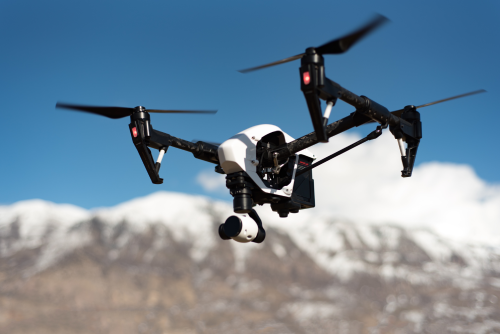
The Insitu Blackjack is a U.S.-origin fixed-wing military/ISR drone aimed at organizations that prioritize persistent aerial observation over consumer-style camera features. Based on the supplied public record, its clearest confirmed strengths are active status, 16 hours of endurance, and a top speed of 167 km/h. That makes it a relevant reference platform for defense analysts, institutional buyers, and readers comparing longer-endurance small unmanned aircraft.
Quick Summary Box
- Drone Name: Insitu Blackjack
- Brand: Insitu
- Model: Blackjack
- Category: military/ISR
- Best For: Authorized long-endurance ISR missions, institutional comparison, and defense UAS research
- Price Range: Not publicly confirmed in supplied data
- Launch Year: Not publicly confirmed in supplied data
- Availability: Not publicly confirmed in supplied data
- Current Status: Active
- Overall Rating: Not rated due to limited confirmed data
- Our Verdict: A niche fixed-wing ISR platform with strong published endurance and speed figures, but very limited public detail on payloads, pricing, and broader specifications.
In plain terms, Blackjack looks important not because it behaves like a mainstream drone, but because it sits in a category where endurance, mission persistence, and operational relevance matter far more than retail convenience. If you are trying to compare defense-oriented fixed-wing systems rather than buy a camera drone for photography, it belongs on the shortlist of platforms worth understanding.
Introduction
Insitu Blackjack is an active fixed-wing drone from Insitu in the military/ISR segment. Unlike consumer drones that are judged mainly by camera resolution, folding design, obstacle avoidance, or portability, platforms in this class are usually evaluated on endurance, mission persistence, supportability, fielding requirements, and sensor integration. Readers should care about Blackjack because its confirmed 16-hour endurance puts it in a serious long-duration category, yet the public data available here is too limited to treat it like a normal retail product page.
That distinction matters. A consumer drone article can often answer predictable questions: how good is the camera, how long does the battery last, how far can it fly, and how much does it cost? A military or institutional ISR platform is different. It is often acquired as part of a larger system that may include mission planning tools, launch and recovery gear, payload modules, secure communications, training, maintenance support, and procurement controls. In other words, the aircraft itself may be only one piece of the actual capability.
That is why Blackjack is best understood as a reference platform rather than a typical “should I buy this?” product. The supplied record tells us enough to say it is relevant, active, and endurance-oriented. It does not tell us enough to fully score it on payload sophistication, lifecycle cost, or software stack. For institutional readers, though, even those few verified data points are meaningful. A 16-hour endurance figure alone moves the aircraft into a more serious persistence conversation than many small multirotor drones ever reach.
Overview
What kind of drone is it?
Blackjack is a fixed-wing unmanned aircraft from Insitu, a U.S. manufacturer known for defense-oriented drone systems. In the supplied data, it is classified for military/ISR use and listed as active. That immediately places it outside the normal consumer and prosumer market.
A fixed-wing airframe usually means better aerodynamic efficiency and longer flight duration than a quadcopter, but it also means no hover capability and a more specialized operating workflow. That tradeoff is central to understanding Blackjack. It is not trying to do everything. It is built around the idea that staying airborne for a long time and covering meaningful distances can be more valuable than close-range hovering or highly cinematic camera movement.
In practical terms, fixed-wing ISR drones are often chosen when the mission requires one or more of the following:
- staying on station for extended periods
- covering wider geographic areas
- conducting route-based observation
- maintaining efficient forward flight
- reducing the number of launch cycles needed to keep eyes on an area
That does not automatically make every fixed-wing drone superior. It simply means the design priorities are different. A multirotor may be better for inspection, hovering over a target, or short-range tactical overwatch near structures. A fixed-wing platform like Blackjack becomes more attractive when persistence and coverage become the core requirement.
The “military/ISR” classification also changes how the platform should be judged. ISR stands for intelligence, surveillance, and reconnaissance. In this context, the aircraft is not defined primarily by entertainment value, creator appeal, or hobby versatility. It is defined by whether it can support observation, sensing, and operational awareness in authorized mission environments.
Who should buy it?
For practical purposes, Blackjack is best viewed as a platform for:
- authorized government and defense users
- institutional evaluators comparing ISR aircraft
- researchers tracking U.S. unmanned aircraft programs
- readers who want a database-style reference on fixed-wing ISR systems
It is not positioned like a consumer drone, creator drone, or hobby FPV product.
The word buy also needs some interpretation here. Most readers will never buy Blackjack in the same way they might buy a DJI, Autel, or Parrot drone. In this segment, “buying” often means one of the following:
- entering a formal procurement process
- evaluating a candidate platform for a government program
- comparing systems for training or doctrine development
- assessing force structure or fleet modernization options
- studying the platform for market intelligence or policy analysis
That makes Blackjack more relevant to professional audiences than general retail audiences. A defense procurement officer, analyst, or academic researcher may find the airframe highly relevant even if there is no public shopping cart, no posted MSRP, and no easily downloadable consumer brochure.
For anyone outside those groups, Blackjack is mostly useful as a point of comparison. It helps answer questions such as:
- What does a long-endurance small fixed-wing ISR drone look like on paper?
- How does endurance matter more than camera specs in institutional UAS evaluation?
- Why are some drone platforms widely documented while others remain comparatively opaque?
- What separates a military UAS system from a retail drone product?
What makes it different?
The biggest confirmed differentiators in the supplied record are:
- 16-hour endurance
- 167 km/h top speed
- active status
- fixed-wing military/ISR positioning
- U.S. origin and Insitu manufacture
Those may seem like only a few data points, but in this class they are enough to outline a real operating concept. A 16-hour endurance figure suggests persistence. A 167 km/h top speed suggests the aircraft is not merely a slow loiter platform, but can also reposition with some urgency. “Active” status matters because it indicates ongoing relevance rather than pure historical interest.
What also makes Blackjack different is the lack of public transparency compared with civilian drones. That is common in defense-linked systems, where payload details, software capabilities, pricing, logistics, and full mission architecture are often less openly published.
That lack of transparency should not automatically be read as a weakness. In many military or institutional programs, public-facing detail is intentionally limited. But it does change how useful open-source analysis can be. With a consumer drone, missing specs may simply reflect poor marketing. With an ISR platform, missing specs may reflect procurement norms, security considerations, or the fact that the aircraft is sold and supported as part of a complete operational package rather than as a standalone gadget.
Another difference is that Blackjack should be thought of as a system capability, not just an aircraft. Even when the public record only confirms airspeed and endurance, the real value in this category often depends on things like:
- payload integration
- control station design
- data-link resilience
- maintenance burden
- launch and recovery requirements
- crew training pipeline
- field support and sustainment
Those are the factors that often decide whether an institutional drone succeeds in service, and they are exactly the areas where public information can be thinnest.
Key Features
- Fixed-wing airframe for efficient forward flight
- Confirmed endurance of 16 hours
- Confirmed top speed of 167 km/h
- Active platform status in the supplied record
- Military/ISR mission classification
- U.S.-made by Insitu
- Likely optimized for persistence and coverage rather than hovering or close-range inspection
- Likely mission-payload driven rather than creator-camera driven, though exact payload details are not publicly confirmed in supplied data
- Better suited to outdoor, operational environments than casual recreational flying
- Publicly available technical detail is limited, so sensor package, control link, navigation stack, and launch/recovery method should all be verified directly through official channels
The most important feature here is still endurance. For many drone buyers, flight time is just one line in a spec sheet. For an ISR user, endurance can define the entire value proposition. Longer endurance can mean fewer launch cycles, fewer aircraft needed to maintain coverage, longer observation windows, and potentially lower operational disruption between sorties.
The next important feature is the aircraft’s fixed-wing configuration. Even without a long public specification list, fixed-wing design tells you a lot about how the platform is intended to be used. It signals mission efficiency over hovering flexibility. It suggests route and area coverage over close-proximity stationary work. It also implies that deployment, recovery, and operator training may be more specialized than with small consumer multirotors.
Finally, active status matters more than it might seem. Many military UAS names remain visible in open sources long after they have ceased to be operationally important. A platform listed as active is more useful for current market analysis, program benchmarking, and capability comparison.
Full Specifications Table
| Specification | Details |
|---|---|
| Brand | Insitu |
| Model | Blackjack |
| Drone Type | Fixed-wing |
| Country of Origin | USA |
| Manufacturer | Insitu |
| Year Introduced | Not publicly confirmed in supplied data |
| Status | Active |
| Use Case | military/ISR |
| Weight | Not publicly confirmed in supplied data |
| Dimensions (folded/unfolded) | Not publicly confirmed in supplied data |
| Max Takeoff Weight | Not publicly confirmed in supplied data |
| Battery Type | Not publicly confirmed in supplied data |
| Battery Capacity | Not publicly confirmed in supplied data |
| Flight Time | 16 hr |
| Charging Time | Not publicly confirmed in supplied data |
| Max Range | Not publicly confirmed in supplied data |
| Transmission System | Not publicly confirmed in supplied data |
| Top Speed | 167 km/h |
| Wind Resistance | Not publicly confirmed in supplied data |
| Navigation System | Not publicly confirmed in supplied data |
| Obstacle Avoidance | Not publicly confirmed in supplied data |
| Camera Resolution | Not publicly confirmed in supplied data |
| Video Resolution | Not publicly confirmed in supplied data |
| Frame Rates | Not publicly confirmed in supplied data |
| Sensor Size | Not publicly confirmed in supplied data |
| Gimbal | Not publicly confirmed in supplied data |
| Zoom | Not publicly confirmed in supplied data |
| Storage | Not publicly confirmed in supplied data |
| Controller Type | Not publicly confirmed in supplied data |
| App Support | Not publicly confirmed in supplied data |
| Autonomous Modes | Not publicly confirmed in supplied data |
| Payload Capacity | Not publicly confirmed in supplied data |
| Operating Temperature | Not publicly confirmed in supplied data |
| Water Resistance | Not publicly confirmed in supplied data |
| Noise Level | Not publicly confirmed in supplied data |
| Remote ID Support | Not publicly confirmed in supplied data |
| Geo-fencing | Not publicly confirmed in supplied data |
| Certifications | Not publicly confirmed in supplied data |
| MSRP / Launch Price | Not publicly confirmed in supplied data |
| Current Price | Not publicly confirmed in supplied data |
Important note: the table above reflects only what is confirmed in the supplied public record. Unknown fields should be interpreted as undisclosed or unverified, not as absent features. In the defense UAS market, missing public specifications are common.
Design and Build Quality
Because the supplied record confirms only that Blackjack is a fixed-wing ISR platform, the best-supported design conclusion is that it is built around aerodynamic efficiency rather than consumer convenience. In this class, the airframe typically matters as much as the payload because the platform must stay aloft for long periods and maintain stable forward flight over meaningful distances.
That changes the normal idea of “build quality.” For a consumer drone, build quality often means fit and finish, compactness, propeller design, and the polish of the folding mechanism. For an ISR aircraft, build quality is more likely to be judged by:
- repeatable launch and recovery performance
- structural reliability over repeated field operations
- maintainability in deployed conditions
- resistance to wear in transportation and setup
- how easily the aircraft integrates into mission workflow
What is not publicly confirmed in the supplied data:
- airframe materials
- wingspan
- length
- foldability
- launch and recovery system
- landing gear configuration
- field-service architecture
That means readers should not assume hand-launchability, catapult launch, runway dependency, or net recovery without official documentation. From a market-position standpoint, Blackjack is likely more field-oriented than portable. In other words, this is the sort of platform where transport, deployment method, and maintenance workflow may matter more than whether it fits into a backpack.
This is also where institutional fixed-wing drones differ sharply from most commercial quadcopters. A quadcopter is often designed around convenience first: simple deployment, minimal assembly, straightforward charging, and relatively low training burden. A fixed-wing ISR aircraft may instead be designed around mission outcome first, even if that means a more involved setup process. If that setup enables 16 hours of endurance, many institutional users will consider the trade worthwhile.
Another design consideration is how the aircraft likely fits into a broader operational kit. Even without confirmed dimensions or mass, platforms in this class are often evaluated as part of a package that may include transport cases, antennas, mission computers, spare airframes, payload modules, and maintenance tools. So the real-world “size” of the system is not just the aircraft itself, but the footprint required to deploy and sustain it.
Because those details are not verified here, the safest conclusion is that Blackjack should be approached as a professional field system rather than a portable drone product. Any serious evaluation should request official information on transportability, assembly time, crew size, launch/recovery equipment, and service intervals.
Flight Performance
The two headline figures available are enough to say that Blackjack is designed for serious endurance-based operation rather than short-hop missions.
A confirmed 16-hour endurance figure is substantial. In practical terms, that suggests a platform built for persistence, route coverage, and extended observation windows rather than quick vertical takeoff jobs. A confirmed top speed of 167 km/h also points to a drone that can reposition with purpose, especially compared with slower multirotor ISR systems.
Those two numbers are worth unpacking a bit further.
Why 16 hours matters
Sixteen hours is not just “good battery life.” In an ISR context, it changes mission planning. Longer endurance can mean:
- a single aircraft can remain on station through a large portion of an operational day
- fewer launches may be needed to maintain surveillance continuity
- crews can spend less time cycling aircraft and more time managing mission output
- coverage over a route, border segment, maritime sector, or operating area can be sustained for longer periods
- payload usefulness increases because the aircraft can support the sensor for longer windows
Endurance also matters economically and operationally. If one platform can do in one sortie what another platform would require multiple launches to accomplish, the difference is not only about convenience. It can affect crew workload, logistics, spare battery or fuel planning, maintenance cycles, and the number of aircraft needed to support a mission set.
Why 167 km/h matters
Top speed should not be treated as the same thing as normal operating speed, but it still matters. A 167 km/h maximum figure suggests useful transit capability. That can be relevant for:
- getting to the mission area faster
- repositioning between sectors
- responding to changing tasking
- maintaining margin against weather or wind in some conditions
- shortening return transit when time matters
A fixed-wing ISR platform does not need to be fast in the same way a manned tactical aircraft needs to be fast. But speed still affects flexibility. A platform that is both long-endurance and reasonably quick can be more versatile than one that is endurance-heavy but slow to reposition.
What we still do not know
A few careful takeaways:
- Fixed-wing aircraft are usually more efficient than multirotors during sustained forward flight.
- A long-endurance profile generally makes them more suitable for area coverage than close-quarters hovering tasks.
- Indoor use is not realistic for a platform of this type.
- Wind handling may be better than that of many small quadcopters, but that is analysis, not a confirmed spec for this model.
- Takeoff and landing behavior cannot be judged here because the launch/recovery method is not publicly confirmed in supplied data.
- Real mission radius cannot be estimated confidently because range and transmission details are not publicly confirmed.
Those unknowns are significant. Endurance alone does not tell you operational radius, because radius depends on transit speed, cruise efficiency, reserve policy, communications architecture, and mission profile. Similarly, top speed does not tell you cruise speed, loiter efficiency, or how the aircraft behaves in degraded weather. Without those details, Blackjack can be described as promising, but not fully characterizable.
One more point is worth noting: fixed-wing performance should be judged as system performance, not just aircraft performance. If the control link, launch setup, or recovery envelope is restrictive, that can affect usable field performance as much as the raw endurance figure. So while the available numbers are strong, official documentation remains essential for any mission planning or procurement decision.
Camera / Payload Performance
Publicly supplied data does not confirm the exact payload carried by the Insitu Blackjack. There is no verified information here on:
- camera type
- sensor resolution
- EO/IR capability
- gimbal system
- payload capacity
- modularity
- multi-sensor options
That matters because military/ISR aircraft are often judged less by consumer-style image specs and more by sensor relevance, stabilization quality, data-link integration, and mission endurance. In this segment, the drone can be valuable even without a headline-grabbing megapixel number if it supports useful reconnaissance or situational-awareness workflows.
This is one of the biggest differences between institutional drones and retail drones. A consumer buyer may ask, “Does it shoot 4K or 8K?” An ISR operator is more likely to ask:
- Can the payload provide actionable imagery in realistic operating conditions?
- Is it useful in day, night, or degraded visibility?
- Is stabilization strong enough for sustained observation from a moving airframe?
- Can the imagery be transmitted securely and in real time?
- Can operators task the sensor efficiently from the ground station?
- Does the payload generate usable metadata for mission exploitation?
Without verified payload details, none of those questions can be answered confidently for Blackjack from the supplied record alone.
That does not make the platform uninteresting. In fact, long endurance often makes payload potential more important. A drone that can stay up for 16 hours may become highly valuable if paired with a suitable ISR sensor stack, because the aircraft can keep that sensor on task for far longer than shorter-endurance competitors. But payload relevance depends on actual integration, not just on the aircraft’s flight time.
For researchers or buyers, the right next questions would be:
- Is the payload fixed or modular?
- Are there electro-optical and thermal options?
- Is there a stabilized turret or other sensor mount?
- What is the effective target observation capability at mission altitude?
- How is payload data transmitted, stored, and exploited?
- Are there interoperability standards or export restrictions on the sensor package?
The cautious conclusion is simple: Blackjack appears to be payload-relevant because of its ISR classification and long endurance, but the actual camera or sensor performance cannot be meaningfully rated from the supplied data alone. In a public-facing review framework, that means the aircraft’s mission value may be substantial, while its imaging value remains unscorable.
Smart Features and Software
Specific smart features and software functions are not publicly confirmed in supplied data.
That means there is no verified public basis here for claiming:
- return-to-home behavior
- waypoint planning
- AI tracking
- autonomous target recognition
- mapping automation
- SDK or API access
- cloud fleet tools
- app-based mission control
- sense-and-avoid systems
In the broader military fixed-wing ISR category, autonomous mission management and route-based control are common, but that should not be treated as a confirmed Blackjack feature without official support material.
Software matters enormously in this segment, often more than non-specialist readers expect. A long-endurance fixed-wing aircraft can only deliver its full value if the mission software supports efficient planning, route management, sensor tasking, lost-link behavior, and crew coordination. A highly capable airframe paired with weak mission software can become operationally frustrating. Conversely, a well-designed control architecture can make a modest airframe much more useful.
For Blackjack, buyers and researchers should verify the following directly with the manufacturer or program office:
- ground control architecture
- navigation and lost-link logic
- sensor control software
- data security and export workflows
- interoperability with existing fleet systems
- training and simulation tools
Additional questions would also be sensible in a formal evaluation:
- Is mission planning done through a dedicated workstation, tablet-based interface, or larger command-system integration?
- How mature are health monitoring and maintenance diagnostics?
- Can the aircraft support repeatable route execution with minimal operator burden?
- What redundancy exists for communication or navigation?
- How are software updates delivered and controlled?
- What cybersecurity standards apply, if any, in the intended operating environment?
The absence of public information here does not imply weak software. It simply means the software layer cannot be scored from open data. For many institutional users, that software layer may be the deciding factor in whether Blackjack is operationally attractive.
Use Cases
Given its confirmed role and endurance, the most realistic use cases are institutional rather than consumer-facing.
- persistent ISR missions in authorized government or defense contexts
- long-duration area observation
- situational-awareness support in legally authorized operations
- fixed-wing UAS training and familiarization
- program benchmarking against other ISR airframes
- research and policy analysis focused on small military UAS categories
These use cases are broad on purpose, because the publicly confirmed record does not describe the aircraft’s exact payload or mission package. Still, the combination of fixed-wing design and long endurance points strongly toward missions where time on station matters.
For example, a long-endurance platform can be valuable when an organization wants continuity rather than quick snapshots. Instead of repeatedly launching short-flight multirotors, an operator may prefer a system that can remain airborne through a long observation period. That can be relevant in defense, border-related, maritime, training, or security-support contexts where the operator is legally authorized and appropriately equipped.
Blackjack is also useful as a comparison case in policy and procurement discussions. Not every reader is trying to fly it. Some are trying to understand how small fixed-wing ISR systems are positioned relative to multirotors, loitering systems, or larger tactical UAS categories. In that sense, Blackjack has analytical value beyond direct operational use.
Pros and Cons
Pros
- Confirmed 16-hour endurance is a major strength
- Confirmed 167 km/h top speed suggests useful transit and repositioning capability
- Active status indicates ongoing relevance rather than pure legacy status
- Fixed-wing layout generally favors efficient long-duration flight
- Built by Insitu, a recognized U.S. unmanned aircraft manufacturer
- Stronger fit for persistence missions than typical short-endurance multirotors
- Relevant reference point for institutional comparisons in the small ISR category
- Likely to matter more in mission planning contexts than in consumer-style spec comparisons
Cons
- Publicly confirmed specifications are very limited
- Camera and payload details are not verified in the supplied record
- Price and launch-year information are unavailable in the source material
- Range, dimensions, weight, and MTOW are not publicly confirmed
- Not a consumer retail drone with easy public purchase visibility
- Fixed-wing platforms are generally less flexible than multirotors for hover-based tasks
- Civil-use software, compliance, and support details are unclear from the record
- Full evaluation depends heavily on official documentation rather than open-source specs
The main pattern is simple: Blackjack’s strengths are meaningful, but narrow in public visibility. Its public case rests on endurance, speed, and role. Its weaknesses are mostly about transparency rather than obvious underperformance.
Comparison With Other Models
Because public data on Blackjack is sparse, comparisons should be treated as directional rather than definitive.
| Model | Price | Flight Time | Camera or Payload | Range | Weight | Best For | Winner |
|---|---|---|---|---|---|---|---|
| Insitu Blackjack | Not publicly confirmed in supplied data | 16 hr | Not publicly confirmed in supplied data | Not publicly confirmed in supplied data | Not publicly confirmed in supplied data | Long-endurance fixed-wing ISR reference | Balanced published endurance/speed |
| Insitu ScanEagle | Not publicly confirmed publicly on a retail basis | Approx. 24+ hr commonly reported | ISR payload options vary by configuration | Not publicly confirmed here | Not publicly confirmed here | Maximum persistence in small fixed-wing ISR | Endurance |
| AeroVironment Puma LE | Not publicly confirmed publicly on a retail basis | Approx. 5.5 hr commonly reported | ISR payload options vary by configuration | Not publicly confirmed here | Not publicly confirmed here | Smaller expeditionary ISR roles | Simpler deployment profile |
Blackjack vs a close competitor
The closest comparison point is Insitu ScanEagle because it sits in a similar fixed-wing ISR conversation and comes from the same manufacturer family. ScanEagle is the better-known endurance benchmark, while Blackjack’s confirmed 16-hour figure still places it in a meaningful persistence class. If maximum published endurance is the priority, ScanEagle often gets the edge; if a buyer is specifically evaluating Blackjack under an existing program structure, then support, sensor fit, and availability matter more than headline numbers.
This comparison is useful because it highlights how procurement decisions are rarely made on endurance alone. Even if ScanEagle appears stronger on often-cited endurance figures, Blackjack could still be preferable in a specific context if it aligns better with:
- an existing support contract
- a particular payload package
- deployment footprint requirements
- training pipeline compatibility
- program availability or regional approval status
In other words, “better” in this segment usually means “better suited to the mission system,” not simply “higher number on the brochure.”
Blackjack vs an alternative in the same segment
Compared with AeroVironment Puma LE, Blackjack appears more oriented toward longer-duration fixed-wing coverage. Puma-type systems are often discussed where portability and expeditionary deployment matter, while Blackjack’s confirmed endurance suggests a stronger fit for longer on-station use. The exact trade-off depends on sensor package, support model, and deployment method, all of which must be verified.
This is the classic ISR trade space: portability versus persistence. A smaller or more expeditionary platform may be easier to field quickly or with a lighter support footprint. A longer-endurance aircraft may be more valuable when sustained observation is the mission priority. Without confirmed system details, Blackjack cannot be declared the universal winner, but it clearly belongs on the persistence side of that spectrum.
Blackjack vs an older or previous-generation option
A precise older-generation match is hard to name from the supplied record alone. In general, older small ISR aircraft often sacrifice endurance and mission persistence in exchange for simpler fielding or lower system complexity. Blackjack is most interesting when endurance and sustained forward-flight efficiency are the priority, not when buyers want the simplest or most openly documented platform.
This also points to a broader lesson: in institutional UAS fleets, replacement decisions are not always about replacing one aircraft with a directly similar one. Sometimes the real question is whether a program wants more persistence, more deployability, lower crew burden, lower lifecycle cost, or a more modern payload ecosystem. Blackjack’s published strengths place it firmly in the persistence-oriented side of that discussion.
How to interpret the comparison table
The table above should be read as a framing tool, not a shopping guide. The models listed are not consumer-retail equivalents with neatly comparable spec sheets and universal pricing. They sit in overlapping but not identical procurement contexts. The useful comparison points are:
- endurance class
- likely deployment philosophy
- institutional fit
- manufacturer ecosystem
- mission tradeoffs
If a buyer or analyst needs a clean answer, it is this: Blackjack appears competitive as a long-endurance fixed-wing ISR reference, but open-source data is too thin to declare it superior to alternatives on total system capability.
Manufacturer Details
Insitu is the listed brand and manufacturer for Blackjack, so there is no practical brand-versus-manufacturer split on this page. The company is based in the USA and is well known in the unmanned aircraft market for fixed-wing defense and ISR platforms.
In broader market context, Insitu has long been associated with the U.S. defense drone ecosystem and is widely recognized for small unmanned aircraft designed around endurance, intelligence collection, and institutional support rather than consumer retail sales. Its reputation is strongest in professional and government-linked UAS programs, especially where long mission duration and operational reliability matter more than creator-friendly features.
That manufacturer context matters. In the institutional drone market, the company behind the aircraft can be almost as important as the airframe itself. Buyers often care about:
- program stability
- long-term support capability
- training capacity
- documentation quality
- integration experience
- ability to support upgrades or payload variants
A recognized manufacturer does not automatically make any one model the right choice, but it can reduce uncertainty in areas like sustainment and professional support. For analysts, Insitu’s involvement also makes Blackjack more notable than an obscure platform with similar raw numbers but little ecosystem presence.
Support and Service Providers
Support for a drone like Blackjack is unlikely to resemble consumer drone support.
Readers should expect support to be centered around:
- official manufacturer channels
- program-specific maintenance arrangements
- authorized service partners
- spare parts supply through formal procurement routes
- training delivered through approved institutional channels
What is not confirmed in the supplied record:
- warranty structure
- open commercial repair options
- public spare-part pricing
- civilian service-center coverage
- community-level repair ecosystem
That is normal for this class. A defense-oriented drone often lives inside a structured support environment rather than an open retail ecosystem. Maintenance may be divided across operator-level service, field-level parts replacement, and deeper manufacturer-supported repair. Software access may also be controlled more tightly than in commercial drone platforms.
If you are evaluating Blackjack seriously, verify official support channels, training availability, spare parts access, and regional service coverage before assuming long-term fleet viability. For fleet buyers, the support package may end up being more decisive than the aircraft’s raw speed or endurance.
Where to Buy
Blackjack should not be treated like a normal retail drone listing. There is no confirmed public retail purchase path in the supplied data.
The most likely acquisition routes are:
- direct engagement with the manufacturer
- authorized defense or government procurement channels
- specialized institutional integrators or approved distributors
- region-specific procurement frameworks where legally permitted
For most readers, this is not a click-to-buy drone. Availability may depend on export controls, end-user status, program eligibility, and local law.
That means the “where to buy” question is really a “how is acquisition structured?” question. In this market, access may involve capability briefings, program qualification, formal request-for-information processes, contract vehicles, or authorized national procurement pathways. Civilian curiosity does not translate into civilian availability.
If your interest is academic or comparative rather than acquisition-driven, the more relevant path is usually documentation research, manufacturer engagement for non-sensitive literature, or study through defense market reporting rather than direct purchasing.
Price and Cost Breakdown
Neither launch price nor current price is publicly confirmed in supplied data.
That makes cost analysis more about budgeting categories than exact figures. For a platform in this segment, buyers should verify:
- air vehicle pricing
- sensor or payload package pricing
- ground control hardware
- power system or battery replacements
- spare parts kits
- launch and recovery equipment, if required
- training costs
- software or mission-system licensing
- maintenance contracts
- logistics and transport costs
- insurance and liability requirements where applicable
In institutional procurement, the full ownership stack can matter more than the bare airframe cost. A drone with a competitive headline price may still become expensive if sustainment, training, or proprietary support are mandatory.
This is especially true for fixed-wing ISR systems. Even if the aircraft itself looks cost-efficient, total ownership may be shaped by factors such as:
- crew training duration
- spare airframe requirements
- payload calibration and servicing
- secure communications infrastructure
- storage and transportation needs
- depot or factory-level repair dependencies
- software update management
- operational attrition planning
Another issue is that system price may vary heavily depending on what is included. One program may procure aircraft only. Another may buy a full package with payloads, ground control, deployment kits, training, and support. Without knowing the package definition, public price comparisons can be misleading.
So the right way to think about Blackjack’s cost is not “What is the sticker price?” but “What is the lifecycle cost of fielding the capability?” That includes acquisition, sustainment, integration, and personnel implications. In this category, those hidden layers often matter more than a simple unit price.
Regulations and Compliance
Regulatory treatment for Blackjack depends heavily on jurisdiction, operator status, and intended use.
Practical points to keep in mind:
- civil airspace use may require registration, authorization, and operator qualifications
- military/ISR platforms may face additional procurement and end-use restrictions
- surveillance and data-collection operations can raise privacy and evidentiary issues depending on local law
- export controls may apply
- Remote ID support is not publicly confirmed in supplied data
- weight-class treatment cannot be assessed here because weight is not publicly confirmed
- certifications and civil compliance claims are not publicly confirmed in supplied data
No reader should assume universal legality, consumer-style compliance, or simple cross-border operability. Always verify aviation law, privacy law, procurement restrictions, and mission authorization requirements in the relevant jurisdiction.
This section deserves extra caution because fixed-wing ISR aircraft often fall into more complex regulatory spaces than ordinary consumer drones. Potential issues can include:
- beyond-visual-line-of-sight authorization requirements
- radio spectrum licensing or approved communications equipment
- airspace deconfliction with manned aircraft
- public-sector surveillance oversight rules
- chain-of-custody or evidentiary handling if imagery is used operationally
- import or export restrictions tied to components, payloads, or end users
For government users, some compliance pathways may differ from those used by civilian operators, but that does not remove the need for authorization. For civilian or mixed-use organizations, the burden may be even greater if the aircraft’s size, range, mission profile, or data-collection role places it outside ordinary commercial UAS permissions.
Because the supplied public record does not confirm weight, certification basis, or remote-ID compatibility, no one should infer straightforward civil operability. Even if the aircraft can technically fly in a jurisdiction, legal use may depend on who is operating it, why, and under what airspace or procurement framework.
Who Should Buy This Drone?
Best for
- authorized defense and government users needing long-endurance fixed-wing ISR capability
- institutional buyers comparing U.S. ISR drone platforms
- research organizations studying military UAS categories
- programs that value persistence and forward-flight efficiency over hovering
The strongest fit is any organization that needs a drone to stay airborne for a long time and contribute to authorized ISR-style mission sets. That includes evaluators who may never purchase Blackjack directly but still need to compare it against peer systems. If your work involves capability benchmarking, fleet planning, doctrine analysis, or institutional procurement research, Blackjack is relevant.
Not ideal for
- consumer buyers
- aerial photographers and videographers looking for a creator drone
- FPV pilots or racing users
- inspection teams that need hover precision near structures
- buyers who require transparent MSRP, easy retail access, and broad public support documentation
If you need an easy-to-buy drone with published prices, camera samples, simple compliance guidance, and a consumer support ecosystem, Blackjack is almost certainly the wrong category. Likewise, if your work depends on hovering close to buildings, towers, or infrastructure, a fixed-wing ISR platform is usually not the natural fit.
Final Verdict
The Insitu Blackjack stands out as an active U.S. fixed-wing ISR drone with two meaningful published numbers: 16 hours of endurance and 167 km/h top speed. Those figures alone make it a serious reference point in the small military unmanned aircraft space. The problem is that nearly everything else a buyer would normally want to know, including payload details, range, dimensions, pricing, and support structure, is not publicly confirmed in the supplied data.
That leaves Blackjack as a strong niche platform on paper, but not a transparent one. If you are an authorized institutional user or a researcher comparing fixed-wing ISR systems, it is worth serious attention because endurance at this level is strategically meaningful in small UAS analysis. If you are a civilian buyer looking for open pricing, clear specs, and easy procurement, this is probably the wrong drone category altogether.
The best way to summarize Blackjack is this: it is not publicly legible in the way consumer drones are, but the few details that are confirmed are strong enough to make it noteworthy. In a market crowded with short-endurance multirotors and over-marketed retail specs, a fixed-wing ISR platform with 16 hours of endurance and active status deserves to be taken seriously. It just cannot be fully judged without official documentation.
