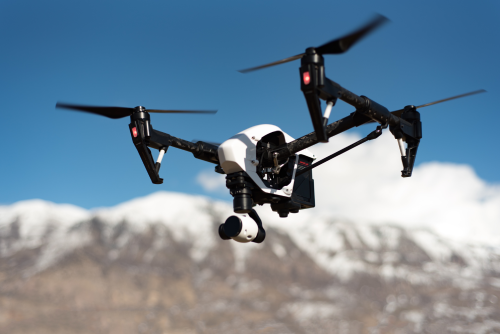
The Quantum Systems Vector is an active VTOL fixed-wing drone positioned as a tactical mapping and ISR platform. It is aimed at professional, enterprise, public-safety, and government users who need vertical takeoff and landing flexibility without giving up the area-coverage advantages of fixed-wing flight. What makes Vector important is its dual-use positioning: it sits at the intersection of mapping workflow value and mission-oriented airborne observation, even though many headline specifications are not publicly confirmed in the supplied data.
In practical terms, that makes Vector less of a retail drone purchase and more of a capability decision. Buyers are not simply choosing a camera and a battery size; they are choosing a field-deployable aerial system that may affect how teams plan missions, collect data, train operators, and support long-term operational readiness. That distinction matters. In the enterprise and public-sector world, a drone can be a workflow tool, a situational-awareness platform, or a procurement program in its own right. Vector appears to sit in that more serious category.
It is also relevant because the VTOL fixed-wing segment remains one of the most operationally interesting classes in professional aviation. Standard multirotors are easy to use but often limited in coverage efficiency. Traditional fixed-wing aircraft can cover more ground but may demand more launch and recovery space, more setup complexity, or more procedural discipline. VTOL fixed-wing systems aim to bridge that gap. If they do it well, they can offer a compelling combination of mobility, efficiency, and mission range. That is exactly why a model like Vector draws attention even when public spec transparency is incomplete.
Quick Summary Box
- Drone Name: Quantum Systems Vector
- Brand: Quantum Systems
- Model: Vector
- Category: Dual-use / ISR
- Best For: Enterprise, public-safety, and government teams seeking a VTOL fixed-wing platform for tactical mapping and ISR-related work
- Price Range: Not publicly confirmed in supplied data
- Launch Year: Not publicly confirmed in supplied data
- Availability: Not publicly confirmed in supplied data
- Current Status: Active
- Overall Rating: Not rated due to limited confirmed data
- Our Verdict: A promising procurement-led VTOL fixed-wing platform from a respected German manufacturer, but buyers should request a full official datasheet because major specs, payload details, software specifics, and pricing are not publicly confirmed in the supplied record.
Introduction
Vector is a professional drone model from Quantum-Systems, marketed under the Quantum Systems brand and categorized here in the dual-use/ISR segment. The supplied record identifies it as a VTOL fixed-wing aircraft and notes a tactical mapping/ISR role, which immediately places it far outside the normal consumer camera-drone market.
That distinction is worth emphasizing. Most mainstream drone buyers are comparing video resolution, obstacle avoidance, portability, and app polish for photography or casual aerial capture. Vector belongs to a different conversation. Its likely buyers care more about launch logistics, coverage rates, mission repeatability, field support, payload suitability, and integration into broader workflows such as mapping, surveillance, emergency response, land management, or government evaluation programs.
Readers should care about this model because VTOL fixed-wing platforms solve a real operational problem: they can launch and recover vertically in constrained areas, then transition into more efficient wing-borne flight for broader area coverage. That combination can be especially attractive for teams balancing mobility, survey output, and situational-awareness needs.
It also matters because not every organization wants to maintain separate aircraft for separate jobs. In some environments, the appeal of a dual-use platform is straightforward: one aircraft family may reduce training fragmentation, simplify logistics, and create more mission flexibility than owning one multirotor for observation and one conventional fixed-wing for mapping. Whether Vector fully delivers on that promise depends on official configuration details, but the market position alone makes it worth close attention.
Overview
What kind of drone is it?
Vector is a VTOL fixed-wing drone. In plain terms, that means it combines helicopter-like takeoff and landing behavior with airplane-like cruise efficiency once it is in forward flight. Based on the supplied record, it is not a hobby or creator drone; it is a tactical mapping and ISR-oriented aircraft for more structured, professional use.
That classification says a lot about how it is probably intended to be operated. A system like this is usually deployed with defined mission planning, a designated operational area, a trained pilot or crew, and some kind of post-flight data process. In other words, it is less about spontaneous flying and more about repeatable outcomes. The aircraft is a means to an end, whether that end is map production, lawful situational awareness, perimeter observation, terrain documentation, or target-area understanding in a professional context.
The “dual-use / ISR” label also signals that the platform may be relevant in both civilian and government-adjacent settings. That does not automatically reveal its payload package, software environment, or permissions structure, but it does indicate that buyers should evaluate it with more seriousness than they would a standard enterprise photography drone. Data handling, support, mission authorization, and configuration options may matter as much as the aircraft itself.
Who should buy it?
The best fit is an organization rather than an impulse buyer. Potential buyers include survey teams, public-safety units, infrastructure and geospatial operators, and government-linked users who need a field-deployable aircraft for mapping or observation tasks and who can support a formal procurement and training process.
More specifically, Vector may appeal to:
- Geospatial teams that need broad-area aerial collection without relying on runways or catapult launch systems
- Emergency-response organizations that may need rapid field deployment from imperfect terrain
- Infrastructure operators covering roads, utilities, pipelines, rights-of-way, or large outdoor assets
- Civil-authority or public-safety teams operating under lawful permissions and defined operating procedures
- Government procurement units evaluating professional VTOL fixed-wing systems from established European manufacturers
- Organizations modernizing legacy fixed-wing workflows and looking for easier launch/recovery procedures
The least likely buyer is an individual consumer seeking easy retail access, transparent online pricing, or creator-style camera features. Even if a private buyer had the budget, the value proposition here still points toward institutional use.
What makes it different?
What stands out is the blend of:
- VTOL convenience
- Fixed-wing mission efficiency
- Dual-use positioning
- ISR and mapping relevance
That makes Vector different from standard multirotors, which are easier to hover but often less efficient over larger areas, and from classic hand-launch fixed-wings, which may be efficient but need more launch and recovery space.
It is also different because of the likely procurement mindset around it. With consumer drones, the purchase is often based on a published spec list and a set of video samples. With a platform like Vector, serious buyers usually need answers to broader questions:
- What exact payload is included?
- What software ecosystem supports mission planning?
- How is data handled and exported?
- What is the field maintenance burden?
- How many batteries are needed for a real mission day?
- What training does the manufacturer or dealer provide?
- What happens if an airframe goes down and needs service?
That broader decision framework is part of what separates a platform like Vector from simpler drones in adjacent categories.
Key Features
- VTOL fixed-wing airframe for vertical takeoff and landing with forward-flight efficiency
- Dual-use / ISR segment positioning rather than consumer photography positioning
- Tactical mapping focus based on the supplied record
- Runway-independent deployment as a core advantage of the airframe class
- Professional mission profile more aligned with enterprise, public-safety, and government users than casual pilots
- Active current status, which is generally more attractive than evaluating a discontinued legacy aircraft
- German manufacturer origin, which may matter to buyers assessing supply-chain preference or regional sourcing
- Many core technical details remain unconfirmed in the supplied data, including endurance, range, speed, ceiling, payload specifics, and price
Those headline points deserve a bit more context.
A VTOL fixed-wing airframe is not just a marketing phrase; it can fundamentally change deployment options. Teams working from roadsides, clearings, rough ground, or temporary field sites often value the ability to launch and recover vertically without extra hardware. That can reduce setup complexity and create more predictable field operations.
A dual-use / ISR positioning suggests the platform is not judged solely on image beauty or casual video quality. Instead, it may be judged on how effectively it supports information gathering, aerial awareness, documentation, and repeatable mission execution.
A tactical mapping focus implies that the aircraft may be relevant where survey-style outputs and operational responsiveness overlap. Some buyers do not want a pure photogrammetry machine if their missions also demand flexible observation capabilities.
Finally, the fact that many core specs are still unconfirmed in the supplied data is itself a major feature of the buying process, because it changes how this drone should be evaluated. Vector should be treated as a shortlist candidate requiring direct vendor engagement, not as a retail model that can be fully assessed from public spec sheets alone.
Full Specifications Table
| Specification | Details |
|---|---|
| Brand | Quantum Systems |
| Model | Vector |
| Drone Type | VTOL fixed-wing |
| Country of Origin | Germany |
| Manufacturer | Quantum-Systems |
| Year Introduced | Not publicly confirmed in supplied data |
| Status | Active |
| Use Case | Tactical mapping / ISR / dual-use operations |
| Weight | Not publicly confirmed in supplied data |
| Dimensions (folded/unfolded) | Not publicly confirmed in supplied data |
| Max Takeoff Weight | Not publicly confirmed in supplied data |
| Battery Type | Not publicly confirmed in supplied data |
| Battery Capacity | Not publicly confirmed in supplied data |
| Flight Time | Not publicly confirmed in supplied data |
| Charging Time | Not publicly confirmed in supplied data |
| Max Range | Not publicly confirmed in supplied data |
| Transmission System | Not publicly confirmed in supplied data |
| Top Speed | Not publicly confirmed in supplied data |
| Wind Resistance | Not publicly confirmed in supplied data |
| Navigation System | Not publicly confirmed in supplied data |
| Obstacle Avoidance | Not publicly confirmed in supplied data |
| Camera Resolution | Not publicly confirmed in supplied data |
| Video Resolution | Not publicly confirmed in supplied data |
| Frame Rates | Not publicly confirmed in supplied data |
| Sensor Size | Not publicly confirmed in supplied data |
| Gimbal | Not publicly confirmed in supplied data |
| Zoom | Not publicly confirmed in supplied data |
| Storage | Not publicly confirmed in supplied data |
| Controller Type | Not publicly confirmed in supplied data |
| App Support | Not publicly confirmed in supplied data |
| Autonomous Modes | Not publicly confirmed in supplied data |
| Payload Capacity | Not publicly confirmed in supplied data |
| Operating Temperature | Not publicly confirmed in supplied data |
| Water Resistance | Not publicly confirmed in supplied data |
| Noise Level | Not publicly confirmed in supplied data |
| Remote ID Support | Not publicly confirmed in supplied data |
| Geo-fencing | Not publicly confirmed in supplied data |
| Certifications | Not publicly confirmed in supplied data |
| MSRP / Launch Price | Not publicly confirmed in supplied data |
| Current Price | Not publicly confirmed in supplied data |
The limited spec visibility is one of the most important realities surrounding Vector. On one hand, that reduces the ability to perform traditional spec-sheet comparisons. On the other, it reflects how many professional systems are actually bought: through direct contact, configuration discussions, and mission-fit analysis rather than public retail marketing.
For buyers, the absence of public confirmation on items like endurance, range, payload details, and software environment should not automatically be seen as a red flag, but it should absolutely trigger a more disciplined vendor questionnaire. A platform like this should be assessed through official documentation, demonstrations, and support discussions, not assumptions.
Design and Build Quality
The supplied record does not provide material composition, foldability details, or exact dimensions, so the safest design assessment comes from the airframe class itself. As a VTOL fixed-wing platform, Vector is built around a mission-first concept rather than a lifestyle-drone concept. That usually means the priority is field deployment, transportability, and efficient cruise performance rather than compact consumer portability.
From a buyer perspective, the biggest design implication is the launch and recovery model. A VTOL fixed-wing aircraft can usually operate without a catapult, runway, or large recovery net, which is a major practical advantage in rough or space-limited environments. That alone can reduce site setup burden compared with conventional fixed-wing survey aircraft.
There are a few broader design implications worth noting even without confirmed dimensions. First, VTOL fixed-wing systems typically involve a more complex airframe architecture than simple multirotors. They may include separate lift and cruise elements, specialized control logic for transition, and a structural layout optimized for stability during both vertical and forward flight. That means “build quality” is not only about material toughness; it is also about how well the platform integrates these competing flight demands into a practical field system.
Second, transportability matters differently here than it does with consumer drones. A public-safety or geospatial team may accept a larger transport case or a more involved assembly process if it results in better area coverage and better deployment flexibility. The key questions become:
- How fast can the aircraft be assembled in the field?
- Can one person handle setup, or is a two-person crew more realistic?
- Are wings, booms, or prop elements easy to inspect and replace?
- Is there a rugged transport case included?
- How resilient is the aircraft to repeated deployment cycles?
Third, professional build quality includes serviceability. A good field drone is not just durable on day one; it must be maintainable over time. That means buyers should care about spare parts, replacement procedures, battery health monitoring, repair turnaround, and whether routine wear items can be swapped without sending the entire system back.
What is not publicly confirmed in the supplied data: – Exact airframe materials – Whether the wings or booms fold or detach – Landing-gear design – Rotor arrangement – Ruggedization level – Service access for field maintenance – Ingress protection or weather rating
Because Vector is positioned as a tactical mapping/ISR platform, it is reasonable to expect a more field-ready build philosophy than a consumer drone, but buyers should still request the official airframe, transport-case, and maintenance documentation before making any procurement decision. For this class of aircraft, the difference between a good platform and a difficult one is often found in setup time, maintenance burden, and how calmly the system behaves after months of real use.
Flight Performance
The confirmed flight-performance data is limited, so this section is partly analysis based on the VTOL fixed-wing category rather than a claim of measured performance.
A VTOL fixed-wing aircraft generally behaves differently from a multirotor in three key ways:
- Launch and recovery are easier in constrained terrain because vertical takeoff and landing reduce dependence on runways or hand-launch procedures.
- Cruise efficiency is usually better because the wing carries the aircraft once it transitions to forward flight.
- Hover-centric tasks are usually not the core mission because this class is typically optimized for transit and coverage rather than prolonged static hovering.
That suggests Vector is likely best suited to outdoor missions where an operator wants to cover meaningful ground, collect mapping data, or maintain airborne observation over an area more efficiently than a typical quadcopter could. It is probably a poor match for indoor flying, close-quarters inspection, or casual low-speed camera work.
There is also a mission-planning dimension to performance. For a multirotor, flight planning is often straightforward because the aircraft can stop, hover, reposition, and resume with relative ease. A fixed-wing or VTOL fixed-wing system rewards more deliberate planning. The operator typically thinks in terms of launch site, transit path, coverage pattern, landing area, wind direction, communication reliability, and contingency procedures. That does not make the platform harder by default, but it does mean “performance” includes workflow discipline.
Transition behavior is another important consideration, even though it is not publicly detailed in the supplied data. In VTOL fixed-wing operations, the move from vertical lift to forward flight is one of the defining characteristics of the aircraft. Buyers should want to know how automated that process is, how predictable it is in wind, and what the operator sees or controls during transition. Smooth transition behavior can have a direct effect on data consistency, pilot confidence, and mission success.
Wind handling is also especially important in this category. Fixed-wing efficiency can be a major advantage over distance, but exposure to outdoor conditions often becomes more relevant than it is for short-range multirotor work. A platform intended for mapping or ISR should ideally provide reliable mission execution in realistic field weather, not just calm demonstration conditions. Since wind-resistance figures are not publicly confirmed here, that should be a direct vendor question.
What cannot be confirmed from the supplied data: – Endurance – Maximum speed – Operational ceiling – Maximum range – Wind tolerance – Link robustness – Transition behavior – Takeoff and landing automation specifics
In short, the platform concept points toward area coverage and field flexibility, but the actual performance envelope needs to be verified through official documentation. Buyers should ask for mission examples, not just abstract numbers. A claimed endurance figure is far more useful when paired with a realistic coverage scenario, payload configuration, and weather assumption.
Camera / Payload Performance
Vector is not described in the supplied record as a creator drone or a single-camera photography platform. Instead, it is described as a tactical mapping/ISR platform, which changes how payload performance should be judged.
For this kind of drone, the real questions are usually: – What sensor package is supported? – Is the payload optimized for mapping, observation, or both? – How stable is the payload during cruise and transition? – What data products can the workflow generate? – How quickly can teams swap or service payload modules?
The supplied data does not publicly confirm: – Camera resolution – Sensor size – Video specifications – Zoom capability – Gimbal type – Payload weight limit – Thermal or multispectral support – Onboard storage format
That means buyers should not evaluate Vector as if it were a conventional camera drone. Its value is more likely tied to mission output than to cinematic specs. For mapping buyers, that means verifying survey accuracy workflow, ground sampling potential, and processing compatibility. For ISR-oriented buyers, that means confirming the approved payload package, stabilization behavior, recording pipeline, and data-handling workflow through official channels.
It is also worth separating sensor quality from workflow quality. In professional operations, a strong payload is not only about megapixels or zoom levels. It is also about:
- Geotagging reliability
- Repeatability across flights
- Calibration procedures
- Metadata integrity
- Export compatibility with downstream software
- Ease of changing payloads between mission types
- Stability of collected data in varied environmental conditions
For mapping use, the important output may be orthomosaics, elevation products, or site documentation rather than visually dramatic imagery. For ISR-adjacent use, the important output may be observation continuity, target-area awareness, or evidence-quality data handling, depending on legal and organizational context.
Payload flexibility, if available, can also influence the long-term value of the platform. A buyer may initially think they need one sensor type, only to realize six months later that thermal, multispectral, or alternate optical configurations would unlock new use cases. Because payload specifics are not publicly confirmed here, buyers should be especially careful to ask whether the platform is single-configuration or designed for modular sensor options.
Smart Features and Software
The supplied record does not list a named app, software suite, cloud platform, or autonomous feature set. That means no responsible review can claim specific functions such as AI tracking, advanced obstacle sensing, SDK access, or a particular fleet-management environment unless those are directly confirmed elsewhere.
That said, a professional VTOL fixed-wing platform in this category typically depends on some form of mission planning and flight automation. At a minimum, the class often relies on automated control for: – Vertical takeoff – Transition into forward flight – Route execution – Recovery and landing behavior
Those are category-level expectations, not confirmed Vector-specific feature claims.
Software matters enormously in this segment because the aircraft is only one piece of the system. A strong enterprise drone platform usually succeeds or fails on how well it handles planning, execution, data transfer, update management, and operational control. Buyers should think beyond whether the drone flies and ask whether the software environment supports their organization’s actual work.
Before purchase, buyers should verify: – Ground control software – Waypoint and mapping mission support – Offline planning capability – Data export formats – Fleet management tools – User permission controls – Firmware update process – API or integration options – Cybersecurity and data-handling policies where relevant
Because Vector sits in a dual-use/ISR-adjacent segment, software maturity may matter as much as raw airframe performance. Public-safety and government users may care about audit trails, local data retention, offline operation, user role controls, and update validation. Enterprise users may care about export compatibility, mission reproducibility, reporting, and integration with GIS or asset-management systems. Survey teams may care about seamless geotagging, route generation, and post-processing handoff.
Another practical issue is training. A system with excellent software can still fail in the field if it requires too many non-obvious steps or if its update process is difficult to manage across multiple operators. When evaluating Vector, organizations should ask not only what the software can do, but how quickly a new team can become competent and consistent with it.
Use Cases
Based on the supplied role and airframe type, the most realistic use cases for Vector are:
- Aerial mapping and site documentation
- Terrain and area survey in locations where runway launch is inconvenient
- Public-safety or civil-authority situational awareness in lawful, authorized contexts
- Infrastructure and land observation over broader outdoor areas
- Corridor or perimeter documentation where fixed-wing efficiency is valuable
- Government or enterprise evaluation of VTOL fixed-wing workflows
- Training for teams adopting professional mapping/ISR drone operations
- Time-sensitive field deployment where vertical launch and landing simplifies setup
These use cases become clearer when translated into real operational patterns.
For aerial mapping and site documentation, the attraction is simple: cover larger areas more efficiently than a multirotor while avoiding the logistical friction of conventional fixed-wing launch methods. This can matter on job sites, in remote terrain, or on changing field locations.
For terrain and area survey, VTOL matters because not every operating environment offers a clean strip for launch or landing. Teams working in uneven ground, roadside staging areas, or temporary encampments may benefit from a platform that can depart and recover vertically.
For public-safety or civil-authority work, the value may come from rapid deployment and better over-area awareness. The ability to launch quickly from a constrained area and then move into efficient forward flight can be useful when operators need lawful situational awareness over a wider zone.
For infrastructure and land observation, fixed-wing efficiency often becomes more meaningful as inspection areas grow. A multirotor can be excellent for detail work, but broad outdoor coverage may favor a winged platform if hovering is not the primary need.
For corridor and perimeter missions, route-based flying may align naturally with a fixed-wing system. Pipelines, roads, rights-of-way, site boundaries, and large estates are the kind of environments where efficient transit and line-following workflows may matter.
For training and capability development, Vector may also have value even before full operational deployment. Some organizations adopt systems like this as part of a broader move toward more structured aerial operations, especially if they are evolving beyond simple quadcopter use.
Pros and Cons
Pros
- VTOL fixed-wing design can combine deployment flexibility with better cruise efficiency than a typical multirotor
- Tactical mapping/ISR positioning gives it clearer mission value than a general-purpose camera drone
- Active status makes it more relevant for current procurement than retired or unsupported models
- Made by a known German drone manufacturer with a strong reputation in professional VTOL fixed-wing systems
- Likely strong fit for larger-area outdoor work compared with hover-focused drones, based on airframe class
- Runway-independent operation is a practical advantage for field teams working from constrained launch sites
- Potentially useful bridge between mapping and observation workflows, which may reduce the need for separate platform categories
- More procurement-relevant than many consumer drones for organizations that care about lifecycle support and operational structure
Cons
- Many key specifications are not publicly confirmed in the supplied data, including endurance, range, top speed, and weight
- Camera and payload details are unclear, which makes direct capability comparison difficult
- Price is not publicly confirmed, so budgeting likely requires a direct quote and configuration review
- Not a consumer-friendly purchase path for casual users looking for transparent retail information
- Likely overkill for hobby, creator, or indoor use
- Regulatory and procurement requirements may be more complex than for off-the-shelf consumer drones
- Software and support environment cannot be fully judged from the supplied record
- Direct mission fit depends heavily on exact payload and configuration, which are not publicly detailed here
The key takeaway is that Vector’s strengths are strategic rather than cosmetic. Its appeal is rooted in operating model, deployment flexibility, and platform class. Its weaknesses are mostly about information opacity and buyer effort: to assess it properly, you need more than a web listing.
Comparison With Other Models
Reliable like-for-like public comparison is limited because the supplied Vector record does not include many hard specifications. The table below compares Vector with real, relevant fixed-wing or VTOL mapping platforms at a market-position level rather than pretending exact parity on missing specs.
| Model | Price | Flight Time | Camera or Payload | Range | Weight | Best For | Winner |
|---|---|---|---|---|---|---|---|
| Quantum Systems Vector | Not publicly confirmed in supplied data | Not publicly confirmed in supplied data | Tactical mapping / ISR payload configuration not publicly confirmed | Not publicly confirmed in supplied data | Not publicly confirmed in supplied data | Buyers needing a VTOL fixed-wing platform with dual-use / ISR relevance | Best fit when mission profile is more ISR-oriented than standard survey procurement |
| Quantum Systems Trinity Pro | Enterprise / quote-based market positioning | Publicly marketed as a long-endurance mapping-class platform | Mapping-focused survey payload ecosystem | Configuration dependent | Configuration dependent | Commercial and professional mapping teams | Better for mapping-first buyers if they want a more openly survey-centered alternative |
| WingtraOne GEN II | Enterprise / quote-based market positioning | Publicly marketed as a long-endurance VTOL mapping platform | Interchangeable high-resolution mapping cameras | Configuration dependent | Configuration dependent | Survey operators prioritizing commercial geospatial output | Better known commercial mapping benchmark |
| senseFly eBee X | Enterprise / quote-based market positioning | Publicly marketed as a long-endurance fixed-wing mapping platform | Survey imaging payloads | Configuration dependent | Configuration dependent | Users comfortable with conventional fixed-wing launch/recovery concepts | Better if VTOL is not required and fixed-wing mapping workflow is the main priority |
Vector vs a close competitor
Against Quantum Systems Trinity Pro, Vector appears more tactical and ISR-adjacent in the supplied data, while Trinity Pro is easier to place as a mapping-first platform. If your procurement is primarily about photogrammetry and survey workflow, the mapping-led alternative may be easier to evaluate. If your mission sits closer to dual-use field observation plus mapping, Vector is the more relevant model to investigate.
There is also a buyer-comfort difference here. A mapping-first aircraft is often easier to justify internally if your stakeholders want clear survey outputs, standard software compatibility, and a straightforward geospatial ROI argument. A more tactical or dual-use platform may require broader stakeholder alignment because its value spans multiple mission types rather than one simple deliverable.
Vector vs an alternative in the same segment
WingtraOne GEN II is a strong commercial benchmark in VTOL mapping conversations. The difference is market posture: Wingtra is more clearly framed around civilian geospatial output, while Vector is described here as tactical mapping/ISR. That makes Vector more interesting for readers who need a platform that may bridge structured observation and mapping roles rather than pure survey production.
This distinction matters because many organizations discover that “best mapping drone” and “best operational field drone” are not always the same thing. A survey benchmark may excel in photogrammetry-focused workflows, while a tactical field platform may be preferred when deployment flexibility, mission versatility, or observation-oriented use cases matter alongside mapping.
Vector vs an older or previous-generation option
Compared with a more traditional fixed-wing mapping aircraft like the senseFly eBee X, Vector’s VTOL classification is the major differentiator. For teams that want simpler launch and recovery in tighter spaces, VTOL can be a major operational advantage. For teams already comfortable with established fixed-wing procedures, an older mapping platform may still remain competitive on workflow maturity.
That comparison is often less about technology prestige and more about operational doctrine. If your team already has strong fixed-wing habits, open launch areas, and a mature survey pipeline, the benefit of VTOL may be smaller. If your operating environment is less controlled, more mobile, or more constrained, VTOL can have outsized practical value.
Manufacturer Details
Quantum-Systems is the manufacturer, while Quantum Systems is the commercial brand name used in the market. In practice, buyers will often see the two presented interchangeably.
The company is based in Germany and is widely recognized for electric VTOL fixed-wing drone systems aimed at professional users rather than toy or casual consumer segments. Its reputation is strongest in mission-oriented markets such as mapping, public safety, and defense-adjacent aerial intelligence and observation workflows.
From a market perspective, Quantum Systems stands out because it has focused on the space between classic survey drones and more tactical field-ready platforms. That makes the brand relevant to buyers who care about deployment flexibility, fixed-wing efficiency, and professional support expectations.
Manufacturer reputation matters more in this segment than in casual drone buying. Enterprise and government buyers often care about:
- Long-term product support
- Supply-chain confidence
- Availability of training and documentation
- Regional dealer or integrator networks
- Product continuity and lifecycle planning
- Responsiveness to institutional procurement processes
A recognized manufacturer can reduce risk in those areas, even if the public-facing spec sheet is not especially detailed. That said, brand reputation should not replace product-level verification. Buyers should still confirm exactly what configuration of Vector is being offered, what support is attached, and how the platform fits their regulatory and operational environment.
Support and Service Providers
Because Vector is an active professional platform, support is likely to be handled through official manufacturer channels and authorized enterprise partners rather than through mass-market consumer retail service.
Buyers should verify: – Official technical support access – Repair turnaround expectations – Spare-parts availability – Battery and propulsion replacement process – Firmware support window – Training options – Regional service coverage – Integrator or dealer certification
For a drone in this class, support quality can be as important as the hardware itself. If your team needs uptime, request a clear answer on maintenance procedures, replacement logistics, and whether regional service is direct or partner-led.
It is also wise to ask whether support is reactive or structured. A professional support environment may include onboarding, operator training, maintenance schedules, escalation channels, and recommended spare kits. Those details can dramatically affect real-world readiness. Two organizations can buy the same aircraft and have very different outcomes depending on whether they also purchased training, spares, and a support plan suited to field use.
Organizations with limited internal UAV experience should pay particular attention to: – Initial training package scope – Availability of recurrent training – Documentation quality – Troubleshooting resources – Whether demo flights or acceptance testing are offered – Expected operator-to-aircraft ratio – Recommended spares for deployed teams
Where to Buy
Vector does not read like a standard off-the-shelf consumer product. The most likely buying routes are:
- Official Quantum Systems sales channels
- Authorized enterprise or public-sector dealers
- Regional drone integrators
- Government or institutional procurement partners
Availability is not publicly confirmed in the supplied data, and access may be region-specific. Depending on the buyer, configuration, and jurisdiction, procurement could be quote-led, approval-led, or handled through a formal reseller relationship rather than a simple online checkout flow.
In many cases, the buying process for a platform like this may include: – Discovery calls – Mission-fit discussions – Demonstrations or trial flights – Configuration review – Formal quotation – Procurement approval – Training and delivery planning
That longer cycle is normal for professional systems. It can also be beneficial, because it gives buyers the chance to ask the right questions before committing. Instead of focusing only on the airframe, they can validate whether the complete package includes the software, payloads, batteries, support, and training needed for real deployment.
Price and Cost Breakdown
No launch price or current price is publicly confirmed in the supplied data.
For a platform like Vector, the sticker price is only part of the budget. Buyers should request a written breakdown that clarifies whether the quoted package includes:
- Airframe
- Payload or sensor package
- Ground control station or controller
- Batteries
- Chargers
- Spare propellers or propulsion components
- Transport case
- Mission planning software
- Mapping or data-processing software
- Training
- Maintenance support
- Repair coverage
- Extended service agreements
- Insurance or risk-management costs where applicable
For enterprise and government buyers, total cost of ownership often matters more than base hardware cost. A lower initial quote can become less attractive if software, training, or service contracts are sold separately.
Other cost questions worth asking include: – How many batteries are needed for a full field day? – Are software licenses annual, perpetual, or tiered? – What parts are considered consumable? – What is the expected service interval? – Is calibration or factory inspection required? – How expensive is a replacement payload versus a replacement airframe? – Are support contracts mandatory for warranty coverage? – What shipping or customs costs apply in your region?
For organizations running formal procurement, this matters because the cheapest quote is not always the lowest operational cost. A more expensive package may still be the better value if it reduces downtime, includes training, and avoids hidden software or servicing expenses.
Regulations and Compliance
Vector sits in a professional dual-use/ISR category, so regulatory review should be conservative and jurisdiction-specific.
Key points to verify before operation: – Aircraft registration requirements – Pilot certification or licensing requirements – Commercial operation rules – Airspace authorization process – Privacy and data-protection obligations – Any restrictions on image collection or observation activities – Public-safety or government operating policies – Import, export, or procurement restrictions where relevant – Remote ID rules in your region
Because the exact weight is not publicly confirmed in the supplied data, do not assume a specific weight-class exemption. Likewise, Remote ID support and certifications are not publicly confirmed here, so buyers must verify official compliance documentation rather than relying on category assumptions.
This section is especially important because a dual-use or ISR-adjacent platform may trigger more internal review than a standard enterprise photo drone. Legal teams, procurement teams, and operations leads may all want input on: – Where data is stored – Whether the platform can operate offline – What user permissions exist – How logs are retained – Whether exports or transfers are controlled – Whether public-sector deployment requires extra approvals
Public-safety and government users should also ensure that the intended payload and mode of use align with local policy, privacy law, and mission authorization frameworks. Even if the aircraft itself is lawful to operate, the nature of the data collected and the context of collection may impose additional obligations.
Who Should Buy This Drone?
Best for
- Enterprise teams evaluating VTOL fixed-wing platforms
- Survey and geospatial organizations that may also need observation-oriented flexibility
- Public-safety or civil-authority users operating under lawful authorization
- Government buyers seeking a professional, active platform from a German manufacturer
- Operators who need easier launch and recovery than a conventional fixed-wing aircraft may offer
- Organizations that value mission versatility more than consumer-facing transparency
- Teams willing to engage in direct vendor evaluation rather than relying on public retail specs
Not ideal for
- Hobbyists and casual weekend flyers
- Content creators shopping for a transparent camera-drone spec sheet
- Buyers who need clear public retail pricing before starting evaluation
- Indoor pilots or close-quarters inspection teams
- Users who only need a simple multirotor for short-range visual capture
- Organizations without training, maintenance, or operational discipline for a professional flight system
- Buyers whose entire decision depends on publicly posted camera specs rather than workflow value
The clearest buying logic is this: if your mission is serious enough that launch logistics, field coverage, software workflow, and support planning matter, Vector may be relevant. If your mission is mostly casual capture or basic aerial video, it almost certainly is not.
Final Verdict
The Quantum Systems Vector looks most compelling as a procurement-led professional aircraft rather than a mainstream drone-store product. Its biggest strength is the concept itself: a VTOL fixed-wing platform from a respected German manufacturer, positioned for tactical mapping and ISR-related work where vertical deployment and fixed-wing efficiency both matter. Its biggest drawback is information opacity in the supplied data, with major specifications, payload details, software specifics, and pricing still unconfirmed.
That does not make Vector unappealing. In fact, it may make it more realistic as a professional system, because many institutional drone purchases are configuration-driven rather than shelf-driven. But it does mean buyers should resist the temptation to fill gaps with assumptions. A platform in this class should be evaluated through official datasheets, live demonstrations where possible, software walkthroughs, and a clear support discussion.
If you are an enterprise, public-safety, survey, or government buyer building a shortlist for serious evaluation, Vector deserves attention. If your need centers on broader area coverage, vertical launch flexibility, and a potentially useful bridge between mapping and observation roles, it may be a strong candidate to investigate further.
If you are a casual buyer, creator, or anyone who needs transparent public specs and pricing to make a fast purchase decision, this is probably too niche and too procurement-driven to be the right fit. Vector appears to be a platform for organizations that buy capability, not just hardware. That is both its appeal and the reason it demands a more careful buying process.
