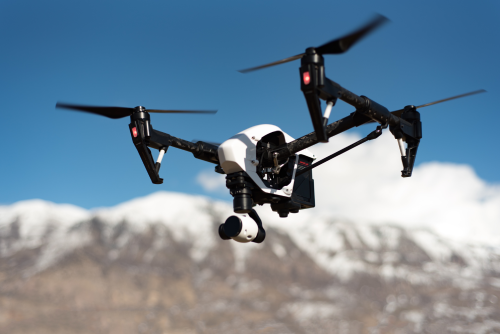
Wingtra WingtraOne is a commercial VTOL fixed-wing drone built for mapping and survey work. It is aimed at professional survey teams, engineering firms, researchers, and enterprise operators that need broader site coverage than a typical multirotor can usually provide. Its importance comes from the airframe concept itself: vertical takeoff and landing for field flexibility, combined with fixed-wing cruise efficiency for larger-area missions.
That combination puts it in a valuable part of the professional drone market. Many organizations outgrow consumer and prosumer quadcopters once projects become larger, deadlines tighten, and clients expect repeatable deliverables. At that point, the drone is no longer just a flying camera. It becomes part of a measurement workflow. The WingtraOne is relevant because VTOL fixed-wing systems are built to solve exactly that type of operational problem: collect data efficiently over larger areas while still launching and recovering in places where a runway or catapult would be inconvenient, unsafe, or impossible.
For buyers in surveying, mining, construction, land management, and infrastructure, the discussion is less about flashy specs and more about mission economics. How much ground can be covered in one deployment? How practical is the aircraft to launch from rough terrain? How much training does the team need? How cleanly does the data move into processing and reporting tools? Those are the questions that matter in this category, and they are why WingtraOne deserves attention even when not every specification is publicly confirmed in the supplied material.
Quick Summary Box
- Drone Name: Wingtra WingtraOne
- Brand: Wingtra
- Model: WingtraOne
- Category: Mapping/survey
- Best For: Enterprise mapping and survey teams that want a VTOL fixed-wing workflow
- Price Range: Not publicly confirmed in supplied data
- Launch Year: Not publicly confirmed in supplied data
- Availability: Not publicly confirmed in supplied data
- Current Status: Active
- Overall Rating: Not rated due to limited confirmed data
- Our Verdict: A serious commercial survey drone with an attractive VTOL fixed-wing concept, but buyers should verify the exact payload package, software stack, support terms, and current pricing before making a decision.
In short, WingtraOne appears to be a purpose-built professional tool rather than a generalist aircraft. That is a strength if your work involves repeatable geospatial outputs. It is also why procurement should be handled carefully: the aircraft itself is only one part of the system, and the final buying decision should include sensors, software, support, training, and total operating cost.
Introduction
The WingtraOne is an active professional drone from Wingtra, a Swiss manufacturer and brand associated with mapping and survey applications. Rather than targeting casual flying or content creation, this model sits in the commercial geospatial market, where mission efficiency, repeatability, and workflow support matter more than lifestyle features. Readers should care about it because VTOL fixed-wing platforms occupy an important niche between multirotors and conventional fixed-wing survey aircraft.
That niche is easy to understand once you look at real field operations. A multirotor is straightforward to use and easy to launch, but it typically covers less ground per flight because it is constantly using power to stay aloft. A traditional fixed-wing aircraft can cover much larger areas efficiently, but it often introduces field-handling compromises such as hand launches, catapults, or the need for more forgiving landing zones. A VTOL fixed-wing design aims to combine the strengths of both approaches: it lifts off vertically like a rotorcraft, transitions into efficient wing-borne flight, then returns for vertical landing.
For organizations that bill by project, work under weather windows, or operate on remote and uneven terrain, that hybrid concept can be genuinely valuable. It can reduce launch-site limitations while preserving the area-coverage benefits that make fixed-wing aircraft attractive in the first place. That does not automatically make WingtraOne the right tool for every mission, but it does make it an important category product for anyone evaluating serious aerial mapping platforms.
Overview
What kind of drone is it?
WingtraOne is a VTOL fixed-wing drone in the mapping/survey segment. That means it is designed to take off and land vertically, then fly like a fixed-wing aircraft during the mission. In practical terms, this class is generally chosen when operators want wider-area coverage than a multirotor, but without the runway, catapult, or belly-landing compromises of a more traditional fixed-wing platform.
The category matters because it shapes almost every operational decision around the drone. A mapping aircraft is not judged mainly on creative video modes or how compact it is for travel. It is judged on whether it can safely and efficiently gather consistent data over large sites. That usually means autonomous or semi-autonomous mission planning, predictable flight lines, appropriate image overlap, manageable launch and recovery procedures, and a software workflow that turns field capture into usable outputs.
Who should buy it?
The most logical buyers are:
- Surveying and geospatial firms
- Construction and earthworks teams
- Mining and quarry operators
- Engineering consultancies
- Research institutions running aerial mapping programs
- Government or infrastructure teams that need repeatable site documentation
It is much less likely to be a fit for casual hobby pilots or buyers looking for an all-purpose camera drone.
To go a step further, the ideal buyer is not just someone who wants a drone, but someone who already understands the value of aerial data in a professional workflow. A civil engineering firm documenting cut-and-fill progress, a mine monitoring changing volumes across large terrain, or a research team conducting recurring land-use studies will evaluate the aircraft differently than a general drone buyer. They are usually looking for consistency over time, defensible data capture procedures, and a workflow that reduces labor while preserving quality.
What makes it different?
The standout differentiator is the VTOL fixed-wing configuration. That format matters because it combines two useful traits:
- Vertical launch and recovery in tighter field conditions
- More efficient forward-flight behavior than a typical multirotor
For mapping teams, that combination can be strategically valuable, especially on large outdoor sites. The supplied data does not confirm exact endurance or range figures, so the advantage should be understood as an airframe-class benefit rather than a quoted performance claim.
Another important distinction is market intent. WingtraOne is presented as a commercial survey platform, not a consumer drone repurposed for occasional mapping. That usually implies a different kind of buying process. Teams should expect to assess not only the aircraft, but the entire operating environment around it: training requirements, software licensing, data export compatibility, support responsiveness, spare parts, and service lead times. In a commercial setting, those factors often have more impact on project success than the raw aircraft concept alone.
Key Features
- VTOL fixed-wing airframe
- Commercial mapping and survey positioning
- Active market status
- Swiss manufacturer and brand
- Designed for outdoor geospatial workflows rather than casual recreation
- Vertical takeoff and landing, which reduces dependence on runway-style launch and recovery areas
- Fixed-wing mission profile, which usually favors broader area coverage than multirotor-only systems
- Enterprise-style procurement and workflow evaluation are likely more important than consumer-style spec shopping
- Payload and camera options are not publicly confirmed in the supplied data and should be verified before purchase
- Software and autonomy details are not publicly confirmed in the supplied data and should also be verified directly
These points may look simple, but together they frame the product accurately. WingtraOne should be viewed as a mission system. The airframe design suggests efficiency over broader sites, while the commercial positioning suggests a workflow-oriented product rather than a one-box gadget. That distinction matters because enterprise drone purchases are rarely won or lost on one line-item specification. They are won or lost on whether the platform performs reliably within a larger operational chain.
A practical feature of the VTOL concept is that it can reduce dependence on ideal terrain. Many survey projects happen on active worksites, rough soil, temporary access roads, fields, or constrained clearings. In those conditions, minimizing launch and landing complexity can improve both safety and productivity. The WingtraOne concept directly addresses that need.
Full Specifications Table
| Field | Specification |
|---|---|
| Brand | Wingtra |
| Model | WingtraOne |
| Drone Type | VTOL fixed-wing |
| Country of Origin | Switzerland |
| Manufacturer | Wingtra |
| Year Introduced | Not publicly confirmed in supplied data |
| Status | Active |
| Use Case | Mapping/survey |
| Weight | Not publicly confirmed in supplied data |
| Dimensions (folded/unfolded) | Not publicly confirmed in supplied data |
| Max Takeoff Weight | Not publicly confirmed in supplied data |
| Battery Type | Not publicly confirmed in supplied data |
| Battery Capacity | Not publicly confirmed in supplied data |
| Flight Time | Not publicly confirmed in supplied data |
| Charging Time | Not publicly confirmed in supplied data |
| Max Range | Not publicly confirmed in supplied data |
| Transmission System | Not publicly confirmed in supplied data |
| Top Speed | Not publicly confirmed in supplied data |
| Wind Resistance | Not publicly confirmed in supplied data |
| Navigation System | Not publicly confirmed in supplied data |
| Obstacle Avoidance | Not publicly confirmed in supplied data |
| Camera Resolution | Not publicly confirmed in supplied data |
| Video Resolution | Not publicly confirmed in supplied data |
| Frame Rates | Not publicly confirmed in supplied data |
| Sensor Size | Not publicly confirmed in supplied data |
| Gimbal | Not publicly confirmed in supplied data |
| Zoom | Not publicly confirmed in supplied data |
| Storage | Not publicly confirmed in supplied data |
| Controller Type | Not publicly confirmed in supplied data |
| App Support | Not publicly confirmed in supplied data |
| Autonomous Modes | Not publicly confirmed in supplied data |
| Payload Capacity | Not publicly confirmed in supplied data |
| Operating Temperature | Not publicly confirmed in supplied data |
| Water Resistance | Not publicly confirmed in supplied data |
| Noise Level | Not publicly confirmed in supplied data |
| Remote ID Support | Not publicly confirmed in supplied data |
| Geo-fencing | Not publicly confirmed in supplied data |
| Certifications | Not publicly confirmed in supplied data |
| MSRP / Launch Price | Not publicly confirmed in supplied data |
| Current Price | Not publicly confirmed in supplied data |
Because so many line-item specifications are not confirmed in the supplied material, it would be a mistake to evaluate WingtraOne like a consumer electronics product where buyers compare a handful of numbers side by side. In this category, those missing details should trigger a procurement checklist rather than immediate rejection. Professional buyers should request a current spec sheet, payload list, software overview, regulatory notes, support plan, and pricing proposal before making any judgment about fit.
Design and Build Quality
From the supplied record, the most important confirmed design fact is the airframe type: VTOL fixed-wing. That alone tells buyers quite a lot about the product’s intended field role. This is not the layout of a pocket drone, a cinematic prosumer quadcopter, or a toy platform. It is a mission-driven aircraft architecture meant for commercial outdoor work.
In design terms, VTOL fixed-wing systems usually trade simplicity for flexibility. Compared with a standard multirotor, they introduce more airframe complexity. Compared with a conventional fixed-wing survey aircraft, they reduce launch and recovery constraints. For real operators, that often matters more than style or portability.
That tradeoff deserves emphasis. A multirotor is often mechanically intuitive for new users: it rises, hovers, moves, returns, and lands with behavior that is easy to visualize. A fixed-wing craft, by contrast, has a different logic. It gains efficiency from forward motion and wing lift, and its mission style is more structured. A VTOL fixed-wing merges those worlds, which can be extremely useful operationally but may also require more disciplined planning, training, and maintenance awareness.
What is not publicly confirmed in the supplied data:
- Airframe materials
- Foldability
- Exact transport dimensions
- Propeller arrangement details
- Landing gear specifics
- Weather sealing
- Field-serviceability details
Because of those unknowns, buyers should verify how easily the aircraft can be packed, assembled, repaired, and transported between sites. In the enterprise mapping world, deployment speed and serviceability can be as important as raw flight time.
A practical design evaluation should include more than just the aircraft body. Operators should ask:
- How long does setup take from case to launch?
- How many people are required for normal field use?
- How many spare parts should be carried on site?
- Are propellers or wings quick to replace?
- Is the aircraft tolerant of dusty, muddy, or windy staging areas?
- Can batteries be changed rapidly during an all-day operation?
- How robust is the transport solution between jobs?
Those questions matter because real-world survey work often happens under time pressure. If a drone theoretically covers a large area but is awkward to deploy or expensive to keep field-ready, the operational advantage can shrink quickly.
Flight Performance
The supplied data does not publicly confirm endurance, range, top speed, ceiling, or wind resistance. That means any hard performance judgment would be premature. Still, the airframe class allows some careful analysis.
A VTOL fixed-wing mapping drone generally aims to behave like this:
- Vertical takeoff and landing at the start and end of the mission
- More efficient forward flight once airborne
- Better suitability for broader outdoor coverage than a hover-centric multirotor
- Less relevance for indoor flying or very tight close-quarters inspection work
That makes WingtraOne most appealing for open-area missions rather than confined-space operations. It is likely to be a better conceptual fit for larger survey blocks, land parcels, and site documentation tasks than for missions requiring long stationary hover.
Takeoff and landing behavior are one of the biggest practical advantages of this class. Vertical launch and recovery can reduce the need for improvised runways or risky hand-launch methods. For survey teams working from rough ground, narrow staging areas, or unpredictable terrain, that can be a real operational benefit.
Wind handling, signal confidence, and radio performance must be verified from the current package. Fixed-wing aircraft often maintain momentum differently from multirotors, but without confirmed wind limits and transmission details, buyers should not assume a specific field envelope.
It is also useful to think about performance in workflow terms, not just flight terms. For mapping teams, the value of the aircraft is tied to how much useful data it can gather per sortie and how repeatably it can fly preplanned routes. A platform does not need to impress on paper if it can reliably execute large-area missions with stable image capture and manageable recovery procedures. Likewise, strong theoretical coverage means little if launch complexity, weather sensitivity, or processing rework slows the operation down.
When assessing WingtraOne, professional users should ask for answers to performance questions such as:
- What typical site area can be covered in one mission with the intended payload?
- How does performance change with different sensors or camera packages?
- What are the recommended wind limits for routine work?
- What is the expected mission efficiency at different ground sample distances?
- How does terrain variation affect route planning and coverage quality?
- What kind of pilot intervention is expected during a standard autonomous mapping flight?
These details shape the real value of the aircraft. A fixed-wing platform can be dramatically more efficient on broad sites, but only if the mission planning, transition behavior, and recovery logic are well matched to the environment.
Camera / Payload Performance
For WingtraOne, payload value matters more than cinematic appeal. This is a mapping/survey drone, so the real question is not whether it shoots attractive lifestyle footage, but whether its sensor and workflow package produce useful geospatial outputs.
The supplied data does not publicly confirm:
- Camera model
- Sensor type
- Resolution
- Video capability
- Gimbal details
- Interchangeable payload options
- Payload capacity
That means payload assessment should focus on verification before purchase. Serious buyers should confirm:
- Which sensors are currently supported
- Whether the payload is fixed or interchangeable
- What kind of mapping outputs the package is intended for
- Whether the camera uses a workflow suited to survey-grade consistency
- How calibration, image overlap, and data export are handled in practice
For industrial buyers, payload performance is about mission accuracy, repeatability, and processing reliability. In that context, the aircraft is only one part of the system. The sensor package and software workflow often decide whether a survey platform is worth the investment.
This is especially important because “camera quality” means something different in mapping than it does in content creation. In a survey workflow, teams care about things like image consistency, geometric reliability, shutter behavior, lens performance, calibration procedures, georeferencing support, overlap planning, and how well the data turns into orthomosaics, elevation models, volume calculations, or inspection-ready visual records. A sensor that looks good in promotional footage is not necessarily the one that delivers the best survey outcome.
Professional buyers should also look at payload performance in relation to the deliverables they actually sell or produce. For example:
- A topographic mapping team may prioritize clean, consistent image sets suitable for reliable photogrammetry.
- An earthworks team may care about repeatability across weekly progress flights.
- A mine operator may focus on stockpile documentation and the ease of processing large sites.
- A research group may need data consistency over time more than absolute speed.
If different payloads are available, the key question is whether the aircraft can grow with the operation. If the payload is fixed, the question becomes whether that single workflow is the right one for the organization’s long-term needs. Either way, buyers should request sample datasets, not just brochures.
Smart Features and Software
On a professional mapping drone, software can matter as much as hardware. Mission planning, route repeatability, data management, and processing compatibility usually define the day-to-day user experience more than the airframe itself.
The supplied data confirms the role of WingtraOne as a commercial survey platform, but it does not publicly confirm the exact software feature set. That includes:
- Flight planning app support
- Waypoint or mapping mission templates
- Corridor or grid automation
- Return-to-home behavior
- Terrain-following
- Cloud or fleet tools
- SDK or API access
- Third-party processing integrations
For buyers, these are the software questions worth asking before committing:
- How are survey missions planned?
- How repeatable are automated missions?
- What export formats are supported?
- What does the data processing workflow look like?
- Is the software license included, bundled, or recurring?
- What onboarding or training is offered to new teams?
In short, WingtraOne may be very strong as a workflow product, but the supplied data does not confirm the exact smart-feature stack. That should be verified directly through official sales or support channels.
Software quality often determines whether a professional drone becomes a productive tool or a constant source of friction. If mission planning is slow, operators will waste time in the field. If the processing pipeline is opaque, teams may struggle to debug poor outputs. If licensing is complex, organizations may face recurring costs they did not budget for. That is why enterprise buyers should review the software environment with the same seriousness as the airframe.
Key areas to investigate include:
- Mission design: Can operators quickly define grid, corridor, or custom-area missions?
- Repeatability: Can the same route be flown consistently for progress monitoring?
- Quality control: Are there tools to verify coverage and flag incomplete datasets before leaving the site?
- Team access: Can multiple staff members plan, review, or manage projects?
- Data export: Does the workflow fit the organization’s preferred processing and GIS environment?
- Supportability: Are updates predictable, documented, and easy to deploy?
For many organizations, the “software stack” is where the purchasing decision is made. A drone that is merely competent in the air can still be highly valuable if the workflow is efficient, predictable, and easy to train across a team.
Use Cases
The most realistic use cases for WingtraOne are professional outdoor geospatial jobs where VTOL launch flexibility and fixed-wing coverage both matter.
- Topographic surveying
- Land mapping
- Construction progress documentation
- Earthworks and stockpile monitoring
- Mining and quarry mapping
- Infrastructure corridor mapping
- Environmental and land-use studies
- Academic geospatial research
- Utility or public-sector site documentation
- Large-property survey operations
Each of these use cases benefits from a platform that can cover more ground than a typical multirotor while still operating from imperfect field conditions.
- Topographic surveying: Useful when teams need recurring site-wide capture without relying on a runway or large launch strip.
- Land mapping: A good conceptual fit for parcel-scale and broader land documentation where efficient forward flight matters.
- Construction progress documentation: Valuable when stakeholders want repeatable records of changing terrain, grading, and site development.
- Earthworks and stockpile monitoring: Relevant where site managers need regular volumetric or progress-oriented datasets from large, open worksites.
- Mining and quarry mapping: Strongly aligned with environments that are expansive, irregular, and often rough underfoot.
- Infrastructure corridor mapping: Potentially attractive for long, narrow assets where mission efficiency and route planning are critical.
- Environmental and land-use studies: Helpful for repeated observations over large outdoor areas, especially where takeoff space is limited.
- Academic geospatial research: Appropriate for institutions that need a repeatable aerial platform rather than a consumer drone workflow.
- Utility or public-sector site documentation: Useful for agencies managing land, assets, or public works over large outdoor footprints.
- Large-property survey operations: Relevant where a team needs to document broad areas efficiently with a professional workflow.
What these jobs have in common is scale. They are not primarily hover-and-inspect missions. They are coverage missions, where efficiency, repeatability, and field practicality are central.
Pros and Cons
Pros
- VTOL fixed-wing design is a strong fit for commercial mapping and survey operations
- Vertical takeoff and landing can be more field-friendly than conventional fixed-wing launch methods
- Fixed-wing mission profile is generally better suited to broad outdoor coverage than hover-only aircraft
- Active status suggests it remains relevant in the market
- Built by a Swiss manufacturer focused on professional drone applications
- Clearly targeted at serious survey workflows rather than generic consumer use
- Likely attractive to organizations that value larger-area mission efficiency over hover versatility
- Suitable in principle for buyers who want a dedicated geospatial workflow rather than a general-purpose drone
Cons
- Many core buying specs are not publicly confirmed in the supplied data, including flight time, range, speed, and weight
- Camera and payload details are not publicly confirmed in the supplied data
- Price transparency is not available in the supplied data
- Software, autonomy, and app support should be verified directly before procurement
- Enterprise support, repairs, and regional service availability need confirmation
- Not a natural fit for hobby flying, indoor work, or casual video creation
- A VTOL fixed-wing workflow may involve more operational planning than a basic multirotor deployment
- Buyers must judge the total system, not just the aircraft, which can lengthen the evaluation process
The overall pattern is clear: the conceptual strengths are strong, but the purchasing case depends on details that should be validated directly. That is common in the enterprise drone space, but it does mean serious buyers should prepare for a more consultative evaluation process.
Comparison With Other Models
| Model | Price | Flight Time | Camera or Payload | Range | Weight | Best For | Winner |
|---|---|---|---|---|---|---|---|
| WingtraOne | Not publicly confirmed in supplied data | Not publicly confirmed in supplied data | Mapping/survey payloads; exact package not publicly confirmed | Not publicly confirmed in supplied data | Not publicly confirmed in supplied data | Teams wanting a VTOL fixed-wing survey workflow | Best if VTOL survey operations are the priority |
| senseFly eBee X | Varies by package and region | Varies by payload and configuration | Mapping payload ecosystem; verify current package | Varies by link and region | Varies by configuration | Buyers comparing established fixed-wing mapping options | Strong close competitor |
| DJI Matrice 350 RTK | Varies by payload and dealer | Varies by battery and payload | Multirotor payload flexibility; verify survey bundle | Varies by link and region | Varies by installed configuration | Operators who need hover plus enterprise payload flexibility | Better alternative if hover and multi-role work matter more than fixed-wing efficiency |
WingtraOne vs a close competitor
Against a close mapping rival such as senseFly eBee X, WingtraOne’s main conceptual advantage is the VTOL launch-and-recovery approach. That can reduce dependence on more traditional fixed-wing field handling. The counterpoint is that buyers should verify the current payload, software, and service ecosystem on both sides, because those factors often matter more than airframe theory alone.
This comparison is important because both products appeal to organizations that care about mapping efficiency. The key divide is usually operational style. If your team strongly values vertical launch and landing because worksites are uneven, constrained, or safety-sensitive, the WingtraOne concept becomes more compelling. If your team is already comfortable with another fixed-wing workflow and has established processes around it, the decision may come down less to the aircraft and more to software, support, and payload maturity.
WingtraOne vs an alternative in the same segment
Against a multirotor enterprise alternative such as DJI Matrice 350 RTK with a survey payload, WingtraOne is likely the better fit when mission efficiency over larger areas is the main goal. The multirotor alternative is more attractive when hover performance, tighter site work, and broader payload versatility are higher priorities. Exact cost and flight-envelope comparisons should be confirmed from current packages.
This is one of the most common enterprise buying decisions. Many teams are choosing not between two fixed-wing aircraft, but between a dedicated mapping platform and a more flexible multirotor. The multirotor route often wins when the same aircraft must support inspections, photography, thermal work, or confined-area jobs in addition to mapping. The dedicated VTOL fixed-wing route becomes more attractive when mapping is the core mission and coverage efficiency matters enough to justify a specialized platform.
WingtraOne vs an older or previous-generation option
The supplied data does not confirm an official older or previous-generation WingtraOne relationship for a formal generational comparison. Buyers considering older survey aircraft on the used market should be cautious: lower purchase cost can be offset by aging batteries, weaker support, dated software, and harder-to-source spare parts.
Used enterprise drones can look cost-effective at first glance, but professional buyers should examine total risk. If a legacy aircraft lacks support, has uncertain parts availability, or is tied to older workflow software, downtime and retraining costs can erase the apparent savings quickly.
Manufacturer Details
Wingtra is both the brand and the manufacturer in this case, so there is no separate parent-brand distinction to explain. The company is based in Switzerland and is associated with professional drone systems for mapping and survey work rather than consumer camera drones.
In market terms, Wingtra’s reputation is tied to commercial geospatial use, workflow value, and enterprise application rather than hobby or creator categories. That positioning matters because it usually means buyers should evaluate the total system offering, not just the airframe.
A focused manufacturer can be a positive sign for enterprise buyers. It often means the company’s product decisions, training materials, and support model are shaped around a narrower set of professional use cases. The tradeoff is that buyers should not expect the same retail-style ecosystem seen in mass-market drone brands. Procurement may be more consultative, pricing may depend on package configuration, and support may be structured through regional partners or specialist resellers.
Support and Service Providers
For a commercial drone like WingtraOne, support quality can be as important as aircraft capability. Buyers should verify the following directly before purchase:
- Official support response channels
- Regional repair coverage
- Spare parts availability
- Training and onboarding options
- Warranty terms
- Battery replacement process
- Software support and update policy
- Authorized service provider coverage in their country
The supplied data does not publicly confirm the exact support network, repair structure, or warranty framework. Because this is a professional platform, it is wise to confirm whether service is handled directly by the manufacturer, through authorized dealers, or via regional partners.
Downtime is expensive in survey work. A delayed repair can disrupt project schedules, client commitments, and staff utilization. That is why support should be treated as a front-end buying factor, not an afterthought. Ask practical questions such as:
- What is the typical turnaround time for repairs?
- Are loaner units available in some service plans?
- Which consumables should be stocked in-house?
- How are firmware and software issues escalated?
- Is phone support available during local operating hours?
- What training is available for new operators and data managers?
For organizations running multiple crews or time-sensitive contracts, a strong support arrangement may justify a higher purchase price.
Where to Buy
WingtraOne should be approached as a commercial procurement product rather than a typical consumer retail drone. In practice, that usually means buyers should look at:
- Official brand sales channels
- Authorized dealer networks
- Regional enterprise drone distributors
- Survey and geospatial equipment partners
If you are evaluating this model, confirm:
- Whether the aircraft is sold in your region
- Which payload packages are available locally
- What software is bundled
- What training and support are included
- Whether import, certification, or radio restrictions apply in your market
This is unlikely to be the sort of product where a buyer should make a decision based only on a generic marketplace listing.
In many cases, the best purchase path is through a dealer or integrator that understands surveying workflows, not just drone hardware. A good reseller can help with configuration, training, compliance questions, battery strategy, data workflow planning, and after-sales service. Buyers should also request demonstrations, sample datasets, and written quotations that clearly separate hardware, software, and service costs.
Price and Cost Breakdown
The supplied data does not publicly confirm launch price, MSRP, or current market price for WingtraOne. That means buyers should treat budgeting as a full-system exercise rather than a simple aircraft quote.
Cost items to verify include:
- Airframe package
- Payload or sensor package
- Controller and ground equipment
- Batteries and charging equipment
- Spare propellers and field spares
- Software licensing or subscription costs
- Training and onboarding
- Maintenance and repair costs
- Insurance
- Transport cases and accessories
- Data processing workflow costs
For enterprise survey drones, total cost of ownership often matters more than sticker price. A platform with a higher upfront cost may still be the better buy if it reduces field time, rework, training friction, or downtime.
This is where many first-time enterprise buyers underestimate the real investment. The aircraft may be only part of the budget. Software subscriptions, staff training, battery inventory, processing tools, support plans, and replacement parts can materially change the economics. On the other hand, a more expensive platform may pay for itself if it shortens field days, reduces the number of flights needed per project, or improves consistency enough to lower rework rates.
A useful budgeting framework includes:
- Acquisition cost: Aircraft, payloads, controller, cases, chargers, and initial accessories.
- Operational cost: Batteries, travel logistics, insurance, training refresh, and maintenance.
- Workflow cost: Planning software, processing software, storage, and reporting tools.
- Risk cost: Downtime, repairs, replacement timelines, and missed project deadlines.
- Return value: Labor saved, area covered per day, and deliverables produced more efficiently.
Regulations and Compliance
WingtraOne is a commercial mapping/survey drone, so operators should assume that serious regulatory review is required before use. The exact legal requirements depend on country, airspace, mission type, and aircraft configuration.
Key points to verify locally:
- Registration requirements
- Commercial operator licensing rules
- Pilot competency or certification requirements
- Airspace access and permission rules
- Visual line of sight limits
- Beyond visual line of sight restrictions, if relevant
- Operations near people, roads, or sensitive infrastructure
- Privacy and data collection laws
- Landowner consent for survey work
- Insurance obligations
Important cautions:
- Max takeoff weight is not publicly confirmed in the supplied data, so do not assume a weight class
- Remote ID support is not publicly confirmed in the supplied data
- Certifications are not publicly confirmed in the supplied data
- No drone should be assumed globally compliant without region-specific verification
Commercial survey teams should also align flight operations with client contracts, site safety plans, and local data-handling rules.
Regulatory compliance for a mapping platform is often more involved than for a hobby drone because the missions themselves are more structured and commercially consequential. Teams may need operating manuals, maintenance logs, risk assessments, pilot records, or job-specific permissions depending on location. If projects involve infrastructure, public land, industrial clients, or repeated operations, the paperwork burden can increase.
Data governance also deserves attention. Mapping flights can collect extensive imagery of land, facilities, vehicles, and personnel. Operators should ensure their data storage, client-sharing practices, and retention policies meet local law and contractual obligations.
Who Should Buy This Drone?
Best for
- Professional survey firms
- Construction and civil engineering teams
- Mining, quarry, and land-development operators
- Geospatial researchers
- Enterprise users comparing VTOL survey workflows
- Buyers who value field launch flexibility plus fixed-wing mission efficiency
These buyers are likely to appreciate WingtraOne most when they routinely face larger outdoor mapping jobs and want a dedicated workflow rather than a multi-role aircraft. If your business model depends on covering substantial ground efficiently and doing so from imperfect launch sites, the platform belongs on your evaluation list.
Not ideal for
- Casual hobby users
- Buyers looking for a consumer camera drone
- Indoor pilots
- Creators focused on cinematic video rather than mapping outputs
- Budget-first buyers who need transparent off-the-shelf pricing
- Operators unwilling to verify software, payload, and support details before purchase
It is also not the most obvious choice for teams whose projects are mostly close-range inspection, facade work, bridge undersides, confined-space jobs, or creative media capture. Those tasks often favor multirotors because hover precision and payload flexibility matter more than area efficiency.
A simple decision test is this: if your organization mainly asks, “How much land can we document efficiently and repeatably?” WingtraOne makes conceptual sense. If your organization mainly asks, “How long can we hover near a target and swap between different payload types?” a multirotor may be the better match.
Final Verdict
WingtraOne stands out as a serious Swiss commercial VTOL fixed-wing survey drone with a mission profile that makes immediate sense for mapping professionals. Its biggest strength is the airframe concept itself: vertical takeoff and landing paired with fixed-wing flight is a compelling combination for teams that need efficient outdoor coverage without the field compromises of traditional fixed-wing launch and recovery.
That positioning alone makes it relevant in a market where many operators are forced to choose between the convenience of multirotors and the area efficiency of fixed-wing aircraft. WingtraOne is appealing because it sits between those two worlds. For the right user, that can mean faster site coverage, more practical deployment from rough terrain, and a workflow better suited to repeated large-area geospatial missions.
Its biggest drawback in this profile is simple but important: many decision-critical details are not publicly confirmed in the supplied data, including endurance, range, speed, payload specifics, software features, and pricing. That does not make it a weak platform; it just means buyers need a proper procurement conversation rather than a casual spec-sheet purchase.
The right way to evaluate WingtraOne is as a complete operational system. Ask about payload options, mission planning tools, software licensing, service coverage, training, repair logistics, and long-term ownership costs. Request demonstrations and sample outputs. Compare it not only to other mapping aircraft, but also to enterprise multirotors if your use cases extend beyond pure survey coverage.
If you are a survey, construction, mining, or geospatial operator looking for a purpose-built VTOL mapping platform, WingtraOne deserves a place on your shortlist. Just make sure you verify the exact aircraft package, sensor options, software workflow, service coverage, and total ownership cost before committing. For organizations that value efficient large-area mapping and field-friendly launch flexibility, that extra diligence could reveal a very strong professional fit.
